Thursday, September 19, 2013

Unearthing Fallujah: Non-Reporting and the Other Nuclear Disaster

‘Damning Evidence’ Becomes ‘No Clear Evidence’: Much-Delayed Report On Congenital Birth Defects In Iraq

by David Cromwell - Media Lens

In a 2010 alert, 'Beyond Hiroshima – The Non-Reporting Of Fallujah's Cancer Catastrophe', we noted the almost non-existent media response to the publication of a new study that had found high rates of infant mortality, cancer and leukaemia in the Iraqi city. The dramatic increases in these rates exceeded even those found in survivors of the atomic bombs dropped by the United States on Hiroshima and Nagasaki in 1945. The Independent's Patrick Cockburn was a lone exception in reporting these awful findings.

As many readers will recall, Fallujah was subjected to US military attacks in March 2004 and an even larger assault in November 2004 which also involved UK forces. Our media alerts at the time highlighted the abysmal lack of media coverage of Western war crimes in Fallujah, including the use of chemical weapons and depleted uranium. Media Lens paid particular attention to the appalling performance of BBC News ('Doubt Cast on BBC Claims Regarding Fallujah', 'BBC Silent On Fallujah', 'BBC Still Ignoring Evidence Of War Crimes').

And it is not just Fallujah that has suffered appallingly. Mozhgan Savabieasfahani, an environmental toxicologist at the University of Michigan's School of Public Health and author of the book Pollution and Reproductive Damage, notes that increasing numbers of birth defects have also been seen in Mosul, Najaf, Basra, Hawijah, Nineveh and Baghdad. In some provinces, adds Dr Savabieasfahani, the rate of cancers is also increasing. She says:

'Sterility, repeated miscarriages, stillbirths and severe birth defects - some never described in any medical books - are weighing heavily on Iraqi families.'

In Basra, attacked and occupied by UK troops, childhood leukaemia rates more than doubled between 1993 and 2007, the year that UK troops withdrew from the city.

Dr Savabieasfahani describes 'an epidemic of birth defects in Iraq' and says that what is 'most urgently needed' is:

'comprehensive large-scale environmental testing of the cities where cancer and birth defects are rising. Food, water, air, and soil must be tested to isolate sources of public exposure to war contaminants. This is a necessity to discover the source, extent, and types of contaminants in the area followed by appropriate remediation projects to prevent further public exposure to toxic war contaminants.'

In 2012, the World Health Organization (WHO), after being pressured by public health experts for a decade, belatedly instigated a study in conjunction with the Iraqi Ministry of Health (MOH) to investigate 'prevalence and factors associated with congenital birth defects' in Iraq. But although the study is extensive in scale, with 10,800 Iraq households selected as the sample size, Dr Savabieasfahani describes the scope of the research as 'severely handicapped'. Why? Because of the controversial decision not to investigate the possible causes of birth defects and cancer; in particular, depleted uranium (DU), white phosphorus and other dangerous residues of the war, notably lead and mercury.

DU is a by-product of the process of enriching uranium. Because of its very high density, it is often used in weapons designed to penetrate buildings and armoured tanks. Dr Keith Baverstock, a former health and radiation adviser to WHO, says that:

'There is absolutely no doubt that DU is toxic if it becomes systemic and gets into the bloodstream.'

The decision by WHO and MOH not to consider uranium in their study 'is an important omission', says Dr Baverstock, and he 'believes that WHO has miserably failed to assess risks posed by DU... There is no doubt in my mind that the upper management of WHO failed to fulfil their obligations to examine the public health implications of DU.'

In 2004, Dr Baverstock was the lead author of a WHO report linking the US and UK use of depleted uranium in Iraq with long-term health risks. But the report was declared 'secret' and never published. Dr Baverstock said that the report was 'deliberately suppressed', pointing the finger of suspicion at the powerful pro-nuclear UN body, the International Atomic Energy Agency.

The War Is Responsible – 'No Other Explanation'

The new WHO/MOH report was originally due to be published in November 2012, but it was indefinitely postponed with no satisfactory reason given. Months passed. Meanwhile, in March 2013, the BBC included a report on its World News channel about birth defects and cancer in Iraq. BBC reporter Yalda Hakim interviewed Dr Mushin Sabbak at Basra Maternity Hospital. He told her that he believed that 'mercury, lead, uranium' from the war were responsible for a 60 per cent increase in birth defects there since 2003. 'We have no other explanation than this,' he added. (An edited version of the World News segment appeared here on BBC News.)

Dr Chaseb Ali, a senior MOH official in Baghdad, told Hakim that:

'All studies done by the Ministry of Health prove with damning evidence that there has been a rise in birth defects and cancer, since the substances in question cause birth defects if the mother was exposed to them, or cancer, or in some cases, both.' (English subtitles)

The BBC journalist said in the report's voiceover:

'Dr Chaseb says there could be many factors, including the use of depleted uranium, and the looting and destruction of Saddam Hussein's laboratories.'

Tellingly, when the journalist asked the senior Iraqi health official whether, given the extensive findings of increased birth defects and cancer, the Iraq government would call for action, he smiled uncomfortably and said:

'I'll keep my thoughts to myself.'

Switching to English, he stated directly:

'I have no answer. I know the fact, but I cannot say anything.'

Hakim then spoke with two Iraqi Ministry of Health doctors working on the WHO/MOH study. These researchers discussed the increase in Iraqi birth defects, and blamed the increase on the war. The BBC reporter was told that the report had been repeatedly delayed but that:

'They confirm that the report will show a rise in birth defects in areas which show heavy fighting.'

There is no shortage of damning testimony of the awful Western legacy suffered by the people of Iraq. Donna Mulhearn is an Australian antiwar activist who has travelled repeatedly to Fallujah, talking with Iraqi doctors as well as affected families. She told journalist Kelley Vlahos:

'I believe the Iraqi government is responding to pressure from the US to keep the issue under the radar.'

The physical horrors reported by Mulhearn and others include:

'babies born with parts of their skulls missing, various tumors, missing genitalia, limbs and eyes, severe brain damage, unusual rates of paralyzing spina bifida (marked by the gruesome holes found in the tiny infants' backs), Encephalocele (a neural tube defect marked by swollen sac-like protrusions from the head), and more.'

Mulhearn said:

'When I was in Iraq earlier this year there was a definite feeling of fear and intimidation among doctors who felt pressure from the Government to stay quiet about increasing levels of cancer and birth defects.'

She added:

'One cancer specialist in Basra was removed from his senior position in a hospital because he has been outspoken on the issue of radiation caused by depleted uranium pollution and what he believes is its terrible impact of the health of Iraqis in the Basra region. He was nervous about giving us an on-camera interview because of possible ramifications.'


'We Worry That This Is Now Politics, Not Science'


In May 2013, with still no sign of the joint WHO/MOH report, a call was issued by a number of public health and medical experts, together with around 50 others including Noam Chomsky, asking for the immediate release of the report. A petition on Change.org, initiated by Dr Samira Alaani, a pediatrician working in Fallujah General Hospital, attracted almost 50,000 signatures. Dr Alaani wrote:

'I have worked in Fallujah as a Pediatrician since 1997 but began to notice something was wrong in 2006 and began logging the cases; we have determined that 144 babies are now born with a deformity for every 1000 live births. We believe it has to be related to contamination caused by the fighting in our city, even now, nearly 10 years later. It is not unique to Fallujah; hospitals throughout the Anbar Governorate and many other regions of Iraq are recording increases. Every day I see the strain this fear puts on expectant mothers and their families. The first question I am asked when a child is born is not "is it a boy or a girl?" but "is my child healthy?"' (Emphasis in original.)

She added:

'The research is now complete and we were promised that it would be published at the beginning of 2013, yet six months later the WHO has announced more delays. We worry that this is now politics, not science. We have already waited years for the truth and my patients cannot wait any longer. [...] My patients need to know the truth, they need to know why they miscarried, they need to know why their babies are so ill but, most importantly, they need to know that something is being done about it.'

When UN sanctions were imposed on Iraq in the 1990s, the British oncologist Karol Sikora, who was then chief of WHO's cancer programme, wrote that:

'Requested radiotherapy equipment, chemotherapy drugs and analgesics [were] consistently blocked by United States and British advisers [to the Iraq sanctions committee].

Dr Sikora told John Pilger:

'We were specifically told [by the WHO] not to talk about the whole Iraq business. The WHO is not an Organization that likes to get involved in politics.'

But it's even worse than that. WHO is an organization that seemingly bends to the will of powerful Western governments. Hans von Sponeck was the UN Humanitarian Coordinator for Iraq before he resigned in 2000 in protest at the appalling level of deaths caused by the sanctions (his predecessor, Denis Halliday, resigned in 1998 for the same reason). Von Sponeck noted that:

'The US government sought to prevent WHO from surveying areas in southern Iraq where depleted uranium had been used and caused serious health and environmental dangers.'

Halliday said:

'The World Health Organisation (WHO) has categorically refused in defiance of its own mandate to share evidence uncovered in Iraq that US military use of Depleted Uranium and other weapons have not only killed many civilians, but continue to result in the birth of deformed babies.'

In July 2013, around 50 medical experts and other concerned people, wrote a second time to WHO:

'The joint WHO and Iraqi Ministry of Health Report on cancers and birth defect in Iraq was originally due to be released in November 2012. It has been delayed repeatedly and now has no release date whatsoever. [...] we are baffled and alarmed at the WHO's inability to release any of its findings, despite our urgent request of May 2013, for the WHO to release its report.

'The Iraqi birth defects epidemic, by itself, would outrage anyone with the simplest understanding of population health and disease. Who could justify blocking the release of information from a long-completed investigation of that epidemic?

'Why have our inquiries failed to break the WHO's apparent filibuster against releasing that data? WHO has a staff of thousands, including medical doctors, public health specialists, scientists, and sophisticated epidemiologists. They are certainly capable of presenting that data to the public by now.' (Mozhgan Savabieasfahani, via email, July 26, 2013)


'A Total Reversal'

On September 11, 2013, Iraq's Ministry of Health finally published a 'summary report'. The World Health Organization was credited with assistance but, oddly, was not a signatory of the report (the study had previously been presented as a 'collaborative' study and 'co-financed' by WHO and Iraq's MOH). But even more bizarrely, the report claimed that:

'The study provides no clear evidence to suggest an unusually high rate of congenital birth defects in Iraq.'

Incredulous, Dr Savabieasfahani noted:

'This is a total reversal compared to previous statements from the same Ministry of Health, as broadcast worldwide in March 2013.' (Email, September 12, 2013)

This was the item on BBC World News in which Iraqi Ministry of Health researchers confirmed that the high rates of cancers and birth defects constituted a 'big crisis' for the 'next generation' of Iraqi children. There was 'damning evidence', a senior Iraqi MOH official had said, of a rise in Iraq birth defects.

Dr Savabieasfahani said that it was 'shocking to see this report declare "no clear evidence" for any abnormality in rates of "spontaneous abortions", "stillbirths", or "congenital birth defects" anywhere in Iraq.' She added bluntly:

'What happened to the data between March and September? Even though data analysis is prone to variations in output, which can lead to potential changes in conclusions, for a change of this magnitude - from "damning evidence" to "no clear evidence" - extensive data manipulation must have taken place. [...] this new report must be viewed with extreme caution if not with suspicion and disbelief.'

Dr Amy Hagopian, a public health researcher at the University of Washington in Seattle, told Media Lens that, along with others, she would be 'pressing for the timely release of all remaining data and reports to ensure effective public health interventions can be developed and implemented.' (Email, September 14, 2013).

Dr Keith Baverstock, the former WHO adviser on radiation and public health mentioned earlier, told us:

'I have not had time to study this report in detail so I will not comment on the scientific aspects. However, there are aspects which cause me very considerable concern. Firstly, this is not the independent academic analysis that is required - it certainly would not find a place in a reputable scientific journal. So it is strange to my mind that apparently reputable scientists have, through what is purported to be a peer review process, endorsed this study. I would have several questions for these people, none of whom I know. For example, how did they ensure that there was no selection bias: why was such a simplistic approach taken to the statistical analysis of the results. The implication is that these people were appointed by WHO although WHO does not appear to be a co-author, or in other ways connected with the report. If this peer review group have had access to information not in the report where and when will this information be made public?' (Email, September 17, 2013).

Dr Baverstock continued:

'From the WHO perspective I think the appointment of peer reviewers (if indeed WHO did appoint them) was extraordinarily inept. Five of the six reviewers were either from the UK or the USA, both countries which contributed to the environmental contamination in Iraq and therefore have a strong conflict of interest in this matter. The sixth reviewer from Norway may well have less of a conflict of interest but it is not clear that he is even qualified to review a study of this kind as his website says he is a social anthropologist and apparently he has no publications in the area of pregnancy outcome. It is the case that WHO suppressed a paper on the genotoxicity of uranium in 2001/2 at the time that Gro Harlem Brundtland, a former Prime Minister of Norway, was the WHO DG [Director-General].'

He concluded:

'The issue of the health consequences for the civilian populations of the Iraq wars is a very serious matter and nothing short of an independently conducted study prepared for a scientific journal will provide satisfactory answers.'

We also asked Noam Chomsky to comment. He told us:

'Extensive evidence had appeared about sharp increases in birth defects in regions of Iraq subjected to intense US assault, particularly Fallujah, where the crimes of November 2004 bear comparison to Srebrenica. Coverage has been slight and hopelessly inadequate. By now there are serious questions about analysis and perhaps withholding of data and reports. The time has surely come for careful inquiry and full disclosure.' (Email, September 16, 2013)

Denis Halliday said:

'This tragedy in Iraq reminds one of US Chemical Weapons used in Vietnam. And that the US has failed to acknowledge or pay compensation or provide medical assistance to thousands of deformed children born and still being born due to American military use of Agent Orange throughout the country. The millions of gallons of this chemical dumped on rural Vietnam were eagerly manufactured and sold to the Pentagon by companies Dupont, Monsanto and others greedy for huge profits.'

He added:

'Given the US record of failing to acknowledge its atrocities in warfare, I fear those mothers in Najaf and other Iraqi cities and towns advised not to attempt the birth of more children will never receive solace or help.'

Halliday concluded that what is needed is a 'United Nations that is no longer corrupted by the five Permanent Members of the Security Council.'

So far, Lexis database searches yield not a single British newspaper mention of the publication of the study into Iraq birth defects, far less the report's 'shocking' shortcomings. But this is standard performance for the corporate media which have an established history of looking the other way when it comes to the crimes of the West.

We do not expect a media investigation anytime soon into why the study's methodology and findings appear to have been twisted by major political interests - presumably to avoid embarrassing the US and its allies who bombarded Iraq, resulting in the deaths of around one million people, littering the country with contaminants, and leaving a toxic legacy of cancer and birth defects.

This Alert is Archived here:

‘Damning Evidence’ Becomes ‘No Clear Evidence’: Much-Delayed Report On Congenital Birth Defects In Iraq

Contact Us:

editor@medialens.org

Share this media alert:

| |

Follow us on Twitter, on Youtube and on Facebook

The second Media Lens book, 'NEWSPEAK in the 21st Century' by David Edwards and David Cromwell, was published in 2009 by Pluto Press. John Pilger writes of the book:

"Not since Orwell and Chomsky has perceived reality been so skilfully revealed in the cause of truth." Find it in the Media Lens Bookshop

In September 2012, Zero Books published 'Why Are We The Good Guys?' by David Cromwell. Mark Curtis, author of 'Web of Deceit' and 'Unpeople', says:

'This book is truly essential reading, focusing on one of the key issues, if not THE issue, of our age: how to recognise the deep, everyday brainwashing to which we are subjected, and how to escape from it. This book brilliantly exposes the extent of media disinformation, and does so in a compelling and engaging way.'
Donate...

In July 2013, we reached our 12th anniversary. We would like to thank all those who have supported and encouraged us along the way. Media Lens relies on donations for its funding. If you currently support the corporate media by paying for their newspapers, why not support Media Lens instead?

Would you like to stop receiving our Media Alerts? Unsubscribe here >>

www.medialens.org

Wednesday, September 18, 2013

From the Roofs: Snipers Keep Cairo in Check

Egypt: In the Eye of the Storm

by Andre Vltcheck - CounterPunch

They say thousands of people died during and after the 3 July 2013 coup d’ état in Egypt. Semi-official and conservative counts speak of 1,600 victims.

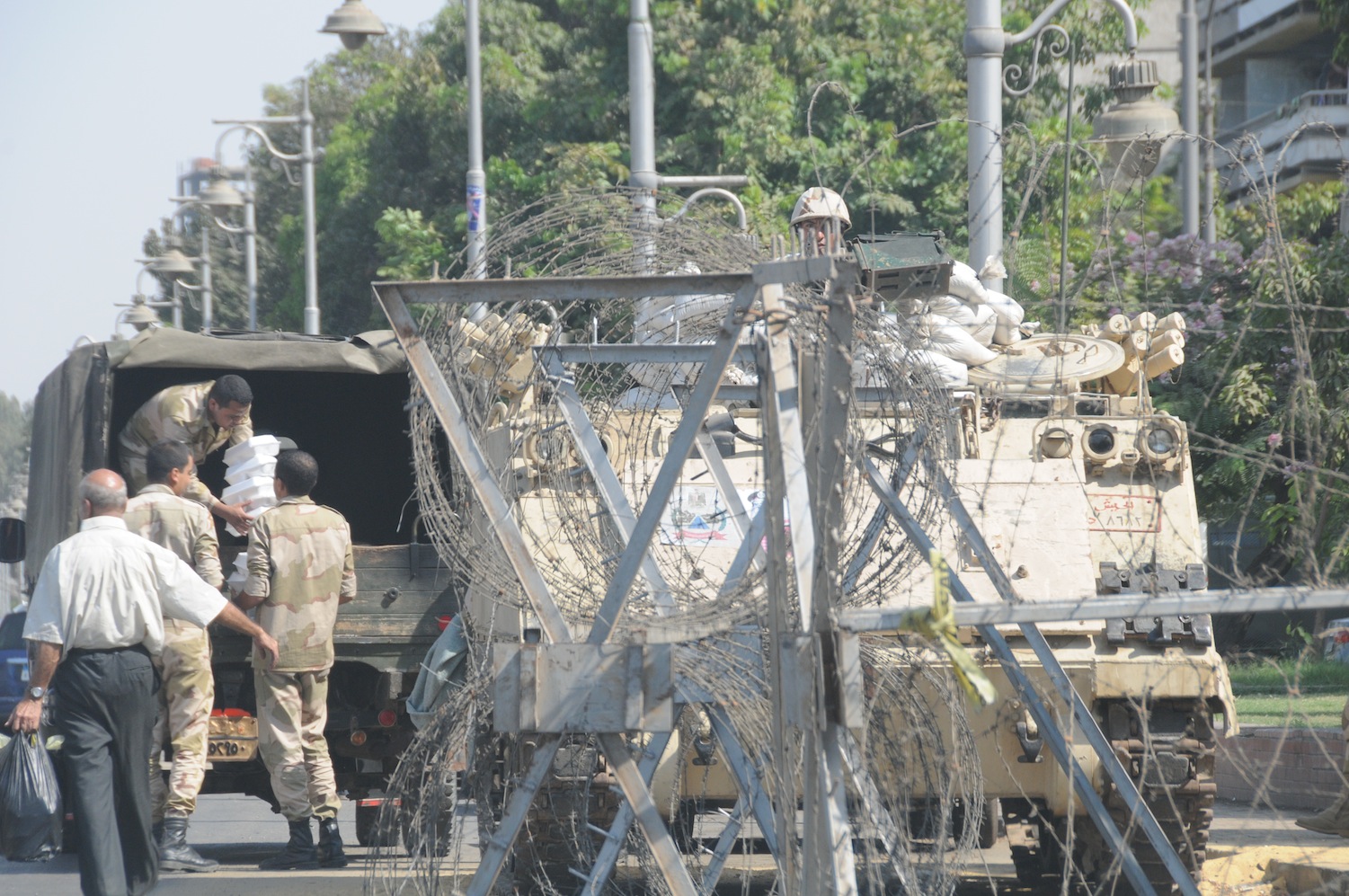
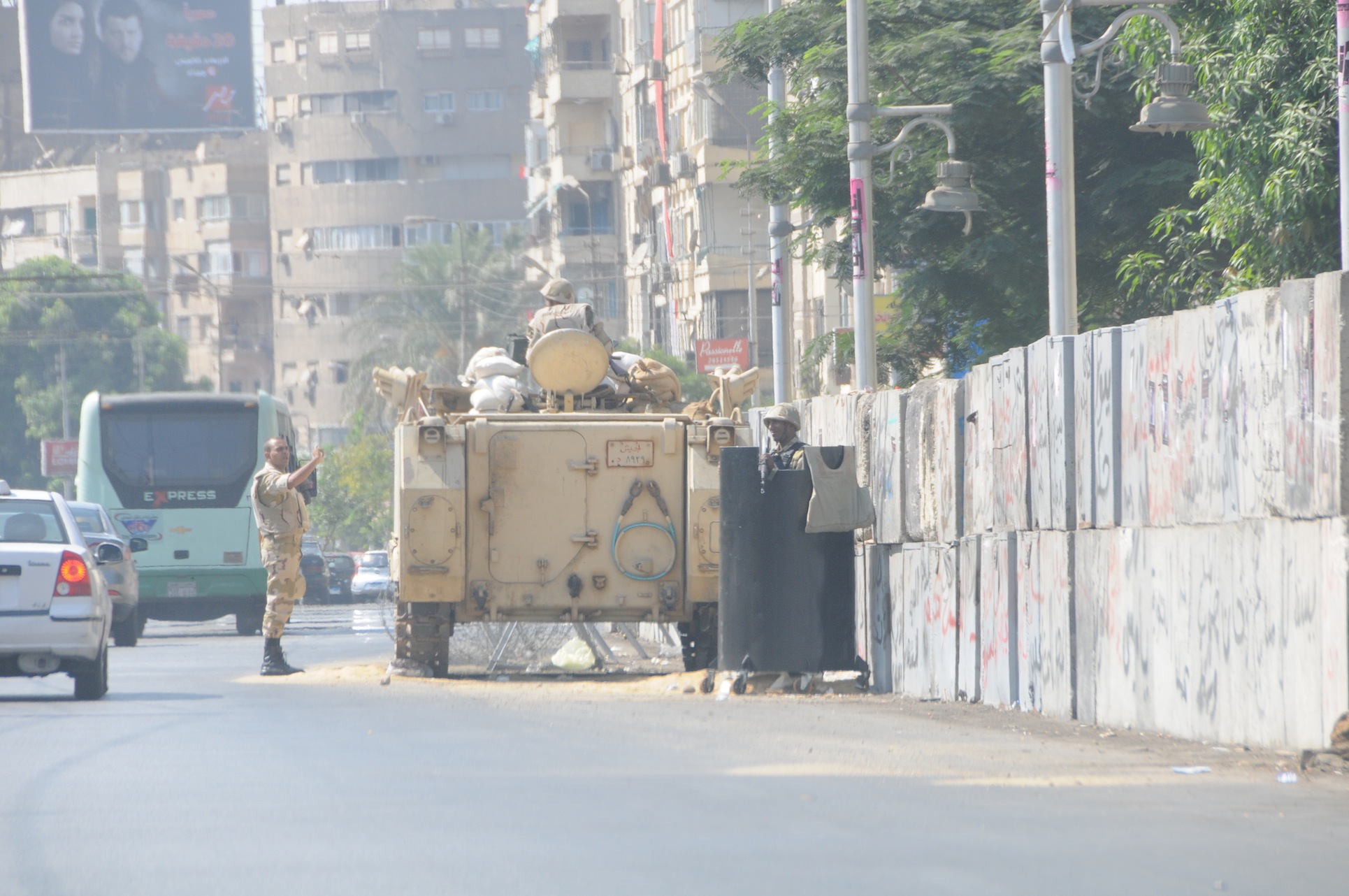
Street control in Cairo… these days.

Once again people are disappearing; they are dying. During the protests, snipers have been positioned on the roofs of tall buildings in Cairo and Alexandria. Fear is everywhere.

In the entire region, a big crackdown is underway. Western allies are arresting and murdering the opposition: in Egypt, Turkey, Bahrain, and Saudi Arabia…

It is widely believed, at least among those who are still in resistance, that President Morsi, the leader of the Muslim Brotherhood, betrayed the revolution. Then, while popular protests were shaking Cairo, Suez, Alexandria and other parts of the country, the Egyptian military ‘intervened’, performing what was described in the West as ‘bloodless coup’.

At that time, some people rejoiced, even the poor, but only for an extremely short time. Killings began almost immediately, and the tanks took up positions all over the country.

Not only that, the military did not intend to bring the revolution back to a socialist (or to at least some socially-oriented) track – it soon became evident that it began moving the country back, essentially and rapidly, towards the Mubarak regime.

It is of little wonder, as the Egyptian military has been enjoying huge financial and ideological support from the West, for years and decades.

***

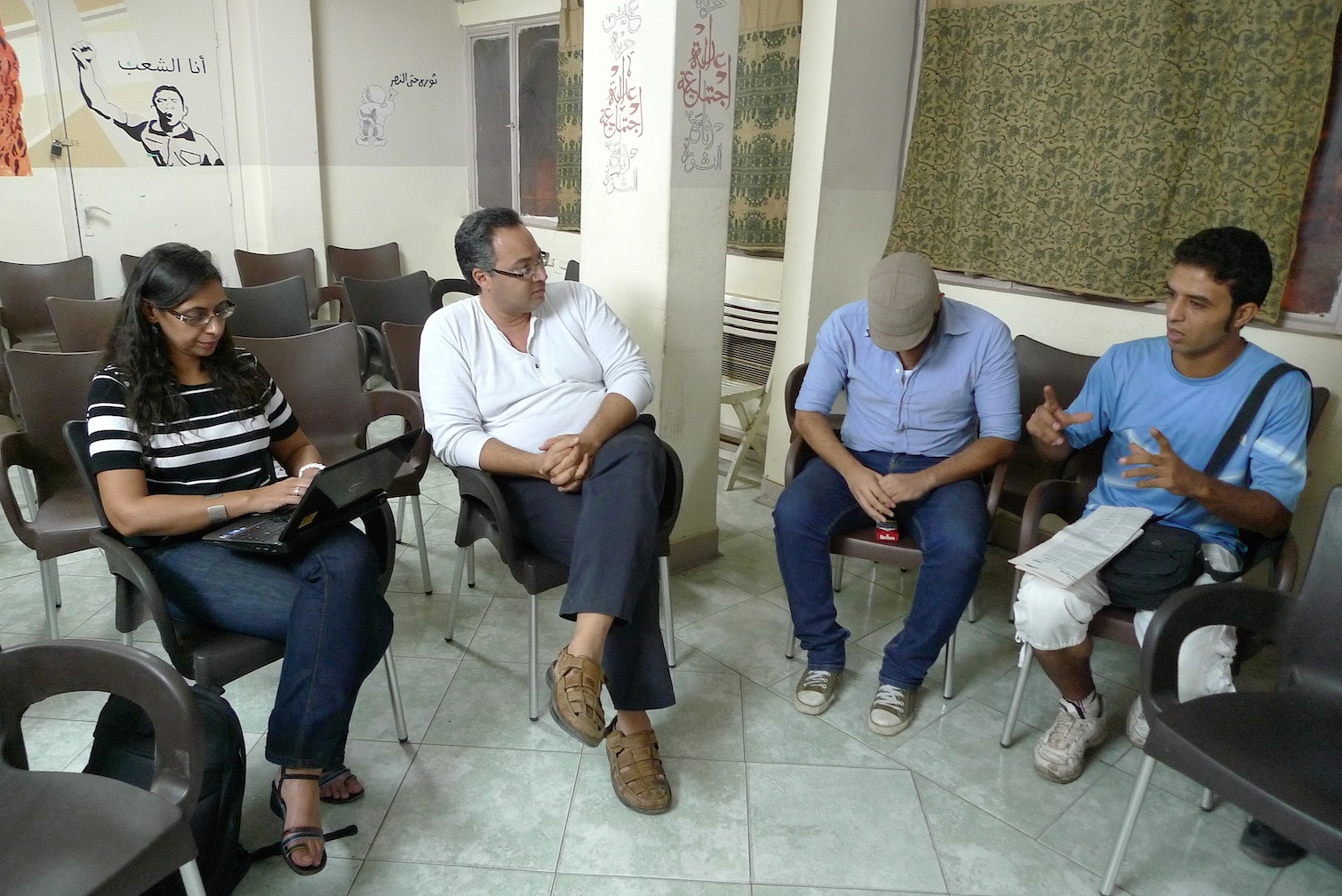
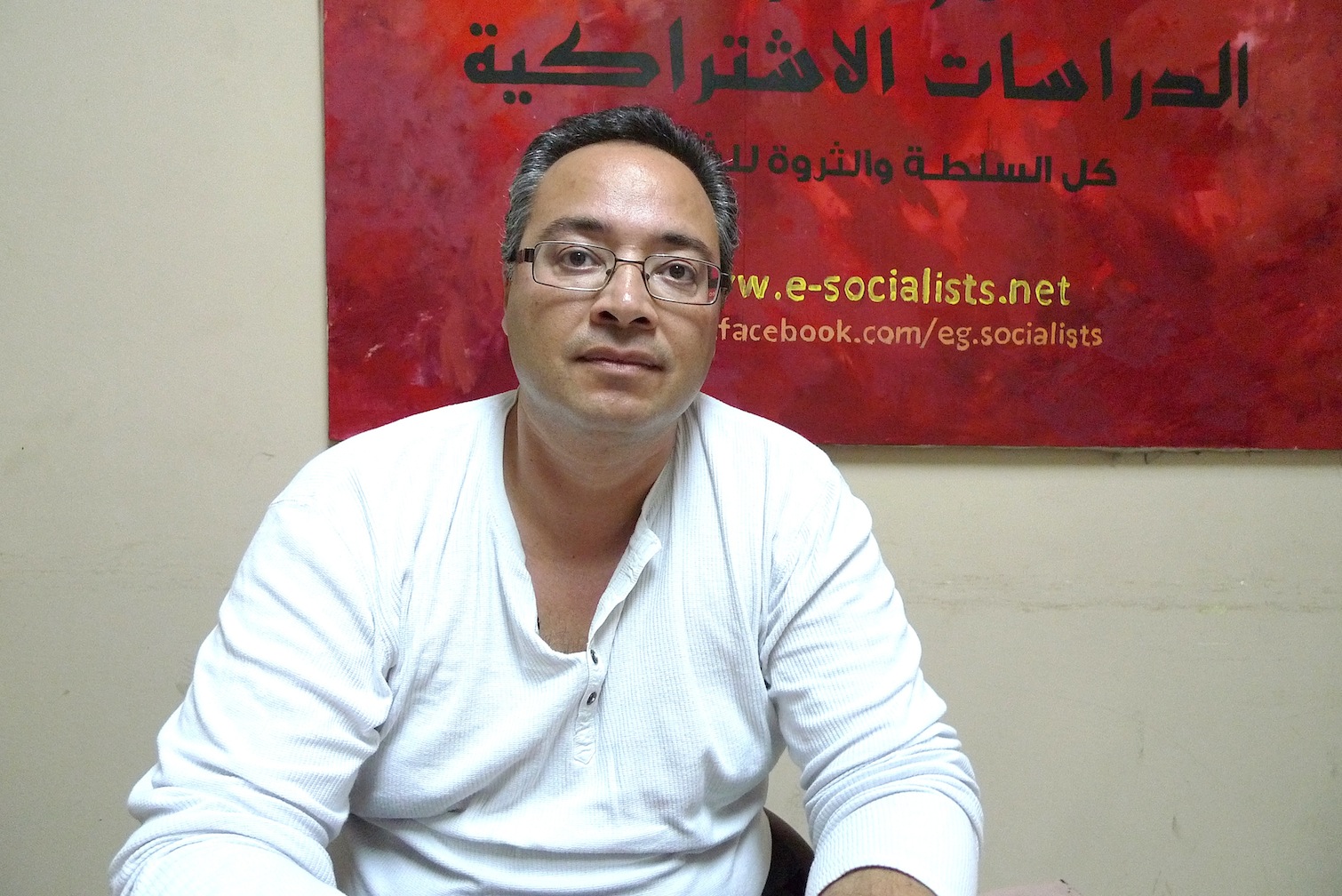
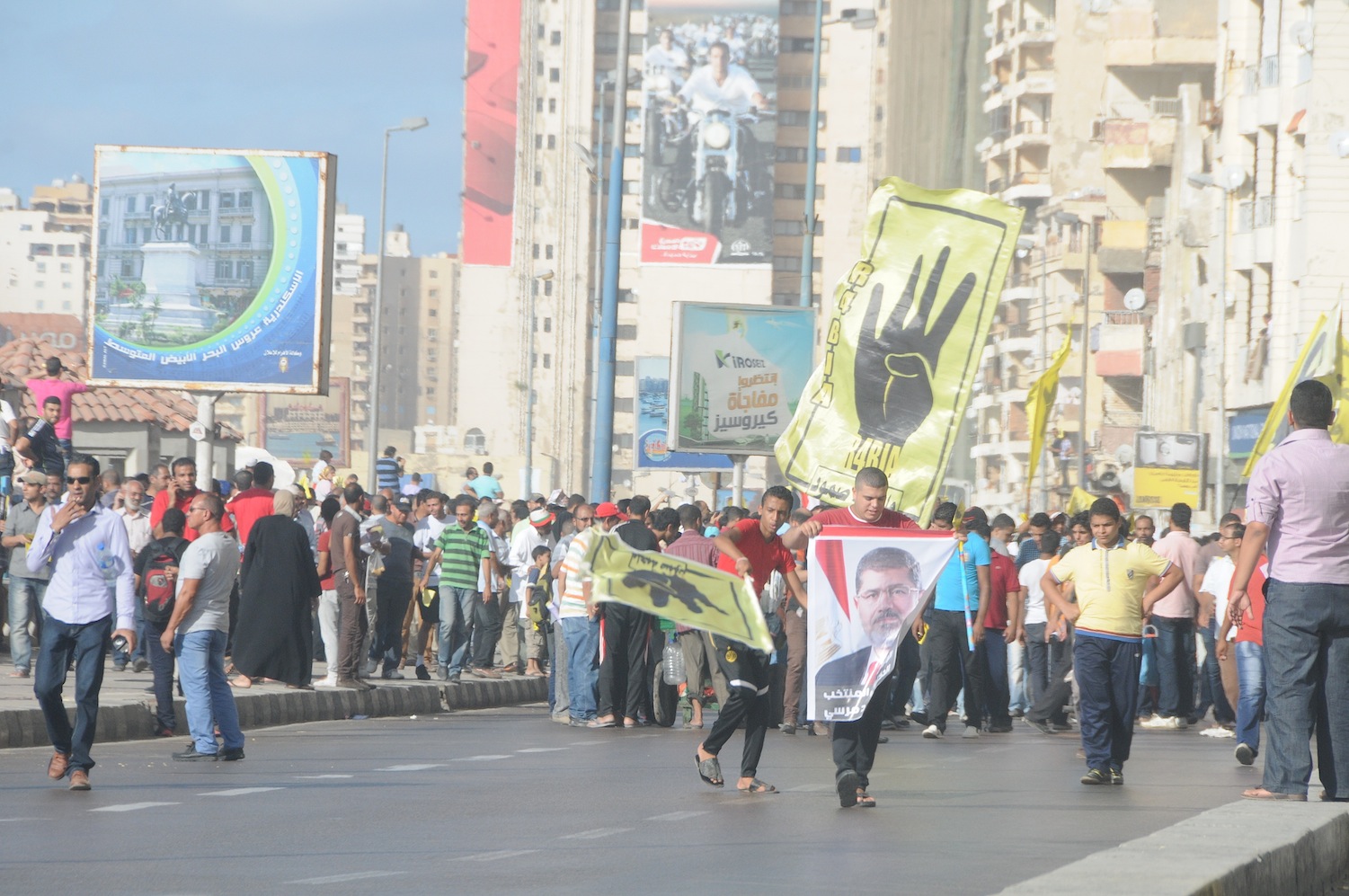
This time I spent one week with members of the Egyptian opposition, mainly with the Revolutionary Socialist Organization. I also visited some rallies of the Muslim Brotherhood in Alexandria, one during which, two people lost their lives.

This is clearly an unsettling moment for the country. Just about anything could happen at any moment. Brutal crackdowns from the armed forces are becoming almost a daily routine. Hundreds of people die, each given week.

But the Egyptian people are strong and determined. They are not always ideologically ready (a result of many decades of brainwashing by Mubarak’s regime), but they at least realize that they are poor, cheated, and exploited. Many slum-dwellers, who first supported the military coup, are now turning against the rule of the armed forces. People want, they are demanding, social justice.

In our recent conversation, Noam Chomsky declared that Egypt and other countries in the region are where Latin America was just a few years ago.

In the past, Egypt was moving on a patriotic and socialist path, but the foreign imperialist forces have derailed it.

Now, once again, there is a chance that the process interrupted decades ago, could return. But the regime and its institutions will clearly not go away overnight, or without a brutal fight.

In the end, true revolution may return, and it may triumph. But thousands of Egyptians may have to die in the process, fighting for a better world.


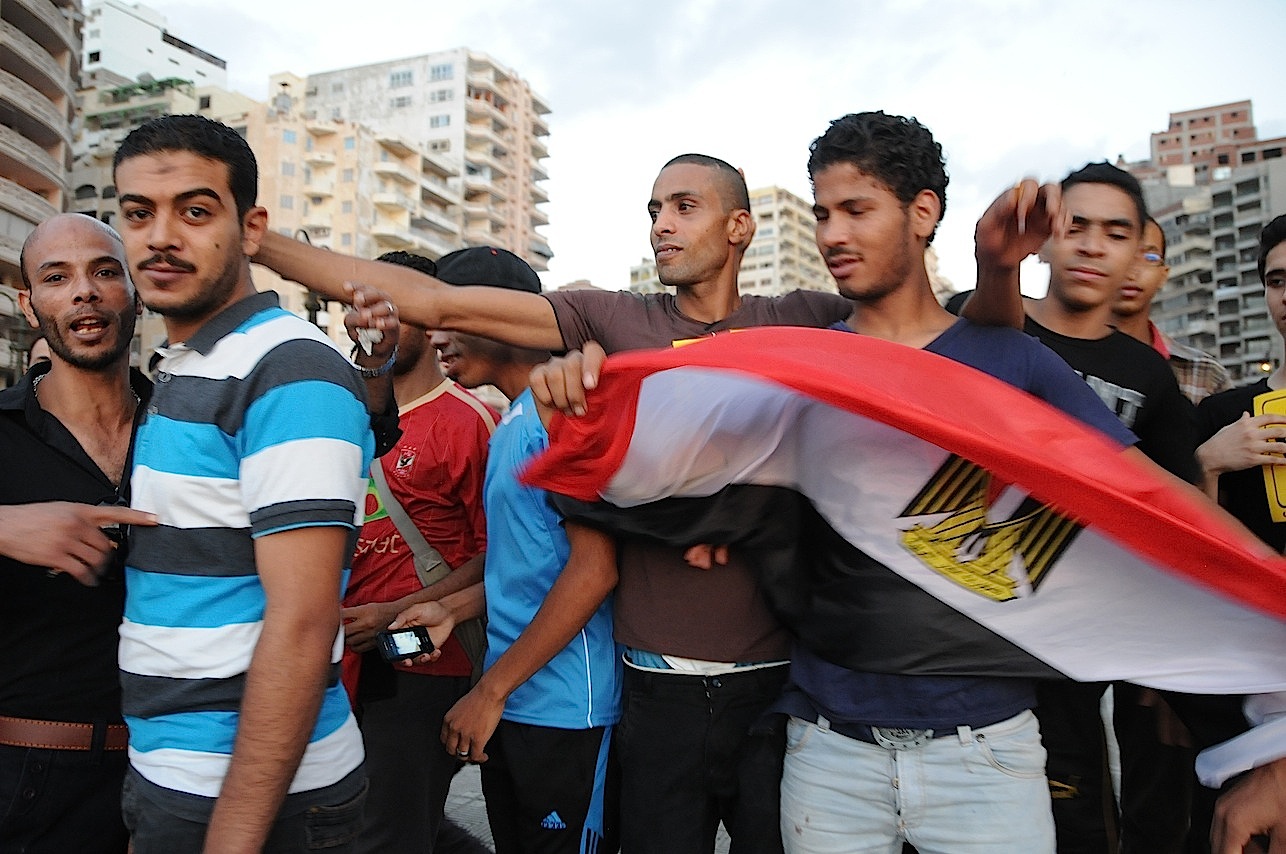
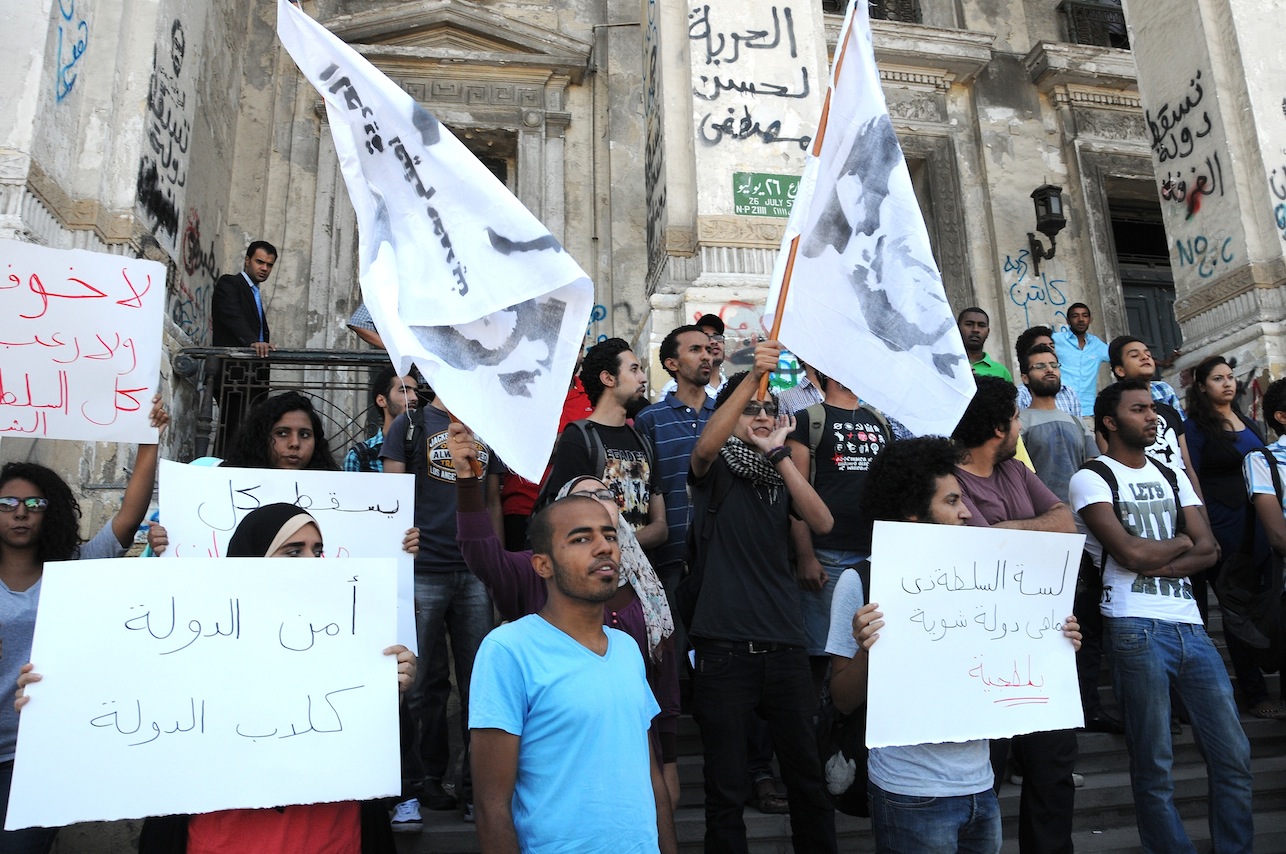
Cheering the protesters.


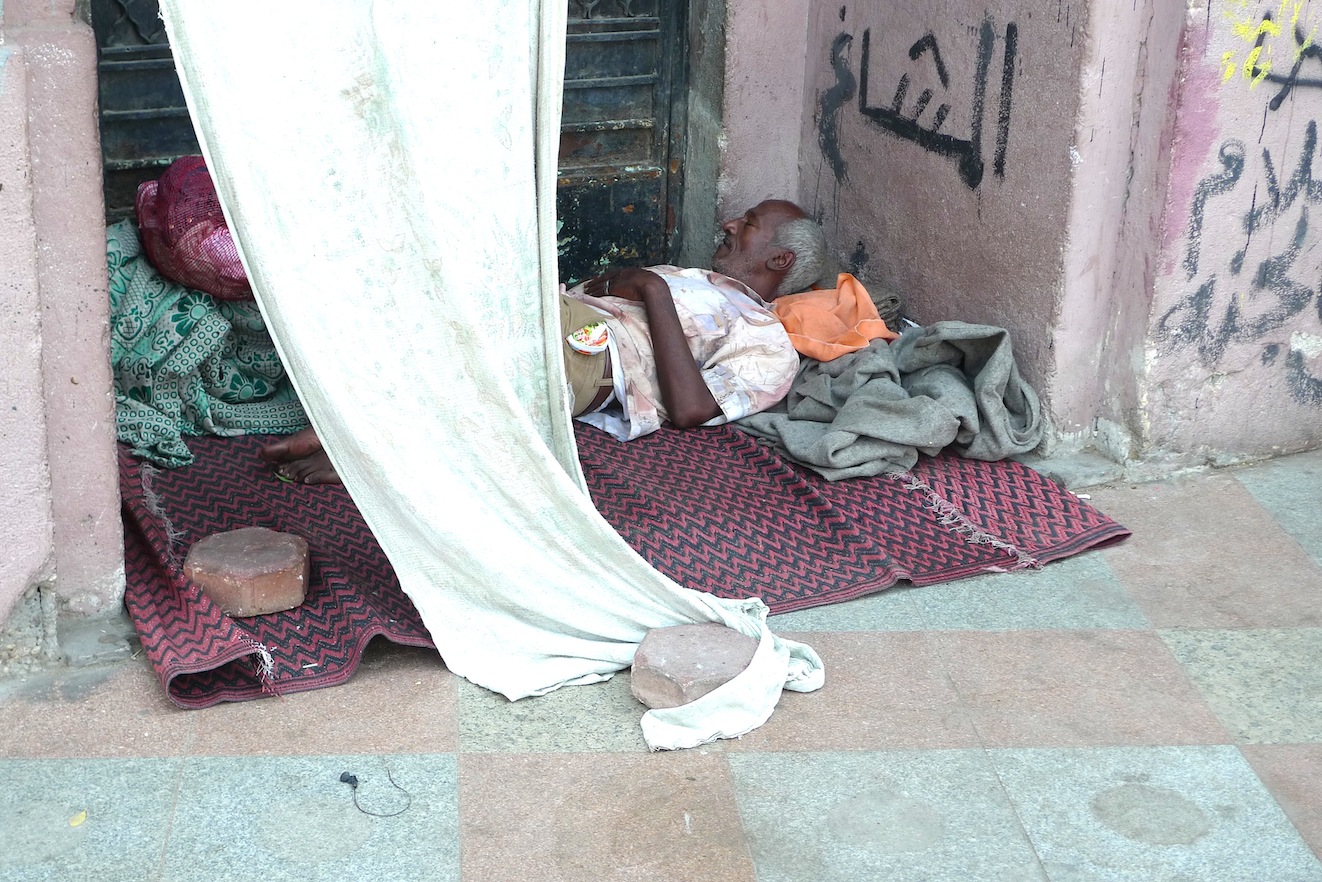
Homeless at Tahrir Square in Cairo.


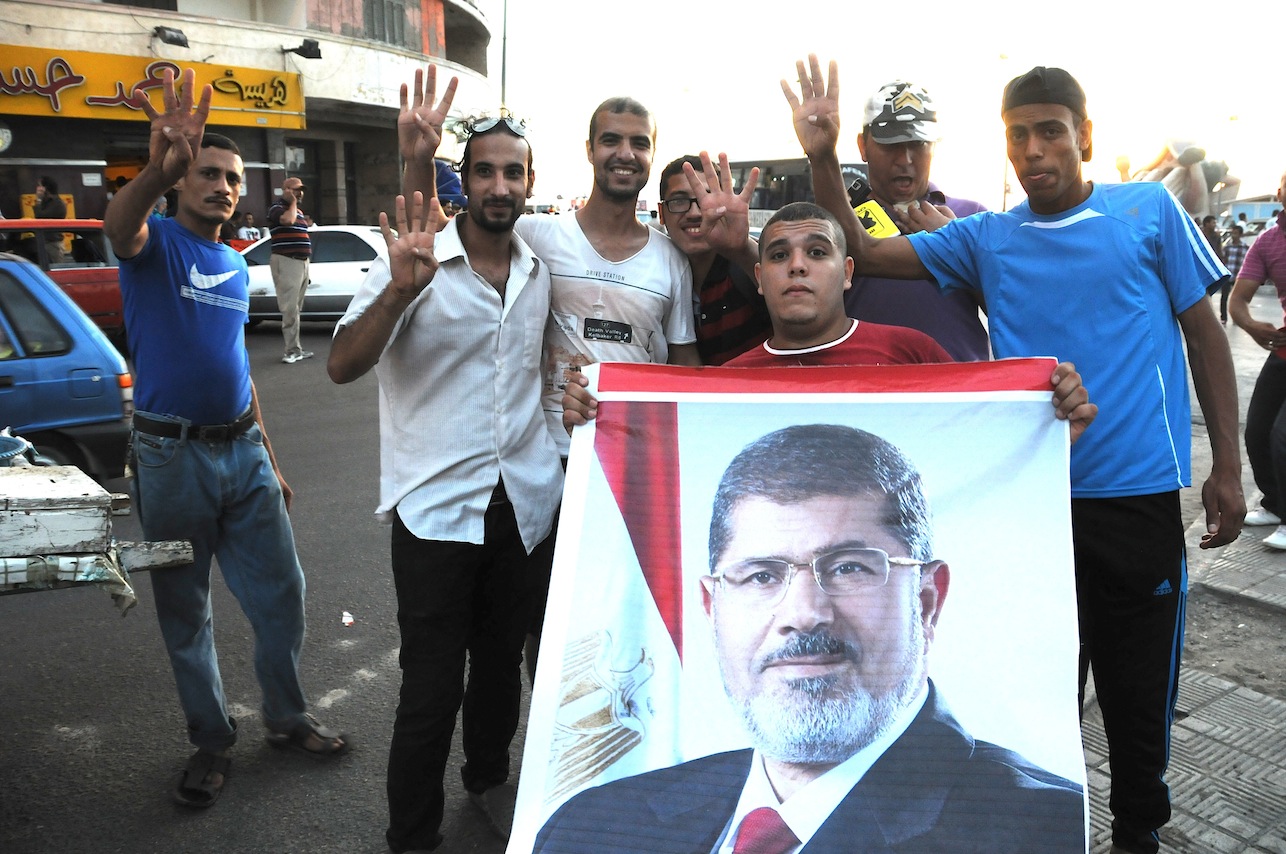
Faces of the Muslim Brotherhood in Alexandria.


Endless military institutions.


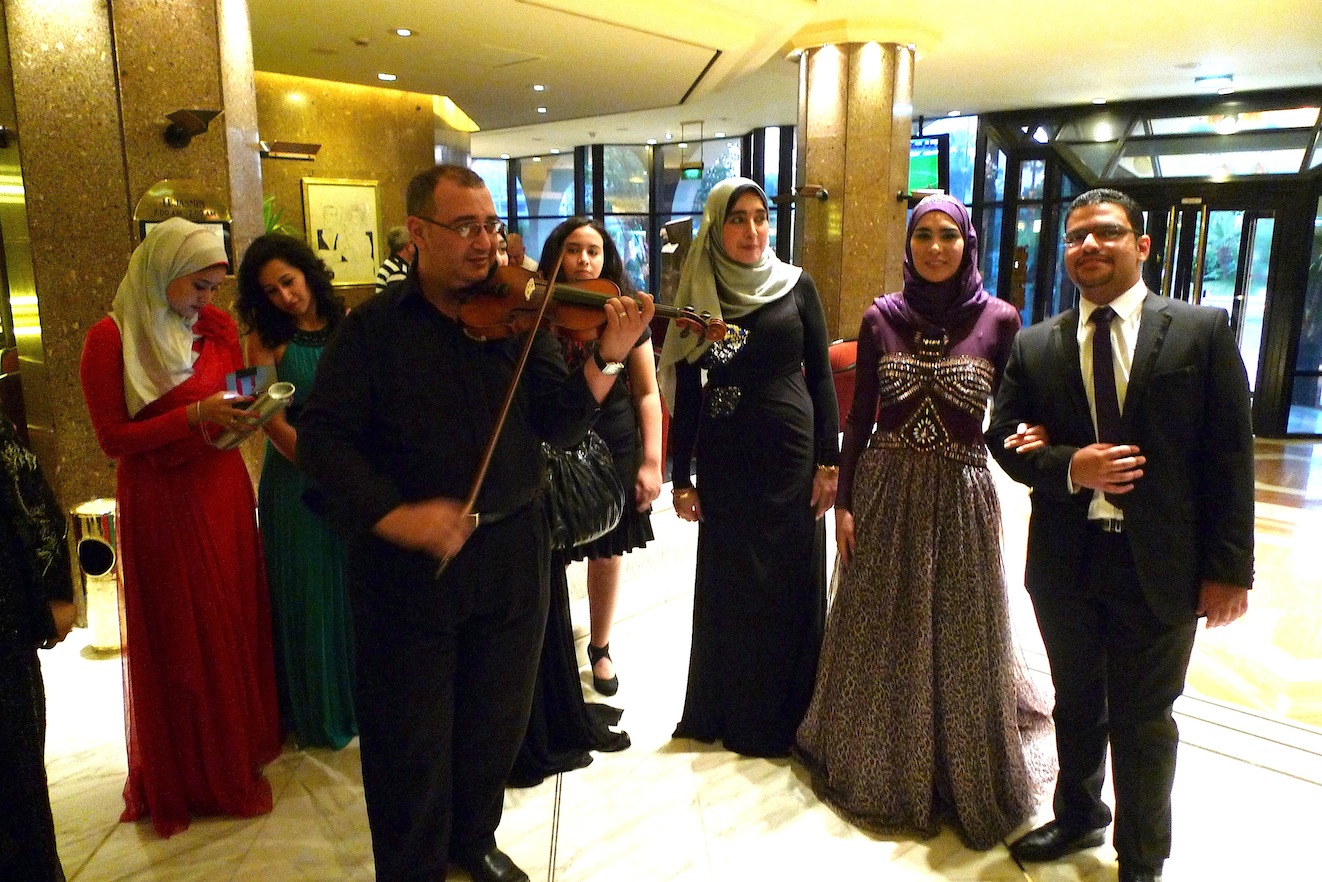
Egyptian wedding during the national upheaval.


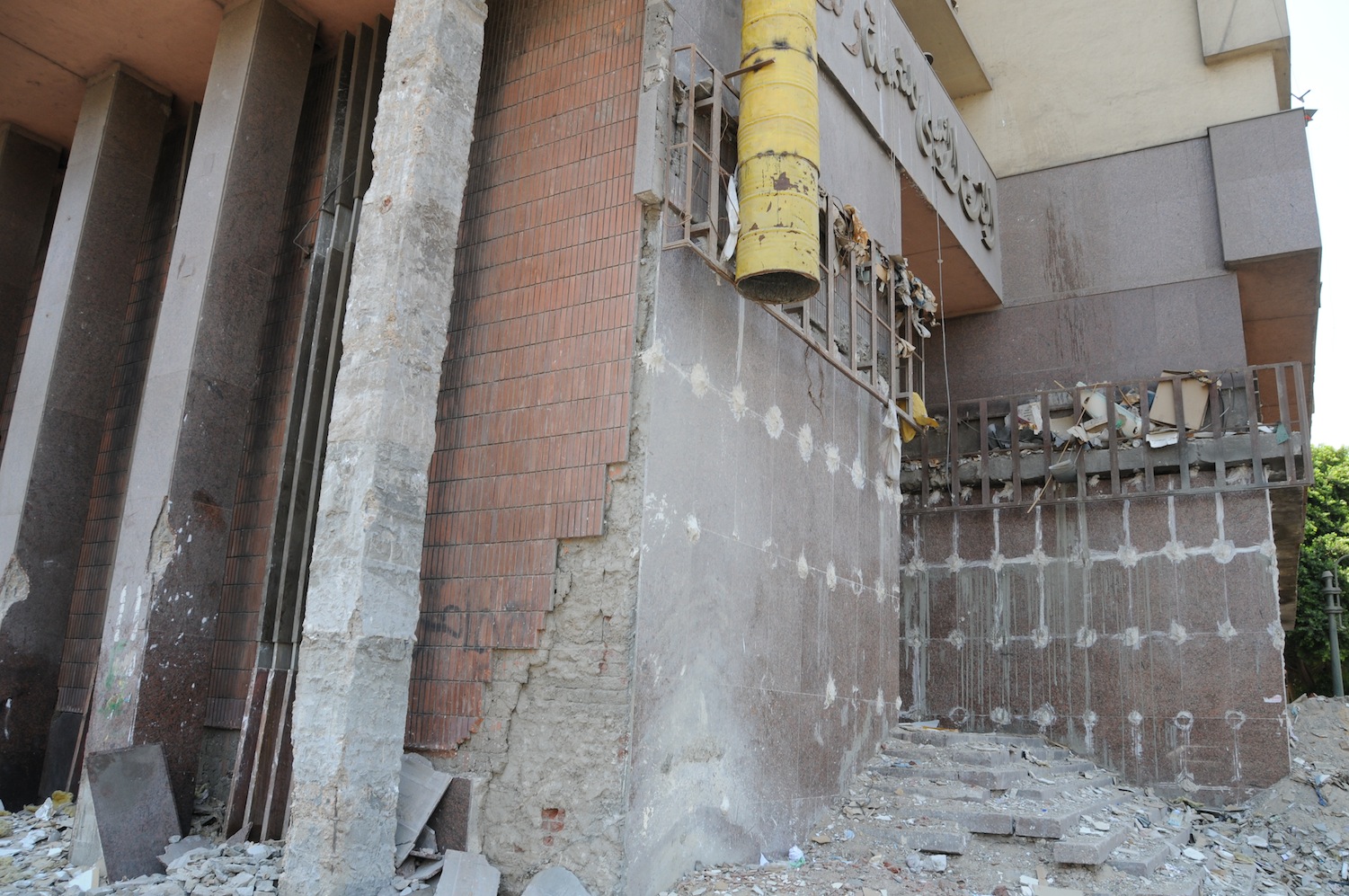
Destroyed building next to Cairo wall.


Cairo street scene.


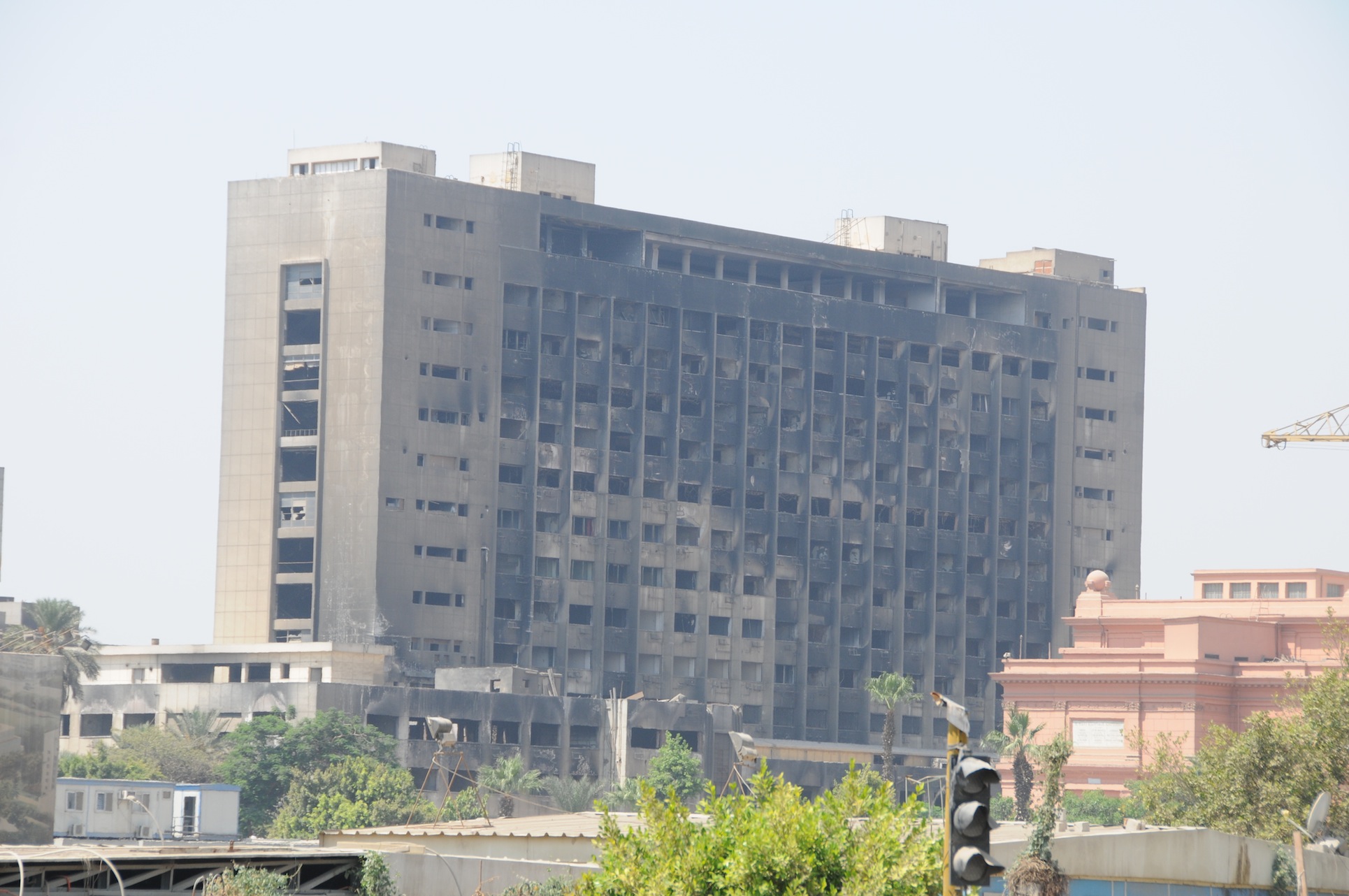
Burned down government building in Cairo.


“..and then they go and die.”


Metal rod and the Muslim Brotherhood tough guys in Alexandria.


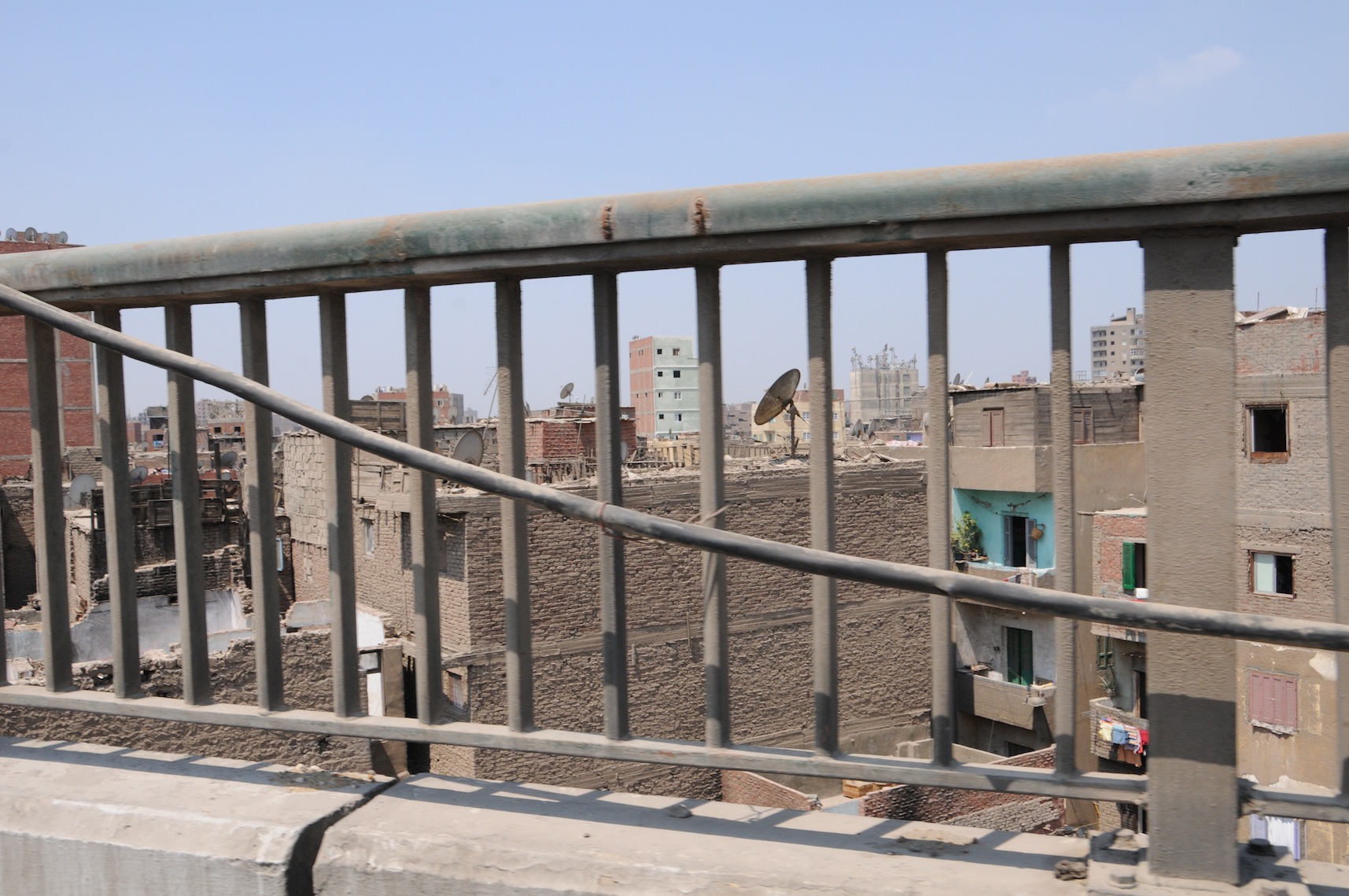
Middle class dwellings by local standards.


Muslim Brotherhood in Alexandria – and they go!


Near Tahrir Square.


Omni-present military.


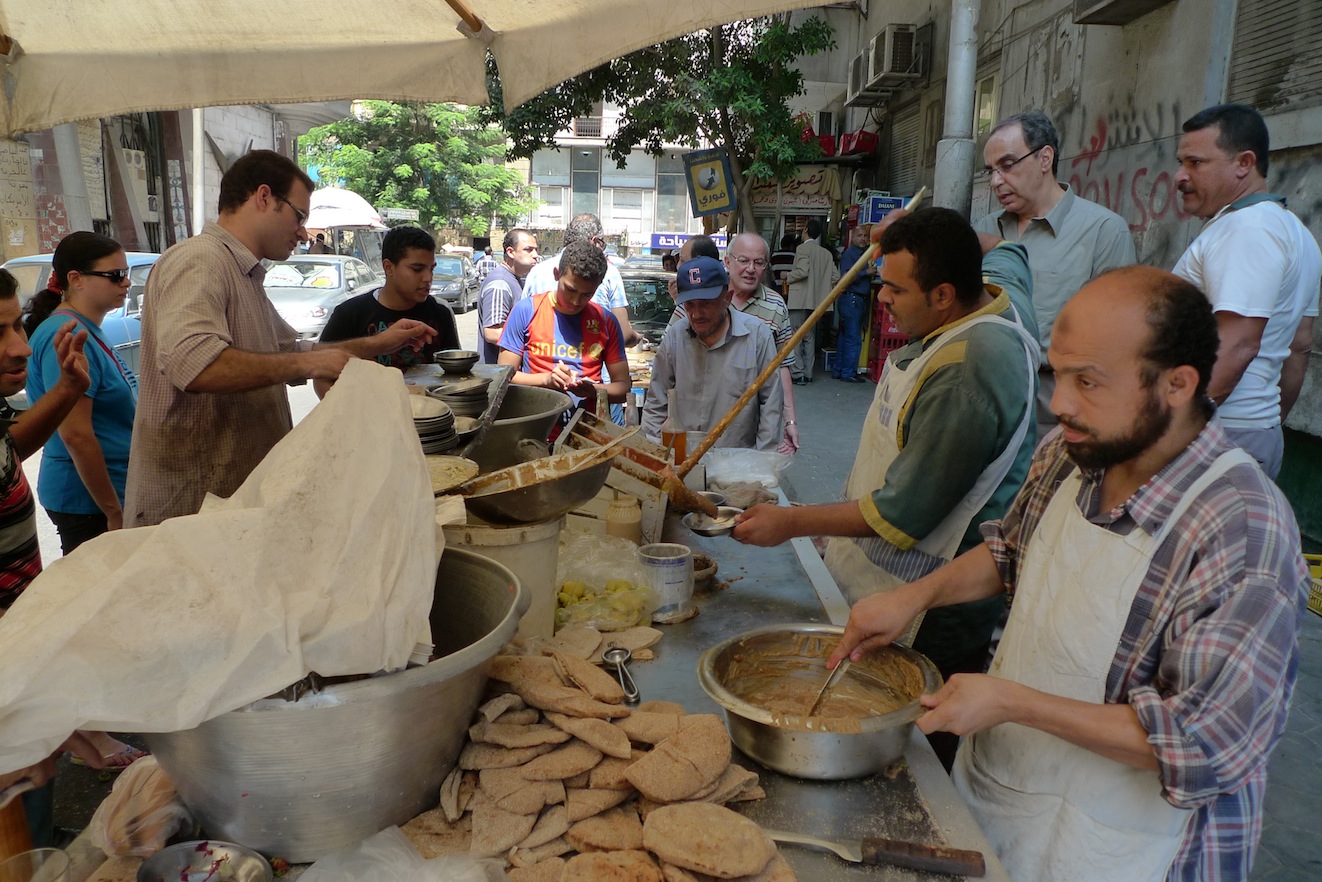
Dining outside.


A peaceful city?


Recruiting new young members to Revolutionary Socialist Organization.


Cairo wall, protecting US Embassy.


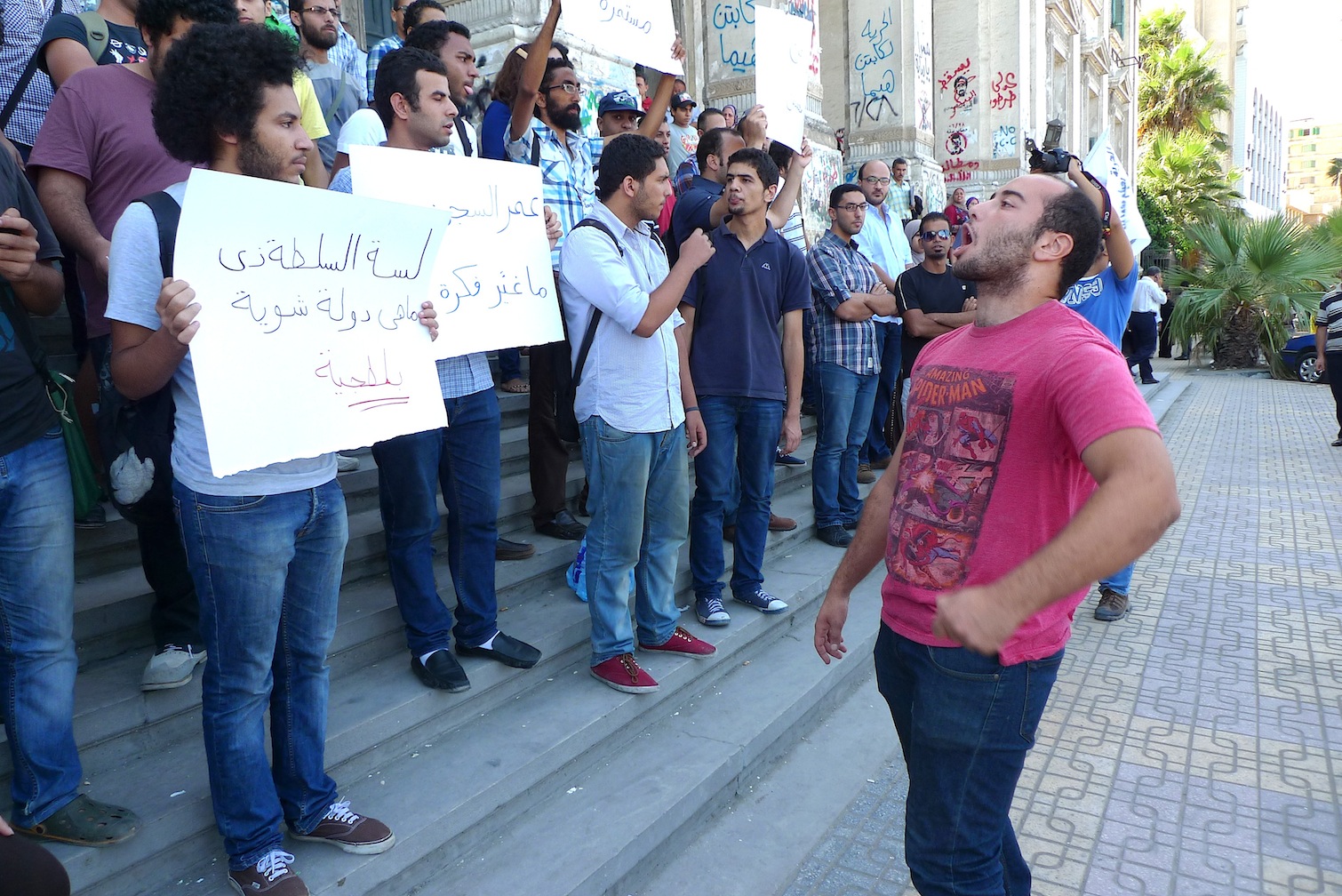
Young people protesting disappearance of an activist.


What are they afraid of?


Wassim Wagdy one of the leaders of Revolutionary Socialist Organization.


Walls protecting government buildings.


Two opposition figures.


Tough boy from the Muslim Brotherhood.


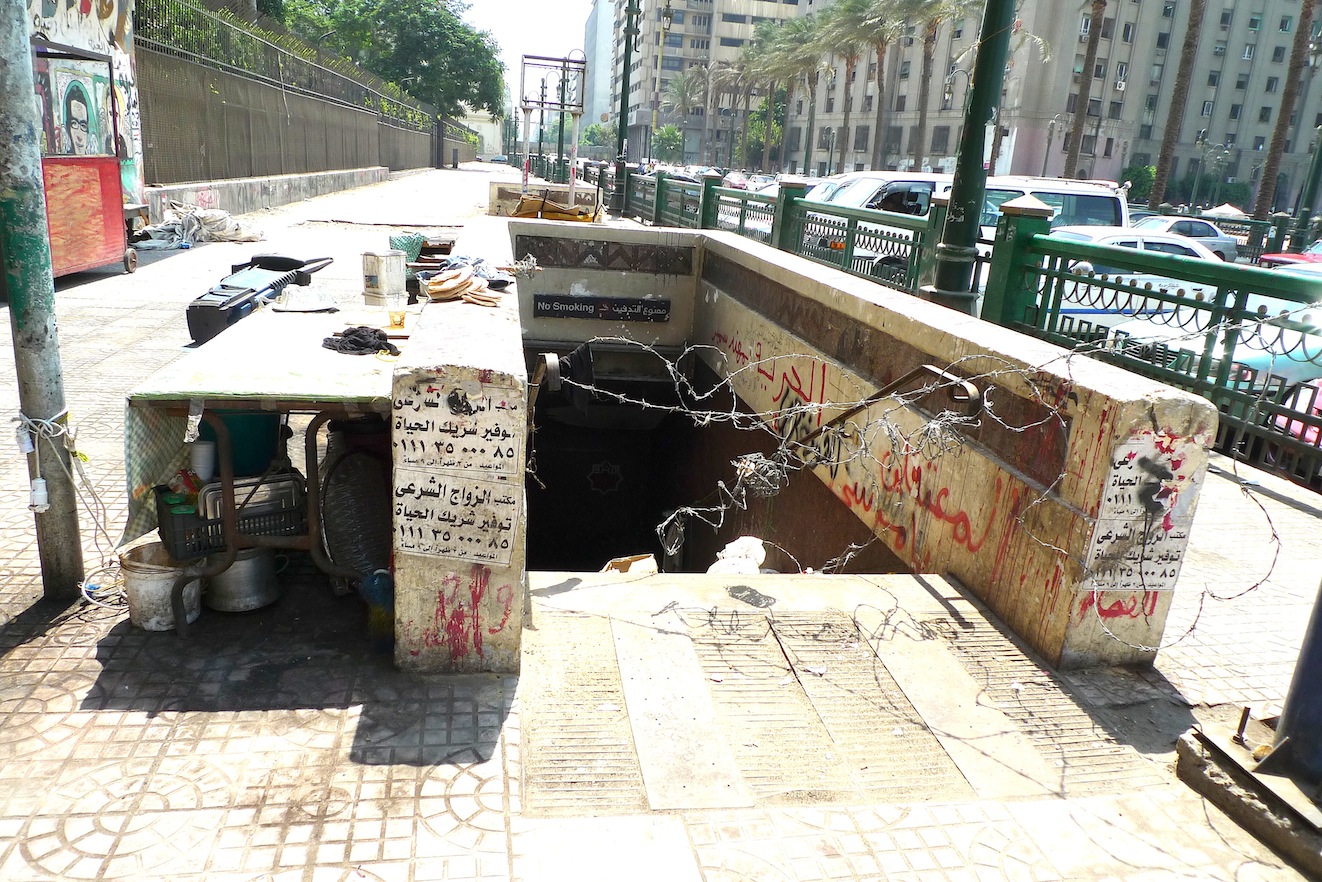
This used to be metro station.


They want Morsi back.


The Muslim Brotherhood riot in Alexandria.


That day, two people died…

Andre Vltchek is a novelist, filmmaker and investigative journalist. He covered wars and conflicts in dozens of countries. His discussion with Noam Chomsky On Western Terrorism is now going to print. His critically acclaimed political novel Point of No Return is now re-edited and available. Oceania is his book on Western imperialism in South Pacific. His provocative book about post-Suharto Indonesia and market-fundamentalist model is called “Indonesia – The Archipelago of Fear”. He just completed feature documentary “Rwanda Gambit” about Rwandan history and the plunder of DR Congo. After living for many years in Latin America and Oceania, Vltchek presently resides and works in East Asia and Africa. He can be reached through his website or his Twitter.

Agitprop NYTimes-style: Syria Through a Busted Lens


New York Times on Syria: All The Propaganda Fit to Print

by Bill Van Auken - WSWS

In a front-page article Tuesday, the New York Times reported that a United Nations report released the day before on the August 21 chemical weapons attack in the suburbs of Damascus “strongly implicated the Syrian government.”

In fact, the report did no such thing. The story’s headline, “UN implicates Syria in using chemical weapons,” is a cynical distortion of reality tailored to meet the needs of the US government for war propaganda.

While the UN inspectors reported “clear and convincing evidence” that surface-to-surface rockets carrying sarin gas were used in the attack, the report provided no indication as to whether it was government forces that fired these rockets, or the Al Qaeda-led “rebels” that are backed by Washington and its allies. As the report states, “The conclusion is that chemical weapons have been used in the ongoing conflict between the parties in the Syrian Arab Republic.”

These inspectors were invited into Syria by the government of President Bashar al-Assad and were set to investigate three separate sites of reported chemical weapons attack, which the Assad regime has blamed on the Islamist anti-government militias. In one of these, which took place on March 19 on the village of Khan al Assal outside Aleppo, the majority of the victims were government soldiers.

Neither the Times nor anyone else charging the Assad regime with ordering the August 21 attack have presented any explanation for why it would do so on the very day that the weapons inspectors that it had invited into Syria were beginning their work just a 15-minute walk away from the site of the attack. On the other hand, the motive for the “rebels” to stage such an attack and blame it on the government is obvious: to provoke Western military intervention in support of their flagging insurgency.

The Times article does not concern itself with such questions. Rather, it deduces from the report’s findings that only the government could have been responsible. This is based fundamentally on the assertion that the “rebel forces … are not known to possess such weapons.” It similarly quotes US ambassador to the United Nations Samantha Powers as claiming that there is “no evidence that the opposition possesses sarin.”

In fact, there is ample evidence that the rebels have both sarin and the means to deliver it with artillery and surface-to-surface missiles. Last May, Carla Del Ponte, the former UN war crimes tribunal prosecutor who is a senior member of the UN commission investigating human rights violations in Syria, reported that the panel’s investigation had indicated that “nerve gas was used by the opponents, by the rebels, and we have no indication at all that the government, that the Syrian government used chemical weapons.”

In Turkey, meanwhile, prosecutors handed down an indictment last week against a Syrian member of the Al Qaeda-affiliated Al Nusra Front and five Turkish accomplices based on charges that they had set up an operation to procure chemical components for the manufacturing of sarin gas. Videos placed on the Internet by the so-called “rebels” have shown them using gas to kill rabbits and bragging that they had such weapons and were prepared to use them.

Also last week, there was the testimony of the Belgian teacher Pierre Piccinin and Italian journalist Domenico Quirico who were released after being held hostage for five months by Islamists and the so-called Free Syrian Army (FSA). They both reported that during captivity they overheard a Skype conversation between two FSA commanders claiming responsibility for the attack for the “rebels.”

“In this conversation, they said that the gas attack on two neighborhoods of Damascus was launched by the rebels as a provocation to lead the West to intervene militarily,” Quirico, a war correspondent for the Italian daily La Stampa, told the newspaper.

As for means to deliver such weapons, Reuters news agency reported last month that “the Free Syrian Army—as well as the Al Qaeda affiliated al Nusra Front and other groups—have also been using increasingly potent captured artillery. This has included Grad surface-to-surface rockets …”

Of course none of this finds its way into the reporting of the Times, whose motto “All the news that’s fit to print” would be rendered more accurately as “All the news that fits the government’s propaganda line.”

The article distorting the findings of the UN inspectors is of a piece with the overall reporting on the Syria chemical weapons issue, which has treated US government assertions as fact while dismissing evidence to the contrary. Its byline was shared by C.J. Chivers, “senior writer” at the New York Times, where he has enjoyed a meteoric rise since coming on as a New York police reporter in 1999.

A former captain in the US Marine Corps and graduate of the Army Ranger school, Chivers was in the first Gulf War and participated in “peacekeeping operations” in Los Angeles during the 1992 riots. In a 2005 interview with mediabistro.com, Chivers spoke of sharing “a common understanding, a set of common memories, a group of ideals” with the military. He said this helped him “immensely” in his journalistic career that took him to the US interventions in Iraq, Afghanistan, Libya and Syria, as well as to Russia, where as Moscow bureau chief he covered fighting in Chechnya, the Beslan school massacre and the Andijan massacre in Uzbekistan.

Such shared “ideals” no doubt made for intimate connections with the US military-intelligence complex, but would hardly foster a critical attitude toward Washington’s war propaganda.

Similar shared “ideals” existed between the Times former correspondent Judith Miller and the US military and intelligence agencies, contributing to the newspaper’s indispensable role in promoting the lies about weapons of mass destruction that were used to drag the American people into the war of aggression against Iraq.

Meanwhile, some of the same columnists—including former Times editor and ex-Moscow bureau chief Bill Keller—who wrote in support of the Iraq war are playing the same role in relation to Syria.

Among the most persistent of these is Nicholas Kristof, who expressed deep disappointment over the deal between the US and Russia on destroying Syria’s chemical weapons having postponed what he portrays as a necessary “humanitarian intervention,” i.e., the bombardment of Damascus with Tomahawk missiles.

The Times readership, sick of Kristof’s unending Mother Teresa act, bombarded the paper with comments expressing their opposition to war and revulsion with the columnist’s liberal war propaganda. Acknowledging that he had “obviously offended many readers by supporting missile strikes on Syria,” he was forced to devote an entire column to defending himself and the proposed war, including by promising that it would cheap.

He added that it was “Syrians, led by the Syrian government in exile who are pleading for American airstrikes.” This is hardly surprising. A bunch of hand-picked US collaborators, residing far from where any missile will strike, are in favor of a military intervention that they hope will put them in power.

Of course none of these reporters or columnists even hint that US imperialism could have any other motive for intervening in Syria than humanitarianism and abhorrence for chemical weapons, or that the present intervention has anything to do with the previous wars in Afghanistan, Iraq and Libya or with wars Washington is preparing against Iran or Russia.

The Syria coverage is only the most glaring and consequential example of how the Times massages the news to fit the interests of the American ruling establishment.

This has emerged clearly in relation to the revelation of state crimes and wholesale domestic spying by WikiLeaks and Edward Snowden, in which the paper has combined character assassination with effective censorship.

On Monday, the Times public editor Margaret Sullivan was compelled to respond to a barrage of emails from readers demanding to know why the newspaper had failed to write one line about the secret NSA documents released by Snowden showing that the agency was funneling raw data, including the telephone calls, emails and other online communications of American citizens, to Israeli intelligence.

“Friends of mine who never before believed that newspapers suppressed the truth are shocked by the evidence before them,” wrote one reader.

Sullivan reports a discussion on the matter with managing editor Dean Baquet, who told her that the story wasn’t “significant or surprising” and that the paper had more important things to do, such as “cover the turmoil in Syria.”

In other words, the NSA-Israel story was news that didn’t “fit” the Times overarching propaganda line in favor of a war in Syria that is intimately bound up with Israeli interests.

In more than 10 years, the stench from the journalistic crimes carried out by Judith Miller and Bill Keller in promoting the lies used to justify the Iraq war to the public has still not left the offices and newsroom of the New York Times. Now it is at it again in Syria, functioning today as an even more open and direct propaganda arm of the US government.

Copyright © 1998-2013 World Socialist Web Site - All rights reserved

A New Day for Labour? What Unifor Means for the Way Canada Does Business

The Economy, Labour and the 2015 Canadian Election

by Murray Dobbin - CounterPunch

With the formation Unifor, a “new kind of union” and the country’s largest private sector union, there is at least a chance that the long slumber of the labour movement is over. An organization that big, with a radically new mandate, cannot help but influence developments elsewhere in the movement. The largely complacent leadership of other large unions will ether be inspired by Unifor’s approach, or be forced to recognize that change is in the offing – which might just mean their replacement.

One key part of that mandate is the idea of community chapters, consisting of any workers who want to join and focused not just on the workplace but on the community. While dramatic membership declines in the private sector union world is clearly a motivating factor in Unifor’s founding, a core part of the response to the crisis is to up the ante regarding social unionism – that tradition of unions engaging in the social and political life of the country.

One of the strongest motivating factors behind Unifor, and a wide variety of other initiatives being undertaken, is the desire to rid the country of the Harper government in 2015. If that is indeed a key objective – and it must be – then perhaps the most important element of this social unionism needs to be to focus as much attention on the economy as possible, to engage the media, the public and political parties in a broad discussion about the catastrophic economic policies of the Harper government.

There are two good reasons for this suggested focus. First, the economy simply isn’t working for working people and hasn’t been for almost thirty years. Wage (and salary) earners have suffered enormously since the so-called free trade deal with the US. Incomes have been literally flat since even before manufacturing jobs began to disappear. A high-wage, value-added economy focused on building resilience and addressing climate change could turn things around over time.

There is a second reason for Unifor and labour in general to focus on the economy. It is Stephen Harper’s only card heading into the 2015 election. It is stunning that Harper still gets the highest polling marks for economic management given what his policies have done. But that is exactly why he has spent over $100 million of taxpayers’ money drilling “Canada’s Economic Action Plan” deep into people’s consciousness. Even people living in or facing poverty have been brainwashed into accepting this absurdist conclusion.

Take away Harper’s advantage on the economy and he has virtually nothing to replace it to get elected. His agenda is one of dismantling, not building. He is unlikeable. The senate scandal has hurt him badly. People do not trust him.

In fact, Harper doesn’t actually have what would conventionally be called an economic policy. With the exception of three areas of the economy – military spending, the resource sector and real estate – Harper is an economic libertarian who would rather jump off a bridge than implement an industrial strategy. Maximizing the extraction of resources (mostly oil and gas) promoting a permanent war economy, and manipulating real estate. That’s it. If you aren’t a part of any of these sectors, then consider yourself and your employer on your own.

Harper is extremely vulnerable in all three of these areas. On resources, especially the tar sands, the Dutch disease is real. Despite desperate efforts by right-wing think tanks and other Harper stooges to deny it, the billions invested in the tar sands have affected manufacturing. While its effects have moderated with the recent decline of the dollar the hell-bent-for-leather development of the tar sands distorts the economy and the allocation of capital.

In 2006 Harper immediately upon his first mandate started shifting billions into new weapons systems. His 2008 Canada First Defence Strategy revealed a staggering $500 billion military expansion over 20 years – a build up that includes stealth fighters, tanks, drones, military satellites and ships. Part of this strategy is to create a huge military manufacturing base to supply weapons to the world. Aside from the repugnant moral implications of selling stuff designed exclusively to kill people and destroy things, this is one of the worst way to create jobs. A US study revealed that a billion dollars spent by government on the military created 11,200 jobs compared to 16,600 for clean energy and 26,700 for educational services. One reason for the disparity is that a large percentage of military spending is spent outside the country while virtually every education dollar is spent here.

Harper’s principle Action Plan for the economy is praying that the real estate sector doesn’t implode. But implode it will and it could come before the 2015 election. Seventeen percent of mortgage holders will be in default of their loans if interest rates rise just 1.5%. While Harper and his finance sidekick Jim Flaherty continue to take credit for “cooling down” the market it was Flaherty who set it on fire in the first place with 40 year, no down payment mortgages. Relying on this sector is tantamount to playing high stakes poker – and no one wins forever. Moreover, promoting this sector is what has driven millions of Canadians into record levels of housing debt – once again, distorting the economy.

A revitalized labour movement needs to challenge all these policies but it has a unique role to play in exposing another set of policies implemented by both the Liberals and Conservatives: so-called labour flexibility. It is this bundle of policies that account for much of the gross income inequality (now matching that which existed in 1928) and the labour movement seems to have long since quit addressing them. It is time to get back to defending all working people – and the Unifor model has great potential for doing just that. Labour standards, minimum wage rate, welfare, EI, pension erosion, and the threat of three more corporate rights agreements about to be signed should all be on the agenda.

Dramatic cuts to EI and social assistance since the mied-1990s has severely weakened the bargaining power of individual workers. Labour standards are now rarely, if ever, enforced by business-friendly governments. Maybe Unifor should re-start the fight for the 40 hour week – a thing of the past for over half of Canadian workers. Gutted EI and welfare means workers are obliged to put up with intolerable working conditions and abusive bosses. Perhaps Unifor’s community chapters could picket particularly nasty employers – while at the same time taking up the cause of ending poverty in Canada by demanding that the minimum wage meet the standard of a living wage and that EI and social assistance be restored to their former levels.

Unifor says it will spend $50 million over 5 years to organize more workers into unions. That’s an amazing perhaps unprecedented commitment. Combined with a public campaign to promote high paying jobs and an appropriate industrial strategy such a drive could have a real impact. But as unions already know, the impact of Liberal and Conservative economic policies has been the loss of such jobs and their replacement with low-paying, part-time, temporary jobs in the service sector (Canada has the second highest proportion of low-paying jobs in the industrialized world – behind only the US). These are the positions that are the hardest to bring under the conventional collective bargaining umbrella.

If unions don’t address the economic policy front in their struggle for a more equal society, they will be faced with trying to organize workers in ever more low paying jobs. I wonder if taking $10 million of that $50 million and educating/mobilizing Canadians for a high-wage economy might make the $40 million remaining more effective.

Perhaps the toughest task facing a revitalized labour movement is changing the political culture regarding the role of unions. While many workers, especially young ones, want to join a union too many others have been sucked into the race to the bottom mentality – attacking public sector workers along the lines of “I don’t have job security or a pension, why should they?” Labour has to work overtime on reversing this self destructive mind-set.

Workers don’t need to be told they’re being screwed. They know that.

They need to know who is doing it to them. A sustained, highly public, well-financed campaign could help accomplish that – and create line-ups at the union door.

MURRAY DOBBIN, now living in Powell River, BC has been a journalist, broadcaster, author and social activist for over forty years. He now writes a bi-weekly column for the on-line journals the Tyee and rabble.ca. He can be reached at murraydobbin@shaw.ca

Lehman Brothers and the Greatest Act of Terrorism Ever Suffered Upon the American People


Financial Terrorism

by Mike Whitney - CounterPunch

The Lehman Brothers default on September 15, 2008, was the biggest incident of financial terrorism in US history. When Secretary of the Treasury Henry Paulson and Fed chairman Ben Bernanke convened an emergency meeting with leading members the US Congress and their aides on September 18, 2008, they had already developed a “break the glass” strategy for extorting $700 billion dollars from US government to make up for the losses on trillions of dollars of toxic “subprime” assets that were at the center of Wall Street’s massive predatory lending swindle.

The plan was to precipitate a financial catastrophe so immense that elected officials would comply with Wall Street’s demands as presented by former Goldman Sachs CEO, Paulson. To that end, Bernanke warned the congressional assembly that if they refused to meet their extortionist demands of $700 billion no-strings-attached bailout, that “We may not have an economy on Monday”. This was clearly a lie that was intended to coerce congress. As it happens, the so called Troubled Asset Relief Program or TARP was not implemented for a full month later (October 14th). The economy was still intact although the markets and Bernanke’s friends on Wall Street had suffered severe losses.

Naturally, this analysis veers from the specious narrative presented in the MSM, which characterizes the behavior of Paulson and Bernanke as selfless and even “heroic”. Nothing could be further from the truth. The two men deliberately blew up the century-old investment bank to blackmail congress and to provide emergency assistance to the many broken and insolvent banks and financial institutions who were at the end of their rope. Bernanke himself alluded to the dismal condition of the country’s biggest lenders in testimony to the Financial Crisis Inquiry Commission in 2011. Here’s what he said:

“As a scholar of the Great Depression, I honestly believe that September and October of 2008 was the worst financial crisis in global history, including the Great Depression. If you look at the firms that came under pressure in that period . . . only one . . . was not at serious risk of failure. . . . So out of maybe the 13, 13 of the most important financial institutions in the United States, 12 were at risk of failure within a period of a week or two.”

They were all broke, according to Bernanke. All, except one. Even worse, “12 were at risk of failure within a period of a week or two”, so something had to be done fast, which is why both men were committed to creating a big enough implosion to scare congress in compliance.

Keep in mind, none of this was secret. It had been more than a year since the French bank BNP Paribas stopped redemptions on hard-to-price mortgage backed assets which were steadily losing value. That sent up red flags on Wall Street and in markets across the globe. PIMCO’s former managing director, Paul McCulley gives a good account of what happened on that day in a speech he delivered at the 19th Annual Hyman Minsky Conference on the State of the U.S. and World Economies. Here’s an excerpt from McCulley’s speech:

“If you have to pick a day for the Minsky Moment, it was August 9. (2007) And, actually, it didn’t happen here in the United States. It happened in France, when Paribas Bank (BNP) said that it could not value the toxic mortgage assets in three of its off-balance sheet vehicles, and that, therefore, the liability holders, who thought they could get out at any time, were frozen. I remember the day like my son’s birthday. And that happens every year. Because the unraveling started on that day. In fact, it was later that month that I actually coined the term “Shadow Banking System” at the Fed’s annual symposium in Jackson Hole.
“It was only my second year there. And I was in awe, and mainly listened for most of the three days. At the end….I stood up and (paraphrasing) said, ‘What’s going on is really simple. We’re having a run on the Shadow Banking System and the only question is how intensely it will self-feed as its assets and liabilities are put back onto the balance sheet of the conventional banking system.’” (Paul McCulley, 19th Annual Hyman Minsky Conference on the State of the U.S. and World Economies)

August 9, 2007. Game over. From that point on, the price of mortgage-backed assets continued to slide wiping out trillions of dollars of value and plunging most of Wall Street’s banks deep into the red. This is why the Fed started doling out liquidity to everyone through its discount window whether they were regulated or not, because they had to stanch the bleeding and stop the de facto run on the shadow banking system. Despite the Fed’s efforts, 12 of the 13 biggest financial institutions in the country were dead broke and “at risk of failure within a period of a week or two.” This is why Paulson and Bernanke decided to throw Lehman overboard, because it was the only way they felt they could win support from Congress for the $700 billion bailout. Oddly, the New York Times financial scribe, Joe Nocera, seems to think that Paulson and Bernanke should be applauded for their initiative. Here’s a clip from an article by Nocera in 2009, a year after the Lehman crashed.

“In the months between Bear Stearns and Lehman Brothers, Mr. Paulson and Mr. Bernanke had approached Congressional leaders about the need to pass legislation that would give them a handful of additional tools to help them deal with a larger crisis, should one ensue. But they quickly realized there was simply no political will to get anything done. After Lehman, however, Mr. Paulson and Mr. Bernanke were able to persuade Congress to pass a bill that gave the Treasury Department $700 billion in potential bailout money — which Mr. Paulson then used to shore up the system, and help ease the crisis. Even then, it wasn’t easy; it took two tries in the House to pass the legislation. Without the crisis prompted by the Lehman default, it would have been impossible to pass a bill like that. That is one reason the Lehman default turned out to be a good thing.” (Lehman Had to Die So Global Finance Could Live”, NYT)

So the Lehman default was a “good thing” because it paved the way for TARP? There’s no question where Nocera’s loyalties lie, is there?

But what is Nocera saying? He’s saying that Paulson had no chance of getting congress to submit to his absurd demands unless they were threatened with a full-system meltdown, a crisis on a scale of 9-11. That speaks to the motive behind Paulson’s actions. Here’s more from Nocera:

“Almost everyone I’ve ever spoken to in Hank Paulson’s old Treasury Department agrees that without the immediate panic caused by the Lehman default, the government would never have agreed to make the loans needed to save A.I.G., a company it knew very little about. In effect, the Lehman bankruptcy caused the government to panic, which in turn caused it to save the firm it really had to save to prevent catastrophe. In retrospect, if you had to choose one firm to throw under the bus to save everyone else, you would choose Lehman.” (Lehman Had to Die So Global Finance Could Live”, NYT)

Yes, Joe, the ”Lehman bankruptcy caused the government to panic”, because it was designed to make them panic. It’s called terrorism, financial terrorism.

Nocera is being deliberately misleading here. “The government never agreed “to make the loans to A.I.G.” How could they? AIG collapsed the day after Lehman blew up, long before the TARP was approved. The Fed authorized the Federal Reserve Bank of New York to lend up to $85 billion to the AIG under Section 13(3) of the Federal Reserve Act. In other words, the Fed invoked emergency powers under some obscure clause (“unusual and exigent”) in their charter, to pull out all the stops and save AIG from the chopping block. But they refused to do the same for Lehman a day earlier. Why?

And why was Lehman denied access to the Fed’s Discount Window even though the facility was explicitly designed for struggling banks like Lehman.. And why was Lehman was blocked from becoming a bank holding company, even though Morgan Stanley and Goldman Sachs were allowed to make that same change just six days later. And why were the short sellers were allowed to devour Lehman with impunity driving down the value of its stock down by 75% in a week, but were banned 4 days later when they took aim at G-Sax and Morgan Stanley. Get a load of this pretentious statement from the SEC banning short selling on September 19, 2008:

“SEC Halts Short Selling of Financial Stocks to Protect Investors and Markets

Washington, D.C., Sept. 19, 2008 — The Securities and Exchange Commission, acting in concert with the U.K. Financial Services Authority, took temporary emergency action to prohibit short selling in financial companies to protect the integrity and quality of the securities market and strengthen investor confidence. The U.K. FSA took similar action yesterdayThe Commission’s action will apply to the securities of 799 financial companies. The action is immediately effective.

SEC Chairman Christopher Cox said, “The Commission is committed to using every weapon in its arsenal to combat market manipulation that threatens investors and capital markets. The emergency order temporarily banning short selling of financial stocks will restore equilibrium to markets. This action, which would not be necessary in a well-functioning market, is temporary in nature and part of the comprehensive set of steps being taken by the Federal Reserve, the Treasury, and the Congress.”

That ought to give you a lot of confidence in our regulatory agencies, eh? Four days after the Lehman faced the firing squad, everyone else gets a pardon. Nice. No politics in that decision!

Of course, there was an offer to buy Lehman’s by Barclay’s, but that mysteriously fell apart at the 11th hour when UK regulators refused to approve the deal. Think about that for a minute. We are asked to belief that “unnamed” UK regulators put the kibosh on a deal that would have kept the stock market crashing and mitigated the financial crisis which according to the Dallas Federal Reserve cost upwards of $14 trillion. Do you find that a little hard to believe? I do.

The deal fell apart, because Paulson torpedoed it, that’s why. Just like the deal with Bank of America (and Lehman) fell apart. In fact, BoA CEO Ken Lewis wouldn’t even answer (Lehman CEO) Dick Fuld’s phone calls on the weekend of the bankruptcy. Why? Because the fix was already in, that’s why. Paulson wanted his own 9-11, and he got it.

Paulson has defended his decision to let Lehman fail saying that neither he nor Bernanke had the legal authority to save Lehman even though they had bailed out Bear Stearns just months earlier under similar conditions. Even though they bailed out AIG the NEXT DAY under similar conditions (under trumped up emergency powers) Even though according to the New York Times The Treasury had $50 billion exchange stabilization fund which could have been used in a pinch. Even though the Fed was throwing around money like a madman, dumping trillions into their lending facilities and committing $330 billion in swap lines with Bank of Canada, Bank of England, Bank of Japan, Danmarks Nationalbank, ECB, Norges Bank, Reserve Bank of Australia, Sveriges Riksbank, and Swiss National Bank Swap lines outstanding now total $620 billion.

Can you believe it? The Fed was doling out money hand over fist to foreign banks while pretending they didn’t have the authority to save Lehman! What a freaking joke. And, as we said earlier, the Fed used its emergency powers –which it conferred on itself, by the way– to bail out AIG the very next day. (Still, none of the recent recaps of the Lehman incident in the MSM have challenged Paulson’s claim that he didn’t have the legal authority.)

Now take a look at this excerpt from a recent interview in Bloomberg with Paulson:

“I remember waking up very early the morning of Sept. 15 in New York and looking out the window at all the people on the street walking to work….. their lives were about to change in very profound ways.

Lehman intensified the crisis — it was a symptom, not the cause. I don’t subscribe to the “domino theory” when it comes to Lehman. My former colleague, Ed Lazear, had a line that’s more apt: The crisis was like a giant popcorn popper, and it had been heating these kernels for a year as the crisis went on. Lehman might have been the first to pop, but we knew that weekend that Merrill Lynch and AIG were going to pop next, and many others in the U.S. and Europe were not far behind.”

Okay, so Paulson confirms our theory that the banks were broke. Good. Here’s more from Paulson:

“That week was like no other week I’ve ever had. We were dealing with multiple problems — the need to prevent the failure of AIG, the likely impending failure of other financial institutions, the need to prevent the implosion of money-market funds, and the need to go to Congress to request emergency authorities.

We had been working all week on how to request what we needed from Congress. At the heart of it was the ability to buy illiquid assets from financial institutions. We were talking in terms of hundreds of billions of dollars.”

It was Thursday evening, Sept. 18, when Ben Bernanke and I met with the congressional leaders. So far many of them had not seen the financial crisis. It hadn’t rippled through to their constituents. Ben and I painted a picture of a financial system which was frozen. Banks weren’t lending to each other. Credit wasn’t flowing normally.” (Bloomberg)

This is where it gets interesting. The day before Lehman collapsed, that is, Sunday, September 14, the International Swaps and Derivatives Association (ISDA) offered an exceptional trading session to allow market participants to offset positions in various derivatives on the condition of a Lehman bankruptcy later that day.” (Wikipedia)

Pretty convenient, eh? So a lot of the banks who would have suffered catastrophic losses by counterparty deals gone south, were able to hedge their bets the day before the volcano blew. Doesn’t sound like the people in charge had already decided how the deal was going to go down?

Indeed. And what about Paulson’s claim that “Ben and I painted a picture of a financial system which was frozen. Banks weren’t lending to each other. Credit wasn’t flowing normally.”

Yeah, it was frozen, because Bernanke was freezing it…deliberately! The Fed chairman began to drain billions of dollars of liquidity from the system to increase the stress in interbank lending and push Libor higher. (Some of the economics blogs were monitoring this fiasco closely at the time wondering what the hell Bernanke was doing.) Bernanke and Paulson were exacerbating the crisis to put pressure on congress. And as far as the trouble in the commercial paper market. According to economist Dean Baker “If the commercial paper market were to shut down, most corporations would lack the ability to meet payroll or pay their bills”. The funny thing is, the Fed had the ability to fix the problem even before TARP was approved, in fact, Bernanke was using the liquidity squeeze in commercial paper and in the money markets to pour more gas on the fire so that congress would cave in. Baker sums up Bernanke’s deceptive role in an article titled “Ben Bernanke; Wall Street’s Servant”:

”Bernanke deliberately misled Congress to help pass the Troubled Asset Relief Program (TARP). He told them that the commercial paper market was shutting down, raising the prospect that most of corporate America would be unable to get the short-term credit needed to meet its payroll and pay other bills. Bernanke neglected to mention that he could singlehandedly keep the commercial paper market operating by setting up a special Fed lending facility for this purpose. He announced the establishment of a lending facility to buy commercial paper the weekend after Congress approved TARP.” (“Ben Bernanke; Wall Street’s Servant”, Dean Baker, Industry News.org)

Baker makes a pretty damning accusation here, but is he right, was Bernanke really exacerbating the troubles in the commercial paper market to twist congress’s arm?

A quick check of the St Louis Fed’s “Financial Crisis Timeline” tells us everything we need to know. On October 3, 2008, Congress passed the Emergency Economic Stabilization Act which established the $700 billion Troubled Asset Relief Program (TARP). Four days later (October 7, 2008) the Fed announced the creation of the Commercial Paper Funding Facility (CPFF), “which will provide a liquidity backstop to U.S. issuers of commercial paper…”.Two weeks after that, (October 21, 2008) Bernanke launched the Money Market Investor Funding Facility (MMIFF) to purchase “U.S. dollar-denominated certificates of deposit and commercial paper” which will relieve the stress lingering in the money markets.

Looks like Baker is right after all; it was a stunt designed to blackmail congress. Bernanke used the problems in the commercial paper and money markets to intensify the crisis and force Congress to sign over the loot. Then– as soon as TARP passed–he dialed down the pressure and backstopped the entire financial system with an estimated $14 trillion in loans and other commitments. If that isn’t financial terrorism, then what is it?

*Max Kaiser coined the term financial terrorism.


MIKE WHITNEY lives in Washington state. He is a contributor to Hopeless: Barack Obama and the Politics of Illusion (AK Press). Hopeless is also available in a Kindle edition. Whitney’s story on declining wages for working class Americans appears in the June issue of CounterPunch magazine. He can be reached at fergiewhitney@msn.com.

Russia, Syria, and America's Great Game in The Levant

Syria’s New Game: The Russian Factor

by Ramzy Baroud  - PalestineChronicle.com

Many US media commentators were fairly accurate in labeling some of the language used by Russian President Vladimir Putin in his recent New York Times article as ‘hypocritical’. But mainstream US media should be the last to point out anyone’s hypocrisy as it has brazenly endorsed every military intervention unleashed by their country since World War II.

Putin’s statement “we must stop using the language of force and return to the path of civilized diplomatic and political settlement,” merits serious scrutiny. Considering that violence has been a readily available option in Russia’s own wars from Afghanistan, to Chechnya and Georgia, the language of dialogue and civilized political settlements have been rarely exercised. But, independent from that context, Putin was surely correct in his assessment of US behavior.

It was indeed difficult to point out any palpable inaccuracy in Putin’s NYT’s article published on the 12th anniversary of September 11.

“It is alarming that military intervention in internal conflicts in foreign countries has become commonplace for the United States,” Putin wrote. “Is it in America’s long-term interest? I doubt it. Millions around the world increasingly see America not as a model of democracy but as relying solely on brute force, cobbling coalitions together under the slogan ‘you’re either with us or against us.” (Interestingly, this was the same conclusion reached by the China Daily in its editorial the next day.)

Putin’s statement was not just true, but precise, highlighting the very essence that has defined US foreign policy since the end of the US-Soviet Cold War, and the US-led military campaign against Iraq in 1990-91.

The model of ‘cobbling coalitions together’ was used then as the US emerged as the lone superpower. This allowed it the space to reconfigure the world’s geopolitical scene in any way it deemed necessary and suitable to its own, but also Israeli interests. It had done so repeatedly and with little hesitation. Its invasion of Iraq in 2003 was the pinnacle of that model. Millions of people were left dead and maimed while millions more were forced to franticly run for their lives.

The US-invited horror was hardly mentioned when western‘liberal’ commentators cleverly called attention to all of Putin’s and Russia’s perceived failures. Simon Tisdall tried to take Putin to task on his piece in the British Guardian on Sep 12 by offering readers selected ‘translations’ of the Russian president’s text. Using an intellectually demeaning approach of ‘translating’ what could be obviously understood by any average reader of world affairs, Tisdall even contended with Putin’s statement that “it is extremely dangerous to encourage people to see themselves as exceptional, whatever the motivation … We are all different, but when we ask for the Lord's blessings, we must not forget that God created us equal.”

“Translation: this passage takes the biscuit for sheer chutzpah,” Tisdall wrote. But what is Tisdall’s view on the very ‘sheer chutzpah’ of invoking American exceptionalism at every turn by the US’ own leaders – from warmongers like George W. Bush to Nobel Peace Prize winners like Barack Obama. Hasn’t American exceptionalism cost the world so dearly? A lethal assortment of shocks and awes and unmanned drone warfare is all being sold in the name of human rights, democracy, and of course, in the name of God.

Putin is not exactly a peacenik, but his country has indeed succeeded in breaking, at least for now, a predictable pattern of American military interventions in the Middle East which are mostly aimed at ensuring Israel’s military and political supremacy and suppressing its foes or potential enemies. This is in addition to safeguarding US energy supplies and keeping economic contenders at bay.

For this reason it was of little surprise that the first country that U.S. Secretary of State John Kerry planned to visit following his talks with his Russian counterpart Sergei Lavrov in Geneva on Sep 14, was Israel. Kerry and Lavrov met to discuss, and later agreed to the details of the dismantling of Syria’s chemical weapons arsenal, which was understood as the only viable way to avert a US military strike. The proposal was fully Russian, thus Putin’s public relations campaign, and his NYT article. The US, alienated after years of warmongering, had to accept the Russian proposal. Any other option would have had unpredictable, but likely catastrophic outcomes. Tellingly, Kerry opted for a meeting to debrief Israeli Prime Minister Benjamin Netanyahu before conversing with his EU allies. Of course, Israel will now try to influence the pursuit of Syria’s chemical arsenal the same way the US and its western allies manipulated the UN inspectors’ work to dismantle Iraq’s non-existent nuclear weapons program.

It must have been a major disappointment for Israel’s neoconservative friends and lobbies in the US that neither war nor ‘surgical strikes’ are in the offing. It goes without saying that the lives of 100,000 Syrians or the plight of six million refugees are not a factor in their discontent. Middle East expert and author Jeremy Salt had a lot to say about the “carefully crafted (and) deceitful campaign,” unleashed by the Israeli lobby.

In “Israel’s Lobbyists Pushing Hard for another War in the Middle East,” and after a careful examination of their public statements, Salt explains the new approach used by the Israel lobby, which carefully avoided any reference to Israeli interests. The major point of the campaign is that this war is “not about Israel (but) about America’s national interest (and) about punishing a government which has used chemical weapons on its own people…”

Israel has killed too many Arabs to worry about the death of some more, and the brutality of the Syrian government or its opposition has never been a concern to Israel and its lobby. For them, another American war is yet another opportunity to knock down an old adversary, engender further chaos and bask in the glory of being ‘the only democracy in the Middle East’ among a sea of tumultuous, unruly neighbors. However, lack of appetite for intervention has thwarted the plan for now, leaving the US and Israel searching for new options to maintain their relevance in a region of quickly shifting balances.

The anger directed at Putin’s article has a lot less to do with Putin’s own legacy as a leader, and much more to do with the frustration that new players in the Middle East are now successfully involved in a ‘game’ that has for decades been dominated by if not reserved for western powers and their allies.


- Ramzy Baroud (www.ramzybaroud.net) is a media-consultant, an internationally-syndicated columnist and the editor of PalestineChronicle.com. His latest book is: My Father was A Freedom Fighter: Gaza's Untold Story (Pluto Press).

Tuesday, September 17, 2013

Israeli Police Arrest Al-Aqsa Official Sheikh Kamal Khatib

Israeli Police Kidnaps Deputy Head of Islamic Movement

by Saed Bannoura - IMEMC News

The Israeli Police arrested the deputy head of the Islamic Movement in Historic Palestine, Sheikh Kamal Khatib, and the movement’s Advisor for Jerusalem and Al-Aqsa Mosque Affairs, Ali Abu Sheikha.

The Al-Aqsa Foundation for Waqf and Heritage issued a statement revealing that the Israeli Police is accusing the two officials of “incitement that led to violence and disorder in the Al-Aqsa Mosque area”.

They will be sent to the District Court in occupied Jerusalem on Wednesday, the Foundation said.

Sheikh Khatib was kidnapped when the Police approached him as he was heading to the Al-Aqsa Mosque for evening prayers, while Sheikh Abu Sheikha was ordered to head to the Al-Maskobiyya detention and interrogation facility.

Both officials were interrogated in room 4 in Al-Maskobiyya, known as “minorities’ interrogation room”, the Al-Aqsa Foundation said.

Islamic Movement Spokesperson, Zahi Njeidat, stated that the Israeli allegations are false, and that the Israeli occupation wants sole control and domination over the Al-Aqsa Mosque.

“This is why Israel keeps kidnapping and interrogating any person who defends the mosque, and exposes the illegal Israeli plans, and the ongoing attacks carried out by extremist settlers”, Njeidat added.

"Over Our Dead Bodies" - Syria's Civilian Resistance to America


“Go Tell It on the Mountain, From the Peaks of Qasioun!”

by Franklin Lamb - CounterPunch

Damascus - At the height of the war scare here in early September, a group of 9 primarily Sunni, Christian, and Alawite students and activists, led by a charismatic and agnostic pro-Hezbollah Lebanese Shia woman from Hermel in Lebanon’s North Bekaa Valley, set up a Human Shields and Observers camp to protect the Syrian TV channels, radio and communication towers situated at the crest of Mount Qasioun which rises up 1,151 meters (3,776 ft) at its crest.

The small community has the air of a sit-in as well as a teach-in. Within a few days, their numbers exceeded 200, and at weeks end the “Ala agsadona” (“over our dead bodies”), website was hosting thousands of visitors every day.

“We are prepared to take the first cruise missile with our bare chests,” explained one young man, an architecture student at Syrian University, a relatively expensive private institution which offers majors in French, English, German, Italian and other western languages.

Mount Qasioun, transliterated from Jabal Qāsiyūn, is the high mountain that overlooks Damascus from the north, and many assume its communication towers would be among the first targets of American cruise missiles. Normally a popular tourist spot for hiking and rock climbing, the area is cherished by Syrians as a place of beauty and peace, where one can get away from life’s pressures and enjoy the mountain’s cool temperatures. Here one may also dine at a range of glass-fronted restaurants from which the whole city may be viewed in panorama—and as Damascus has expanded over the years, some districts have even been established on the foot of the mountain. Perhaps as a sign of the times, these days Qaisoun is also honeycombed with Syrian armed forces.

The special connection of Mount Qasioun and the people of Syria is perpetuated by oral and written histories signifying what the Mountain has meant to this region since prehistory. On the slopes of Jabal Qasiun, just above the “Ala agsadona” camp, is a cave, which, it is said, the first man, Adam, inhabited for a period. Historians have recorded a variety of stories about Ibrāhīm (Abraham), and ‘Īsā (Jesus) also having sheltered and prayed in it. Medieval Arab history books speak additionally of it as the site where Qābīl (Cain) killed Hābīl (Abel). Moreover, it has been known for hundreds of years as a place where prayers would immediately be accepted by God, and in Syrian history when a calamity threatened the people, and especially in times of drought, rulers of Damascus would climb to the cave and pray for safety and often for rainfall.

During these days of slaughter and the threats of US-led western bombing, the camp has come to symbolize Syrian resistance to foreign hegemony and occupation.

Sitting below “Adams cave,” not far from the camp, this observer listened as some of these students and activists, many of whom have taken to sleeping on foam mattresses in or alongside tents, explained for me their involvement in the Human Shield project and their objectives. One is Alaa, a United States social history buff, who, to my great enjoyment, sang a resistance song she is writing, asking me my opinion. The song is adapted from the Afro-American spiritual classic, written by John Wesley Work, Jr. in the mid-19th century, with just a few changes to the lyrics:

“Go Tell It on the Mountain, From the Peaks of Qasioun and Everywhere;

Go Shout It out from Adam’s Cave– Where Syria’s Blessed Resistance Was Born!”

Some of the most active and inspirational youngsters up at “Ala agsadona” camp are in their “adolescent” 60’s and 70’s. Many of them have lost loved ones during this God-awful continuing crisis. The camp is on high alert 24/7 given the threats against its dwellers from foreigner jihadist groups—given also that the mountain was targeted by mortars, as well as bombed by Israel, last spring. Several army check points minutely screen all traffic heading up its slopes. But despite the various threats, the attitude and general esprit inside “Ala agsadona” is one of resistance, pride and patriotism, not exclusively for the current regime, but intensely focused on Syria—its ten thousand-year history as the cradle of civilization and culture, as well as its centuries as the region’s superpower.

Ogarit Dandask, whose idea it was to establish the camp, explained: “We will protect our land with our bodies, for we prefer dying in dignity than living under any occupation. We call on all the Syrians to join us, because it’s our country that is being threatened, not the regime or any specific person.”

After hearing of preparations for large numbers of Americans and other foreigners to come to Syria to serve as human shields and international observers in solidarity with the Syrian people, Ms. Dandask made an appeal to “all the free people in the world, all those who believe that people have the right to decide their own future,” to join this grass roots campaign. Many Syrians have offered to open their homes to foreign supporters of Syria, who likely would be camped at key potential bombing sites.

Asked if the current pause in Obama Administration bombing plans would lead them to break camp, the response has been that the participants will remain vigilant, prepared to resume their full numbers, and to man their posts should the threats of immediate bombing re-surface. A majority of the Quisoun “minute-men and women”, reflecting the Syrian population’s general view, believe that the current pause is just that. And that American bombing is still likely.

Yet as appears to be the case across Syria, there is a palpable sense of relief, even some limited euphoria at the moment, along with hope and optimism, that the United Nations, Russia, Iran, the USA, and Syria can settle this crisis that has destroyed such a great part of Syria and brought widespread death and destruction to so very many of her families.

Franklin Lamb is doing research in Syria and Lebanon and can be reached c/o fplamb@gmail.com

False Hopes for a True Syria Peace Deal: Obama Buys Time to Rearm Opposition

Syria deal seems to have just postponed US-led war

by Finian Cunningham - PressTV

The avoidance of an imminent US military onslaught on Syria is of course to be welcomed, but the deal struck by American Secretary of State John Kerry and his Russian counterpart Sergei Lavrov at the weekend looks rather like a postponement of US aggression than a step towards a peaceful resolution.

Already Western politicians and media are conflating the latest UN chemical weapons inspection report with the weekend admission by the Syrian government that it possesses such armaments.

The UN report only confirms that the toxic nerve agent sarin was used in an attack on 21 August near the capital, Damascus. But this finding is being spun to insinuate that the armed forces of President Bashar al-Assad are to blame and in that way justifying Western threats of retaliatory military action.

It is troubling that within hours of Kerry and Lavrov shaking hands in Geneva on a seeming breakthrough agreement they were both saying very different things about its consequences.

On his way back to Washington, Kerry met the French and British foreign ministers in Paris on Monday morning where they reiterated - with usual high-handed truculence - that the option of military force against Syria was still on the table if the Syrian government did not fully comply with the complete decommissioning of its chemical weapons.

For his part, Lavrov in response to the Paris statement appeared to be irked by the repetition of the militarist option by “our partners…this shows a lack of understanding of what John Kerry and I agreed on.” The Russian foreign minister added that any use of military threat might wreck the chance of a peaceful resolution.

Elsewhere, US President Barack Obama also stated that military force against Syria remained an option in spite of the Geneva pact to disarm Syria’s chemical arsenal through diplomacy. That position of wielding military threat was also backed by French President Francois Hollande.

The Americans, British and French want to finalize a resolution at the United Nations Security Council this week which will be “strong and binding,” meaning the authorization of military force if Syria does not deliver on handing over of its stockpile of chemical weapons.

Russia and China - the other two UN Security Council members - will no doubt veto any such resolution.

However, in that case, the US, supported by Britain and France, says that it will invoke a unilateral decision to go it alone in the use of military force outside of the UN. During his press conference with Lavrov in Geneva, Kerry responded to a question about what his country would do if it did not obtain a UN mandate, by saying “the [American] president always has the right to defend US interests.” In other words, the US president can do whatever he wants, including waging war on another country.

This unilateral move would leave the US open to charges of aggression. But knowing Washington’s arrogant capacity for self-justification, sophistry and long history of aggression, such a charge is by no means a deterrent to eventual US belligerence.

It is significant that the first destination for Kerry after Geneva was to fly to Israel to meet with Prime Minister Benjamin Netanyahu. The latter welcomed Kerry with open arms and was visibly pleased with the prospect of “stripping Syria of all its chemical weapons.” Some commentators have averred that the weekend Geneva deal was a slap in the face to Netanyahu from the Obama White House in that it steered away from Israeli war plans against Syria.

Such an analysis seems misplaced as it presumes, against all the evidence, that Washington does not have an inherent war plan for regime change in Syria. It is also misplaced given Netanyahu’s obvious glee on receiving Kerry. And why wouldn’t the Israeli warmonger be pleased?

The so-called Geneva “deal” may have halted US war plans on Syria for now, but the upshot is that Western aggression towards that country is even more emboldened and, bizarrely, has also now gained a veneer of legitimacy.

Syria was compelled to join the Chemical Weapons Convention and thereby surrender its arsenal of chemical weapons. While such weapons are an abomination and in an ideal world should be removed completely everywhere, the result of the Lavrov-Kerry arrangement is that Syria is obliged to unilaterally disarm. Israel has an equally dangerous stockpile of chemical weapons, as well as biological and nuclear arsenals.

Unlike the Syrian government, the Israeli regime has actually used its chemical weapons in the form of White Phosphorus against Palestinian citizens in Gaza. Yet, while Syria is being disarmed of its weapons that have acted as a deterrent against Israel’s weapons of mass destruction, the Israeli regime is free to increase its balance of terror.

Provocatively, the Western powers are still insisting that they have the right to launch a military attack on Syria if the latter does not conform to the chemical disarmament process. But this process is all one-sided. The West is swinging the threat of military force even though it is an unlawful act of aggression. The US and its allies should be indicted for this aggression against Syria, which they have been engaging in for several months and not just since the 21 August chemical weapon atrocity near Damascus.

The UN chemical weapons inspectors, led by Swedish scientist Ake Sellstrom, has confirmed that the deadly nerve agent sarin was used in the attack on 21 August. The UN team does not conclude who actually used the toxic gas despite Western insinuations. But there is plenty of evidence from alternative sources pointing to the Western-backed mercenaries fighting for regime change who committed this atrocity and others involving chemical weapons, such as at Khan al-Assal near Aleppo on 19 March this year.

As well as the US and its allies remaining armed and dangerous so too are the militants that are terrorizing Syria on behalf of Washington. According to recent reports, Washington is stepping up its weapons supplies to al-Qaeda-linked mercenaries - the same mercenaries who are beheading army captives and civilians, as well as poisoning women and children to fabricate crimes attributed to the Syrian army.

US-led all-out war on Syria may have been averted by the Lavrov-Kerry deal in Geneva at the weekend, but the price for that respite seems to be the West and its allies having gained even more leverage for their criminal agenda of regime change.

What Syria, Russia, Iran, China and other independent nations need to do is to widen the terms of any deal over Syria. This must include the complete cessation of weapons being funneled into Syria by the US and its allies; the immediate halt to threats of war by the US; and if we are going to have disarmament of weapons of mass destruction in the Middle East then that process must include the Israeli regime as absolutely mandatory.

Finian Cunningham, originally from Belfast, Ireland, was born in 1963. He is a prominent expert in international affairs. The author and media commentator was expelled from Bahrain in June 2011 for his critical journalism in which he highlighted human rights violations by the Western-backed regime. He is a Master’s graduate in Agricultural Chemistry and worked as a scientific editor for the Royal Society of Chemistry, Cambridge, England, before pursuing a career in journalism.