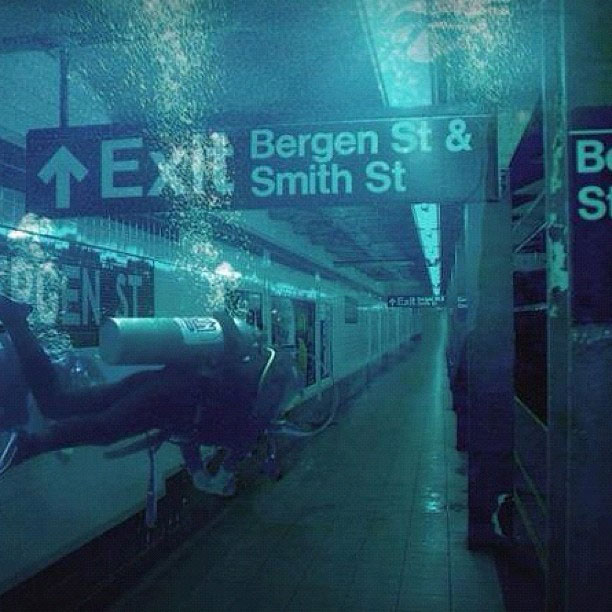
Tuesday, December 17, 2013

Obama's Syria Chemical Attack Lies Left Lay by Media Majors

An Awkward Silence: Burying the Hersh Revelations of Obama's Syrian Deceit

by David Cromwell - Media Lens

'All governments lie', the US journalist I.F. Stone once noted, with Iraq the most blatant example in modern times. But Syria is another recent criminal example of Stone's dictum.

An article in the current edition of London Review of Books by Seymour Hersh makes a strong case that US President Obama misled the world over the infamous chemical weapons attack near Damascus on August 21 this year. Hersh is the Pulitzer Prize-winning journalist who exposed the My Lai atrocity committed by American troops in Vietnam and the subsequent cover-up. He also helped bring to public attention the systematic brutality of US soldiers at the Abu Ghraib prison in Iraq.

After the nerve gas attack at Ghouta, Obama had unequivocally pinned the blame on Syrian President Assad, a propaganda claim that was fervently disseminated around the world by a compliant corporate news media. Following Obama's earlier warnings that any use of chemical weapons would cross a 'red line', he then declared on US television on September 10, 2013:

'Assad's government gassed to death over a thousand people ...We know the Assad regime was responsible ... And that is why, after careful deliberation, I determined that it is in the national security interests of the United States to respond to the Assad regime's use of chemical weapons through a targeted military strike.'

There was global public opposition to any attack on Syria. But war was only averted when the Americans agreed to a Russian proposal at the UN to dismantle Syria's capability for making chemical weapons.

Based on interviews with US intelligence and military insiders, Hersh now charges that Obama deceived the world in making a cynical case for war. The US president 'did not tell the whole story', says the journalist:

'In some instances, he omitted important intelligence, and in others he presented assumptions as facts. Most significant, he failed to acknowledge something known to the US intelligence community: that the Syrian army is not the only party in the country's civil war with access to sarin, the nerve agent that a UN study concluded – without assessing responsibility – had been used in the rocket attack.'

Obama did not reveal that American intelligence agencies knew that the al-Nusra Front, a jihadi group affiliated with al-Qaida, had the capability to manufacture considerable quantities of sarin. When the attack on Ghouta took place, 'al-Nusra should have been a suspect, but the administration cherry-picked intelligence to justify a strike against Assad.' Indeed, the 'cherry-picking was similar to the process used to justify the Iraq war.'

Hersh notes that when he interviewed intelligence and military personnel:

'I found intense concern, and on occasion anger, over what was repeatedly seen as the deliberate manipulation of intelligence. One high-level intelligence officer, in an email to a colleague, called the administration's assurances of Assad's responsibility a "ruse".'

Hersh continues:

'A former senior intelligence official told me that the Obama administration had altered the available information – in terms of its timing and sequence – to enable the president and his advisers to make intelligence retrieved days after the attack look as if it had been picked up and analysed in real time, as the attack was happening.'

The former official said that this 'distortion' of the facts by the Obama administration 'reminded him of the 1964 Gulf of Tonkin incident, when the Johnson administration reversed the sequence of National Security Agency intercepts to justify one of the early bombings of North Vietnam.'

Hersh adds:

'The same official said there was immense frustration inside the military and intelligence bureaucracy: "The guys are throwing their hands in the air and saying, 'How can we help this guy' – Obama – 'when he and his cronies in the White House make up the intelligence as they go along?' "'

Hersh does not actually use the word 'lie' or 'deceive' in his article. But, given the above account, he might as well have done.

In an interview with Amy Goodman on Democracy Now!, Hersh notes that:

'there are an awful lot of people in the government who just were really very, very upset with the way the information about the gas attack took place.'

He makes clear that he is not making any claims for who conducted the sarin attack at Ghouta; he does not know who did it. 'But there's no question my government does not' know either. The essence of the revelations, Hersh emphasises, is that Obama 'was willing to go to war, wanted to throw missiles at Syria, without really having a case and knowing he didn't have much of a case.'

'Our Media Lie Entirely In Sync With Our Governments'


The independent journalist Jonathan Cook spells out an important conclusion from Hersh's vital reporting:

'not only do our governments lie as a matter of course, but our media lie entirely in sync with our governments. Hersh exposes a catalogue of journalistic failures in his piece, just as occurred in Iraq. He even points out that at one vital White House press conference, where the main, false narrative was set out, officials refused to invite a critical national security correspondent, presumably fearing that he might expose the charade.'

It is noteworthy that Hersh's article did not appear in The New Yorker, his usual outlet in recent years. Hersh said 'there was little interest' for the story at the magazine, and New Yorker editor David Remnick did not respond to the news website BuzzFeed asking for an explanation for a piece it published discussing Hersh's revelations.

The Washington Post also turned down Hersh's article, even though it was originally going to run there. Hersh was told by Executive Editor Marty Baron 'that the sourcing in the article did not meet the Post's standards.' The journalist finally turned to the London Review of Books which, ironically, published his piece after it had been 'thoroughly fact checked by a former New Yorker fact checker who had worked with Hersh in the past.'

Given the resistance from both The New Yorker and the Washington Post, Cook is right to say that there should be no 'false complacency' that Hersh's exceptional role in exposing state deceptions demonstrates that our media is anywhere close to being 'free and pluralistic.' Cook makes the astute observation that:

'There will always be the odd investigative reporter like Hersh at the margins of the mainstream media. And one can understand why by reading Hersh closely. His sources of information are those in the security complex who lost the argument, or came close to losing the argument, and want it on record that they opposed the government line. Hersh is useful to them because he allows them to settle scores within the establishment or to act as a warning bell against future efforts to manipulate intelligence in the same manner. He is useful to us as readers because he reveals disputes that show us much more clearly what has taken place.'


'Several Hours Of Googling' Trumps Hersh


Some commentators have attempted to dismiss Hersh's article by misrepresenting it as pinning the blame on Syrian rebels for the Ghouta chemical weapons attack. Brian Whitaker, a former Middle East editor of the Guardian, has a blog piece based on this skewed reading. Whitaker asks his readers to treat Seymour Hersh, a veteran journalist with an impressive track record, with more scepticism than Eliot Higgins 'who sits at home in an English provincial town [Leicester] trawling the internet and tweets and blogs about his findings under the screen name Brown Moses.' Whitaker argues with a straight face that Hersh's in-depth journalism has been trumped by a blogger who has performed 'several hours of Googling'.

Whitaker wrote a follow-up blog piece prompted by criticism he'd received from Media Lens via Twitter. Again, he seemingly failed to grasp the point of Hersh's article - that Obama had no solid case and knew it - and Whitaker instead blew some diversionary smoke about 'a conflict between two different approaches [i.e. those of internet-researcher Higgins and 'traditional' Hersh] to investigative journalism and the sources that they use'. There followed an excellent rebuttal from the ever-insightful Interventions Watch. First, citing Whitaker:

'he [Hersh] has often been criticised for his use of shadowy sources. In the words of one Pentagon spokesman, he has "a solid and well-earned reputation for making dramatic assertions based on thinly sourced, unverifiable anonymous sources".'

Interventions Watch then noted that:

'Hersh has spent decades shining lights into places "Pentagon spokesmen" types don't want him to look. So it's not surprising that they'd try and discredit his work. Would Whitaker, for example, quote an Iranian military spokesman to try and rubbish the work of an Iranian dissident journalist? I doubt it. And the fact he does it here perhaps says much about his unexamined assumptions and biases.'

It is hardly surprising that Higgins, a blogger who presents a view conforming to the 'mainstream' narrative, should be given special attention by Whitaker, an establishment journalist. As Interventions Watch observes:

'At this point in his career, it's not like Higgins is some obscure, insurgent outsider. He has had his work published in The New York Times and Foreign Policy, has had a lengthy profile written about him in The New Yorker, has worked with Human Rights Watch, and has been interviewed more than once on T.V. News. Does this make him wrong? Of course not. But the line between him and "old media" isn't quite as defined as Whitaker would like to make out.'

Phil Greaves, a writer on US-UK foreign policy, likewise questions the role of Higgins who has recently:

'jump[ed] to the fore with his YouTube analysis in order to bolster mainstream discourse whilst offering the air of impartiality and the crucial "open source" faux-legitimacy. It has become blatantly evident that the "rebels" in both Syria and Libya have made a concerted effort in fabricating YouTube videos in order to incriminate and demonize their opponents while glorifying themselves in a sanitized image. Western media invariably lapped-up such fabrications without question and subsequently built narratives around them – regardless of contradictory evidence or opinion.'

The same spotlight of corporate media approval shines on the grandly-named Syrian Observatory for Human Rights – a man who owns a clothes shop, operating from his Coventry home – and the volunteer-run Iraq Body Count, whose numbers are routinely cited by journalists in preference to the much higher death-toll estimates from the Lancet epidemiological studies.

To emphasise once again, culpability for the Ghouta chemical attack is not the key thrust of Hersh's article at all. It is that significant elements of the US intelligence community were angered and dismayed by the Obama administration's manipulation of the facts, and that the White House falsely claimed certainty in its bid to make a self-interested case for war. It takes considerable skill in mental and verbal contortions to avoid these simple truths.


No Need For A Memory Hole


To date, searches of the Lexis newspaper database reveal that not a single print article has appeared about Hersh's revelations in the entire UK national press. Notably, the Guardian and the Independent, the two flagship daily newspapers of British liberal journalism, have steered well clear of embarrassing Obama. For the entire British press not to even discuss, far less mention, Hersh's claims is Orwellian – or worse. Why worse? Because there is not even the need for a memory hole if the story never surfaced in the first place. This represents an astonishing level of media conformity to the government narrative of events. In fact, the silence indicates complicity in the cynical distortion of the truth for war aims.

To its credit, the Daily Mail did publish a web-only article which was a fair summary of Hersh's article, and Peter Oborne had a short blog piece on the Telegraph website: all of five brief paragraphs. Oborne's piece then prompted his colleague Richard Spencer, a Telegraph foreign correspondent, to write his own web-only article denouncing Hersh's careful journalism as 'conspiracy theory'. Spencer did so based in large part on his reliance on the googling work of Eliot 'Brown Moses' Higgins, mentioned above, and a second blog 'of admittedly variable quality'. That appears to have been the sum total of press attention devoted to genuinely shocking revelations about the Nobel Peace Prize-winning US president.

As far as we can tell, there has been no coverage by BBC News, ITV News or Channel 4 News. (Certainly google searches of their websites yield not a single hit.) In the US, the media has likewise 'blacked out' coverage of Hersh's strong claims.

Imagine if a respected and experienced journalist published an in-depth piece reporting that an official enemy had deceived the world over chemical weapon claims in order to agitate for war. It would be plastered over every front page and given headline coverage on every major news programme.

As the days rolled on following the publication of Hersh's article, several Media Lens readers emailed journalists asking why they hadn't covered the revelations and urging them now to do so. Justin Webb of the BBC Radio 4 Today programme was a rare voice in responding:

'Thanks for this note - the answer is that we will and should [be covering the Hersh revelations] but we need to work out how much weight to give them. But yes it's obviously important.' (Posted on the Media Lens message board by Robert, December 12, 2013; temporary link.)

But, so far, nothing has been broadcast.

Another reader challenged Michael White, a Guardian assistant editor, who also had the decency to respond. White said:

'thanks for the note, was not aware of the piece, but he's a man to take seriously is Sey [sic] Hersh, so I will ask around among colleagues concerned with these matters' (Email, December 12, 2013)

Within an hour, White had replied again:

'a well informed friend says:

' "short answer: it was widely attacked and discredited by people who are genuinely expert on the subject and use open sources rather than anonymous spooks.

'"http://www.foreignpolicy.com/articles/2013/12/09/sy_hershs_chemical_misfire#sthash.UKt3cjE9.dpbs

' "the article was rejected by wash post and new yorker apparently".'

Who is the 'well informed friend' - a Guardian colleague perhaps? - and who are these unnamed 'people who are genuinely expert on the subject'? White didn't say. The Foreign Policy link was, inevitably, to an article by one Eliot Higgins. So in less than 60 minutes, White had gone from saying Hersh 'is a man to take seriously' to dismissing him on the basis of being 'discredited' by a blogger whose output conforms to Western governments' propaganda.

Finally, in his Democracy Now! interview, Hersh notes how easy it is for powerful leaders like Obama to go unchallenged:

'you can create a narrative, which he did, and you know the mainstream press is going to carry out that narrative.'

He continued:

'I mean, it's almost impossible for some of the mainstream newspapers, who have consistently supported the administration. This is after we had the WMD scandal, when everybody wanted to be on the team. It turns out our job, as newspaper people, is not to be on the team. [...] It's just not so hard to hold the people in office to the highest standard. And the press should be doing it more and more.'

The fact that Hersh's revelations have been met by an almost total silence in the corporate media is stunning but sadly unsurprising. After all, this is simply the standard performance by 'mainstream' news media that have demonstrated decades of adherence to state-corporate power. That this is still happening after the horrendous war crime of Iraq, which was facilitated by intense media boosting of Western propaganda claims, is utterly shameful.


SUGGESTED ACTION

The goal of Media Lens is to promote rationality, compassion and respect for others. If you do write to journalists, we strongly urge you to maintain a polite, non-aggressive and non-abusive tone.

Write to:

Alan Rusbridger, Guardian editor
Email: alan.rusbridger@guardian.co.uk
Twitter: @arusbridger

Amol Rajan, Independent editor
Email: a.rajan@independent.co.uk
Twitter: @amolrajan

Jon Snow, Channel 4 News
Email: jon.snow@itn.co.uk
Twitter: @jonsnowC4

Please blind-copy us in on any exchanges or forward them to us later at:
editor@medialens.org

The End of Us: Climate Change and Extinction

Are We Falling Off the Climate Precipice? Scientists Consider Extinction

by Dahr Jamail - TomDispatch

I grew up planning for my future, wondering which college I would attend, what to study, and later on, where to work, which articles to write, what my next book might be, how to pay a mortgage, and which mountaineering trip I might like to take next.

Now, I wonder about the future of our planet. During a recent visit with my eight-year-old niece and 10- and 12-year-old nephews, I stopped myself from asking them what they wanted to do when they grew up, or any of the future-oriented questions I used to ask myself. I did so because the reality of their generation may be that questions like where they will work could be replaced by: Where will they get their fresh water? What food will be available? And what parts of their country and the rest of the world will still be habitable?

Tomgram: Dahr Jamail, The Climate Change Scorecard

Since a nuclear weapon went off over Hiroshima, we have been living with visions of global catastrophe, apocalyptic end times, and extinction that were once the sole property of religion. Since August 6, 1945, it has been possible for us to imagine how human beings, not God, could put an end to our lives on this planet. Conceptually speaking, that may be the single most striking development of our age and, to this day, it remains both terrifying and hard to take in. Nonetheless, the apocalyptic possibilities lurking in our scientific-military development stirred popular culture over the decades to a riot of world-ending possibilities.

In more recent decades, a second world-ending (or at least world-as-we-know-it ending) possibility has crept into human consciousness. Until relatively recently, our burning of fossil fuels and spewing carbon dioxide into the atmosphere represented such a slow-motion approach to end times that we didn’t even notice what was happening. Only in the 1970s did the idea of global warming or climate change begin to penetrate the scientific community, as in the 1990s it edged its way into the rest of our world, and slowly into popular culture, too.

Still, despite ever more powerful weather disruptions -- what the news now likes to call “extreme weather” events, including monster typhoons, hurricanes, and winter storms, wildfires, heat waves, droughts, and global temperature records -- disaster has still seemed far enough off. Despite a drumbeat of news about startling environmental changes -- massive ice melts in Arctic waters, glaciers shrinking worldwide, the Greenland ice shield beginning to melt, as well as the growing acidification of ocean waters -- none of this, not even Superstorm Sandy smashing into that iconic global capital, New York, and drowning part of its subway system, has broken through as a climate change 9/11. Not in the United States anyway.

We’ve gone, that is, from no motion to slow motion to a kind of denial of motion. And yet in the scientific community, where people continue to study the effects of global warming, the tone is changing. It is, you might say, growing more apocalyptic. Just in recent weeks, a report from the National Academy of Scientists suggested that “hard-to-predict sudden changes” in the environment due to the effects of climate change might drive the planet to a “tipping point.” Beyond that, “major and rapid changes [could] occur” -- and these might be devastating, including that “wild card,” the sudden melting of parts of the vast Antarctic ice shelf, driving sea levels far higher.

At the same time, the renowned climate scientist James Hansen and 17 colleagues published a hair-raising report in the journal PLoS. They suggest that the accepted target of keeping global temperature rise to two degrees Celsius is a fool’s errand. If global temperatures come anywhere near that level -- the rise so far has been less than one degree since the industrial revolution began -- it will already be too late, they claim, to avoid disastrous consequences.

Consider this the background “temperature” for Dahr Jamail’s latest piece for TomDispatch, an exploration of what climate scientists just beyond the mainstream are thinking about how climate change will affect life on this planet. What, in other words, is the worst that we could possibly face in the decades to come? The answer: a nightmare scenario. So buckle your seat belt. There’s a tumultuous ride ahead. Tom

Are We Falling Off the Climate Precipice? Scientists Consider Extinction

by Dahr Jamail

The reason, of course, is climate change -- and just how bad it might be came home to me in the summer of 2010. I was climbing Mount Rainier in Washington State, taking the same route I had used in a 1994 ascent. Instead of experiencing the metal tips of the crampons attached to my boots crunching into the ice of a glacier, I was aware that, at high altitudes, they were still scraping against exposed volcanic rock. In the pre-dawn night, sparks shot from my steps.

The route had changed dramatically enough to stun me. I paused at one point to glance down the steep cliffs at a glacier bathed in soft moonlight 100 meters below. It took my breath away when I realized that I was looking at what was left of the enormous glacier I’d climbed in 1994, the one that -- right at this spot -- had left those crampons crunching on ice. I stopped in my tracks, breathing the rarefied air of such altitudes, my mind working hard to grasp the climate-change-induced drama that had unfolded since I was last at that spot.

I haven’t returned to Mount Rainier to see just how much further that glacier has receded in the last few years, but recently I went on a search to find out just how bad it might turn out to be. I discovered a set of perfectly serious scientists -- not the majority of all climate scientists by any means, but thoughtful outliers -- who suggest that it isn’t just really, really bad; it’s catastrophic. Some of them even think that, if the record ongoing releases of carbon dioxide into the atmosphere, thanks to the burning of fossil fuels, are aided and abetted by massive releases of methane, an even more powerful greenhouse gas, life as we humans have known it might be at an end on this planet. They fear that we may be at -- and over -- a climate change precipice hair-raisingly quickly.

Mind you, the more conservative climate science types, represented by the prestigious Intergovernmental Panel on Climate Change (IPCC), paint scenarios that are only modestly less hair-raising, but let’s spend a little time, as I’ve done, with what might be called scientists at the edge and hear just what they have to say.

“We’ve Never Been Here as a Species”


“We as a species have never experienced 400 parts per million of carbon dioxide in the atmosphere,” Guy McPherson, professor emeritus of evolutionary biology, natural resources, and ecology at the University of Arizona and a climate change expert of 25 years, told me. “We’ve never been on a planet with no Arctic ice, and we will hit the average of 400 ppm... within the next couple of years. At that time, we’ll also see the loss of Arctic ice in the summers… This planet has not experienced an ice-free Arctic for at least the last three million years.”

For the uninitiated, in the simplest terms, here’s what an ice-free Arctic would mean when it comes to heating the planet: minus the reflective ice cover on Arctic waters, solar radiation would be absorbed, not reflected, by the Arctic Ocean. That would heat those waters, and hence the planet, further. This effect has the potential to change global weather patterns, vary the flow of winds, and even someday possibly alter the position of the jet stream. Polar jet streams are fast flowing rivers of wind positioned high in the Earth’s atmosphere that push cold and warm air masses around, playing a critical role in determining the weather of our planet.

McPherson, who maintains the blog Nature Bats Last, added, “We’ve never been here as a species and the implications are truly dire and profound for our species and the rest of the living planet.”

While his perspective is more extreme than that of the mainstream scientific community, which sees true disaster many decades into our future, he’s far from the only scientist expressing such concerns. Professor Peter Wadhams, a leading Arctic expert at Cambridge University, has been measuring Arctic ice for 40 years, and his findings underscore McPherson’s fears. “The fall-off in ice volume is so fast it is going to bring us to zero very quickly,” Wadhams told a reporter. According to current data, he estimates “with 95% confidence” that the Arctic will have completely ice-free summers by 2018. (U.S. Navy researchers have predicted an ice-free Arctic even earlier -- by 2016.)

British scientist John Nissen, chairman of the Arctic Methane Emergency Group (of which Wadhams is a member), suggests that if the summer sea ice loss passes “the point of no return,” and “catastrophic Arctic methane feedbacks” kick in, we’ll be in an “instant planetary emergency.”

McPherson, Wadham, and Nissen represent just the tip of a melting iceberg of scientists who are now warning us about looming disaster, especially involving Arctic methane releases. In the atmosphere, methane is a greenhouse gas that, on a relatively short-term time scale, is far more destructive than carbon dioxide (CO2). It is 23 times as powerful as CO2 per molecule on a 100-year timescale, 105 times more potent when it comes to heating the planet on a 20-year timescale -- and the Arctic permafrost, onshore and off, is packed with the stuff. “The seabed,” says Wadham, “is offshore permafrost, but is now warming and melting. We are now seeing great plumes of methane bubbling up in the Siberian Sea… millions of square miles where methane cover is being released.”

According to a study just published in Nature Geoscience, twice as much methane as previously thought is being released from the East Siberian Arctic Shelf, a two million square kilometer area off the coast of Northern Siberia. Its researchers found that at least 17 teragrams (one million tons) of methane are being released into the atmosphere each year, whereas a 2010 study had found only seven teragrams heading into the atmosphere.

The day after Nature Geoscience released its study, a group of scientists from Harvard and other leading academic institutions published a report in the Proceedings of the National Academy of Sciences showing that the amount of methane being emitted in the U.S. both from oil and agricultural operations could be 50% greater than previous estimates and 1.5 times higher than estimates of the Environmental Protection Agency.

How serious is the potential global methane build-up? Not all scientists think it’s an immediate threat or even the major threat we face, but Ira Leifer, an atmospheric and marine scientist at the University of California, Santa Barbara, and one of the authors of the recent Arctic Methane study pointed out to me that “the Permian mass extinction that occurred 250 million years ago is related to methane and thought to be the key to what caused the extinction of most species on the planet.” In that extinction episode, it is estimated that 95% of all species were wiped out.

Also known as “The Great Dying,” it was triggered by a massive lava flow in an area of Siberia that led to an increase in global temperatures of six degrees Celsius. That, in turn, caused the melting of frozen methane deposits under the seas. Released into the atmosphere, it caused temperatures to skyrocket further. All of this occurred over a period of approximately 80,000 years.

We are currently in the midst of what scientists consider the sixth mass extinction in planetary history, with between 150 and 200 species going extinct daily, a pace 1,000 times greater than the “natural” or “background” extinction rate. This event may already be comparable to, or even exceed, both the speed and intensity of the Permian mass extinction. The difference being that ours is human caused, isn’t going to take 80,000 years, has so far lasted just a few centuries, and is now gaining speed in a non-linear fashion.

It is possible that, on top of the vast quantities of carbon dioxide from fossil fuels that continue to enter the atmosphere in record amounts yearly, an increased release of methane could signal the beginning of the sort of process that led to the Great Dying. Some scientists fear that the situation is already so serious and so many self-reinforcing feedback loops are already in play that we are in the process of causing our own extinction. Worse yet, some are convinced that it could happen far more quickly than generally believed possible -- even in the course of just the next few decades.

The Sleeping Giant Stirs


According to a NASA research report, “Is a Sleeping Climate Giant Stirring in the Arctic?”: “Over hundreds of millennia, Arctic permafrost soils have accumulated vast stores of organic carbon -- an estimated 1,400 to 1,850 petagrams of it (a petagram is 2.2 trillion pounds, or 1 billion metric tons). That's about half of all the estimated organic carbon stored in Earth's soils. In comparison, about 350 petagrams of carbon have been emitted from all fossil-fuel combustion and human activities since 1850. Most of this carbon is located in thaw-vulnerable top soils within 10 feet (3 meters) of the surface.”

NASA scientists, along with others, are learning that the Arctic permafrost -- and its stored carbon -- may not be as permanently frosted as its name implies. Research scientist Charles Miller of NASA's Jet Propulsion Laboratory is the principal investigator of the Carbon in Arctic Reservoirs Vulnerability Experiment (CARVE), a five-year NASA-led field campaign to study how climate change is affecting the Arctic's carbon cycle. He told NASA, "Permafrost soils are warming even faster than Arctic air temperatures -- as much as 2.7 to 4.5 degrees Fahrenheit (1.5 to 2.5 degrees Celsius) in just the past 30 years. As heat from Earth's surface penetrates into permafrost, it threatens to mobilize these organic carbon reservoirs and release them into the atmosphere as carbon dioxide and methane, upsetting the Arctic's carbon balance and greatly exacerbating global warming."

He fears the potential results should a full-scale permafrost melt take place. As he points out, “Changes in climate may trigger transformations that are simply not reversible within our lifetimes, potentially causing rapid changes in the Earth system that will require adaptations by people and ecosystems."

The recent NASA study highlights the discovery of active and growing methane vents up to 150 kilometers across. A scientist on a research ship in the area described this as a bubbling as far as the eye can see in which the seawater looks like a vast pool of seltzer. Between the summers of 2010 and 2011, in fact, scientists found that in the course of a year methane vents only 30 centimeters across had grown a kilometer wide, a 3,333% increase and an example of the non-linear rapidity with which parts of the planet are responding to climate disruption.

Miller revealed another alarming finding: "Some of the methane and carbon dioxide concentrations we've measured have been large, and we're seeing very different patterns from what models suggest," he said of some of CARVE’s earlier findings. "We saw large, regional-scale episodic bursts of higher than normal carbon dioxide and methane in interior Alaska and across the North Slope during the spring thaw, and they lasted until after the fall refreeze. To cite another example, in July 2012 we saw methane levels over swamps in the Innoko Wilderness that were 650 parts per billion higher than normal background levels. That's similar to what you might find in a large city."

Moving beneath the Arctic Ocean where methane hydrates -- often described as methane gas surrounded by ice -- exist, a March 2010 report in Science indicated that these cumulatively contain the equivalent of 1,000-10,000 gigatons of carbon. Compare this total to the 240 gigatons of carbon humanity has emitted into the atmosphere since the industrial revolution began.

A study published in the prestigious journal Nature this July suggested that a 50-gigaton “burp” of methane from thawing Arctic permafrost beneath the East Siberian sea is “highly possible at anytime.” That would be the equivalent of at least 1,000 gigatons of carbon dioxide.

Even the relatively staid IPCC has warned of such a scenario: "The possibility of abrupt climate change and/or abrupt changes in the earth system triggered by climate change, with potentially catastrophic consequences, cannot be ruled out. Positive feedback from warming may cause the release of carbon or methane from the terrestrial biosphere and oceans."

In the last two centuries, the amount of methane in the atmosphere has increased from 0.7 parts per million to 1.7 parts per million. The introduction of methane in such quantities into the atmosphere may, some climate scientists fear, make increases in the global temperature of four to six degrees Celsius inevitable.

The ability of the human psyche to take in and grasp such information is being tested. And while that is happening, yet more data continues to pour in -- and the news is not good.

Out of the Frying Pan, Into the Fire


Consider this timeline:

* Late 2007: The Intergovernmental Panel on Climate Change (IPCC) announces that the planet will see a one degree Celsius temperature increase due to climate change by 2100.

* Late 2008: The Hadley Centre for Meteorological Research predicts a 2C increase by 2100.

* Mid-2009: The U.N. Environment Programme predicts a 3.5C increase by 2100. Such an increase would remove habitat for human beings on this planet, as nearly all the plankton in the oceans would be destroyed, and associated temperature swings would kill off many land plants. Humans have never lived on a planet at 3.5C above baseline.

* October 2009: The Hadley Centre for Meteorological Research releases an updated prediction, suggesting a 4C temperature increase by 2060.

* November 2009: The Global Carbon Project, which monitors the global carbon cycle, and the Copenhagen Diagnosis, a climate science report, predict 6C and 7C temperature increases, respectively, by 2100.

* December 2010: The U.N. Environment Programme predicts up to a 5C increase by 2050.

* 2012: The conservative International Energy Agency’s World Energy Outlook report for that year states that we are on track to reach a 2C increase by 2017.

* November 2013: The International Energy Agency predicts a 3.5C increase by 2035.

A briefing provided to the failed U.N. Conference of the Parties in Copenhagen in 2009 provided this summary: “The long-term sea level that corresponds to current CO2 concentration is about 23 meters above today’s levels, and the temperatures will be 6 degrees C or more higher. These estimates are based on real long-term climate records, not on models.”

On December 3rd, a study by 18 eminent scientists, including the former head of NASA’s Goddard Institute for Space Studies, James Hansen, showed that the long-held, internationally agreed upon target to limit rises in global average temperatures to 2 degrees Celsius was in error and far above the 1C threshold that would need to be maintained in order to avoid the effects of catastrophic climate change.

And keep in mind that the various major assessments of future global temperatures seldom assume the worst about possible self-reinforcing climate feedback loops like the methane one.

“Things Are Looking Really Dire”


Climate-change-related deaths are already estimated at five million annually, and the process seems to be accelerating more rapidly than most climate models have suggested. Even without taking into account the release of frozen methane in the Arctic, some scientists are already painting a truly bleak picture of the human future. Take Canadian Wildlife Service biologist Neil Dawe, who in August told a reporter that he wouldn't be surprised if the generation after him witnessed the extinction of humanity. All around the estuary near his office on Vancouver Island, he has been witnessing the unraveling of “the web of life,” and “it’s happening very quickly.”

"Economic growth is the biggest destroyer of the ecology," Dawe says. "Those people who think you can have a growing economy and a healthy environment are wrong. If we don't reduce our numbers, nature will do it for us." And he isn’t hopeful humans will be able to save themselves. "Everything is worse and we're still doing the same things. Because ecosystems are so resilient, they don't exact immediate punishment on the stupid."

The University of Arizona’s Guy McPherson has similar fears. “We will have very few humans on the planet because of lack of habitat,” he says. Of recent studies showing the toll temperature increases will take on that habitat, he adds, “They are only looking at CO2 in the atmosphere.”

Here’s the question: Could some version of extinction or near-extinction overcome humanity, thanks to climate change -- and possibly incredibly fast? Similar things have happened in the past. Fifty-five million years ago, a five degree Celsius rise in average global temperatures seems to have occurred in just 13 years, according to a study published in the October 2013 issue of the Proceedings of the National Academy of Sciences. A report in the August 2013 issue of Science revealed that in the near-term Earth’s climate will change 10 times faster than at any other moment in the last 65 million years.

“The Arctic is warming faster than anywhere else on the planet,” climate scientist James Hansen has said. “There are potential irreversible effects of melting the Arctic sea ice. If it begins to allow the Arctic Ocean to warm up, and warm the ocean floor, then we’ll begin to release methane hydrates. And if we let that happen, that is a potential tipping point that we don’t want to happen. If we burn all the fossil fuels then we certainly will cause the methane hydrates, eventually, to come out and cause several degrees more warming, and it’s not clear that civilization could survive that extreme climate change.”

Yet, long before humanity has burned all fossil fuel reserves on the planet, massive amounts of methane will be released. While the human body is potentially capable of handling a six to nine degree Celsius rise in the planetary temperature, the crops and habitat we use for food production are not. As McPherson put it, “If we see a 3.5 to 4C baseline increase, I see no way to have habitat. We are at .85C above baseline and we’ve already triggered all these self-reinforcing feedback loops.”

He adds: “All the evidence points to a locked-in 3.5 to 5 degree C global temperature rise above the 1850 ‘norm’ by mid-century, possibly much sooner. This guarantees a positive feedback, already underway, leading to 4.5 to 6 or more degrees above ‘norm’ and that is a level lethal to life. This is partly due to the fact that humans have to eat and plants can’t adapt fast enough to make that possible for the seven to nine billion of us -- so we’ll die.”

If you think McPherson’s comment about lack of adaptability goes over the edge, consider that the rate of evolution trails the rate of climate change by a factor of 10,000, according to a paper in the August 2013 issue of Ecology Letters. Furthermore, David Wasdel, director of the Apollo-Gaia Project and an expert on multiple feedback dynamics, says, “We are experiencing change 200 to 300 times faster than any of the previous major extinction events.”

Wasdel cites with particular alarm scientific reports showing that the oceans have already lost 40% of their phytoplankton, the base of the global oceanic food chain, because of climate-change-induced acidification and atmospheric temperature variations. (According to the Center for Ocean Solutions: “The oceans have absorbed almost one-half of human-released CO2 emissions since the Industrial Revolution. Although this has moderated the effect of greenhouse gas emissions, it is chemically altering marine ecosystems 100 times more rapidly than it has changed in at least the last 650,000 years.”)

“This is already a mass extinction event,” Wasdel adds. “The question is, how far is it going to go? How serious does it become? If we are not able to stop the rate of increase of temperature itself, and get that back under control, then a high temperature event, perhaps another 5-6 degrees [C], would obliterate at least 60% to 80% of the populations and species of life on Earth.”

What Comes Next?


In November 2012, even Jim Yong Kim, president of the World Bank Group (an international financial institution that provides loans to developing countries), warned that “a 4C warmer world can, and must be, avoided. Lack of action on climate change threatens to make the world our children inherit a completely different world than we are living in today.”

A World Bank-commissioned report warned that we are indeed on track to a “4C world” marked by extreme heat waves and life-threatening sea-level rise.

The three living diplomats who have led U.N. climate change talks claim there is little chance the next climate treaty, if it is ever approved, will prevent the world from overheating. "There is nothing that can be agreed in 2015 that would be consistent with the 2 degrees," says Yvo de Boer, who was executive secretary of the United Nations Framework Convention on Climate Change in 2009, when attempts to reach a deal at a summit in Copenhagen crumbled. "The only way that a 2015 agreement can achieve a 2-degree goal is to shut down the whole global economy."

Atmospheric and marine scientist Ira Leifer is particularly concerned about the changing rainfall patterns a recently leaked IPCC draft report suggested for our future: “When I look at what the models predicted for a 4C world, I see very little rain over vast swaths of populations. If Spain becomes like Algeria, where do all the Spaniards get the water to survive? We have parts of the world which have high populations which have high rainfall and crops that exist there, and when that rainfall and those crops go away and the country starts looking more like some of North Africa, what keeps the people alive?”

The IPCC report suggests that we can expect a generalized shifting of global rain patterns further north, robbing areas that now get plentiful rain of future water supplies. History shows us that when food supplies collapse, wars begin, while famine and disease spread. All of these things, scientists now fear, could happen on an unprecedented scale, especially given the interconnected nature of the global economy.

“Some scientists are indicating we should make plans to adapt to a 4C world,” Leifer comments. “While prudent, one wonders what portion of the living population now could adapt to such a world, and my view is that it’s just a few thousand people [seeking refuge] in the Arctic or Antarctica.”

Not surprisingly, scientists with such views are often not the most popular guys in the global room. McPherson, for instance, has often been labeled “Guy McStinction” -- to which he responds, “I’m just reporting the results from other scientists. Nearly all of these results are published in established, esteemed literature. I don’t think anybody is taking issue with NASA, or Nature, or Science, or the Proceedings of the National Academy of Sciences. [Those] and the others I report are reasonably well known and come from legitimate sources, like NOAA [the National Oceanic and Atmospheric Administration], for example. I’m not making this information up, I’m just connecting a couple of dots, and it’s something many people have difficulty with.”

McPherson does not hold out much hope for the future, nor for a governmental willingness to make anything close to the radical changes that would be necessary to quickly ease the flow of greenhouse gases into the atmosphere; nor does he expect the mainstream media to put much effort into reporting on all of this because, as he says, “There’s not much money in the end of civilization, and even less to be made in human extinction.” The destruction of the planet, on the other hand, is a good bet, he believes, “because there is money in this, and as long as that’s the case, it is going to continue.”

Leifer, however, is convinced that there is a moral obligation never to give up and that the path to global destruction could be altered. “In the short term, if you can make it in the economic interests of people to do the right thing, it’ll happen very fast.” He offers an analogy when it comes to whether humanity will be willing to act to mitigate the effects of climate change: “People do all sorts of things to lower their risk of cancer, not because you are guaranteed not to get it, but because you do what you can and take out the health protections and insurance you need in order to try to lower your risk of getting it.”

The signs of a worsening climate crisis are all around us, whether we allow ourselves to see them or not. Certainly, the scientific community gets it. As do countless communities across the globe where the effects of climate change are already being experienced in striking ways and local preparations for climatic disasters, including increasingly powerful floods, droughts, wildfires, heat waves, and storms are underway. Evacuations from low-lying South Pacific islands have already begun. People in such areas, out of necessity, are starting to try to teach their children how to adapt to, and live in, what we are causing our world to become.

My niece and nephews are doing something similar. They are growing vegetables in a backyard garden and their eight chickens provide more than enough eggs for the family. Their parents are intent on teaching them how to be ever more self-sustaining. But none of these heartfelt actions can mitigate what is already underway when it comes to the global climate.

I am 45 years old, and I often wonder how my generation will survive the impending climate crisis. What will happen to our world if the summer Arctic waters are indeed ice-free only a few years from now? What will my life look like if I live to experience a 3.5 Celsius global temperature increase?

Above all, I wonder how coming generations will survive.

Dahr Jamail has written extensively about climate change as well as the BP oil disaster in the Gulf of Mexico. He is a recipient of numerous awards, including the Martha Gellhorn Award for Journalism and the James Aronson Award for Social Justice Journalism. He is the author of two books: Beyond the Green Zone: Dispatches from an Unembedded Journalist in Occupied Iraq and The Will to Resist: Soldiers Who Refuse to Fight in Iraq and Afghanistan. He currently works for al-Jazeera English in Doha, Qatar.

Copyright 2013 Dahr Jamail

Monday, December 16, 2013

Kinder Morgan Hopes Tied to Trans Mountain Pipeline Twinning

Kinder Morgan files pipeline application despite widespread community opposition

by Wilderness Committee

VANCOUVER/VICTORIAThe Wilderness Committee is reiterating its concerns over Kinder Morgan's proposed Trans Mountain tar sands pipeline, after an announcement today that the company has filed its formal application with the National Energy Board (NEB).

The proposed pipeline from Edmonton, Alberta to Burnaby, BC has been met with increasing opposition from First Nations, environmentalists and community leaders along the route, whose concerns range from the threat of an oil spill to the impact of tar sands exports on global climate change.

"The message we've been hearing from communities along the pipeline and tanker route is that this project is not wanted. First Nations, municipal leaders and even businesses have acknowledged the serious risks associated with the proposal, which would drastically increase tar sands exports from BC's coast," said Wilderness Committee Policy Director Gwen Barlee.

In its 15,000-page application, the company repeatedly refers to the proposed project as a "twinning" of the existing Trans Mountain pipeline, which has been in operation since the 1950s. However, large portions of the proposed route differ substantially from the existing one, and the proposal still requires the construction of a completely new pipeline meant for export rather than domestic use.

The Wilderness Committee has been very active in the campaign to stop this project, holding a series of town hall meetings over the past two years to connect with communities that will be most affected by the pipeline, and the 400 or more tankers it would bring to the Salish Sea and Burrard Inlet.

"The risks that this pipeline and the associated tankers pose to the Salish Sea are just not worth taking," said Vancouver Island Campaigner Torrance Coste. "Whether it's in the form of a catastrophic spill, or through its contribution to carbon emissions and climate change, this project will have serious negative impacts in the region."

Now that the project has entered the official application phase, a public hearing process will follow in the coming year. Unfortunately, because of new rules around environmental assessments in Canada, members of the public must complete an application in order to participate.

The right to participate will only be granted to those who are considered to be "directly affected", or who are deemed to possess "relevant information or expertise".

– 30 –

For Immediate Release - December 16, 2013
For more information, contact:

Gwen Barlee | Policy Director, Wilderness Committee


Making Peace with the Pentagon


Peace in the Pentagon

by David Swanson - CounterPunch

I’m a huge fan of peace studies as an academic discipline that should be spread into every corner of what we call, with sometimes unclear justification, our education system. But often peace studies, like other disciplines, manages to study only those far from home, and to study them with a certain bias.

I recently read a book promoting the sophisticated skills of trained negotiators and suggesting that if such people, conversant in the ways of emotional understanding, would take over the Palestine “peace process” from the aging politicians, then … well, basically, then Palestinians would agree to surrender their land and rights without so much fuss. Great truths about negotiation skills only go so far if the goal of the negotiation is injustice based on misunderstanding of the facts on the ground.

I recently read another book discussing nonviolent resistance to injustice and brutality. It focused on a handful of stories of how peace was brought to various poor tribes and nations, usually through careful, respectful, and personal approaches, that appeased some tyrant’s ego while moving him toward empathy. These books are valuable, and it is good that they are proliferating. But they always leave me wondering whether the biggest war-maker on earth is left out because war isn’t war when Westerners do it, or is it, rather, because the military industrial complex requires a different approach. How many decades has it been since a U.S. president sat down and listened to opponents of militarism? Does the impossibility of such a thing remove it from our professors’ consideration?

Here in Virginia’s Fifth District, a bunch of us met with our then-Congressman Tom Perriello a few years back and sought respectfully and persuasively to bring him to oppose and stop funding the war on Afghanistan. Perriello was and is, in some quarters, considered some sort of “progressive” hero. I’ve never understood why. He did not listen. Why? We had majority opinion with us. Was it because we lacked the skills? Was it because of his sincere belief in so-called humanitarian wars? Or was it something else? The New York Times last Friday reported on the corruption of the organization where Perriello was hired immediately upon his electoral defeat. The Center for American Progress takes funding from weapons companies and supports greater public funding of weapons companies. The Democratic National Committee gave Perriello’s reelection campaign a bunch of money just after one of his votes for a bill containing war money and a bank bailout (he seemed to oppose the latter). White House officials and cabinet secretaries did public events with Perriello in his district just after his vote.

I know another member of Congress who wants to end wars and cut military spending, but when I ask this member’s staff to stop talking about social safety net cuts as if they only hurt veterans rather than all people I can’t even make my concern — that of glorifying veterans as more valuable — understood. It’s like talking to a brick military base.

My friend David Hartsough was one, among others, who spoke with President John Kennedy when he was President, urged him toward peace and believed he listened. That didn’t work out well for President Kennedy, or for peace. When Gorbachev was ready to move the Soviet Union toward peace, President Ronald Reagan wasn’t. Was that because of sincere, well-meaning, if misguided notions of security? Or was it senility, stupidity, and stubbornness? Or was it something else? Was it a system that wouldn’t allow it? Was something more than personal persuasion on the substance of the matter needed? Was a new way of funding elections and communicating campaign slogans required first? Would peace studies have to revise its approach if it noticed the existence of the Pentagon?

Of course, I think the answer is some of each. I think reducing military spending a little will allow us to be heard a little more clearly, which will allow us to reduce military spending a little further, and so on. And part of the reason why I think it’s both and not purely “structural” is the opposition to war that brews up within the U.S. military — as it did on missile strikes for Syria this past summer. Sometimes members of the military oppose, protest, or even resist wars.

Another type of book that has proliferated madly is the account of military veterans’ activism in the peace movement during the Bush presidency — with always a bit on what survived of that movement into the reign of the Nobel Peace Laureate Constitutional Law Professor President. I’ve just read a good one of these books called Fighting For Peace: Veterans and Military Families in the Anti-Iraq War Movement by Lisa Leitz. This book, as well as any of them, provides insights into the difficulties faced by military and veteran peace activists, and military family member peace activists, as well as the contributions they’ve made. I’ve become an associate (non-veteran) member of Veterans For Peace and worked for that group and with other groups like Iraq Veterans Against the War and Military Families Speak Out because of the tremendous job they’ve done. The non-military peace movement needs to work ever harder at welcoming and encouraging and supporting military and veteran peace activism. And vice versa.

Different risks are involved. Different emotions are involved. Would you march against a war if it might ruin your own or a loved one’s career? To stretch the definition of war-maker a little, would you take a job with Lockheed-Martin if you oppose war? What if you oppose war but your child is in the military — would you be proud of his or her success and advancement into an elite murder team? Should you not be proud of your child?

The contributions of military and former military peace activists have been tremendous: the throwing back of medals, the memorials and cemeteries erected in protest and grief, the reenactment of war scenes on the streets, the testimony confessing to crimes no one wants to prosecute. New people have been reached and opinions changed. And yet, I want to say there is a downside.

Most peace activists have never been in the military. Most books about peace activists are about the military ones. This distorts and diminishes our understanding of what we’re doing. Most victims in our wars — and I mean statistically almost all of them — are on the other side, but most writing done about victims is about the U.S. military ones (assuming aggressors are victims). The giant cemeteries representing the dead in Iraq are orders of magnitude too small to be accurate. This severely distorts our understanding of one-sided slaughters, allowing the continuation of the myth of war as a contest between two armies.

Eliminating war would logically involve eliminating the war-making machine, but veteran and military opponents of war, more often than others, want the military preserved and used for good ends. Is that because it makes sense or because of personal identification? Nationalism is driving wars, but military peace activists tend, more than others, to favor “good patriotism” or “true patriotism.” Must a peace movement that ought to celebrate international law and cooperation follow that lead?

Leitz quotes Maureen Dowd claiming that veterans have “moral authority” to oppose war, unlike — apparently — those who have opposed war for a longer period of time or more consistently. Imagine applying that logic to some other offense, such as child abuse. We don’t suggest that reformed child abusers have the greatest moral authority to oppose child abuse. What about shoplifting? Do reformed shoplifters have the greatest authority to oppose shoplifting? I think that in any such situation, the former participants have a particular type of perspective. But I think there’s another valuable perspective in those who have opposed a crime. Some veterans, of course, were in the military before I was born and have worked for the abolition of war longer than I’ve breathed. I don’t think their past diminishes them in any way. I also don’t think it does what Dowd thinks it does.

Dowd’s idea may be that some wars are good and some bad, so we should trust those who’ve taken part in wars to make the distinction. I’d disagree with the conclusion even if I agreed with the premise. I don’t think it’s a premise the peace movement should accept. Peace is as incompatible with some wars as it is with all wars.

Accounts like Fighting for Peace bring out the segregation of military from civilian culture in the United States, a product of standing armies and standing foreign bases. I once spoke on a panel with a Democratic veteran candidate for Congress who thankfully lost but who advocated for everyone joining the military so that everyone would be familiar with what the military was. I have another proposal: everyone join civilian life, close the bases, dismantle the weapons, disassemble the ships, put solar panels on the runways, and give the Pentagon a new role to play. I think it would make a fine roller skating rink.

In the meantime, we should try to understand and work with each other to reduce the military, and that requires doing so without promoting it or joining it.

David Swanson is author of War is a Lie. He lives in Virginia.

Demonstraters Brave Canadian Winter in Support of Hunger-Striking Migrant Detainees

Hunger-striking Immigrant Detainees Held in Canada for Years Without Trial

by TRNN

Supporters rally in snowstorm outside maximum security prison to show solidarity for prisoners being held without charges or release date.

Busloads of people from Toronto, Canada, and other cities in Ontario gathered to protest the indefinite detention of migrants at a prison in Lindsay, a town two hours northeast of Toronto.

Sunday, December 15, 2013

Military Cruises America's Schools for Generation Next

America’s Child Soldiers: JROTC and the Militarizing of America

by Ann Jones  - TomDispatch

Congress surely meant to do the right thing when, in the fall of 2008, it passed the Child Soldiers Prevention Act (CSPA). The law was designed to protect kids worldwide from being forced to fight the wars of Big Men.

From then on, any country that coerced children into becoming soldiers was supposed to lose all U.S. military aid.

It turned out, however, that Congress -- in its rare moment of concern for the next generation -- had it all wrong. 
In its greater wisdom, the White House found countries like Chad and Yemen so vital to the national interest of the United States that it preferred to overlook what happened to the children in their midst.

Tomgram: Ann Jones, Suffer the Children

[Note for TomDispatch Readers: Ever since we published it, I’ve been telling you that our new Dispatch Book, They Were Soldiers: How the Wounded Return From America’s Wars -- The Untold Story by Ann Jones, is amazing. But you no longer have to take my word for it. Someone else has just weighed in -- big time. Jeremy Scahill’s Dirty Wars was recently chosen by Publisher’s Weekly as one of its top ten picks of the year. That magazine then asked Scahill and the other chosen authors to create a new top ten list in which each would select his or her favorite book of 2013. Scahill chose They Were Soldiers. Here’s what he wrote about it:

“My pick for the best book of 2013 comes from Ann Jones, who shows us a side of America’s wars that we often don’t see. She embeds with the doctors who spend their lives dealing with soldiers who are grievously wounded, psychologically scarred, or killed in combat. She talks to the families of troops who speak of their inability to recognize their sons and daughters, husbands and wives, or mothers and fathers because they have come home so transformed by their experiences in war. It’s a stunning portrait of the psychological and physical effects of war, with which we so rarely reckon. Jones, the daughter of a World War I veteran, brings a real understanding of the gap between the celebrations of our vets and the reality of how they are treated when they return. ‘America’s soldiers return with enough troubles to last the rest of their lives,’ she observes. She also questions the idea that war is inevitable. ‘War is not natural,’ she writes. ‘We have to be trained for it, soldiers and citizens alike. And the “wars of choice” we were trained for, the wars these soldiers took part in, need never have been fought.’”

So forget about me. Listen to Scahill and then pick up a copy of a book that truly is a must-read! Tom]

Another week, another revelation about spying by the National Security Agency. This time, it was the NSA’s infiltration of online video games and virtual realms like World of Warcraft and Second Life. And it was hardly a shock. More than a decade ago, TomDispatch began reporting on the U.S. military’s collaborations with the video game industry, including a virtual world known as There. As the years went by, the military became ever more enmeshed in the digital world. In 2008, while covering the 26th Army Science Conference, I spoke to the chief of the U.S. Army Training and Doctrine Command about a new recruiting initiative he was setting up in the fantasy realm of Second Life. General William Wallace was over the moon about the possibility of engaging with the “four million young people” who had signed onto that virtual online environment.

While the Army was making an overt play for new recruits in the digital universe, the NSA was secretly targeting virtual worlds for clandestine activities. A top-secret 2008 NSA document, leaked by former NSA contractor Edward Snowden to the Guardian and shared with the New York Times and ProPublica, cast online games as a “target-rich communication network.” They were imagined (with little evidence) to be potential terrorist havens and so, as one document gushed, “an opportunity!”

In the time since I spoke to General Wallace, virtual worlds have bloomed. The number of Second Life accounts, for example, has grown to 36 million registered users, according to its creator, Linden Labs. And it seems, as the Times and ProPublica reported, that a surprising number of those new visitors were from the U.S. Intelligence Community. Second Life, in fact, became so thick with spies from the Pentagon, the CIA, and the FBI that it was necessary to create what one of the leaked documents called a “deconfliction” group to keep them from duplicating their efforts, spying on one another, and so turning their online push into a digital snarl.

And yet, after all that virtual snooping, there is no evidence that the untold millions of dollars spent infiltrating digital spies into worlds of pixies, scantily-clad lion-women, and pony skeleton avatars (no, I’m not making these up) has uncovered any terrorists or foiled any al-Qaeda plots. It has, however, allowed the U.S. government to penetrate the lives of the young (and increasingly, the not-so-young) in new and intrusive ways.

Today, Ann Jones, author of the acclaimed new Dispatch Book, They Were Soldiers: How the Wounded Return from America's Wars -- The Untold Story, examines another way the U.S. military targets America’s youth -- via a completely non-virtual, off-line, old school social network: the Junior Reserve Officers Training Corps. It’s a startling look at the sort of everyday military indoctrination that may be happening, possibly in your very neighborhood, and almost as quietly as government agents slip in and out of their favorite digital fantasy worlds.

After recently shining much needed light on what happens to America’s veterans once they return from this country’s war zones, Jones turns her perceptive gaze on one way the military gets hold of young men and women in the first place. If you thought only countries like Yemen, South Sudan, and Chad had child soldiers, think again. Nick Turse

America’s Child Soldiers: JROTC and the Militarizing of America

by Ann Jones

As required by CSPA, this year the State Department once again listed 10 countries that use child soldiers: Burma (Myanmar), the Central African Republic, Chad, the Democratic Republic of the Congo, Rwanda, Somalia, South Sudan, Sudan, Syria, and Yemen. Seven of them were scheduled to receive millions of dollars in U.S. military aid as well as what’s called “U.S. Foreign Military Financing.” That’s a shell game aimed at supporting the Pentagon and American weapons makers by handing millions of taxpayer dollars over to such dodgy “allies,” who must then turn around and buy “services” from the Pentagon or “materiel” from the usual merchants of death. You know the crowd: Lockheed Martin, McDonnell Douglas, Northrop Grumman, and so on.

Here was a chance for Washington to teach a set of countries to cherish their young people, not lead them to the slaughter. But in October, as it has done every year since CSPA became law, the White House again granted whole or partial “waivers” to five countries on the State Department’s “do not aid” list: Chad, South Sudan, Yemen, the Democratic Republic of the Congo, and Somalia.

Too bad for the young -- and the future -- of those countries. But look at it this way: Why should Washington help the children of Sudan or Yemen escape war when it spares no expense right here at home to press our own impressionable, idealistic, ambitious American kids into military “service”?

It should be no secret that the United States has the biggest, most efficiently organized, most effective system for recruiting child soldiers in the world. With uncharacteristic modesty, however, the Pentagon doesn’t call it that. Its term is “youth development program.”

Pushed by multiple high-powered, highly paid public relations and advertising firms under contract to the Department of Defense, the program is a many splendored thing. Its major public face is the Junior Reserve Officers Training Corps or JROTC.

What makes this child-soldier recruiting program so striking is that the Pentagon carries it out in plain sight in hundreds and hundreds of private, military, and public high schools across the U.S.

Unlike the notorious West African warlords Foday Sankoh and Charles Taylor (both brought before international tribunals on charges of war crimes), the Pentagon doesn’t actually kidnap children and drag them bodily into battle. It seeks instead to make its young “cadets” what John Stuart Mill once termed “willing slaves,” so taken in by the master’s script that they accept their parts with a gusto that passes for personal choice. To that end, JROTC works on their not-yet-fully-developed minds, instilling what the program’s textbooks call “patriotism” and “leadership,” as well as a reflexive attention to authoritarian commands.

The scheme is much more sophisticated -- so much more "civilized" -- than any ever devised in Liberia or Sierra Leone, and it works. The result is the same, however: kids get swept into soldiering, a job they will not be free to leave, and in the course of which they may be forced to commit spirit-breaking atrocities. When they start to complain or crack under pressure, in the U.S. as in West Africa, out come the drugs.

The JROTC program, still spreading in high schools across the country, costs U.S. taxpayers hundreds of millions of dollars annually. It has cost some unknown number of taxpayers their children.

The Acne and Braces Brigades


I first stumbled upon JROTC kids a few years ago at a Veterans Day parade in Boston. Before it got underway, I wandered among the uniformed groups taking their places along the Boston Common. There were some old geezers sporting the banners of their American Legion posts, a few high school bands, and some sharp young men in smart dress uniforms: greater Boston’s military recruiters.

Then there were the kids. The acne and braces brigades, 14- and 15-year-olds in military uniforms carrying rifles against their shoulders. Some of the girl groups sported snazzy white gloves.

Far too many such groups, with far too many underage children, stretched the length of Boston Common. They represented all branches of the military and many different local communities, though almost all of them were brown or black in hue: African Americans, Hispanics, the children of immigrants from Vietnam and other points South. Just last month in New York City, I watched similarly color-coded JROTC squads march up Fifth Avenue on Veterans’ Day. One thing JROTC is not is a rainbow coalition.

In Boston, I asked a 14-year-old boy why he had joined JROTC. He wore a junior Army uniform and toted a rifle nearly as big as himself. He said, “My dad, he left us, and my mom, she works two jobs, and when she gets home, well, she’s not big on structure. But they told us at school you gotta have a lot of structure if you want to get somewhere. So I guess you could say I joined up for that.”

A group of girls, all Army JROTC members, told me they took classes with the boys but had their own all-girl (all-black) drill team that competed against others as far away as New Jersey. They showed me their medals and invited me to their high school to see their trophies. They, too, were 14 or 15. They jumped up and down like the enthusiastic young teens they were as we talked. One said, “I never got no prizes before.”

Their excitement took me back. When I was their age, growing up in the Midwest, I rose before daybreak to march around a football field and practice close formation maneuvers in the dark before the school day began. Nothing would have kept me from that “structure,” that “drill,” that “team,” but I was in a marching band and the weapon I carried was a clarinet. JROTC has entrapped that eternal youthful yearning to be part of something bigger and more important than one’s own pitiful, neglected, acne-spattered self. JROTC captures youthful idealism and ambition, twists it, trains it, arms it, and sets it on the path to war.

A Little History


The U.S. Army Junior Reserve Officers’ Training Corps was conceived as part of the National Defense Act of 1916 in the midst of World War I. In the aftermath of that war, however, only six high schools took up the military's offer of equipment and instructors. A senior version of ROTC, was made compulsory on many state college and university campuses, despite the then-controversial question of whether the government could compel students to take military training.

By 1961, ROTC had become an optional program, popular at some schools, but unwelcome on others. It soon disappeared altogether from the campuses of many elite colleges and progressive state universities, pushed out by protest against the war in Vietnam and pulled out by the Pentagon, which insisted on maintaining discriminatory policies (especially regarding sexual preference and gender) outlawed in university codes of conduct. When it gave up “Don’t Ask, Don’t Tell” in 2011 and offered a menu of substantial research grants for such institutions, elite universities like Harvard and Yale welcomed the military back with unbecoming deference.

During ROTC’s exile from such institutions, however, it put down roots on college campuses in states that made no fuss about discrimination, while the Pentagon expanded its recruitment program in high schools. Almost half a century after Army JROTC was established, the Reserve Officers Training Corps Vitalization Act of 1964 opened such junior training to all branches of the military. What’s more, the number of JROTC units nationwide, previously capped at 1,200, climbed rapidly until 2001, when the very idea of imposing limits on the program disappeared.

The reason was clear enough. In 1973, the Nixon administration discarded the draft in favor of a standing professional “all-volunteer” army. But where were those professionals to be found? And how exactly were they to be persuaded to “volunteer”? Since World War II, ROTC programs at institutions of higher education had provided about 60% of commissioned officers. But an army needs foot soldiers.

Officially, the Pentagon claims that JROTC is not a recruiting program. Privately, it never considered it to be anything else. Army JROTC now describes itself as having “evolved from a source of enlisted recruits and officer candidates to a citizenship program devoted to the moral, physical, and educational uplift of American youth.” Yet former Defense Secretary William Cohen, testifying before the House Armed Services Committee in 2000, named JROTC “one of the best recruiting devices that we could have.”

With that unacknowledged mission in hand, the Pentagon pushed for a goal first advanced in 1991 by Colin Powell, then chairman of the Joint Chiefs of Staff: the establishment of 3,500 JROTC units to “uplift” students in high schools nationwide. The plan was to expand into "educationally and economically deprived areas.” The shoddy schools of the inner cities, the rust belt, the deep South, and Texas became rich hunting grounds. By the start of 2013, the Army alone was recycling 4,000 retired officers to run its programs in 1,731 high schools. All together, Army, Air Force, Navy, and Marine JROTC units now flourish in 3,402 high schools nationwide -- 65% of them in the South -- with a total enrollment of 557,129 kids.

Getting With the Program


Here’s how the program works. The Department of Defense spends several hundred million dollars -- $365 million in 2013 -- to provide uniforms, Pentagon-approved textbooks, and equipment to JROTC, as well as part of the instructors’ salaries. Those instructors, assigned by the military (not the schools), are retired officers. They continue to collect federal retirement pay, even though the schools are required to cover their salaries at levels they would receive on active duty. The military then reimburses the school for about half of that hefty pay, but the school is still out a bundle.

Ten years ago, the American Friends Service Committee found that the true cost of JROTC programs to local school districts was “often much higher -- in some cases more than double -- the cost claimed by the Department of Defense.” In 2004, local school districts were shelling out “more than $222 million in personnel costs alone.”

Several principals who spoke to me about the program praised the Pentagon for subsidizing the school budget, but in this matter they evidently don’t grasp their own school finances. The fact is that public schools offering JROTC programs actually subsidize the Pentagon’s recruitment drive. In fact, a JROTC class costs schools (and taxpayers) significantly more than would a regular physical education or American history course -- for both of which it is often considered a suitable substitute.

Local schools have no control over the Pentagon’s prescribed JROTC curricula, which are inherently biased toward militarism. Many school systems simply adopt JROTC programs without so much as a peek at what the students will be taught. The American Friends Service Committee, Veterans for Peace, and other civic groups have compiled evidence that these classes are not only more costly than regular school courses, but also inferior in quality.

What else but inferior quality might be expected from self-serving textbooks written by competing branches of the military and used by retired military men with no teaching qualifications or experience? For one thing, neither the texts nor the instructors teach the sort of critical thinking central to the best school curricula today. Instead, they inculcate obedience to authority, inspire fear of “enemies,” and advance the primacy of military might in American foreign policy.

Civic groups have raised a number of other objections to JROTC, ranging from discriminatory practices -- against gays, immigrants, and Muslims, for example -- to dangerous ones, such as bringing guns into schools (of all places). Some units even set up shooting ranges where automatic rifles and live ammunition are used. JROTC embellishes the dangerous mystique of such weapons, making them objects to covet, embrace, and jump at the chance to use.

In its own defense, the program publicizes a selling point widely accepted across the United States: that it provides "structure," keeps kids from dropping out of school, and turns boys (and now girls) of "troubled" background into "men" who, without JROTC to save them (and the rest of us from them), would become junkies or criminals or worse. Colin Powell, the first ROTC grad ever to rise to the military’s top job, peddled just this line in his memoir My American Journey. "Inner-city kids," he wrote, "many from broken homes, [find] stability and role models in Junior ROTC."

No evidence exists to prove these claims, however, apart from student testimonials like that offered by the 14-year-old who told me he joined up for “structure.” That kids (and their parents) fall for this sales pitch is a measure of their own limited options. The great majority of students find better, more life-affirming “structure” in school itself through academic courses, sports, choirs, bands, science or language clubs, internships -- you name it -- in schools where such opportunities exist. Yet it is precisely in schools with such programs that administrators, teachers, parents, and kids working together are most likely to succeed in keeping JROTC out. It is left to the “economically and educationally deprived” school systems targeted by the Pentagon to cut such “frills” and blow their budgets on a colonel or two who can offer students in need of “stability and role models” a promising, though perhaps very short, future as soldiers.

School Days


In one such Boston inner city school, predominantly black, I sat in on JROTC classes where kids watched endless films of soldiers on parade, then had a go at it themselves in the school gym, rifles in hand. (I have to admit that they could march far better than squads of the Afghan National Army, which I’ve also observed, but is that something to be proud of?) Since those classes often seemed to consist of hanging out, students had lots of time to chat with the Army recruiter whose desk was conveniently located in the JROTC classroom.

They chatted with me, too. A 16-year-old African American girl, who was first in her class and had already signed up for the Army, told me she would make the military her career. Her instructor -- a white colonel she regarded as the father she never had at home -- had led the class to believe that “our war” would go on for a very long time, or as he put it, “until we’ve killed every last Muslim on Earth.” She wanted to help save America by devoting her life to that “big job ahead.”

Stunned, I blurted out, “But what about Malcolm X?” He grew up in Boston and a boulevard not far from the school was named in his honor. “Wasn’t he a Muslim?” I asked.

“Oh no, ma’am,” she said. “Malcolm X was an American.”

A senior boy, who had also signed up with the recruiter, wanted to escape the violence of city streets. He joined up shortly after one of his best friends, caught in the crossfire of somebody else’s fight, was killed in a convenience store just down the block from the school. He told me, “I’ve got no future here. I might as well be in Afghanistan.” He thought his chances of survival would be better there, but he worried about the fact that he had to finish high school before reporting for “duty.” He said, “I just hope I can make it to the war.”

What kind of school system gives boys and girls such “choices”? What kind of country?

What goes on in schools in your town? Isn’t it time you found out?

TomDispatch regular Ann Jones is the author of a new book, They Were Soldiers: How the Wounded Return from America’s Wars -- the Untold Story, a Dispatch Books project in cooperation with Haymarket Books. (Jeremy Scahill just chose it as his favorite book of 2013.) Jones, who has reported from Afghanistan since 2002, is also the author of two books about the impact of war on civilians: Kabul in Winter and War Is Not Over When It’s Over. Her website is annjonesonline.com.


Copyright 2013 Ann Jones

Guantanamo's Secrets: Review Board Star Chanber

Guantanamo's secretive review boards

by Andy Worthington - AJE

The long delayed Periodic Review Boards have resumed work amid charges of secrecy and obstruction.
There are 162 prisoners still held at Guantanamo. They fall into three categories: 84 were cleared for release in January 2010 by the high-level, inter-agency Guantanamo Review Task Force that US President Barack Obama established shortly after taking office in 2009, but they are still held because of obstruction by Congress and the president's unwillingness to spend political capital overcoming those obstacles. Seven others are currently facing trials, and one other is serving a life sentence after a trial by military commission in 2008.

The remaining 71 prisoners are undergoing a painfully slow and uncertain review process, to ascertain whether they should continue to be held, or whether they should be released.

Delay in PRBs


These reviews - the Periodic Review Boards - were supposed to have been established in March 2011, when Obama issued an executive order authorising the on-going imprisonment without charge or trial of 48 prisoners, following recommendations made by the task force.

This was a profoundly troubling development, as the task force concluded that the 48 were "too dangerous to transfer but not feasible for prosecution". Critics were appalled by the decision to carry on holding these men without charge or trial, and Obama only avoided relentless criticism by promising that they would receive periodic reviews, to ensure, as he stated in a speech in May 2009, that "any prolonged detention is carefully evaluated and justified".

Shamefully, the PRBs were not established until July, when the Pentagon announced that 71 men would receive reviews - the men designated for on-going detention in March 2011 - who now number 46 men, because two have died - and 25 others, who were among 36 men recommended for prosecution by the task force in 2010.

These 25 men will not now face trials because, in two recent rulings, judges in the court of appeals in Washington DC threw out two of the only convictions secured in the military commissions, on the basis that the crimes of which the prisoners were convicted - including material support for terrorism and conspiracy - were not real war crimes, and had been invented by Congress. Because the majority of prisoners recommended for trials faced these charges, they too will face PRBs to see if they should still be held.

Six-hour secret testimony


On November 20, the first of the PRBs finally took place, when Mahmud al-Mujahid, a 33-year-old Yemeni, who has been at Guantanamo since January 2002, spent six hours trying to secure his freedom.
 
Army Lt Col Todd Breasseale, a Pentagon spokesman, stated, "The detainee was allowed to speak, uncensored, except for when his counsel interrupted him," but nothing is known of what al-Mujahid said, or how those listening to his testimony by video feed responded to it. The Pentagon's PRB website explains that panels are "comprised of senior officials from the Departments of Defense, Homeland Security, Justice, and State; the Joint Staff; and the Office of the Director of National Intelligence".

According to the Miami Herald, Breasseale explained that they "listened to the captive and then questioned him with the aid of two linguists via closed-circuit feed" from a secret location near Washington DC. He added that a transcript of part of the hearing would be released "soon", but would "not necessarily contain the captive’s comments".

Al-Mujahid's attorney, David Remes, was with him during the hearing, but he stated only that his client's objective "is to leave Guantanamo", and that he would prefer "to go to a Western country but was amenable to going back to Yemen if that would cause him to be released earlier".

No other source was able to comment, because journalists, independent legal experts and human rights observers were not allowed to see or hear anything that took place.

Alan Liotta, the Pentagon’s deputy director of detainee affairs, explained in a letter to Andrea Prasow of Human Rights Watch on November 4, that the DoD was "working to establish procedures for granting press access to certain unclassified portions of the PRB hearings".

The Miami Herald noted that military sources said that Liotta’s boss, Paul Lewis, the Pentagon envoy for Guantanamo closure, who was appointed in October, "was surprised to discover", during a visit to Guantanamo on November 5, that prison staff "had no plans to accommodate the media for the hearings".

Under the PRBs' predecessors, the Administrative Review Boards convened under President Bush, observers had been allowed to watch the unclassified portion of the proceedings, and this also happened in Afghanistan, in the Detainee Review Boards at Bagram. Alan Liotta was unable to explain why similar access was not available from the start of the PRB process.

The secrecy in the PRBs is unfortunate, because, among those seeking the closure of Guantanamo, hopes have been expressed that they will lead to the release of prisoners.

A way forward?


The secrecy in the PRBs is unfortunate, because, among those seeking the closure of Guantanamo, hopes have been expressed that they will lead to the release of prisoners. When the start of the review process was announced in July, Remes told Jason Leopold that he "commends the motivation behind giving these men a second look", adding that the PRBs were "likely to be predisposed to approval to transfer because the idea here is to close down Guantanamo". However, he also asked, "What is there that’s new to look at?" And called it, "surreal" that "nobody is going to have new information about what happened 11 or 12 years ago".

In an email exchange, Clive Stafford Smith, the director of the legal action charity Reprieve, which represents 15 prisoners at Guantanamo, told me he thought the PRBs are "a genuine effort to clear people who should have been cleared long ago", although he also noted that the process "suffers from many of the same flaws as earlier procedures".

Those flaws may well include a predisposition to caution, of the kind that got the men recommended for trials, or for on-going detention without charge or trial, when there was never any reliable evidence to indicate that they posed a threat, or had ever done so, to the US.

In an email exchange, Pardiss Kebriaei, a staff attorney at the New York-based Center for Constitutional Rights, discussed her client, Ghaleb Al-Bihani, a Yemeni who is also scheduled to have a PRB. In January 2009, he had his habeas corpus petition turned down because he had been cooking for forces allied with the Taliban.

Kebriaei wrote:

"The administration says that 12 years ago Ghaleb al-Bihani was an assistant cook for a group that no longer exists. He shouldn't even be at Guantanamo, let alone have to undergo this review. But now that the PRB is going to review him, to what end? Will being cleared at the end of the process finally mean release after 12 years of detention without charge, or will Mr al-Bihani simply continue to languish at Guantanamo, like 84 others who were cleared years ago but remain detained?"

That is one of three key questions as the PRB process moves forward: Will the Pentagon drop its secrecy and allow independent scrutiny of the process? Will the process move forward as swiftly as possible, given that the men held are mostly approaching their 13th year in custody? And will it lead to the release of any prisoners, given that 84 other cleared prisoners are still held?

The answers are uncertain, but they do not look hopeful. As Pardiss Kebriaei also explained to me, "The date for his PRB hasn't been set yet, despite [the fact] that he was notified in September". She added, "To my knowledge, he's one of only five men who've been notified so far and, separate from the hearing just held on November 20, only one other hearing has been scheduled, for January 28, 2014 or thereabouts."

Andy Worthington is a freelance investigative journalist. He has been researching and writing about Guantanamo since 2006, and has worked with the United Nations, WikiLeaks, Reprieve and Cageprisoners. He is the co-founder of the Close Guantanamo campaign, and authored the book The Guantanamo Files.


The views expressed in this article are the author's own and do not necessarily reflect Al Jazeera's editorial policy.

Gorilla Radio with Chris Cook, Mimi German, Helen Caldicott, Janine Bandcroft Dec. 16, 2013

This Week on GR

by C. L. Cook - Gorilla-Radio.com

As the birth date of Homo technologicus is debatable, so too the end time of the age will be difficult to determining with any certainty. I imagine post-technopocalyptic sociologists, sitting about the fire asking: "Was it the Industrial Revolution, Capitalist production models, or runaway resource extractive technologies that put an end to the era; a combination of these factors; or, was it something else?"

Could I be there, I would mark on the cave walls with my charcoal stick the date: March 11th, 2011. The day Fukushima blew.

More than a thousand days since the disaster in Japan, four of Fukushima's Daiichi Nuclear Power Plant reactors are wrecked, with three melting down. The plant is today spewing poison radiation into the atmosphere and Pacific Ocean, and so far nobody knows how to stop it.

Listen. Hear.

In fact, Pacific Rim governments have remained unnaturally quiet about the disaster, refusing to either monitor radiation levels, or report findings, (if they have them) to their respective populations.

Mimi German is an Oregon-based citizen activist with the grassroots group No Nukes Northwest, and founder of Radcast.org. Because the government won't move to provide information she deems essential for public health and safety, a network of monitoring stations to keep an eye on radiation levels from California to Alaska has been formed; and, they've have hooked up with like-minded activists farther afield too.

Mimi German in the first half.

And; Dr. Helen Caldicott is a physician, author, and lecturer, who has for more than thirty years studied, written, and campaigned against the proliferation of nuclear weapons and their derivatives, delivering impassioned speeches and making imprecations to both the suited and unsuitable politicians and power-brokers overseeing the precarious atomic tinderbox reality of our modern lives. Dr. Caldicott's book titles include: 'If You Love This Planet,' 'Nuclear Power Is Not the Answer,'The New Nuclear Danger,' 'Depleted Uranium: Metal of Dishonour,' and 'If You Love This Planet: A Plan to Heal the Earth.' Caldicott was in California recently to attend the premier of Lawrence Johnston's new documentary film, 'Fallout,' on the making of the Hollywood film based on Neville Shute's seminal book, 'On the Beach,' a tale nuclear apocalypse and humanity's last survivors. I spoke to Helen from her home, and setting of Shute's book, Melbourne, Australia a few weeks ago.

Dr. Helen Caldicott on the beach fifty years later in the second half.

And; Victoria Street Newz publisher and CFUV Radio broadcaster, Janine Bandcroft will join us at the bottom of the hour to bring us up to speed with some of what's good to do in and around our city, and beyond too, in the coming week. But first, Miriam German and what's on our beaches?

Chris Cook hosts Gorilla Radio, airing live every Monday, 5-6pm Pacific Time. In Victoria at 101.9FM, and on the internet at: http://cfuv.uvic.ca.  He also serves as a contributing editor to the web news site, http://www.pacificfreepress.com. Check out the GR blog at: http://gorillaradioblog.blogspot.ca/

G-Radio is dedicated to social justice, the environment, community, and providing a forum for people and issues not covered in the corporate media.