Wednesday, February 12, 2014

Homs "Humanitarian Pause" Cause for Hope in Syria?

A Faux “Humanitarian Pause” in Homs?

by Franklin Lamb

El Nubek, Syria - As two delegations, one representing the Government of the Syrian Arab Republic, led by Bashar Assad, and the other claiming to represent the popular opposition which is seeking its overthrow, arrived in Switzerland this morning to continue with Round Two of Geneva II, there is uncertainty over the agenda and whether to extend this weekend’s 36 hour “Humanitarian pause” to allow aid into the Old City of Homs. Such a deal, which could come at any time, would bolster confidence ahead of the Round Two of the peace talks.

Some observers, including this one, predict that the ceasefire will in fact be extended as a result of a meeting on 2/10/14 being held between Syrian government officials here in Homs and UN representatives that will likely result in more civilians being allowed out of the old city later today or tomorrow.

But it is not certain. And meanwhile, on 2/10/14, the meager amounts of aid trickling into Yamouk Palestinian refugee camp in Damascus was stopped due to yet another breach of a “humanitarian pause” that was agreed upon last week.

The governor of Homs, Talal al-Barazi, has advised journalists and observers gathered in his office yesterday that the ceasefire may be extended by a further three days; to allow all those who might want to leave the chance to do so. The operation to help trapped civilians in Homs was the one concrete agreement reached at recent peace talks in Geneva, which are due to resume on Monday.

There remains much mistrust and plenty of PR jockeying from both sides as the public awaits the sound of the gavel from UN envoy Lakhdar Brahimi to resume discussions to end the killing in Syria. The new opposition team, at press time, is not fully identified but has announced that it wants the focus of Round Two to be solely or how to transition ( it demands a clean slate in Damascus) and nothing else.

In contradistinction, Syrian government Presidential Political and Media Adviser Dr. Buthaina Shaaban argues that the continuing essential problem in the search for a political solution through the Geneva track lies in the fact that “we don’t know whom is representing those who came by the name of opposition, how many, and what is their relation to Syria.” She added that the coalition delegation came to Geneva for discussing one word in the 12/12/13 Geneva I Communiqué; transition. Whereas the Syrian official delegation wants initially to discuss the first item in the Communiqué, the halt of violence, combating terrorism and the preservation of state institutions.

Whether there will be an extension of the just competed “three day” humanitarian pause cease-fire” is not yet sure. In point of clarification, the so-called “three day” partial ceasefire to allow humanitarian aid to the area which for more than 600 days has experienced nearly daily bombardment of the city which is labeled by some as the ‘Birthplace of the Revolution.” is a misnomer in the extreme. The so-called “Humanitarian Pause” such as it was, never comprised three days. Rather in reality it was for less than 36 hours given that aid deliveries and evacuations were strictly limited to 12 hours, from 6 a.m. to 6 p.m. over three days.

One spokesman for a European aid organization, attempted to enlighten this observer on the ceasefire terms by claiming that “After 6 p.m. any aid distributors within a snipers scope is fair game and they are for warned. I told them it is kind of like caveat emptor after six or before six.”

Frankly, the gentleman could not be more mistaken and he should have known better given his job. His view constitutes a shocking and fundamentally flawed edict and misstatement of applicable binding international norms anchored in black letter public international humanitarian law, including but not limited to the Geneva Conventions and other principles, standards and rule of international humanitarian law requiring protection by all belligerents of aid workers whenever and wherever they perform their humanitarian work. Nor can International customary law and treaty law on this subject be abrogated bilaterally by warring parties who may choose not to kill aid workers or civilians only during a mutually declared 6 a.m. to 6 p.m. day shift.

The aid workers in Homs, as are all civilians, are inviolate during military action. Nor is there any suggestion that either party has complied international law, which requires all warring factions to allow unconditional humanitarian access. It is no excuse, but there does appear, according to information given to these observers from local residents, that more than 30 different armed groups operate in the Old City, making any agreement among them unlikely. The Regional Advisor of UNICEF, Mr. Geoffrey Ijumba a reasonable sounding fellow, claims that “the main stumbling block is that the 30 plus militia groups inside Homs want guarantees that the aid will still be delivered to the Old City once the civilians are evacuated.” An extended ceasefire, given recent government military gains is, according to some observers monitoring developments in Homs, a rather tough precondition to expect from the Syrian government given the price it has paid for advancing militarily over the past two years in this area.

There is currently plenty of mistrust and much PR jockeying from both sides. The new opposition team, at press time not fully identified, wants the focus of Round Two to be solely transition and nothing else. Syrian government Presidential Political and Media Adviser Dr. Buthaina Shaaban strongly argues that an essential problem in the search for a political solution through the Geneva track lies in the fact that “we don’t know whom is representing those who came by the name of opposition, how many, and what is their relation to Syria.” She added that the coalition delegation came to Geneva for discussing one word in the Geneva I Communiqué; transition whereas the Syrian official delegation wants initially to discuss the first item in the Communiqué, the halt of violence, combating terrorism and the preservation of state institutions. For its part, Damascus has been keen to portray the humanitarian deal outside the framework of talks, with pundits and parliamentarians taking to the airwaves to tout the deal as evidence of the government’s ongoing efforts to aid civilians. It has come under pressure from its allies Russia and Iran to make humanitarian concessions.

Predictably perhaps, both sides accuse the other of violations of the claimed three-day humanitarian aid ceasefire as the Opposition team announced that its delegation to “Round Two” was being re-configured. Many observers of Genera II judged that the strong personalities and intellects of the Syrian delegation, including Foreign Minister Walid Mouallum, Dr. Bouthania Shaaban, and Minister of Information Omran Zoubi as well as Faisal Mekdad, among others, “won” Round I of the public relations challenge of G II and that the Obama Administration via John Kerry advised the opposition to that, “It had better field a stronger team or risk losing ground”.

The first civilians were evacuated from a rebel-held area of the Syrian city of Homs on 2/8/14 after more than a year and half of struggling to survive. Six buses arrived with three UN vehicles and six Red Crescent ambulances to pick up women, children, and elderly. Dina Elkassaby, a spokeswoman for the World Food Program, said its staff had reported that many of the evacuees were in “very, very bad shape,” with children showing signs of malnutrition.

Humanitarian workers braved mortar shells and gunfire on 2/9/14 as they pushed forward with their mission to deliver aid into besieged parts of the Syrian city of Homs through Jouret al Shayah al Qoubaisi. 12 civilians came out on the first bus from the rebel enclave.

Syria state television said four members of the Syrian Arab Red Crescent (SARCS) were wounded by ”armed terrorist groups”, on 2/9/14 as the aid workers tried to deliver humanitarian supplies to a besieged, rebel-held district of Homs city.

At sunset on 2/9/14 Abu Bilal, an activist trapped in the old city since June 2012 explained:

“We hope more aid will come in, and we hope the civilians can be evacuated, but we don’t know whether that will happen. We are afraid that we will only see more of yesterday’s shelling.” 

The Syrian Red Crescent Society told observers that it has been “a challenge” to get its staff and the UN team out of the area. SARCS official Khaled Erksoussi said the convoy came under attack from mortars and gunfire as it was leaving the Qarabis neighborhood.

Many of those evacuated on 2/7/14 looked frail and described extreme hardships inside the area, which has been under army siege for nearly a year-and-a-half. They said bread had not been available for months, and many residents were gathering weeds and leaves to eat. As the BBC’s Lyse Doucet reported:

“The tide of people continued - elderly men and women on stretchers or crutches, exhausted mothers in tears, children who went straight into the arms of waiting aid officials from the UN and the Syrian Arab Red Crescent Society. Water, bread, even polio vaccinations were provided on the spot. Many residents who have finally escaped speak of having only grass and olives to eat.”

On Sunday, 2/9/14, 611 civilians, an increase from 83 on 2/7/14, who were besieged for more than 600 days in the old city of Homs were evacuated, the majority being women, children and elderly. According to one of the Governate of Homs officials responsible for monitoring their evacuation, their ages ranged between 16 and 54 years of age. It is not yet clear if the warring parties will agree to a three day (36 hour) extension of the aid mission and if so that it will be honored. The governor of Homs, Talal al-Barazi sated on 2/0/14 that his administration will cooperate if the UN mission and the Syrian Red Crescent are the ones delivering the aid. Food and hygiene kits and have also been distributed in the neighborhoods of Bustan al-Diwan and al-Hamidieh.

The humanitarian aid gesture in the Old City of Homs is modest, compared to the more than four million civilians living under siege across this great country, being war deprived of adequate food, water, or sanitation. In all, some 9.3 million people in Syria need some form of aid, according to the U.N.

This past week, the U.N. Security Council pushed for a resolution that would enable broad-based aid deliveries to Syria. So did France. On the morning of 2/10/14, French Foreign Minister Laurent Fabius said France and other countries would present a resolution at the UN calling for greater access for humanitarian aid. He told the media in Homs and internationally, “It is absolutely scandalous that there have been discussions for quite a while and that people are still being starved every day, and so along with a number of other countries, we will present a resolution at the UN along those lines.” Yet, many in Homs voice skepticism that Moscow would allow UN Security Council Chapter Seven action given its rivalry with Washington on this and other Syria related regional issues.

Some 3,000 people are slated to receive aid during the humanitarian pause. At sunset on 2/9/14 Abu Bilal, an activist trapped in the old city since June 2012 explained:

“We hope more aid will come in, and we hope the civilians can be evacuated, but we don’t know whether that will happen. We are afraid that we will only see more of yesterday’s shelling.”

It appears certain that in the coming few days the intentions of both sides will become clearer with respect to the Geneva process and their willingness to allow full humanitarian aid into Homs and the evacuation of those who want to exit the Old City.

Whichever side fails in its humanitarian duties will be harshly judged by history and quite possibly by a Special Tribunal for Syria, already being planned by some, to be held at The Hague.


Franklin Lamb is a visiting Professor of International Law at the Faculty of Law, Damascus University and volunteers with the Sabra-Shatila Scholarship Program (sssp-lb.com). He can be reached c/o fplamb@gmail.com.

Tuesday, February 11, 2014

Ruin of River Fail: B.C.Hydro Does Not Meet California's Environmental Standards

What does California really think of BC’s river diversion projects?

by Gwen Barlee - Wilderness Committee

There’s good news coming from south of the border this month – news that could save hundreds of BC’s wild rivers from being dammed and diverted for private power!

On January 15th, 2014, the California Energy Commission adopted a final report that excludes private run-of-river hydro projects in BC from the state’s Renewable Portfolio Standards (RPS). 
 
Basically, the report confirms what we have known all along: that BC river diversion projects don’t meet California’s environmental standards when it comes to producing electricity, because of British Columbia’s lax environmental laws and the significant impacts the projects have on our rivers, streams and fish.

To read more about California’s decision, click here.

The Wilderness Committee has worked for years with allies in California to ensure that regulators know about the risks to our wild rivers and fish from river diversion projects in BC. Time and time again, we’ve uncovered proof that many of these projects are seriously lacking when it comes to maintaining adequate water flows or protecting fish habitat

Just last week, the “horror shows” occurring on some BC rivers made front page news in The Province newspaper, thanks to FOI documents obtained by the Wilderness Committee. The BC Ministry of Forests, Lands and Natural Resource Operations confirmed that as of this month, 75 per cent of operating river diversion projects in the South Coast region still have “unsatisfactory operating procedures” – even after the BC government identified non-compliance in this industry as a priority issue to address two years ago. Read the Province article here.

Also in the news last week, the private power industry’s trade association – Clean Energy BC (CEBC) – released a new study on the impacts of run-of-river (RoR) hydro on fish. CEBC commissioned the Pacific Salmon Foundation to undertake the study, which found that over 97 per cent of river diversion projects are operating in salmonid habitat and that data gaps in the information provided by IPP operators was too deficient to draw conclusions about salmonid impacts.

“The extent of association of salmonids with RoR facilities was much greater than expected and indicates a risk to BC salmonids that is not yet fully understood,” the report explains. 
 
It also found that “the lack of independent review and analysis is a serious deficiency in environmental oversight,” stating that without this step the public cannot be assured of responsible development. For our response to this report, check out this recent radio interview from CKNW’s Bill Good Show.

Despite all this, the BC government recently granted approval for the controversial Narrows Inlet Hydro Project on the Sunshine Coast. It’s a disappointing result, but it has only strengthened our resolve to protect the rest of BC’s wild rivers and creeks from being industrialized for private profit.

If you haven’t written already, please take action by writing to the provincial government to demand an immediate moratorium on private river diversion hydro projects in BC!

Click here to write today.

Stay tuned for more updates on this important campaign!

Gwen Barlee | Policy Director
Wilderness Committee

American's Fighting Back: NSA Spying Targeted in Concerted Citizen Campaign

NSA Spying on Americans

by EFF

The US government, with assistance from major telecommunications carriers including AT&T, has engaged in a massive illegal dragnet surveillance of domestic communications and communications records of millions of ordinary Americans since at least 2001.

Since this was first reported on by the press and discovered by the public in late 2005, EFF has been at the forefront of the effort to stop it and bring government surveillance programs back within the law and the Constitution.


History of NSA Spying Information since 2005


(See EFF’s full timeline of events here)

News reports in December 2005 first revealed that the National Security Agency (NSA) has been intercepting Americans’ phone calls and Internet communications. Those news reports, combined with a USA Today story in May 2006 and the statements of several members of Congress, revealed that the NSA is also receiving wholesale copies of American's telephone and other communications records. All of these surveillance activities are in violation of the privacy safeguards established by Congress and the US Constitution.

In early 2006, EFF obtained whistleblower evidence (.pdf) from former AT&T technician Mark Klein showing that AT&T is cooperating with the illegal surveillance. The undisputed documents show that AT&T installed a fiberoptic splitter at its facility at 611 Folsom Street in San Francisco that makes copies of all emails web browsing and other Internet traffic to and from AT&T customers and provides those copies to the NSA. This copying includes both domestic and international Internet activities of AT&T customers. As one expert observed, “this isn’t a wiretap, it’s a country-tap.” Secret government documents, published by the media in 2013, confirm the NSA obtains full copies of everything that is carried along major domestic fiber optic cable networks.

In June 2013, the media, led by the Guardian and Washington Post started publishing a series of articles, along with full government documents, that have confirmed much of what was reported in 2005 and 2006 and then some. The reports showed - and the government later admitted - that the government is mass collecting phone metadata of all US customers under the guise of the Patriot Act. Moreover, the media reports confirm that the government is collecting and analyzing the content of communications of foreigners talking to persons inside the United States, as well as collecting collecting much more, without a probable cause warrant. Finally, the media reports confirm the “upstream” collection off of the fiberoptic cables that Mr. Klein first revealed in 2006.

(See EFF’s How It Works page here for more)

EFF Fights Back in the Courts


EFF is fighting these illegal activities in the courts. Currently, EFF is representing victims of the illegal surveillance program in Jewel v. NSA, a lawsuit filed in September 2008 seeking to stop the warrantless wiretapping and hold the government and government officials behind the program accountable. In July 2013, a federal judge ruled that the government could not rely on the controversial ‘state secrets’ privilege to block our challenge to the constitutionality of the program. This case is being heard in conjunction with Shubert v. Obama, which raises similar claims.

Also in July, 2013, EFF filed another lawsuit, First Unitarian v. NSA, based on the recently published FISA court order demanding Verizon turn over all customer phone records including who is talking to whom, when and for how long — to the NSA. This so-called “metadata,” especially when collected in bulk and aggregated, allows the government to track the associations of various political and religious organizations. The Director of National Intelligence has since confirmed that the collection of Verizon call records is part of a broader program. In addition to making the same arguments we made in Jewel, we argue in Unitarian First Unitarian v. NSA that this type of collection violates the First Amendment right to association.

Previously, in Hepting v. AT&T, EFF filed the first case against a cooperating telecom for violating its customers' privacy. After Congress expressly intervened and passed the FISA Amendments Act to allow the Executive to require dismissal of the case, Hepting was ultimately dismissed by the US Supreme Court.

First Unitarian v. NSAEFF’s case challenging the NSA’s phone metadata surveillance Jewel v. NSAEFF’s case challenging the NSA’s dragnet surveillance Hepting v. AT&TEFF’s case that challenged AT&T’s complicity in illegal NSA spying
 

Campaiging Pakistani Journalist Disappeared by Government: Arrested Before European Parliamentary Meetings

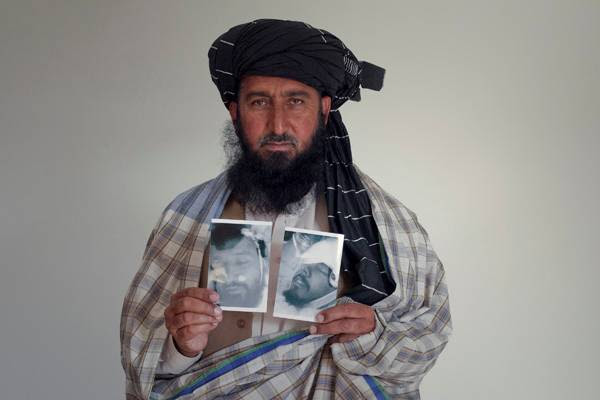
Father of Pakistani Drone Victim Kidnapped by Pakistani State

by Medea Benjamin - CODEPINK

In October 2012, I was with a CODEPINK delegation in Pakistan meeting families impacted by US drone strikes.

Kareem Khan, a journalist from the tribal area of Waziristan, told us the heartbreaking story of a drone strike that killed his son and brother. Since then, Khan has been seeking justice through the Pakistani courts and organizing other drone strike victims.

On February 10, he planned to fly to Europe for meetings with German, Dutch and British parliamentarians to discuss the negative impact drones are having on Pakistan. But days before his trip, in the early hours of the morning on February 5, he was kidnapped from his home in Rawalpindi by 15-20 men in police uniform and plain clothes. He has not been seen since.

Terrified, Khan’s wife said the men did not disclose their identities and refused to say why her husband was being taken away.

Khan’s tragic story began on December 31, 2009. He had been working as a journalist in the capital, Islamabad, leaving his family back home in Waziristan. On New Year’s Eve, he got an urgent call from his family: their home had just been struck by a US drone, and three people were dead; Kahn’s 18 year-old son Zahinullah, his brother Asif Iqbal and a visiting stonemason who was working on the village mosque.

The news reports alleged that the target of the strike had been a Taliban commander, Haji Omar, but Khan insisted that Haji Omar was nowhere near the village that night. Khan also told us that the same Taliban commander had been reported dead several times by the media. “How many times could the same man be killed?” Khan asked.

Khan’s son had just graduated from high school, and his brother was a teacher at the local school. Khan’s brother taught his students that education was far more powerful than weapons. The drone strike that killed their teacher taught the students a very different lesson.

Khan was the first family member of a drone victim to take the issue into the Pakistani courts. With the help of human rights lawyer Shahzad Akbar, he sent a legal notice to the American Embassy in Islamabad, detailing the wrongful deaths and accusing the CIA of grossly violating the Universal Declaration of Human Rights.

Speaking outside a police station after he had lodged a legal complaint, Khan asked that Jonathan Banks, the CIA station chief in Islamabad, be forbidden from leaving Pakistan until he answered to the charges against him. (While CIA agents’ identities are secret, Banks’ name had been revealed in the local press.) While the accusation against Banks made headlines in Pakistan, the CIA chief was allowed to flee the country. But in the ensuing months, Khan organized other families of victims and jointly, they have been pressing their cases in several lawsuits now pending in Pakistani courts.

Khan has obviously been an embarrassment to the US government, which is responsible for the drone strikes. And it has put the Pakistani government in an uncomfortable position. On the one hand the Pakistani government—from Prime Minister Zardari to the legislature—has come out publicly against the US use of drones. But Pakistan is heavily dependent on US aid and the government has been unwilling to bring charges against the US in international bodies or send an irrefutable rebuke by shooting down a US drone.

Given the political backroom deals that have obviously been going on between the US and Pakistan, Khan took great risks by speaking out. “Kareem Khan is not only a victim, but an important voice for all other civilians killed and injured by US drone strikes,” said Khan’s lawyer Shahzad Akbar, who is also Director of the Foundation for Fundamental Rights. “Why are Pakistani officials so scared of Kareem and his work that they felt the need to abduct him in an effort to silence his efforts?”

How tragically ironic that someone whose loved ones have been killed by a CIA drone program condemned by the Pakistani government has now been abducted by that very government. Pakistanis we have talked to say this could only happen on orders from the United States, which did not want Khan speaking out in Europe against US policy.

“We are extremely worried about Kareem Khan, a gentle, warm man who opened up his heart to us when we were in Pakistan,” said Alli McCracken, who was on the CODEPINK delegation.
 “We have launched a campaign to free him, flooding the Pakistani Embassy and State Department with calls.” 

You can add your voice to the call to free Kareem Kahn by signing this petition, which will be hand-delivered to Pakistani and US government officials.

Japan's Militarist Turn Earns New Name: “Collective Self Defense” Allows “Dynamic/Static Deterrence”

What Me Worry? US Says OK to Japanese Collective Self Defense

by Peter Lee - China Matters

The United States government, be it the White House, the security strategists, the civilian leadership, or the military brass apparently has no qualms about Prime Minister Shinzo Abe’s decision to affirm Japan’s right to practice “collective self defense” or CSD.

In the face of public disapproval, resistance by the impotent political opposition, and gentle pushback from the LDP’s minority partner, Abe looks to implement CSD by by asserting the government’s right to repurpose the provisions of the pacifist constitution without formal revision or reinterpretation, but through a simple statement by the Cabinet. US supporters have been cheering him on in this awkward process, like anxious soccer parents on the sidelines trying to will a clumsy toddler into nudging the ball into an empty net.

Whether or not this is a good idea, especially as it will permit Japan to restructure its security relationship with its future Asian allies without US mediation, history will, as they say, judge.

But it looks like the United States is all in, on the basis that collective self defense will enable Japanese military forces to assist the US.

I assume Ambassador to Japan Caroline Kennedy (term as ambassador and, indeed, total public career to date: three months) lacks the political or foreign policy throw-weight to freelance on key US-Japan issues, so this statement of support for collective self defense is probably an authoritative indicator of Obama administration preferences:

“Japan will be a more effective alliance partner if its Self-Defense Forces are able to help defend American soldiers or sailors if they are attacked,” U.S. Ambassador Caroline Kennedy told the Asahi newspaper in an interview published Jan. 23.

Prime Minister Abe dutifully sang from the same hymnal before the Diet on February 6:

Japanese Prime Minister Shinzo Abe stressed Thursday that the country's continued self-imposed ban on exercising its right to collective self-defense will adversely affect the Japan-U.S. alliance.

Referring to a case in which Japanese Maritime Self-Defense Force vessels fail to counterattack when U.S. warships conducting joint activities come under attack, Abe said at a meeting of the House of Councillors Budget Committee, "The damage from the failure to the Japan-U.S. alliance is immeasurable."

I am presuming that in the original Japanese the case Abe described was a hypothetical: susbstitute “if” for “when” and “would be” for “is”.

Questions of grammar and tense aside, this scenario is bullshit under the current pacifist constitution.

The 1997 US-Japan Defense Guidelines explicitly and repeatedly mandate bilateral wartime operations, as can be seen from this useful table of responsibilities (Table 1).

The Self-Defense Force is, as the name implies, supposed to defend Japan, including US installations in Japan, but not the U.S. Seventh Fleet. The Seventh Fleet is designed to look after itself and is quite up to the task. The current structure of the US-Japan defense relationship is specifically and intensively structured to preclude the need for “collective self defense”. The contingency that a U.S. naval vessel will find itself getting mugged like a granny coming back from the store by a Chinese PLAN ship and will desperately need the help of the SDF is, to put it charitably, remote under current circumstances.

According Michael Cucek’s twitter feed, the head of the opposition DPJ, Banri Kaeida, put this very question to Prime Minister Abe during Diet question time.

For a long time, the United States has been keen to enable certain joint US/Japanese operations under the current pacifist constitution, with the Japanese side moving beyond its traditional “only defend Japan” restrictions to provide benign, non-aggressive services such as minesweeping, reconnaissance, and ballistic missile defense, especially for new regional security missions only tangentially related to the defense of Japan. Scenarios for increased Japanese participation in joint activities while still within the bounds of the current constitution have been painstakingly parsed by American and Japanese strategists.

CSD would add another facet to this kind of operation. A joint flotilla could be sailing around outside Japanese waters, protecting sea lanes and whatnot, with the Japanese vessels sweeping mines, launching helicopters and surveillance planes, etc. in full pacifist constitution mode. Then, if things get ugly—for instance if a US vessel and equipment of an unnamed Asian power get into a scrape—then it’s Showtime! And the Japanese ships are free to blast away to protect the US ship, protect themselves, launch pre-emptive strikes…the list of kinetic operations possible under the label of collective self-defense is probably quite extensive.

With this sort of scenario in mind, perhaps US planners might believe that “collective self defense” kills two birds with one stone. First, it allows Japanese forces to be more easily and effectively integrated into new US regional missions beyond genuinely defensive ones; second, it keeps Japanese forces in a “defensive” posture, so the United States and countries around the region don’t have to worry about the Japanese military going off on independent military adventures.

In other words, “collective self defense” gives the US the best of both worlds: Japan pulls its military weight in the alliance, but Japan’s military ambitions remain under the thumb of the pacifist constitution.

And, of course, there is AirSeaBattle, the fantasy war with the PRC scenario. It is tempting to speculate that the outlandishness of AirSeaBattle—which assumes a sneak attack by the PRC, a massive war of attrition between the US & the PRC that never goes nuclear because, well, then we couldn’t have AirSeaBattle and the Navy and Air Force deserve to have nice things—was an intentional feature designed to demonstrate that integration of US and Japanese military operations through collective self defense was the only feasible pathway to continued US military hegemony in the Western Pacific.

However, “the best laid plans of man and men and Powerpoint Rangers oft go agly” to paraphrase Robert Burns, and the Abe administration is already looking for ways to perform an active of strategic jiu jitsu and turn “collective self defense” into a potential instrument for independent Japanese action.

The Abe administration’s architects of CSD have made it quite clear that they intend to apply collective self defense beyond the one nation with whom Japan currently has a formal alliance relationship, the US.

The deeper game in “collective self defense” was frankly discussed by its architect:

Yousuke Isozaki, a special adviser to Abe on security policy, is spearheading the effort on collective self-defense and says the change will deepen security ties with the U.S. and allow Japan to reach out to other allies.
 
“We want to be able to discuss security with friendly countries other than the U.S.,”he said in a Jan. 17 interview. “If we are bound hand and foot, we cannot talk. We cannot even say we will protect one another if something happens.”

In other words, “collective self defense” could be exercised in the aid of future allies, like India, the Republic of the Philippines, and Vietnam, all of whom are already eager partners in heightened security cooperation with Japan targeting the People’s Republic of China.

Theoretically, therefore, the Philippines for instance could get into a scrape with the PRC over the Scarborough Shoal with the understanding that it could call on Japan for assistance.

Furthermore, Japanese and US military strategists have already created a doctrinal template that can easily be transferred into a non-Japanese Asian security environment.

Aficionados of the causes of WWIII might want to bone up on the concept of “grey zone crises”—conditions that are neither peacetime nor wartime. This is apparently the formulation that Japanese military strategists and their opposite numbers at the Pentagon have been working off since the first Senkaku crisis in 2010 to characterize the friction with the PRC over various ocean matters.

Sugio Takahashi of the National Institute for Defense Studies has characterized China’s maritime activities, including but not limited to the Senkakus as a gray zone crisis. He takes as his premise the assertion that the PRC is not pursuing interests to be negotiated diplomatically with other stakeholders, but is exploiting perceived power vacuums.

The framing, of course, is important here. If the PRC is pursuing specific interests that it perceives to be important and legitimate, that’s a matter for engagement and negotiation. If, on the other hand, the PRC’s priority is to push competitors out of the west Pacific, the proper riposte is defiance, a refusal to discuss or compromise, deterrence, and—if deterrence is challenged—the convincing ability to retaliate.

In past months, quite noticeably the calls to confront China and eschew appeasement have become more strident. I leave it to observers to ponder whether this state of affairs reflects a fuller understanding of the PRC’s actual nefarious ambitions, or whether militant declarations are meant to obfuscate relatively routine PRC moves to define and regulate its maritime affairs, and foreclose engagement options in favor of a conflict narrative that is much more favorable to the joint Japanese and US security strategy.

The prescription for the problem, according to Mr. Takahashi, is “dynamic deterrence”, lots of flying and sailing around the sensitive area, intelligence gathering, and posturing by Japan to disabuse the PRC of the misconception that a power vacuum exists in Japan’s sovereign territory—which is pretty much the scenario we see around the Senkakus. The key, however, is that “dynamic deterrence”--which, it occurs to me is another one of those unintentionally revealing Abe oxymorons, like "active pacifism"-- is backed up by “static deterrence”: the fact that US forces are on tap if Japanese forces do get involved in a military confrontation.

Takahashi described how the “gray zone crisis” is supposed to play out.

… East China Sea …current situation is unfolding in the gray-zone. … Japan will take care of the current situation by herself as long as it continues to be in gray-zone. However, if it escalates to a military conflict, the situation will drastically change and fall under “Article Five” in the Security Treaty, where the two militaries will cooperate operationally. In this case, he primary player will be the SDF, and assistance from the U.S. to Japan is to be expected. 

And, in case you are wondering, Takahashi apparently doesn’t think that the gray zone formula is only relevant for areas where Japan claims sovereignty.

Takahashi concludes:

[G]ray-zone crisis is also applicable to the South China Sea… The development of a permanent body as well as procedures for operational cooperation and coordination will give additional flexibility to deal with challenges in the gray-zone.

If the “dynamic deterrence” in “gray zone crisis” formula is applied to future security agreements between Japan and the Philippines, Vietnam, and/or India as Japanese strategists already wish to apply them to the US relationship, then the priority in the South China Sea will evolve from “managing friction” to “preserving credible deterrence”, a rather risky state of affairs.

As to whether the Philippines would be more likely to pursue a confrontational policy with the PRC as a result of the prospect of Japanese back-up, I would have to say Yes. In fact, I consider the Philippines’ adoption of the inflammatory Hitler/Sudetenland rhetoric against the PRC part and parcel of a strategy to foreclose the possibility that the Philippines will be called upon to negotiate an arrangement with its overbearing neighbor (nobody negotiates with Hitler, after all) and justify a security arrangement with Japan that puts a couple of sizable bricks in the China-containment wall.

In fact, as the name implies, the whole concept of “collective self defense” can be seen as a strategy to further institutionalize alliances to negate the PRC’s preferred posture of resolving its various regional issues bilaterally, quietly, and to the PRC’s advantage. One might add that this strategy carries with it the greater potential that disputes with the PRC—now carefully conducted through maritime patrol vessels as peacetime sovereignty issues—will become militarized under the “deterrence” doctrine.

“Collective self defense” would allow the “dynamic/static deterrence” template to be applied to Asia, with Japan assuming the role of “static deterrent” backstop in place of the United States. It’s a lower-risk strategy that placates the United States, avoids the political and diplomatic minefield of constitutional revision, and dodges the high profile hassle and risk of acting as the front-line military power, but is at the same time an important practical step in Japan’s recovery of full military sovereignty.

This potential goes a long way to explaining why Prime Minister Abe might be willing to pay the political cost of pushing through “collective self defense” even though Japanese voters are cool on the idea and it seems to have only marginal significance within the context of the US-Japan alliance.

One might argue whether applying the “dynamic deterrence” formula to non-US alliances is good, bad, or indifferent—ever since Secretary of State Clinton was running the show, the basic assumption has been that an atmosphere of tension produces a virtuous cycle of action and Chinese reaction which pushes more Asian countries in the US camp, and therefore should not be discouraged-- but it should in any evaluation be a focus of US concern.

After all, the alliance arrangement in the Pacific to date is hub-and-spoke, with the US as the hub and Japan, the ROK, and the Philippines as the spokes. With the creeping restoration of full Japanese military sovereignty and a sour regional attitude (quietly encouraged by Japan, I think) that Japan and the Asian democracies can no longer rely completely on Uncle Sam's long term mettle and have to look to themselves i.e. the spokes are thinking of dealing more directly with each other, I would have thought that the United States might have some mental reservations endorsing the whole collective self-defense posture.

One assumes that strategic thinkers in the US military/think tank complex have some kind of a handle on this.

However, I don’t see any public acknowledgement that, by supporting collective self defense they are potentially disintermediating the United States in the restructuring of the Asian security regime and putting a powerful lever in the hands of the Japanese government. I also reached out to two eminences in Asian security for comment, and they both stated that the potential for Japanese security freelancing in the context of "collective self defense" did not concern them.

So it’s just me. Obviously CSD is a done deal now.

All that remains is the public relations bullshit, in other words the hyping of the China threat to justify some rather brisk, borderline constitutionally shady executive measures to assert the Japanese prerogative to “collective self defense”.

Prime Minister Abe has assiduously cultivated the China threat narrative and, if a recent report from Mainichi Shinbun concerning the infamous PRC ADIZ is accurate, has been cynically provoking it with the acquiescence of the US over the last few years.

English language readers can get the story, thanks to the Shingetsu News Agency:

The Mainichi Shinbun obtained secret documents of the Defense Ministry (fortunately for them, and the public, the new secrets law is not yet in force to suppress such inconvenient information), which reveal that senior PLA officers had told their Japanese counterparts in May 2010 that they had established the ADIZ in the East China Sea, and that they were moving toward making it public in the future. Moreover, they invited dialogue with the Japan Self-Defense Forces on how the two countries’ overlapping ADIZs might be managed in order to reduce the possibility of mishaps.

Moreover, the Japanese government was, according to the Mainichi Shinbun, well aware “in early 2013” that “final preparations” for the announcement of the Chinese ADIZ were underway. We can safely surmise that if the Japanese government knew the declaration was forthcoming, that the US government, with its vast intelligence agencies, was also aware of it.

So the announcement of the Chinese ADIZ may have been a “surprise” to the general public, but it was certainly not a surprise to either the Japanese nor the US governments, which had in fact been tipped off by the PLA itself several years earlier.

What emerges, therefore, is not the sudden, aggressive, unilateral action by the Chinese government that has been so vividly portrayed by the world’s media for the last couple months, but rather a careful, longterm process that culminated in the November 2013 public declaration.

It is also worth noting that in June 2010 — one month after the Japanese were informed by China of their intention to establish a large, overlapping ADIZ in the East China Sea — the Japanese government announced (unilaterally) an expansion of its own ADIZ in the East China Sea by 22 kilometers in order to include Yonaguni Island.

So the real story of the ADIZ (which in my opinion also resembles the real story of the Captain Zhan uproar of 2010 and the Senkaku purchase of 2013 in its lineaments of Machiavellian plotting and, I might add, prestige media gormlessness in the face of the determined and less-than-100%-honest Japanese government PR operation) is that the Abe administration had been notified of the PRC’s plans, sandbagged the PRC by waiting for the announcement in order to vociferously attack it, and used it to hype an exaggerated China threat and grease the skids for collective self defense, all with the apparent collusion of the US.

Or, as the Bloomberg article put it:

“What is lucky for the Abe administration is that China set up the ADIZ,” said the LDP’s Hirasawa, who tutored Abe as a child. “That proves that what the Abe administration has been saying is correct. China is taking a stronger and stronger stance.”


What luck, indeed.

State-Sponsered Gangsterism: Obama's French Connection

US-France's New Terror Tango

by Finian Cunningham - PressTV

France is emerging as the new partner-in-crime in support of America's imperialist machinations across the globe.

Up until recently, that thuggish role was filled by British in what was euphemistically referred to as the "special Anglo-American relation". Now the French are taking over from the British as the "oldest ally."

French leader Francois Hollande is currently on a three-day visit to the US, greeted by President Barack Obama with full military honors and a 21-gun salute. "France and US enjoy renewed alliance," reports the Washington Post.

The American president has gone out of his way to emphasize historical links between the two countries, with the opening visit for the two leaders taking place at Thomas Jefferson's estate in Charlottesville, Virginia.

Jefferson was the US envoy to France leading up to the French revolution in 1795, before he went on to become the third president of the US following its war of independence from the British Crown.

To mark the beginning of Hollande's trip, the two presidents penned an op-ed piece in the Washington Post in which they boasted of their prominent role in "global security."

"More nations must step forward and share [our] burden and costs of leadership. More nations must meet their responsibilities for upholding global security and peace and advancing freedom and human rights," wrote Obama and Hollande.

In other words, Obama and Hollande are exhorting other nations to similarly trash international law and embrace their style of state-sponsored gangsterism.

Of course, such self-congratulatory nonsense is to be expected coming from the world's leading terrorist states. The US-led wars in Iraq and Afghanistan which killed more than one million people are still festering like open wounds, while the French have lately emerged as the new warmonger in Africa with four illegal interventions on that continent in the past four years - Cote d'Ivoire, Libya, Mali and currently the Central African Republic.

The portrayal of criminal wars of aggression inflicted on foreign countries as some kind of noble role of leadership upholding global security and peace" is truly sickening. It is a disturbing sign of the blatant lawlessness gripping the world - a reckless climate fostered by the very international conduct of Washington and Paris.

Obama and Hollande take perverse credit by claiming their countries' threats of all-out war on Syria last August-September resulted in the Syrian government decommissioning its stockpile of chemical weapons.

The reality is that the US and France were on the brink of perpetrating yet another war crime based on a propaganda stunt carried out by Western-backed mercenaries - a stunt which killed hundreds of women and children.

It was only outraged public opinion around the world, as well as deft Russian diplomacy, that forced Washington and Paris to back down from their contrived aggression against Syria. This false-flag incident needs to be followed up with prosecution of American and French warmongers, not self-congratulatory op-ed pieces in the servile and equally complicit Western media.

This rogues' gallery is why the Americans are pulling out all the sycophantic stops for their French guest this week. The French are providing the Americans with crucial political and moral cover for their imperialist wrecking-ball conduct around the world. Without the French, the Americans would appear isolated as the world's biggest rogue terror state, or as it vainly refers to itself, "superpower."

This French cover for naked American state terrorism is seen with regard to Syria, as noted above. It is also true for Iran. The French are lending credibility to the US claims that the delicate negotiations between the P5+1 and Tehran are all about "preventing Iran from obtaining nuclear weapons." This is a ludicrous charade that hardly anyone believes anymore, which is being used to justify barbaric sanctions and bullying against the Iranian people. It is a shame on the French that they are dignifying this repugnant American policy towards Iran.

The pay-off for this pair of rogue states is in their mutual carve-up of Africa. As Obama and Hollande state:

"Perhaps nowhere is our new partnership on more vivid display than in Africa."

The two leaders claim that France "with US logistical and information support" is pushing back "Al Qaeda terrorists in Mali" and "stemming violence" between communities in Central Africa. These are utter lies, easily proven, as can be read in previous editions of this column.

French illegal intervention in Africa has led to more instability and violence for the ulterior purpose of gaining a neo-imperialist foothold on the world's richest continent for natural resources. Under the cynical guise of "upholding security and humanitarian peace", the real motive is securing rich natural resources for Western capital, while trying to block China's legitimate economic advances gained right across Africa over the past decade.

As the main former colonial power in Africa, with advantages conferred by language and historical contacts, the Americans need the French to spearhead the new military re-conquest of that continent.

A case in point is Djibouti in the Horn of Africa. This former French colony with its Francophone administration serves as a military base for some 4,000 American troops based at Camp Lemmonier, adjacent to the main civilian airport. From the base in Djibouti, the Americans operate drones, attack helicopters and troop transport planes to support the newly formed US East Africa Response Force that reaches into Somalia, Sudan and Kenya, among other countries.

That is why Obama is extending a welcoming hand to Hollande this week. Despite the florid, grandiloquent language, the Americans and the French are emerging as the world's new terrorist tango team, and both of them know it.

Finian Cunningham (born 1963) has written extensively on international affairs, with articles published in several languages. He is a Master’s graduate in Agricultural Chemistry and worked as a scientific editor for the Royal Society of Chemistry, Cambridge, England, before pursuing a career in journalism.

Monday, February 10, 2014

Remembering Aaron Swartz: 'The Day We Fight Back'

Rest in peace, Aaron Swartz

by Greg Palast

 But that’s impossible, isn’t it?

Like the restless Jewish prophets before you, you are an outcast in your own land. And like the prophets before you, you are trouble, Aaron, a lot of trouble.

Thank you for troubling us, Aaron. You are trouble, but very good trouble.

Socrates’ suicide, like yours, was a state-sponsored execution. And like Socrates in death, you’ve conferred an immortal obligation on the living to resist the temptation to let the rulers attach their strings, the strings that turn us from people with hearts into puppets with property.

Rest in peace, Aaron Swartz. And I promise you, I won’t.

*
On Tuesday, a coalition of civil liberties organizations joined under the banner, “The Day We Fight Back,” will commemorate the death of Aaron Swartz with a push to limit a national security surveillance apparatus gone berserk.

To honor Swartz, the Robin Hood of the Information Liberation Front, I am publishing again the story I wrote about him for Vice Magazine one year ago, shortly after his death, “Aaron Swartz Died for Piers Morgan’s Sins.”


Greg Palast's new film Vultures and Vote Rustlers was just released last month.
Greg Palast is the author of the New York Times bestsellers Billionaires amp; Ballot Bandits,The Best Democracy Money Can Buy, Armed Madhouse and the highly acclaimed Vultures' Picnic.

HELP US FOLLOW THE MONEY. Visit thePalast InvestigativeFund's store or simply make a tax-deductible contribution to keep our work alive!

Subscribe to Palast's Newsletter and podcasts.
Follow Palast on Facebook and Twitter.

www.GregPalast.com

Gorilla Radio with Chris Cook, Greg Palast, Janine Bandcroft, Food for the Future Rally Feb 10, 2014

This Week on GR

by C. L. Cook - Gorilla-Radio.com

On today's program, a master class in journalism, high finance, and election fraud from reporting investigator, Greg Palast. Trained at Chicago's infamous School of Economics under Milton Friedman, (Godfather of Trickle Down Economics and inspiration to the Gordon Gekko mantra of the era, "Greed is Good") Palast transitioned into journalism because the reporters he was feeding stories of malfeasance in high places to routinely screwed them up, or allowed their editors bleed them white.

But, as a trailblazing DIY investigator, he soon discovered; having a great story to tell doesn't mean the media will tell it. Finding himself in the position of having, as he says, "to take hostages to get his name in American papers," Greg Palast ventured across the Atlantic, finding a home with London's Guardian newspaper, and later presenting his investigations on the BBC flagship television program, Newsnight.

Listen. Hear.

Greg Palast is the author of several books, including New York Times bestsellers, 'Billionaires & Ballot Bandits,' 'Armed Madhouse,' and 'The Best Democracy Money Can Buy.' His latest is 'Vultures' Picnic,' named by the BBC's Newsnight Review as "Book of the Year for 2012." In addition to Britain's Guardian, (who regards him as "the most important investigative journalist of our time...") and the BBC, Greg's reports are featured Stateside by The Nation Magazine, Rolling Stone, Harper's Magazine, and online at Truthout.org.

Greg Palast film exposés include: 'Billionaires and Ballot Bandits - The Movie,' 'Vultures and Vote Rustlers.' 'Why We Occupy - Palast Live!,' 'Big Easy to Big Empty,' 'Bush Family Fortunes, ' 'The Assassination of Hugo Chavez,' 'Palast Investigates,' 'The Election File,' and with Jeremy Scahill 'Big Noise: From Black Water to White Powder.'

Greg Palast in the first half.

And; today, people from across the province gathered here in Victoria for 'Food for the Future - the Family Day Rally for Farmland.' Right now, in support of "the fracking industry," "foreign electricity exports," or for "increased demand for domestic electricity consumption," (all lines used to variously "justify" the destruction by dam construction of thousands of hectares of prime farm land in the Peace River country) the proposed Site C dam would certainly, in a time of growing food insecurity, destroy not just some of our best farm land and wildlife habitat, but would also displace homesteader families, and visit again cultural dispossession for First Nations.

I went down to the demo to catch the tenor of the times.

Food for our future at the first Family Day for Farmland rally in the second half.


And; Victoria Street Newz publisher, and CFUV Radio broadcaster, Janine Bandcroft will be here between segments to bring us up to speed with some of the other newz emanating from our streets and beyond. But first, Greg Palast and the state of his industry, journalism, under the Industrial State.

Chris Cook hosts Gorilla Radio, airing live every Monday, 5-6pm Pacific Time. In Victoria at 101.9FM, and on the internet at: http://cfuv.uvic.ca.  He also serves as a contributing editor to the web news site, http://www.pacificfreepress.com. Check out the GR blog at: http://gorillaradioblog.blogspot.ca/
G-Radio is dedicated to social justice, the environment, community, and providing a forum for people and issues not covered in the corporate media.

Sunday, February 09, 2014

Fracked Ethos: The Ethics of Fracking

Ethics of Fracking

by Ethics of Fracking


Farm Bill Starving Food Stamp program of $8.7 Billion

How The Farm Bill's $8.7 Billion Food Stamp Cuts Hurt Working America 

by TRNN

Working age adults now make up the majority of food stamp recipients, but would raising their hourly wage get them off food stamps?

Jessica Desvarieux is a multimedia journalist who serves as the Capitol Hill correspondent for the Real News Network. Most recently, Jessica worked as a producer for the ABC Sunday morning program, This Week with Christianne Amanpour. Before moving to Washington DC, Jessica served as the Haiti corespondent for TIME Magazine and TIME.com. Previously, she was as an on-air reporter for New York tri-state cable outlet Regional News Network, where she worked before the 2010 earthquake struck her native country of Haiti. From March 2008 - September 2009, she lived in Egypt, where her work appeared in various media outlets like the Associated Press, Voice of America, and the International Herald Tribune - Daily News Egypt. She graduated from Northwestern University's Medill School of Journalism with a Master of Science degree in journalism. She is proficient in French, Spanish, Haitian Creole, and has a working knowledge of Egyptian Colloquial Arabic. Follow her @Jessica_Reports. 

A Reckoning to Come: The Truth About the Destruction of Iraq

The Truth About The Criminal Bloodbath in Iraq Can't Be 'Countered' Indefinitely


by John Pilger - JohnPilger.com

The BBC's Today programme is enjoying high ratings, and the Mail and Telegraph are, as usual, attacking the corporation as leftwing. Last month a single edition of the Radio 4 show was edited by the artist and musician PJ Harvey. What happened was illuminating.

Harvey's guests caused panic from the moment she proposed the likes of Mark Curtis, a historian rarely heard on the BBC who chronicles the crimes of the British state; the lawyer Phil Shiner and the Guardian journalist Ian Cobain, who reveal how the British kidnap and torture; the WikiLeaks founder, Julian Assange; and myself.

There were weeks of absurd negotiation at Broadcasting House about ways of "countering" us and whether or not we could be allowed to speak without interruption from Today's establishment choristers. What this brief insurrection demonstrated was the fear of a reckoning. The crimes of western states like Britain have made accessories of those in the media who suppress or minimise the carnage.

The Faustian pacts that contrived a world war a century ago resonate today across the Middle East and Asia, from Syria to Japan. Then, as now, cover-up was the principal weapon. In 1917 David Lloyd George, the British prime minister, declared:

"If people knew the truth, the war would be stopped tomorrow. But of course they don't know and can't know."

On Harvey's Today programme I referred to a poll conducted by ComRes last year that asked people in Britain how many Iraqis had been killed as a result of the 2003 invasion. A majority said that fewer than 10,000 had been killed: a figure so shockingly low it was a profanity.

I compared this with scientific estimates of "up to a million men, women and children [who] had died in the inferno lit by Britain and the US". In fact, academic estimates range from less than half a million to more than a million. John Tirman, the principal research scientist at the MIT Centre for International Studies, has examined all the credible estimates; he told me that an average figure "suggests roughly 700,000". Tirman pointed out that this excluded deaths among the millions of displaced Iraqis, up to 20% of the population.

The day after the Harvey programme, Today "countered" with Toby Dodge of the LSE – a former adviser to General Petraeus, one of the architects of the disasters in both Iraq and Afghanistan – along with Mowaffak al-Rubaie, a former Iraqi "national security adviser" in the occupation regime, and the man who led Saddam Hussein to his lynching.

These BBC-accredited "experts" rubbished, without evidence, the studies and reduced the number of dead by hundreds of thousands. The interviewer, Mishal Husain, offered no challenge to their propaganda. They then "debated" who was responsible. Lloyd George's dictum held; culpability was diverted.

But for how long? There is no question that the epic crime committed in Iraq has burrowed into the public consciousness. Many recall that "shock and awe" was the extension of a murderous blockade imposed for 13 years by Britain and the US and suppressed by much of the mainstream media, including the BBC. Half a million Iraqi infants died as a result of sanctions, according to Unicef. I watched children dying in hospitals, denied basic painkillers.

Ten years later, in New York, I met the senior British official responsible for these "sanctions". He is Carne Ross, once known in the UN as "Mr Iraq". He is now a truth-teller. I read to him a statement he had made to a parliamentary select committee in 2007:

"The weight of evidence clearly indicates that sanctions caused massive human suffering among ordinary Iraqis, particularly children. We, the US and UK governments, were the primary engineers and offenders of sanctions and were well aware of the evidence at the time but we largely ignored it and blamed it on the Saddam government … effectively denying the entire population the means to live."
I said to him: "That's a shocking admission."

"Yes, I agree," he replied. "I feel ashamed about it ..." He described how the Foreign Office manipulated a willing media. "We would control access to the foreign secretary as a form of reward to journalists. If they were critical, we would not give them the goodies of trips around the world. We would feed them factoids of sanitised intelligence, or we'd freeze them out."

In the build-up to the 2003 invasion, according to studies by Cardiff University and Media Tenor, the BBC followed the Blair government's line and lies, and restricted airtime to those opposing the invasion. When Andrew Gilligan famously presented a dissenting report on Today, he and the director general were crushed.

The truth about the criminal bloodbath in Iraq cannot be "countered" indefinitely. Neither can the truth about our support for the medievalists in Saudi Arabia, the nuclear-armed predators in Israel, the new military fascists in Egypt and the jihadist "liberators" of Syria, whose propaganda is now BBC news.

There will be a reckoning – not just for the Blairs, Straws and Campbells, but for those paid to keep the record straight.

America's Military Aid for Israel's Peace for War Process

Washington’s Military Aid to Israel: Fake Peace Process, Real War Process

by Chase Madar  - TomDisptach

We Americans have funny notions about foreign aid. Recent polls show that, on average, we believe 28% of the federal budget is eaten up by it, and that, in a time of austerity, this gigantic bite of the budget should be cut back to 10%. In actual fact, barely 1% of the federal budget goes to foreign aid of any kind.

In this case, however, truth is at least as strange as fiction. Consider that the top recipient of U.S. foreign aid over the past three decades isn’t some impoverished land filled with starving kids, but a wealthy nation with a per-head gross domestic product on par with the European Union average, and higher than that of Italy, Spain, or South Korea.

Consider also that this top recipient of such aid -- nearly all of it military since 2008 -- has been busily engaged in what looks like a nineteenth-century-style colonization project. 
 Tomgram: Chase Madar, The Folly of Arming Israel

Last year, Secretary of State John Kerry condemned Russia’s pledge to sell advanced antiaircraft weapons to Syria, noting that it would have “a profoundly negative impact on the balance of interests and the stability of the region.” And really, who could argue that pouring more weapons into a heavily-armed corner of the globe, roiled by conflict, convulsed by civil strife and civil war, could do anything but inflame tensions and cost lives?

Yet Kerry’s State Department, in coordination with the Pentagon, has been content to oversee a U.S.-sanctioned flood of arms and military matériel heading into the region at a breakneck pace. In December, the Defense Security Cooperation Agency (DSCA), which coordinates sales and transfers of military equipment, announced that it had approved the sale of more than 15,000 Raytheon-produced anti-tank missiles to Saudi Arabia under two separate agreements worth a combined $1 billion. Last month, potential deals to sell and lease Apache attack helicopters to the embattled government of Iraq were also made public, in addition to an agreement that would send the country $82 million worth of Hellfire missiles. At about the same time, the DSCA notified Congress of a possible $270 million sale of F-16 fighters to the United Arab Emirates (UAE). All of this was on top of a potential $600 million deal to train 6,000-8,000 Libyan military personnel and a prospective $150 million agreement for Marines to mentor members of the UAE’s Presidential Guard Command, both of which were announced in January. And let’s not forget that, last month, Congress also turned on the spigot to allow automatic weapons and anti-tank rockets to flow to rebel fighters in -- wait for it -- Syria.

Of course, Muslim nations around the region aren’t alone in receiving U.S. support. The U.S. also plies Israel, the only nuclear power in the Middle East, with copious amounts of aid. Since World War II, the Jewish state has, in fact, been the largest beneficiary of U.S. foreign assistance, almost all of it military, according to the Congressional Research Service. Yet the topic is barely covered in the U.S. Today, TomDispatch regular Chase Madar provides a remedy for that collective silence, taking us on a deep dive into what that aid means in Israel, Palestine, and Washington. In the process, he explains why you’re unlikely ever to hear John Kerry suggest that sending weapons to Israel might have “a profoundly negative impact on the balance of interests and the stability of the region.” Nick Turse

Washington’s Military Aid to Israel: 

Fake Peace Process, Real War Process

by Chase Madar

In the late 1940s, our beneficiary expelled some 700,000 indigenous people from the land it was claiming. In 1967, our client seized some contiguous pieces of real estate and ever since has been colonizing these territories with nearly 650,000 of its own people. It has divided the conquered lands with myriad checkpoints and roads accessible only to the colonizers and is building a 440-mile wall around (and cutting into) the conquered territory, creating a geography of control that violates international law.

“Ethnic cleansing” is a harsh term, but apt for a situation in which people are driven out of their homes and lands because they are not of the right tribe. Though many will balk at leveling this charge against Israel -- for that country is, of course, the top recipient of American aid and especially military largesse -- who would hesitate to use the term if, in a mirror-image world, all of this were being inflicted on Israeli Jews?

Military Aid to Israel


Arming and bankrolling a wealthy nation acting in this way may, on its face, seem like terrible policy. Yet American aid has been flowing to Israel in ever greater quantities. Over the past 60 years, in fact, Israel has absorbed close to a quarter-trillion dollars in such aid. Last year alone, Washington sent some $3.1 billion in military aid, supplemented by allocations for collaborative military research and joint training exercises.

Overall, the United States covers nearly one quarter of Israel’s defense budget -- from tear gas canisters to F-16 fighter jets. In their 2008-2009 assault on Gaza, the Israeli Defense Forces made use of M-92 and M-84 “dumb bombs,” Paveway II and JDAM guided “smart bombs,” AH-64 Apache attack helicopters equipped with AGM-114 Hellfire guided missiles, M141 “bunker defeat” munitions, and special weapons like M825A1 155mm white phosphorous munitions -- all supplied as American foreign aid. (Uniquely among Washington’s aid recipients, Israel is also permitted to spend 25% of the military funding from Washington on weapons made by its own weapons industry.)

Why is Washington doing this? The most common answer is the simplest: Israel is Washington’s “ally.” But the United States has dozens of allies around the world, none of which are subsidized in anything like this fashion by American taxpayer dollars. As there is no formal treaty alliance between the two nations and given the lopsided nature of the costs and benefits of this relationship, a far more accurate term for Israel’s tie to Washington might be “client state.”

And not a particularly loyal client either. If massive military aid is supposed to give Washington leverage over Israel (as it normally does in client-state relationships), it is difficult to detect. In case you hadn’t noticed, rare is the American diplomatic visit to Israel that is not greeted with an in-your-face announcement of intensified colonization of Palestinian territory, euphemistically called “settlement expansion.”

Washington also provides aid to Palestine totaling, on average, $875 million annually in Obama’s first term (more than double what George W. Bush gave in his second term). That’s a little more than a quarter of what Israel gets. Much of it goes to projects of dubious net value like the development of irrigation networks at a moment when the Israelis are destroying Palestinian cisterns and wells elsewhere in the West Bank. Another significant part of that funding goes toward training the Palestinian security forces. Known as “Dayton forces” (after the American general, Keith Dayton, who led their training from 2005 to 2010), these troops have a grim human rights record that includes acts of torture, as Dayton himself has admitted. One former Dayton deputy, an American colonel, described these security forces to al-Jazeera as an outsourced "third Israeli security arm." According to Josh Ruebner, national advocacy director for the U.S. Campaign to End the Occupation and author of Shattered Hopes: Obama’s Failure to Broker Israeli-Palestinian Peace, American aid to Palestine serves mainly to entrench the Israeli occupation.

A Dishonest Broker


Nothing is equal when it comes to Israelis and Palestinians in the West Bank, East Jerusalem, and the Gaza Strip -- and the numbers say it all. To offer just one example, the death toll from Operation Cast Lead, Israel’s 2008-2009 assault on the Gaza Strip, was 1,385 Palestinians (the majority of them civilians) and 13 Israelis, three of them civilians.

And yet mainstream opinion in the U.S. insists on seeing the two parties as essentially equal. Harold Koh, former dean of the Yale Law School and until recently the top lawyer at the State Department, has been typical in comparing Washington’s role to “adult supervision” of “a playground populated by warring switchblade gangs.” It was a particularly odd choice of metaphors, given that one side is equipped with small arms and rockets of varying sophistication, the other with nuclear weapons and a state-of-the-art modern military subsidized by the world’s only superpower.

Washington’s active role in all of this is not lost on anyone on the world stage -- except Americans, who have declared themselves to be the even-handed arbiters of a conflict involving endless failed efforts at brokering a “peace process.” Globally, fewer and fewer observers believe in this fiction of Washington as a benevolent bystander rather than a participant heavily implicated in a humanitarian crisis. In 2012, the widely respected International Crisis Group described the “peace process” as “a collective addiction that serves all manner of needs, reaching an agreement no longer being the main one.”

The contradiction between military and diplomatic support for one party in the conflict and the pretense of neutrality cannot be explained away. “Looked at objectively, it can be argued that American diplomatic efforts in the Middle East have, if anything, made achieving peace between Palestinians and Israelis more difficult,” writes Rashid Khalidi, a historian at Columbia University, and author of Brokers of Deceit: How the U.S. Has Undermined Peace in the Middle East.

Evasive Silence


American policy elites are unable or unwilling to talk about Washington’s destructive role in this situation. There is plenty of discussion about a one-state versus a two-state solution, constant disapproval of Palestinian violence, occasional mild criticism (“not helpful”) of the Israeli settlements, and lately, a lively debate about the global boycott, divestment, and sanction movement (BDS) led by Palestinian civil society to pressure Israel into a “just and lasting” peace. But when it comes to what Americans are most responsible for -- all that lavish military aid and diplomatic cover for one side only -- what you get is either euphemism or an evasive silence.

In general, the American media tends to treat our arming of Israel as part of the natural order of the universe, as beyond question as the force of gravity. Even the “quality” media shies away from any discussion of Washington’s real role in fueling the Israel-Palestine conflict. Last month, for instance, the New York Times ran an article about a prospective “post-American” Middle East without any mention of Washington’s aid to Israel, or for that matter to Egypt, or the Fifth Fleet parked in Bahrain.

You might think that the progressive hosts of MSNBC’s news programs would be all over the story of what American taxpayers are subsidizing, but the topic barely flickers across the chat shows of Rachel Maddow, Chris Hayes, and others. Given this across-the-board selective reticence, American coverage of Israel and Palestine, and particularly of American military aid to Israel, resembles the Agatha Christie novel in which the first-person narrator, observing and commenting on the action in calm semi-detachment, turns out to be the murderer.

Strategic Self-Interest and Unconditional Military Aid


On the activist front, American military patronage of Israel is not much discussed either, in large part because the aid package is so deeply entrenched that no attempt to cut it back could succeed in the near future. Hence, the global BDS campaign has focused on smaller, more achievable targets, though as Yousef Munayyer, executive director of the Jerusalem Fund, an advocacy group, told me, the BDS movement does envision an end to Washington’s military transfers in the long term. This makes tactical sense, and both the Jerusalem Fund and the U.S. Campaign to End the Israeli Occupation are engaged in ongoing campaigns to inform the public about American military aid to Israel.

Less understandable are the lobbying groups that advertise themselves as “pro-peace,” champions of “dialogue” and “conversation,” but share the same bottom line on military aid for Israel as their overtly hawkish counterparts. For instance, J Street (“pro-Israel and pro-peace”), a Washington-based nonprofit which bills itself as a moderate alternative to the powerhouse lobbying outfit, the American Israel Public Affairs Committee (AIPAC), supports both “robust” military aid and any supplemental disbursements on offer from Washington to the Israeli Defense Forces. Americans for Peace Now similarly takes the position that Washington should provide “robust assistance” to ensure Israel’s “qualitative military edge.” At the risk of sounding literal-minded, any group plumping for enormous military aid packages to a country acting as Israel has is emphatically not “pro-peace.” It’s almost as if the Central America solidarity groups from the 1980s had demanded peace, while lobbying Washington to keep funding the Contras and the Salvadoran military.

Outside the various factions of the Israel lobby, the landscape is just as flat. The Center for American Progress, a Washington think tank close to the Democratic Party, regularly issues pious statements about new hopes for the “peace process” -- with never a mention of how our unconditional flow of advanced weaponry might be a disincentive to any just resolution of the situation.

There is, by the way, a similar dynamic at work when it comes to Washington’s second biggest recipient of foreign aid, Egypt. Washington’s expenditure of more than $60 billion over the past 30 years ensured both peace with Israel and Cold War loyalty, while propping up an authoritarian government with a ghastly human rights record. As the post-Mubarak military restores its grip on Egypt, official Washington is currently at work finding ways to keep the military aid flowing despite a congressional ban on arming regimes that overthrow elected governments. There is, however, at least some mainstream public debate in the U.S. about ending aid to the Egyptian generals who have violently reclaimed power. Investigative journalism nonprofit ProPublica has even drafted a handy “explainer” about U.S. military aid to Egypt -- though they have not tried to explain aid to Israel.

Silence about U.S.-Israel relations is, to a large degree, hardwired into Beltway culture. As George Perkovich, director of the nuclear policy program at the Carnegie Endowment for International Peace told the Washington Post, “It’s like all things having to do with Israel and the United States. If you want to get ahead, you don’t talk about it; you don’t criticize Israel, you protect Israel.”

This is regrettable, as Washington’s politically invisible military aid to Israel is not just an impediment to lasting peace, but also a strategic and security liability. As General David Petraeus, then head of U.S. Central Command, testified to the Senate Armed Services Committee in 2010, the failure to reach a lasting resolution to the conflict between the Israelis and Palestinians makes Washington’s other foreign policy objectives in the region more difficult to achieve. It also, he pointed out, foments anti-American hatred and fuels al-Qaeda and other violent groups. Petraeus’s successor at CENTCOM, General James Mattis, echoed this list of liabilities in a public dialogue with Wolf Blitzer last July:

“I paid a military security price every day as a commander of CENTCOM because the Americans were seen as biased in support of Israel, and that [alienates] all the moderate Arabs who want to be with us because they can’t come out publicly in support of people who don’t show respect for the Arab Palestinians.”

Don’t believe the generals? Ask a terrorist. Khalid Sheikh Mohammed, mastermind of the 9/11 attacks now imprisoned at Guantanamo, told interrogators that he was motivated to attack the United States in large part because of Washington’s leading role in assisting Israel’s repeated invasions of Lebanon and the ongoing dispossession of Palestinians.

The Israel lobby wheels out a battery of arguments in favor of arming and funding Israel, including the assertion that a step back from such aid for Israel would signify a “retreat” into “isolationism.” But would the United States, a global hegemon busily engaged in nearly every aspect world affairs, be "isolated" if it ceased giving lavish military aid to Israel? Was the United States "isolated" before 1967 when it expanded that aid in a major way? These questions answer themselves.

Sometimes the mere act of pointing out the degree of U.S. aid to Israel provokes accusations of having a special antipathy for Israel. This may work as emotional blackmail, but if someone proposed that Washington start shipping Armenia $3.1 billion worth of armaments annually so that it could begin the conquest of its ancestral province of Nagorno-Karabakh in neighboring Azerbaijan, the plan would be considered ludicrous -- and not because of a visceral dislike for Armenians. Yet somehow the assumption that Washington is required to generously arm the Israeli military has become deeply institutionalized in this country.

Fake Peace Process, Real War Process


Today, Secretary of State John Kerry is leading a push for a renewed round of the interminable American-led peace process in the region that has been underway since the mid-1970s. It’s hardly a bold prediction to suggest that this round, too, will fail. The Israeli minister of defense, Moshe Ya’alon, has already publicly mocked Kerry in his quest for peace as “obsessive and messianic” and added that the newly proposed framework for this round of negotiations is “not worth the paper it’s printed on.” Other Israeli high officials blasted Kerry for his mere mention of the potential negative consequences to Israel of a global boycott if peace is not achieved.

But why shouldn’t Ya’alon and other Israeli officials tee off on the hapless Kerry? After all, the defense minister knows that Washington will wield no stick and that bushels of carrots are in the offing, whether Israel rolls back or redoubles its land seizures and colonization efforts. President Obama has boasted that the U.S. has never given so much military aid to Israel as under his presidency. On January 29th, the House Foreign Affairs Committee voted unanimously to upgrade Israel’s status to “major strategic partner.” With Congress and the president guaranteeing that unprecedented levels of military aid will continue to flow, Israel has no real incentive to change its behavior.

Usually such diplomatic impasses are blamed on the Palestinians, but given how little is left to squeeze out of them, doing so this time will test the creativity of official Washington. Whatever happens, in the post-mortems to come there will be no discussion in Washington about the role its own policies played in undermining a just and lasting agreement.

How much longer will this silence last? The arming and bankrolling of a wealthy nation committing ethnic cleansing has something to offend conservatives, progressives, and just about every other political grouping in America. After all, how often in foreign policy does strategic self-interest align so neatly with human rights and common decency?

Intelligent people can and do disagree about a one-state versus a two-state solution for Israel and Palestine. People of goodwill disagree about the global BDS campaign. But it is hard to imagine what kind of progress can ever be made toward a just and lasting settlement between Israel and Palestine until Washington quits arming one side to the teeth.

“If it weren’t for U.S. support for Israel, this conflict would have been resolved a long time ago,” says Josh Ruebner. Will we Americans ever acknowledge our government's active role in destroying the chances for a just and lasting peace between Palestine and Israel?

Chase Madar (@ChMadar) is a lawyer in New York, a TomDispatch regular, and the author of The Passion of [Chelsea] Manning: The Story behind the Wikileaks Whistleblower (Verso).

Follow TomDispatch on Twitter and join us on Facebook or Tumblr. Check out the newest Dispatch Book, Ann Jones’s They Were Soldiers: How the Wounded Return From America’s Wars -- The Untold Story.

Copyright 2014 Chase Madar

TPP, Not with a Bang: Defeating America with a Fountain Pen

Third World America’s Trade Agreements

by Charles Sullivan - The Picket

The corporate media would have us believe that the nation is in the midst of an economic recovery.

In the shadow of the approaching mid-term elections, the president cites the number of jobs created and speaks optimistically about America’s economic future. The future is indeed bright, but only if you are among the wealthiest one percent of the population.

For instance, since the 2007 recession, the greatest crisis of capitalism in 75 years, corporate profits have risen, CEO salaries and bonuses are at record levels and the stock market is soaring. By contrast, workers’ wages have stagnated for more than four decades, benefits are either few or non-existent, and workers are encumbered with debt that forces them to perform multiple jobs— if they can find them—in order to survive.

Jobs that offer long-term security and a living wage are scarce even for those with university degrees. Adjusted for inflation, today’s workers are worse off than they were in the late 1960s.

Whose economic recovery is this?


According to economic forecaster Gerald Celente, 90 percent of the jobs created in 2013 were part-time, most of them paying low wages and providing no benefits. Student loan debt exceeds $1.1 trillion, a number that surpasses the combined credit card liability of the nation.

These debts cannot be discharged through bankruptcy. The big banks and corporations that finance political campaigns have no such restrictions placed upon them.

Even the unemployment figures are deceiving. According to the latest government data, unemployment is at 6.7 percent. In reality, that number is probably closer to 17 or 18 percent, according to economist Richard Wolff.

The government does not count people whose unemployment benefits have expired or those who have given up looking for work. A cashier working 10 hours a week at Food Lion is counted as fully employed.

We have students, many of them burdened with immense debt, entering a job market that makes it difficult for them to earn a decent living. This is the economic minefield that workers across America must navigate. A little truth might help them find their way and comprehend why this is happening.

One of the many reasons we face such a bleak economic future is the implementation of Free Trade Agreements (FTAs).

In 1992, the North American Free Trade Agreement (NAFTA) was implemented between the governments of the United States, Canada and Mexico. NAFTA was fast-tracked through Congress by President H.W. Bush and signed into law by President Clinton. NAFTA was promoted in the commercial media as an engine for job creation in the United States, an assertion that is contradicted by the facts. According to Wolff, more than 700,000 jobs fled the country as the result of NAFTA, many of them providing middle class incomes and benefits.

Those jobs are never coming back. It is not just the number of jobs created that matter, it is the quality of those jobs that is a predictor of economic success.

Furthermore, the mass movement of U.S. corporations to Mexico wrecked the already struggling Mexican economy, particularly its sustainable, locally-based businesses. The situation initiated a mass migration of immigrant Mexican workers to the U.S. in search of better-paying jobs than were available to them in the homeland. Multinational corporations seeking a source of cheap labor and a climate of deregulation are the primary benefactors. The quantifiable effect that NAFTA has had on the U.S. workers is staggering job loss, reduced wages and increasing economic disparity.

Now, with the backing of corporate lobbyists, yet another FTA—the Trans-Pacific Partnership (TPP)—is being fast-tracked through Congress. Both Democrats and Republicans are enthusiastically backing the legislation.

The Electronic Frontier Foundation describes the process: “The Trans-Pacific Partnership is a secretive, multi-national trade agreement that threatens to extend restrictive intellectual property (IP) laws across the globe and rewrite international rules on its enforcement.” TTP is currently being negotiated between nine to 12 nations.

If enacted, TTP will permit privately-owned corporations to have hegemony over the governments of sovereign nations. For instance, if the state of West Virginia were to ban the use of genetically modified soybeans, Monsanto Corporation could either overturn the decision or extort billions of dollars in remuneration from their projected loss of profits. FTAs belligerently put corporate profits before the legitimate needs of the people and the welfare of the biosphere.

The implications for students and working class people will be profoundly detrimental.

Hundreds of thousands of jobs will flee the country, wages will fall yet again, autonomy will be lost, and the job market will resemble the wreckage of the Hesperus. FTAs are the means by which the power elite are turning the U.S. into a Third World economy.

Charles Sullivan is a Master Naturalist, community activist, and free-lance writer residing in the Ridge and Valley Province of geopolitical West Virginia.

This article was originally published at The Picket