Monday, December 08, 2014

Israel Bombs Syria Again, Gives Arms and Medical Support to "Terrorists"

AIDING ISIS: Israel Bombs Syria For Fifth Time in 18 Months, Gives Arms, Medical Aid to Militants

by 21st Century Wire

SPECIAL REPORT
 
Contrary to popular belief, Israel is very much involved in the destabilization of Syria

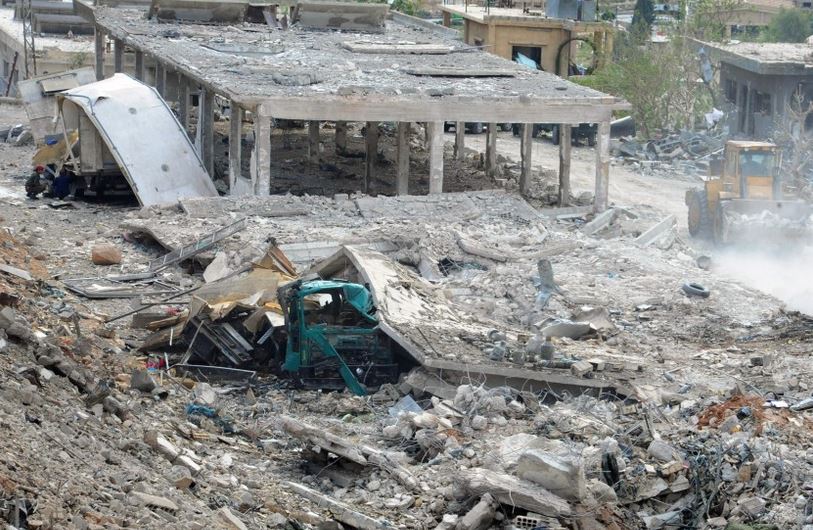
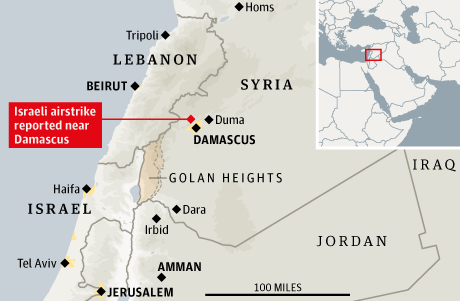
JERUSALEM Israeli warplanes hit two separate areas near Syria’s capital of Damascus yesterday, including a facility at the city’s international airport, and reveals Tel Aviv’s role in the destabilzation of Syria and aiding Islamic insurgents inside Syria.

“This afternoon, the Israeli enemy targeted two safe areas in Damascus province, namely the Dimas area and the Damascus International Airport,” said the Syrian Armed Forces General Command.
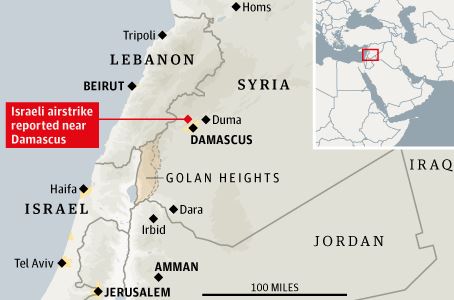
(Image Source: The Guardian)

As is customary, Israeli officials refused to ‘confirm or deny’ the bombing raid, in what the Jerusalem Post describes as, “Maintaining a policy of ambiguity that is meant to allow the other side to save face and to stave off retaliation”.Israel is claiming this, its fifth unprovoked airstrike against Syria in 18 months (see full list of attacks below), was carried out as a ‘defensive measure’, claiming that Syria was “hiding sophisticated weaponry destined for Hezbollah in Lebanon”. A Lebanese TV correspondent believes that Israel struck 10 crucial intelligence-linked locations in Syria that “belonging to Iran”. The same news outlet also reported other explosions heard near the Israeli-Lebanese border, allegedly from IDF airforce maneuvers.

Israel regularly claims it is under threat from neighboring Syria and Lebanon, and has used this as justification to attack its neighbors. The Syrian government claims Israel’s latest airstrike had an ulterior motive, describing it as “direct aggression carried out to help the Syrian government’s opponents”. The ‘opponents’ Syrian officials are referring to are US-backed rebels, ISIS and Turkey.

Syrian officials also stated, “This direct aggression by Israel was carried out to help the terrorists in Syria, after our armed forces secured important victories in Deir Ezzor, Aleppo and elsewhere.”

The Syrian army spoke to Press TV, who reported: “Israel’s direct support for terrorism in Syria,” saying it had targeted two ‘safe areas’ in Damascus where both civilian and military aircraft operated. The international airport in Damascus is located southeast of the capital near areas such as Eastern Ghouta, where ISIL militants have gained control over much of its territories.”
 
Turkey has been working together with Israel to 
diminish Syria’s military capability to fight off 
US-backed rebel terrorist groups, most notably when 
Israel used a Turkish military base to launch its July 5, 2013 

Israel and Turkey Joint Support of FSA, al Nusra and ISIS


Israel’s strategic partnership with Turkey, a known supporter of Islamic foreign fighters in Syria (see details below), puts Israel squarely in the frame with US and GCC-backed Islamic insurgent fighting groups, including Islamic State terrorist (ISIS/ISL).

Among other sources, the Jerusalem Post reported one testimony from an ISIS fighter confirming that Turkey is funding the Islamic terrorist group. As a NATO member and close ally of the US, it is now widely understood how Turkey has played the pivotal role in helping foreign terrorist fighters and ISIS militants, in its wider effort to help destablize and exact the official US foreign policy of regime change in Damascus, Syria.

RELATED: Team America: ISIS is ‘McCain’s Army’

This week, it was also confirmed how Turkey has refused to allow a U.S.-led coalition aircraft to attack ISIS jihadists which Turkey regularly allows to roam freely in and out of its country. Despite regular denials and obfuscation from officials in Washington, it’s now well known how its other close U.S. allies – including Saudi Arabia, Qatar, Bahrain, Kuwait and Jordan – have all played key material roles in backing Islamic fighters including al Nusra brigades and ISIS terrorists.

Israel and ISIS: ‘Arms for Medical’ Scandal


Foreign Policy Magazine (CFR) recently published documents admitting how Israel is also treating ISIS terrorists for free in its hospitals, and providing medical care and other unidentified supplies to the insurgents. Global Research/Washington’s Blog explains the revelation:

“In the past three months, battle-hardened Syrian rebels have transported scores of wounded Syrians across a cease-fire line that has separated Israel from Syria since 1974, according to a 15-page report by U.N. Secretary-General Ban Ki-moon on the work of the U.N. Disengagement Observer Force (UNDOF). Once in Israel, they receive medical treatment in a field clinic before being sent back to Syria, where, presumably, some will return to carry on the fight.”

“U.N. blue helmets responsible for monitoring the decades-old cease-fire report observing armed opposition groups “transferring 89 wounded persons” from Syrian territory into Israel, where they were received by members of the Israel Defense Forces, according to the report. The IDF returned 21 Syrians to armed opposition members back in Syria, including the bodies of two who died.”

AID & COMFORT: Israel President Benjamin Netanyahu greets 
and congratulates Syrian Islamic terrorist at Israeli hospital.

Israel’s assistance to terrorist rebels in Syria is not limited to medical, as the Times of Israel reported in September 2014, about Israel’s ‘Arms for Medical’ exchange with Syrian insurgents:

“A Free Syrian Army commander, arrested last month by the Islamist militia Al-Nusra Front, told his captors he collaborated with Israel in return for medical and military support, in a video released this week.

In a video uploaded to YouTube Monday … Sharif As-Safouri, the commander of the Free Syrian Army’s Al-Haramein Battalion, admitted to having entered Israel five times to meet with Israeli officers who later provided him with Soviet anti-tank weapons and light arms. Safouri was abducted by the al-Qaeda-affiliated Al-Nusra Front in the Quneitra area, near the Israeli border, on July 22.
“The [opposition] factions would receive support and send the injured in [to Israel] on condition that the Israeli fence area is secured. No person was allowed to come near the fence without prior coordination with Israel authorities,” Safouri said in the video.
“In the edited confession video, in which Safouri seems physically unharmed, he says that at first he met with an Israeli officer named Ashraf at the border and was given an Israeli cellular phone. He later met with another officer named Younis and with the two men’s commander, Abu Daoud. In total, Safouri said he entered Israel five times for meetings that took place in Tiberias. Following the meetings, Israel began providing Safouri and his men with “basic medical support and clothes” as well as weapons, which included 30 Russian [rifles], 10 RPG launchers with 47 rockets, and 48,000 5.56 millimeter bullets.”

In March, Haaretz also reported:

“The Syrian opposition is willing to give up claims to the Golan Heights in return for cash and Israeli military aid against President Bashar Assad, a top opposition official told Al Arab newspaper, according to a report in Al Alam. (…) The Western-backed militant groups want Israel to enforce a no-fly zone over parts of southern Syria to protect rebel bases from air strikes by Assad’s forces, according to the report.”In addition to this, on Sept 23, 2014, Israel used its air defense support to provide air cover to Islamic militants (ISIS) in Syria’s Golan Heights region when an IDF Patriot Missile battery shot down a Syrian MIG21, allegedly because it “violated Israeli airspace”. 
 
The timing of the Israeli move was somewhat uncanny – coming just after the US launched its unilateral attack on Islamic State targets in northeastern Syria.

Just one week before the Israeli attack, Jabhat al-Nusra fighters drove out hundreds of UN peacekeepers from the Syrian side of the Golan Heights, taking their uniforms and vehicles, and terrorist fighters “had succeeded in occupying all of the Syrian side” of the Golan Heights, forcing troops from the UN Disengagement Observer Force (UNDOF) to retreat. It’s well known about Israel’s desire to retake the Golan Heights and the Civil War in Syria may provide them with the perfect cover they need to achieve this.

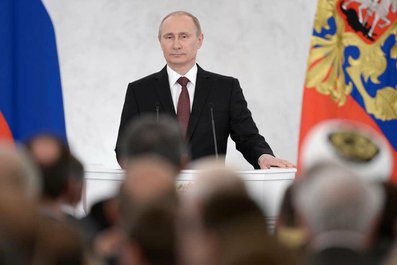
Israel’s support of Islamic militants in Syria also includes supplying strategic information to ISIS/ISIL fighters operating inside Syria. Alexander Prokhanov, a senior aide to Russian President Vladimir Putin, told Press TV on Dec 7, 2014, that the Israeli Mossad spy agency has been providing key data and information, as well as ‘training assistance’ to ISIS/ISIL militants.

Many now believe that the US and Israel’s current involvement in toppling Syria’s leadership is a continuation Israel’s Yinon Plan to decapitate the leadership of any remaining Arab nationalist governments in the Middle East and North Africa.

21WIRE journalist Andrew McKillop explains, “The plan was named after Israel’s minister of foreign affairs at the time of the 1982 invasion of Lebanon and occupation of Beirut, with about 25 000 dead, this divide-and-rule geostrategy plan for the MENA (Middle East and North Africa) lives on. Victims of this strategy since 2011 – operated by Israel, the US and Saudi Arabia – are divided and weakened states like Iraq, Libya, Yemen and Syria. Egypt and even Tunisia can also possibly be added to the list. Others, like Lebanon, can be identified as likely short-term target victim countries.“

IDF STRIKE SYRIA: Aftermath of the Israeli airstrike 
near Damascus in May 2013.

UN Afraid to Cite Israel Over Airstrikes

Following yesterday’s attack by Israel, Syria has called for UN sanctions against Israel over its air strikes in violation of Syria’s territorial sovereignty as recognized by international law and conventions.

Al Jazeera reports, “There was no threat of retaliation, but the Syrian Foreign Ministry said on Monday it had asked Ban Ki-moon, UN secretary-general, and the Security Council to impose sanctions on Israel, describing Sunday’s alleged attack as “a heinous crime against Syria’s sovereignty”.Thus far, the UN policy towards Israel’s continuous attacks on its neighbors is not to mention it or ask for any accountability for any of Israel’s actions, even if it has killed civilians – a policy which is in direct contravention to both the Geneva Conventions and the Nuremburg principles forbidding undeclared wars.

Many now believe that this is because of heavy diplomatic pressure being placed, as well as threats issued by Washington DC to pull funding from UN if it ever moves against Israeli interests, which would include its numerous undeclared military incursions.

Since 2006, Israel has conducted several air strikes on Syria. Below is a description of those attacks:


Damascus and Dimas attack (7 December 2014) – Alleged Israeli airstrikes in Syria against a warehouse of advanced S-300 missiles, which were en route to Hezbollah in Lebanon.[25]
Missile Strike at Golan Heights (23 September 2014) - IDF Patriot Missile battery shot down a Syrian MIG21, allegedly because it violated Israeli airspace.
Beqaa Valley airstrike (24 February 2014) – Two airstrikes against an alleged Hezbollah missile base in Lebanon near the border with Syria.[21]
2nd Latakia attack (26 January 2014) – Alleged Israeli airstrike against a Syrian warehouse of S-300 missiles.[20]
Snawbar airstrike (30 October 2013) – Alleged Israeli airstrike at an air defense site in Snawbar.[19]
Latakia explosion (5 July 2013) – Alleged Israeli airstrike on a Syrian depot containing Russian-made Yakhont anti-ship missiles.[18]
Airstrikes on Syria (3-5 May 2013) – Airstrikes on Syria against alleged long-ranged weapons sent from Iran to Hezbollah.[16][17]
Jamraya airstrike (30 January 2013) – Alleged Israeli airstrike on a Syrian convoy allegedly transporting weapons to Hezbollah.[14] Other sources stated the targeted site was a military research center in Jamraya responsible for developing biological and chemical weapons.[15]
Operation Orchard (6 September 2007) Israeli airstrike on a ‘suspected’ nuclear reactor[4] in the Deir ez-Zor region[5] of Syria. The Israeli and U.S. governments imposed virtually total news blackouts immediately after the raid that held for seven months.[6]
Ain es Saheb airstrike (5 October 2003) - Israeli Air Force operation against an alleged Palestinian militant training camp in Ain es Saheb, Syria.

Additionally, Israel has attacked Lebanon repeatedly, most notably in 2006 when it slaughtered some 1,500 Lebanoese civilians during it’s indiscriminate bombing raids hitting residential areas and targeting ‘infrastructure’ in neighboring Lebanon:

Operation Just Reward
(12 July – 14 August 2006) - Israeli counterattack which began with air force bombing of Hezbollah positions in Southern Lebanon. Israel attacked Lebanon in this bloody siege which ended with 1,191 Lebanese dead in total (including combatants and foreign civilians in Lebanon) and over 4,000 injured. The IDF lost only 121 soldiers, and Israeli civilians said to have died were 43.

21WIRE contributors to this report are Peter Sterry, Jason Smith and Patrick Henningsen.

SEE ALSO: Team America: ISIS is ‘McCain’s Army’

READ MORE ISRAEL NEWS AT: 21st Century Wire Israeli Files

READ MORE ISIS NEWS AT: 21st Century Wire 21st Century Wire ISIS Files


COPYRIGHT © 2009-2014 · 21WIRE MEDIA · ALL RIGHTS RESERVED WORLDWIDE

The Six Freed from Guantánamo and Those Who Remain

Who Are the Six Men Freed from Guantánamo and Given New Homes in Uruguay?

by Andy Worthington

Great news regarding Guantánamo, as yesterday the Pentagon announced that six men, long cleared for release from the prison — four Syrians, a Palestinian and a Tunisian — have been resettled in Uruguay as refugees.

Back in March, President José Mujica of Uruguay — a former political prisoner — announced that he had been approached by the Obama administration regarding the resettlement of Guantánamo prisoners and had offered new homes to a number of men, cleared for release from the prison in 2009 by President Obama’s high-level Guantánamo Review Task Force, who could not be safely repatriated.

In May, President Mujica’s offer was confirmed, as I explained in an article entitled, “Uruguay’s President Mujica Confirms Offer of New Home for Six Guantánamo Prisoners,” but the releases were then delayed. The Obama administration ran into problems with Congress after releasing five Taliban prisoners in exchange for Sgt. Bowe Bergdahl, the sole US prisoner of war in Afghanistan, and, according to various reports, defense secretary Chuck Hagel dragged his heels when it came to notifying Congress of any proposed releases, as required by law. In addition President Mujica ran up against hostility from his political opponents — which was particularly difficult in an election year.

Now, however, the election is over, with victory going to Tabaré Vázquez, an ally of Mr. Mujica’s, and the delays attributed to Chuck Hagel have also been overcome. As the New York Times reported, “the deal was ready to go in March,” but “Mr. Hagel waited until July to notify Congress that he was approving” it. Then, in August, “when the United States sent a plane to Guantánamo to bring the men out, Mr. Mujica balked, preferring to avoid the media spectacle of their arrival in the middle of an election campaign to choose his successor.”

Speaking after the men’s release, Mr. Mujica “emphasised that Uruguay would not place restrictions on the mobility of the six men,” as the New York Times described it, “saying that their arrival with refugee status meant that ‘the first day they want to leave, they can go.'” The Times also noted that, “When they arrived in Uruguay early Sunday morning, five of the men were taken to a military hospital for examinations. A sixth who was described as in more fragile health was taken to a civilian facility, Hospital Maciel, according to a report the Uruguayan radio station Monte Carlo.”

Meanwhile, Chuck Hagel’s reluctance to approve prisoner releases apparently contributed to his resignation last month.

As the New York Times reported:

Mr. Hagel approved a flurry of transfers in late 2013, but in 2014 the process ground to a halt as he did not move on the Uruguay deal, nor on a proposal to repatriate four low-level Afghans and make other arrangements in the pipeline.

His reluctance to sign off on these agreements contributed to a deterioration in his relations with the White House. In May, President Obama’s national security adviser, Susan Rice, sent Mr. Hagel a memo pressuring him to pick up the pace, and Mr. Hagel, in an interview, explained that he was in no hurry to approve deals.

“My name is going on that document; that’s a big responsibility,” Mr. Hagel said at the time, adding: “What I’m doing is, I am taking my time. I owe that to the American people, to ensure that any decision I make is, in my mind, responsible.”

Recently, however, there has been movement on Guantánamo that is reassuring. Fawzi al-Odah, one of the last two Kuwaitis in the prison, was sent home a month ago, then five men — four Yemenis and a Tunisian — were given new homes in Georgia and Slovakia, and then a Saudi was repatriated.

136 men are now held in Guantánamo, 67 of whom have also been approved for release. The majority are Yemenis, still held because of a reluctance throughout the US establishment to overcome their fears about the security situation in Yemen. One notable prisoner still held is Shaker Aamer, the last British resident in Guantánamo, whose ongoing imprisonment is inexplicable, and last week I set up a new campaign, We Stand With Shaker, in an effort to secure his release.

The case of Abu Wa’el Dhiab


The best-known of the six men is Abu Wa’el Dhiab (ISN 722), a Syrian approved for release in 2009, who has been on a hunger strike because of his despair at ever being released, and who, as a result, has been force-fed. A father of three children — originally four, but one child died during his long years in US custody — Mr. Dhiab is in a wheelchair because of the decline in his health during 12 years in US custody, and he has, this year, been involved in a high-profile legal challenge against the US government.

Mr. Dhiab’s case was turned down in the District Court last summer, but revived after a favourable ruling in the D.C. Circuit Court in February, and in May, as I explained in a recent article:

[District Judge Gladys Kessler, in Washington D.C.,] briefly ordered the government to stop force-feeding Mr. Dhiab. This order was swiftly rescinded, as Judge Kessler feared for his life, but she also ordered videotapes of his “forcible cell extractions” (FCEs) and his force-feeding to be made available to his lawyers, who had to travel to the Pentagon’s secure facility outside Washington D.C. to see them. After viewing them, Cori Crider, his lawyer at Reprieve, said, “While I’m not allowed to discuss the contents of these videos, I can say that I had trouble sleeping after viewing them,” and added, “I have no doubt that if President Obama forced himself to watch them, he would release my client tomorrow.”

Mr. Dhiab himself said, “I want Americans to see what is going on at the prison today, so they will understand why we are hunger-striking, and why the prison should be closed. If the American people stand for freedom, they should watch these tapes. If they truly believe in human rights, they need to see these tapes.”

More recently, Judge Kessler — disappointingly — upheld the authorities’ right to force-feed Mr. Dhiab, and also granted the government a delay in releasing the videotapes, but Mr. Dhiab’s case has been a profound embarrassment for the authorities, and, as the New York Times reported, although Mr. Dhiab’s release “may make most of that case moot … a dispute over whether videotapes of the procedure must be disclosed to the public is expected to continue” — and other prisoners, still held, are also queuing up to challenge their treatment and to seek the release of videotapes.

Commenting on his release, Cori Crider, a director at the legal action charity Reprieve and one of Mr. Dhiab’s lawyers, said, “We are grateful to the government of Uruguay — and President Mujica in particular — for this historic stand. Very few people can truly comprehend what the cleared men in Guantánamo suffer every day, but I believe Mr. Mujica is one of them. Like President Mujica, Mr. Dhiab spent over a dozen years as a political prisoner. Mr Dhiab was never charged, never tried. President Mujica spent two years at the bottom of a well; for most of the past two years, Mr. Dhiab has had a team of US soldiers truss him up like an animal, haul him to a restraint chair, and force-feed him through a tube in his nose. The President’s compassion has ended that torture.”

She added, “Despite years of suffering, Mr. Dhiab is focused on building a positive future for himself in Uruguay. He looks forward to being reunited with his family and beginning his life again. Let’s not forget that Mr. Dhiab and the others freed today leave behind many men just like them: cleared prisoners warehoused in Guantánamo for years. Reprieve hopes that other countries will follow the positive example set by the Uruguayan government today, and help President Obama close this shameful prison.”

The stories of the five other men


The three other Syrians — Abdelhadi Faraj (ISN 329), described by the Pentagon as Omar Mahmoud Faraj, Ali Hussein al-Shaaban (ISN 327), described as Ali Hussain Shaabaan, and Ahmed Adnan Ahjam (ISN 326) — had been living together in Kabul, and, as I explained in my article in May, “were captured together crossing from Afghanistan to Pakistan in December 2001, along with another man, Maasoum Mouhammed, who was given a new home in Bulgaria in May 2010. Last year, Abdelhadi Faraj took part in the prison-wide hunger strike, and his account of that can be found here, and in February 2013 Ali Hussein al-Shaaban’s lawyer, Michael E. Mone Jr., wrote a brief article about his client’s plight for the Boston Globe. Also see here for an interview with David Marshall, the lawyer for Ahmed Adnan Ahjam, conducted in 2013 by The Talking Dog.”

As I explained in my book The Guantánamo Files in 2007, “The four men certainly matched the profiles of economic migrants, drifting from country to country in search of employment, and drawn to Afghanistan by its Arab-influenced reputation for welcoming Muslims from all around the world. They said that only seven people lived at the house (themselves, the owner, and two other Syrians), and that they all put money in to keep the place running.”

According to his account in Guantánamo, Ahmed Adnan Ahjam worked for a Saudi humanitarian aid charity, Ali Hussein al-Shaaban, who was just 19 years old when he was seized, came from a poor family in Syria and had been an ironsmith in his father’s store, and told his tribunal at Guantánamo that he went to Afghanistan because he wanted to move there to seek a new life, and Abdelhadi Faraj, who was just 20 years old when he was seized, told his tribunal at Guantánamo that he had been working at a store in Kabul, but that he planned to move on to Pakistan when a friend sent him money from Syria.

As I also explained in my article in May:

The Palestinian is Mohammed Taha Mattan (ISN 684) [described by the Pentagon as Mohammed Tahanmatan] who, like the handful of other Palestinians held at Guantánamo and subsequently released, is essentially stateless, as he can only return with the blessing of the Israeli government, which has no intention of allowing any former Guantánamo prisoner to return home. I most recently profiled his case here, mentioning how he was not only cleared for release by President Obama’s Guantánamo Review Task Force in 2009 … but had also been cleared for release under President Bush in October 2007. I also mentioned how, sadly, he was one of three prisoners that the German government was planning to accept in 2010, but was the only one left behind in Guantánamo when, for political reasons, a decision was taken to accept just two men instead.

The sixth man is Abdul Bin Mohammed Abis Ourgy (ISN 502), aka Abdul bin Ourgy, a Tunisian, who had been an Italian resident before he traveled to Afghanistan and was captured and sent to Guantánamo. He had apparently married an Afghan woman in 2000, and was first cleared for release by a military review board under the Bush administration.

What now?


In its coverage of the release of the prisoners, the New York Times noted, “The Obama administration hopes that if it can shrink the inmate population to two digits, Congress will revoke a law that bars the transfer of detainees into the United States. It would be far cheaper for taxpayers to house the inmates on domestic soil, and the White House argues that closing Guantánamo would eliminate a propaganda symbol for terrorists to use against the country.”

As I noted in an article last week, Congress has passed legislation preventing prisoners from being moved to the US mainland for many years (in the annual National Defense Authorization Act), and recently did so again. As a result, reducing the population by making sure that all the men approved for release are actually released is a good way for President Obama to argue that keeping Guantánamo open for less than 70 men is unjustifiably expensive.

That ought to be obvious, as should Guantánamo’s damaging role as a propaganda symbol. However, the prison — and the fate of those held there — has become part of a cynical game of political football, which not only costs a fortune and inflames tensions abroad. In addition, the existence of Guantánamo also causes inestimable damage to the US’s claim that it is a nation that respects the rule of law, and after nearly 13 years that terrible situation needs to be brought to an end.


Andy Worthington is a freelance investigative journalist, activist, author, photographer and film-maker. He is the co-founder of the “Close Guantánamo” campaign, the director of “We Stand With Shaker,” calling for the immediate release from Guantánamo of Shaker Aamer, the last British resident in the prison, and the author of The Guantánamo Files: The Stories of the 774 Detainees in America’s Illegal Prison (published by Pluto Press, distributed by Macmillan in the US, and available from Amazon — click on the following for the US and the UK) and of two other books: Stonehenge: Celebration and Subversion and The Battle of the Beanfield. He is also the co-director (with Polly Nash) of the documentary film, “Outside the Law: Stories from Guantánamo” (available on DVD here — or here for the US).

To receive new articles in your inbox, please subscribe to Andy’s RSS feed — and he can also be found on Facebook (and here), Twitter, Flickr and YouTube. Also see the six-part definitive Guantánamo prisoner list, and “The Complete Guantánamo Files,” an ongoing, 70-part, million-word series drawing on files released by WikiLeaks in April 2011. Also see the definitive Guantánamo habeas list, the full military commissions list, and the chronological list of all Andy’s articles.

Please also consider joining the “Close Guantánamo” campaign, and, if you appreciate Andy’s work, feel free to make a donation.

See the following for articles about the 142 prisoners released from Guantánamo from June 2007 to January 2009 (out of the 532 released by President Bush), and the 95 prisoners released from February 2009 to November 2014 (by President Obama), whose stories are covered in more detail than is available anywhere else –- either in print or on the internet –- although many of them, of course, are also covered in The Guantánamo Files, and for the stories of the other 390 prisoners released by President Bush, see my archive of articles based on the classified military files released by WikiLeaks in 2011: June 2007 –- 2 Tunisians, 4 Yemenis (here, here and here); July 2007 –- 16 Saudis; August 2007 –- 1 Bahraini, 5 Afghans; September 2007 –- 16 Saudis; September 2007 –- 1 Mauritanian; September 2007 –- 1 Libyan, 1 Yemeni, 6 Afghans; November 2007 –- 3 Jordanians, 8 Afghans; November 2007 –- 14 Saudis; December 2007 –- 2 Sudanese; December 2007 –- 13 Afghans (here and here); December 2007 –- 3 British residents; December 2007 –- 10 Saudis; May 2008 –- 3 Sudanese, 1 Moroccan, 5 Afghans (here, here and here); July 2008 –- 2 Algerians; July 2008 –- 1 Qatari, 1 United Arab Emirati, 1 Afghan; August 2008 –- 2 Algerians; September 2008 –- 1 Pakistani, 2 Afghans (here and here); September 2008 –- 1 Sudanese, 1 Algerian; November 2008 –- 1 Kazakh, 1 Somali, 1 Tajik; November 2008 –- 2 Algerians; November 2008 –- 1 Yemeni (Salim Hamdan) repatriated to serve out the last month of his sentence; December 2008 –- 3 Bosnian Algerians; January 2009 –- 1 Afghan, 1 Algerian, 4 Iraqis; February 2009 — 1 British resident (Binyam Mohamed); May 2009 —1 Bosnian Algerian (Lakhdar Boumediene); June 2009 — 1 Chadian (Mohammed El-Gharani), 4 Uighurs to Bermuda, 1 Iraqi, 3 Saudis (here and here); August 2009 — 1 Afghan (Mohamed Jawad), 2 Syrians to Portugal; September 2009 — 1 Yemeni, 2 Uzbeks to Ireland (here and here); October 2009 — 1 Kuwaiti, 1 prisoner of undisclosed nationality to Belgium; October 2009 — 6 Uighurs to Palau; November 2009 — 1 Bosnian Algerian to France, 1 unidentified Palestinian to Hungary, 2 Tunisians to Italian custody; December 2009 — 1 Kuwaiti (Fouad al-Rabiah); December 2009 — 2 Somalis, 4 Afghans, 6 Yemenis; January 2010 — 2 Algerians, 1 Uzbek to Switzerland, 1 Egyptian, 1 Azerbaijani and 1 Tunisian to Slovakia; February 2010 — 1 Egyptian, 1 Libyan, 1 Tunisian to Albania, 1 Palestinian to Spain; March 2010 — 1 Libyan, 2 unidentified prisoners to Georgia, 2 Uighurs to Switzerland; May 2010 — 1 Syrian to Bulgaria, 1 Yemeni to Spain; July 2010 — 1 Yemeni (Mohammed Hassan Odaini); July 2010 — 1 Algerian, 1 Syrian to Cape Verde, 1 Uzbek to Latvia, 1 unidentified Afghan to Spain; September 2010 — 1 Palestinian, 1 Syrian to Germany; January 2011 — 1 Algerian; April 2012 — 2 Uighurs to El Salvador; July 2012 — 1 Sudanese; September 2012 — 1 Canadian (Omar Khadr) to ongoing imprisonment in Canada; August 2013 — 2 Algerians; December 2013 — 2 Algerians, 2 Saudis, 2 Sudanese, 3 Uighurs to Slovakia; March 2014 — 1 Algerian (Ahmed Belbacha); May 2014 — 5 Afghans to Qatar (in a prisoner swap for US PoW Bowe Bergdahl); November 2014 — 1 Kuwaiti (Fawzi al-Odah); November 2014 — 3 Yemenis to Georgia, 1 Yemeni and 1 Tunisian to Slovakia, and 1 Saudi.

"Red Menace" Preparing the Ground for a New German Imperialism?

The Rise of German Imperialism and the Phony "Russian Threat"

by James Petras

The principle Nazi ideological prop that secured massive financial and political support from Germany’s leading industrialists was the Communist and Soviet threat. The main Nazi military drive, absorbing two-thirds of its best troops, was directed eastward at conquering and destroying Russia. The ‘Russian Threat’ justified Nazi Germany’s conquest and occupation of the Ukraine, the Balkans, Eastern Europe and the Baltic states, with the aid of a substantial proportion of local Nazi collaborators.

After Germany’s defeat , division and disarmament, and with the extension of Soviet power, the US reinstated the Nazi industrial and banking giants, officials and intelligence operatives. At first they were engaged in rebuilding their domestic economy and consolidating political power, in collaboration with the US military occupation forces.

By the late 1960’s Germany regained economic primacy in Europe and was at the forefront of European ‘integration’, in association with France and England. It soon came to dominate the principle decision – making institutions of the European Union(EU).

The EU served as Germany’s instrument for conquest by stealth. Year by year, through ‘aid’ and low interest loans, the EU facilitated German capitalist’s market penetration and financial expansion,through out south and central Europe. Germany set the agenda for Western Europe, gaining economic dominance while benefiting from US subversion and encirclement of Eastern Europe, Russia and the Baltic and Balkan states.

Germany’s Great Leap Forward: The Annexation of East Germany and the Demise of the USSR


Germany’s projection of power on a world scale would never have occurred if it had not annexed East Germany. Despite the West German claims of beneficence and ‘aid’ to the East, the Bonn regime secured several million skilled engineers, workers and technicians, the takeover of factories, productive farms and, most important, the Eastern European and Russian markets for industrial goods, worth billions of dollars. Germany was transformed from an emerging influential EU partner, into the most dynamic expansionist power in Europe, especially in the former Warsaw Pact economies.

The annexation of East Germany and the overthrow of the Communist governments in the East allowed German capitalists to dominate markets in the former Eastern bloc .As the major trading partner, it seized control of major industrial enterprises via corrupt privatizations decreed by the newly installed pro-capitalist client regimes. As the Czech Republic, Poland, Slovakia, Hungary, Bulgarian, the Baltic States “privatized” and “de-nationalized” strategic economic, trade, media and social service sectors, ‘unified’ Germany was able to resume a privileged place. As Russia fell into the hands of gangsters, emerging oligarchs and political proxies of western capitalists, its entire industrial infrastructure was decimated and Russia was converted into a giant raw-material export region.

Germany converted its trade relations with Russia from one between equals into a ‘colonial’ pattern: Germany exported high value industrial products and imported gas, oil and raw materials from Russia.

German power expanded exponentially, with the annexation of the “other Germany”, the restoration of capitalism in Eastern Europe and the ascendancy of client regimes eager and willing to submit to a German dominated European Union and a US directed NATO military command.

German political-economic expansion via ‘popular uprisings’, controlled by local political clients, was soon accompanied by a US led military offensive – sparked by separatist movements. Germany intervened in Yugoslavia, aiding and abetting separatists in Slovenia and Croatia .It backed the US-NATO bombing of Serbia and supported the far-right, self-styled Kosovo Liberation Army ( KLA),engaged in a terrorist war in Kosovo . Belgrade was defeated and regime change led to a neo-liberal client state. The US built the largest military base in Europe in Kosovo. Montenegro and Macedonia became EU satellites.

While NATO expanded and enhanced the US military presence up to Russia’s borders, Germany became the continent’s pre-eminent economic power.

Germany and the New World Order


While President Bush and Clinton were heralding a “new world order”, based on unipolar military supremacy, Germany advanced its new imperial order by exercising its political and economic levers. Each of the two power centers, Germany and the US, shared the common quest of rapidly incorporating the new capitalist regimes into their regional organizations –the European Union (EU) and NATO– and extending their reach globally. Given the reactionary origins and trajectory into vassalage of the Eastern, Baltic and Balkan regimes, and given their political fears of a popular reaction to the loss of employment, welfare and independence resulting from their implementation of savage neoliberal “shock policies”, the client rulers immediately “applied” for membership as subordinate members of the EU and NATO, trading sovereignty, markets and national ownership of the means of production for economic handouts and the ‘free’ movement of labor, an escape valve for the millions of newly unemployed workers. German and English capital got millions of skilled immigrant workers at below labor market wages, and unimpeded access to markets and resources. The US secured NATO military bases, and recruited military forces for its Middle East and South Asian imperial wars.

US-German military and economic dominance in Europe was premised on retaining Russia as a weak quasi vassal state, and on the continued economic growth of their economies beyond the initial pillage of the ex-communist economies.

For the US, uncontested military supremacy throughout Europe was the springboard for near-time imperial expansion in the Middle East, South Asia, Africa and Latin America. NATO was ‘internationalized’ into an offensive global military alliance: first in Somalia, Afghanistan then Iraq, Libya, Syria and the Ukraine.

The Rise of Russia, The Islamic Resistance and the New Cold War


During the ‘decade of infamy’ (1991-2000) extreme privatization measures by the client rulers in Russia on behalf of EU and US investors and gangster oligarchs, added up to vast pillage of the entire economy, public treasury and national patrimony. The image and reality of a giant prostrate vassal state unable to pursue an independent foreign policy, and incapable of providing the minimum semblance of a modern functioning economy and maintaining the rule of law, became the defining view of Russia by the EU and the USA. Post-communist Russia, a failed state by any measure, was dubbed a “liberal democracy” by every western capitalist politician and so it was repeated by all their mass media acolytes.

The fortuitous rise of Vladimir Putin and the gradual replacement of some of the most egregious ‘sell-out’ neo-liberal officials, and most important, the reconstruction of the Russian state with a proper budget and functioning national institutions, was immediately perceived as a threat to US military supremacy and German economic expansion. Russia’s transition from Western vassalage to regaining its status as a sovereign independent state set in motion, an aggressive counter-offensive by the US-EU. They financed a neo-liberal-oligarchy backed political opposition in an attempt to restore Russia to vassalage via street demonstrations and elections .Their efforts to oust Putin and re-establish Western vassal state failed. What worked in 19991 with Yeltsin’s power grab against Gorbachev was ineffective against Putin. The vast majority of Russians did not want a return to the decade of infamy.

In the beginning of the new century, Putin and his team set new ground-rules, in which oligarchs could retain their illicit wealth and conglomerates, providing they didn’t use their economic levers to seize state power. Secondly, Putin revived and restored the scientific technical, military, industrial and cultural institutions and centralized trade and investment decisions within a wide circle of public and private decision makers not beholden to Western policymakers. Thirdly, he began to assess and rectify the breakdown of Russian security agencies particularly with regard to the threats emanating from Western sponsored ‘separatist’ movements in the Caucuses, especially, in Chechnya, and the onset of US backed ‘color revolutions’ in the Ukraine and Georgia.

At first, Putin optimistically assumed that, Russia being a capitalist state, and without any competing ideology, the normalization and stabilization of the Russian state would be welcomed by the US and the EU. He even envisioned that they would accept Russia as an economic, political, and even NATO partner. Putin even made overtures to join and co-operate with NATO and the EU. The West did not try to dissuade Putin of his illusions .In fact they encouraged him, even as they escalated their backing for Putin’s internal opposition and prepared a series of imperial wars and sanctions in the Middle East, targeting traditional Russian allies in Iraq, Syria and Libya.

As the ‘internal’ subversive strategy failed to dislodge President Putin, and the Russian state prevailed over the neo-vassals, the demonization of Putin became constant and shrill. The West moved decisively to an ‘outsider strategy’, to isolate, encircle and undermine the Russian state by undermining allies, and trading partners

US and Germany Confront Russia: Manufacturing the “Russian Threat”


Russia was enticed to support US and NATO wars in Iraq, Afghanistan and Libya in exchange for the promise of deeper integration into Western markets. The US and EU accepted Russian co-operation, including military supply routes and bases, for their invasion and occupation of Afghanistan. The NATO powers secured Russian support of sanctions against Iran. They exploited Russia’s naïve support of a “no fly zone” over Libya to launch a full scale aerial war. The US financed so-called “color revolutions” in Georgia and the Ukraine overt, a dress rehearsal for the putsch in 2014 Each violent seizure of power allowed NATO to impose anti-Russian rulers eager and willing to serve as vassal states to Germany and the US.

Germany spearheaded the European imperial advance in the Balkans and Moldavia, countries with strong economic ties to Russia. High German officials “visited” the Balkans to bolster their ties with vassal regimes in Slovenia, Bulgaria, Slovakia and Croatia. Under German direction, the European Union ordered the vassal Bulgarian regime of Boyko “the booby” Borisov to block the passage of Russian owned South Stream pipeline to Serbia, Hungary, Slovenia and beyond. The Bulgarian state lost $400 million in annual revenue . . . Germany and the US bankrolled pro-NATO and EU client politicians in Moldavia – securing the election of Iurie Leanca as Prime Minister. As a result of Leanca’s slavish pursuit of EU vassalage, Moldavia lost $150 million in exports to Russia. Leanca’s pro-EU policies go counter to the views of most Moldavians – 57% see Russia as the country’s most important economic partner. Nearly 40% of the Moldavian working age population works in Russia and 25% of the Moldavians’ $8 billion GDP is accounted for by overseas remittances.

German and the US empire-builders steamroll over dissenting voices in Hungary, Serbia and Slovenia, as well as Moldova and Bulgaria, who’s economy and population suffer from the impositions of the blockade of the Russian gas and oil pipeline. But Germany’s, all out economic warfare against Russia takes precedent over the interests of its vassal states: its theirs to sacrifice for the ‘Greater Good’ of the emerging German economic empire and the US – NATO military encirclement of Russia. The extremely crude dictates of German imperial interests articulated through the EU, and the willingness of Balkan and Baltic regimes to sacrifice fundamental economic interests, are the best indicators of the emerging German empire in Europe.

Parallel to Germany’s rabid anti-Russian economic campaign, the US via NATO is engaged in a vast military build-up along the length and breadth of Russia’s frontier. The US stooge, NATO Chief Jens Stoltenberg, boasts that over the current year, NATO has increased 5-fold the warplanes and bombers patrolling Russian maritime and land frontiers, carried out military exercises every two days and vastly increased the number of war ships in the Baltic and Black Sea.

Conclusion


What is absolutely clear is that the US and Germany want to return Russia to the vassalage status of the 1990’s. They do not want ‘normal relations’. From the moment Putin moved to restore the Russian state and economy, the Western powers have engaged in a series of political and military interventions, eliminating Russian allies, trading partners and independent states.

The emergent of extremist, visceral anti-Russian regimes in Poland, Latvia, Estonia and Lithuania served as the forward shield for NATO advancement and German economic encroachment. Hitler’s ‘dream’ of realizing the conquest of the East via unilateral military conquest has now under Prime Minister Merkel taken the form of conquest by stealth in Northern and Central Europe , by economic blackmail in the Balkans ,and by violent putsches in the Ukraine and Georgia.

The German economic ruling class is divided between the dominant pro-US sector that is willing to sacrifice lucrative trade with Russia today in hopes of dominating and pillaging the entire economy in a post-Putin Russia (dominated by ‘reborn Yeltsin clones’); and a minority industrial sector, which wants to end sanctions and return to normal economic relations with Russia.

Germany is fearful that its client rulers in the East, especially in the Balkans are vulnerable to a popular upheaval due to the economic sacrifices they impose on the population. Hence, Germany is wholly in favor of the new NATO rapid deployment force, ostensibly designed to counter a non-existent “Russian threat” but in reality to prop up faltering vassal regimes.

The ‘Russian Threat’, the ideology driving the US and German offensive throughout Europe and the Caucuses, is a replay of the same doctrine which Hitler used to secure support from domestic industrial bankers, conservatives and right wing overseas collaborators among extremists in Ukraine, Hungary, Rumania and Bulgaria.

The US-EU seizure of power via vassal political clients backed by corrupt oligarchs and Nazi street fighters in Ukraine detonated the current crisis. Ukraine power grab posed a top security threat to the very existence of Russia as an independent state. After the Kiev take-over, NATO moved its stooge regime in Kiev forward to militarily eliminate the independent regions in the Southeast and seize the Crimea .thus totally eliminating Russia’s strategic position in the Black Sea. Russia the victim of the NATO power grab was labelled the “aggressor”. The entire officialdom and mass media echoed the Big Lie. Two decades of US NATO military advances on Russia’s borders and German-EU economic expansion into Russian markets were obfuscated. Ukraine is the most important strategic military platform from which the US-NATO can launch an attack on the Russian heartland and the single largest market for Germany since the annexation of East Germany

The US and Germany see the Ukraine conquest as of extreme value in itself but also as the key to launching an all-out offensive to strangle Russia’s economy via sanctions and dumping oil and to militarily threaten Russia. The strategic goal is to reduce the Russian population to poverty and to re-activate the quasi-moribund opposition to overthrow the Putin government and return Russia to permanent vassalage. The US and German imperial elite, looking beyond Russia, believe that if they control Russia, they can encircle ,isolate and attack China from the West as well as the East.

Wild-eyed fanatics they are not. But as rabid proponents of a permanent war to end Russia’s presence in Europe and to undermine China’s emergence as a world power, they are willing to go to the brink of a nuclear war.

The ideological centerpiece of US-German imperial expansion and conquest in Europe and the Caucuses is the “Russian Threat”. It is the touchstone defining adversaries and allies. Countries that do not uphold sanctions are targeted. The mass media repeat the lie. The “Russian Threat” has become the war cry for cringing vassals – the phony justification for imposing frightful sacrifices to serve their imperial ‘padrones’ in Berlin and Washington – fearing the rebellion of the ‘sacrificed’ population.

No doubt, under siege, Russia will be forced to make sacrifices. The oligarchs will flee westward; the liberals will crawl under their beds. But just as the Soviets turned the tide of war in Stalingrad, the Russian people, past the first two years of a bootstrap operation will survive, thrive and become once again a beacon of hope to all people looking to get from under the tyranny of US-NATO militarism and German-EU economic dictates.

Sunday, December 07, 2014

Putting an End to Last of the Grand Juries

No More Grand Juries

by Dave Lindorff - CounterPunch

In case people didn’t get it earlier, it’s time to recognize that the ancient institution of the grand jury has outlived its usefulness, and should be eliminated, as its only real purpose today is to give prosecutors political cover and an added cudgel with which to intimidate witnesses.

Originally established back 1215 as part of the Magna Carta in England, the intent was to put some constraint on the ability of the king to prosecute opponents. In modern times, its use has been reduced, and in fact, throughout the world in countries where the justice system is based upon British Common Law, it has been eliminated — with the notable exception of the United States.

We should be asking why the US, where justice and the rule of law have been so exceptionally corrupted, perverted and and subverted in recent decades, with the virtual elimination of trial by jury in criminal cases, the undermining of habeas corpus, and the ubiquity of excessive bail, not to mention wide-spread racism in all phases of the legal process, from arrest and arraignment to jury selection and sentencing, is the US the lone major country still holding on to grand juries. (Hint: It can’t be for anything good.)

What we have seen in Ferguson, MO in the case of the grand jury “investigation” there of white Ferguson Police Office Darren Willson and his killing of the unarmed black teenager Michael Brown, and in New York City, and in the case of the grand jury “investigation” of NY Police Officer Daniel Pantaleo and his killing, by illegal choke hold, of Eric Garner, the unarmed black father of six, are two examples of a grand jury being used to provide the state, and specifically two elected district attorneys, with an excuse and political cover not to prosecute criminal police officers.

In Ferguson, an unarmed youth who was simply walking down the middle of a largely empty street, was gunned down by a police officer while he was on the ground pleading for mercy. In New York, a 43-year-old man, trying to support his family by selling cigarettes on the sidewalk was piled on by four police officers, one of whom, while the victim was being held on prone on the sidewalk, his face ground into the concrete, choked him to death with an arm hold that had long been specifically banned by the NYPD because of the number of deaths it had caused.

The prosecutor in the first case, Robert McCollom, hails from a family of police officers — his father and brothers were all cops, and his father had reportedly been slain during a call by a black man with a sniper rifle. On that basis alone, he should have stepped aside in this particular case because of an unseemly appearance of and potential for bias. But it gets worse. After the grand jury reached its controversial “decision” not to indict Wilson for any violation at all in the slaying of Brown, it was reported that Democrat McCollom, in addition to being St. Louis County’s top prosecutor, is also president of an organization called The Backstoppers, Inc., a charity that raises money to support cops in Missouri and Illinois, and to compound the felony, that organization had been selling T-shirts emblazoned with the phrase:

“I support Officer Wilson.”

In New York, where there are five boroughs and five elected prosecutors, the district attorney who presided over the grand jury that declined to find any violation in Officer Panteleo’s killing of Garner, is Dan Donovan, a politically ambitious Republican in the city’s one Republican-majority borough. To win a GOP nomination to any higher office in the state, Donovan needs to establish his “tough on crime” reputation, which in the Republican Party tends to be a codeword for “tough on minorities.” It also means being an unquestioning backer of police. As Jeffrey Fagan, a Columbia University law professor specializing in police accountability and criminal law, explained the importance of this grand jury in a local publication called The Gothamist:

“It’s politically costly for Dan Donovan to indict a police officer on Staten Island. He can easily shift the political and legal burden to the Department of Justice to decide whether to pursue criminal charges. He’s washed his hands of it.”

Of course, grand juries are most often used to indict criminals who aren’t police officers, but in that case, they actually are completely superfluous. While at the federal level, grand juries are required for any felony indictment, at the state or county level, prosecutors have the full authority to present charges against suspects for crimes without going through the process of a grand jury hearing. In fact, the whole idea of a grand jury investigation in a criminal case at the state level is a huge waste of time and money, particularly for those citizens who are impaneled and have to sit through the process of hearing witnesses.

As jurist Sol Wachtler, a former chief judge of the New York State Court of Appeals, once famously said of the institution of the grand jury that “any prosecutor who wanted to could get a grand jury to indict a ham sandwich.” His point was that prosecutors control all the information that the lay people on the grand jury hear about a case in question, and also provide the legal information those citizen jurors need in terms of what different charges, for example first or second-degree murder, manslaughter, or involuntary manslaughter, entail. (In the Ferguson case, we know from grand jury transcripts that McColloch misinformed jurors about the law, inaccurately informing them that in Missouri, it’s legal for police to shoot and kill “fleeing felons.” It is not legal to do so, and the DA surely knew that. We don’t know what Staten Island DA told his grand jury, because the transcript, as with most grand juries, is sealed.)

While both grand jurors and petit jurors have the right to reach their own conclusions in a case, regardless of the evidence and of any instructions from, respectively, a prosecutor or a judge, it is rare enough to see petit jurors reach a decision different from what they are instructed by a judge and rarer still to see a grand jury ignore the recommendations of a prosecutor.

So if grand juries are abused for the purpose of giving political cover to district attorneys, and aren’t needed to bring charges against criminals, why do we have them? Well, it turns out that prosecutors love them for another reason. They get to bring in witnesses and suspected accomplices of criminal suspects and then compel them to testify about what they know — before any trial even takes place.

Witnesses at a grand jury hearing (which is always closed to the public, unlike a courtroom), are required to answer all questions put to them, unless they plead protection under the Fifth Amendment against self-incrimination. That’s a powerful investigative tool for a local prosecutor, and one district attorneys would be loath to give up. After all, the FBI has the advantage, in investigating a crime, that it is a federal felony to lie to an FBI agent, even when not placed under oath, but it is not a crime to lie to a state or local police officer or detective. It’s also a tool that can be overused or improperly used in politically-motivated prosecutions, since simply leaking word that someone in a grand jury hearing “took the Fifth” can destroy a career, even though there can actually be many non-criminal reasons for doing so — for example exposing a marital infidelity, or perhaps a hidden but embarrassing sexual proclivity.

All in all, we’d all be much better off, and our civil liberties, human rights, and the rule of law would be better protected if grand juries in the US were scrapped as they have been in most of the rest of the English-speaking world.

For starters, corrupted, biased and politically ambitious prosecutors like McCollom and Donovan would have to stand on their own two feet and take full responsibility for any controversial decision not to prosecute police officers who clearly, as demonstrated by video evidence, used excessive force and killed unarmed citizens not guilty of any crime.

The mounting toll of such extrajudicial murders by increasingly militarized and brutal US police of innocent, unarmed people, now running in excess of 1400 per year, demands that we have prosecutors willing to hold police to account, and that, when they don’t, the public knows who to hold responsible for that inaction.

Dave Lindorff is a founding member of ThisCantBeHappening!, an online newspaper collective, and is a contributor to Hopeless: Barack Obama and the Politics of Illusion (AK Press).

Christmas Comes Early for Ukraine "President" Poroshenko in Form of Heavy Weapons

President Poroshenko Host Welcome Ceremony of New Heavy Weaponry for Ukraine Armed Forces

by NewColdWar.Org

The office of President Petro Poroshenko organized a ceremony yesterday, Dec. 6, in Chuhuiv, Kharkiv region, to welcome the delivery of new tanks to the armed forces of Ukraine. The official announcement on the President’s website says the following models of tank were received: Т-64BМ ‘Bulat’, Т-64 BV, Т-72 B1, Т-72UA, Т-72A, BТR-3е and BТR-4е.

Other weapons received were 2C1 self-propelled artillery Mi-8 and Mi-2 2C1 helicopters.

Although at least one published report said these weapons were of “unknown” sources, possibly foreign, they were manufactured in Ukraine (Ukrainian news report). Certain parts may be of foreign manufacture. That said, Poroshenko told the ceremony that the government is pressing to receive weapons from its “partners”.

Poroshenko told a welcoming ceremony: “We are providing the troops with new armored vehicles, precision anti-tank and counter-artillery weapons, and means of communication and protection. At the same time, we are holding negotiations with our partners on the procurement of modern weapons that are not produced in Ukraine.”

The official announcement of the ceremony said that the new weapons will “help Ukrainian warriors win and liberate the Ukrainian territories from the occupants.”

At the time of his election in May, 2014, Poroshenko was presented as a ‘peacemaking’ president. That myth continues to circulate. The Kyiv government signed a ceasefire on September 5 in the bloody war it has been waging against the rebellious southeast Ukraine. The population there is seeking political autonomy and the preservation of economic and political ties with Russia. Kyiv has been routinely violating that ceasefire.

Indeed, the violations of ceasefires or political agreements goes back to the very creation of the new, right-wing government in Kyiv in late February of this year. Following the violent clashes in Kyiv during Feb. 18 to 21, a political agreement was brokered by the European Union that would have seen early presidential elections. That agreement was immediately ignored and broken by the dynamic core of the ascendant right wing forces, including the extreme right.

A few days ago, the Kyiv government signed a supplementary ceasefire with the autonomous government and rebel forces of the Luhansk region in the southeast. There is talk of a supplementary ceasefire in Donetsk, too. But the weapons ceremony of Dec. 6 is a stark reminder of Kyiv’s goal to conquer the southeast, including through an ethnic cleansing that would see much of the region depopulated.

Already, more than one and a half million of the region’s population have been displaced by the war. Most of those have fled to Russia. Many hundreds of thousands are also displaced to other regions of Ukraine.

The Triumph of Propaganda

Propaganda’s Triumph over Journalism

by John Pilger  - Consortium News

Why has so much journalism succumbed to propaganda? Why are censorship and distortion standard practice? Why is the BBC so often a mouthpiece of rapacious power? Why do the New York Times and the Washington Post deceive their readers?

President Vladimir Putin delivers speech on Ukraine crisis March 18, 2014. (Russian government photo)

Why are young journalists not taught to understand media agendas and to challenge the high claims and low purpose of fake objectivity? And why are they not taught that the essence of so much of what’s called the mainstream media is not information, but power?

These are urgent questions. The world is facing the prospect of major war, perhaps nuclear war – with the United States clearly determined to isolate and provoke Russia and eventually China. This truth is being turned upside down and inside out by journalists, including those who promoted the lies that led to the bloodbath in Iraq in 2003.

The times we live in are so dangerous and so distorted in public perception that propaganda is no longer, as Edward Bernays called it, an “invisible government.” It is the government. It rules directly without fear of contradiction and its principal aim is the conquest of us: our sense of the world, our ability to separate truth from lies.

The information age is actually a media age. We have war by media; censorship by media; demonology by media; retribution by media; diversion by media – a surreal assembly line of obedient clichés and false assumptions. This power to create a new “reality” has been building for a long time. Forty-five years ago, a book entitled The Greening of America caused a sensation. On the cover were these words: “There is a revolution coming. It will not be like revolutions of the past. It will originate with the individual.”

I was a correspondent in the United States at the time and recall the overnight elevation to guru status of the author, a young Yale academic, Charles Reich. His message was that truth-telling and political action had failed and only “culture” and introspection could change the world.

Within a few years, driven by the forces of profit, the cult of “me-ism” had all but overwhelmed our sense of acting together, our sense of social justice and internationalism. Class, gender and race were separated. The personal was the political, and the media was the message. In the wake of the cold war, the fabrication of new “threats” completed the political disorientation of those who, 20 years earlier, would have formed a vehement opposition.

In 2003, I filmed an interview in Washington with Charles Lewis, the distinguished American investigative journalist. We discussed the invasion of Iraq a few months earlier. I asked him, “What if the freest media in the world had seriously challenged George Bush and Donald Rumsfeld and investigated their claims, instead of channeling what turned out to be crude propaganda?”

He replied that if we journalists had done our job “there is a very, very good chance we would have not gone to war in Iraq.”

That’s a shocking statement, and one supported by other famous journalists to whom I put the same question. Dan Rather, formerly of CBS, gave me the same answer. David Rose of the Observer and senior journalists and producers in the BBC, who wished to remain anonymous, gave me the same answer.

In other words, had journalists done their job, had they questioned and investigated the propaganda instead of amplifying it, hundreds of thousands of men, women and children might be alive today; and millions might not have fled their homes; the sectarian war between Sunni and Shia might not have ignited, and the infamous Islamic State might not now exist.

Even now, despite the millions who took to the streets in protest, most of the public in Western countries have little idea of the sheer scale of the crime committed by our governments in Iraq. Even fewer are aware that, in the 12 years before the invasion, the U.S. and British governments set in motion a holocaust by denying the civilian population of Iraq a means to live.

Those are the words of the senior British official responsible for sanctions on Iraq in the 1990s – a medieval siege that caused the deaths of half a million children under the age of five, reported UNICEF. The official’s name is Carne Ross. In the Foreign Office in London, he was known as “Mr. Iraq.” Today, he is a truth-teller of how governments deceive and how journalists willingly spread the deception. “We would feed journalists factoids of sanitized intelligence,” he told me, “or we’d freeze them out.”

The main whistleblower during this terrible, silent period was Denis Halliday. Then Assistant Secretary General of the United Nations and the senior UN official in Iraq, Halliday resigned rather than implement policies he described as genocidal. He estimates that sanctions killed more than a million Iraqis.

What then happened to Halliday was instructive. He was airbrushed. Or he was vilified. On the BBC’s Newsnight program, the presenter Jeremy Paxman shouted at him: “Aren’t you just an apologist for Saddam Hussein?” The Guardian recently described this as one of Paxman’s “memorable moments.” Last week, Paxman signed a £1 million book deal.

The handmaidens of suppression have done their job well. Consider the effects. In 2013, a ComRes poll found that a majority of the British public believed the casualty toll in Iraq was less than 10,000 – a tiny fraction of the truth. A trail of blood that goes from Iraq to London has been scrubbed almost clean.

Rupert Murdoch is said to be the godfather of the media mob, and no one should doubt the augmented power of his newspapers – all 127 of them, with a combined circulation of 40 million, and his Fox network. But the influence of Murdoch’s empire is no greater than its reflection of the wider media.

The most effective propaganda is found not in the Sun or on Fox News – but beneath a liberal halo. When the New York Times published claims that Saddam Hussein had weapons of mass destruction, its fake evidence was believed, because it wasn’t Fox News; it was the New York Times.

The same is true of the Washington Post and the Guardian, both of which have played a critical role in conditioning their readers to accept a new and dangerous cold war. All three liberal newspapers have misrepresented events in Ukraine as a malign act by Russia – when, in fact, the fascist-led coup in Ukraine was the work of the United States, aided by Germany and NATO.

This inversion of reality is so pervasive that Washington’s military encirclement and intimidation of Russia is not contentious. It’s not even news, but suppressed behind a smear-and-scare campaign of the kind I grew up with during the first Cold War. Once again, the Evil Empire is coming to get us, led by another Stalin or, perversely, a new Hitler. Name your demon and let rip.

The suppression of the truth about Ukraine is one of the most complete news blackouts I can remember. The biggest Western military build-up in the Caucasus and Eastern Europe since World War Two is blacked out. Washington’s secret aid to Kiev and its neo-Nazi brigades responsible for war crimes against the population of eastern Ukraine is blacked out. Evidence that contradicts propaganda that Russia was responsible for the shooting down of a Malaysian airliner is blacked out.

And again, supposedly liberal media are the censors. Citing no facts, no evidence, one journalist identified a pro-Russian leader in Ukraine as the man who shot down the airliner. This man, he wrote, was known as The Demon. He was a scary man who frightened the journalist. That was the evidence.

Many in the Western media haves worked hard to present the ethnic Russian population of Ukraine as outsiders in their own country, almost never as Ukrainians seeking a federation within Ukraine and as Ukrainian citizens resisting a foreign-orchestrated coup against their elected government.

What the Russian president has to say is of no consequence; he is a pantomime villain who can be abused with impunity. An American general who heads NATO and is straight out of Dr. Strangelove – one General Breedlove – routinely claims Russian invasions without a shred of visual evidence. His impersonation of Stanley Kubrick’s General Jack D. Ripper is pitch perfect.

Forty thousand Ruskies were massing on the border, according to Breedlove. That was good enough for the New York Times, the Washington Post and the Observer – the latter having previously distinguished itself with lies and fabrications that backed Blair’s invasion of Iraq, as its former reporter, David Rose, revealed. There is almost the joi d’esprit of a class reunion. The drum-beaters of the Washington Post are the very same editorial writers who declared the existence of Saddam’s weapons of mass destruction to be “hard facts.”

“If you wonder,” wrote Robert Parry, “how the world could stumble into World War III – much as it did into World War I a century ago – all you need to do is look at the madness that has enveloped virtually the entire U.S. political/media structure over Ukraine where a false narrative of white hats versus black hats took hold early and has proved impervious to facts or reason.”

Parry, the journalist who revealed Iran-Contra, is one of the few who investigate the central role of the media in this “game of chicken,” as the Russian foreign minister called it. But is it a game? As I write this, the U.S. Congress votes on Resolution 758 which, in a nutshell, says: “Let’s get ready for war with Russia.”

In the 19th Century, the writer Alexander Herzen described secular liberalism as “the final religion, though its church is not of the other world but of this.” Today, this divine right is far more violent and dangerous than anything the Muslim world throws up, though perhaps its greatest triumph is the illusion of free and open information.

In the news, whole countries are made to disappear. Saudi Arabia, the source of extremism and Western-backed terror, is not a story, except when it drives down the price of oil. Yemen has endured 12 years of American drone attacks. Who knows? Who cares?

In 2009, the University of the West of England published the results of a ten-year study of the BBC’s coverage of Venezuela. Of 304 broadcast reports, only three mentioned any of the positive policies introduced by the government of Hugo Chavez. The greatest literacy program in human history received barely a passing reference.

In Europe and the United States, millions of readers and viewers know next to nothing about the remarkable, life-giving changes implemented in Latin America, many of them inspired by Chavez. Like the BBC, the reports of the New York Times, the Washington Post, the Guardian and the rest of the respectable Western media were notoriously in bad faith. Chavez was mocked even on his deathbed. How is this explained, I wonder, in schools of journalism?

Why are millions of people in Britain persuaded that a collective punishment called “austerity” is necessary? Following the economic crash in 2008, a rotten system was exposed. For a split second the banks were lined up as crooks with obligations to the public they had betrayed.

But within a few months – apart from a few stones lobbed over excessive corporate “bonuses” – the message changed. The mug shots of guilty bankers vanished from the tabloids and something called “austerity” became the burden of millions of ordinary people. Was there ever a sleight of hand as brazen?

Today, many of the premises of civilized life in Britain are being dismantled in order to pay back a fraudulent debt – the debt of crooks. The “austerity” cuts are said to be £83 billion. That’s almost exactly the amount of tax avoided by the same banks and by corporations like Amazon and Murdoch’s News UK. Moreover, the crooked banks are given an annual subsidy of £100 billion in free insurance and guarantees – a figure that would fund the entire National Health Service.

The economic crisis is pure propaganda. Extreme policies now rule Britain, the United States, much of Europe, Canada and Australia. Who is standing up for the majority? Who is telling their story? Who’s keeping the record straight? Isn’t that what journalists are meant to do?

In 1977, Carl Bernstein, of Watergate fame, revealed that more than 400 journalists and news executives worked for the CIA. They included journalists from the New York Times, Time and the TV networks. In 1991, Richard Norton Taylor of the Guardian revealed something similar in this country.

None of this is necessary today. I doubt that anyone paid the Washington Post and many other media outlets to accuse Edward Snowden of aiding terrorism. I doubt that anyone pays those who routinely smear Julian Assange – though other rewards can be plentiful.

It’s clear to me that the main reason Assange has attracted such venom, spite and jealously is that WikiLeaks tore down the facade of a corrupt political elite held aloft by journalists. In heralding an extraordinary era of disclosure, Assange made enemies by illuminating and shaming the media’s gatekeepers, not least on the newspaper that published and appropriated his great scoop. He became not only a target, but a golden goose.

Lucrative book and Hollywood movie deals were struck and media careers launched or kick-started on the back of WikiLeaks and its founder. People have made big money, while WikiLeaks has struggled to survive.

None of this was mentioned in Stockholm on Dec. 1 when the editor of the Guardian, Alan Rusbridger, shared with Edward Snowden the Right Livelihood Award, known as the alternative Nobel Peace Prize. What was shocking about this event was that Assange and WikiLeaks were airbrushed. They didn’t exist. They were unpeople.

No one spoke up for the man who pioneered digital whistle-blowing and handed the Guardian one of the greatest scoops in history. Moreover, it was Assange and his WikiLeaks team who effectively – and brilliantly – rescued Edward Snowden in Hong Kong and sped him to safety. Not a word. What made this censorship by omission so ironic and poignant and disgraceful was that the ceremony was held in the Swedish parliament – whose craven silence on the Assange case has colluded with a grotesque miscarriage of justice in Stockholm.

“When the truth is replaced by silence,” said the Soviet dissident Yevtushenko, “the silence is a lie.”

It’s this kind of silence we journalists need to break. We need to look in the mirror. We need to call to account an unaccountable media that services power and a psychosis that threatens world war.

In the 18th Century, Edmund Burke described the role of the press as a Fourth Estate checking the powerful. Was that ever true? It certainly doesn’t wash any more. What we need is a Fifth Estate: a journalism that monitors, deconstructs and counters propaganda and teaches the young to be agents of people, not power. We need what the Russians called perestroika – an insurrection of subjugated knowledge. I would call it real journalism.

It’s 100 years since the First World War. Reporters then were rewarded and knighted for their silence and collusion. At the height of the slaughter, British Prime Minister David Lloyd George confided in C.P. Scott, editor of the Manchester Guardian: “If people really knew [the truth] the war would be stopped tomorrow, but of course they don’t know and can’t know.”

It’s time they knew.


John Pilger is an Australian-British journalist based in London. This article was derived from John Pilger’s address to the Logan Symposium, “Building an Alliance Against Secrecy, Surveillance & Censorship”, organized by the Centre for Investigative Journalism, London, Dec. 5-7, 2014. Pilger’s Web site is: www.johnpilger.com

The Awajah's: One Family in Gaza


No Exit in Gaza: Broken Homes and Broken Lives

by Jen Marlowe  - TomDispatch

Rubble. That’s been the one constant for the Awajah family for as long as I’ve known them.

Four months ago, their home was demolished by the Israeli military -- and it wasn’t the first time that Kamal, Wafaa, and their children had been through this. For the last six years, the family has found itself trapped in a cycle of destruction and reconstruction; their home either a tangle of shattered concrete and twisted rebar or about to become one.

I first met the Awajah family in August 2009, in the tent where they were living. I filmed them as they told me what had happened to them eight months earlier during the military invasion that Israel called Operation Cast Lead and said was a response to rocket fire from the Gaza Strip.

I had no intention of making a film when I went to Gaza, but after hearing the family’s story, I knew I had to. I returned again in 2012 and have continued to stay in touch in the years since, realizing that the plight of the Awajahs opened a window onto what an entire society was facing, onto what it’s like to live with an interminable war and constant fear. The Awajahs’ story shines a spotlight on what Palestinians in Gaza have endured for years on end.

What stuck with me most, however, was the demand of the Awajah children regarding the reconstruction of their new home in 2012: they insisted that the house have two doors.
  
Tomgram: Jen Marlowe, One Family, Two Doors, Nowhere to Run

During the Israeli attacks on Gaza this past summer, U.S. officials were unusually vocal. After shelling killed four young Palestinians on a beach, for example, State Department spokeswoman Jen Psaki called it "horrifying." "The tragic event makes clear that Israel must take every possible step to meet its standards for protecting civilians from being killed," she said. Asked whether Israel was doing enough on that count, Psaki replied: "We believe that certainly there's more that can be done." White House Press Secretary Josh Earnest called it "totally unacceptable and totally indefensible" when Israeli shelling of a United Nations school in Gaza killed 16 civilians. Israel, he said, "can and should do more to protect the lives of innocent civilians."

"We feel profound anguish upon seeing the images of suffering from Gaza, including the deaths and injuries of innocent Palestinian civilians, including young children, and the displacement of thousands of people," said Ambassador to the United Nations Samantha Power. On July 22nd, she offered this running tally of the misery:

"In Gaza, the toll of the violence has been devastating. More than 600 Palestinians have been killed, the large majority civilians, including at least 59 women and more than 121 children. More than 3,700 more have been injured. Thousands of homes have been damaged, many totally destroyed. And more than 100,000 people have been displaced. As the destruction mounts, some 35,000 Palestinians who need food have not yet been reached. 1.2 million people have little or no access to water or sanitation. And behind every number is a real person, perhaps even a child. The suffering is immense."

By the time of the late August ceasefire, six Israeli civilians and a Thai national had been killed by rocket and mortar attacks from Gaza, while 1,462 Palestinian civilians had died as a result of Israel’s war, according to the United Nations.

But while the administration and State Department were rebuking Israel (albeit mildly), and the president himself was expressing “serious concern” about the growing number of Palestinian civilian casualties in Gaza, the Pentagon was replenishing the Jewish state’s dwindling ammunition stockpile without the approval of either the White House or the State Department. "We were blindsided," one U.S. diplomat told the Wall Street Journal.

Since then, Chairman of the Joint Chiefs of Staff General Martin Dempsey (who has recently seemed to ignore, if not defy, his commander-in-chief when it comes to Iraq War policy) has offered his own dissenting assessment of Israeli conduct during the most recent campaign in Gaza. Instead of using terms like unacceptable, indefensible, or horrifying, Dempsey claimed that Israel had gone to "extraordinary lengths" to limit civilian casualties. "I can say to you with confidence that I think that they acted responsibly," he told the Carnegie Council for Ethics in International Affairs. In fact, Dempsey suggested that the U.S. military could learn a thing or two from the Israelis, noting that the Pentagon dispatched a "lessons learned team" of senior commissioned and noncommissioned officers to study the methods the Israel Defense Forces employed in Gaza.

In her latest piece for TomDispatch, filmmaker Jen Marlowe suggests that Israel’s 2014 Gaza campaign, like the 2008-2009 campaign before it, might not be the optimal model for the U.S. (or any other) military. In a striking piece of reportage, she offers a counter-narrative to the one advanced by the Chairman of the Joint Chiefs. Chronicling one family through a night of terror and more than five years of loss, she walked streets on which Dempsey has never set foot and surveyed the rubble he’ll never see to shed light on what life in Gaza is like for civilians caught in the path of war. Nick Turse

No Exit in Gaza: 

Broken Homes and Broken Lives

by Jen Marlowe


What The Awajahs Saw


In separate interviews in 2009, Wafaa and Kamal Awajah told me the same story, each breaking down in tears as they offered me their memories of the traumatic events that had taken place eight months earlier -- a night when they lost far more than a home. The next day, a still grief-stricken Wafaa walked me through her recollections of that night, pointing out the spot where each incident had taken place.

On January 4th, as Operation Cast Lead’s ground campaign began, the Awajah family was at home. Wafaa’s eldest daughter, 12-year-old Omsiyat, woke her up at around 2 am. “Mom,” said Omsiyat, “soldiers are at the door.” Wafaa jumped out of bed to look. “There are no soldiers at the door, honey,” she reassured her daughter. When Omsiyat insisted, Wafaa looked again, and this time she spotted the soldiers and tanks. She lit candles in the window so that the Israeli troops would know that a family was inside.

Suddenly, the ceiling began to crumble. Wafaa, Kamal, and their six children fled, as an Israeli military bulldozer razed their home. No sooner had they made it outside than the roof collapsed. As tank after tank rolled by, the family huddled under an olive tree next to the house. When dawn finally broke, they could examine the ruins of their house.

Just as the Awajahs were trying to absorb their loss, Wafaa heard nine-year-old Ibrahim scream. He had been shot in the side. As more gunfire rang out, Kamal scooped up the injured boy and ran for cover with the rest of the family. Wafaa was hit in both hips, but she and five of the children managed to take shelter behind a mud-brick wall. From there, she saw Kamal, also wounded, lying in the middle of the road, Ibrahim still in his arms.

Israeli soldiers approached her husband and son on foot, while Wafaa watched, and -- according to what she and Kamal both told me -- without warning, one of them shot Ibrahim at close range, killing him. He may have assumed that Kamal was already dead. Despite Wafaa and Kamal’s wounds, the family managed to get back to their wrecked home, where they hid under the collapsed roof for four days with no food or clean water, until a passing family with a donkey cart took them and Ibrahim’s body to a hospital in Gaza city.

As far as I know, the Israeli military never investigated the incident. In fact, only a handful of possible war crimes during Operation Cast Lead were ever investigated by Israel. Instead of an official inquiry, the Awajahs were left with a dead son, grievous physical wounds that eventually healed, psychological ones that never will, and a home reduced to pile of rubble.


One Family in Gaza, Jen Marlowe's award-winning short documentary film featuring the Awajah family

(You may also click here to view the video on Vimeo if your browser is having trouble loading the video on this page.)

Life Goes On


When I met them eight months later, the Awajahs were struggling to rebuild their lives. “What’s hardest is how to offer safety and security for my children,” Kamal told me. “Their behaviors are not the same as before.”

Wafaa pointed to three-year-old Diyaa. “This boy is traumatized since the war,” she said. “He sleeps with a loaf of bread in his arms. If you try to take it from him, he wakes up, hugs it, and says, ‘It’s mine.’”

“What you can’t remove or change is the fear in the children’s eyes,” Kamal continued. “If Diyaa sees a bulldozer, he thinks it’s coming to destroy a house. If he sees a soldier, whether an Israeli or Arab soldier, he thinks the soldier wants to kill him. I try to keep them away from violence, but what he experienced forces him to release his fear with violence. When he kisses you, you can feel violence in his kiss. He kisses you and then pushes you away. He might punch or slap you. I am against violence and war in any form. I support peaceful ways. That’s how I live and raise my children. Of course, I try to keep my children from violence, and help them forget what happened to them, but I can’t erase it from their memory. The memories of fear are engraved in their blood.”

I thought about Kamal’s words as I filmed Diyaa and his five-year-old sister Hala scrambling onto the rubble of their destroyed home -- their only playground -- squealing with glee as they rolled bullet casings and shrapnel down the collapsed roof.

What moved me deeply was the determination of Kamal and Wafaa to create a future for their surviving children. “Yes, my home was destroyed, my life was destroyed, but this didn’t destroy what’s inside me,” Kamal said. “It didn’t kill me as Kamal. It didn’t kill us as a family. We’re living. After all, we must continue living. It’s not the life we wanted, or had, but I try to provide for my children what I can.”

The Fragility of Hope


In 2012, I returned to Gaza and to the tent in which the Awajah family was still living. It was evident that the trauma of their experience in 2009 -- along with the daily deprivation and lack of security and freedom that characterize Gaza under siege -- had taken a toll. “I had thought that those were the most difficult days of my life,” Kamal said, “but I discovered afterwards that the days which followed were even more difficult.”

In 2009, Kamal told me that the war hadn’t fundamentally changed him. Now, he simply said, “I lost myself. The Kamal before the war does not exist today.” He spoke of the screams of his children, waking regularly from nightmares. “The war is still chasing them in their dreams.”

Most painful for Kamal was his inability to help his children heal. His despair and feelings of helplessness had grown to the point where he had become paralyzed with severe depression. “I tried and I still try to get us out of the situation we are in -- the social situation, the educational situation for the children, and the mental situation for me and my family.” But their situation, he added, kept getting worse.

My 2012 visit, however, came during a rare moment of hope. After nearly four years, the Awajah family was finally rebuilding their home. Trucks were delivering bags of cement; gravel-filled wheelbarrows were being pushed onto skids; wooden planks were being hammered down. In 2009, I had filmed Diyaa and Hala playing on the rubble of their destroyed house. In 2012, I filmed them climbing and jumping on the foundation of their new home.

“I am building a house. It is my right in life for my children to have a house,” Kamal said.

“I call it my dream house, because I dream that my children will go back to being themselves. It will be the first step to shelter me and my children, away from the sun and the heat and tents, our homelessness. The biggest hope and the biggest happiness I have is when I see my children smiling and comfortable... when they sleep without nightmares.” Kamal added,

“I can’t sleep because of my fear over them.”

For Wafaa, while the new home represented hope for their future, its construction also triggered flashbacks to that night of the bulldozer. As she told me, “Bulldozers and trucks bringing construction material came at night, and, at that moment, it was war again. When I saw the bulldozers and the trucks approaching with big lights, my heart fell between my feet. I was truly scared.”

Planning for the new house also provided Wafaa and Kamal with a poignant reminder of the fragility of hope in Gaza. “The children say to make two doors to the house,” Wafaa told me. “One [regular] door and the other door so when the Israelis demolish the house, we can use it to escape. We try to comfort them and tell them nothing like this will happen, but no, they insist on us making two doors. ‘Two doors, Daddy, one here and one there, so that we can run away.’”

The Gaza War of 2014


After my 2012 visit, I periodically contacted the Awajah family. Construction was proceeding in fits and starts, Kamal told me, due to shortages of materials in Gaza and their lack of financial resources. Finally, however, in the middle of 2013 the home was completed and as the final step, glass for the windows was installed in February 2014.

Five months later, in July, the most recent Israeli assault on Gaza began. I called the Awajah family right away.

“The children are frightened but okay,” Wafaa told me.

The Israeli army had warned their neighborhood to evacuate and they were now renting a small apartment in Gaza City. During a humanitarian ceasefire, Kamal was able to return to their house: it had been demolished along with the entire neighborhood.

When I spoke to the Awajah family at the end of September, Kamal told me that rent money had run out. Seeking shelter at a United Nations Relief and Works Agency (UNRWA) school wasn’t a viable option, he said, because there were already so many families packed into each room. The Awajahs were back in a tent next to the rubble of their twice-destroyed home.

Click here to see a larger version

2014: Kamal and his children on the rubble of their twice-destroyed home

The family’s situation is far bleaker than in 2009. Then they were able to tap into an electricity source and there was a communal outhouse for all the tent-dwelling families in the area. This time, Kamal said, the area near their house was entirely deserted: no water tank, electricity, outhouse, gas, or stove for cooking. Their only possessions were the few items of clothing they managed to take with them when they fled. They were sleeping on the ground, he said, no mattresses or blankets to ward off the cold, only the nylon of the tent beneath them. The children had been walking several kilometers to fill jugs with water until villagers who lived nearby made their wells available for a few hours a day.

Wafaa told me that she was cooking on an open fire, using scrap wood scavenged from the remnants of her house. For the first week, the children returned home from school every day and, surrounded by nothing but rubble, began to cry. Seventeen-year-old Omsiyat briefly took the phone. Her typically warm and open voice was completely flat, no affect whatsoever.

Worse yet, Kamal still owes $3,700 for the construction of their previous house. Though the home no longer exists, the debt does. “We are drowning,” Wafaa said.

The Awajah family today

(You may also click here to view the video on Vimeo if your browser is having trouble loading the video on this page.)

Drowning in Gaza


The Awajahs aren’t the only ones in Gaza who are drowning. The true horror of their repeated trauma lies in the extent to which it is widespread and shared. Nine-year-old Ibrahim Awajah was one of 872 children in Gaza killed in the 2009, 2012, and 2014 wars combined, according to statistics gathered by the United Nations Office for the Coordination of Humanitarian Affairs and B’tselem, an Israeli human rights organization. (There was also one Israeli child killed by mortar fire in that period.)

The flat affect in Omsiyat’s voice reflects the assessment of the United Nations Children’s Fund that nearly half of the children in Gaza are in urgent need of psychological help. And Kamal’s desire not to move into a communal shelter is understandable, given that 53,869 displaced people still remain crowded into 18 UNWRA schools. According to Shelter Cluster, an inter-agency committee that supports shelter needs for people affected by conflict and natural disaster, the Awajah family’s house is one of 18,080 homes in Gaza that were completely demolished or severely damaged in the 2014 war alone. A further 5,800 houses suffered significant damage, with 38,000 more sustaining some damage.

Shelter Cluster estimates that it will take 20 years for Gaza to be rebuilt -- assuming that it does not face yet another devastating military operation. As the last six years indicate, however, unless there is meaningful political progress (namely, the ending of the Israeli siege and ongoing occupation), further hostilities are inevitable. It is not enough that people in Gaza be able to rebuild their houses yet again. They need the opportunity to rebuild their lives with dignity.

Kamal Awajah said as much. “I don’t ask anyone to build me a home for the sake of charity. That’s not the kind of help we want. We need the kind of help that raises our value as human beings. But how? That’s the question.”

There seem to be no serious efforts on the horizon to address Kamal’s question, which has at its core an insistence on recognizing the equal value of Palestinian humanity. As long as that question remains unanswered and the fundamental rights of Palestinians continue to be denied, the devastating impact of repeated war will continue for every family in Gaza and the terrifying threat of the next war will always loom. The Awajah children have every reason to insist that their future home be constructed with two doors.

Jen Marlowe is a human rights activist, author, documentary filmmaker, and founder of donkeysaddle projects. Her books include I Am Troy Davis and The Hour of Sunlight: One Palestinian’s Journey from Prisoner to Peacemaker. Her films include Witness Bahrain and One Family in Gaza. She blogs at View from the donkey’s saddle and tweets at @donkeysaddleorg.

[Note: To help the Awajah family rebuild their home, Jen Marlowe set up an Indiegogo campaign on their behalf, which you can visit and share by clicking here.]

Follow TomDispatch on Twitter and join us on Facebook. Check out the newest Dispatch Book, Rebecca Solnit's Men Explain Things to Me, and Tom Engelhardt's latest book, Shadow Government: Surveillance, Secret Wars, and a Global Security State in a Single-Superpower World

Copyright 2014 Jen Marlowe

Saturday, December 06, 2014

Brand Animating Revolution

Russell Brand Revolution Audiobook Animated

by Russell Brand


Extract from the Revolution audiobook animated by
Alexa Lunn, Youyang Yu, Ruifan Wang, and Chun Huang

Friday, December 05, 2014

Mass Arrests as NYC Comes Out for Eric Garner

Protests erupt over decision not to indict cop who killed Eric Garner

by a WSWS reporting team

5 December 2014

Demonstrations against police violence escalated for a second day Thursday, as thousands took to the streets, outraged that the state will not bring any charges against Daniel Pantaleo, the New York City police officer who was videotaped violently choking Staten Islander Eric Garner to death.


Protesters gather at Foley Square in Lower Manhattan Thursday

The largest demonstrations were held in New York City, where an angry and diverse crowd of thousands filled public squares, marched through streets and crossed bridges. Police arrested dozens, as demonstrations continued late into the evening.

More than 200 protesters were arrested on Thursday night, following more than 80 arrests the night before. In Times Square on Thursday, police used ambulances to stop the flow of demonstrations, disperse and “kettle” protesters, then carry out mass arrests.


Police with some of the dozens arrested on Thursday night in Times Square

Protesters also marched in Chicago, Boston, Baltimore, Washington D.C., St. Louis, Dallas and other major cities and at college campuses.

Chants of “I can’t breathe” (Eric Garner’s last words) and “Hands up, don’t shoot” (referencing the police killing of Mike Brown in Ferguson, Missouri) echoed throughout the night.


Michelle Holland

“I have lived in New York a long time, and I am disappointed but not surprised,” Michelle Holland told the World Socialist Web Site. “There have been so many instances of unarmed black men being killed by the police, and the police are not punished. It is like as soon as a cop says that he felt threatened, [the charges are] thrown out.”

Despite New York City Mayor Bill de Blasio’s efforts to differentiate the response of the NYPD to that of Ferguson police—he pledged to grant the protesters “space” to demonstrate—the police presence was overwhelming and their tactics at times highly provocative.

The NYPD, which last week sent detectives to Ferguson, mobilized hundreds if not thousands of police officers for the demonstrations. They came prepared with armored vehicles, LRAD sound weapons, tactical SWAT vans and paddy wagons for mass arrests.

Hilary, a native of Brooklyn, said: “The failure to indict was quite wrong. It shows that cops can do anything they want and get away with it. This should be looked into seriously. One thing I want to say is that, white or black, this is an injustice. There are white kids being killed by police. There was a [white] 17-year-old in Georgia who was killed by a cop.

“This has to stop. They are trying to make the police in this country into a military force. You’re giving them machine guns and all kinds of ammunition. I am very surprised that you need a permit to go out and protest. Every few years our rights as citizens of the country diminish. It makes me quite mad, and I want America to wake up. The police forces are going to take over. They have to protect the moneymakers of this system, this capitalism that we live in.


Sarah and Hilary

“Things need to change. We need to revamp the government. A great example of what should happen would be the French Revolution, where the people took power into their hands. I am from a working-class family and I believe that the working class needs this very much.”

Sarah added, “I have a lot of anger. There’s not going to be justice until this stops happening. I think it’s important that people out here are inspired to change things. The ability to imagine that things can be different is very radical.”

Joanne said, “If you can’t get indicted for killing someone on camera then something is wrong with the system. If the cops are supposed to be protecting people and they’re not being held accountable, then we need to change the system. I don’t know the best way to do that. The politicians are defiantly protecting police. They are a part of the system.”

Michelle, a recent graduate of Williams College participating in demonstrations in New York, told the WSWS, “I came out tonight because I care about my brothers and their ability to walk around unharmed. The failure to indict was heartbreaking, but also very telling of the kind of justice system that we are working with.

“I think it’s time to reevaluate and potentially overthrow the system and start from scratch. I don’t know what that would look like. But I don’t know how we move forward from [police violence], because I think that we’ve hit a breaking point. It’s clear there are many interconnected broken systems that are feeding into the Eric Garners and the Trayvon Martins and the Michael Browns.”

Meanwhile, the operation by the Democratic Party to contain popular outrage pressed forward Thursday. Mayor de Blasio appeared with New York City Police Commissioner Bill Bratton at a press conference, proclaiming that, “the way we go about policing has to change.” Rhetoric notwithstanding, de Blasio offered next to nothing in terms of concrete actions: a three day mandatory “retraining” course for all officers on top of a pilot program announced yesterday to outfit 90 patrolmen with video cameras.

Officials in New York are coordinating the response closely with the Obama administration, which announced shortly after the grand jury decision that the Justice Department will proceed with a Federal civil rights investigation. A similar investigation into the police killing of Michael Brown in Ferguson is not expected to result in any charges, according to officials interviewed by the Washington Post.

Earlier this week, the Obama administration gave its full backing to the continue militarization of police forces throughout the country.