Wednesday, November 25, 2015

Second Russian Pilot Alive: Rescued by Syrian Army, Says Turks Issued No Warning Before Attack

Is Turkey Lying?: Rescued Russian Pilot Says There Was No Warning Before F-16 Opened Fire

by Tyler Durden - ZeroHedge


November 25, 2015

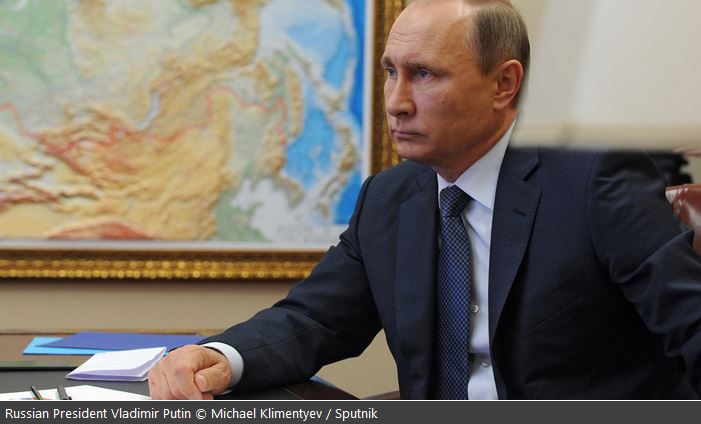
The conflicting stories over yesterday's dramatic downing of a Russian jet on the Syria-Turkish border continue to grow, and after the ongoing confusion whether the Russian pilot did or did not enter Turkish territory for a grand total of 17 seconds, moments ago Konstantin Murahtin, the co-pilot from the downed Russian jet who survived the ground fire by US-armed rebels unlike his pilot, and who was rescued by the Syrian army, said that contrary to official reports that Turkey had somehow warned the Russian jet "10 times" (in 17 seconds?) that it would fire, Turkey had in fact given no warning whatsoever before downing the Russian jet.

This is what he said, cited by Sputnik:

"There were no warnings. Not via the radio, not visually. There was no contact whatsoever. That's why we were keeping our combat course as usual. You have to understand what the cruising speed of a bomber is compared to an F-16. If they wanted to warn us, they could have shown themselves by heading on a parallel course. But there was nothing. And the rocket hit our tail completely unexpectedly. We didn't even see it in time to take evasive maneouvres."

Murahtin shown in the photo below:


And here he is speaking to the Russian press with an English voiceover:


It would be quite easy to confirm or deny his allegation that Turkey is lying by simply checking the data from the plane's Black Box, and alternatively, from the F-16 that was responsible for the downing of the Russian Su-24, who as shown on the photo below, is one Yb. Uner:


Murahtin also made it clear that he thought there was no violation of the Turkish airspace and added that the crew of the downed Russian bomber jet knew the area of the operation "like the back of their hands."

The co-pilot added that he wants to continue serving in the Russian aviation group in Syria: "I can't wait until I get the all-clear from the medics, so that I can step back into the ranks. I'm going to ask our command to keep me on this base — I have a debt to repay, for my commander."

More in the RT report below:


The bottom line is that someone is lying, and while for now there has been no material escalation in tensions between Turkey and Russia, it is almost assured that Putin is now carefully plotting just what his next move should be, one which will likely include the missile cruiser by the Syrian coast and any Turkish fighter jets that stray into Syrian territory.

For now what Russia appears set on doing next is closing the Syrian border with Turkey. As earlier reported, Moscow backs the proposal of French President Francois Hollande to close the Turkish-Syrian border, Sergei Lavrov said.

"I think this is the right decision. I hope President Hollande will tell us more about the issue tomorrow. We would be ready to consider all measures that needed for this [closing the border]. By closing the border we will basically thwart the terrorist threat in Syria," the minister said.

But Lavov was not finished. In a press conference earlier today, he first said that "Moscow is not avoiding contacts with Ankara" citing his phone conversation with the Turkish FM as proof.

He press on saying that "too many indicators showing terrorist threats have appeared on Turkish soil", Russian Foreign Minister Sergei Lavrov said Wednesday.

"We cannot leave everything that has happened without a reaction not because we have to respond somehow, that’s not it. Actually there have been too many indicators on Turkish soil that show a direct terrorist threat to our citizens."

“I think that now we will insist on not just a list of members of this group, but also agree on the overall understanding of the channels the terrorists use to get their feedlines and support."

“We will somehow probably have to deal with certain countries so that this support ends,” Lavrov added.

It is quite clear just which "countries" the Russian minister was referring to, and it is safe to say the entire world is eagerly looking forward to see just what Russia's ultimate decision will be.

Black-Out Blackmail: Ukraine Extremists Kill the Lights in Crimea

State of Emergency in Crimea

by Roger Annis - CounterPunch


November 25, 2015  

Late on November, 21, right-wing extremists in Ukraine severed the four electricity lines which transmit electricity from Ukraine to Crimea. The terrorist attacks, using explosives, cut domestic electricity service to much of Crimea’s population of 2.3 million.

Two of the transmission lines were damaged during the night of November 20-21. The coup de grace cutting all service to Crimea was delivered to the other two lines the following night. Photos of downed pylons with Ukrainian or Crimean-Tatar flags hanging on them have been posted online.

“Crimea has been completely cut off,” Viktor Plakida director of Crimea’s state energy company, Krymenergo, told TASS Russian news service.

A state of emergency has been declared in Crimea. Reserve electricity production using portable gas turbines and diesel generators is assuring electricity service to public institutions, including the national airport at Simferopol, bus and train service and television and radio broadcasting. But most Crimean citizens were left without power at home.

Extremists supporting the blasts blocked crews from conducting repairs in the days following. In Kyiv, hundreds of right-wing protesters gathered at the Ministry of Internal Affairs (police) on the evening of the 21st, demanding that a full electricity blockade be instituted against the people of Crimea (video report here).

The Ukrainian National Guard did secure at least one of the damaged lines, during the day on Nov 20. Guardsmen confronted violent protesters; a five-minute video on the right-wing, ATR YouTube channel shows some of the confrontation that took place. But the government soon bowed to the extremists and backed off.

The government refused offers of assistance from Russia to restore electricity transmission, even though the blasts deprived the Ukrainian regions of Kherson and Nikolayev in Ukraine of electricity and Yuriy Katich, deputy director of Ukraine’s energy company Ukrenergo, said that the interruptions have placed two of Ukraine’s nearby nuclear energy stations in “very dangerous” territory. Nuclear and coal each generate approximately 40 per cent of Ukrainian domestic electricity production.

On Nov 23, the Ukrainian government declared a total ban on cargo traffic to and from Crimea. The Wall St. Journal reported that day that the measure was a concession to extremists in exchange for them standing aside to allow repairs to the damaged electrical system. In other words, the government in Kyiv is now officially hostage to right wing and neo-Nazi extremists. The Journal cites President Petro Poroshenko its Nov 23 report:

“We are not satisfied with today’s status quo, when an occupying power [Russia] neglects the basic rights of the Crimean Tatar people,” said President Petro Poroshenko after a meeting with three European foreign ministers.

“Crimea is Ukrainian territory. We will defend the rights of the Crimean Tatar people and all Ukrainians who are living on occupied territory.”

According to the UK Telegraph, Ukraine’s police (interior) minister, Arsen Avakov, wants the country’s national security council to annul contracts for power supply to Crimea in response to Russia’s decision to ban Ukrainian food imports as of January 1. Russia took that action when the European Union and Ukraine decided their “economic association” agreement would proceed on January 1.

There have been no negotiations with Russia over the consequences, even though Ukraine and Russia presently have free exchange of food trade and the European agreement turns Ukraine into an uncontrolled transit point into Russia for food from anywhere in the EU.

The announced transport blockade by the Kyiv regime builds on a food transport blockade of Crimea which Ukrainian extremists have conducted with impunity since September 20.


One of the electricity pylons servicing Crimea sabotaged
on Nov 20, 2015 (TV Rezda image on Twitter)


Consequences of the terrorist attacks


According to a report earlier this month on Krymedia, there are four electricity routes from Ukraine to Crimea, respectively: Melitopol (Ukraine)-Dzhankoy (Crimea) (330 kV), Kakhovka-Ostrovskaya (330 kV), Kakhovka-Dzhankoy (330 kV) and Kakhovka-Titan (220 kV).

Ukraine’s state-run energy firm, Ukrenergo, initially said it could repair the damaged lines within four days. Ukraine’s Energy Ministry said one of the four damaged power lines could be repaired within 24 hours if workers were allowed safe and unfettered access to the site. But that was not to be.

Russia’s Energy Ministry says emergency electricity supplies have been activated in Crimea. Mobile gas turbine generators as well as some 1,000 diesel generators have been mobilized

Crimea’s first vice premier, Mikhail Sheremet, told journalists that Crimea can mobilize some 600 megawatts of electrical production whereas peak daily demand is 1,200 MW. Another Crimean news report said average daily consumption is 850 MW at this time of year.

The Crimean state utility Krymergo says the region’s reserve fuel supply to operate generators could last up to 25 days. Deputy Crimean government chairman Dmitry Kozak is cited in the Wall St. Journal that Crimea is meeting 30 per cent of its normal electricity needs through its emergency generation.

Crimea is planning on energy independence from Ukraine. An electricity cable from mainland Russia to Crimea is under construction and due to begin full service in 2016, delivering app 800 MW of power. The first stage will begin to deliver 400 MW by the end of this year.

A state-owned gas pipeline capable of carrying four billion cubic meters of natural gas to Crimea from Russia is under construction. It will power two gas generation stations under construction, which will bring Crimea’s daily electrical production capacity up to 950 MW. A road and rail bridge connection, also under construction, will open in 2019 and be fully operational in 2020.

Crimean Prime Minister Sergei Aksyonov has branded the destruction of the pylons “a terrorist act”. He is reported in TASS news agency as saying, “Crimeans will not be brought to their knees or spoken to in the language of blackmail” (reported in The Moscow Times).

Aksyonov warned that Ukrainian electricity providers on whom Crimea currently depends can expect to lose access to the Crimean market as the territory is integrated into Russia’s unified power grid, reported RIA Novosti on Sunday. “If the governing entities of Ukraine think they don’t need the [Crimean] market, then they are going to lose it forever. Just as has happened with food imports.”

The chairman of the of the Committee on International Affairs of the Council of the Russian Federation, Konstantin Kosachev, says the sabotage and the Ukrainian government response constitute “a gesture of final farewell” to Crimea. Noting the hanging of Ukrainian flags on destroyed electricity pylons, he said, “For the first time ever, I’ve seen state flags displayed as tokens of solidarity with terrorists.”

Nonetheless, Kosachev says, he hopes that “Crimea, Ukraine and all of us” will now take a sober look at the situation.

Russia’s Kommersant newspaper reported on Monday the results of a survey of Crimeans conducted November 13-16 by the Levada Center, an independent Russian pollster. It shows 87 per cent of respondents believe Crimea should be part of Russia, compared with 73 per cent in August this year. Only three per cent thought the peninsula should be part of Ukraine.

These latest survey results are consistent with results published by several Western-funded polls in late 2014.

The right-wing forces mounting the food blockade have been threatening for several months to cut Crimea’s electricity supply. Last month, on October 6, an electricity pylon in Kherson was damaged by an explosive device (photo and story).

The attacks against Crimea’s electricity supply coincide with increased violations of the Minsk-2 ceasefire in Donetsk and Lugansk regions of eastern Ukraine, as documented by the daily reports of the Special Monitoring Mission of the Organisation for Security and Cooperation in Europe and in the Novorossiya Today news outlet.

Western media and government collusion in attacks on Crimea


Ever since the Maidan coup of February 2014, Western media and governments have all but incited violent actions by extremists against the Crimean people.

Unknown to people in the West is the aforementioned, food transport blockade, ongoing since September 20. Western media has self-censored reports of that, including the central role played by the neo-Nazi Right Sector group.

The food blockade is stressful and an inconvenience for the people of Crimea, but for farmers, truckers and traders on both sides of the border, it has dealt a harsh economic blow in a country already enduring near-to catastrophic economic hemorrhaging.

Last month, Ukraine withdrew takeoff and landing rights of Russian airlines, provoking Russia to respond in kind. Again, this was a measure far more detrimental to Ukrainian people and interests than to those of Russia.

On the rare occasion when the food blockade is mentioned in Western media, it is presented as an action waged by “Crimean Tatars”. For example, a November 23 report in Bloomberg writes, “Ethnic Tatars from [Crimea]… have blocked trucks from entering [Crimea] since last week.” The Bloomberg writer shows he is especially misinformed when he reports the Sept 20 food blockade as having commenced “last week”.

The “Crimean Tatars” referred to in Bloomberg and other Western news reports are Mustafa Djemilev and Refat Chubarov, Tatar figureheads who aligned themselves with the government in Kyiv years ago. Both have received appointments as deputies to the Rada (Parliament).

Lenur Islyamov, who served briefly as deputy premier of the Republic of Crimea following the March 2014 secession, has joined their ranks. He is identified in an interview on 112.ua as the “coordinator” of the “Tatar” protests blocking repairs to the blown up transmission lines. Islyamov is a wealthy businessman. His holdings include the diminished ATR television and radio media network. Earlier this year, a spectacle erupted over broadcast license renewals of ATR. The network refused to apply through established channels for renewals of its licenses and then cried ‘censorship’ when its broadcast rights expired.

The West’s own embargo of Crimea


If the big imperialist governments of Europe and North America are concerned about extremists using food and now electricity as a political weapon against a civilian population, they haven’t said so. That’s not so very surprising because they operate their own food and economic embargo against Crimea. That was imposed in April 2014 after a large majority of the Crimean population voted to secede from Ukraine.

Last week at the G20 summit meeting in Turkey, Western leaders met briefly and extended by another six months their embargo against Crimea and sanctions against Russian political and business leaders. Reuters reports:

U.S. President Barack Obama, Germany’s Angela Merkel, Britain’s David Cameron, Italy’s Matteo Renzi and French Foreign Minister Laurent Fabius, who represented President Francois Hollande at the summit, attended the brief meeting near the conclusion of the G20 meeting in Antalya.

The story of electricity ties between Ukraine and Russia is more complicated than Western media bothers to report. Ukraine obtains a significant portion of its electricity and its coal for generating electricity from Russia.

According to an agreement reached nearly one year ago, Ukraine sells electricity to Crimea and, in exchange, Russia sells electricity to Ukraine. Russia has done so at preferred prices, no less, the price of Russian-generated electricity being cheaper than what Ukraine produces.

Earlier this month, Ukrainian Energy Minister Vladimir Demchishin announced that agreement had been reached to extend electricity supply from Ukraine to Crimea through 2016. He spoke against those advocating interruption to service or cutting it altogether. It seems his sentiments did not carry too far in the halls of power in Kyiv.

The latest attack on electricity transmission has sparked a pro forma statement of concern by the German government. Sputnik News reports German Foreign Office spokesman Martin Schaefer as stating, “Attacks on Ukraine’s public infrastructure, including that providing Crimea with electricity, are criminal acts. We expect them to be perceived as such and investigated by Ukrainian officials.”

Ukrainian terrorism and the West


The latest brazen action by Ukrainian extremists raises questions anew about their financial and military ties in the West. Western governments and media have backed, or turned a blind eye to, the prominent role which the extremists have been played in Ukraine’s military intervention in eastern Ukraine. Kyiv’s ‘Anti-Terrorist Operation’ has killed more than 8,000 people, severely damaged the economy and infrastructure of the entire country, and displaced more than two million people from their homes.

Significant fundraising is taking place in Canada, the U.S. and western Europe for the extremist cause. Earlier this year, two of Canada’s largest newspapers—the Toronto Star and the Globe and Mail—favourably reported such fundraising, singling out for praise and support the agency called ‘Army SOS‘ which uses funds to purchase supplies for the Ukrainian army and paramilitaries.

This past summer, at the urging of Western governments and as a cautionary move to limit public relations damage, Ukraine began integrating into its National Guard entire units of the extremist paramilitaries. The measure was prompted by the decision of the U.S. Congress in June–and the media reporting which followed–to prohibit training or other support to one of the paramilitary units, the Azov Battalion.

The fundraising for Ukrainian extremists has eerie parallels to the long history of covert backing and financing by Western governments and regional allies of extremist forces in the Middle East. One week before the attacks against Crimea’s electricity supply, vigilantes of the Daesh (so-called ISIS) movement based in Iraq and Syria killed 130 people in a murderous attack in Paris.

Like Daesh, many extremists in Ukraine hold to arcane, pseudo-religious views. These views are also deeply racist, advocating a ‘white’ Ukraine that could lead the rest of Europe out of a political and moral “degeneracy” caused by the presence of large numbers of non-Caucasian citizens.

Canada’s new, governing Liberal Party has been a strong backer of the government in Kyiv and the civil war it has waged in eastern Ukraine. The new minister of international trade, Chrystia Freeland, is one of the most vocal ideologues in Canada of the Kyiv regime and its allied, paramilitary ‘freedom fighters’.

Freeland and Prime Minister Justin Trudeau met with a delegation of the Ukrainian Canadian Congress last month on October 13, six days before the national election won by the Liberals. The UCC advocates that Canada increase its military support to Ukraine, including advanced, heavy weaponry.

The UCC reported on the October 13 meeting, “We were pleased to be able to have a full, frank and productive exchange with Mr. Trudeau and are pleased to have had the opportunity to hear Mr. Trudeau address the issues and explain the Liberal Party position in person. Following this meeting, I am pleased that Mr. Trudeau and his candidates Borys Wrzesnewskyj, Chrystia Freeland, Arif Virani and James Maloney have committed to ensure that Ukraine is a top policy priority for the Liberal Party of Canada,” said [UCC President Paul] Grod.

“We are pleased that the Liberal Party will press for increased sanctions against Russia including the SWIFT payments system for its illegal occupation of Crimea and ongoing terrorist war in eastern Ukraine.”

Trudeau made brief, ill-informed comments about Crimea to Russian President Vladimir Putin at the G20 summit meeting earlier this month in Turkey. Trudeau signalled that the harsh, anti-Russia, pro-Kyiv policies of the previous Conservative government would continue. And in a similar foreign policy vein, Canada’s new defense minister said on Nov 22 that Canada would remain part of the U.S.-led ‘regime change’ chorus for Syria.

Three days ago at the United Nations, Canada and three other countries—the U.S., Ukraine and Palau—voted against a resolution condemning racism in all its forms, including the ideology of neo-Nazism. The resolution was approved by 126 countries, including India and China. Fifty three countries abstained, including all the member countries of the European Union.

The myth of a Russian “annexation” of Crimea in March of 2014 is an inaccurate but powerful narrative underlying the ongoing aggression against the Crimean people. Large swaths of liberal and even left-wing opinion in Western countries have bought into this myth. This latest chapter in Ukraine-Crimea relations will hopefully serve to open new eyes as to who are the aggressors in Ukraine-Crimea relations.

The Crimean people have the right to live free of threats and aggression. Their right to self-determination should be respected and the provocative and dangerous embargo against them by Western powers should end.
Roger Annis is an editor of the website The New Cold War: Ukraine and beyond. On June 12, he gave a talk in Vancouver, Canada reporting on his visit to Donetsk, eastern Ukraine in April 2015 as part of a media tour group. A video broadcast of that talk is here: The NATO offensive in eastern Europe and the class and the national dynamics of the war in eastern Ukraine.
More articles by:Roger Annis

Tuesday, November 24, 2015

Turkey Calls NATO to Deeper Syria Quagmire

Turkey Downs Russian Fighter to Draw NATO and US Deeper into Syrian Quagmire

by Mike Whitney - CounterPunch


November 24, 2015

On Tuesday, Turkey shot down a Russian warplane that was carrying out military operations against jihadi groups in Northern Syria.

The downing of the Su-24 fighter jet is part of a broader plan by the administration of Turkish President Tayyip Recep Erdogan to topple the secular government of Syrian President Bashar al Assad and to establish “safe zones” on the Syrian side of the Turkish-Syrian border.

Erdogan needs the safe zones to provide a sanctuary for the militant extremists who are the footsoldiers in his war against Syria.

The downing of the Russian fighter is a desperate attempt by Erdogan to incite a reaction from Russia that will draw either NATO or the United States deeper into a conflict which has dragged on for 4 and a half years and killed 250,000 people.

Unlike the Obama administration, that has been willing to arm and train jihadi groups to conduct its proxy-war against Assad in Syria, Erdogan is a true believer, a committed Islamist who has done everything in his power to roll back democracy in Turkey, to establish one-man rule, to destroy the independent judiciary, to silence the free press, and to establish a conservative and intolerant Islamic state.

Erdogan is what many would call a “Koolaid drinker”, a man who believes that his support for disparate and vicious terrorist groups that have decimated Syria, laid its civilian infrastructure to waste, and displaced more than half the population is “God’s work”. Make no mistake, the Turkish government is the modern-day Caliphate. The fact that its government officials dress in nicely-tailored suits rather than black pajamas, is merely a way to divert attention from their extreme fanaticism and their covert support for liver-eating fundamentalist savages.

In the seven weeks since Russia began military operations in Syria, nearly all of the gains of the US-Turkey-Saudi-Qatar jihadi coalition have been wiped out. The decisive battle took place more than a week ago at Kuweris airbase east of Aleppo. This was the tipping point for the war although the imminent fall of Aleppo is bound to attract more notoriety.

It’s clear now that the Russian-led coalition is winning the war, has foiled US attempt to remove Assad, and that the bulk of the foreign mercenaries will either be killed or captured. The Obama administration realizes that the current phase of the war is hopeless and has started to implement a fallback plan to control territory in E Syria that is critical for future pipeline corridors.

In contrast, the Turkish government is completely unwilling to accept the fact that its plan has failed which is why it has embarked on this risky strategy to draw either NATO or Washington deeper into the fray. Check this out from a Tuesday battlefield report from South Front:

“The Syrian forces backed up by the Russian warplanes, pushed back the militant groups from nearly 200 kilometers of land in the coastal province of Lattakia, military sources said Monday. On Sunday, the Syrian army and popular forces purged the terrorists and advanced to areas near the Turkish borders. The ground reports argue that the Syrian Arab Army (SAA) took control of Zahia heights, 2km from the joint borders with Turkey.”

Can you see what’s going on? The Russian-led coalition is closing in on the Syria-Turkish border which will put an end to Erdogan’s dream of toppling Assad or continuing to fuel the war with terrorists that are provided a safe haven on Syrian soil. This is why the Su-24 fighter was shot down on Tuesday. It is a desperate attempt to salvage the failed strategy of toppling a secular government and replacing it with friendly Islamic extremists who hew to Erdogan’s twisted worldview.

By the way, readers should take a minute and review the video of the “moderate” headchoppers that the US supports in Syria paying special attention to their moderate treatment of prisoners. The Russian pilot was captured by these “freedom fighters”, shot twice in the chest and then his clothes were ripped off so he could be moderately photographed. These are the fine fellows that Uncle Sam would like to see in Damascus heading the government because, as we all know, “Assad has lost legitimacy.” (See here.)

For the last three days, I have been following a fast-evolving plan by the Turkish Terrorist Government (TTG) to create a false flag operation that would draw either the US or NATO deeper into the war in Syria reversing Obama’s recent commitment NOT to deploy ground troops to the warzone.

On Saturday, Turkish newspapers reported that 1,500 Syrian Turkmen had fled to the Turkish border for safety. The reasons that were given were that the Russian warplanes were bombing areas where ISIS was not located. True, ISIS is not located in these Turkmen villages by the border; rather the barbarians that you see in the video are located there. These men belong to the jihadi groups that that have been funded, armed and trained by Turkey and the US and who are fighting to topple Assad. Reasonable people who would like to see an end to terrorism, should feel supportive of Putin’s efforts to annihilate these monsters. Instead, the Turkish government has been trying to make the case that Russia is bombing innocent civilians.

Now check out this story (from Monday) in Turkey’s leading newspaper Hurriyet:

“Turkey has called for a U.N. Security Council meeting to discuss attacks on Turkmens in neighboring Syria, according to Prime Ministry sources, with Prime Minister Ahmet DavutoÄŸlu saying his government will “not hesitate” to take the required measures on Syrian soil to protect the Turkmen people…

Turkey is in discussions with the United States and Russia over the bombing of the villages and has sent a letter to Britain, the current holder of the U.N. Security Council’s presidency, asking for the subject to be taken up, sources from DavutoÄŸlu’s office told Reuters on Nov. 23…

Speaking to reporters late on Nov. 22, Davutoğlu recalled that he was engaged in constant contact with both Chief of General Staff Gen. Hulusi Akar and National Intelligence Organization (MİT) Chief Hakan Fidan over the weekend concerning alleged Russian air raids on Turkmen villages near the Syrian-Turkish border. Sources, meanwhile, told Reuters that Davutoğlu had consulted on the intelligence dimension of the issue with Akar and Fidan.

“Our security forces have been instructed to retaliate against any development that would threaten Turkey’s border security,” the prime minister said. “If there is an attack that would lead to an intense influx of refugees to Turkey, required measures would be taken both inside Syria and Turkey,” he added.
“Looking at background of these attacks, in a region where very clearly there is no element of Deash (ISIS), where there is no terrorist element, first Russian airplanes come and then with support from foreign fighters.

“We will also take the required measures diplomatically for the protection of our brothers and sisters in the place where they are located and for the protection of their human rights in the face of any threat,” he also stated.” (Turkey urges UN to act to protect Turkmens in Syria, Hurriyet)

So is the Turkish PM correct in saying the Russians are bombing the Turkmen civilians forcing them to flee from their homes. Not according to Turkmen leader Ali Türkmani. Here’s what he said:

“There is a perception operation that is being waged over the Turkmens. The regime will of course attempt to maintain its territorial integrity. As such, threats from al-Nusra and the Free Syrian Army are being targeted [by Russian air strikes]. It’s not correct to say the Turkmens are being targeted.”

So civilians are not being targeted, but the Turkish government is supplying weapons and ammo to the terrorists as this article in the Turkish Daily Zaman proves:

“Several trucks bound for Syria were stopped at the beginning of last year by Turkish gendarmerie forces upon instructions by a prosecutor. It turned out they contained weapons.
The AK Party government claimed for months that the trucks only included humanitarian aid, but a report published by the Cumhuriyet daily in May last year revealed that the trucks contained weapons.

According to the daily’s report, a truck, which is thought to be one of many, contained 1,000 artillery shells, 50,000 machine gun rounds, 30,000 heavy machine gun rounds and 1,000 mortar shells.

The government was accused of sending the weapons to radical Islamist groups in Syria, but DavutoÄŸlu swore in June that the trucks were bound for Turkmens. In contrast, Turkmens had earlier denied receiving any weapons from Turkey.” (Turkey calls on UN Security Council to convene for Turkmens in Syria, Today’s Zaman)

So what is the game-plan here? What is Turkey really up to?

Well, first of all, they are trying to set up a safe zone on sovereign Syrian territory so they can continue to spread terror across Syria. Check out this clip from the Daily Sabah and you’ll see how these Turkmen radicals who are allies of Ankara are seizing villages to create the safe zone:

“Syrian opposition groups supported by Turkish and US warplanes took control of two Turkmen towns in Northern Syria early Saturday, Anadolu Agency reported….The operation was supported by six Turkish F-16s, four US F-15s and an AC-130 joined the offensive along with three drones.

Security sources added that this success in the fight against DAESH that can be defined as the first step for the creation of a DAESH-free zone in Northern Syria….

Speaking about Turkey’s stance on the recent developments in Northern Syria, President Recep Tayyip ErdoÄŸan said in a live broadcast on Wednesday that declaring no-fly and safe zones is crucial to resolve the Syrian Crisis….ErdoÄŸan further stated that Turkey will continue to carry out anti-terror operations until concrete results are achieved and peace is restored.”
(First step for the safe zone in N. Syria: opposition groups take two Turkmen towns from DAESH, Daily Sabah)

Whether you call it an ISIS-free zone or not is irrelevant. The fact is, the Turkish government (with US air support) is trying to annex Syrian territory for its own nefarious purposes. That much is clear.

The downing of the Russian Su-24 fighter fits perfectly with the way in which the Turkish government has been ratcheting up tensions on the border, using its jihadi allies to seize Syrian territory, and trying to incite a violent reaction that will force greater NATO or US involvement. I seriously doubt that Putin is gullible enough to take the bait and overreact to this obvious and pathetic provocation in Ankara. He will exact his pound of flesh at some other time, a time of his own choosing.


MIKE WHITNEY lives in Washington state. He is a contributor to Hopeless: Barack Obama and the Politics of Illusion (AK Press). Hopeless is also available in a Kindle edition. He can be reached at fergiewhitney@msn.com.
More articles by:Mike Whitney

Gorilla Radio with Chris Cook, John LaForge, Patrick Henningsen, Janine Bandcroft Nov. 25, 2015

This Week on GR

by C. L. Cook - Gorilla-Radio.com


Nuclear power's role in our energy future will doubtless play a large part in the forthcoming COP21 talks in Paris.

Long-cited as the "safe" and "carbon friendly" alternative to fossil fuels, even environmental stalwarts like George Monbiot promote nukes, if only for the transitional period required for the world to switch to CO2-free forms of energy generation.

But does nuclear power really buy us time when its downstream by-products are an eternal threat?

Listen. Hear.

John LaForge is a long-time staffer at Nukewatch, the Wisconsin-based nuclear watchdog and environmental justice group. His countless articles on the topic have appeared in Nukewatch's quarterly and at online sites like: New Internationalist, Z Magazine, The Progressive, Earth Island Journal and at CounterPunch.org, where I found his latest, 'Exploding Radioactive Waste Warning: Keep It Above Ground' a disturbing account of a homegrown nuclear emergency you probably haven't heard about.

John is co-recipient of the US Peace and Justice Studies Association’s 2004 Social Courage Award, and is a 1986 War Resisters League Peace Awardee who has spent in total more than four years in prisons and jails for his non-violent resistance to our war system.

John LaForge in the first segment.

And; the World became a distinctly more dangerous place yesterday with the shooting down by Turkey of a Russian warplane. That the two Russian pilots were reportedly shot dead* as they hung in their parachutes, and the body of at least one paraded across social media, makes a Turkish walkback from its actions, and any Russian face-saving measure, even more difficult. Turkey's actions are, in the opinion of my second segment guest, the gravest crisis NATO has ever faced - seeing one of its members unilaterally provoking war with a regional Superpower.

Patrick Henningsen is a freelance journalist and co-founder of the online news site, 21st Century wire, launched during the 2009 Copenhagen Climate Change Summit. Patrick's geopolitical analyses and commentaries are featured online at RT and Al Jazeera, and of course at 21Wire, where he's been working overtime these past two weeks since the attacks in Paris, and now covering this stunning development over Syria.

Patrick Henningsen and what bitter grist Turkey's shootdown brings to NATO's table in the second half.

And; Victoria Street Newz publisher emeritus and CFIV Radio broadcaster, Janine Bandcroft will join us at the bottom of the hour to bring us newz of the coming week from our city's streets, and beyond there too. But first; John LaForge and "when it rains it burns," Nevada's little-known nuclear mishap.

* [UPDATE: November 25, 2015 - Russian co-pilot alive. Rescued by Syrian military, Konstantin Murahtin says no prior warning given before Turkish attack. - Ape]

Chris Cook hosts Gorilla Radio, airing live every Wednesday, 1-2pm Pacific Time. In Victoria at 101.9FM, and on the internet at: http://cfuv.uvic.ca.  He also serves as a contributing editor to the web news site, http://www.pacificfreepress.com. Check out the GR blog at: http://gorillaradioblog.blogspot.ca/
G-Radio is dedicated to social justice, the environment, community, and providing a forum for people and issues not covered in the corporate media.

Turkish Shootdown Protects NATO-Allied Terrorists on the Ground

‘Turkey Protects Terrorists on the Ground’: Patrick Henningsen speaks to RT International

by 21wire  

November 24, 2015

21WIRE’s Patrick Henningsen talks to RT International to breakdown today’s events and the potential UN and NATO diplomatic crisis which may ensue as a result of Turkey’s dangerous stunt.

Watch:


[UPDATE: Russian co-pilot alive. Rescued by Syrian military, Konstantin Murahtin says no prior warning given before Turkish attack. - Ape]

21st Century Wire says…

UPDATE: Two Russian pilots who tried to parachute to safety after the Su-24 jet was downed, both were shot dead by pro-NATO Jihadist Turkmen militants.
“Both of the pilots were dead on retrieval. Our comrades opened fire into the air and they died in the air,” Alpaslan Celik, a deputy commander of a Syrian Turkmen brigade said.

Follow LIVE UPDATES on Russian warplane shot down at Syria-Turkey border

READ MORE SYRIA NEWS AT: 21st Century Wire Syria Files

An Act of Madness? Why Turkey Attacked Russia

An Invisible US Hand Leading to War? Turkey's Downing of a Russian Jet Was An Act of Madness

by Dave Lindorff - This Can't Be Happening

In considering the terrifying but also sadly predictable news of a Russian fighter jet being downed by two Turkish fighters, let’s start with one almost certain assumption — an assumption that no doubt is also being made by the Russian government: Turkey’s action, using US-supplied F-16 planes, was taken with the full knowledge and advance support of the US. In fact, given Turkey’s vassal status as a member of US-dominated NATO, it could well be that Ankara was put up to this act of brinksmanship by the US.

What makes the downing of the Russian jet, and the reported death of at least one of its two pilots (the other was reportedly captured alive by pro-turkish Turkmen fighters on the Syrian side of the Syria-Turkish border, and will presumably be returned to Russia) so dangerous is that as a member of NATO, supposedly a “mutual assistance” treaty that binds all members to come to the defense of one that is attacked, if Russia were to retaliate by downing a Turkish military plane, NATO countries including the US would be obligated to come to Turkey’s defense.

Russia knows this, and that is why so far the Russian response to the downing has been muted. Had it been a Jordanian, Saudi or Kuwaiti jet that downed the Russian SU-24, Russia’s response would have been instantaneous. The guilty party would have had some of its planes shot down, or perhaps even bombed on the ground. But President Putin so far has limited himself to demanding a meeting, to warning that Russian-Turkish economic relations would be threatened, etc.

This restraint is good, but clearly, Vladimir Putin will not stop there. Even putting aside domestic considerations (imaging the public clamor for a military response here in the US if some small country shot down a US plane!), he will have to respond or his whole project — so far stunningly successful — of restoring Russia to its pre-USSR-collapse position as a global power, would be a failure.

Putin’s options are actually quite broad, though some carry considerably more risk for everyone, not just for Russia and Turkey. He could have his own air

force in Syria, where Russia is legally acting at the request of the Syrian government to defend it against rebel forces of ISIS and Al Nusra, some of which are backed by both Turkey and the US, calmly wait for a Turkish military jet to cross into Syrian airspace. At that point it could be downed by Russian planes or missiles. No doubt Turkey will be extraordinarily careful going forward to have its pilots keep well away from Syrian air space too avoid that, but it could happen. My guess is that Russian fighter pilots and anti-aircraft batteries in Syria already have their marching orders to take that action, which probably would not activate NATO confrontation with Russia and lead to World War III, as long as there was reasonable evidence that Turkey’s plane was in Syrian airspace.

But should no such opportunity present itself, Russia has plenty of other opportunities to counter Turkey. Remember, Russia is also defending Syria’s coastline, and could sink or capture a Turkish ship that entered Syrian waters (or Russian waters in the Black Sea, which borders both countries).

Russia — knowing that this is really not about Turkey, but about push-back by the US against growing Russian power and influence, both globally and in the Middle East region — could also choose to respond in a venue where it has more of an advantage, for example in Ukraine, where it could amp up its support for the breakaway regions of Donetsk and Lugansk, perhaps by downing a Ukrainian military plane, or more broadly, providing air cover to protect those regions. Russia could also, less directly, provide aid to Kurdish rebels in both Syria and in Turkey itself who are fighting against Turkish forces.

I’m sure there are plenty of other options available to Russia also to turn the screws against both Turkey and NATO, without openly pushing buttons that could lead to a direct confrontation with the US and its NATO fiction. Working in Russia’s favor is that the US aside, the European nations of NATO have no desire to be at war with Russia. There are clearly hotheads in the US Congress, the Pentagon, and perhaps even within the neo-con-infested Obama administration, who are pushing for just such a mad showdown. But in Europe, where the actual fighting would mostly occur, and where memories are still strong of the destructive power of war, there is no taste for such insanity. It could, in fact, have been a big error in the long run for the US to push Turkey into such a deadly provocation, if it leads to more anti-American sentiment among the citizens of such key NATO countries as France, Germany, Italy and Britain.

It should be added that Russia and China have become much closer in recent years, economically, politically and militarily. This means there is also the possibility that the two countries could, in concert, step up pressure on the US in the western Pacific, for example by forcing down one of the provocative US flights near China’s new island projects in the South China Sea. That would force an already stretched US military to shift more forces to Asia from Europe and the Middle East.

It is all terribly dangerous and it is hard to predict where things will lead. One thing seems certain, though. This outrageous shootdown of a Russian plane that was in no way posing a threat to Turkey or Turkish forces, will not end here, because Russia and President Putin cannot allow Turkey and NATO to so blatantly act against Russia and its pilots and go unpunished, particularly as it is Russia that is acting legally in Syria, while the US, Turkey and other nations backing rebel forces there are in all acting blatant violation of international law.

Unless saner heads start prevailing in Washington, this could all quickly spiral into the kind of situation in 1914, where a lot of ill-conceived treaties led to a minor incident in the Balkans turning inexorably into World War I.


Dave Lindorff is a founding member of ThisCantBeHappening!, an online newspaper collective, and is a contributor to Hopeless: Barack Obama and the Politics of Illusion (AK Press).
More articles by:Dave Lindorff

Black Lives Matter Demonstration Fired On, Protesters Allege by White Supremacists

Black Lives Matter: White Supremacists Shoot Protesters in Minneapolis, US

by TeleSur

Black Lives Matter says white supremacists shot into a crowd of unarmed, mostly Black protesters demonstrating against police brutality.

Black Lives Matter Minneapolis released statement early Tuesday morning saying white supremacists shot into a crowd of unarmed, mostly Black protesters who were demonstrating against police brutality.

2 unarmed protestors shot by white supremacists who were asked to leave & followed them out. One block up they shot one in leg & one in stomach #4thPrecinctShutDown Posted by Black Lives Matter Minneapolis on Monday, November 23, 2015

The group has said three to five protesters were injured in the shooting that occurred late on Monday night.

The statement comes after a week of protests by the Black Lives Matter movement and Minneapolis community members over the shooting of unarmed Jamar Clark by two police officers.   

Local reporters and the Associated Press reported that police confirmed the shootings had taken place. Police spokesman John Elder told the Associated Press that at least five people were injured.

Police source: At least 4 protesters shot outside 4th precinct in #Minneapolis. Suspects believed to be white males with bulletproof vests. — Steve Tellier KSTP (@stellierkstp) November 24, 2015

According to the local Star Tribune, the attackers fled and there have been, as of publication, no arrests made.

“A group of white supremacists showed up at the protest, as they have done most nights,” Miski Noor, a media contact for Black Lives Matter, told the paper.

Noor said after protesters attempted to escort the the group out of the area, but the individuals “opened fire on about six protesters,” shooting at least three of them. The Tribune reports shootings occurred near an alley about a block away from the precinct station, where protesters have been rallying.

According to officials who spoke with the Star Tribune the injuries sustained by the protesters were “non-life threatening.”

The demonstrators have already braved the cold, police pepper-spray and rubber bullets during their protests for over a week.   

2 black men just got shot in Minneapolis at #4thPrecinctShutDown pic.twitter.com/aS1GjXqVG3    — Lorena de la Cuesta (@LorenadlaCuesta) November 24, 2015

But this is not the first time the social movement has posted about white supremacists attending their rallies. Black Lives Matter Minneapolis had earlier posted a video on Friday of two men accused of being white supremacists who allegedly tried to attend the protests calling for police accountability. In the video, two men can be seen armed with a gun, mocking the recent protests and saying comments like “stay white.”

“In the era of white supremacist terrorism against people of color across the U.S., we refuse to be intimidated by hate groups,” Black Lives Matter Minneapolis said in their Nov. 20 Facebook post.

“We call on our supporters to join us tonight to continue to demand #Justice4Jamar and an end to violence against our community, whether by white supremacist citizens, or white supremacist Police like MPD union president Bob Kroll.”

VIDEO: Last night 2 white supremacists, one carrying a pistol, showed up to our peaceful protest at the 4th precinct.After community members on livestream started questioning them they left without incident, then we later found a video of them en route to the protest brandishing a pistol and making comments including “stay white” and justifying the killing of Jamar Clark.It has come to our attention that members of this group plan on returning tonight to our candlelight vigil at 4:30, some may come armed. [See: http://pastebin.com/FkA1B2rq]They say they will be wearing the "4 of clubs" to identify one another, so watch for this badge or patch on their clothing.In the era of white supremacist terrorism against people of color across the U.S., we refuse to be intimidated by hate groups. We call on our supporters to join us tonight to continue to demand #Justice4Jamar and an end to violence against our community, whether by white supremacist citizens, or white supremacist Police like MPD union president Bob Kroll. Posted by Black Lives Matter Minneapolis on Friday, November 20, 2015

The November 20th Facebook post by Black Lives Matter Minneapolis alleging armed white supremacists targeted their vigils in memory of Jamar Clark.   

Jamar Clark, 24, was shot last week by police two blocks from the 4th Precinct police station and died as a result of his injuries when his family decided to disconnect life support.   

Witnesses say Clark was already handcuffed when police shot him, though the Minneapolis police force have refuted the claim.

Minneapolis Mayor Betsy Hodges has requested a federal human rights investigation into the shooting from the U.S. Department of Justice.

Black Lives Matter Minneapolis has called the latest shooting an “act of domestic terrorism” and called on its supporters to continue to rally.


www.teleSURtv.net/english

Kleptomerica: Welcome to Kabul on the Potomac

Home, Sweet Kleptocracy: Kabul in America

by Rebecca Gordon  - TomDispatch


A top government official with energy industry holdings huddles in secret with oil company executives to work out the details of a potentially lucrative “national energy policy.” Later, that same official steers billions of government dollars to his former oil-field services company.

Well-paid elected representatives act with impunity, routinely trading government contracts and other favors for millions of dollars. Meanwhile, ordinary citizens live in fear of venal police forces that suck them dry by charging fees for services, throwing them in jail when they can’t pay arbitrary fines or selling their court “debts” to private companies. 
Sometimes the police just take people’s life savings leaving them with no recourse whatsoever. Sometimes they steal and deal drugs on the side.

Meanwhile, the country’s infrastructure crumbles. Bridges collapse, or take a quarter-century to fix after a natural disaster, or (despite millions spent) turn out not to be fixed at all. Many citizens regard their government at all levels with a weary combination of cynicism and contempt. Fundamentalist groups respond by calling for a return to religious values and the imposition of religious law.

What country is this? Could it be Nigeria or some other kleptocratic developing state? Or post-invasion Afghanistan where Ahmed Wali Karzai, CIA asset and brother of the U.S.-installed president Hamid Karzai, made many millions on the opium trade (which the U.S. was ostensibly trying to suppress), while his brother Mahmoud raked in millions more from the fraud-ridden Bank of Kabul? Or could it be Mexico, where the actions of both the government and drug cartels have created perhaps the world’s first narco-terrorist state? 

Tomgram: Rebecca Gordon, Corruption U.S.A.

[Note for TomDispatch Readers: There will be no Thursday post this week. The next TD post will be on Sunday, November 29th. And a good Thanksgiving to you all! Tom]

I recently took a little trip into the past and deep into America’s distant war zones to write a piece I called “It’s a $cam.” It was, for me, an eye-opening journey into those long-gone years of American “nation-building” and “reconstruction” in Afghanistan and Iraq. Mind you, I still remembered some of what had been reported at the time like the “urine-soaked” police academy built in Baghdad by an American private contractor with taxpayer dollars. But it was the cumulative effect of it all that now struck me -- one damning report after another that made it clear Washington was incapable of building or rebuilding anything whatsoever. There were all those poorly constructed or unfinished military barracks, police stations, and outposts for the new national security forces the U.S. military was so eagerly “standing up” in both countries. There were the unfinished or miserably constructed schools, training centers, and “roads to nowhere.” There were those local militaries and police forces whose ranks were heavily populated by “ghost soldiers.” There was that shiny new U.S. military headquarters in Afghanistan that cost $25 million and no one wanted or would ever use. It was, in short, a litany of fiascoes and disasters that never seemed to end.

Financially, Washington had invested sums in both countries that far exceeded the Marshall Plan, which so successfully put Western Europe back on its feet after World War II. Yet Iraq and Afghanistan were left on their knees amid a carnival of corruption and misspent taxpayer money. What made revisiting this spectacle so stunning wasn’t just the inability of the U.S. military, the Army Corps of Engineers, the U.S. Agency for International Development, and a crew of crony warrior corporations raking in the big bucks to do anything right, but that this was the United States of America. It was the country I -- and I was hardly alone in this -- had grown up thinking of as the globe's master builder. In the 1950s and early 1960s, my childhood years, it seemed as if there was nothing Americans couldn’t build successfully from an unparalleled highway system to rockets that were moonward bound.

Half a century later, it’s clear that, at least in our war zones, there’s nothing we’ve been capable of building right, no matter the dollars available. And that, as TomDispatch regular Rebecca Gordon suggests today in an eye-opening piece, is just the beginning of our new American reality. Tom

Home, Sweet Kleptocracy: Kabul in America

by Rebecca Gordon

In fact, everything in this list happened (and much of it is still happening) in the United States, the world leader -- or so we like to think -- in clean government. These days, however, according to the Corruption Perception Index of Transparency International (TI), our country comes in only 17th in the least-corrupt sweepstakes, trailing European and Scandinavian countries as well as Canada, Australia, and New Zealand. In fact, TI considers us on a par with Caribbean island nations like Barbados and the Bahamas. In the U.S., TI says, “from fraud and embezzlement charges to the failure to uphold ethical standards, there are multiple cases of corruption at the federal, state and local level.”

And here’s a reasonable bet: it’s not going to get better any time soon and it could get a lot worse. When it comes to the growth of American corruption, one of TI’s key concerns is the how the Supreme Court’s 2010 Citizens United decision opened the pay-to-play floodgates of the political system, allowing Super PACs to pour billions of private and corporate money into it, sometimes in complete secrecy. Citizens United undammed the wealth of the super-rich and their enablers, allowing big donors like casino capitalist -- a description that couldn’t be more literal -- Sheldon Adelson to use their millions to influence government policy.

Kleptocracy USA?


Every now and then, a book changes the way you see the world. It’s like shaking a kaleidoscope and suddenly all the bits and pieces fall into a new pattern. Sarah Chayes’s Thieves of State: Why Corruption Threatens Global Security shook my kaleidoscope. Chayes traveled to Afghanistan in 2001 as a reporter for NPR. Moved by the land and people, she soon gave up reporting to devote herself to working with non-governmental organizations helping “Afghans rebuild their shattered but extraordinary country.”

In the process, she came to understand the central role government corruption plays in the collapse of nations and the rise of fundamentalist organizations like the Taliban, al-Qaeda, and the Islamic State. She also discovered just how unable (and often unwilling) American military and civilian officials were to put a stop to the thievery that characterized Afghanistan’s government at every level -- from the skimming of billions in reconstruction funds at the top to the daily drumbeat of demands for bribes and “fees” from ordinary citizens seeking any kind of government service further down the chain of organized corruption. In general, writes Chayes, kleptocratic countries operate very much as pyramid schemes, with people at one level paying those at the next for the privilege of extracting money from those below.

Chayes suggests that “acute government corruption” may be a major factor “at the root” of the violent extremism now spreading across the Greater Middle East and Africa. When government robs ordinary people blind, in what she calls a “vertically integrated criminal enterprise,” the victims tend to look for justice elsewhere. When officials treat the law with criminal contempt, or when the law explicitly permits government extortion, they turn to what seem like uncorrupted systems of reprisal and redemption outside those laws. Increasingly, they look to God or God’s laws and, of course, to God’s self-proclaimed representatives. The result can be dangerously violent explosions of anger and retribution. Eruptions can take the form of the Puritan iconoclasm that rocked Catholic Europe in the sixteenth century or present-day attempts by the Taliban or the Islamic State to implement a harsh, even vindictive version of Islamic Sharia law, while attacking “unbelievers” in the territory they control.

Reading Thieves of State, it didn’t take long for my mind to wander from Kabul to Washington, from a place where American-funded corruption was an open secret to a place where few would think it applicable. Why was it, I began to wonder, that in our country “corruption” never came up in relation to bankers the government allowed to sell mortgages to people who couldn’t repay them, then slicing and dicing their debt into investment “securities” that brought on the worst recession since the 1930s? (Neil Barofsky, who took on the thankless role of inspector general for the Troubled Asset Relief Fund, tells the grim tale of how the government was “captured by the banks” in his 2012 book Bailout.)

Chayes made me wander ever deeper into the recent history of Washington's wheeling and dealing, including, for instance, the story of the National Energy Policy Development Group, which Vice President Dick Cheney convened in the first weeks of George W. Bush’s presidency. Its charge was to develop a national energy policy for the country and its deliberations -- attended by top executives of all the major oil companies (some of whom then denied before Congress that they had been present) -- were held in complete secrecy. Cheney even refused to surrender the list of attendees when the Government Accountability Office sued him, a suit eventually dropped after Congress cut that agency’s budget. If the goal was to create a policy that would suit the oil companies, Cheney was the perfect man to chair the enterprise.

In 2001, having suggested himself as the only reasonable running mate for Bush, Cheney left his post as CEO at oilfield services corporation Halliburton. “Big changes are coming to Washington,” he told ABC News, “and I want to be a part of them.” And so he was, including launching a disastrous war on Iraq, foreseen and planned for in those energy policy meetings. Indeed, documents shaken loose in a Freedom of Information Act suit brought by Judicial Watch and the Sierra Club showed that in March 2001 -- months before the 9/11 attacks -- energy task force members were already salivating over taking possession of those Iraqi oil fields. Nor did Cheney forget his friends at Halliburton. Their spin-off company, KBR, would receive a better-than-1,000-to-1 return on their investment in the vice president (who’d gotten a $34 million severance package from them), reaping $39.5 billion in government contracts in Iraq. And yet when did anyone mention “corruption” in connection with any of this?

Chayes’s book made me think in a new way about the long-term effects of the revolving door between the Capitol -- supposedly occupied by the people’s representatives -- and the K Street suites of Washington’s myriad lobbyists. It also brought to mind all those former members of Congress, generals, and national security state officials who parachute directly out of government service and onto the boards of defense-oriented companies or into cushy consultancies catering to that same security state.

It also made me think in a new way about the ever-lower turnouts for our elections. There are good reasons why so many Americans -- especially those living in poverty and in communities of color -- don’t vote. It’s not that they don’t know their forebears died for that right. It’s not that they don’t object when their votes are suppressed. It’s that, like many other Americans, they clearly believe their government to be so corrupt that voting is pointless.

Are We in Ferguson -- or Kabul?


What surprises me most, however, isn’t the corruption at the top, but the ways in which lives at the bottom are affected by it. Reading Thieves of State set me thinking about how regularly money in this country now flows from the bottom up that pyramid. If you head down, you no longer find yourself on Main Street, U.S.A., but in a place that seems uncomfortably like Kabul; in other words, a Ponzi-scheme world of the first order.

Consider, for instance, the Justice Department’s 2015 report on the police in Ferguson, Missouri, about whom we’ve learned so much since Michael Brown, an unarmed black teenager, was shot to death on August 9, 2014. As it happens, the dangers for Ferguson’s residents hardly ended with police misconduct. “Ferguson’s law enforcement practices are shaped by the city’s focus on revenue rather than by public safety needs,” Justice Department investigators found:

“This emphasis on revenue has compromised the institutional character of Ferguson’s police department, contributing to a pattern of unconstitutional policing, and has also shaped its municipal court, leading to procedures that raise due process concerns and inflict unnecessary harm on members of the Ferguson community.”

The report then recounted in excruciating detail the extent to which the police were a plague on the city’s largely black population. Ferguson was -- make no mistake about it -- distinctly Kabul, U.S.A. The police, for instance, regularly accosted residents for what might be termed “sitting in a car while Black,” and then charged them with bogus “crimes” like failing to wear a seat belt in a parked car or “making a false declaration” that, say, one’s name was “Mike,” not “Michael.” While these arrests didn’t make money directly for the police force, officers interested in promotion were told to keep in mind that their tally of “self-initiated activities” (tickets and traffic stops) would have a significant effect on their future success on the force. Meanwhile, those charged often lost their jobs and livelihoods amid a welter of court appearances.

Ferguson’s municipal court played its own grim role in this ugly scheme. As Justice Department investigators discovered, it did not “act as a neutral arbiter of the law or a check on unlawful police conduct.” Instead, it used its judicial authority “as the means to compel the payment of fines and fees that advance[d] the city’s financial interests.”

By issuing repeated arrest warrants when people missed court appearances or were unable to pay fines, it managed to regularly pile one fine on top of another and then often refused to accept partial payments for the sums owed. Under Missouri state law, moving traffic violations, for instance, automatically required the temporary suspension of a driver’s license. Ferguson residents couldn’t get their licenses back until -- you guessed it -- they paid their fines in full, often for charges that were manufactured in the first place.

As if in Kabul, people then had to weigh the risk of driving license-less (and getting arrested) against losing their jobs or -- without a car -- not making it to court. With no community service option available, many found themselves spending time in jail. From the police to the courts to city hall, what had been organized was, in short, an everyday money-raising racket of the first order.

And all of this was linked to the police department, which actually ran the municipal court. As the Justice Department report put it, that court “operates as part of the police department... is supervised by the Ferguson chief of police, is considered part of the police department for city organizational purposes, and is physically located within the police station. Court staff report directly to the chief of police.” He, in turn, ran the show, doing everything from collecting fines to determining bail amounts.

The Harvard Law Review reported that, in 2013, Ferguson had a population of 22,000. That same year, “its municipal court issued 32,975 arrest warrants for nonviolent offenses,” or almost one-and-a-half arrests per inhabitant. The report continued:

“In Ferguson, residents who fall behind on fines and don’t appear in court after a warrant is issued for their arrest (or arrive in court after the courtroom doors close, which often happens just five minutes after the session is set to start for the day) are charged an additional $120 to $130 fine, along with a $50 fee for a new arrest warrant and 56 cents for each mile that police drive to serve it. Once arrested, everyone who can’t pay their fines or post bail (which is usually set to equal the amount of their total debt) is imprisoned until the next court session (which happens three days a month). Anyone who is imprisoned is charged $30 to $60 a night by the jail.”

Whether in Kabul or Ferguson, this kind of daily oppression wears people down. It’s no surprise that long before the police shot Michael Brown, the citizens of Ferguson had little trust or respect for them.

Privatizing Official Corruption


But might Ferguson not have been an outlier, a unique Kabul-in-America case of a rogue city government bent on extracting every penny from its poorest residents? Consider, then, the town of Pagedale, Missouri, which came up with a hardly less kleptocratic way of squeezing money out of its citizens. Instead of focusing on driving and parking, Pagedale routinely hit homeowners with fines for “offenses” like failing to have blinds and “matching curtains” on their windows or “unsightly lawns.” Pagedale is a small town, with 3,300 residents. In 2013, the city’s general revenues totaled $2 million, 17% percent from such fines and fees.

Might such kleptocratic local revenue-extraction systems, however, be limited to just one Midwestern state? Consider then the cozy relationship that Augusta, capital of Georgia, has with Sentinel Offender Services, LLC. That company makes electronic monitoring equipment used by state and local government agencies, ranging from the Los Angeles County Probation Department to the Massachusetts Office of the Commissioner of Probation. Its website touts the benefits to municipalities of what it calls “offender-funded programs” in which the person on probation pays the company directly for his or her own monitoring, saving the courts the cost of administering a probation system. In return, the company sets its own fees at whatever level it chooses. “By individually assessing each participant a fee based on income,” says Sentinel, “our sliding-fee scale approach has shifted the financial burden to the participant, allowing program growth and size to be a function of correctional need rather than budget availability.”

“Profiting from Probation,” a 2014 Human Rights Watch report, offers a typical tale of an Augusta resident named Michael Barrett. Arrested for shoplifting a can of beer, he entered a local court system that was focused on revenue extraction via a kind of official extortion, which is the definition of corruption. Even to step into a courtroom to deal with his “case,” he had to hand over an $80 fee for a court-appointed defense lawyer. Then, convicted, he would be sentenced to a $200 fine and probation. Because the charge was “alcohol-related,” the court required Barrett to wear an electronic bracelet that would monitor his alcohol consumption, even though his sentence placed no restrictions on his drinking. For that Sentinel bracelet, there was a $50 startup fee, a $39 monthly “service” charge, and a $12 “daily usage” fee. In total, he was forced to pay about $400 a month to monitor something he was legally allowed to do. Since Barrett couldn’t even pay the startup fee, he was promptly thrown in jail for a month until a friend lent him the money.

Such systems of privatized “justice” that bleed the poor are now spreading across the U.S., a country officially without debtor’s prisons. According to the Harvard Law Review article, some cities charge a “fee” to everyone they arrest, whether or not they’re ever convicted of an offense. In Washington, D.C., on the other hand, for “certain traffic and a number of lower level criminal offenses,” you can simply pay your arresting officer “to end a case on the spot,” avoiding lengthy and expensive court costs. Other jurisdictions charge people who are arrested for the costs of police investigations, prosecution, public defender services, a jury trial (“sometimes with different fees depending on how many jurors a defendant requests”), and incarceration.

Watch Your Ass(ets)


Even Machiavelli, who counseled princes seizing new territory to commit all their crimes at once because human beings have such short memories, warned that people will accept pretty much any kind of oppression unless “you prey on the possessions or the women of your subjects.” So many centuries later, while we women now tend to believe we belong to ourselves, civil asset forfeiture is still a part of American life. Unlike criminal asset forfeiture, which permits the government to seize a person’s assets after conviction of a crime, civil forfeiture allows local, state, or federal law enforcement to seize and keep someone’s money or other property even if he or she is never charged. If, say, you are suspected of involvement with drugs or terrorism, the police can seize all the money you have on you on the spot, even if they don’t arrest you -- and you have to go to court to get it back.

Federal asset forfeiture collections have risen from around $800 million in 2002 to almost $4.5 billion in 2014, according to the Institute for Justice (IJ). Governments defend the practice as a means of preventing suspected criminals -- especially high-level drug dealers -- from using their money to commit more crimes. But all too often, it’s poor people whose money is “forfeited,” even when they've committed no crime. The Pennsylvania ACLU reported that police take around a million dollars from Philadelphians each year in 6,000 separate cases -- and not from drug lords either. More than half the cases involve seizures of less than $192, and in a city that’s only 43% black, 71% of those seizures from people charged with no crimes come from African Americans. If your property is seized, you can try to go to court to get it back but, says the ACLU, you should expect to make an average of four court appearances. Most people just give up.

Reading Thieves of State reminded me that we’re not living in the country many of us imagine, but in something like an American klepto-state. Corruption, it turns out, doesn’t just devour the lives of people in far-off nations. Right now, it’s busy shoving what’s left of our own democracy down our throats.

Chayes documents how such corruption can lead to violent explosions in other countries. Indeed, it was a final kleptocratic insult -- a police woman’s slap in the face after he refused to pay a bribe to retrieve his confiscated vegetable cart -- that led Tunisian Mohamed Bouazizi to burn himself to death and touch off the Arab Spring. As Machiavelli wrote so long ago, people will put up with a lot -- torture, mass surveillance, even a car full of clowns masquerading as candidates for president -- but they don’t like being robbed by their own government. Sooner or later, they will rebel. Let’s hope, when that happens, that we don’t end up under the rule of our own American Taliban or some billionaire reality TV star.

Rebecca Gordon is a TomDispatch regular. She teaches at the University of San Francisco and is the author of Mainstreaming Torture: Ethical Approaches in the Post-9/11 United States and the forthcoming American Nuremberg: The Officials Who Should Stand Trial for Post 9/11 War Crimes (Hot Books, 2016).

Follow TomDispatch on Twitter and join us on Facebook. Check out the newest Dispatch Book, Nick Turse’s Tomorrow’s Battlefield: U.S. Proxy Wars and Secret Ops in Africa, and Tom Engelhardt's latest book, Shadow Government: Surveillance, Secret Wars, and a Global Security State in a Single-Superpower World.

Copyright 2015 Rebecca Gordon

Turk Downing of Russian Jet Teases Putin Counter Measures

Putin Throws Down The Gauntlet To Turkey’s Erdogan Over Downed Russian Jet

by Patrick Henningsen - 21wire 


Russian President Vladimir Putin led a brief press conference this afternoon to make a statement on the international incident today.

Putin stated that in no way did Russian Su-24 fighter violate Turkish airspace. He added, “In no way did our Russia planes did not threaten the nation of Turkey.”

The super sonic aircraft was flying 1 km (.6 miles) inside Syrian territory when it was shot down, with the plane and the pilots landing in Syrian territory.

21st Century Wire says…

Earlier today, it’s reported that a NATO Turkish F16 aircraft shot down a Russian Su-24 Fighter Bomber with an air-to-air missile near the Syria-Turkish border. It is the first time that a NATO fighter has downed a Russian combat aircraft since the start of the Cold War nearly 70 years ago.

A disturbing video was released online
depicting US and NATO-backed “moderate rebels” celebrating over what appears to be a dead Russian pilot, while shouting jihadist, Takfirist slogans, and could be heard saying “Mujadehin!” Another “moderate” could be heard saying, “We should have burned him before he was dead.”

It’s unclear as yet whether or not a second Russian pilot who has parachuted to safety has survived or not, or possibly captured.

Putin came out immediately with a series of statements which should send shockwaves across the NATO bloc and beyond. Turkish president Recep Tayyip Erdogan has already been implicated in fueling much of the instability in Syria by allowing ISIS and other ‘moderate’ terrorists to cross over into Turkey, as well as using the US-led coalition in order to settle its own score against Kurdish militia.

Turkey’s brash move will almost certainly cause a freeze in diplomatic relations between Ankara and Moscow.


Turkey’s Erdogan has used NATO as cover to wage a clandestine 
violent regional war.


“We all signed an agreement to work together to fight terrorism”.

Putin then delivered a sharp rebuke to Turkey, saying, “This was a stab in the back, carried out by the accomplices of terrorists.”

“Do they want NATO to serve the interests of ISIS?” said Putin.

Today’s incident exposes Turkey’s own willful violation and ignorance towards the multilateral ‘deconfliction’ contact center that was set-up precisely to avoid the very situation which happened today.

It will be difficult for Turkey to explain away its actions, and its aggressive act will certain open the door to more scrutiny into Turkey pivotal role in facilitating extremist terrorist fighters, including al Qaeda and ISIS, within its borders since as early as 2011, and also Turkey’s involvement in ISIS’s now famous $1.5 million illicit oil trade which runs in and out of Turkey heavily surveilled border with Syria.

Any serious investigation into this illegal trade will also bring Britain into the ISIS-oil frame too, as evidenced by this latest report commissioned by Middle East Eye, which details British involvement in the illegal ISIS oil trade

“We will analyse everything, and today’s tragic event will have significant consequences, including for Russia-Turkish relations. We have always treated Turkey as a friendly state. I don’t know who was interested in what happened today, certainly not us. And instead of immediately getting in contact with us, as far as we know, the Turkish side immediately turned to their partners from Nato to discuss this incident, as if we shot down their plane and not they ours.”

Indeed, Turkey is dependent on a number of products, including Russian gas, as well as valuable nuclear expertise. Ankara would struggle to replace Russian supplies, but it’s likely that US would insert itself in order to assuage any Turkish concerns in this area.

Ever since it entered the Syrian conflict, Russia’s air strikes in support of President Bashar al-Assad’s forces have radically shifted the balance of power away from the extremist conclave, but it’s also been a sharp blow to Turkey’s aspirations of regime change in Syria.

This desire of Ankara’s regional hegemony dovetails with Washington, France, Britain and the GCC’s desire to overthrow the Damascus government, and collapse the nation state of Syria.

This crisis could be one of NATO’s worst internal meltdowns since its founding in 1949, prompting military leaders to hold an emergency meeting early this evening.

In addition, expect high-level, UN Security diplomatic and round table negotiations to be held as early as this week in Europe.


SEE ALSO: Russian Su-24 Fighter Bomber Shot Down By Turkey On Syrian Border

READ MORE NATO NEWS AT: 21st Century Wire NATO Files