Wednesday, April 05, 2017

Can America Demob?

Demobilizing America: A Nation Made by War and a Citizenry Unmade By It

by Tom Engelhardt - TomDispatch


April 4, 2017   

On successive days recently, I saw two museum shows that caught something of a lost American world and seemed eerily relevant in the Age of Trump.

The first, “Hippie Modernism,” an exploration of the counterculture of the 1960s and 1970s (heavy on psychedelic posters), was appropriately enough at the Berkeley Art Museum.

To my surprise, it also included a few artifacts from a movement crucial to my own not-especially-countercultural version of those years: the vast antiwar protests that took to the streets in the mid-1960s, shook the country, and never really went away until the last American combat troops were finally withdrawn from Vietnam in 1973.

Corita Kent: yellow submarine, 1967;
silkscreen; 23 x 25 in.; Corita Art Center,
Immaculate Heart Community, Los Angeles.
Photo: Joshua White.


Included was a poster of the American flag, upside down, its stripes redrawn as red rifles, its stars as blue fighter planes, and another showing an American soldier, a rifle casually slung over his shoulder. Its caption still seems relevant as our never-ending wars continue to head for “the homeland.”

“Violence abroad,” it said, “breeds violence at home.” Amen, brother.

The next day, I went to a small Rosie the Riveter Memorial museum-cum-visitor’s center in a national park in Richmond, California, on the shores of San Francisco Bay. There, during World War II, workers at a giant Ford plant assembled tanks, while Henry Kaiser’s nearby shipyard complex was, at one point, launching a Liberty or Victory ship every single day. Let me repeat that: on average, one ship a day. Almost three-quarters of a century later, that remains mindboggling. In fact, those yards, as I learned from a documentary at the visitor’s center, set a record by constructing a single cargo ship, stem to stern, in just under five days.

And what made such records and that kind of 24/7 productiveness possible in wartime America? All of it happened largely because the gates to the American workforce were suddenly thrown open not just to Rosie, the famed riveter, and so many other women whose opportunities had previously been limited largely to gender-stereotyped jobs, but to African Americans, Chinese Americans, the aged, the disabled, just about everyone in town (except incarcerated Japanese Americans) who had previously been left out or sold short, the sort of cross-section of a country that wouldn’t rub elbows again for decades.

Similarly, the vast antiwar movement of the 1960s and early 1970s was filled with an unexpected cross-section of the country, including middle-class students and largely working-class vets directly off the battlefields of Southeast Asia. Both the work force of those World War II years and the protest movement of their children were, in their own fashion, citizen wonders of their American moments. They were artifacts of a country in which the public was still believed to play a crucial role and in which government of the people, by the people, and for the people didn’t yet sound like a late-night laugh line. Having seen in those museum exhibits traces of two surges of civic duty -- if you don’t mind my repurposing the word “surge,” now used only for U.S. military operations leading nowhere -- I suddenly realized that my family (like so many other American families) had been deeply affected by each of those mobilizing moments, one in support of a war and the other in opposition to it.

My father joined the U.S. Army Air Corps immediately after the Japanese attack on Pearl Harbor. He would be operations officer for the First Air Commandos in Burma. My mother joined the mobilization back home, becoming chairman of the Artist’s Committee of the American Theatre Wing, which, among other things, planned entertainment for servicemen and women. In every sense, theirs was a war of citizens' mobilization -- from those rivets pounded in by Rosie to the backyard “victory gardens” (more than 20 million of them) that sprang up nationwide and played a significant role in feeding the country in a time of global crisis. And then there were the war bond drives for one of which my mother, described in an ad as a “well known caricaturist of stage and screen stars,” agreed to do “a caricature of those who purchase a $500 war bond or more.”

World War II was distinctly a citizen’s war. I was born in 1944 just as it was reaching its crescendo. My own version of such a mobilization, two decades later, took me by surprise. In my youth, I had dreamed of serving my country by becoming a State Department official and representing it abroad. In a land that still had a citizen’s army and a draft, it never crossed my mind that I wouldn’t also be in the military at some point, doing my duty. That my “duty” in those years would instead turn out to involve joining in a mobilization against war was unexpected. But that an American citizen should care about the wars that his (or her) country fought and why it fought them was second nature. Those wars -- both against fascism globally and against rebellious peasants across much of Southeast Asia -- were distinctly American projects. That meant they were our responsibility.

If my country fought the war from hell in a distant land, killing peasants by the endless thousands, it seemed only natural, a duty in fact, to react to it as so many Americans drafted into that military did -- even wearing peace symbols into battle, creating antiwar newspapers on their military bases, and essentially going into opposition while still in that citizen’s army. The horror of that war mobilized me, too, just not in the military itself. And yet I can still remember that when I marched on Washington, along with hundreds of thousands of other protesters, it never occurred to me -- not even when Richard Nixon was in the White House -- that an American president wouldn’t have to listen to the voices of a mobilized citizenry.

Add in one more thing. Each of those mobilizing moments, in its own curious fashion, proved to be a distinctly American tale of triumph: the victory of World War II that left fascism in its German, Italian, and Japanese forms in literal ruins, while turning the U.S. into a global superpower; and the defeat in Vietnam, which checked that superpower's capacity to destroy, thanks at least in part to the actions of both a citizen’s army in revolt and an army of citizens.

The Teflon Objects of Our American World


Since then, in every sense, victory has gone missing in action and so, for decades (with a single brief moment of respite), has the very idea that Americans have a duty of any sort when it comes to the wars their country chooses to fight. In our era, war, like the Pentagon budget and the growing powers of the national security state, has been inoculated against the virus of citizen involvement, and so against any significant form of criticism or resistance. It’s a process worth contemplating since it reminds us that we’re truly in a new American age, whether of the plutocrats, by the plutocrats, and for the plutocrats or of the generals, by the generals, and for the generals -- but most distinctly not of the people, by the people, and for the people.

After all, for more than 15 years, the U.S. military has been fighting essentially failed or failing wars -- conflicts that only seem to spread the phenomenon (terrorism) they’re supposed to eradicate -- in Afghanistan, Iraq, more recently Syria, intermittently Yemen, and elsewhere across the Greater Middle East and parts of Africa. In recent weeks, civilians in those distant lands have been dying in rising numbers (as, to little attention here, has been true periodically for years now). Meanwhile, Donald Trump’s generals have been quietly escalating those wars. Hundreds, possibly thousands, more American soldiers and special ops forces are being sent into Syria, Iraq, and neighboring Kuwait (about which the Pentagon will no longer provide even inaccurate numbers); U.S. air strikes have been on the rise throughout the region; the U.S. commander in Afghanistan is calling for reinforcements; U.S. drone strikes recently set a new record for intensity in Yemen; Somalia may be the next target of mission creep and escalation; and it looks as if Iran is now in Washington’s sniper scopes. In this context, it’s worth noting that, even with a significant set of anti-Trump groups now taking to the streets in protest, none are focused on America’s wars.

Many of these developments were reasonably predictable once Donald Trump -- a man unconcerned with the details of anything from healthcare to bombing campaigns -- appointed generals already deeply implicated in America’s disastrous wars to plan and oversee his version of them, as well as foreign policy generally. (Rex Tillerson’s State Department has, by now, been relegated to near nonentity-hood.) In response, many in the media and elsewhere began treating those generals as if they were the only “adults” in the Trumpian room. If so, they are distinctly deluded ones. Otherwise why would they be ramping up their wars in a fashion familiar to anyone who’s been paying attention for the last decade and a half, clearly resorting to more of what hasn’t worked in all these years? Who shouldn’t, for instance, feel a little chill when the word “surge” starts to be associated again with the possibility of sending thousands more U.S. troops to Afghanistan? After all, we already know how this story ends, having had more than 15 years of grim lessons on the subject. The question is: Why don’t the generals?

And here’s another question that should (but doesn’t) come to mind in twenty-first-century America: Why does a war effort that has already cost U.S. taxpayers trillions of dollars not involve the slightest mobilization of the American people? No war taxes, war bonds, war drives, victory gardens, sacrifice of any sort, or for that matter serious criticism, protest, or resistance? As has been true since Vietnam, war and American national security are to be left to the pros, even if those pros have proven a distinctly amateurish lot.

And here’s one more question: With an oppositional movement gearing up on domestic issues, will our wars, the military, and the national security state continue to be the Teflon objects of our American world? Why, with the sole exception of President Trump (and in his case only when it comes to the way the country’s intelligence agencies have dealt with him) is no one -- with the exception of small groups of antiwar vets and a tiny number of similarly determined activists -- going after the national security state, even as its wars threaten to create a vast arc of failed states and a hell of terror movements and unmoored populations?

The Age of Demobilization


In the case of America’s wars, there’s a history that helps explain how we ended up in such a situation. It would undoubtedly begin with an American high command facing a military in near revolt in the later Vietnam years and deciding that the draft should be tossed out the window. What was needed, they came to believe, was an “all-volunteer” force (which, to them, meant a no-protest one).

In 1973, President Nixon obliged and ended the draft, the first step in bringing a rebellious citizen’s army and a rebellious populace back under control. In the decades to come, the military would be transformed -- though few here would say such a thing -- into something closer to an American foreign legion. In addition, in the post-9/11 years, that all-volunteer force came to shelter within it a second, far more secretive military, 70,000 strong: the Special Operations Command. Members of that elite crew, which might be thought of as the president’s private army, are now regularly dispatched around the globe to train literal foreign legions and to commit deeds that are, at best, only half-known to the American people.

In these years, Americans have largely been convinced that secrecy is the single most crucial factor in national security; that what we do know will hurt us; and that ignorance of the workings of our own government, now enswathed in a penumbra of secrecy, will help keep us safe from “terror.” In other words, knowledge is danger and ignorance, safety. However Orwellian that may sound, it has become the norm of twenty-first-century America.

That the government must have the power to surveil you is by now a given; that you should have the power to surveil (or simply survey) your own government is a luxury from another time. And that has proven an effective formula for the kind of demobilization that has come to define this era, even if it fits poorly with any normal definition of how a democracy should function or with the now exceedingly old-fashioned belief that an informed public (as opposed to an uninformed or even misinformed one) is crucial to the workings of such a government.

In addition, as they launched their Global War on Terror after 9/11, top Bush administration officials remained obsessed with memories of the Vietnam mobilization. They were eager for wars in which there would be no prying journalists, no ugly body counts, and no body bags heading home to protesting citizens. In their minds, there were to be only two roles available for the American public. The first was, in President George W. Bush’s classic formulation, to “go down to Disney World in Florida, take your families, and enjoy life the way we want it to be enjoyed” -- in other words, go shopping. The second was to eternally thank and praise America’s “warriors” for their deeds and efforts. Their wars for better or worse (and it would invariably turn out to be for worse) were to be people-less ones in distant lands that would in no way disturb American life -- another fantasy of our age.

Coverage of the resulting wars would be carefully controlled; journalists “embedded” in the military; (American) casualties kept as low as possible; and warfare itself made secretive, “smart,” and increasingly robotic (think: drones) with death a one-way street for the enemy. American-style war was, in short, to become unimaginably antiseptic and distant (if, that is, you were living thousands of miles away and shopping your heart out). In addition, the memory of the attacks of 9/11 helped sanitize whatever the U.S. did thereafter.

In those years, the result at home would be an age of demobilization. The single exception -- and it’s one that historians will perhaps someday puzzle over -- would be the few months before the Bush administration’s invasion of Iraq in which hundreds of thousands of Americans (millions globally) suddenly took to the streets in repeated protests. That, however, largely ended with the actual invasion and in the face of a government determined not to listen.

It remains to be seen whether, in Donald Trump’s America, with that sense of demobilization fading, America’s wars and military-first policies will once again become the target of a mobilizing public. Or will Donald Trump and his Teflon generals have a free hand to do as they want abroad, whatever happens at home?

In many ways, from its founding the United States has been a nation made by wars. The question in this century is: Will its citizenry and its form of government be unmade by them?

Tom Engelhardt is a co-founder of the American Empire Project and the author of The United States of Fear as well as a history of the Cold War, The End of Victory Culture. He is a fellow of the Nation Institute and runs TomDispatch.com. His latest book is Shadow Government: Surveillance, Secret Wars, and a Global Security State in a Single-Superpower World.

Follow TomDispatch on Twitter and join us on Facebook. Check out the newest Dispatch Book, John Dower's The Violent American Century: War and Terror Since World War II, as well as John Feffer's dystopian novel Splinterlands, Nick Turse’s Next Time They’ll Come to Count the Dead, and Tom Engelhardt's Shadow Government: Surveillance, Secret Wars, and a Global Security State in a Single-Superpower World.

Copyright 2017 Tom Engelhardt

Tuesday, April 04, 2017

"Syrian Chemical Attack" Another Desperate Media Attempt to Foment War

Reviving the ‘Chemical Weapons’ Lie: New US-UK Calls for Regime Change, Military Attack Against Syria

by Patrick Henningsen - 21st Century Wire


April 4, 2017

 Here it comes again. As the enemies of peace continue to pressure a new US President into deeper war commitments overseas, and as Washington’s Deep State works relentlessly opposing Russian moves in Syria at every turn, the war drums have started again – beating harder than ever now, clamouring for a new US-led attack on Syria.

This morning we saw the familiar theme emerge, and just in time to provide a convenient backdrop to this week’s Brussels’ ‘Peace Talks’ and conference on “Syria’s Future”.

The US-led ‘Coalition’ prepares to make its end-run into Syria to ‘Retake Raqqa,’ and impose its Safe Zones in order to partition Syria, more media demonization of the Syrian government appears to be needed by the West.

On cue, the multi-billion dollar US and UK media machines sprung into overdrive this morning over reports based primarily from their own ‘activist’ media outlets. Aleppo Media Center and others embedded in the Al Nusra-dominated terrorist stronghold of Idlib, Syria, alongside their media counterpart the UK-based Syrian Observatory for Human Rights (SOHR) funded by the UK and EU, are all now claiming that the Syrian and Russian Airforces have launched a chemical weapons airstrike killing civilians in Idlib.

In their report today entitled, “Syria conflict: ‘Chemical attack’ in Idlib kills 58”, the BBC is also alleging in their report that Sarin gas was used.

The alleged “chemical airstrikes” are said to have taken place in the town of Khan Sheikhoun, about 50km south of the city of Idlib.

Predictably, the BBC and other similar reports by CNN, have triggered a wave of ‘consensus condemnation’ and indignation by the usual voices, the UN’s Staffan de Mistura, Francois Hollande, and, of course, UK Foreign Secretary Boris Johnson, who said that President Bashar al-Assad “would be guilty of a war crime” if it somehow be proven that his ‘regime’ was responsible.

“Bombing your own civilians with chemical weapons is unquestionably a war crime and they must be held to account,” he said (reported by BBC).

But is the mainstream media’s version of events what actually happened?


The BBC claims in their article that, “Opposition activists said Syrian government or Russian warplanes carried out the strikes.” This claim should be checked against any Russian air sorties scheduled for the same period. As of this morning, Russia’s defence ministry has stated that it had not carried out any air strikes the area.

The problem here is that the BBC and others are not only taking ‘opposition activists’ reports of a chemical attack at face value, they are also elevating claims that the Syrian and Russian airforces were then later hitting the medical clinics who were treating the survivors:

“Later, aircraft fired rockets at local clinics treating survivors, medics and activists said.”

Expectedly, as with past claims of “chemical attacks,” the notorious US-UK funded ‘NGO’, the White Helmets have already played a central role in scripting the narrative for this latest chemical attack.

As with so many other previous reports on Syria, the BBC, CNN and AP’s reporting relies exclusively on “opposition activists” and “opposition media agencies,” including the ‘pro-opposition’ Step News agency’, the Edlib Media Center (EMC), and ‘opposition journalists’ like photographer Hussein Kayal, as well as an unnamed “AFP news agency journalist”.

The unnamed “AFP journalist” is particularly interesting, as it seems to be the source of a key portion of the BBC’s version of events:

“An AFP news agency journalist saw a young girl, a woman and two elderly people dead at a hospital, all with foam still visible around their mouths.”

The journalist also reported that the same facility was hit by a rocket on Tuesday afternoon, bringing down rubble on top of doctors treating the injured.”

However, as you read further down the BBC report, the story gets less certain, as the story becomes very loose:

“The source of the projectile was not clear, but the EMC and the opposition Local Co-ordination Committees (LCC) network said warplanes had targeted several clinics.”

After their source the SOHR refused to say which “chemical” was supposedly dropped, the BBC quickly moved in to fill in the blanks by framing the story that the Syrian-Russian Airforces had launched a “Sarin Attack”.


“The SOHR said it was unable to say what exactly was dropped. However, the EMC and LCC said it was believed to be the nerve agent Sarin, which is highly toxic and considered 20 times as deadly as cyanide.”


At no point in its reporting does the BBC ever express any skepticism that maybe their ‘activist’ sources could be providing false or misleading information. Ultimately, these reports can be used to trigger renewed calls by Western officials for military strikes against the ‘Syrian Regime’ – which was exactly what happened today after these news stories were circulated.

Within a few hours after these reports circulated, Congressman Adam Kinzinger (R, Illinois) came on CNN with Wolf Blitzer who asked Kinzinger point blank: What can be done to remove this regime? Kinzinger then replied by calling outright for US airstrikes to “Take out the Assad Regime in Syria”, including “cratering their airstrips so no planes can take off” and creating a “No Fly Zone” over Syria.

These statements, as bombastic as they may sound, are serious and should not be taken casually. The problem is they are based on a series of lies. Of course, Kinzinger was followed on-air by John McCain protesting against US Secretary of State Rex Tillerson’s recent comments this week that, “The Syrian people should be able to choose their own (political) future” – effectively holding the overwhelming majority of Syrian in contempt for supporting their government.

CNN Senior Middle East correspondent Arwa Damon also chimed in with Blitzer from New York, and without any real evidence presented as to what has happened and who is to blame, she swiftly concluded that the Idlib “chemical attack” was the work of ‘the regime’ and that America cannot stand back idly and do nothing, and how this would show a “lack of humanity,”

The BBC does briefly mention an alternative report, but carefully tried to discredit it in the court of political opinion by labelling it as from “Pro-Government journalists,” stated here:

“Pro-government journalists later cited military sources as saying there had been an explosion at an al-Qaeda chemical weapons factory in Khan Sheikhoun that was caused either by an air strike or an accident.”

As expected, the UN affiliated chemical weapons watchdog, the OPCW, quickly announced they were “seriously concerned” about the alleged chemical attack, and that they were now “gathering and analysing information from all available sources”. One hopes that this will entail more than just looking at ‘activist’ or White Helmets material being circulated on the US and western media.

Incredibly, Kinzinger also said on national TV with CNN that people should ignore any stories which DO NOT implicate the Syrian government waged chemical attacks against its own people in East Ghouta in 2013 – and that these should be dismissed as “fake news” put out by ‘the Russians and the FSB.’ By this statement, Kinzinger is essentially saying that award-winning American journalists Seymour Hersh and Robert Parry are akin to being Russian agents. In fact, Kinzinger is wrong and lying in his capacity as a high-ranking House Committee member.


In 2013, the US and UK went on an all-out propaganda blitz to try and implicate the Syrian Government in advance of war votes in both Washington and London. The campaign failed.

The following are links to a small sample of factual reports publicly available which clearly show that the alleged “Sarin Attack” in 2013 was in fact the work of western and Gulf-backed ‘opposition rebels’ (terrorists) and not the Assad government, and all of these reports have been more or less ignored by CNN, BBC and the entirety of the western mainstream media – because they do not fit into the western ‘regime change’ and US-led military intervention narrative:

Seymour M. Hersh
https://www.lrb.co.uk/v36/n08/seymour-m-hersh/the-red-line-and-the-rat-line

Peter Lee
http://www.counterpunch.org/2015/10/23/hersh-vindicated-turkish-whistleblowers-corroborate-story-on-false-flag-sarin-attack-in-syria/

C.J. Chivers
http://www.nytimes.com/2013/12/29/world/middleeast/new-study-refines-view-of-sarin-attack-in-syria.html

Alex Newman
https://www.thenewamerican.com/usnews/foreign-policy/item/17443-mit-report-obama-used-bogus-intelligence-to-push-syria-war

Carla Del Ponte, UN Inspector
http://www.independent.co.uk/news/world/middle-east/uns-carla-del-ponte-says-there-is-evidence-rebels-may-have-used-sarin-in-syria-8604920.html

Carmen Russell-Sluchansky
http://www.mintpressnews.com/the-failed-pretext-for-war-seymour-hersh-eliot-higgins-mit-professors-on-sarin-gas-attack/188597/

Swedish Doctors for Human Rights
http://theindicter.com/swedish-doctors-for-human-rights-white-helmets-video-macabre-manipulation-of-dead-children-and-staged-chemical-weapons-attack-to-justify-a-no-fly-zone-in-syria/

Patrick Henningsen (2013 chlorine incident)
http://21stcenturywire.com/2013/03/27/iraq-2-0-west-will-now-lean-on-un-to-delivery-a-wmd-verdict-in-syria/

Robert Parry
https://consortiumnews.com/2016/09/08/un-team-heard-claims-of-staged-chemical-attacks/

More on the MIT study debunking West theory on Ghouta:
http://21stcenturywire.com/2014/01/20/mit-study-further-destroys-washingtons-syria-chemical-weapons-claim/

READ MORE SYRIA NEWS AT: 21st Century Wire Syria Files

SUPPORT OUR WORK BY SUBSCRIBING & BECOMING A MEMBER @21WIRE.TV

Gorilla Radio with Chris Cook, Dahr Jamail, Helen Caldicott, Janine Bandcroft April 5, 2017

This Week on GR

by C. L. Cook - Gorilla-Radio.com


April 5, 2017

Unprecedented seems too trite a term to describe Washington's new normal. Last week, perched atop the steps of the Environmental Protection Agency, and flanked by a phalanx of coal workers, President Trump signed the death warrant of Obama's Clean Power Plan.

In an apparent continuation of his unheard of grudge match with the former president, Trump claimed to be taking "historic steps" to "cancel job-killing regulations." But, Trump's executive order is actually more than petty spite, or even populist grandstanding, it's actually just one part of a larger plan determined to annihilate all Obama administration efforts to curb carbon emissions.

Listen. Hear.

Meanwhile, reports from media fringe outfits like the World Meteorlogical Organization announce, after consecutive years of highest-ever mean temperatures, and record low Arctic ice levels, Planet Earth has entered "truly uncharted territory."

Dahr Jamail is a journalist and author whose books, 'The Will to Resist: Soldiers Who Refuse to Fight in Iraq and Afghanistan and, 'Beyond the Green Zone: Dispatches from an Unembedded Journalist in Occupied Iraq,' chronicle his intrepid dispatches from America's war zones, where he spent more than a year in Iraq, as well as filing reports from Lebanon, Syria, Jordan and Turkey over a 10 year's span. The Martha Gellhorn Investigative Journalism awardee currently serves as staff reporter at Truthout.org, where his monthly column Climate Disruption Dispatches accompanies his regular articles.

Dahr's third book, 'The Mass Destruction of Iraq: Why It Is Happening, and Who Is Responsible' is co-authored with Truthout editor, William Rivers Pitt, and his latest is the soon to be released, 'The End of Ice'.

Dahr Jamail in the first half.

And; while climate disruption, terrorism, war, and rumours of it compete for space in our nightmares, the preeminent global horror is being overlooked. 'Sleepwalking to Armageddon' is pioneering antinuclear activist Helen Caldicott's latest attempt to bring some semblance of sanity to the political stage. In the book, she assembles contributions from the world’s leading nuclear scientists and thought leaders to "assess the political and scientific dimensions of the threat of nuclear war today."

Dr. Helen Caldicott is a physician, author, and lecturer who has for more than thirty years studied, written, and campaigned against the proliferation of nuclear weapons and their derivatives, delivering impassioned speeches and making imprecations to both the politicians and power-brokers overseeing the precarious atomic tinderbox.

Dr. Caldicott’s book titles include: ‘If You Love This Planet,’ ‘Nuclear Power Is Not the Answer,’The New Nuclear Danger,’ ‘Depleted Uranium: Metal of Dishonour,’ and ‘If You Love This Planet: A Plan to Heal the Earth.’

Dr. Helen Caldicott on rousing a somnambulant polity in the second half.

And; CFUV Radio broadcaster, Janine Bandcroft will be here at the bottom of the hour, in a rare in-studio appearance to bring us up to speed with a Left Coast Events update of some of the good things planned in the coming week around here, and beyond too. But first, Dahr Jamail and the Trump denialists going into overdrive, as climate change accelerates 170 times faster than predicted.

Chris Cook hosts Gorilla Radio, airing live every Wednesday, 1-2pm Pacific Time. In Victoria at 101.9FM, and on the internet at: http://cfuv.ca.  He also serves as a contributing editor to the web news site, http://www.pacificfreepress.com. Check out the GR blog at: https://gorillaradioblog.blogspot.ca/

G-Radio is dedicated to social justice, the environment, community, and providing a forum for people and issues not covered in the corporate media.

Monday, April 03, 2017

Courage to Resist: Perennially Parochial NDP Debates Ignore World at War

NDP Leadership Debates Continue to Ignore Foreign Policy

by Yves Engler  - Dissident Voice


April 3rd, 2017 

There has yet to be a single question about foreign policy in the NDP’s first two leadership debates, but some contenders say they want the party to devote a forum to international affairs. During a gathering organized by Courage after the recent youth issues debate in Montréal I asked Niki Ashton whether she voted in favour of bombing Libya.

The NDP leadership candidate said she and a few other MPs sought to dissuade then leader Jack Layton from supporting the NATO war. Failing to convince him, Ashton said she couldn’t remember if she voted yes on Libya.

Here’s the background:

The NDP supported a vote in March 2011 and another in June initiated by the minority Stephen Harper government endorsing the bombing of Libya. Green Party leader Elizabeth May was the only member of parliament to vote against a war in which Canada played a significant role. A Canadian general led the NATO bombing campaign, seven CF-18 fighter jets participated, two Canadian naval vessels patrolled the Libyan coast and an unknown number of Canadian special forces invaded.

Since the war Libya has descended into chaos. ISIS has taken control of parts of the country while various warring factions and hundreds of militias operate in the country of 6 million. Not only did the war destabilize that country, in 2012 the Libyan conflict spilled south into Mali and has even strengthened Boko Haram in Nigeria.

The African Union predicted as much. In opposing the invasion of Libya, AU Commission Chief Jean Ping said, “Africa’s concern is that weapons that are delivered to one side or another … are already in the desert and will arm terrorists and fuel trafficking.”

Days into the February 2011 uprising in Eastern Libya the AU Peace and Security Council sought a negotiated solution to the conflict, but was rebuffed by the US/Britain/France/Canada backed National Transitional Council, which controlled Benghazi. A week before NATO began bombing Libya, the AU Peace and Security Council put forward a five-point plan demanding: “A cease-fire; the protection of civilians; the provision of humanitarian aid for Libyans and foreign workers in the country; dialogue between the two sides, i.e. the Gaddafi regime and the National Transitional Council (NTC); leading to an ‘inclusive transitional period’ and political reforms which ‘meet the aspirations of the Libyan people.’”

Three weeks into the bombing the AU High Level Ad Hoc Committee on Libya, including four heads of state, visited Libya to pursue a ceasefire. Gaddafi agreed to the first phase of the proposal but it was rejected by the NATO-backed NTC. At a meeting with the UN Security Council three months into NATO’s war the AU High Level Ad Hoc Committee on Libya criticized the war. Delivering the AU position, Ruhakana Rugunda, Uganda’s permanent representative to the UN, said: “there has been no need for these war activities, ever since Gaddafi accepted dialogue when the AU Mediation Committee visited Tripoli on April 10. Any war activities after that have been provocation for Africa.”

In Slouching Towards Sirte: NATO’s War on Libya and Africa, Concordia University professor Maximilian Forte argues the invasion of Libya was designed to eliminate an important supporter of African unity and critic of Western militarism on the continent. Gaddafi spearheaded opposition to the United States’ Africa Command (AFRICOM), which Washington wanted to set up on the continent. A 2009 cable from the US Embassy in Tripoli called “the presence of non- African military elements in Libya or elsewhere on the continent” almost a “neuralgic issue” for Gaddafi. Eliminating Gaddafi delivered a blow to the AU and those who rejected AFRICOM.

Ashton’s inability to remember whether she voted to support the war on Libya leaves much to be desired. But, I don’t want to single her out unfairly. The only reason I thought to ask Ashton about Libya is she attended the Courage event, which is part of her plan to draw the party closer to social movements. Moreover, at the youth issues debate Ashton criticized the party leadership for “turfing” pro-Palestinian candidates during the 2015 federal election campaign.

Ashton seems to have brought up Palestine partly because the Young New Democrats of Québec asked the party leadership to include a question in the debate about Palestine. They refused.

During my conversation with Ashton she said the party should devote more energy to discussing foreign policy issues. In response, I asked if she would publicly call for one of the planned eight leadership debates to be devoted to the subject. She agreed, writing in a follow-up message: “Grassroots members are calling for a specific debate on foreign policy or foreign policy questions at each debate and the party should listen and follow suit.”

Afterwards I emailed the three other registered contenders and potential candidate Sid Ryan to ask whether they would “support a leadership debate devoted to military and foreign policy issues” and whether they voted to support the NATO bombing of Libya. (Guy Caron and Sid Ryan were not in the House of Commons at the time of the votes so I didn’t ask them about Libya.)

Despite emailing and Facebook messaging them, Angus and Julian failed to reply to my question about whether they voted to bomb Libya. Angus and Julian also ignored the question about a foreign policy focused debate.

Guy Caron’s spokesperson wrote that he’s “looking forward to getting a chance to debate foreign policy issues. While the party has not indicated specific themes for the remaining debates, I would certainly be open to having a substantive discussion on questions of foreign policy.”

For his part, Ryan expressed “concern as to why the NDP debates have completely ignored the question of foreign policy” and said he “absolutely supports the idea of holding a debate that focuses exclusively on foreign policy.”

A video Ryan recently released bemoans “billions of dollars for the NATO war machine” and shows a protest sign that says, “Stop the US-Israel war”. Elsewhere, Ryan has said Canada should withdraw from NATO, which sharply contrasts with outgoing leader Tom Mulcair’s description of the NDP as “proud members of NATO.” While Mulcair pushed to strengthen sanctions against Russia, Ryan has called for an end to Canada’s military deployments in Eastern Europe.

In maybe the starkest difference, Ryan has spoken at pro-Palestinian demonstrations and when he was president of CUPE-Ontario he accepted the members’ vote to support the Boycott, Divestment and Sanctions campaign targeting Israel’s violation of international law. For his part, Mulcair purged a number of NDP candidates – some elected by local riding associations – that supported Palestinian rights.

There are important differences of opinion within the NDP regarding foreign policy questions. These issues deserve to be aired.

A party unable to openly debate its foreign policy is likely to support another war that devastates a small African country.

Yves Engler is the author of A Propaganda System: How Canada’s Government, Corporations, Media and Academia Sell War and Canada in Africa: 300 years of aid and exploitation. Read other articles by Yves.

Sunday, April 02, 2017

Post-Presidential Politics in the Age of Populism

The Bloodstained Rise of Global Populism: A Political Movement’s Violent Pursuit of “Enemies”

by Alfred W. McCoy - TomDispatch

April 2, 2017  

In 2016, something extraordinary happened in the politics of diverse countries around the world. With surprising speed and simultaneity, a new generation of populist leaders emerged from the margins of nominally democratic nations to win power. In doing so, they gave voice, often in virulent fashion, to public concerns about the social costs of globalization.

Even in societies as disparate as the affluent United States and the impoverished Philippines, similarly violent strains of populist rhetoric carried two unlikely candidates from the political margins to the presidency.

On opposite sides of the Pacific, these outsider campaigns were framed by lurid calls for violence and even murder. 

Tomgram: Alfred McCoy, Would-Be Strongmen Worldwide

[Note for TomDispatch Readers: With today’s post and the first announcement of Alfred McCoy’s new Dispatch Book (coming this fall), you can finally see the full range of the TD book publishing program for 2017: John Feffer’s unsettling dystopian novel Splinterlands, John Dower’s powerful look at The Violent American Century, and McCoy’s upcoming In the Shadows of the American Century: The Rise and Decline of U.S. Global Power (which can be pre-ordered). My hope is that TomDispatch readers will set aside a little bookshelf space for our growing publishing program and make sure to pick up copies of our books. That will help keep us going, while these volumes, like the posts at this site, are guaranteed to offer you frameworks for reconsidering our American world in ways you will seldom find elsewhere, certainly not in the mainstream of this culture.

Note as well that, for a contribution of $100 ($125 if you live outside the U.S.), signed, personalized copies of Splinterlands and also of Jon Else’s powerful new book on the civil rights movement, True South, are still available at our donation page. Check it out! Tom]

Whatever the relations may or may not have been between Donald Trump and his crew and Vladimir Putin and his crew, here’s one thing that the two presidents do not have in common: popularity. According to polls, Putin’s approval rating was at 82% late last year. In his 17-year reign, he’s never fallen below the 60% mark, and when his figures did drop modestly, his military-first projection of Russian power in the Crimea and then Syria turned things around. Trump, on the other hand, barely squeaked to victory last November without even winning the popular vote -- you remember all those undocumented aliens, millions of them, who snuck into the polling booths! -- and his approval rating recently hit a distinctly non-Putinesque 36% in a Gallup poll, a figure unique for American presidents in their “honeymoon” periods and below all-time lows for, among others, Barack Obama, Bill Clinton, Dwight Eisenhower, and even Gerald Ford.

And if we’re talking about the rest of the global roster of right-wing populists TomDispatch regular Alfred McCoy focuses on today, things don’t look much better for The Donald. Philippine President Rodrigo Duterte, for instance, who has loosed his country’s police in a brutal killing campaign that’s littered Filipino urban landscapes with the bodies of thousands of drug pushers and users, stood at an 83% approval rating in January, down from his September 2016 high of 86%. Unfortunately for Trump, in the wake of the recent Obamacare fiasco, there’s no obvious way to recover domestically, no less soar to the heights presently reached by the Russian and Philippine strongmen. He does, however, have at his command something that neither Putin, Duterte, or any other populist figure can call upon: a military unparalleled on the planet --- and don’t for a second think that, if things continue going this badly, it won’t cross his mind that creating his own “Crimea” might have certain plusses, that “bombing the shit” out of distant enemies (rather than murdering pushers at home) might perk up those polling figures a bit. Taking out enemies, as McCoy makes clear, is an eternally popular way for such politicians to make their mark. The only problem: if the U.S. military is unparalleled in its destructive power in these years, it’s also had an unparalleled inability to bring any conflict it enters to a positive conclusion or, as Trump puts it, to start “winning wars again.”

It’s a record that would worry any populist looking for advantage and it’s part of a larger historical record, now including the election of Donald J. Trump, which should bring the word “decline” (as in the decline and fall of...) to all our lips. Alfred McCoy has had that very word on his mind for a while. His timely new Dispatch Book, In the Shadows of the American Century: The Rise and Decline of U.S. Global Power, will be published this fall at a moment when all of this may seem far more obvious. In the meantime, on our increasingly fragmented, seemingly degrading planet, he does something you don’t often see and groups the whole crew of global populists of our moment in one place to consider just what we should make of their rise -- and our potential fall. Tom

The Bloodstained Rise of Global Populism: A Political Movement’s Violent Pursuit of “Enemies”

by Alfred W. McCoy


As his insurgent crusade gained momentum, billionaire Donald Trump moved beyond his repeated promises to fight Islamic terror with torture and brutal bombing by also advocating the murder of women and children. “The other thing with the terrorists is you have to take out their families, when you get these terrorists, you have to take out their families,” he told Fox News.

“They care about their lives, don’t kid yourself. When they say they don’t care about their lives, you have to take out their families.”

At the same time, campaigning in the Philippines on a law-and-order program of his own, Rodrigo Duterte, then mayor of a remote provincial city, swore that he would kill drug dealers across the nation, sparing nothing in the way of violent imagery.

“If by chance that God will place me [in the presidency],” he promised in launching his campaign, “watch out because the 1,000 [people executed while he was a mayor] will become 100,000. You will see the fish in Manila Bay getting fat. That is where I will dump you.”

The rise of these political soulmates and populist strongmen not only resonated deeply in their political cultures, but also reflected global trends that made their bloodstained rhetoric paradigmatic of our present moment. After a post-Cold War quarter-century of globalization, displaced workers around the world began mobilizing angrily to oppose an economic order that had made life so good for transnational corporations and social elites.

Between 1999 and 2011, for instance, Chinese imports had eliminated 2.4 million American jobs, closing furniture manufacturers in North Carolina, factories that produced glass in Ohio, and auto parts and steel companies across the Midwest. As a range of nations worldwide reacted to such realities by imposing a combined 2,100 restrictions on imports to staunch similar job losses, world trade actually started to slow down without a major recession for the first time since 1945.

The Bloodstained History of Populism


Across Europe, hyper-nationalist right-wing parties like the French National Front, the Alternative for Germany, and the UK Independence Party won over voters by cultivating nativist, especially anti-Islamic, responses to globalization. Simultaneously, a generation of populist demagogues either held, gained, or threatened to take power in democracies around the world: Marine Le Pen in France, Geert Wilders in the Netherlands, Viktor Orban in Hungary, Vladimir Putin in Russia, Recep Erdogan in Turkey, Donald Trump in the U.S., Narendra Modi in India, Prabowo Subianto in Indonesia, and Rodrigo Duterte in the Philippines, among others.


Indian essayist Pankaj Mishra recently summed up their successes this way: “Demagogues are still emerging, in the West and outside it, as the promise of prosperity collides with massive disparities of wealth, power, education, and status.”

The Philippine economy offered typically grim news on this score. It grew by an impressive 6% annually in the six years before Duterte launched his presidential campaign, even as a staggering 26 million poor Filipinos struggled to survive on a dollar a day. In those years, just 40 elite Filipino families grabbed an estimated 76% of all the wealth this growth produced.

Scholar Michael Lee suggests that a populist leader succeeds by rhetorically defining his or her national community by both its supposedly “shared characteristics” and its inevitable common “enemy,” whether Mexican “rapists” or Muslim refugees, much as the Nazis created a powerful sense of national selfhood by excluding certain groups by “blood.” In addition, he argues, such movements share the desire for an “apocalyptic confrontation” through a final “mythic battle” as “the vehicle to revolutionary change.”

Although scholars like Lee emphasize the ways in which populist demagogues rely on violent rhetoric for their success, they tend to focus less on another crucial aspect of such populists globally: actual violence. These movements might still be in their (relatively) benign phase in the United States and Europe, but in less developed democracies around the world populist leaders haven’t hesitated to inscribe their newfound power on the battered bodies of their victims.

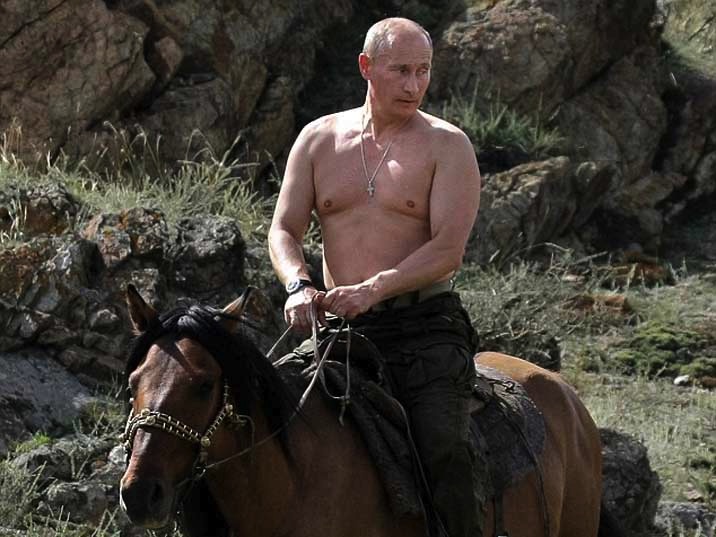
For more than a decade, for instance, Russian President Vladimir Putin, a reasonable candidate for sparking this wave of populism, has demonstrated his famously bare-chested version of power politics by ensuring that opponents and critics meet grim ends under “mysterious” circumstances.

These include the lethal spritz of polonium 210 that killed Russian secret police defector Alexander Litvinenko in London in 2006; the shooting of journalist and Putin critic Anna Politkovskaya outside her Moscow apartment that same year; a dose of rare Himalayan plant poison for banker and Putin nemesis Alexander Perepilichny in London in 2012; a fusillade that felled opposition leader Boris Nemtsov in downtown Moscow in 2015; and four fatal bullets this March for refugee whistleblower Denis Voronenkov on a Kiev sidewalk, which Ukraine has denounced as “an act of state terrorism.”

As an Islamist populist, Turkish president Recep Erdogan has projected his power through a bloody repression of, and a new war with, the country’s Kurdish minority. He portrays the Kurds as a cancer within the country’s body politic whose identity must be extinguished, much as his forebears rid themselves of the Armenians. In addition, since mid-2016, he’s overseen a wholesale purge of 50,000 officials, journalists, teachers, and military officers in the aftermath of a failed coup, and in a brutal round of torture and rape filled Turkish prisons to the brim.

In 2014, retired general Prabowo Subianto nearly won Indonesia’s presidency with a populist campaign of “strength and order.” In fact, Prabowo’s military career had long been steeped in such violence. In 1998, when the authoritarian regime of his father-in-law Suharto was at the brink of collapse, Prabowo, then commander of the Kopassus Rangers, staged the kidnapping-disappearance of a dozen student activists, the savage rape of 168 Chinese women (acts meant to incite racial violence), and the burning of 43 shopping malls and 5,109 buildings in Jakarta, the country’s capital, that left more than 1,000 dead.

During his first months in power, newly elected Philippine President Duterte waged his highly publicized war on the drug trade in city slums by loosing the police and vigilantes nationwide in a campaign already marked, in its first six months, by at least 7,000 extrajudicial killings. The bodies of his victims were regularly dumped on Manila’s streets as warnings to others and as down payments on Duterte’s promises of a new, orderly country.

And he wasn’t the first populist in Asia to take such a path either. In 2003, Thai Prime Minister Thaksin Shinawatra launched his “red shirt” movement as a war on his country’s rampant methamphetamine abuse. In just three months under Thaksin’s rule, the police carried out 2,275 extrajudicial killings of suspected drug dealers and users, often leaving the bodies where they fell as a twisted tribute to his power.

Such examples of populist political carnage and the likelihood of more to come -- including what Donald Trump’s presidency might have in store -- raise certain questions: Just what dynamics lie behind the urge toward violence that seems to propel such movements? Why does the virulent campaign rhetoric of populist political movements so often morph into actual violence once a populist wins power? And why is that violence invariably aimed at enemies believed to threaten the imagined integrity of the national community?

In their compulsion to “protect” the nation from what are seen as pernicious alien influences, such populist movements are defined by their need for enemies. That need, in turn, infuses them with an almost uncontrollable compulsion for conflict that transcends actual threats or rational political programs.

To give this troubling trend its political due, it’s necessary to understand how, at a particular moment in history, global forces have produced a generation of populist leaders with such potential compulsions. And at the moment, there may be no better example to look to than the Philippines.

During its last half-century of bloodstained elections, two populists, Ferdinand Marcos and Rodrigo Duterte, won exceptional power by combining the high politics of diplomacy with the low politics of performative violence, scattering corpses scarred by their signature brutality as if they were so many political pamphlets. A quick look at this history offers us an unsettling glimpse of America’s possible political future.

Populism in the Philippines: the Marcos Era


Although now remembered mainly as a “kleptocrat” who plundered his country and enriched himself with shameless abandon (epitomized by the discovery that his wife possessed 3,000 pairs of shoes), Ferdinand Marcos was, in fact, a brilliant populist, thoroughly skilled in the symbolic uses of violence.

As his legal term as president came to an end in 1972, Marcos -- who, like many populists, saw himself as chosen by destiny to save his people from perdition -- used the military to declare martial law. He then jailed 50,000 opponents, including the senators who had blocked his favored legislation and the gossip columnists who had mocked his wife’s pretensions.

The first months of his dictatorship actually lacked any official violence. Then, just before dawn on January 15, 1973, Constabulary officers read a presidential execution order and strapped Lim Seng, an overseas Chinese heroin manufacturer, to a post at a Manila military camp. As a battery of press photographers stood by, an eight-man firing squad raised their rifles. Replayed endlessly on television and in movie theaters, the dramatic footage of bullets ripping open the victim’s chest was clearly meant to be a vivid display of the new dictator’s power, as well as an appeal to his country’s ingrained anti-Chinese racism. Lim Seng would be the only victim legally executed in the 14 years of the Marcos dictatorship. Extra-judicial killings were another matter, however.

Marcos made clever use of the massive U.S. military bases near Manila to win continuing support for his authoritarian (and increasingly bloody) rule from three successive American administrations, even effectively neutralizing President Jimmy Carter’s human rights policy. After a decade of dictatorship, however, the economy began to collapse from a too-heavy dose of “crony capitalism” and the political opposition started to challenge Marcos’s self-image as destiny’s chosen one.

To either sate or subdue an increasingly restive population, he soon resorted to escalating raw violence. His security squads conducted what were referred to as “salvagings,” more than 2,500 of them (or 77% of the 3,257 extrajudicial killings during his 14-year dictatorship). Bodies scarred by torture were regularly abandoned in public plazas or at busy intersections so passers-by could read the transcript of terror in their stigmata. In the capital, Manila, with only 4,000 police for six million residents, the Marcos regime also deputized hundreds of “secret marshals” responsible for more than 30 shoot-on-sight fatalities during May 1985, the program’s first month, alone.

Yet the impact of Marcos’s version of populist violence proved mutable -- effective at the start of martial law when people yearned for order and counterproductive at its close when Filipinos again longed for freedom. That shift in sentiment soon led to his downfall in the first of the dramatic “people power” revolutions that would challenge autocratic regimes from Beijing to Berlin.

Populism in the Philippines: Duterte’s Violence


Rodrigo Duterte, the son of a provincial governor, initially pursued a career as the mayor of Davao City, a site of endemic violence that left a lasting imprint on his political persona.

In 1984, after the communist New People’s Army made Davao its testing ground for urban guerilla warfare, the city’s murders soared, doubling to 800, including the assassination of 150 policemen. To check the communists, who took over part of the city, the military mobilized criminals and ex-communists as death squad vigilantes in a lethal counterterror campaign. When I visited Davao in 1987 to investigate death squad killings, that remote southern city already had an unforgettable air of desolation and hopelessness.

It was in this context of rising national and local extrajudicial slaughter that the 33-year old Rodrigo Duterte launched his political career as the elected mayor of Davao City. That was in 1988, the first of seven terms that would keep him in office, on and off, for another 21 years until he won the country’s presidency in 2016. His first campaign was hotly contested and he barely beat his rivals, taking only 26% of the vote.

Around 1996, he reportedly mobilized his own vigilante group, the Davao Death Squad. It would be responsible for many of the city’s 814 extrajudicial killings over the next decade, as victims were dumped on city streets with faces wrapped bizarrely in packing tape. Duterte himself may have killed one or more of the squad’s victims. Apart from liquidating criminals, the Davao Death Squad also conveniently eliminated the mayor’s political rivals.

Campaigning for president in 2016, Duterte would proudly point to the killings in Davao City and promise a drug war that would murder 100,000 Filipinos if necessary. In doing so, he was also drawing on historical resonances from the Marcos era that lent some political depth to his violent rhetoric. By specifically praising Marcos, promising to finally bury his body in the National Heroes Cemetery in Manila, and supporting Ferdinand Marcos Jr. for vice president, Duterte identified himself with a political lineage of populist strongmen epitomized by the old dictator at a time when desperate Filipinos were looking for new hope of a decent life.

On taking office, President Duterte promptly started his promised anti-drug campaign and dead bodies became commonplace sights on city streets nationwide, sometimes accompanied by a crude cardboard sign reading “I am a pusher,” or simply with their faces wrapped in the by-now trademark packing tape used by the Davao Death Squad. Although Human Rights Watch would declare his drug war a “calamity,” a resounding 85% of Filipinos surveyed were “satisfied,” apparently seeing each body sprawled on a city street as another testament to the president’s promise of order.

At the same time, like Marcos, Duterte deployed a new style of diplomacy as part of his populist reach for unrestrained power. Amid rising tensions in the South China Sea between Beijing and Washington, he improved his country’s bargaining position by distancing himself from the Philippines’ classic alliance with the United States. At the 2016 ASEAN conference, reacting to Barack Obama’s criticism of his drug war, he said bluntly of the American president, “Your mother’s a whore.”

A month later during a state visit to Beijing, Duterte publicly proclaimed “separation from the United States.’’ By setting aside his country’s recent slam-dunk win over China at the Court of Arbitration in the Hague in a legal dispute over rival claims in the South China Sea, Duterte came home with $24 billion in Chinese trade deals and a sense that he was helping establish a new world order.

In January, after his police tortured and killed a South Korean businessman on the pretext of a drug bust, he was forced to call a sudden halt to the nationwide killing spree. Like his role model Marcos, however, Duterte’s populism seems to contain an insatiable appetite for violence and so it was not long before bodies were once again being dumped on the streets of Manila, pushing the death toll past 8,000.

Success and the Strongman


The histories of these Filipino strongmen, past and present, reveal two overlooked aspects of the ill-defined phenomenon of global populism: the role of what might be termed performative violence in projecting domestic strength and a complementary need for diplomatic success to show international influence. How skillfully these critical poles of power are balanced may offer one gauge for speculating about the fate of populist strongmen in disparate parts of the globe.

In Russia’s case, Putin’s projection of strength through the murder of selected domestic opponents has been matched by unchecked aggression in Georgia and Ukraine -- a successful balancing act that has made his country, with its rickety economy the size of Italy’s, seem like a great power again and is likely to extend his autocratic rule into the foreseeable future.

In Turkey, Erdogan’s harsh repression of ethnic and political enemies has essentially sunk his bid for entry into the European Union, plunged him into an unwinnable war with Kurdish rebels, and complicated his alliance with the United States against Islamic fundamentalism -- all potential barriers to his successful bid for unchecked power.

In Indonesia, Prabowo Subianto failed in his critical first step: building a domestic base large enough to sweep him into the presidency, in part because his call for order resonated so discordantly with a public still capable of remembering his earlier bid for power through eerie violence that roiled Jakarta with hundreds of rapes, fires, and deaths.

Without the popular support generated by his local spectacle of violence, President Duterte’s de facto abrogation of his country’s claims to the South China Sea’s rich fishing grounds and oil reserves in his bid for Chinese support risks a popular backlash, a military coup, or both. For the time being, however, Duterte’s deft juxtaposition of international maneuvering and local bloodletting has made him a successful Philippine strongman with, as yet, few apparent checks on his power.

While the essential weakness of the Philippine military limits Duterte’s outlets for his populist violence to the police killings of poor street drug dealers, Donald Trump faces no such restraints. Should Congress and the courts check the virulence of his domestic attacks on Muslims, Mexicans, or other imagined enemies and should his presidency run into further setbacks like the recent repeal-Obamacare humiliation, he could readily resort to violent military adventures not only in Iraq, Syria, Yemen, Afghanistan, and Libya, but even in Iran, not to speak of North Korea, in a bid to recover his populist aura of overweening power. In this way, unlike any other potential populist politician on the planet, he holds the fate of countless millions in his much-discussed hands.

If populism’s need for what scholar Michael Lee calls an “apocalyptic confrontation” and a “mythic battle” proves accurate, it might, in the end, lead the Trump administration’s “systemic revolutionaries” far beyond even their most extreme rhetoric into an endlessly escalating cycle of violence against foreign enemies, using whatever weapons are available, whether drones, special operations forces, fighter bombers, naval armadas, or even nuclear weapons.

Alfred W. McCoy, a TomDispatch regular, is the Harrington professor of history at the University of Wisconsin-Madison. He is the author of the now-classic book The Politics of Heroin: CIA Complicity in the Global Drug Trade, which probed the conjuncture of illicit narcotics and covert operations over 50 years, among other works. His newest book, In the Shadows of the American Century: The Rise and Decline of U.S. Global Power (Dispatch Books/Haymarket) will be published this September. This article is based on a lecture he delivered in February at the Third World Studies Center, University of the Philippines.

Follow TomDispatch on Twitter and join us on Facebook. Check out the newest Dispatch Book, John Feffer's dystopian novel Splinterlands, as well as Nick Turse’s Next Time They’ll Come to Count the Dead, and Tom Engelhardt's latest book, Shadow Government: Surveillance, Secret Wars, and a Global Security State in a Single-Superpower World.

Copyright 2017 Alfred W. McCoy

Japanese Court Finds Tepco Liable for Failing to Prevent Fukushima Meltdown

In first, government and Tepco found liable for Fukushima disaster

by Daisuke Kikuchi - Japan Times


Mar 17, 2017  
 
Maebashi, Gunma Pref.A court in Japan has ruled for the first time that the government and the operator of the crippled Fukushima No. 1 nuclear power plant were responsible for failing to take preventive measures against the March 11, 2011, quake-triggered tsunami that killed scores and forced tens of thousands from their homes.

Friday’s stunning ruling by the Maebashi District Court was the first to recognize negligence by the state and Tokyo Electric Power Co. Holdings Inc. It called the massive tsunami predictable and said the major nuclear disaster could have been avoided.

The district court ordered the two to pay damages totaling ¥38.55 million to 62 of 137 plaintiffs from 45 households located near the plant, which suffered a triple meltdown caused by the tsunami, awarding ¥70,000 to ¥3.5 million in compensation to each plaintiff.

The plaintiffs had demanded the state and Tepco pay compensation of ¥11 million each — a total of about ¥1.5 billion — over the loss of local infrastructure and psychological stress they were subjected to after being forced to relocate to unfamiliar surroundings.

Citing a government estimate released in July 2002, the court said in the ruling that “Tepco was capable of foreseeing several months after (the estimate) that a large tsunami posed a risk to the facility and could possibly flood its premises and damage safety equipment, such as the backup power generators.”

It pointed out that the state should have ordered Tepco to take bolstered preventive measures, and criticized the utility for prioritizing costs over safety.

Of the plaintiffs, 76 who lived in evacuation zones were forced to move, while another 61 evacuated voluntarily even though their houses were located outside evacuation zones. The ruling was the first of 30 similar class-action suits filed nationwide involving more than 10,000 plaintiffs.

About 80,000 citizens who had lived in Fukushima reportedly left the prefecture after the March 2011 disaster.

“I believe that the ruling saying both the government and Tepco were equally responsible is an important judgment,” Katsuyoshi Suzuki, the lead lawyer for the defense said at a news conference following the ruling. “But," he added, 

“Thinking about the psychological distress (the plaintiffs faced) after being forced to evacuate from their homes, I think the amount is not enough.”

Takehiro Matsuta, 38, one of the plaintiffs who evacuated from the city of Koriyama, hailed the ruling, but called the damages “disappointing” saying,

“The ruling was one big step for my family, for those who evacuated from Fukushima to Gunma, and for tens of thousands of earthquake victims nationwide.” 

Matsuta was also “disappointed,” his child, who was 3 years old at the time of the nuclear disaster, was not granted compensation.

“My wife and I are struggling everyday, but it’s my child who suffers the most.”

The group of lawyers for the plaintiffs, which have had suits filed since September 2011, claimed that the Fukushima disaster resulted in serious human rights violations by forcing victims to relocate after the crisis caused widespread environmental damage.

The plaintiffs argued that Tepco could have prevented the damage if it had implemented measures, including the building of breakwaters, based on its 2008 tsunami trial calculation that showed waves of over 10 meters could hit the Fukushima No. 1 plant.

Those calculations took into account the 2002 estimate by the government’s Headquarters for Earthquake Research Promotion, which concluded that there was a 20 percent chance of a magnitude-8 earthquake rocking areas off Fukushima within 30 years.

However, the government and Tepco have argued that the massive tsunami was unexpected, claiming that there were different opinions among scholars over the long-term evaluation. Both attacked the credibility of the study, calling it unscientific.

The government also objected to the ruling, saying that because it had no authority to force Tepco to take such preventive measures as argued by the plaintiffs, it bore no responsibility.

According to the defense, a number of other class suits are inching closer to rulings, with one in the city of Chiba scheduled for Sept. 22 and another in the city of Fukushima involving 4,000 plaintiffs expected by the year’s end.

Information from Kyodo added

Countries Mass for Nuke Weapons Ban

As 120 countries push for a ban, nuclear survivors take the floor

by Ray Acheson - The Bulletin


28 March 2017

Over the past two days, about 120 governments have participated in nuclear ban talks at the United Nations, determined to move ahead even though nuclear-armed states like the United States are refusing to participate and pressuring allies to do the same.

The high-level segment of the meeting, which invited government ministers and UN permanent representatives to speak, was scheduled to end on Monday but ran until lunchtime on Tuesday due to overwhelming interest.

States continued to cite the “historic nature” of the negotiations, with the delegate from Liechtenstein observing that “the broad and high-level representation today shows strong political support for this process.”

A diverse set of delegations continued to set out their vision of the future treaty. Ghana, Honduras, Nigeria, Iran, New Zealand, Thailand, Trinidad and Tobago, Vietnam, and others suggested possible provisions for the draft text. These will be elaborated further in upcoming sessions on principles and objectives, legal measures, and institutional arrangements.

States clearly came prepared to the opening week of the conference, indicating their determination to negotiate this treaty despite the opposition of the nuclear-armed states. As Trinidad and Tobago said,

“We stand on the precipice of history as we seek to shatter the chronic stalemate that has existed in the field of nuclear disarmament and non-proliferation for far too long.”

At the end of the high-level segment, civil society representatives were given the floor. Setsuko Thurlow, a survivor of the atomic bombing of Hiroshima, delivered a rousing speech on behalf of the International Campaign to Abolish Nuclear Weapons saying,

“Whenever I remember Hiroshima, the first image that comes to my mind is my four-year-old nephew, who was transformed in an unrecognizable, blackened, swollen, melted chunk of flesh.”

She urged governments to establish a strong legal standard against nuclear weapons, declaring “in no uncertain terms that nuclear weapons are illegitimate, immoral and illegal.”

Sue Coleman-Haseldine spoke about her experience as a child during tests the British and Australian governments conducted in the South Australian desert near her birthplace. She called on governments to ensure that the nuclear ban treaty “acknowledge the permanent damage done to people, land and culture, across generations, and particularly for indigenous people worldwide.”

The treaty, she said, “should require countries to address the needs of impacted people.”

Other civil society speakers included Yayoi Tsuchida of Gensuikyo (The Japan Council against Atomic and Hydrogen Bombs), Jasmin Nario Galace of Faith Communities Concerned about Nuclear Weapons, and Sergio Duarte of the Pugwash Conferences.

This post is part of Ban Brief, a series of updates on the historic 2017 negotiations to create a treaty banning nuclear weapons. Ban Brief is written by Tim Wright, Asia-Pacific director of the International Campaign to Abolish Nuclear Weapons, and Ray Acheson, director of Reaching Critical Will.