Thursday, April 20, 2017

Brexit's Dam: May Brings No Flowers for Britons

Theresa May: An Unstoppable Undemocratic Disaster in a Dismal Brexit Britain Without Adequate Opposition 

by Andy Worthington


20.4.17

Please support my work as a reader-funded investigative journalist and commentator.


Since Theresa May triggered Article 50 of the Lisbon Treaty three weeks ago, starting the two-year process of the UK leaving the EU, based on a slim majority in a referendum whose outcome was not legally binding, I have withdrawn into a protective shell, unable to cope with her deluded dictatorial arrogance, the pointlessness of the MPs who have persistently refused to challenge her in any way, with the spinelessness or corruption of most of the mainstream media, and with the racism and xenophobia and pathetic Little Englander nationalism unleashed by Brexit.

In these three weeks, I’ve been interested to note, I’ve met many other people who have felt the same, and who, like me, are refusing to watch the news any more — not just because it’s depressing to have to keep watching May and her fellow pro-Brexit ministers attempting to justify their idiocy, but also because of the bias of those bringing the news to us — the horribly corrupt BBC above all, with right-wing mouthpieces like the dreadful Laura Kuennsberg pretending to be journalists rather than stenographers for those in power, and with programmes like Question Time persistently giving far too much airtime to right-wing panel members and audiences.

Those of us who are so sickened that we’ve switched off are, of course, all Remainers, and we all know — not believe, know — that Brexit is an unprecedented disaster, that racism and xenophobia are out in the open now, poisoning our streets, and, along with our now-broken reputation for tolerance, we also know that far too many of our fellow citizens are flag-waving fantasists, longing for a golden age that never was, but that, in their minds, actually existed and, crucially, involved no foreigners. We also know that our economy is already in a self-inflicted decline, as the everyday cost of living is already noticeably more expensive than it was last June, a situation that can only get worse. We also despair that May and the Tories are so popular, and despair of the plight that Labour has dug itself into, with an unelectable leader, however worthy he is.

I’ve spent some of the last three weeks wondering if this detachment would lead to new ways of challenging the runaway Juggernaut that is Theresa May and her bloodless zombie enthusiasm for as destructive a break with Europe as is possible, or if we, the 48%, the 16.1 million UK citizens who voted to remain in the EU, would have to end up reluctantly retreating from politics as so many of us did in the 1980s.

I still don’t know the answer to that question, but as I returned from nearly a week away — with friends in Stroud, for 24 hours, and then, for four days, in a cottage in the Brecon Beacons, when the horror of having to look at May’s undead face or to listen to a tide of everyday bigots had been almost completely forgotten — I suddenly discovered that May had now added “total hypocrite” to the long roll-call of her failings, calling a General Election on June 8, even though she has no excuse to do so under the laws her own party brought in after the 2010 election to guarantee fixed five-year terms for parliaments, and even though, since running for leader last June, she has persistently said that she would not call an election.

As the Guardian explained, in a wonderfully hard-hitting editorial:

Britain does not need, and its people are not demanding, this general election. There is no crisis in the government. Mrs May is not losing votes in the Commons. The House of Lords is not defying her. No legislation is at risk. There is no war and no economic crisis. Brexit is two years away. The press are not clamouring for an early election.

And yet, as the Guardian added, it is now happening “solely because Mrs May sees Conservative partisan advantage in making it happen.” As the editorial proceeded to explain,

“As U-turns go, it is an absolute screecher. The smell of rubber on the Downing Street black top is acrid and foul. Judgments about Mrs May will never be quite the same, and deservedly so. She has built her authority by being, and by appearing to be, a leader who plays straight, gets on with the job and takes politics seriously … But now there is a new dimension to Mrs May. She is now a party political leader whose words can’t be trusted at face value as much, and for whom politics is, after all, a game. The Tory party may win, if opinion polls can be believed, because Mrs May is trusted far more than Mr Corbyn. But the loss to wider politics ought to be severe. The damage inflicted by the hypocrisy of the apparently sincere is more serious than the damage inflicted by the transparently untrustworthy.”

The Guardian’s editorial added:

Some of Mrs May’s reasons for calling the election are particularly unacceptable. To say, as she did, that a poll is needed because “division at Westminster” is causing “damaging uncertainty and instability” sails troublingly close to being a Thames Valley version of the sort of thing that President Erdoğan might say in Turkey. Division in parliament is necessary and inherent, above all on something as momentous as the Brexit terms. Brexit reflects life-influencing divisions in the country. Mrs May’s decision and language illustrate the damage that referendums do to parliamentary democracy.

The election is also an invitation to voters to buy Mrs May’s Brexit terms sight unseen. She said … that she wants support “for the decisions I must take”. But we do not know what those decisions will be. They depend on negotiations that have barely begun with some EU partners who face elections of their own, as well as on events. All this will involve give and take. Mrs May is seeking a mandate to do something of which not even she knows the main planks, the details and the trade-offs. She wants to get parliament off her back in making the Brexit terms. This election must ensure that this does not happen.

Many things may change over the coming weeks. At this early stage the danger is that the 2017 election may be less a contest about who should govern and more a contest about how much power the voters are willing to entrust to Mrs May. The Tory manifesto will have to be watched like a hawk; it will be an unusually crucial document. This is a premature election which the country does not need, the people do not want and Mrs May does not require in order to do her job effectively. Above all else, this election must not write her a blank cheque over Europe.

The Guardian also shone a light on what happened yesterday when MPs voted on May’s decision. Just a third of MPs could have derailed it by voting against it, but in the end only 13 MPs did, with 522 others voting to allow it, including the SNP and the Liberal Democrats, who both hope to gain from it, and probably will (in the former case, strengthening the chances of a second independence referendum, and in the latter, creating the very real possibility that Tory MPs in constituencies that voted Remain will turn to — or revert to — the Lib Dems), and the Labour Party also going along with it, even though it could well be a disaster for them. As the Guardian noted, however, the Labour Party, currently, is too intimidated and fatalistic to have seen the importance of resistance.

What happens next? Well, who knows? I reluctantly sense that I will have to wake up from my slumber and engage, but how, exactly, has yet to become apparent. As Ian Dunt, the author of the very necessary book, Brexit: What the Hell Happens Now? has explained, “May has called a referendum on Jeremy Corbyn and is going to pretend the result is a mandate for her Brexit strategy.”

Ian Dunt has also written another useful article, How the general election could go against Theresa May, which I recommend, and Gina Miller, who launched the successful lawsuit last year against Theresa May’s dictatorial insistence that she could trigger Article 50 without Parliament, is crowdfunding funds to launch a new organisation, ‘Best for Britain’, next week, which is planning “the country’s biggest tactical voting drive ever [to] stop Extreme Brexit.” As the funding website states, “We are launching a tactical vote campaign, aiming to ensure the final vote on the Brexit deal is a real one; one that is best for Britain. We need to prevent MPs and the people being forced into an Extreme Brexit that is not in Britain’s best interests. We will support candidates who campaign for a real final vote on Brexit, including rejecting any deal that leaves Britain worse off.”

In addition, a Facebook group has already been set up to encourage tactical voting in the local elections taking place on May 4, which, presumably, will now be expanding its operations to include the General Election on June 8, and I look forward to as much tactical voting as possible to try and damage the Tories as much as possible. I also look forward to significant pro-European Tories — like Lord Heseltine, who regards Brexit as the most idiotic peacetime policy in his lifetime — refusing to be silenced as May attempts to stifle any vestiges of internal dissent — and, as noted above, I look forward to Tory MPs in pro-Remain constituencies losing their seats across the south east and the south west of England if they fail to support their constituents’ wishes.

Mostly, though, this most cynical of elections is in many ways unknown territory, with UKIP, who secured 3.8 million votes in the 2015 General Election, now falling apart as a party, and the probability that the biggest winner this time around will, yet again, be the biggest party of all — the non-voting party, those who, put off by corrupt and/or remote politicians, and by the lack of representation in our ridiculous first-past-the-post system, don’t vote at all. And in 2015, lest we forget, just 66.2% of the 46,354,197 people eligible to vote actually bothered to do so. That’s 15,656,672 people — or, to go by the turnout in the referendum, the 27.8% of registered voters (12,948,018 people), who didn’t vote, making “the will of the people” that Theresa May and her ministers bang on about incessantly, with the full support of the right-wing media, the will of just 37.4% of the electorate. That’s way more than the 2015 General Election, when only 24.9% of registered electors voted for the Tories, who, nevertheless, took 50.9% of the seats, but it falls far short of providing anything like a mandate for all of the horrors that the Tories have been inflicting on us over the last seven years, and that, with Brexit, looks set to damage us permanently unless we can find a way to defeat them, and to discredit their malignant view of what Britain is, and what its place is in the world.


Andy Worthington is a freelance investigative journalist, activist, author, photographer, film-maker and singer-songwriter (the lead singer and main songwriter for the London-based band The Four Fathers, whose debut album ‘Love and War’ and EP ‘Fighting Injustice’ are available here to download or on CD via Bandcamp).

He is the co-founder of the Close Guantánamo campaign (and the Countdown to Close Guantánamo initiative, launched in January 2016), the co-director of We Stand With Shaker, which called for the release from Guantánamo of Shaker Aamer, the last British resident in the prison (finally freed on October 30, 2015), and the author of The Guantánamo Files: The Stories of the 774 Detainees in America’s Illegal Prison (published by Pluto Press, distributed by the University of Chicago Press in the US, and available from Amazon, including a Kindle edition — click on the following for the US and the UK) and of two other books: Stonehenge: Celebration and Subversion and The Battle of the Beanfield. He is also the co-director (with Polly Nash) of the documentary film, “Outside the Law: Stories from Guantánamo” (available on DVD here — or here for the US).

To receive new articles in your inbox, please subscribe to Andy’s RSS feed — and he can also be found on Facebook (and here), Twitter, Flickr and YouTube. Also see the six-part definitive Guantánamo prisoner list, and The Complete Guantánamo Files, an ongoing, 70-part, million-word series drawing on files released by WikiLeaks in April 2011. Also see the definitive Guantánamo habeas list, the full military commissions list, and the chronological list of all Andy’s articles.

Please also consider joining the Close Guantánamo campaign, and, if you appreciate Andy’s work, feel free to make a donation.

Wednesday, April 19, 2017

Finding the Strawberries: Behind Clinton's "Paranoid" and "Nixonian" Campaign

Why Hillary Clinton Really Lost

by Robert Parry  - Consortium News


April 19, 2017

An early insider account of Hillary Clinton’s presidential campaign, entitled Shattered, reveals a paranoid presidential candidate who couldn’t articulate why she wanted to be President and who oversaw an overconfident and dysfunctional operation that failed to project a positive message or appeal to key voting groups.

Okay, I realize that people who have been watching Rachel Maddow and other MSNBC programs – as well as reading The New York Times and The Washington Post for the past four months – “know” that Clinton ran a brilliant campaign that was only derailed because of “Russian meddling.”

But this insider account from reporters Jonathan Allen and Annie Parnes describes something else.

As The Wall Street Journal review notes, the book “narrates the petty bickering, foolish reasoning and sheer arrogance of a campaign that was never the sure thing that its leader and top staffers assumed. … Mr. Allen and Ms. Parnes stress two essential failures of the campaign, the first structural, the second political. The campaign’s structure, the authors write, was an ‘unholy mess, fraught with tangled lines of authority, petty jealousies, and no sense of greater purpose.’”

The book portrays Hillary Clinton as distant from her campaign staff, accessible primarily through her close aide, Huma Abedin, and thus creating warring factions within her bloated operation.

According to the Journal’s review by Barton Swaim, the book’s authors suggest that this chaos resulted from “the fact that Mrs. Clinton didn’t know why she wanted to be president. At one point no fewer than 10 senior aides were working on her campaign announcement speech, not one had a clear understanding of why Americans should cast their vote for Mrs. Clinton and not someone else. The speech, when she finally delivered it, was a flop – aimless, boring, devoid of much beyond bromides.”

The book cites a second reason for Clinton’s dismal performance – her team’s reliance on analytics rather than on reaching out to real voters and their concerns.

There is also an interesting tidbit regarding Clinton’s attitude toward the privacy of her staff’s emails. “After losing to Mr. Obama in the protracted 2008 primary,” the Journal’s review says, Clinton “was convinced that she had lost because some staffers – she wasn’t sure who – had been disloyal. So she ‘instructed a trusted aide to access the campaign’s server and download the [email] messages sent and received by top staffers.’”

Nixonian Paranoia


In other words, Clinton – in some Nixonian fit of paranoia – violated the privacy of her senior advisers in her own mole hunt, a revelation that reflects on her own self-described “mistake” to funnel her emails as Secretary of State through a private server rather than a government one. As the Journal’s review puts it: “she didn’t want anyone reading her emails the way she was reading those of her 2008 staffers.”


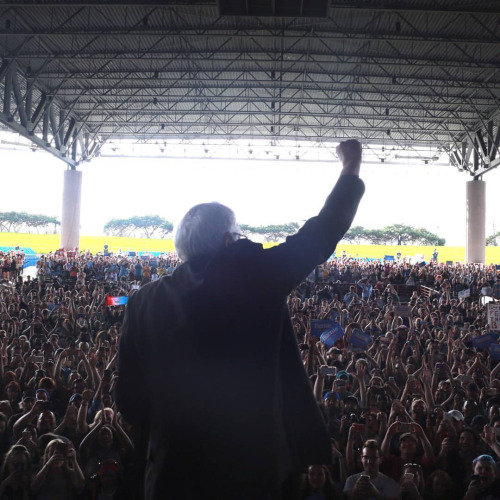
Sen. Bernie Sanders speaking to one of his large crowds of supporters. 
(Photo credit: Sanders campaign)


But there is even a greater irony in this revelation because of the current complaint from Clinton and her die-hard supporters that Russia sabotaged her campaign by releasing emails via WikiLeaks from the DNC, which described how party leaders had torpedoed the campaign of Clinton’s rival for the nomination, Sen. Bernie Sanders, and other emails from her campaign chairman John Podesta, revealing the contents of Clinton’s paid speeches to Wall Street banks and some pay-to-play features of the Clinton Foundation.

WikiLeaks has denied that it received the emails from Russia – and President Obama’s outgoing intelligence chiefs presented no real evidence to support the allegations – but the conspiracy theory of the Trump campaign somehow colluding with the Russians to sink Clinton has become a groupthink among many Democrats as well as the mainstream U.S. media.

So, rather than conducting a serious autopsy on how Clinton and the national Democratic Party kicked away a winnable election against the buffoonish Donald Trump, national Democrats have created a Zombie explanation for their failures, blaming their stunning defeat on the Russians.

This hysteria over Russia-gate has consumed the first several months of the Trump presidency – badgering the Trump administration into a more belligerent posture toward nuclear-armed Russia – but leaving little incentive for the Democrats to assess what they need to do to appeal to working-class voters who chose Trump’s empty-headed populism over Clinton’s cold-hearted calculations.

The current conventional wisdom among the mainstream media, many Democrats and even some progressives is that the only way to explain the victory by pussy-grabbing Trump is to complain about an intervention by the evil Russians. Maybe Maddow and the other Russia-did-it conspiracy theorists will now denounce Shattered as just one more example of “Russian disinformation.”

The Times’ View


The New York Times’ review by Michiko Kakutani also notes how Shattered details Clinton’s dysfunction, but the newspaper inserted a phrase about “Russian meddling,” presumably to avoid a head-exploding cognitive dissonance among its readers who have been inundated over the past four months by the Times’ obsession on Russia! Russia! Russia!

However, the Times’ review still focuses on the book’s larger message:

“In fact, the portrait of the Clinton campaign that emerges from these pages is that of a Titanic-like disaster: an epic fail made up of a series of perverse and often avoidable missteps by an out-of-touch candidate and her strife-ridden staff that turned ‘a winnable race’ into ‘another iceberg-seeking campaign ship.’
An insider book on Campaign 2016 reveals a paranoid 
Hillary Clinton who spied on staff emails after losing in 2008 and 
carried her political dysfunction into her loss to Donald Trump
“It’s the story of a wildly dysfunctional and ‘spirit-crushing’ campaign that embraced a flawed strategy (based on flawed data) and that failed, repeatedly, to correct course.
A passive-aggressive campaign that neglected to act on warning flares sent up by Democratic operatives on the ground in crucial swing states, and that ignored the advice of the candidate’s husband, former President Bill Clinton, and other Democratic Party elders, who argued that the campaign needed to work harder to persuade undecided and ambivalent voters (like working-class whites and millennials), instead of focusing so insistently on turning out core supporters.”

So, perhaps this new book about how Hillary Clinton really lost Campaign 2016 will enable national Democrats to finally start charting a course correction before the party slams another Titanic-style campaign into another iceberg.

Investigative reporter Robert Parry broke many of the Iran-Contra stories for The Associated Press and Newsweek in the 1980s. You can buy his latest book, America’s Stolen Narrative, either in print here or as an e-book (from Amazon and barnesandnoble.com).image_pdf

On the Eve of Escalation: The Metrics of Yemen's Destruction

US Moves Toward Major Intervention in Yemen

by Thomas Mountain  - CounterPunch


April 19, 2017

The USA, according to Defense Secretary “Mad Dog” Mattis, he who ordered the use of chemical weapons in Fallujah, Iraq, is about to take a major step towards direct intervention in support of the Saudi Arabia war on the Yemeni people.

According to Jeffrey St. Clair of CounterPunch, this war has already seen 90,000 Saudi airstrikes on Yemen, or one every 12 minutes, 123 a day for two years now. With direct US military involvement it will only get worse. The USA had been limiting its involvement to fueling, arming and target selection for the Saudi military.

The UN and international media claim only 12,000 or so deaths in Yemen but this just doesn’t add up. If there's been 90,000 airstrikes that means only one Yemeni is killed for every 8 strikes? They must take us for idiots, or more likely, just too ignorant and brainwashed to know better.

One airstrike is a big deal, for it involves the use of several thousand kilograms of high explosives, enough to incinerate an entire village. And then there are the cluster bombs in their thousands, and the hundreds of markets bombed…so if only 3 Yemenis have been killed per air strike then we are talking upwards of 250,000 dead Yemenis and counting.

Doesn’t this match the toll for the first two years of the US invasion of Iraq in 2003 and isn’t just going to get worse with US involvement? There is a huge crime being committed in Yemen and the UN and its cronies in the so called “human rights movement” are helping cover it up with their ridiculous death statistics.

Never mind the tens of thousands of Yemeni children already dead and buried from the US backed Saudi enforced starvation blockade of food and medicine to the Houthi homeland.

The US has to protect its national interests in controlling the Bab Al Mandab chokepoint between the Red Sea and Indian Ocean through which passes the trade of the two biggest international partners, Europe and Asia.

The US may have become a second tier trading partner but militarily “Mad Dog” Mattis is not going to sit by and lose control of the region. The US has a airbase in near by Djibouti and most likely planning permanent bases in Yemen to aid the incoming onslaught of US military might.

Already moves are underway to increase direct US military involvement in Somalia, the other key link in controlling the “Gate of Tears”. First comes Mad Dog Mattis calling for an increase in airstrikes, then on the ground coordinators, “training officers” and in the end, direct military intervention by the US, as Somalia itself continues to be rocked by insurgency and famine. What possible good can come from an aerial onslaught on the Somali people by the American Luftwaffe, whose so called “smart bombs” seem to inevitably find targets containing Somali women and children.

Famine to the left of Bad Al Mandab, famine to the right of Bad Al Mandab, it seems a famine policy is being enacted by Pax Americana and its lackeys at the UN when it comes to the Horn of Africa.

So expect no mercy when it comes to the US military directly involving itself in Yemen. Drone strikes will continue, with some most likely based directly in Yemen, though does Pax Americana really want to give ISIS and Al Qaeda an available target by putting American boots on the ground in Yemen?

And always off shore lurks the the US Navy’s Indian Ocean Fleet supported by its base at Diego Garcia, striking without warning anywhere they choose in Yemen, never mind the dead women and children by now in the hundreds of thousands.

Many tens of thousands of new airstrikes, so many that the munition makers in the US are putting on 24 hour shifts. The US airbase at Camp Lemonierre in Djibouti will be ramping up operations and the US will be taking out of mothballs their bases in Saudi Arabia.

It is as if the War on Iraq is being fought all over again, except this time against the poorest, hungriest of the Arab peoples, the Yemenis.

Saudi Arabia is stuck in a quagmire in Yemen, easy to get into and very difficult to get out of, just as Egypt did in the 1960’s, what President Nasser was to call “Egypt's Vietnam”. The US recognizes the fact that the Saudi war is going nowhere, with out a single major objective recaptured since the start of the war. Al Qaeda and ISIS are growing in strength, taking advantage of the vacuum of power existing in the Sunni communities in Southern Yemen who are actually fighting for independence.

The so called “Government” of Yemen, if you can call a government based in a foreign country any such thing, is little more that a mouthpiece, with no effective fighting forces on the ground in southern Yemen thanks to the Saudis failing to provide the salaries of its fighters. No pay, no way, their families have to eat so its back to doing whatever it takes to buy food for their wives and kids and that was the end of “Governments” army.

So its South American mercenaries guarding the UAE facilities, Saudi troops and a handful of Sudanese troops caught between the battle hardened Houthi fighters and their allies in the Yemeni army loyal to former President Saleh and Al Qaeda and ISIS with all hell to pay.

What is the US going to do, sit back and watch their strategic partner in West Asia, or asset really, the Saudi’s, stuck in a swamp of their own making with no apparent way out?

The USA seems intent on going where history has proven only catastrophe awaits, into the tribal conflict in Yemen. As a result the world should expect half a million or more dead Yemenis in this war against the Houthi tribes and their supporters as well as untold starvation deaths of Yemeni children.

But no matter the unimaginable suffering the Yemen people suffer, their tribal differences must be put aside, as in reunification in 1990, and lift themselves out of the failed state they exist in today. There are those who do not want this to happen, for crisis management is the policy of the USA when it comes to the Horn of Africa, as in help create a crisis the better to manage control of such an international critical choke point, the Bab Al Mandab. As in Somalia, the USA prefers chaos to a strong, independent Yemen able to interfere in Pax Americana’s control of the Gate of Tears.
 
Thomas C. Mountain attended Punahou School for six years some half a dozen years before “Barry O’Bombers” time there. He has been living and writing from Eritrea since 2006. He can be reached at thomascmountain at g_ mail_ dot _com
More articles by:Thomas Mountain

Science Takes on Propaganda: "Syria Sarin Gas Attack Did Not Occur"

MIT Scientist FURTHER Debunks False Flag: "The Nerve Agent Attack that Did Not Occur"

by Theodore A. Postol

via Washington's Blog - ZeroHedge

Apr. 19, 2017

Theodore A. Postol, professor emeritus of science, technology, and national security policy at MIT. Postol’s main expertise is in ballistic missiles. He has a substantial background in air dispersal, including how toxic plumes move in the air. Postol has taught courses on weapons of mass destruction – including chemical and biological threats – at MIT.

Before joining MIT, Postol worked as an analyst at the Office of Technology Assessment, as a science and policy adviser to the chief of naval operations, and as a researcher at Argonne National Laboratory. He also helped build a program at Stanford University to train mid-career scientists to study weapons technology in relation to defense and arms control policy.
Postol is a highly-decorated scientist, receiving the Leo Szilard Prize from the American Physical Society, the Hilliard Roderick Prize from the American Association for the Advancement of Science, and the Richard L. Garwin Award from the Federation of American Scientists.
For background on Dr. Postol’s previous essays on this issue, see:
Exclusive: Top Missile and Chemical Weapons Expert Debunks Trump’s Claims About Syrian Chemical Weapons
Addendum to Dr. Theodore Postol’s Assessment of the White House Report on Syria Chemical Attack
Video Evidence of False Claims Made in the White House Intelligence Report of April 11, 2017


THE NERVE AGENT ATTACK THAT DID NOT OCCUR: ANALYSIS OF THE TIMES AND LOCATIONS OF CRITICAL EVENTS IN THE ALLEGED NERVE AGENT ATTACK AT 7 AM ON APRIL 4, 2017 IN KHAN SHEIKHOUN, SYRIA


Introduction 


This analysis contains a detailed description of the times and locations of critical events in the alleged nerve agent attack of April 4, 2017 in Khan Shaykhun, Syria – assuming that the White House Intelligence Report (WHR) issued on April 11, 2017 correctly identified the alleged sarin release site.

Khan Shaykhun Sun Angles
Relative to Local Horizontal on April 4, 2017

Analysis using weather data from the time of the attack shows that a small hamlet about 300 m to the east southeast of the crater could be the only location affected by the alleged nerve agent release. The hamlet is separated from the alleged release site (a crater) by an open field. The winds at the time of the release would have initially taken the sarin across the open field. Beyond the hamlet there is a substantial amount of open space and the sarin cloud would have had to travel long additional distance for it to have dissipated before reaching any other population center.

Video taken on April 4 shows that the location where the victims were supposedly being treated from sarin exposure is incompatible with the only open space in the hamlet that could have been used for mass treatment of victims. This indicates that the video scenes where mass casualties (dead and dying) were laid on the ground randomly was not at the hamlet. If the location where the bodies were on the ground was instead a site where the injured and dead were taken for processing, then it is hard to understand why bodies were left randomly strewn on the ground and in mud as shown in the videos.

The conclusion of this summary of data is obvious – the nerve agent attack described in the WHR did not occur as claimed. There may well have been mass casualties from some kind of poisoning event, but that event was not the one described by the WHR.

The findings of this analysis can serve two important purposes:

It shows exactly what needs to be determined in an international investigation of this alleged atrocity. In particular, if an international investigation can determine where casualties from the nerve agent attack lived, it will further confirm that the findings reported by the WHR are not compatible with the data it cites as evidence for its conclusions.

It also establishes that the WHR did not utilize simple and widely agreed upon intelligence analysis procedures to determine its conclusions.

This raises troubling questions about how the US political and military leadership determined that the Syrian government was responsible for the alleged attack. It is particularly of concern that the WHR presented itself as a report with “high confidence” findings and that numerous high-level officials in the US government have confirmed their belief that the report was correct and to a standard of high confidence.

Methodology Used in This Analysis


The construction of the time of day at which particular video frames were generated is determined by simply using the planetary geometry of the sun angle during the day on April 4. The illustration below of the sun-angle geometry shows the Day/Night Sun Terminator at the location of Khan Sheikhoun on April 4. The angle of the sun relative to local horizontal is summarized in the table that follows the image of the planetary geometry along with the temperature during the day between 6:30 AM and 6 PM.

The next set of two side-by-side images shows the shadows at a location where a large number of poison victims are being treated in what appears to be the aftermath of a poisoning event. The shadows indicate that this event occurred at about 7:30 AM. This is consistent with the possibility of a nerve agent attack at 7 AM on the morning of April 4 and it is also consistent with the allegation in the WHR that an attack occurred at 6:55 AM on that day.

The timing sequence of the attack is important for determining the consistency of the timelines with the allegations of a sarin release at the crater identified in the WHR.

Assuming there was an enough sarin released from the crater identified by the WHR to cause mass casualties at significant downwind distances, the sarin would have drifted downwind at a speed of 1 to 2 m/s and for several minutes before encountering the only location where mass casualties could have occurred from this particular release. The location where these mass casualties would have had to occur will be identified and described in the next section. If there was a sarin release elsewhere, mass casualties would have not occurred at this location but would have occurred somewhere else in the city.

Assuming the victims of the attack were exposed to the plume, the symptoms of sarin poisoning would have express themselves almost immediately. As such, the scene at 7:30 AM on April 4 is absolutely consistent with the possibility of a mass poisoning downwind of the sarin-release crater.

The next figure shows the earliest photograph we have been able to find of an individual standing by the sarin-release crater where the alleged release occurred. The photo was posted on April 4 and the shadow indicates the time of day was around 10:50 AM. Thus the individual was standing by the crater roughly 4 hours after the dispersal event.

If the dispersal event was from this crater, the area where this unprotected individual is standing would be toxic and this individual would be subjected to the severe and possibly fatal effects of sarin poisoning. As a result, this throws substantial suspicion on the possibility that the crater identified by WHR would be the source of the sarin release.

At the time of the sarin release, the temperature of the air was about 60°F and the sun was at an angle of only 8° relative to local horizontal. This means that liquid sarin left on the ground from the dispersal event would remain mostly unevaporated. By 11 AM, the temperature of the air had risen to 75° and the angle of the sun relative to horizontal was at 66°. Thus, one would expect that the combination of the rise in air temperature and the sun on the crater would lead to significant evaporation of liquid sarin left behind from the initial dispersal event. The air temperature and sun angle are such that the area around the crater should have been quite dangerous for anybody without protection to operate.

This is therefore an important indication that the crater was probably not a dispersal site of the sarin.

The final set of three photographs shows arriving victims seeking treatment at a hospital at some location in Khan Sheikhoun. The arrivals at the hospital are at between 9 and 10:30 AM on the day of the attack. This is perhaps late since victims were seriously exposed by 7:30 AM, but victims could have been trailing in after the initial arrival of severely affected victims. This time is considerably earlier than the time at which WHR alleges that a hospital was attacked while treating victims of the poisoning attack.

In the next section we discuss the location where mass casualties should have occurred if the sarin release occurred at the location alleged by the WHR.


Local Time of Day in Khan
ShayKhun on April 4, 2017 Surface Temperature
in Degrees Fahrenheit Sun Angle in Degrees Relative to
Local Horizontal
6:30 58.16 1.20
7.00 60.24 8.40
7:30 62.39 15.60
8.00 64.55 22.80
8:30 66.68 30.00
9.00 68.74 37.20
9:30 70.69 44.40
10.00 72.51 51.60
10:30 74.15 58.80
11.00 75.59 66.00
11:30 76.81 73.20
12.00 77.80 80.40
12:30 78.53 87.60
13.00 79.01 94.80
13:30 79.24 102.00
14.00 79.22 109.20
14:30 78.96 116.40
15.00 78.48 123.60
15:30 77.81 130.80
16.00 76.99 138.00
16:30 76.04 145.20
17.00 75.03 152.40
17:30 74.01 159.60
18.00 73.05 166.80


Identification of the Location of the Mass Casualties


The figure on the next page shows the direction of the toxic sarin plume based on the assumption that the alleged release point was the crater identified by WHR. The wind conditions at the time of the release, which would have been at about 7 AM on April 4, would have carried the plume across an empty field to an isolated Hamlet roughly 300 m downwind from the crater.

Although there were some walls and structures that would have somewhat attenuated and inhibited the movement of the aerosol cloud from the release point, the open field would be an ideal stable wind environment to transmit the remaining sarin cloud with minimal distortion and dispersal. As such, it is plausible that the sarin cloud could with the weather conditions at that time have led to mass casualties at the Hamlet.

The sarin dosage level that results in 50% of exposed victims dying is known as the LD50. The LD50 for sarin is about 100 mglmin/m3.

The dose quantity mglmin/m3 can be understood simply.

An exposure of about 100 mglmin/m3 simply means that a victim is within an environment for one full minute when there is 100 mg/m3 of sarin in the air. If the victim is instead in an environment for 10 minutes where there is a density of sarin of 10 mg/m3, they will also receive a lethal dose of 100 mglmin/m3.

Assuming 5 to 10 liters were aerosolized at the crater as alleged by the WHR, this would have resulted in an average sarin exposure at the Hamlet at 300 m range of about 10 to 20 mglmin/m3, assuming wind and temperature conditions that are near ideal for lethal exposures downwind. This estimate assumes that an individual would be outside and exposed to the sarin as the gas cloud passes by.


Since a cloud of sarin would not be uniformly mixed, there will be regions in the cloud that have much higher and lower doses than the average. In addition, as the cloud passes, sarin entering into open windows of aboveground and basement rooms would tend to become trapped inside these rooms creating a significantly longer exposure to the nerve agent, certainly leading to lethal levels if residents did not evacuate the rooms immediately. Also, since the nerve agent cloud would be passing through an area that has buildings, it will tend to flow around, over buildings, and down into open basement windows, resulting in buildups of sarin in some locations and diminished levels of sarin at other locations.

As such, the Hamlet could well have been within lethal range of the sarin exposure. However, areas further downwind from the Hamlet would be sufficiently far away that the sarin will have dispersed sufficiently that it would not be capable of causing deaths.

Thus, the Hamlet area 300 m downwind of the crater is the only area where mass casualties could occur if there had been a sarin release at the crater as alleged by the WHR!

The selected video frames collected on the next two pages show three important sets of data that indicate the following:

Unprotected civilians with clothing that have logos of the Idlib Health Directorate are tampering with the contents of the crater crater that the WHR alleges was the source of the sarin release. All of the indicators point to a ruptured tube that could have contained no more than 8 to 10 liters of sarin. This is the only container shown in any videos from this scene.
The next collection of video frames shows panoramic views of the target area taken from a drone equipped with a video camera. As can be seen in the video frames, a goat that was allegedly killed from the sarin dispersal is close to downwind of the alleged dispersal site.

However, the Hamlet that should have experienced major casualties if the alleged dispersal site had been correctly identified is only 300 m down range, and easily reachable by simply walking over to the site.

Yet none of the video journalists refer in any way to a mass casualty site nearby. They simply focus on a dead goat and present out of context images of a few dead birds. It is remarkable that no video journalists of the many who reported from this crater area referred in any way to the mass casualties that could only have occurred 300 m away if the attack had been executed from this crater. 

The last collection of 18 video frames is from the area where mass casualties were piled on the ground haphazardly dead or dying. Among these casualties were infants as well as men and women. This scene clearly could not have been at the location of the Hamlet as one can see that the walls surrounding the area are carved out of rock. Thus, this scene could not possibly have been at the Hamlet.

These video frames were generated by reviewing hundreds of videos posted on YouTube plus additional videos and video frames found on Twitter.

Among the hundreds of videos reviewed there seems to be no more than 50 to 60 seconds of actual original scenes like those laid out in the collection of 18 videos below. The vast majority of time in the videos contains the same repeated sequences of the same dead and injured infants and adults that could all be collected into less than a couple of minutes of independent scenes.

The overwhelming evidence is that these videos repeat nothing more than redundant scenes that suggest one terrible event might have occurred. Almost none of the scenes contain any different information from the others. This raises a serious question about how much real data has been supplied that would indicate an actual significant nerve agent attack.

What is absolutely clear from the videos is that the location of the sarin dispersal site alleged by WHR and the mass casualty site that would have had to be generated if the sarin dispersal actually occurred, are not in any way related to the scenes of victims shown in the other videos. The conclusion is obvious, the alleged attack described in WHR never occurred.


Final Comments


This abbreviated summary of the facts has been constructed entirely from basic physics, video evidence, and absolutely solid analytical methods. It demonstrates without doubt that the sarin dispersal site alleged as the source of the April 4, 2017 sarin attack in Khan Sheikhoun was not a nerve agent attack site.

It also shows beyond a shadow of a doubt that the only mass casualty site that could have resulted from this mass attack is not in any way related to the sites that are shown in video following a poisoning event of some kind at Khan Sheikhoun.

This means that the allegedly “high confidence” White House intelligence assessment issued on April 11 that led to the conclusion that the Syrian government was responsible for the attack is not correct. For such a report to be so egregiously in error, it could not possibly have followed the most simple and proven intelligence methodologies to determine the veracity of its findings.

Since the United States justified attacking a Syrian airfield on April 7, four days before the flawed National Security Council intelligence report was released to the Congress and the public, the conclusion that follows is that the United States took military actions without the intelligence to support its decision.

Furthermore, it is clear that the WHR was not an intelligence report.

No competent intelligence professional would have made so many false claims that are totally inconsistent with the evidence. No competent intelligence professional would have accepted the findings in the WHR analysis after reviewing the data presented herein. No competent intelligence professionals would have evaluated the crater that was tampered with in terms described in the WHR.

Although it is impossible to know from a technical assessment to determine the reasons for such an egregiously amateurish report, it cannot be ruled out that the WHR was fabricated to conceal critical information from the Congress and the public.

Appendix

Resource Materials Used To DetermineLocalWeather Conditions andSun Angles
Needed to Verify the above Analysis

Khan Shaykhun, Idlib Historical Weather, Syria

The past date should be after 1st July, 2008 onwards
Tue 04th Apr, 2017

Time Weather

Temp Feels Like Rain

Wind

Gust Rain? Cloud

Humidity

Pressure
00:00 03:00 06:00 09:00 12:00 15:00 18:00 21:00

10 °c 10 °c 13 °c 21 °c 25 °c 26 °c 23 °c 20 °c
10 °c 10 °c 13 °c 21 °c 24 °c 24 °c 24 °c 20 °c
0.0 mm 0.0 mm 0.0 mm 0.0 mm 0.0 mm 0.0 mm 0.0 mm 0.0 mm
4 mph
SSW 3 mph
S 2 mph
SE 4 mph

E 7 mph
ENE 10 mph
ENE 11 mph
ENE 10 mph
ENE
8 mph 6 mph 4 mph 4 mph 8 mph 12 mph 17 mph 20 mph
0% 0% 0% 0% 0%

7% 2% 1% 1% 6%

94% 91% 76% 40% 19% 0% 0% 0%
20% 25% 21%
17% 25% 33%
1022 mb 1022 mb 1023 mb 1023 mb 1022 mb 1021 mb 1021 mb 1021 mb


Khan Shaykhun Past weather on 04th April

2mph = 0.9 m/sec
3mph = 1.3 m/sec
4mph = 1.8 m/sec

3 to 4 Minutes from Crater to Residences

https://www.timeanddate.com/sun/syria/damascus
April 2017 — Sun in Damascus

Month:
2017 Apr Sunrise/Sunset

Sunrise Sunset Length Daylength

Difference Astronomical Twilight

Start End Nautical Twilight

Start End Civil Twilight

Start End Solar Noon

Time Mil. mi
1 6:22 am t (84°) 6:55 pm t (276°) 12:32:44 +2:03 4:58 am 8:19 pm 5:28 am 7:49 pm 5:57 am 7:20 pm 12:38 pm (61.2°) 92.896
2 6:21 am t (83°) 6:55 pm t (277°) 12:34:48 +2:03 4:56 am 8:20 pm 5:26 am 7:50 pm 5:56 am 7:21 pm 12:38 pm (61.6°) 92.922
3 6:19 am t (83°) 6:56 pm t (277°) 12:36:51 +2:03 4:55 am 8:21 pm 5:25 am 7:51 pm 5:54 am 7:21 pm 12:37 pm (61.9°) 92.948
4 6:18 am t (83°) 6:57 pm t (278°) 12:38:54 +2:03 4:53 am 8:22 pm 5:23 am 7:52 pm 5:53 am 7:22 pm 12:37 pm (62.3°) 92.974
5 6:17 am t (82°) 6:58 pm t (278°) 12:40:58 +2:03 4:52 am 8:23 pm 5:22 am 7:53 pm 5:52 am 7:23 pm 12:37 pm (62.7°) 93.000
6 6:15 am t (82°) 6:58 pm t (279°) 12:43:00 +2:02 4:50 am 8:24 pm 5:21 am 7:53 pm 5:50 am 7:24 pm 12:37 pm (63.1°) 93.026
7 6:14 am t (81°) 6:59 pm t (279°) 12:45:02 +2:02 4:49 am 8:25 pm 5:19 am 7:54 pm 5:49 am 7:24 pm 12:36 pm (63.5°) 93.052
8 6:13 am t (81°) 7:00 pm t (279°) 12:47:04 +2:01 4:47 am 8:26 pm 5:18 am 7:55 pm 5:48 am 7:25 pm 12:36 pm (63.8°) 93.079
9 6:12 am t (80°) 7:01 pm t (280°) 12:49:05 +2:01 4:46 am 8:27 pm 5:16 am 7:56 pm 5:46 am 7:26 pm 12:36 pm (64.2°) 93.105
10 6:10 am t (80°) 7:01 pm t (280°) 12:51:07 +2:01 4:44 am 8:28 pm 5:15 am 7:57 pm 5:45 am 7:27 pm 12:36 pm (64.6°) 93.131
11 6:09 am t (79°) 7:02 pm t (281°) 12:53:07 +2:00 4:43 am 8:29 pm 5:14 am 7:58 pm 5:44 am 7:28 pm 12:35 pm (64.9°) 93.158
12 6:08 am t (79°) 7:03 pm t (281°) 12:55:07 +2:00 4:41 am 8:29 pm 5:12 am 7:58 pm 5:42 am 7:28 pm 12:35 pm (65.3°) 93.184
13 6:06 am t (79°) 7:04 pm t (282°) 12:57:07 +1:59 4:40 am 8:30 pm 5:11 am 7:59 pm 5:41 am 7:29 pm 12:35 pm (65.7°) 93.210
14 6:05 am t (78°) 7:04 pm t (282°) 12:59:06 +1:59 4:38 am 8:31 pm 5:10 am 8:00 pm 5:40 am 7:30 pm 12:34 pm (66.0°) 93.237
15 6:04 am t (78°) 7:05 pm t (283°) 13:01:05 +1:58 4:37 am 8:32 pm 5:08 am 8:01 pm 5:38 am 7:31 pm 12:34 pm (66.4°) 93.263
16 6:03 am t (77°) 7:06 pm t (283°) 13:03:03 +1:58 4:35 am 8:33 pm 5:07 am 8:02 pm 5:37 am 7:31 pm 12:34 pm (66.7°) 93.290
17 6:02 am t (77°) 7:07 pm t (283°) 13:05:01 +1:57 4:34 am 8:34 pm 5:05 am 8:03 pm 5:36 am 7:32 pm 12:34 pm (67.1°) 93.316
18 6:00 am t (76°) 7:07 pm t (284°) 13:06:58 +1:56 4:33 am 8:35 pm 5:04 am 8:04 pm 5:35 am 7:33 pm 12:34 pm (67.4°) 93.343
19 5:59 am t (76°) 7:08 pm t (284°) 13:08:54 +1:56 4:31 am 8:36 pm 5:03 am 8:05 pm 5:33 am 7:34 pm 12:33 pm (67.8°) 93.369
20 5:58 am t (76°) 7:09 pm t (285°) 13:10:50 +1:55 4:30 am 8:37 pm 5:01 am 8:05 pm 5:32 am 7:35 pm 12:33 pm (68.1°) 93.395
21 5:57 am t (75°) 7:10 pm t (285°) 13:12:44 +1:54 4:28 am 8:38 pm 5:00 am 8:06 pm 5:31 am 7:36 pm 12:33 pm (68.5°) 93.421
22 5:56 am t (75°) 7:10 pm t (286°) 13:14:39 +1:54 4:27 am 8:39 pm 4:59 am 8:07 pm 5:30 am 7:36 pm 12:33 pm (68.8°) 93.447
23 5:55 am t (74°) 7:11 pm t (286°) 13:16:32 +1:53 4:25 am 8:41 pm 4:58 am 8:08 pm 5:29 am 7:37 pm 12:33 pm (69.1°) 93.472
24 5:53 am t (74°) 7:12 pm t (286°) 13:18:25 +1:52 4:24 am 8:42 pm 4:56 am 8:09 pm 5:27 am 7:38 pm 12:32 pm (69.5°) 93.498
25 5:52 am t (74°) 7:13 pm t (287°) 13:20:17 +1:52 4:23 am 8:43 pm 4:55 am 8:10 pm 5:26 am 7:39 pm 12:32 pm (69.8°) 93.523
26 5:51 am t (73°) 7:13 pm t (287°) 13:22:08 +1:51 4:21 am 8:44 pm 4:54 am 8:11 pm 5:25 am 7:40 pm 12:32 pm (70.1°) 93.547
27 5:50 am t (73°) 7:14 pm t (287°) 13:23:58 +1:50 4:20 am 8:45 pm 4:53 am 8:12 pm 5:24 am 7:40 pm 12:32 pm (70.4°) 93.572
28 5:49 am t (72°) 7:15 pm t (288°) 13:25:48 +1:49 4:19 am 8:46 pm 4:51 am 8:13 pm 5:23 am 7:41 pm 12:32 pm (70.8°) 93.596
29 5:48 am t (72°) 7:16 pm t (288°) 13:27:36 +1:48 4:17 am 8:47 pm 4:50 am 8:14 pm 5:22 am 7:42 pm 12:32 pm (71.1°) 93.619
30 5:47 am t (72°) 7:16 pm t (289°) 13:29:23 +1:47 4:16 am 8:48 pm 4:49 am 8:15 pm 5:21 am 7:43 pm 12:31 pm (71.4°) 93.643


* All times are local time for Damascus. Time is adjusted for DST when applicable. Dates are based on the Gregorian calendar. Today is highlighted.

Time Determined by Planetary Analysis

Sunrise ~ 6:25 AM

Sunset ~ 6:56 PM

Postscript: Here is the .pdf version, with the best layout:

The Nerve Agent Attack that Did Not Occur__Analysis of the Alleged Nerve Agent Attack at 7 AM on April 4_2017 in Khan Sheikhoun_Syrian_(April18,2017)_Optimized_

In a cover letter to his report, Dr. Postol also sent us the following Summary of Findings:

This analysis contains a detailed description of the times and locations of critical events in the alleged nerve agent attack of April 4, 2017 in Khan Shaykhun, Syria – assuming that the White House Intelligence Report (WHR) issued on April 11, 2017 correctly identified the alleged sarin release site.

Analysis using weather data from the time of the attack shows that a small hamlet about 300 m to the east southeast of the crater could be the only location affected by the alleged nerve agent release. Video data of suffocating and dead victims lying on the ground shows a different location from the predicted sarin dispersal site if it had been correctly identified by the White House.

The conclusion is that the nerve agent attack described in the White House Intelligence Report did not occur as claimed.
There may well have been mass casualties from some kind of poisoning event, but that event was not the one described by the WHR. The findings of this expanded analysis can serve two important purposes:
It shows exactly what needs to be determined in an international investigation of this alleged atrocity.

In particular, if an international investigation can determine where casualties from the nerve agent attack lived, it will confirm that the findings reported by the White House Report are incompatible with its own cited data.
It also establishes that the White House Report did not utilize simple and widely agreed upon intelligence analysis procedures to determine its conclusions.

This raises troubling questions about how the US political and military leadership determined that the Syrian government was responsible for the alleged attack. It is particularly of concern that the White House Report presented itself as a report with “high confidence” findings and that numerous high-level officials in the US government have confirmed their belief that the report was correct and executed to a standard of high confidence.

Tuesday, April 18, 2017

Yemen's Twin Terrors

Peace Activist Kathy Kelly: Yemeni's Are Facing Twin Terrors of Aerial Bombings and Starvation


by Democracy Now


April 17, 2017

The United Nations is warning the risk of mass starvation is rapidly rising in Yemen, Nigeria, Somalia and South Sudan. This comes as the U.S. escalates its involvement in the Saudi-led war on Yemen.


We speak to Kathy Kelly, co-coordinator of Voices for Creative Nonviolence, a campaign to end U.S. military and economic warfare. She and over a dozen other peace activists recently held a week-long vigil and fast in front of the United Nations to protest the ongoing U.S. support for the Saudi bombing of Yemen and the Saudi blockade of Yemeni ports.

Mocking Skepticism: NYT Carrying Water for Dubious 'Gas Attack' Claims

NYT Mocks Skepticism on Syria-Sarin Claims

by Robert Parry - Consortium News


April 18, 2017

In the old days of journalism, we were taught that there were almost always two sides to a story, if not more sides than that. Indeed, part of the professional challenge of journalism was to sort out conflicting facts on a complicated topic.

Often we found that the initial impression of a story was wrong once we understood the more nuanced reality.

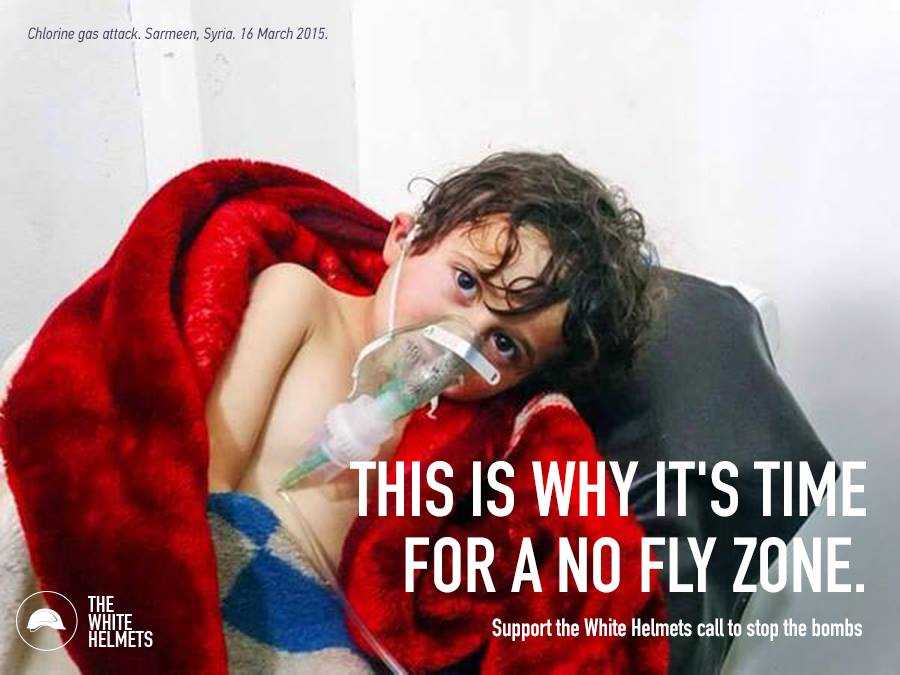
A heart-rending propaganda image  designed 
to justify a major U.S. military operation inside 
Syria against the Syrian military.

Today, however, particularly on foreign policy issues, the major U.S. news outlets, such as The New York Times and The Washington Post, apparently believe there is only one side to a story, the one espoused by the U.S. government or more generically the Establishment.

Any other interpretation of a set of facts gets dismissed as “fringe” or “fake news” even if there are obvious holes in the official story and a lack of verifiable proof to support the mainstream groupthink. Very quickly, alternative explanations are cast aside while ridicule is heaped on those who disagree.

So, for instance, The New York Times will no longer allow any doubt to creep in about its certainty that Syrian President Bashar al-Assad intentionally dropped a sarin bomb on the remote rebel-held town of Khan Sheikhoun in Idlib province in northern Syria on April 4.

A mocking article by the Times’ Jim Rutenberg on Monday displayed the Times’ rejection of any intellectual curiosity regarding the U.S. government’s claims that were cited by President Trump as justification for his April 6 missile strike against a Syrian military airbase. The attack killed several soldiers and nine civilians including four children, according to Syrian press reports.

Rutenberg traveled to Moscow with the clear intention of mocking the Russian news media for its “fake news” in contrast to The New York Times, which holds itself out as the world’s premier guardian of “the truth.” Rather than deal with the difficulty of assessing what happened in Khan Sheikhoun, which is controlled by Al Qaeda’s Syrian affiliate and where information therefore should be regarded as highly suspect, Rutenberg simply assessed that the conventional wisdom in the West must be correct.

To discredit any doubters, Rutenberg associated them with one of the wackier conspiracy theories of radio personality Alex Jones, another version of the Times’ recent troubling reliance on McCarthyistic logical fallacies, not only applying guilt by association but refuting reasonable skepticism by tying it to someone who in an entirely different context expressed unreasonable skepticism.

Rutenberg wrote:

“As soon as I turned on a television here I wondered if I had arrived through an alt-right wormhole. Back in the States, the prevailing notion in the news was that Mr. Assad had indeed been responsible for the chemical strike. There was some ‘reportage’ from sources like the conspiracy theorist and radio host Alex Jones — best known for suggesting that the Sandy Hook school massacre was staged — that the chemical attack was a ‘false flag’ operation by terrorist rebel groups to goad the United States into attacking Mr. Assad. But that was a view from the [U.S.] fringe. Here in Russia, it was the dominant theme throughout the overwhelmingly state-controlled mainstream media.”

Ergo, in Rutenberg’s sophistry, the “prevailing notion in the [U.S.] news” must be accepted as true, regardless of the checkered history of such confidence in the past, i.e., the “prevailing notion” that Saddam Hussein was hiding WMD in Iraq in 2003. Today, to shut down any serious evaluation of the latest WMD claims about Syria just say: “Alex Jones.”

Thus, any evidence that the April 4 incident might have been staged or might have resulted from an accidental release of Al Qaeda-controlled chemicals must be dismissed as something on par with believing the wildest of silly conspiracy theories. (Indeed, one of the reasons that I detest conspiracy theories is that they often reject hard evidence in favor of fanciful speculation, which then can be used, in exactly the way that Rutenberg did, to undermine serious efforts to sort through conflicting accounts and questionable evidence in other cases.)

Alternative Explanations


In the case of the April 4 incident, there were several alternative explanations that deserved serious attention, including the possibility that Al Qaeda had staged the event, possibly sacrificing innocent civilians in an attempt to trick President Trump into reversing his administration’s recent renunciation of the U.S. goal of “regime change” in Syria.

This notion is not as nutty as Rutenberg pretends. For instance, United Nations investigators received testimonies from Syrian eyewitnesses regarding another attempt by Al Qaeda-affiliated jihadists and their “rescue” teams to stage a chlorine attack in the town of Al-Tamanah on the night of April 29-30, 2014, and then spread word of the bogus attack through social media.

“Seven witnesses stated that frequent alerts [about an imminent chlorine weapons attack by the government] had been issued, but in fact no incidents with chemicals took place,” the U.N. report stated. “While people sought safety after the warnings, their homes were looted and rumours spread that the events were being staged. … [T]hey [these witnesses] had come forward to contest the wide-spread false media reports.”

The rebels and their allies also made preposterous claims about how they knew canisters of chlorine were contained in “barrel bombs,” by citing the supposedly distinctive sound such chlorine-infused bombs made.

The U.N. report said, “The [rebel-connected] eyewitness, who stated to have been on the roof, said to have heard a helicopter and the ‘very loud’ sound of a falling barrel. Some interviewees had referred to a distinct whistling sound of barrels that contain chlorine as they fall. The witness statement could not be corroborated with any further information.”

Of course, the statement could not be corroborated because it was crazy to believe that people could discern the presence of a chlorine canister inside a “barrel bomb” by its “distinct whistling sound.”

Still, the U.N. team demanded that the Syrian government provide flight records to support its denial that any of its aircraft were in the air in that vicinity at the time of the attack. The failure of the Syrian government to provide those records of flights that it said did not happen was then cited by the U.N. investigators as somehow evidence of Syrian guilt, another challenge to rationality, since it would be impossible to produce flight records for flights that didn’t happen.

Despite this evidence of a rebel fabrication – and the lack of a Syrian military purpose from using chlorine since it almost never kills anyone – the U.N. investigators succumbed to intense career pressure from the Western powers and accepted as true two other unverified rebel claims of chlorine attacks, leading the Western media to report as flat-fact that the Syrian government used chlorine bombs on civilians.

The Dubious Sarin Case


Besides the dubious chlorine cases – and the evidence of at least one attempted fabrication – there was the infamous sarin attack outside Damascus on Aug. 21, 2013, when there was a similar rush to judgment blaming the Syrian government although later evidence, including the maximum range of the sarin-carrying missile, pointed to the more likely guilt of Al Qaeda-connected extremists sacrificing the lives of civilians to advance their jihadist cause.


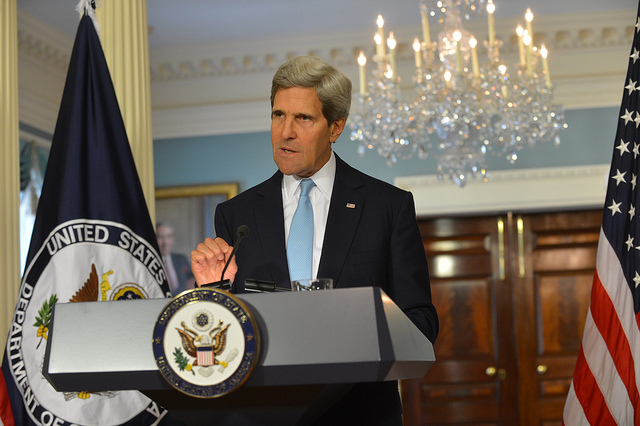
U.S. Secretary of State John Kerry on Aug. 30, 2013, claims to have proof that the Syrian 
government was responsible for a chemical weapons attack on Aug. 21, 2013, but that 
evidence failed to materialize or was later discredited. [State Department photo]In all these cases,
 the Times and other Western news outlets behaved as if there was only one acceptable side 
to the story, the one that the U.S. government was pushing, i.e., blaming the Syrian government. 
It didn’t matter how implausible the claims were or how unreliable the sources.

In both the Aug. 21, 2013 sarin case and the current April 4, 2017 case, Western officials and media ignored the obvious motives for Al Qaeda to carry out a provocation, foist blame on the government and induce the U.S. to intervene on Al Qaeda’s side.

In August 2013, the Syrian government had just welcomed U.N. investigators who came to Damascus to investigate government allegations of rebels using chemical weapons against government troops. That the Syrian government would then conduct a poison-gas attack within miles of the hotel where the U.N. investigators were staying and thus divert their attention made no logical sense.

Similarly, in April 2017, the Syrian government was not only prevailing on the battlefield but had just received word that the Trump administration had reversed the U.S. policy demanding “regime change” in Damascus. So, the obvious motive to release chemical weapons was with Al Qaeda and its allies, not with the Syrian government.

Manufacturing a Motive


The West has struggled to explain why President Assad would pick that time – and a town of little military value – to drop a sarin bomb. The Times and other mainstream media have suggested that the answer lies in the barbarism and irrationality of Arabs. In that vaguely racist thinking, Assad was flaunting his impunity by dropping sarin in a victory celebration of sorts, even though the predicable consequence was a U.S. missile attack and Trump reversing again the U.S. policy to demand Assad’s ouster.

On April 11, five days after Trump’s decision to attack the Syrian airbase, Trump’s White House released a four-page “intelligence assessment” that offered another alleged motivation, Khan Sheikhoun’s supposed value as a staging area for a rebel offensive threatening government infrastructure. 

Photograph of men in Khan Sheikdoun in Syria, allegedly 
inside a crater where a sarin-gas bomb landed.

But that offensive had already been beaten back and the town was far from the frontlines. In other words, there was no coherent motive for Assad to have dropped sarin on this remote town. There was, however, a very logical reason for Al Qaeda’s jihadists to stage a chemical attack and thus bring pressure on Assad’s government. (There’s also the possibility of an accidental release via a conventional government bombing of a rebel warehouse or from the rebels mishandling a chemical weapon – although some of the photographic evidence points more toward a staged event.)

But we’re not supposed to ask these questions – or doubt the “evidence” provided by Al Qaeda and its allies – because Alex Jones raised similar questions and Russian news outlets are reporting on this scenario, too.

There’s the additional problem with Rutenberg’s sophistry: Many of the April 4 sarin claims have been debunked by MIT national security and technology expert Theodore Postol, who has issued a series of reports shredding the claims from the White House’s “intelligence assessment.”


Another photo of the crater containing the alleged canister that supposedly 
disbursed sarin in Khan Sheikdoun, Syria, on April 4, 2017.


For instance, Postol cited the key photographs showing a supposed sarin canister crumpled inside a crater in a roadway. Postol noted that the canister appeared to be crushed, not exploded, and that the men in the photos inspecting the hole were not wearing protective gear that would have been required if there actually were sarin in the crater.

All of these anomalies and the problems with “evidence” generated by Al Qaeda and its allies should put the entire meme of the Syrian government using chemical weapons in doubt. But Rutenberg is not alone in treating this official groupthink as flat-fact.

Four Pinocchios


Washington Post “fact-checker” Glenn Kessler awarded “four Pinocchios” – reserved for the most egregious lies – to former National Security Adviser Susan Rice for asserting last January that the Syrian government had surrendered all its chemical weapons as part of a 2013 agreement.

Kessler declared: “The reality is that there were confirmed chemical weapons attacks by Syria – and that U.S. and international officials had good evidence that Syria had not been completely forthcoming in its declaration [regarding its surrendered chemicals], and possibly retained sarin and VX nerve agent …. and that the Syrian government still attacked citizens with chemical weapons not covered by the 2013 agreement,” i.e., the chlorine cases.

But Kessler has no way of actually knowing what the truth is regarding Syria’s alleged chemical weapons use. He is simply repeating the propagandistic groupthink that has overwhelmed the Syrian crisis.

Washington Post’s “fact-checker”
Glenn Kessler. (Photo credit: Singerhmk) 

Presumably he would have given four Pinocchios to anyone who had doubted the 2003 claims about Iraq hiding WMD because all the Important People “knew” that to be true at the time.

What neither Rutenberg nor Kessler seems willing or capable of addressing is the larger problem created by the U.S. government and its NATO allies investing heavily in information warfare or what is sometimes called “strategic communications,” claiming that they are defending themselves from Russian “active measures.” However, the impact of all these competing psychological operations is to trample reality.

The role of an honest press corps should be to apply skepticism to all official stories, not carry water for “our side” and reject anything coming from the “other side,” which is what The New York Times, The Washington Post and the rest of the Western mainstream media has done, especially regarding Middle East policies and now the New Cold War with Russia.

The American people and other news consumers have a right to expect that the Western media will recall the old adage that there are almost always two sides to a story. There’s also the truism that truth often resides not at the surface but is hidden beneath.

Investigative reporter Robert Parry broke many of the Iran-Contra stories for The Associated Press and Newsweek in the 1980s. You can buy his latest book, America’s Stolen Narrative, either in print here or as an e-book (from Amazon and barnesandnoble.com).

After Daesh: Rebuilding a World Destroyed

When Daesh is Defeated: Who Will Fill the Intellectual Vacuum in the Arab World?

by Ramzy Baroud


April 18, 2017

Back in the Middle East for a few months, I find myself astounded by the absence of the strong voices of Arab intellectuals. The region that has given rise to the likes of Michel Aflaq, George Habash, Rached al- Ghannouchi, Edward Said and numerous others has marginalized its intellectuals.

Arab visionaries have either been co-opted by the exuberant funds allocated to sectarian propaganda, been silenced by fear of retribution, or are simply unable to articulate a collective vision that transcends their sects, religions or whatever political tribe they belong to.

This void created by the absence of Arab intellectuals (reduced to talking heads with few original ideas, and engaged in useless TV ‘debates’) has been filled by extremist voices tirelessly advocating a genocidal future for everyone.

It is no secret that Arabs and Muslims are by far the greatest victims of extremism.

Strange as this may sound, religious scholars seem more united in countering the voices that hijacked religion to promote their dark political agendas.

Yet despite repeated initiatives, cries of Muslim scholars who represent majority of Muslims worldwide have garnered little media attention.

For example, in June 2016, nearly 100,000 Muslim clerics in Bangladesh signed a religious decree (Fatwa) condemning the militant group, Daesh.

Such Fatwas are quite common, and many thousands of Arab Muslim scholars have done the same.

Although hardly popular among Muslims in the Middle East, Asia, Africa and the rest of the world, somehow Daesh came to define Islam and all Muslims in the eyes of the West.

The debate in Western media and among academics remains futile, yet pervasive - while the Islamophobes are eager to reduce Islam to Daesh, others insist on conspiracy theories regarding the origins of the group.

Much time is wasted in this demoralizing discussion.

The roots of extremism cannot be found in a religion that is credited with uplifting Europe from its Dark Ages to an era of rational philosophy and the ascendency of science.

Thanks to Muslim scientists during the Islamic Golden Age, Alchemy, mathematics, philosophy, physics and even agricultural methods were passed from the Arabs - Muslim, Christian, Jewish and Persian scholars - to medieval Europe beginning as early as the 12th Century and lasting for hundreds of years.

The developed Arab Muslim city states in Al-Andalus, Spain, was a major gate through which Muslim knowledge gushed into western Europe, affecting a continent then sustained by endless wars and superstitions.

Fortunes had indeed turned with the fall of Granada in 1492. Massacres of Arabs and Jews in Spain ensued, extending for hundreds of years. It was then that many Jews sought a safe haven in the Arab world, continuing a period of relatively peaceful co-existence that remained in place until the mid-20th Century.

While times had changed, the essence of Islam as a religion remained intact.

In the hands of scholars and intellectuals, Islam influenced much of the world. In the hands of Daesh 'scholars', Islam has become exploited, offering bloody fatwas and humiliating and enslaving women.

Islam has certainly not changed, but the 'intellectual' has.

Most of the answers we continue to seek about Daesh often yields little meaning simply because the questions are situated in American-Western priorities.

We insist on discussing Daesh as a question of Western security, and refuse to contextualize the emergence of Daesh in US-Western interventions in Iraq, Syria, Libya and Yemen.

It seems that extremists (whether Daesh, al-Qaeda or others) are almost always linked to Western military 'areas of operations' in the Middle East. Extremism thrives in places in which strong central powers are lacking or have no political legitimacy and popular support, leaving the door wide-open for foreign interventionists.

Yemen had no strong central power for many years, neither did Somalia, nor recently, Libya and Mali. It was no surprise that these places are dual victims of extremists and interventionists.

Foreign interventionists often cite ‘fighting extremism’ to further justify their meddling in other countries’ affairs, thus empowering extremists, who use interventions to acquire more recruits, funds and self-validation.

It is a vicious cycle that has occupied the Middle East since the US invasion of Iraq in 2003.

That relationship - between foreign interventions, ensued chaos, and extremism - is often missing in Western media discourses.

But here in the Arab world the challenge is somewhat different.

In recent years, the 'marketplace of ideas' has shrunk to the point that what remains is an alternative marketplace in which the 'intellectual' is bought and sold for a negotiable price.

It is quite common that an editor of a newspaper can use his publication to serve as a mouthpiece for a Middle Eastern party, before he changes his loyalty to other competing parties. 

It all depends on who pays more.

Many once-promising intellectuals are now victims too, acting as mere mouthpieces.

There were times in which Arab intellectuals fought to articulate a unique narrative - a combination of nationalist, socialist and Islamic ideologies that had tremendous impact on the Arab individual and collective.

Even if the offshoots were sometimes populist movements centered around an individual, or a ruling party, the Arab intellectual movement that emerged during the anticolonial and postcolonial struggles remained relevant, vibrant and massively consequential.

The setback following the upheaval of the 2011 revolts, uprisings and civil wars, has led to massive polarization. Many Arab intellectuals fled to the West, were imprisoned or opted to remain silent.

Pseudo-intellectuals, however, were readily co-opted, selling their allegiances to the highest bidder.

This intellectual vacuum allowed the likes of Daesh, al-Qaeda and others to fill the space with their agendas.

True, their agendas are dark and horrific, yet they are rational outcomes at a time when Arab societies subsist in despair, when foreign interventions are afoot, and when no homegrown intellectual movement is available to offer Arab nations a roadmap towards a future free from tyranny and foreign occupation.

Even when Daesh is defeated on the ground, its ideology will not disappear; it will simply mutate, for Daesh is itself a mutation of various other extremist ideologies.

Neither the Westernized Arab intellectual, nor the co-opted local one is capable of filling the empty space at the moment, leaving room for more chaos that can only by filled by opportunistic extremism.

This is not a discussion that can be instigated by Western universities or state-sponsored Arab media for these platforms will impose a self-serving narrative doomed to prejudice the outcomes.

It is fundamentally an Arab discussion that must be generated by free Arab thinkers - Muslim and Christians alike. It is the birth of that movement that will begin to imagine an alternative future for the region.

Seemingly wishful thinking? I think not. Without such intellectual renaissance, the Arabs will remain hostage to two choices: to remain lackeys to Western powers or hostage to self-serving regimes.

And both options are not options at all.

Dr. Ramzy Baroud has been writing about the Middle East for over 20 years. He is an internationally-syndicated columnist, a media consultant, an author of several books and the founder of PalestineChronicle.com. His books include “Searching Jenin”, “The Second Palestinian Intifada” and his latest “My Father Was a Freedom Fighter: Gaza’s Untold Story”. His website is www.ramzybaroud.net.

Gorilla Radio with Chris Cook, K.J. Howe, Patrick Henningsen, Diana Beresford-Kroeger, Christina Nikolic Aprilil 19, 2017

This Week on GR

by C. L. Cook - Gorilla-Radio.com


April 19, 2017

More than merely an avenue of escape, fiction serves best when elucidating the Truth of our times.

And, what times they are!

As war and rumours of it fill our screens and front pages it's fitting perhaps the stories we're drawn to reflect a chaotic planet, wracked by violence and uncertainty.

K.J. Howe is an author and inveterate globe-trotter whose debut novel, 'The Freedom Broker' incorporates her exotic adventure-travels and the dark world of kidnap and ransom, where crime, terrorism, and politics blur the lines between ideology and international business.

Listen. Hear.

K.J. Howe in the first segment.

And; Patrick Henningsen is the founding editor of the independent news website, 21st Century Wire. He appeared here last month detailing his plans to travel to Syria to investigate firsthand the situation there, and arrived on the heals of the massacre by Western allies of an estimated 126 refugees from al-Foua and Kfraya, villages outside Aleppo.

The dead and maimed, mostly women and children, were blown to pieces by a bomb disguised in a food truck, and driven up to buses waiting, as agreed in a truce, to ferry the villagers to safety.

Patrick Henningsen from Syria in the second segment.

And; Diana Beresford-Kroeger is a woman with a plan, a Bioplan. The world renowned author, medical biochemist, botanist, and "last child of ancient Ireland" possesses a unique combination of western scientific knowledge and the traditional concepts of the ancient world. Her plan: "encouraging ordinary people to develop a new relationship with nature, to join together to replant the global forest."

A part of that "encouragement" is the authoring of the books: “The Sweetness of a Simple Life”, “The Global Forest”, “Arboretum Borealis”, “Arboretum America”, and “A Garden for Life.”

Diana has also made a film, chronicling her vision. 'Call of the Forest: The Forgotten Wisdom of Trees screens April 25th through 30th at UVic's Cinecenta theatre.

Diana Beresford-Kroeger and seeing the forest through the trees in the final segment.

And; horticultural guru and green entrepreneur, Christina Nikolic will be here to bring us news of good things planned in and around our town in the coming week. But first, K.J. Howe and when freedom isn't free.

Chris Cook hosts Gorilla Radio, airing live every Wednesday, 1-2pm Pacific Time. In Victoria at 101.9FM, and on the internet at: http://cfuv.ca.  He also serves as a contributing editor to the web news site, http://www.pacificfreepress.com. Check out the GR blog at: https://gorillaradioblog.blogspot.ca/

G-Radio is dedicated to social justice, the environment, community, and providing a forum for people and issues not covered in the corporate media.

A Growing Global Disgust: Opposing Imperial Aggression

Opposition to US Strikes in Syria Grows 

by Andre Vltchek - CounterPunch


April 18, 2017

Beirut - As the US Tomahawk missiles were raining on Syria, the entire Middle East was shaken to its core. Here, even the name itself – Syria – triggers extremely complex and often contradictory sets of emotions.

To some, Syria is synonymous with pride and a determined struggle against Western imperialism, while others see it as an uncomfortable reminder of how low their own rulers and societies have managed to sink, serving foreign interests and various neo-colonialist designs.

Survivors of the bus bombing of al-Foua 
and Kfraya refugees

Many people are hiding their heads in the sand, obediently repeating the official Western narrative, while others are gradually resorting to the alternative sources of information that are coming from outlets such as RT Arabic, Al-Mayadeen and Press TV.

Here in the Middle East and in fact all over the entire Arab world, feelings towards the Syrian President Basheer Al-Assad are always ‘strong’; no one appears to be ‘neutral’. But even the divisions are often ‘pre-defined’, carved along pan-Arab versus pro-Western, or Sunni versus Shi’a lines. It is rarely being mentioned that the Syrian state is constructed mainly on secular and socialist principles.

The recent opportunistic statements by certain badly informed and biased Western ‘progressive’ intellectuals, calling the Syrian system “disgraceful” has confused things even further.

***

Overall, in the countries encircling Syria, there is very little support among the general population as well as among the intellectuals, for the Western assaults on the country, conducted directly, and indirectly by proxies. Pro-Western regimes and governments are currently governing Jordan, Lebanon and Turkey, and all of them are officially supporting the Western military actions. So is, naturally, Israel. The leaders of both Turkey and Israel would actually like to see more military actions, and more attacks against one of the last Arab countries, which still upholds its independence.

But ask the thinkers from all over the region, and the reaction is near unanimously against the assaults that are being conducted by the West.

An Iraqi educationalist, prominent journalist and researcher, Ms Zeinab Al-Saffar explained:

“I believe that the attacks against Syria that we are now witnessing, are a pre-orchestrated flagrant imperialist violation of a sovereign state, a flexing of muscles which is supposed to prove that the US is still the global power. Why on earth would the Syrian government perform a chemical attack knowing that the fingers would be immediately pointed at it, consequently thwarting an ongoing political process? Only fools could buy such narratives that are reminiscent of the 2003 US-led aggression to destroy the WMDs in Iraq, which only resulted in the devastation of Iraq, in the ruining of its people, and wiping out of its culture.”

After the US missile assault on Syria, the Bolivian Ambassador to the United Nations, Sacha Llorenti, lashed out at Trump’s decision, which he defined as, “an extremely serious violation of international law.”

Llorenti reminded the Council of February 5th, 2003, when the then US secretary of State Colin Powell, “came to this room to present to us, according to his own words, convincing proof that there were weapons of mass destruction in Iraq.”

Such views are not held in Iraq only; I encountered fairly similar logic and recollection of the events even in Turkey, from where a well-known columnist Feryal Çeviköz wrote to me:

“The real question is: “who orchestrated that chemical attack?” It seems that only the US could benefit from this chemical assault. The US had finally found the ‘reason’, the pretext for its direct attack against Syria. There were already many similar incidents in the region and in other parts of the world, and the screenplay is always the same. It seems that only the players, the actors keep changing.”

In Latin America, Russia, China, much of Africa and of course in the neighboring Iran, people are beginning to see clearly both the pattern and predictability of the Western foreign policy.

A young prominent Iranian researcher, columnist and filmmaker, Hamed Ghashghavi, gave me his opinion on the recent developments:

“It seems to me that the US behaves like an injured wolf that is close to its death, but before vanishing is trying to hurt others. The more aggressively the US behaves, the closer, it appears to be at its end. The recent attack against Syria, whatever the reasons and consequences, has symbolically proven how and why the so-called US Empire is declining. What the US did is also sending a strong signal to Iran and its project of the military base near the Syrian town of Khmeimim, but it is also a message to an anti-Trump wing of neocons who have been accusing him of being too much ‘pro-Putin’ and ‘pro-Assad’.”

What is now clearly detectable in the region is not just a condemnation of the US and Western actions, it is also a deep fatigue of having to endure the same type aggression which brings absolutely nothing except misery to the people of the Middle East and the world.

In Syria, the sentiments are clear. My friend, a Syrian educator Ms. Fida Bashour summarized it all, I believe:

“I feel sad and worried. I want this war to finally stop, no blood any more, I want peace and to have my safe existence. I don’t want others to interfere in our life. Why doesn’t Trump let us live as we want to; why is he doing this to us?”

Andre Vltchek is a philosopher, novelist, filmmaker and investigative journalist. He has covered wars and conflicts in dozens of countries. Three of his latest books are revolutionary novel “Aurora” and two bestselling works of political non-fiction: “Exposing Lies Of The Empire” and “Fighting Against Western Imperialism”. View his other books here. Andre is making films for teleSUR and Al-Mayadeen. Watch Rwanda Gambit, his groundbreaking documentary about Rwanda and DRCongo. After having lived in Latin America, Africa and Oceania, Vltchek presently resides in East Asia and the Middle East, and continues to work around the world. He can be reached through his website and his Twitter.
More articles by:Andre Vltchek

Hearing the Call of the Forest

Call of the Forest: The Forgotten Wisdom of Trees

by Diana Beresford-Kroeger


April 18, 2017

The science and enchantment of the global forest provides us with answers to modern dilemmas.

‘Call Of The Forest – The Forgotten Wisdom Of Trees’ is a documentary featuring scientist and acclaimed author Diana Beresford-Kroeger. The film follows Diana as she investigates our profound biological and spiritual connection to forests. Her global journey explores the science, folklore, and restoration challenges of this essential eco-system.


Beresford-Kroeger explores the most beautiful forests in the Northern Hemisphere from the sacred sugi and cedar forests of Japan to the great boreal forest of Canada. She shares the amazing stories behind the history and legacy of these ancient forests while also explaining the science of trees and the irreplaceable roles they play in protecting and feeding the planet.


Along the way we meet some of the world’s foremost experts in reforestation. Dr. Akira Miyawaki, a worldwide specialist in the restoration of natural forest systems on degraded land, shows us how a native forest system can be planted even in the smallest street corner of Tokyo. Dr. Bill Libby, a pioneer in the field of forest tree genetics, tells us about the impacts of climate change on California’s coast redwood and giant sequoia forests. Since 2002 Andrew St. Ledger, founder of The Woodland League in Ireland, has dedicated his life to restoring native woodlands in Ireland. We are introduced to the Anishinaabe people of Pimachiowin Aki who are working to have 33,400 square kilometers of boreal forest in Canada recognized as a UNESCO World Heritage Site.

Diana Beresford-Kroeger and I share a dream. We want people to see the forest and the trees, and the wildlife abounding in wild environments, in fine detail. We want native species to be valued and cultivated one by one for the special place they have in the deep history of the land. 
- E. O. Wilson, Harvard entomologist, conservationist and father of modern environmentalism.

Trees provide food, create medicine, and most importantly, provide life-giving oxygen. Without trees and their ability to capture carbon dioxide, our living breathable atmosphere would cease to exist on our planet. Trees are the most important living organisms on earth, chemically affecting our environment more than anything else, and playing a vital role that sustains all life. Trees are literally the lifeline of the planet and the key to reversing climate change.

The Call of the Forest film and movement is a call for massive, global reforestation to reverse climate change. If we could look back in time we would see forests blanketing the continents. But as human society has developed we have lost upwards of ninety five percent of the world’s forests and we continue to lose more than one hundred and forty square kilometres of forest per day. Only 5% of the world’s old growth native forests currently remain today.

Call of the Forest sounds the alarm by calling for immediate action on a global scale, but at its heart, it is a story of triumph, proposing a simple strategy for each of us to combat climate change by planting trees in our own yards and neighbourhoods.

Climate change is happening. What can we do about it? It will start with a shovel and an acorn, but we might just change the world. 
- Diana Beresford Kroeger