Thursday, November 02, 2017

Afghanistan from the Ground Up

From the Ground Up

by Kathy Kelly - Dissident Voice


October 31, 2017

On a recent Friday at the Afghan Peace Volunteers‘ (APV) Borderfree Center, here in Kabul, thirty mothers sat cross-legged along the walls of a large meeting room. Masoumah, who co-coordinates the Center’s “Street Kids School” project, had invited the mothers to a parents’ meeting.

Burka-clad women who wore the veil over their faces looked identical to me, but Masoumah called each mother by name, inviting the mothers, one by one, to speak about difficulties they faced. From inside the netted opening of a burka, we heard soft voices and, sometimes, sheer despair.

Masoumah invites Afghan mothers
to speak about difficulties they face 
(Photo: Afghan Peace Volunteers)
 
Others who weren’t wearing burkas also spoke gravely. Their eyes expressed pain and misery, and some quietly wept. Often a woman’s voice would break, and she would have to pause before she could continue. 

“I have debts that I cannot pay,” whispered the first woman

“My children and I are always moving from place to place. I don’t know what will happen.”

“I am afraid we will die in an explosion.”

“My husband is paralyzed and cannot work. We have no money for food, for fuel.”

“My husband is old and sick. We have no medicine.”

“I cannot feed my children.”

“How will we live through the winter?”

“I have pains throughout my whole body.”

“I feel hopeless.”

“I feel depressed, and I am always worried.”

“I feel that I’m losing my mind.”

The mothers’ travails echo across Afghanistan, where “one-third of the population lives below the poverty line (earning less than $2 a day) and a further 50 percent are barely above this.” Much of the suffering voiced was common: most of the women had to support their families as they moved from house to house, not being able to come up with the rent for a more permanent space, and many women experienced severe body pains, often a result of chronic stress.

Last week, our friend Turpekai visited the Borderfree Center and spoke with dismay about her family’s well having gone dry. Later that morning, Inaam, one of the students in the “Street Kids School,” said that his family faces the same problem. Formerly, wells dug to depths of 20 to 30 meters were sufficient to reach the water table. But now, with the water table dropping an average of one meter a year, new wells must be dug to depths of 80 meters or more. Inflowing refugees create increased demands on the water table in times of drought and so do the extravagant water needs of an occupying military, and the world’s largest fortified embassy, that can dig as deep for water as it wants. Families living on less than $2 a day have little wherewithal to dig deep wells or begin paying for water. The water has been lost to war.

Sarah Ball, a nurse from Chicago, arrived in Kabul one week ago. Together we visited the Emergency Surgical Center for Victims of War, feeling acutely grateful for an opportunity to donate blood and hear an update from one of their logistical coordinators about new circumstances they encounter in Kabul.

In past visits to Kabul, staff at the Emergency Hospital would point happily to their volleyball court, the place where they could find diversion and release from tensions inherent in their life-saving work. Now, as an average of two “mass casualties” happen each week, often involving many dozens of patients severely injured by war, a triage unit has replaced the volleyball court. Kabul, formerly one of the safest places in Afghanistan, has now become one of the most dangerous.

The Taliban and other armed groups have vowed to continue fighting as long as the U.S. continues to occupy Afghan land, to wage attacks on Afghans and supply weapons to the various fighting factions. The United States maintains nine major bases in Afghanistan and many smaller forward operating bases.

Following President Trump’s announcement of an increase in U.S. troops being sent to Afghanistan, the Washington Post reported that “Direct U.S. spending on the war in Afghanistan will rise to approximately $840.7 billion if the president’s fiscal year 2018 budget is approved.”

What on earth have they accomplished?!


Masoumah asked each mother a second question: What are you thankful for? The atmosphere became a little less grim as many of the mothers said they were grateful for their children. Beholding the lively, bright and beautiful youngsters who fill the Border Free Center each Friday, I could well understand their gratitude. The following day, we joined two dozen young girls living in a squalid refugee camp. Crowded into a small makeshift classroom with a mud floor, our friend Nematullah taught a two-hour class focused on forming peace circles. The little girls were radiant, exuberant and eager for better futures. Nematullah later told us that all their families are internally displaced, many because of war.

I feel deeply moved by the commitment my young friends have made to reject wars and dominance, preferring instead to live simply, share resources, and help protect the environment.

Zarghuna works full-time to coordinate projects at the Border Free Center. She and Masoumah feel passionately committed to social change which they believe will be organized “from the ground up.” I showed Zarghuna a Voices accounting sheet tallying donations entrusted to us for the Street Kids School and The Duvet Project. I wanted to assure her of grass roots support from people giving what they can. “Big amounts of money coming from the U.S. military destroys us,” Zarghuna said. “But small amounts that are given to the people can help change lives and make them a little better.”

Kathy Kelly co-coordinates Voices for Creative Nonviolence. In Kabul, she is a guest of the Afghan Peace Volunteers. (In the late ‘80s she spent one year in prison for planting corn on nuclear missile silo sites). Read other articles by Kathy.

Wednesday, November 01, 2017

Gorilla Radio with Chris Cook, Pablo Ouziel, Chrissy Brett, Camille Labchuk, Janine Bandcroft November 2, 2017

This Week on GR

by C. L. Cook - Gorilla-Radio.com


November 2, 2017

Spain's constitutional crisis geared up last week with the unilateral declaration of independence issued from the separatist Catalonia government of Carles Puigdumont.

Predictably, Madrid made good on it's threat to turf out the regional government, and went further: arresting those in the pro- Independence leadership that hadn't already slipped out of the country, banning the independence movement outright, and taking over Catalunya's media, police, and government bureaucracy.

The lament going up today in Spain is for the death of democracy, a haunting reminder of the country's not so distant fascist past.

Listen. Hear.

Dr. Pablo Ouziel is a Post-Doctoral fellow at UVic whose project in progress is, ‘Towards Democratic Responses to the Crisis of Democracy in Spain: Forms of Participatory and Representative Civic Engagement.’

Pablo Ouziel in the first half.

And; the Pop-Up Prayer Vigil encampment has moved along to Saanich. The ongoing homelessness camp and protest site has been on the move weekly, spending the last few weeks at various locations in Oak Bay; much to the consternation of local authorities, residents, and an increasingly hostile local media. Chrissy Brett is spokesperson, and self-described "head cat herder" for the Vigil/Protest movement. I spoke with her a few days ago about what they hope to accomplish.

Chrissy Brett keeping a vigil for homelessness in the second segment.

And; activist efforts to ban the capture and incarceration of whales and dolphins scored a major victory in Vancouver earlier this year when City Council voted to ban the practice, despite intense lobbying by the Vancouver Aquarium and its industry allies. That victory wasn't the end of the struggle, nor even the beginning of the end; but perhaps it was, as Winston 'the Whale' Churchill would say, "the end of beginning" of the campaign to stop world-wide the obviously barbarous practice of cetacean imprisonment.

Camille Labchuk is Executive Director of Animal Justice, an organization dedicated to looking out for the legal interests of animals, exposing cruel and systemic practices creating animal suffering both in the wild and in agriculture, and seeking meaningful policy changes to redress those practices.

Camille Labchuk and whales (and dolphins) for the saving in the final segment.

And; Victoria-based activist and CFUV Radio broadcaster at-large, Janine Bandcroft will be here at the bottom of the hour with the Left Coast Events Bulletin. But first, Pablo Ouziel and Spanish democracy's dark night of the soul breaking on an uncertain morning.

Chris Cook hosts Gorilla Radio, airing live every Thursday between 11-Noon Pacific Time. In Victoria at 101.9FM, and on the internet at: http://cfuv.uvic.ca.  He also serves as a contributing editor to the web news site, http://www.pacificfreepress.com. Check out the GR blog at: http://gorillaradioblog.blogspot.ca/

Tuesday, October 31, 2017

Canada's Friendly Place in the Empire

Chrystia Freeland: Canada doesn’t engage in “regime change”

by Yves Engler - Dissident Voice


October 31st, 2017

A huge surprise to the people of Libya, Haiti, Honduras, Chile, Democratic Rep. Congo, Ghana, Uganda, Guatemala, and ...


It may walk and quack like a regime-change-promoting duck, but Ottawa’s unilateral sanctions and support for Venezuela’s opposition is actually just a cuddly Canadian beaver, says Chrystia Freeland.

Canada has never been an imperialist power. It’s even almost funny to say that phrase: we’ve been the colony,” said the journalist turned politician after a Toronto meeting of foreign ministers opposed to the Venezuelan government.

The above declaration was part of the Canadian foreign minister’s response to a question about Chavismo’s continued popularity, which was prefaced by a mention of protesters denouncing Ottawa’s interference in Venezuela’s internal affairs. Freeland added that “one of the strengths Canada brings to its international affairs” is that it doesn’t engage in “regime change”.

Notwithstanding her government’s violation of the UN and Organization of American States charters’ in Venezuela, Freeland’s claim that Ottawa doesn’t engage in “regime change” is laughable. Is she unaware that a Canadian General commanded the NATO force, which included Canadian fighter jets, naval vessels and special forces, that killed Muammar Gaddafi in Libya six years ago?

Sticking to contexts more directly applicable to the situation in Venezuela, Ottawa has repeatedly endorsed US-backed military coups against progressive elected leaders.

Canada passively supported the ouster of Iranian Prime Minister Mohammad Mossadegh in 1953, Guatemalan President Jacobo Arbenz in 1954, Ugandan President Milton Obote (by Idi Amin) in 1971 and Chilean President Salvador Allende in 1973.

In a more substantial contribution to undermining electoral democracy, Ottawa backed the Honduran military’s removal of elected president Manuel Zelaya. Before his 2009 ouster Canadian officials criticized Zelaya and afterwards condemned his attempts to return to the country. Failing to suspend its military training program, Canada was also the only major donor to Honduras — the largest recipient of Canadian assistance in Central America — that failed to sever any aid to the military government. Six months after the coup Ottawa endorsed an electoral farce and immediately recognized the new right-wing government.

In the 1960s Ottawa played a more substantial role in the ouster of pan-Africanist independence leaders Kwame Nkrumah and Patrice Lumumba. In 1966 Ghana’s Canadian-trained army overthrew Nkrumah. In an internal memo to External Affairs just after Nkrumah was ousted, Canadian high commissioner in Accra, C.E. McGaughey wrote,

“...a wonderful thing has happened for the West in Ghana and Canada has played a worthy part.” 

Soon after the coup, Ottawa informed the military junta that Canada intended to carry on normal relations and Canada sent $1.82 million ($15 million today) worth of flour to Ghana.

Ottawa had a strong hand in Patrice Lumumba’s demise. Canadian signals officers oversaw intelligence positions in the UN mission supposed to protect the territorial integrity of the newly independent Congo, but which Washington used to undermine the progressive independence leader.

Canadian Colonel Jean Berthiaume assisted Lumumba’s political enemies by helping recapture him. The UN chief of staff, who was kept in place by Ottawa despite being labelled an “imperialist tool” by Lumumba’s advisers, tracked the deposed prime minister and informed army head Joseph Mobutu of Lumumba’s whereabouts. Soon after Lumumba was killed and Canadian officials celebrated the demise of an individual Prime Minister John Diefenbaker privately called a “major threat to Western interests”.

It’s in the Western Hemisphere’s poorest nation where Canada was most aggressive in opposing a progressive government. On January 31 and February 1, 2003, Jean Chrétien’s Liberal government organized an international gathering to discuss overthrowing Haiti’s elected government. No Haitian officials were invited to the “Ottawa Initiative on Haiti” where high-level US, Canadian and French officials decided that president Jean-Bertrand Aristide “must go”, the dreaded army should be recreated and that the country would be put under a Kosovo-like UN trusteeship.

Thirteen months after the “Ottawa Initiative on Haiti” meeting Aristide and most other elected officials were pushed out and a quasi UN trusteeship had begun. The Haitian National Police was also heavily militarized.

Canadian special forces “secured” the airport from which Aristide was bundled (“kidnapped” in his words) onto a plane by US Marines and deposited in the Central African Republic. Five hundred Canadian troops occupied Haiti for the next six months.

After cutting off aid to Haiti’s elected government, Ottawa provided tens of millions of dollars in foreign aid to the installed government, publicly supported coup officials and employed numerous officials within coup government ministries.

Haiti’s deputy justice minister for the first 15 months of the foreign-installed government, Philippe Vixamar, was on the Canadian International Development Agency’s payroll and was later replaced by another CIDA employee (the minister was a USAID employee). Paul Martin made the first ever trip by a Canadian prime minister to Haiti to support the violent post-coup dictatorship.

Dismissing criticism of Ottawa’s regime change efforts in Venezuela by claiming Canada has been a benevolent international actor is wholly unconvincing. In fact, a serious look at this country’s foreign policy past gives every reason to believe that Ottawa is seeking to unseat an elected government that has angered many among the corporate set.

Anyone with their eyes open can tell the difference between a beaver and a duck.

Yves Engler is the author of A Propaganda System: How Canada’s Government, Corporations, Media and Academia Sell War and Canada in Africa: 300 years of aid and exploitation.
Read other articles by Yves.

Getting Real on Russia

Sorting Out the Russia Mess

by Robert Parry  - Consortium News


October 31, 2017

Exclusive: The U.S. mainstream media finally has its “smoking gun” on Russia-gate — incriminating information from a junior Trump campaign adviser — but a closer look reveals serious problems with the “evidence,” writes Robert Parry.


Russia-gate special prosecutor Robert Mueller has turned up the heat on President Trump with the indictment of Trump’s former campaign manager for unrelated financial crimes and the disclosure of a guilty plea from a low-level foreign policy adviser for lying to the FBI.

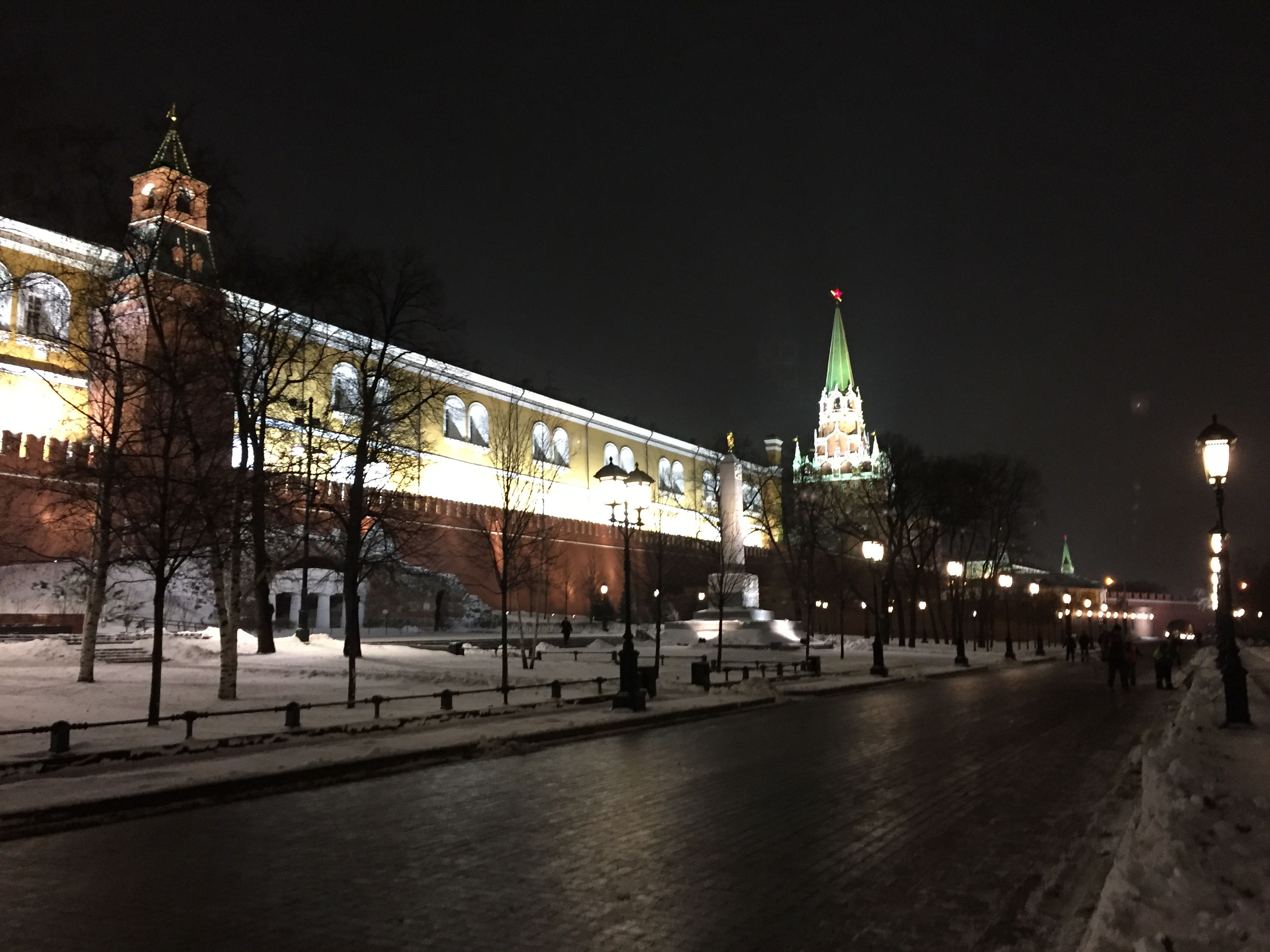
Tomb of Unknown Soldier outside Kremlin wall, Dec. 6, 2016. (Photo: Robert Parry)

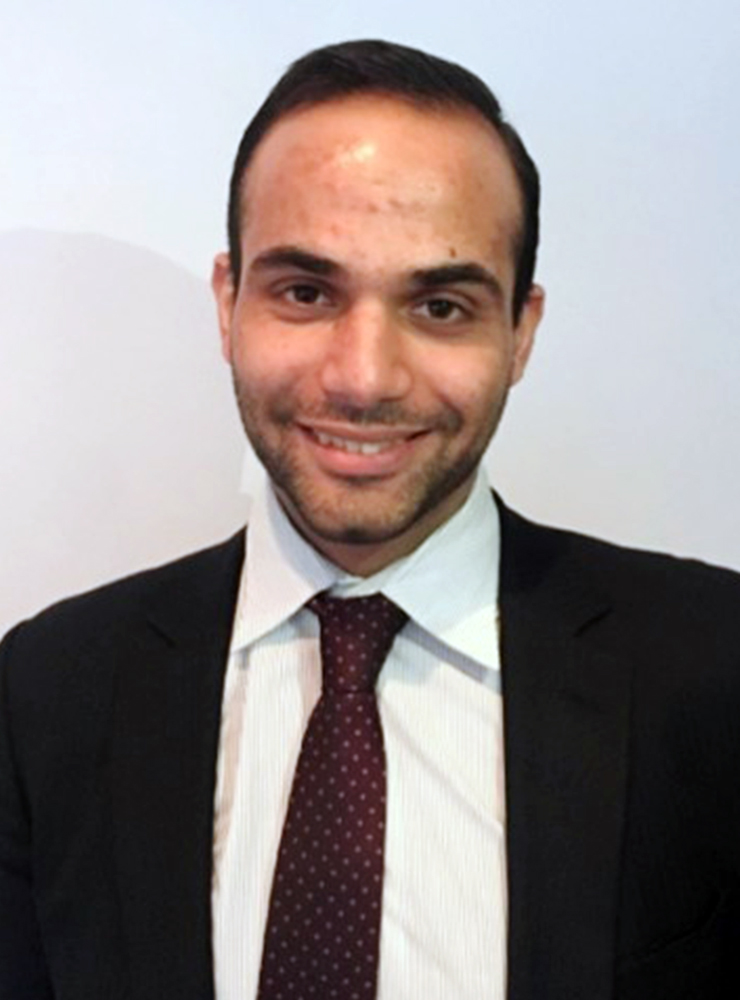
While longtime Republican fixer Paul Manafort, who helped guide Trump’s campaign to the GOP nomination in summer 2016, was the big name in the news on Monday, the mainstream media focused more on court documents related to George Papadopoulos, a 30-year-old campaign aide who claims to have heard about Russia possessing Hillary Clinton’s emails before they became public on the Internet, mostly via WikiLeaks.

While that would seem to bolster the Russia-gate narrative – that Russian intelligence “hacked” Democratic emails and President Vladimir Putin ordered the emails be made public to undermine Clinton’s campaign – the evidentiary thread that runs through Papadopoulos’s account remains tenuous.

That’s in part because his credibility has already been undermined by his guilty plea for lying to the FBI and by the fact that he now has a motive to provide something the prosecutors might want in exchange for leniency. Plus, there is the hearsay and contested quality of Papadopoulos’s supposed information, some of which already has turned out to be false.

According to the court documents, Papadopoulos got to know a professor of international relations who claimed to have “substantial connections with Russian government officials,” with the professor identified in press reports as Joseph Mifsud, a little-known academic associated with the University of Stirling in Scotland.

The first contact supposedly occurred in mid-March 2016 in Italy, with a second meeting in London on March 24 when the professor purportedly introduced Papadopoulos to a Russian woman whom the young campaign aide believed to be Putin’s niece, an assertion that Mueller’s investigators determined wasn’t true.

Trump, who then was under pressure for not having a foreign policy team, included Papadopoulos as part of a list drawn up to fill that gap, and Papadopoulos participated in a campaign meeting on March 31 in Washington at which he suggested a meeting between Trump and Putin, a prospect that other senior aides reportedly slapped down.

The ‘Email’ Breakfast


But Papadopoulos continued his outreach to Russia, according to the court documents, which depict the most explosive meeting as an April 26 breakfast in London with the professor (Mifsud) supposedly saying he had been in Moscow and “learned that the Russians had obtained ‘dirt’ on then-candidate Clinton” and possessed “thousands of emails.” Mainstream press accounts concluded that Mifsud must have been referring to the later-released emails.

Former Trump foreign policy adviser
George Papadopoulos.

However, Mifsud told The Washington Post in an email last August that he had “absolutely no contact with the Russian government” and described his ties to Russia as strictly in academic fields.

In an interview with the U.K. Daily Telegraph after Monday’s disclosures, Mifsud acknowledged meeting with Papadopoulos but disputed the contents of the conversations as cited in the court papers. Specifically, he denied knowing anything about emails containing “dirt” on Clinton and called the claim that he introduced Papadopoulos to a “female Russian national” as a “laughingstock.”

According to the Telegraph interview, Mifsud said he tried to put Papadopoulos in touch with experts on the European Union and introduced him to the director of a Russian think tank, the Russian International Affairs Council.

It was the latter contact that the court papers presumably referred to in saying that on May 4, the Russian contact with ties to the foreign ministry wrote to Papadopoulos and Mifsud, reporting that ministry officials were “open for cooperation,” a message that Papadopoulos forwarded to a senior campaign official, asking whether the contacts were “something we want to move forward with.”

However, even an article in The New York Times, which has aggressively pushed the Russia-gate “scandal” from the beginning, noted the evidentiary holes that followed from that point.

The Times’ Scott Shane wrote: “A crucial detail is still missing: Whether and when Mr. Papadopoulos told senior Trump campaign officials about Russia’s possession of hacked emails. And it appears that the young aide’s quest for a deeper connection with Russian officials, while he aggressively pursued it, led nowhere.”

Shane added,

“the court documents describe in detail how Mr. Papadopoulos continued to report to senior campaign officials on his efforts to arrange meetings with Russian officials, … the documents do not say explicitly whether, and to whom, he passed on his most explosive discovery – that the Russians had what they considered compromising emails on Mr. Trump’s opponent.
“J.D. Gordon, a former Pentagon official who worked for the Trump campaign as a national security adviser and helped arrange the March 31 foreign policy meeting, said he had known nothing about Mr. Papadopoulos’ discovery that Russia had obtained Democratic emails or of his prolonged pursuit of meetings with Russians.”

Reasons to Doubt


If prosecutor Mueller had direct evidence that Papadopoulos had informed the Trump campaign about the Clinton emails, you would assume that the proof would have been included in Monday’s disclosures. Further, since Papadopoulos was flooding the campaign with news about his Russian outreach, you might have expected that he would say something about how helpful the Russians had been in publicizing the Democratic emails.

Hillary Clinton at the Code 2017 conference, May 31, 2017

Absence of supporting evidence Papadopoulos conveyed his hot news on the emails to campaign officials and Mifsud’s insistence that he knew nothing about them would normally raise serious questions about Papadopoulos’s credibility on this most crucial point.

At least for now, those gaps represent major holes in the storyline. But Official Washington has been so desperate for “proof” about the alleged Russian “election meddling” for so long, that professional skepticism has been unwelcome in most media outlets.

There is also another side of the story that rarely gets mentioned in the U.S. mainstream media: that WikiLeaks founder Julian Assange has repeatedly denied that he received the two batches of purloined Democratic emails – one about the Democratic National Committee and one about Clinton’s campaign chairman John Podesta – from the Russians. While it is surely possible that the Russians might have used cutouts to pass on the emails, Assange and associates have suggested that at least the DNC emails came from a disgruntled insider.

Also, former U.S. intelligence experts have questioned whether at least one batch of disclosed emails could have come from an overseas “hack” because the rapid download speed is more typical of copying files locally onto a memory stick or thumb drive.

What I was told by an intelligence source several months ago was that Russian intelligence did engage in hacking efforts to uncover sensitive information, much as U.S. and other nations’ intelligence services do, and that Democratic targets were included in the Russian effort.

But the source said the more perplexing question was whether the Kremlin then ordered release of the data, something that Russian intelligence is usually loath to do and something that in this case would have risked retaliation from the expected winner of the 2016 election, Hillary Clinton.

But such questions and doubts are clearly not welcome in the U.S. mainstream media, most of which has embraced Mueller’s acceptance of Papadopoulos’s story as the long-awaited “smoking gun” of Russia-gate.

Investigative reporter Robert Parry broke many of the Iran-Contra stories for The Associated Press and Newsweek in the 1980s. You can buy his latest book, America’s Stolen Narrative, either in print here or as an e-book (from Amazon and barnesandnoble.com).

Whither the Left? Liberalism Leaving the Building

What Da F#%k Ever Happened to the Left?

by Howard Lisnoff - CounterPunch


October 30, 2017  

First, there was the firing of air traffic controllers that for all intents and purposes marked the beginning of the complete demise of unions. This attack against unions, along with later trade agreements, murdered the working class and part of the middle class in the U.S. Then there was the rebranding of the Vietnam War into a “noble cause.” What followed were the massive tax cuts for the wealthy that continue on as the most egregious reverse kind of welfare agenda.

And then, as if the march to the right wasn’t enough for some, there was the ascendancy of the fundamentalist religious right, the attacks against the environment (remember “trees pollute”), and the beginning of the destruction of public schooling whose necessary end was the know nothing caricature, Betsy DeVos.

It was like an unending far-right laundry list that came about because of economic malaise and as a reaction to the hostage situation in Iran.

Reagan’s kowtowing to religious fundamentalists can be seen in the religious right’s base in the Trump administration. His support of religious fundamentalists in Afghanistan had predictable results. It’s a pity that Reagan’s fascination with astrology couldn’t have given the left a head’s up about a Trump administration, but the message was there if the tea leaves were properly read and interpreted. It was sort of an eerie handwriting on the wall.

So, leftists, and even some liberals, were out in the cold, not being able to catch their breaths, sort of like being punched in the stomach full force and not seeing it coming: We still have not be able to catch our collective breath.

Ass-grabber George H.W. Bush moved Reagan’s low-intensity warfare to all-out warfare in the first war in Iraq. Remember the “turkey shoot” from the air of fleeing Iraqi soldiers on their way out of Kuwait? Remember Panama?At least we now know that the elder Bush was schooled in English literature.

Then there was Bill Clinton, another of the Vietnam-era cohort, who made neoliberalism what it is today. Some have called him the first black president. I can almost hear W.E.B. Du Bois laughing out loud about that one!

Clinton, another famous personage who had not broken a sweat during the Vietnam War, opened the floodgates of mass incarceration of people of color and grew the prison-industrial complex. He ended welfare-as-we-know-it in a capitalist economy that was outsourcing itself and leaving wage growth and job opportunities behind. And the end of Glass-Steagall was a bald-face betrayal of the moderate New Deal. Nothing was sacred to these folks!

And George W. Bush, Mr. Mission Accomplished, who is now lauded in hurricane relief efforts. Remember Katrina and the assault on civil liberties, and the intelligence failures of 9/11, and the endless wars and torture that arose from that calamity! Pete Seeger sang that “We elect them again and again.” Some voters, or those whose votes haven’t been suppressed, certainly do.

Barack Obama proved that you can fool lots of people lots of the time. He and his sycophants in Congress, elected on a platform of “hope and change,” allowed masses of people to go down faster than the Titanic in the economic debacle of 2007-2008 that made home ownership and home equity in the U.S. a bad joke for many. Their wink and nod to the military-industrial-financial complex almost certainly had to point the way and coronation of the neofascist Trump.

Those on the left who knew which way the wind blew could not have been too surprised when the neo-Nazis and neofascists finally got to the top of the heap in Washington, D.C. and in state capitols around the nation. The right had been working diligently on it since religious fundamentalists gained traction during the administration of the bumbling Great Communicator. They had even taken over seemingly innocuous positions on school boards across the country.

Now, not only leftists, but the entire planet face mass annihilation because naysayers like the Tea Party and Trump and some of his supporters want to tank the entire show.

Caitlin Johnstone writes in “Why Does The Left Attack Itself” Generations Of Government Psyops,” Greanville Post, October 26, 2017) that CounterPunch is an elitist white boy’s club, addressing one of the many disagreements and infighting that often crop up on the left:

Early on during the Reagan presidency a liberal acquaintance noted that all of the questions had been moved to the right. What did that mean?
Meanwhile the boy’s club at the acclaimed lefty outlet CounterPunch, who published eight articles about me in July, is now trying to turn their publication into even more of an elitist sausage fest than it already was by going after their own writer Diana Johnstone (no relation).

As a long-time member of the political left, it doesn’t look or feel like I belong to anything remotely resembling an “elitist sausage fest.” The left isn’t going anywhere if it can’t get organized and fight back while it conducts a political food fight. Part of the left’s history is a proven record of snatching defeat out of the jaws of victory.

I’m more concerned right now that the left is still dealing with a Democratic Party (which is probably long past any possible redemption) that couldn’t give a damn about progressive issues and politics and ran a neoliberal candidate like Hillary Clinton the last time around and that the power of elite wealth still holds the reins of that party.

Howard Lisnoff is a freelance writer. He is the author of Against the Wall: Memoir of a Vietnam-Era War Resister (2017). 
More articles by: Howard Lisnoff


Importing Israeli-Style Occupation: Walls, Militarized Malls, and High-Tech Democracy Override

Walls and Militarized Police: How Israel Is Exporting Its Occupation to the United States

by Ramzy Baroud - ramzybaroud.net


October 31, 2017

Israeli footprints are becoming more apparent in the US security apparatus. Such a fact does not bode well for ordinary Americans.

US Senate Bill S.720 should have been a wake-up call.

The Bill, drafted by the Israel lobby group, American Israel Public Affairs Committee (AIPAC), as part of its "2017 Lobbying Agenda" is set to punish any individual or company that boycotts Israel for its violation of Palestinian human rights.

The severe punishment could reach a million dollars in fines, and up to 20 years in jail. Although political boycott has been sanctioned by the US Supreme Court, the Congress wants to make a boycott of Israel the exception, even it means the subversion of US democracy.

Still, protests are largely muted. The mainstream US media is yet to take US lawmakers to task, as hundreds of those elected representatives have already endorsed the unacceptable initiative.

Criticizing Israel is still a taboo in the US, where the Congress is beholden to lobby pressures and kickbacks, and where the media's script on the illegal Israeli military occupation of Palestine is even less critical than Israel's own media.

However, the infiltration of the US government is not new. It is only becoming more emboldened, due to the absence of enough critical voices that are capable of creating a semblance of balance or a serious debate on the issue.

For years, ordinary US citizens have been far-removed from the entire discussion on Israel and Palestine. The subject felt alien, marred by Hollywood propaganda, religious misconception and the lack of any understanding of history.

But in recent years, Israel has become an integral part of American life, even if most people do not spot the Israeli influence.

"In the aftermath of 9/11, Israel seized on its decades-long experience as an occupying force to brand itself as a world leader in counter-terrorism," reported Alice Speri in the Intercept.

The successful branding has earned Israeli security firms billions of dollars. The massive payouts are the result of the exploitation of American fear of terrorism, while presenting Israel as a successful model of fighting terror.

In the last two decades, hundreds of top federal agents and thousands of police officers have, thus far, received training in Israel or through seminars and workshops organized on Israel’s behalf.

Groups like AIPAC, the Anti-Defamation League (ADL) and the Jewish Institute for National Security Affairs are, to various degrees, involved in turning the US police force into militarized units similar to the structure of the Israeli police.

As an occupying power, Israel has blurred the lines between the police and the army. In areas like occupied Palestinian East Jerusalem, both apparatus behave in a similar pattern. They ‘shoot to kill’ as a result of the slightest provocation or suspicion. Sometimes, for no reason at all.

Alex Vitale, an author and a Brooklyn College professor of sociology, described the nature of the regular trips made by federal agents and police officers to Israel.

"A lot of the policing that folks are observing and being talked to about on these trips is policing that happens in a non-democratic context."

This 'non-democratic context' involves the policing, humiliating and often outright murdering of occupied Palestinians. Instead of pressuring Israel to end its occupation of the Palestinians, the US government is bringing Israeli 'expertise' to its own cities.

Indeed, the US military-like police phenomena has made local cops look more like "an occupying force" than individuals sworn to protect the public.

Israel is exporting its occupation tactics to the US, with Israeli military contractors opening subsidiaries across the country, promoting their surveillance technologies, walls, border monitoring equipment and violent tactics.

Americans should be worried, but most are oblivious to the disturbing pattern because the media rarely sheds a light on the growing Israeli military influence on American life.

An Israeli company, Elta North America, (a subsidiary of the Israel Aerospace Industry) was one of eight companies awarded a massive sum to produce a prototype for the wall that the US intends to build along the US-Mexico border.

The wall was one of the main pledges made by Trump during his campaign for the White House. Israel was the first country to rush in support of Trump's divisive words.

"President Trump is right. I built a wall along Israel's southern border. It stopped all illegal immigration. Great success. Great idea," tweeted Israeli Prime Minister, Benjamin Netanyahu, at the time.

Although his support of Trump angered Mexico and many Americans, Netanyahu knew of the lucrative investments in the years ahead only too well.

Indeed, US border security has been a major source of revenue for Israeli companies.

One such generous contracts was the one granted by the Obama Administration to the Israeli company Elbit Systems. Valued at $145-million, the company provided surveillance equipment and built towers along the Arizona/Sonora US-Mexico border.

Elbit also cashed in handsomely from Boeing in 2006 for its part in the "DHS' Strategic Border Initiative."

Magal Security System, the Israeli firm that has helped the Israeli military in tightening the siege on Gaza, is actively involved in the burgeoning US security industry, and was one of the first companies to pitch building the wall to cut off Mexico from the US.

Israel's illegal tactics are now the model through which the US plans to police its cities, monitor its borders and define its relationship with its neighbors.

But the fact is that Israeli walls are not meant for defense, but rather to annex Palestinian and Arab land, while feeding its own national phobias of threats lurking all around.

While the US’ imprudent and violent response to September 11, 2001 attacks has contributed to existing American fears of the rest of the world, Trump's isolationist policies pave the perfect ground for further Israeli infiltration of American government and society.

The evidence of all of this can now be found in major US cities, its various borders and the surveillance system that has the potential to monitor every US citizen.

Ramzy Baroud is a journalist, author and editor of Palestine Chronicle. His forthcoming book is ‘The Last Earth: A Palestinian Story’ (Pluto Press, London). Baroud has a Ph.D. in Palestine Studies from the University of Exeter and is a Non-Resident Scholar at Orfalea Center for Global and International Studies, University of California Santa Barbara. His website is www.ramzybaroud.net.

Monday, October 30, 2017

Small Orange Marble: A Chemical Earth

A Dripping Wet Chemical Planet

by Robert Hunziker - CounterPunch


October 30, 2017

Each and every year an avalanche of toxic chemicals, amounting to 250 billion tonnes, drips over Earth, which, over time, will sanitize all life, turning the planet into a massive gooey glob that glistens dazzlingly orange, not vividly blue. Already, scientists categorize Earth as a “toxic planet.” (Source: “Scientists Categorize Earth as a ‘Toxic Planet,” Phys.Org, Feb. 7, 2017)

“Earth, and all life on it, are being saturated with man-made chemicals in an event unlike anything in the planet’s entire history,” says Julian Cribb, author of ‘Surviving the 21st Century’ (Springer International 2017), Ibid.

Photo by Scott MacIver | CC by 2.0 

Nothing is spared. Mercury is found in Arctic polar bears. Honeybees are dropping like flies. Insect abundance is falling off the edge of a cliff, down 75%, which itself is an extinction event. And, drumroll please, Mt Everest’s snow is so polluted it doesn’t even meet EPA drinking water standards, absolutely true.

Dangerous levels of arsenic and cadmium have been found in snow samples taken every 1,000 feet up, according to Samantha Langely-Turnbaugh, professor of environmental science, University of Southern Maine.

So, how does this affect the human species?


Well, for starters, man-made chemical emissions are, far and away, the largest human footprint on the planet. And, here’s the strange scary aspect: It’s one of the least understood or regulated. So, even though Earth is turning into a chemically soaked sphere above and beyond the wildest of imagination, according to UN Environment Program, most of those chemicals blanketing the planet have never been screened for health concerns.

According to WWF Global research, only 14% of chemicals used in largest volumes have the minimum amount of data available to make an initial basic safety assessment. Oh, well!

So, not only is the planet saturated dripping wet with chemicals, it is largely being done in the blind. Nobody knows for sure the upshot of the biggest most gigantic of all time chemical spray in all of history as toxic chemicals literally drip off the planet. Witnessed from outer space, aliens must be horrified. No wonder they haven’t landed.

Humanity could be at risk like never before but nobody really knows for sure how or why at the very moment when worldwide capitalism is cranking faster than ever before now that state-run capitalism is so popular and ingrained in Oligarch-Heaven Russia and Red Communist China. The upshot: Considerably more unregulated chemicals at the rate of 2,000 new chemicals released every year. That’s five (5) brand new chemicals soaking the planet every day. As a result, industrial toxins are now found worldwide in newborn babies. When will humans start glowing in the dark?

Meanwhile, medical science is increasingly linking issues such as obesity, cancer, heart disease and brain disorders like autism, ADHD and depression to the massively growing titanic volume of toxic chemicals dripping off the planet.

Notably, only recently, the global threat is coming to surface, for example, a recent landmark study of insects showing a 75% falloff of abundance over 27 years. That in and of itself is an extinction event! (See Caspar A. Hallmann, et al, More Than 75 Percent Decline Over 27 Years in Total Flying Insect Biomass in Protected Areas, PLOS, October 18, 2017)

Problem: People need insects a lot more than insects need people. Without insects 80% of plants will die. The plants are angiosperms, meaning they need pollination. Mass starvation ensues. There’s no way around it.

Now that the UN and the chief scientist of the UK have come out in protests of rampant peacetime chemical warfare lodged against humanity, it is all the more interesting, actually disheartening, to follow America’s leadership role in the wide, wide world of chemicals.

Beyond U.S. policy, here’s what the world, via the UN, says about pesticides:

“The current assumption underlying pesticide regulation – that chemicals that pass a battery of tests in the laboratory or in field trials are environmentally benign when they are used at industrial scales – is false,’ say the scientists,” (Source: Damian Carrington, Environmental Editor, Warning of Ecological Armageddon After Dramatic Plunge in Insect Numbers, The Guardian, October 18, 2017)

What to do? After all, it’s claimed the world will go hungry without pesticide control. However, according to a UN study, it’s a myth that pesticides are essential to feed a fast-growing population, See: “Report of the Special Rapporteur on the Right to Food, Human Rights Council,” UN General Assembly Thirty-fourth Session, Agenda item 3, Jan. 24, 20170, to wit:

“Pesticides cause an array of harms. Runoff from treated crops frequently pollute the surrounding ecosystem and beyond, with unpredictable ecological consequences. Furthermore, reductions in pest populations upset the complex balance between predator and prey species in the food chain, thereby destabilizing the ecosystem. Pesticides can also decrease biodiversity of soils and contribute to nitrogen fixation, which can lead to large declines in crop yields, posing problems for food security… Despite grave human health risks having been well established for numerous pesticides, they remain in use.”

Try organic farming on for size and see if it fits and crop rotation and crop-cover natural farming techniques rather than industrialized chemically grown crops.

A recent New York Times exposé, “Why Has the E.P.A. Shifted on Toxic Chemicals? An Industry Insider Helps Call the Shots” (10-21-17), delves into details about toxic changes at EPA, figuratively as well as literally a real killer of a story.

When it comes to peacetime chemical warfare, the Trump administration simply gives the finger to both the UN and the UK chief scientist, and for that matter, all scientists. Who needs’em? The Trumpeters think it is just dandy, just great to loosen up the regs. “Cease and desist overregulation” is their mantra. Let the chips fall were they may, and stop the crazy over-regulation becuz it hurts making America great again. Indeed, the Trumpeters are pure fodder for the Sixth Mass Extinction. Just what Dr. Doom ordered.

Contrariwise, there are times when science verbiage makes common sense, a lot of common sense, for example:

“Our data indicate that beyond global species extinctions Earth is experiencing a huge episode of population declines and extirpations, which will have negative cascading consequences on ecosystem functioning and services vital to sustaining civilization. We describe this as a “biological annihilation” to highlight the current magnitude of Earth’s ongoing sixth major extinction event.” (Source: Paul R. Ehrlich, et al, Biological Annihilation via the Ongoing Sixth Mass Extinction Signaled by Vertebrate Population Losses and Declines, Proceedings of the National Academy of Sciences of the United States of America, Vol. 114, no. 31, May 23, 2017)

In other words “biological annihilation” is right around the corner. Isn’t that just great! Thus therefore and furthermore, ponder for a moment impending biological annihilation in the context of the Trump presidency.

But, thank heavens, in stark contrast to Trump administration officials obliterating EPA, the UN is on the warpath, warning of “catastrophic consequences” from use of pesticides, claiming manufacturers systematically deny any harm and use unethical marketing tactics. After all, it’s a $50B industry on a dollars and cents basis worth the risk to chemical manufacturers to hoodwink the public as long as possible. Legal fees are easily paid out of profits to defend lawsuits.

According to the UN, 200,000 people die each year from acute poisoning, and who could possibly know of the numbers of cases of cancer or Parkinson’s or liver failure. Nobody knows, and therein lies the heart of the problem of “not knowing” what nobody knows (not a quote by Donald Rumsfeld).

It is worthwhile taking note that pesticides are found in honey around the world. Yes, honey, the stuff people like to spread on bread and eat, lots and lots of honey. Here’s a quote from Science Magazine, Pesticides Found in Honey Around the World, Oct. 4, 2017:

“Insecticides are cropping up in honey samples from around the world, a new study finds, suggesting that bees and other pollinators are being widely exposed to these dangerous chemicals.”

No kidding, that’s exactly why insect abundance has plummeted by 75%. Nothing could be worse, other than a Trump nuke attack simultaneously on both North Korea and Iran. That would likely knock out the remaining 25% insect population. Then, who knows what?  

Robert Hunziker lives in Los Angeles and can be reached at roberthunziker@icloud.com
More articles by:Robert Hunziker

Climate Change Alien to Trump Environmental Appointee

Trump Picks Infamous Climate Change Denier for Top Environmental Job 

by TRNN


October 30, 2017

Southern California is sizzling in a record setting heat wave with temperatures soaring across Los Angeles and other cities this week.

The opening game of the 2017 World Series on Tuesday was the hottest World Series on record with the first pitch being thrown at 103 degrees Fahrenheit.

According to weather historian, Christopher Burke, this is likely the hottest single temperatures recorded anywhere in the United States so late into the year.

The increased temperatures due to human caused climate change, have also been linked to the increase in drought and forest fires across California and the US.

As if all this is not enough, in the midst of dealing with fallout from the worst hurricanes in the US history also linked to climate change, President Trump has named a prominent climate denier, Kathleen Hartnett-White (pictured above) to head up the White House Environmental Council.


Investigative Journalist Steve Horn discusses President Trump's pick to head up the powerful White House Council: former Texas Commissioner on Environmental Quality, Kathleen Hartnett White, who has links to ExxonMobil, the Koch Brothers, and Big Coal.

Sunday, October 29, 2017

Tomorrow's Battlefields Today: A “Persistent Presence” on Russia’s Doorstep

From America With Love - U.S. Commandos Are a “Persistent Presence” on Russia’s Doorstep

by Nick Turse - TomDispatch


October 29, 2017   

They are very concerned about their adversary next door,” said General Raymond Thomas, the head of U.S. Special Operations Command (SOCOM), at a national security conference in Aspen, Colorado, in July. “They make no bones about it.”

The “they” in question were various Eastern European and Baltic nations. “Their adversary”? Vladimir Putin’s Russia.

Thomas, the commander of America’s most elite troops -- Navy SEALs and Army Green Berets among them -- went on to raise fears about an upcoming Russian military training event, a wargame, known as “Zapad” or “West,” involving 10 Russian Navy ships, 70 jets and helicopters, and 250 tanks. 


Tomgram: Nick Turse, A Red Scare in the Gray Zone

Memo to Senator John McCain: Senator, the other day I noticed that, as chairman of the Armed Services Committee, you threatened to subpoena the Trump administration for information about the recent attack in Niger that killed four American soldiers. “There’s a mindset over there that they’re a unicameral government,” you said. “It was easier under Obama... We are coequal branches of government; we should be informed at all times. We’re just not getting the information in the timely fashion that we need.”

How true! But let me make one small suggestion. If you really want to know what led to those deaths in Niger, the first place you might consider looking -- no subpoena needed -- is this very website, TomDispatch. Or, to be more specific, Nick Turse’s coverage of the way U.S. Africa Command and American Special Operations forces have, with a certain stealth but also without significant coverage in the mainstream media, extended the war on terror deep into Africa. He alone has covered this story and the secret bases, widespread “training missions” (like the one in Niger), and barely noticed wars being fought there since at least 2012, when I was already writing this of his work:

“So here’s another question: Who decided in 2007 that a U.S. Africa Command should be set up to begin a process of turning that continent into a web of U.S. bases and other operations? Who decided that every Islamist rebel group in Africa, no matter how local or locally focused, was a threat to the U.S., calling for a military response? Certainly not the American people, who know nothing about this, who were never asked if expanding the U.S. global military mission to Africa was something they favored, who never heard the slightest debate, or even a single peep from Washington on the subject.”

By 2013, in a passage that sounds eerily up to date as we read of ISIS-allied militants on the lawless Niger-Mali border, he was already reporting that

“while correlation doesn’t equal causation, there is ample evidence to suggest the United States has facilitated a terror diaspora, imperiling nations and endangering peoples across Africa. In the wake of 9/11, Pentagon officials were hard-pressed to show evidence of a major African terror threat. Today, the continent is thick with militant groups that are increasingly crossing borders, sowing insecurity, and throwing the limits of U.S. power into broad relief. After 10 years of U.S. operations to promote stability by military means, the results have been the opposite. Africa has become blowback central.”

Four years later, when the Niger events occurred, nothing had changed, except that the U.S. military had moved, again with little attention (except from Turse), even deeper into the heart of Africa, setting up a remarkable array of bases and outposts of every sort (including two drone bases in Niger).

So here’s another tip for you, Senator McCain, when it comes to a completely different area of the world. Please understand. I’m just trying to save you the need for yet more subpoenas in, say, 2020. Instead, check out Turse’s piece today on the way in which U.S. Special Operations forces have quietly moved not into Africa this time, but into Europe, in country after country in the former borderlands of the Soviet Union. It’s a story that -- I give you my guarantee on this, Senator -- will make the news one of these days, just as the war on terror in Africa has done recently and, if you keep up with Turse, you’ll be among the few in the know ahead of time. Tom

From America With Love - U.S. Commandos Are a “Persistent Presence” on Russia’s Doorstep

by Nick Turse

 
“The point of concern for most of these eastern Europeans right now is they're about to do an exercise in Belarus... that's going to entail up to 100,000 Russian troops moving into that country.” And he added, “The great concern is they're not going to leave, and... that's not paranoia...”

Over the last two decades, relations between the United States and Russia have increasingly soured, with Moscow casting blame on the United States for encouraging the Rose Revolution in Georgia in 2003 and the Orange Revolution in Ukraine a year later. Washington has, in turn, expressed its anger over the occupation of Abkhazia and South Ossetia following the Russo-Georgian War of 2008; the annexation of Crimea from Ukraine after pro-Moscow president Viktor Yanukovych was chased from power; and interference in the 2016 U.S. presidential election. There have been recriminations on both sides over the other nation’s military adventurism in Syria, the sanctions Washington imposed on Moscow in reaction to Crimea, Ukraine, and human rights issues, and tit-for-tat diplomatic penalties that have repeatedly ramped up tensions.

While Zapad, which took place last month, is an annual strategic exercise that rotates among four regions, American officials nonetheless viewed this year’s event as provocative. 

“People are worried this is a Trojan horse,” Lieutenant General Ben Hodges, who commands U.S. Army forces in Europe, told Reuters.
“[The Russians] say, ‘We’re just doing an exercise,’ and then all of a sudden they’ve moved all these people and capabilities somewhere.”

Russia is not, however, the only military power with “people and capabilities” in the region. In passing, SOCOM’s Thomas also mentioned the presence of other forces; troops that he readily admitted the public might not be aware of. Those soldiers were -- just as he feared of the Russian troops involved in Zapad -- not going anywhere. And it wasn’t just a matter of speculation. After all, they wear the same uniform he does.

For the past two years, the U.S. has maintained a special operations contingent in almost every nation on Russia’s western border. “[W]e've had persistent presence in every country -- every NATO country and others on the border with Russia doing phenomenal things with our allies, helping them prepare for their threats,” said Thomas, mentioning the Baltics as well as Romania, Poland, Ukraine, and Georgia by name.

Commandos and Their Comrades


Since 9/11, U.S. Special Operations forces (SOF) have grown in every conceivable way from funding to manpower, the pace of operations to geographic sweep. On any given day, about 8,000 special operators -- from a command numbering roughly 70,000 in total -- are deployed in around 80 countries. Over the course of a year, they operate in about 70% of the world’s nations.

According to Major Michael Weisman, a spokesman for U.S. Special Operations Command Europe, elite U.S. forces have deployed to 21 European countries in 2017 and conducted exercises with an even larger number of nations. “Outside of Russia and Belarus we train with virtually every country in Europe either bilaterally or through various multinational events,” he told TomDispatch.

The number of commandos in Europe has also expanded exponentially in recent years. In 2006, 3% of special operators deployed overseas were sent to the continent. Last year, the number topped 12% -- a jump of more than 300%. Only Africa has seen a larger increase in deployments over the same time span.

This special-ops surge is also reflected in the Joint Combined Exchange Training (JCET) program, overseas missions designed to prepare American commandos in a variety of warfighting skills while also strengthening relations with foreign forces. In 2012, special operators conducted 29 JCETs on that continent.

Last year, the number reached 37, including six in Bulgaria, three in Estonia, three in Latvia, three in Poland, and three in Moldova.

The United States has devoted significant resources to building and bolstering allied special ops forces across the region.

“Our current focus consists of assuring our allies through building partner capacity efforts to counter and resist various types of Russian aggression, as well as enhance their resilience,” SOCOM’s Thomas told members of the House Armed Services Committee earlier this year. 
“We are working relentlessly with our partners and the Department of State to build potency in eastern and northern Europe to counter Russia’s approach to unconventional warfare, including developing mature and sustainable Special Operations capabilities across the region.”

This year, U.S. commandos could be found in nations all along Russia’s borders. In March, for example, Green Berets took to snowmobiles for a cold-weather JCET alongside local troops in Lapland, Finland. In May, Navy SEALs teamed up with Lithuanian forces as part of Flaming Sword 17, a training exercise in that country. In June, members of the U.S. 10th Special Forces Group and Polish commandos carried out air assault and casualty evacuation training near Lubliniec, Poland. In July, Naval Special Warfare operators took part in Sea Breeze, a two decade-old annual military exercise in Ukraine. In August, airmen from the 321st Special Tactics Squadron transformed a rural highway in Jägala, Estonia, into an airstrip for tank-killing A-10 Thunderbolts as part of a military drill. That same month, U.S. special operators advised host-nation commandos taking part in Exercise Noble Partner in the Republic of Georgia.

“Working with the GSOF [Republic of Georgia’s Special Operations forces] was awesome,” said Captain Christopher Pulliam, the commander of the Georgia Army National Guard’s Company H (Long-Range Surveillance), 121st Infantry Regiment. (That, of course, is a unit from the American state of Georgia.) 
“Our mission set requires that we work in small teams that gather specific intel in the area of operations. The GSOF understand this and can use our intel to create a better understanding of the situation on the ground and react accordingly.”

Special Warriors and Special Warfare


The United States isn’t alone in fielding a large contingent of special operations forces. The U.S. Defense Intelligence Agency estimates that Russia’s Spetsnaz (“special purpose”) troops number around 30,000, a sizeable force, although less than half the size of America’s contingent of commandos. Russia, SOCOM’s Thomas told members of the Senate Armed Services Committee earlier this year, is “particularly adept at leveraging unconventional approaches to advancing their interests and it is clear they are pursuing a wide range of audacious approaches to competition -- SOF [special operations forces] often present a very natural unconventional response.”

Indeed, just like the United States and myriad militaries around the world, Russia has devoted significant resources to developing its doctrine and capabilities in covert, clandestine, and unconventional forms of warfare. In a seminal 2013 article in the Russian Academy of Military Science’s journal Military-Industrial Courier, Chief of the General Staff Valery Gerasimov explained the nature of modern hybrid warfare, including the use of elite troops, this way:

“In the twenty-first century we have seen a tendency toward blurring the lines between the states of war and peace. Wars are no longer declared and, having begun, proceed according to an unfamiliar template... The role of nonmilitary means of achieving political and strategic goals has grown, and in many cases, they have exceeded the power of force of weapons in their effectiveness... [t]he broad use of political, economic, informational, humanitarian, and other nonmilitary measures... is supplemented by military means of a concealed character, including carrying out actions of informational conflict and the actions of special operations forces.”

Spetsnaz troops have indeed played a role in all of Russia’s armed interventions since 2001, including in Chechnya and the North Caucasus, Georgia, Ukraine, and Syria. During that same span, U.S. Special Operations forces have been employed in combat in Afghanistan, Iraq, Pakistan, Yemen, Somalia, Libya, Syria, Niger, and the Central African Republic. They have also had a presence in Jordan, Kenya, Djibouti, and Cameroon, among other countries to which, according to President Trump, U.S. combat-equipped forces are currently deployed.

In an interview late last year, retired Lieutenant General Charles Cleveland, chief of U.S. Army Special Operations Command from 2012 to 2015 and now the Senior Mentor to the Army War College, discussed the shortcomings of the senior military leadership in regard to the wars in Iraq and Afghanistan, the “bad national policy decisions... that shaped U.S. campaigns in those theaters,” and a reliance on a brand of conventional war-fighting with limited effectiveness in achieving political goals. 
“[I]t is important to understand why SOF has risen from footnote and supporting player to main effort,” he added, “because its use also highlights why the U.S. continues to have difficulty in its most recent campaigns -- Afghanistan, Iraq, against ISIS and AQ [al-Qaeda] and its affiliates, Libya, Yemen, etc. and in the undeclared campaigns in the Baltics, Poland, and Ukraine -- none of which fits the U.S. model for traditional war.”

U.S. Special Operations Command Europe‎ failed to answer TomDispatch’s questions about those “undeclared campaigns” on Russia’s doorstep, but more public and conventional efforts have been in wide evidence. In January, for example, tanks, trucks, and other equipment began arriving in Germany, before being sent on to Poland, to support Operation Atlantic Resolve. That effort, “designed to reassure NATO allies and partners... in light of the Russian intervention in Ukraine,” according to the Congressional Research Service, began with a nine-month rotation of about 3,500 soldiers from the 3rd Armored Brigade Combat Team, 4th Infantry Division, who were replaced in September by 3,300 personnel and 1,500 vehicles from the 2nd Armored Brigade Combat Team, 1st Infantry Division, which would be deployed to five countries. Earlier this month, Russia’s Defense Ministry complained that the size of the U.S. contingent in the Baltics violates a Russian-NATO agreement.

Red Dawn in the Gray Zone


Late last year, a group of active-duty and retired senior military officers, former ambassadors, academics, and researchers gathered for a symposium at the National Defense University (NDU) in Washington, D.C., titled “Russian Engagement in the Gray Zone.” Conducted via Chatham House rules -- that is, in accounts of the meeting, statements could not be attributed to any specific speaker -- the Americans proceeded to vilify Russia both for its bellicosity and its underhanded methods. Among the assessments: “Russia is always at a natural state of war and it prioritizes contactless war”; “Russia de-emphasizes kinetic activities and emphasizes the indirect/non-lethal approach”; and “Russia places a priority on subversion.”

The experts at NDU called for a comprehensive campaign to undermine Russia through sanctions, by courting “disenfranchised personnel” and “alienated persons” within that country, by developing enhanced cyber-capabilities, by utilizing psychological operations and “strategic messaging” to enhance “tactical actions,” and by conducting a special ops shadow war -- which General Charles Cleveland seems to suggest might be already underway. “[T]he United States should learn from the Chechnya rebels’ reaction. The rebels used decentralized operations and started building pockets of resistance (to include solo jihadists),” reads a synopsis of the symposium.

“SOCOM actions will need,” the NDU experts asserted, “to be unconventional and irregular in order to compete with Russian modern warfare tactics.”

In other words, they were advocating an anti-Russian campaign that seemed to emphasize the very approach they were excoriating Russia for -- the “indirect/non-lethal approach” with a “priority on subversion.” 

In the end, Russia’s much-feared “West” war game, in which Spetsnaz troops did participate, concluded with a whimper, not a bang. “After all the anxiety, Russia's Zapad exercise ends without provocation,” read the headline in the military newspaper Stars and Stripes on September 20th.

For months, while Russia insisted its war game would involve fewer than 13,000 soldiers, the U.S. and its allies had warned that, in reality, up to 100,000 troops would flood into Belarus. Of those Russian troop levels, Lieutenant Colonel Thomas Möller, a Swedish military observer who attended Zapad, said, “We reported about 12,400.” Of such exercises, he added, 

 “This is normal military business as we do in all countries with armed forces. This is not training for attacking anyone. You meet the enemy, you stop the enemy, you defeat the enemy with a counterattack. We are doing the same thing in Sweden.”

Indeed, just as Möller suggested, more than 20,000 troops -- including U.S. Special Operations forces and soldiers from Denmark, Estonia, Finland, France, Lithuania, Latvia, Norway, and Sweden -- had gathered in his country during the Zapad exercise for Aurora 2017. And Sweden was hardly unique. At the same time, troops from the U.S., Bulgaria, Canada, Estonia, Georgia, Italy, Lithuania, Moldova, Norway, Poland, Romania, Turkey, Ukraine, and the United Kingdom were carrying out Rapid Trident, an annual military exercise, in neighboring Ukraine.

What message was the U.S. sending to Russia by conducting training exercises on its borders, Catherine Herridge of Fox News asked General Raymond Thomas in Aspen? “That's a fascinating question because I am -- I try to appreciate the adversary's optic to -- I realize that a way to gauge a metric if you will for how well we're doing,” the SOCOM chief replied somewhat incoherently.

Herridge was, of course, asking Thomas to view the world through the eyes of his adversary, to imagine something akin to Russia and its ally Syria conducting war games in Mexico or Canada or in both countries; to contemplate Spetsnaz troops spread throughout the Western hemisphere on an enduring basis just as America’s elite troops are now a fixture in the Baltics and elsewhere in Eastern Europe.

In the end, Thomas’s take was understated in a way that undoubtedly wouldn’t have been the case had the roles been reversed. 
“I am curious what Putin and his leadership are thinking,” the special ops chief mused.
 “I think it was a little unnerving.”

Nick Turse is the managing editor of TomDispatch, a fellow at the Nation Institute, and a contributing writer for the Intercept. He recently covered ethnic cleansing by government forces in South Sudan for Harper’s Magazine and the Columbia Journalism Review. His latest book is Next Time They’ll Come to Count the Dead: War and Survival in South Sudan. His website is NickTurse.com.

Copyright Nick Turse 2017