Thursday, March 17, 2016

With "Significant" Amount of Diesel Fuel Aboard, 'American Eagle' Tug Runs Aground in Johnstone Strait

American Tug, "Ocean Eagle" and Its Barge Run aground in Johnstone Strait

by Ingmar Lee - 10,000 Ton Tanker

March 17, 2016

Friends; two days ago, the American tug, Ocean Eagle and its tug both ran aground near Chatam Point in Johnstone Strait.

If you get your news from CBC, you will have learned NOTHING about this serious event.

After the  rounding, the " Ocean Eagle" backtracked to Menzies Bay, Campbell River, where it currently languishes at anchor.

Currently, the Western Canada Marine Rescue Corporation ( WCMRC -owned by 5 giant tar- sands producers ) has arrived on scene, - albeit 2 days late.

It would appear that there's a problem... From yesterday's Campbell River Mirror:

Mike Davies - Campbell River Mirror

Mar 15, 2016 at 2:00 PM

At approximately 2 a.m. Tuesday morning, the Campbell River Coast Guard responded to an American barge that had run aground north of Campbell River.

The Ocean Eagle was carrying general cargo and was en route to Alaska when both it and the 100-foot tug towing it touched bottom, spurring the call to the Coast Guard.

According to officials at the Joint Rescue Co-ordination Centre (JRCC) in Victoria, the Campbell River Coast Guard responded to the incident, which happened near Chatham Point, and escorted the barge and tug to Menzies Bay for examination to determine the extent of the damage.

Five people were on board, but no one was hurt in the event.

The JRCC says there was no evidence of environmental pollution at the site of the grounding, but the extent of the damage will be determined during the examination of the vessels. The tug was carrying what is being called a “significant” amount of diesel. The tug's capacities are  87,930 gallons of fuel oil, 1,350 gallons of lube oil, 25 gallons of hydraulic oil, and 5,550 gallons of water.

Cheers, Ingmar

Not Going Down Without a Fight, SITE C Hunger Strikers Vows to Starve for the Peace River Valley

SITE C PROTESTORS DAY 5 HUNGER STRIKE!

by Kristin Henry


March 17, 2016

VANCOUVER, B.C. - Kristin Henry is now on day 5 of her hunger strike. She is beginning to feel the mental and physical effects of having not eaten for the better part of the week. She remains strong in her demands for the halt of the Site C Dam Project in the Peace River Valley.

We at the camp request that the public of B.C. hold Prime Minister Trudeau accountable to his commitment to repair relationships with First Nations, and to move towards truly green and sustainable energy for Canada by not issuing more permits for the project and requiring the project go for further review with the BCUC before any more of its destruction continues.

The camp and supporters around Kristin have been slowly growing. With three more tents and tarps up for protection from the wind and rain. Tonight there will be 5 women staying in the camp, with more expected this coming weekend.

Yesterday, the women of the camp welcomed a man into the camp as he has taken on a hunger strike in solidarity with Kristin. Sage Birley is a farmer from the Peace River Valley who has been active in voicing his opposition to the project. Sage's reason for joining the strike is:

"I grew up under the impression that people in the south didn’t care about the struggles faced by people in the North East of the province. But my perspective was shifted visiting Vancouver when I found out Kristin Henry was willing to go on a hunger strike to stop the Site C Dam.
"As a farmer in the Peace River Region I know first hand the value of the land in the Peace River valley and the potential it has to feed one million people while creating long-term sustainable jobs. The unique conditions of the Peace River Valley such as it’s alluvial soil and superior micro climate make it the Northeast’s only chance at food security. If we throw away this incredible valley for a few short term jobs and power that BC Hydro has failed to prove we need; we are missing the opportunity to invest in food, a commodity that will only continue to increase in value.
"I have been so inspired by the work that the incredible women who have set up this camp have done. So in an expression of my own support and gratitude, and with their permission, I will be spending 3 days participating in the Hunger Strike.
"If someone I had previously never met is willing to go without food to protect the food security of the Peace Region then it is time for me to do my part. It’s time to stand in solidarity to halt the Site C Dam so we can feed our communities and so we can all have food on our plates."


FOR IMMEDIATE RELEASE - HUNGER STRIKE DAY 5

MEDIA CONTACTS:
Amy Widmer
Sage Birley

Bernie Lights It Up: Clinton’s Wall Street and Oil Industry Bribes

Sanders still has a path to victory: Decrying Clinton’s Wall Street and Oil Industry Bribes, Bernie Soldiers On

by Dave Lindorff - This Can't Be Happening


March 16, 2016

Bernie Sanders’ brash campaign to win the Democratic Party’s nomination for president took a “Yu-u-u-u-ge” hit on Tuesday, not only losing big as expected in Florida and North Carolina, but also in Ohio, and narrowly losing too in Illinois and Missouri.

But the good news is that at a big rally in Phoenix, Arizona, held (but blacked out by the corporate media) on the night of the ballot counting in those elections in a state that will be holding its Democratic primary next Tuesday, Sanders announced [1] that his now longer-shot campaign for the nomination will continue.

Sanders, early in his campaign, had said that at the end of the day, if Hillary Clinton were to win the nomination, he would support her.

But the reality is that by not conceding at this point in the campaign, with two and a half months of primaries still to go, including in such big states as California, New York, New Jersey, Pennsylvania and Wisconsin, Sanders will continue (as he did in Phoenix) to shame and embarrass his opponent Clinton, calling out her reliance on millions of dollars in corrupt and corrupting campaign contributions from Wall Street banks and hedge funds, military contractors, pharmaceutical companies and oil companies.

Then too, while the corporate media are treating Sanders as if his effort is now quixotic, the other reality is that he can still win. Clinton has run through all the states that she had any real advantage in and Sanders has come painfully close to winning others, like Illinois and Missouri. Now the the focus of the primaries moves west, where Sanders should be at his strongest. He needs to win the rest of the races by 58%. That's a high bar, but consider that he's already done that in Kansas, Vermont, Minnesota and New Hampshire, and came close to that landslide figure in Nebraska, it's doable. The Sanders goal is to win big going forward, and if Clinton starts losing badly in those contests, to then work at prying loose both Super and pledged delegates worried that Clinton will lose against Trump or whoever the Republicans end up nominating.


[1]Late Tuesday night, Sanders continued his campaign with a rally in 
Phoenix, where he denounced Clinton for taking corporate bribes 

He will continue to denounce the job-killing trade agreements, from NAFTA to the latest one, the Trans-Pacific Partnership (sic) currently being pushed by President Obama, and promoted by Clinton while she was Secretary of State.

He will continue to call for a country that uses diplomacy, not war, as its default foreign policy approach.

And he will continue to denounce the corrupt and racist justice system and the militarized policing in the US that have together made this country the incarceration capital of the world, and a nation that is more of a domestic war zone than a civilized society.

In continuing his campaign in this manner, Sanders will be undermining Clinton, particularly among the key portions of the electorate that are normally the most supportive of Democratic candidates -- progressives, young people, African Americans and Latinos, and working-class people of all colors.

I don’t know what Sanders will ultimately decide to do when the Democratic Convention is over should Hillary Clinton become the party’s presidential nominee. Maybe he’ll refuse to endorse her. I hope he decides to do that. But even if he were to endorse her, given all that he has said, and given the corrupt and dirty way she has campaigned against him with her lies and misrepresentations, I suspect any endorsement, if offered, wouldn’t be made with any enthusiasm.

It’s a good sign that speaking on the night of his sweeping losses March 15, when some candidates might have emulated Republican candidate Marco Rubio and dropped out of the race, Sanders once again condemned Clinton for the money she has taken from big business interests. As he said, to roars from the assembled crowd:

“...She has a super PAC which among other special interests has received $15 million from Wall Street. She has received money from the drug companies and the fossil fuel industry. She has given speeches on Wall Street for $225,000 a pop. Now to my mind if you’re going to give a speech for $225,000 it must be a really great speech, and if it’s such a great speech, all of America should be able to read it!”

It would be hard to switch from that kind of harsh and truthful attack to an endorsement.

It remains to be seen how Sanders will decide to end his campaign, assuming he doesn’t through some miracle nab the nomination at July’s convention in Philadelphia. Clearly he has struck a chord with a huge segment of the electorate, either handily winning primaries in states from New Hampshire to Colorado, or coming painfully close as in Illinois, Massachusetts, Missouri and Nevada. He would have won many more states and delegates, and would probably be on the way to an easy nomination, had the corporate media not deceived much of the voting public, first by ignoring his campaign altogether for months, and then, when that became impossible, by spreading the lie that Clinton was the inevitable candidate and the one who would more likely defeat whoever was the Republican candidate. Many of those decieved voters have told exit polls that they liked what Sanders was saying but wanted to vote for someone who would defeat Donald Trump or whoever else won the Republican primary.

Those who have listened to and supported Sanders‘ call for a political system free of corporate sponsorship, a state-run health system that is available to all, free public colleges, real action on climate change, a foreign policy not based on war, and a criminal justice system that is not racist, and that focuses on rehabilitation, not on punishment number in the millions, and they are ready to be organized into a political force to be reckoned with. Sanders is in the position to help do that.

He alluded to this reality in his talk in Arizona when he said, again to loud cheers:

“Everybody here understands one important historical fact, and that is change -- real change -- never takes place from the top on down. It always, it always takes place from the grassroots on up. Workers, a hundred plus years ago said they would not be treated like animals, and they struggled and went to jail and were beaten up in order to form unions and get collective bargaining. That’s how we fight for workers’ rights. For hundreds of years African Americans and their white allies struggled together to end racism and bigotry and segregation in America. Those changes did not take place from the top on down. It was blacks and whites standing together and saying we will not accept racism in the United States of America. People forget, but a hundred years ago, women in America did not have the right to vote, could not get the education they wanted, could not do the jobs they wanted. But what happened is that people looked around and said, hey, in America we will not accept women being treated as second-class citizens. It’s gonna change! If we were in this room seven years ago, and somebody had said you know what, I think gay marriage will be legal in every state in this country by 2015, nobody would have believed it. But it happened, and it happened because the gay community and their straight allies said that in America people have the right to love whoever they want. If we were in this room five years ago, and somebody jumped up and said you know Bernie, I think this $7.25 minimum wage is a starvation wage. We gotta raise it to $15 an hour!, the person next to him would have said you’re nuts! You’re wanting to double the minimum wage. That’s crazy! Can’t happen. Well you know what happened? Fast-food workers at McDonalds and Burger King went out on strike. They stood up and fought back? And then you know what happened? Seattle, $15 an hour. San Francisco, Los Angeles $15 an hour. Oregon, $15 an hour. And that $15-an-hour movement is sweeping the country. But here is my point, the most important point: Do not settle for the status quo when the status quo is broken!”

Sanders clearly knows that it is this kind of political action in the streets that makes real “revolutionary” change, and it’s getting harder and harder for me to imagine him, after building up that level of energy and support, just walking away from it after the convention in July and shilling for the likely winner (especially if hundreds of thousands of Sanders backers converge on Philadelphia to demand that he be nominated). Hillary Clinton, after all, stands for all the things he has been denouncing for this whole primary season.

As he also said in his Arizona speech, which ran for an hour, “What I do not want to see are billionaires spending unlimited sums of money buying elections and undermining the democracy which has made our country so great.” That of course is exactly what Hillary Clinton and her corporate backers have been doing for the past year or more, and it is what she will be doing, should she be the party’s nominee, in the general election following the convention.

Here’s hoping Sanders wins the nomination. And here's hoping that should he fail to win it, that instead of backing corporate hack Hillary Clinton, he chooses to criticize both candidates in the general election, and instead use the millions of dollars he has raised and the credibility he has established over the last 10 months to help convert the mass support base he has assembled (a third of whom according to polls say they will not vote for Clinton) into a mass movement for change operating outside of the electoral system and the terminally corrupted Democratic Party.


Links: [1] https://www.youtube.com/watch?v=_wwHxmEdyeU

BDS Can't Lose: To Combat Racism in Israel

Why BDS Cannot Lose: A Moral Threshold to Combat Racism in Israel 

by Ramzy Baroud - CounterPunch


March 17, 2016

A foray of condemnations of the boycott of Israel seems to have fallen on deaf ears. Calls from Western governments, originating from the UK, the US, Canada and others, to criminalize the boycott of Israel have hardly slowed down the momentum of the pro-Palestinian Boycott, Divestment and Sanctions movement (BDS).

On the contrary, it has accelerated.

It is as if history is repeating itself. Western governments took on the pro-South African Anti-Apartheid Movement, fighting it at every corner and branding its leaders. Nelson Mandela and many of his comrades were called terrorists.

Once he passed away in 2013, top US politicians vied for the opportunity to list the late African leader’s great qualities in their many press conferences, speaking of his commitment to justice and human rights. However, Mandela’s name was not removed from the US terrorism watch list till 2008.

The Reagan administration called the African National Congress – the main platform for the anti-apartheid struggle – a terrorist group, as well. The ANC’s strategy against the Apartheid government was “calculated terror”, the administration said in 1986.

Many South Africans would tell you that the fight for equality is far from over, and that the struggle against institutional apartheid has been replaced by equally pressing matters. Corruption, neoliberal economics, and disproportionate allocation of wealth are only a few such challenges.

But aside from those who are still holding on to the repellent dream of racial superiority, the vast majority of humanity looks back at South Africa’s Apartheid era with revulsion.

The South Africa experience, which is still fresh in the memory of most people, is now serving as a frame of reference in the struggle against Israeli Apartheid in Palestine, where Jews have been designated as a privileged race, and Palestinian Muslims and Christians are poorly treated, oppressed and occupied.

While racism is, unfortunately, a part of life and is practiced, observed and reported on in many parts of the world, institutionalized racism through calculated governmental measures is only practiced – at least, openly – in a few countries around the world: Burma is one of them. However, no country is as adamant and open about its racially-motivated laws and apartheid rules as the Israeli government. Almost every measure taken by the Israeli Knesset that pertains to Arabs is influenced by this mindset: Palestinians must remain inferior, and Jews must ensure their superiority at any cost.

The outcome of Israel’s racist pipe dream has been a tremendous amount of violence, palpable inequality, massive walls, trenches, Jews-only roads, military occupation, and even laws that outlaw the very questioning of these practices.

Yet, the greater its failure to suppress Palestinian Resistance and to slow down the flow of solidarity from around the world with the oppressed people, the more Israel labors to ensure its dominance and invest in racial segregation.

“The whole world is against us,” is quite a common justification in Israel itself, of the international reaction to Israel’s Apartheid practices. With time, it becomes a self-fulfilling prophecy and feeds on past notions that are no longer applicable. No matter how many companies divest from Israel – the latest being the world’s largest security corporation G4S – and, no matter how many universities and churches vote to boycott Israel, Israeli society remains entrenched behind the slogan and its disconcerting sense of victimization.

Many Israelis believe that their country is a ‘villa in a jungle’ – a notion that is constantly enforced by top Israeli leaders. Right-wing Prime Minister, Benjamin Netanyahu, is purposely advancing the crippling fear in his own society. Unable to see the unmistakable crimes he has carried out against Palestinians for years, he continues to perpetuate the idea of the purity of Israel and the wickedness of everyone else.

In February, he spoke of the need to create yet more fences to keep his ‘villa in the jungle’ safe, and, to quote, “to defend ourselves against the wild beasts” in neighboring countries. The statement was made only a few weeks before the launch of the annual Israel Apartheid Week in numerous cities around the world. It is as if the Israeli leader wished to contribute to the global campaign which is successfully making a case against Israel as being an Apartheid state that ought to be boycotted.

Israel is, of course, no ‘villa in the jungle’. Since its inception over the ruins of destroyed and occupied Palestine, it has meted out tremendous violence, provoked wars and harshly responded to any resistance carried out by its victims. Similar to the US and the UK designation of Mandela as a ‘terrorist’, Palestinian Resistance and its leaders are also branded, shunned, and imprisoned. Israel’s so-called ‘targeted killings’ – the assassination of hundreds of Palestinians in recent years have often been applauded by the US and other Israeli allies as victories in their ‘war on terror.’

Comforted by the notion that the US and other western governments are on their side, most Israelis are not worried about exhibiting their racism and calling for more violence against Palestinians. According to a recent survey conducted by the Pew Research Center and revealed on March 08, nearly half of Israel’s Jewish population want to expel Palestinians to outside of their historic homeland.

The study was conducted between October 2014 and May 2015 – months before the current Intifada began in October 2015 – and is described as a first-of-its-kind survey as it reached out to over 5,600 Israeli adults and touched on myriads of issues, including religion and politics. 48% of all Israeli Jews want to exile Arabs. However, the number is significantly higher – 71% – among those who define themselves as ‘religious’.

What options are then left for Palestinians, who have been victimized and ethnically cleansed from their own historic homeland for 68 years, when they are described and treated as ‘beasts’, killed at will, and suffer under a massive system of apartheid and racial discrimination that has never ceased after all of these years?

BDS has, thus far, been the most successful strategy and tactic to support Palestinian Resistance and steadfastness while, at the same time, holding Israel accountable for its progressively worsening policies of apartheid. The main objective behind BDS, an entirely non-violent movement that is championed by civil society across the globe, is not to punish ordinary Israelis, but to raise awareness of the suffering of Palestinians and to create a moral threshold that must be achieved if a just peace is ever to be realized.

That moral threshold has already been delineated in the relationship between Palestinians and South Africans when Mandela himself said,

“We know all too well that our freedom is incomplete without the freedom of the Palestinians.”

He was not trying to be cordial or diplomatic. He meant every word. And, finally, many around the world are making the same connection, and are wholeheartedly in agreement.
 
Dr. Ramzy Baroud has been writing about the Middle East for over 20 years. He is an internationally-syndicated columnist, a media consultant, an author of several books and the founder of PalestineChronicle.com. His latest book is My Father Was a Freedom Fighter: Gaza’s Untold Story (Pluto Press, London). His website is: ramzybaroud.net
More articles by:Ramzy Baroud

Wednesday, March 16, 2016

The Disintegration of Li'l Marco

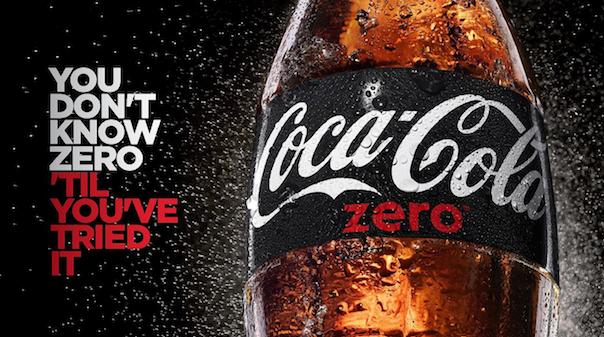
Coke Zero: The Disintegration of Marco Rubio

by Patrick Henningsen - 21st Century Wire


March 16, 2016

Any business expert will tell you that marketing is not an exact science. The same is true in politics, and even more so in this historic election season.

As the polls closed yesterday, Republican candidate and US Senator Marco Rubio took to the podium to announce he was finally bowing out the GOP presidential primary race. Front runner Donald Trump nearly swept the board starting with Rubio’s home state of Florida, followed by Illinois, North Carolina, Missouri and in US territory Mariana Islands, while Ohio governor John Kasich took the remaining contest winning his first primary in his home state.

With 99 delegates at stake in a winner take all contest, Florida was meant to be Rubio’s gallant last stand. Even though the polls showed Rubio trailing in double digits before Tuesday, Rubio still insisted he was going to win, and even go on to win the nomination too.


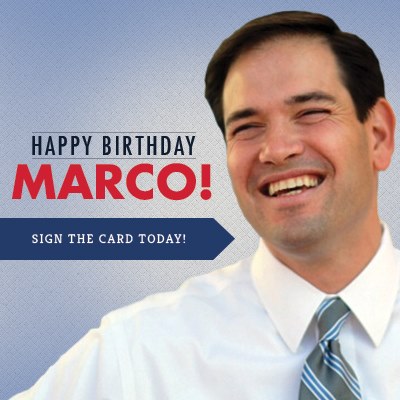
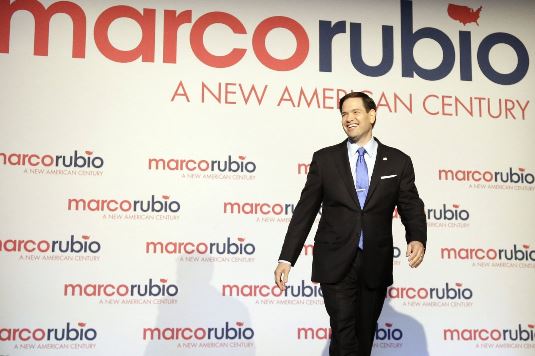
                                                Critics blasted Rubio’s ‘plastic’ smile.


“Quite frankly, I think a lot of people are going to be embarrassed tonight and are going to want refunds from the money they spent on those polls because we’re going to win Florida,” said Rubio.
“We feel very optimistic about that.”

When it was all said and done, Trump beat Rubio 46% to 27% in Florida. A blow-out.

By the end of his long drive, Rubio had only managed to win one state caucus in Minnesota, leaving him with no real primary victory. To his investors, the truth of matter might be almost too painful to comprehend – that beyond all the hype, their man was really a bottom tier candidate.

Super Tuesday’s humiliating loss was indicative of a Rubio rise… that never rose. Before Tuesday’s defeat, no matter how poorly Florida Senator Marco Rubio showed in previous primary elections, and no matter how badly he was polling in his home state of Florida – the media, led by CNN and FOX News, still covered his campaign like he was winning the election. Clearly, there was a concerted and well-coordinated effort by the Republican establishment and major broadcast media outlets to promote Rubio’s candidacy well above the actual candidate’s weight division.

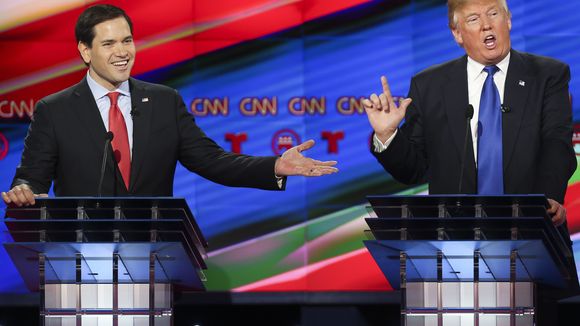
Three weeks ago, in a last-ditch effort to elevate his poll numbers, Rubio tried to out-Trump Trump, by unleashing his own round of back-ally personal verbal insults at the front runner in the hope of pulling The Donald back down to earth. Rubio began publicly calling Trump a “con man” and asserted that Trump had not achieved anything in his business career and along with fellow competitor Ted Cruz, inferred that the billionaire property and entertainment mogul Trump had inherited $200 million dollars from his late father and therefore was not deserving of any accolades. When Trump would joke about Rubio’s lack of height (Rubio is 5’8″ and Trump is 6’2″), Rubio hit back joking, “look how small Donald’s hands are, and you what they say about men with small hands..” to his crowds roaring with laughter before the Texas primary three weeks earlier.

Trump finally hit back with a moniker that Rubio could never shake, renaming him “Little Marco.”


LITTLE MARCO: Trump’s crude deconstruction of Rubio delivered the final blow.


Although their cage match pulled more TV airtime and attention away from a Trump-obsessed media, in the end it backfired horribly for Marco, as America got an uncomfortable snapshot of a nasty and desperate Rubio – hardly the look of stability, moderation and “unity” that Rubio marketeers were trying to project, and hardly presidential either.

What was most telling about Rubio’s response to a situation, partly of his own making, was that Rubio shirked any responsibility for ratcheting-up the rhetoric, and instead tried to blame Trump for the degrading ‘tone’ of the election:

“This is a frightening, grotesque and disturbing development in American politics,” Rubio said of the violence.
“We are being ripped apart at the seams now,” he continued. “I’m sad for this country. This is supposed to be the example to the world of how a republic functions and instead people are watching third-world images last night coming out of Chicago.”

It was too late. The damage was already done. Some pundits were calling it “political suicide” by Rubio – a gross error of political miscalculation on his part. But this would be missing the point because in reality, beyond all the incredible marketing hype, Rubio’s campaign never achieved any serious market penetration to begin with.

It’s important to remember that the establishment firmly believed, and still to this day, that Marco Rubio could be the Republican Party’s answer to the marketing sensation that was Barack Obama in 2008. By capitalizing on his youth and his Latino profile, the GOP elite saw this as a ‘turn-key’ marketing solution. Just like a soda pop brand, party and media operatives believed that by positioning Rubio’s brand in a highbrow market tier, voters would make the necessary connections and move to act by casting their vote for him.


DETATCHED: Darryl Issa throws himself under the bus,, desperate to inflate Rubio before Super Tuesday.

On Super Tuesday, the transmission truly fell out of the Rubio marketing machine. After months of boasting about how he would win his home state, Rubio plugger and California Congressman Darryl Issa (R), insisted that, “Marco is leading in early (voting) returns in Florida.”

Seriously, Congressman Issa?


Issa appeared to be carrying water for the GOP establishment by doing the last minute media rounds for kingmaker Mitt Romney, who weeks earlier dropped the gauntlet down on the Trump train during a speech at the University of Utah. Romney, the former Republican presidential candidate and Massachusetts governor implored his GOP herd to join forces and stop Trump by splitting the votes by voting for Kasich in Ohio, and for Rubio in Florida. Romney’s hoped that his divide and conquer strategy would rob Trump of the delegate majority needed to secure the GOP nomination before the Republican National Convention in Cleveland Ohio this July.


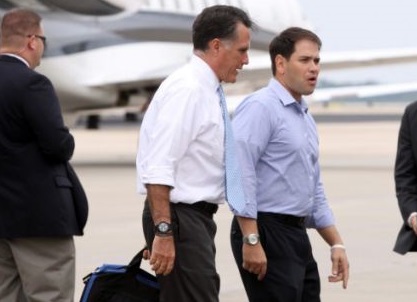
JET-SET: Rubio taking instructions from elite off-shoring 
corporate raider Mitt Romney.


Clearly, Romney had staked his claim behind Marco Rubio then, which means that Rubio’s collapse in Florida has half deflated Romney’s Revolt.

Romney continued to dig a hole for himself in Florida before Super Tuesday by recording an automated “Robo-call” used to phone prospective Marco Rubio voters in Florida, nearly begging voters to cast ballots for, “a candidate who can defeat Hillary Clinton and who can make us proud.”

The recorded message went on: “If we Republicans were to choose Donald Trump as our nominee, I believe that the prospects for a safe and prosperous future would be greatly diminished — and I’m convinced Donald Trump would lose to Hillary Clinton.”

Making Robo-calls for a candidate who people were already calling “a Robot”, wasn’t exactly a smart move by Romney.

Far from swinging the election towards Rubio, what Mitt Romney really proved was that money and power can’t buy common sense.

Ghost Run


For anyone who actually bothered to look close enough, hints of Rubio’s collapse were everywhere, but you wouldn’t know if from media coverage over the last two months. If not for favorable network face-time on the GOP TV debates, along with Rubio’s elite financier backers like billionaire Paul Singer and Cayman hedge fund raider Romney, it’s safe to say that Rubio’s numbers might had been well below those of his fellow non-starter, Ohio Governor John Kasich.

Rubio-linked multi-million dollar Super PAC funds pulled out all the stops against Trump too, launching a social media tidal wave of anti-Trump messages before the Florida primary:

If every Rubio supporter makes 1 phone call #MarcoRubio will win! Convince 1 voter to vote for Marco! #CallForMarco pic.twitter.com/d8wOKZWFA4

— Stop Trump PAC (@StopTrumpPAC) March 15, 2016

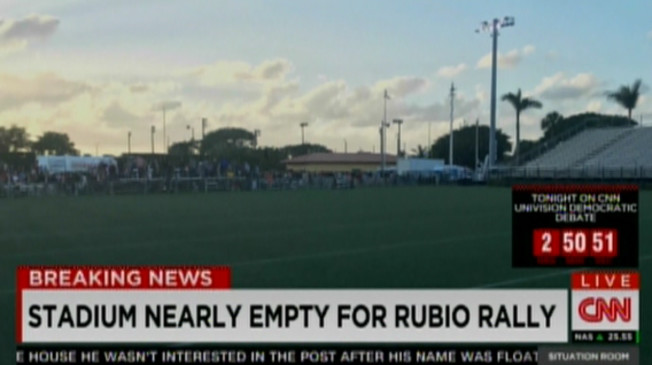
Last Wednesday, Rubio hired out a football stadium to stage a homecoming rally in his own state. Unfortunately, no one showed up. TV cameras had to be moved forward into a tiny area around the field’s goal posts in order to make the rally look as if more than a few hundred people bothered to show up. Far from jovial and inspirational, the atmosphere was that of deflation and despondency. It was tragic.

Rubio stadium event in Hialeah. Stands empty; crowd in one end zone. pic.twitter.com/9zj0xslwSA

— Byron York (@ByronYork) March 9, 2016

And when the cameras zoomed-in, it looked like this:


The crowd in Hialeah is fired up for @marcorubio tonight! #FLforMarco #FLPrimary pic.twitter.com/e34GsoWWwH

— Team Marco (@TeamMarco) March 9, 2016

CNN had dispatched one of its intrepid city-dwelling reporters, Jason Carroll, out to Hialeah, Florida to cover the event. Carrol tried be nice about it, describing the event as “much, much smaller” than a ‘normal’ Rubio event. So much for Marco’s homecoming, and so much for Mitt Romney’s plan to have Marco win his home state to force a brokered convention in July.

If Romney’s revolt was ever going to happen, it wasn’t going to be in Florida. You’d think Mitt’s people would’ve figured that one out, but there you go (millions are beginning to understand now why Romney performed so poorly in the 2012 election).

Jason Carol’s cameraman delivered a dim shot of the rally. If there was a church BBQ down the road, it would have drawn a bigger crowd than this.


After this debacle last week, Rubio still found the gumption to go on national TV and more or less instruct his supporters to cast their vote for John Kasich in the Ohio primary. Never before in modern American history have we seen presidential candidates instructing their supporters to vote against them in order to derail the party frontrunner in the hopes of triggering a brokered Republican National Convention in July.

In reality, a brokered convention means that even if Donald Trump wins the popular votes and the collects the most delegates in the GOP primaries – the Republican Party will call for a vote on the convention floor asking for all delegates to vote again, which in this case would mean that if the combined delegates of Ted Cruz, Marco Rubio and John Kasich exceeds that held by Donald Trump, then Trump would be dumped by his own party’s establishment insiders at the convention – in favor of another yet to be determined party elite selection. Most likely this would be Mitt Romney’s former running mate, House Speaker Paul Ryan, or one of the other three aforementioned candidates.

Great on Paper


Before he was cast-off by the Tea Party purists in favor of Cruz, Rubio had positioned his brand as one of insurgency, but the crowd didn’t buy it. So the brand was repositioned as a “safe” choice for voters.

When the Rubio vs Trump may lay first started, I had said that this was the inevitable result of the Republican establishment who were, “going for the mathematical and demographically pragmatic option – which would be Marco Rubio, with Wisconsin’s Scott Walker throwing early innings in the bull pen. Orthodox RNC thinking last spring believed that Rubio, with less than one term in Senate and no leadership experience, would somehow repeat the ‘Obama effect’ of 2008, and finally usher their party into the 21st century. Things looked very different for Hillary last spring too, where she seemed invincible on the Democrat side as well as in national polling. On paper at least, it seems that Rubio would “tick all the right boxes” for the GOP elite presiding over a party in decline and disarray – young (44 years old, although you’d put him at a decade his junior), and even more importantly, Latino, giving the GOP a shot at pulling in a crucial trilateral voter compliment: Hispanic-American, independents and moderate Democrats. On paper this all makes perfect sense, but running for President in the United States of America isn’t simply a case of what looks logical on paper. Case and point: Bernie Sanders, Ben Carson and, of course, Donald Trump.


It was a truly devastating moment for the Rubio campaign who had raised no less than $70 million so far as part of a desperate establishment bid to market the ‘Rubio brand’. According to a chief strategist for Ohio Gov. John Kasich, Rubio has been “more hyped than Crystal Pepsi,” in reference to Pepsi’s 1992 marketing flop.

“Sen. Rubio has been more hyped than Crystal Pepsi, but he has flopped even worse,” said Weaver last week.

“Even a well-conceived, high-financed marketing campaign won’t work if people don’t want to buy the product. That’s the Rubio campaign’s problem…. Behind the nice packaging, voters are discovering there is little substance.”

Not surprisingly, I don’t really like Crystal Pepsi. No one does. But everyone remembers when Coca Cola tried to inflate Coke Zero before it completely flopped. Millions were wasted in vain, and it seems that the only people who really benefited from this exercise in hype were the advertising agencies and the production companies who produced them – and also the media networks who sold the ad space to Coca Cola.

The same could be said with Rubio, and of course with Jeb Bush and a few others, although Rubio may still live to run another day. Even Coke Zero can become a Hero (well, according to Coca Cola, anyway) after years and years of marketing capital is invested into that product which no one was really interested in to begin with.

Billionaire Boys Club


Billionaires need love to gamble, especially in politics – and they gambled heavily – and lost, on Marco Rubio. One might question the establishment’s efficacy in leaving an invisible Rubio in a primary race where he’s taking votes away from a more promising challenger in Texas Senator Rafael Edward (Ted) Cruz. Ditto with Kasich.

Maybe it’s the egos, or maybe Trump is actually pulling the master strings. Either way, the establishment’s anti-Trump obsession is tearing the Republican Party apart.

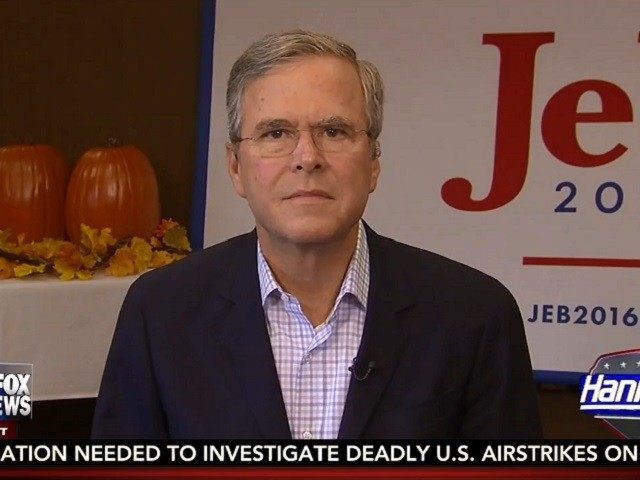
Just when you thought it couldn’t get any more like a true life black comedy, all three desperate GOP challengers found themselves courting the endorsement of election dropout and former Florida governor, Jeb Bush, on the Thursday before the CNN debate began.


As sexy goes, this endorsement hardly registers outside of a few select country clubs. If it were an endorsement from 90 year old Barbara Bush then it might mean something.

So poor was Jeb’s showing in the primary contest – even after burning through over $100 million in campaign donations (he raised over $150 million) and received around 7% of the vote – it’s difficult to see why anyone among Rubio, Cruz and Kasich would be offering a stump for Mr. Excitement, a “low energy” dynastic nonstarter.

On balance, this endorsement would probably garner less votes than an endorsement from David Duke. Such is the bizarre and sideshow-like nature of this 2016 presidential election.


A NEW AMERICAN CENTURY: Rubio uses Neocon’s 
PNAC and ‘Israel-first’ old marketing slogan.

Why the Elite Loved Rubio


Like his globalist colleague Kasich, and despite his evasive comments on the campaign trail, Rubio seems very committed to Wall Street and Bilderberg principles regarding corporate-brokered trade pacts like TPP, TTIP, GAT, and the WTO.

On foreign policy, Rubio is a pro-war Republican, calling for regime change in Syria, and even made the incredible comment during one of the GOP’s February debates that, “We didn’t overthrow Gaddafi, the Libyan people did…”, having not realized that months of US air bombardment and arming and working with Islamist militant on the ground is what toppled the Libyan state in 2011.

The other obvious, if not bizarre indicator that the globalists’ billionaire, military industrial class are firmly backing Rubio was hidden in plain sight. His campaign slogan was “A New American Century”, and of course, the significance of this was completely lost on the mainstream media. It seemed that Rubio had stolen his campaign slogan from the likes of Donald Rumsfeld and John Bolton (and Jeb Bush, who also signed the PNAC pledge in 1998) whose neoconservative pro-war think tank, Project for A New American Century (PNAC) was arguably the architect of America’s post-9/11 foreign policy. PNAC was also an extension of Israel’s foreign policy too, which makes sense considering how aggressively Rubio advocates for Israeli interests.

When you actually look at Rubio’s record during his time in the Florida legislature, it does not paint a pretty picture at all.

Without too much effort, any member of the media, including CNN’s Don Lemon, Jake Tapper or Anderson Cooper, could find a substantial trail of dirt behind the young Senator – if only for the fact that Rubio’s record seems to be off limits by the media and newspapers like the New York Times – all of whom are devoted to only running critical exposes on Donald Trump. Rubio’s dubious track record of scandals and other pieces of corruption are well-known in his home state, but almost invisible nationally. Top of that list might be one David Rivera, a long-time political ally and close friend of Marco Rubio – who also happens to be under investigation by the FBI.

That’s only the beginning. One of the most telling scandals involved Rubio selling his home to a lobbyist, and getting way over the asking price. On The Issues reports:

“Rubio’s personal finances were questioned because he made a $200,000 profit selling a house he owned to the mother of a chiropractor who was lobbying for a change in state insurance rules. Rubio had been a holdout, but removed a block on the measure shortly after the home sale and voted for it. Rubio was criticized for failing to disclose a home equity loan he received from US Century Bank, whose chairman, Sergio Pino, was a political supporter. The house had been appraised for $185,000, more than the purchase price just 37 days after he bought it. Rubio’s staff said the value jumped because he’d locked in a lower preconstruction price and made improvements. US Century Bank–a large recipient of federal bank bailout money–denied making a sweetheart deal.”

There are a number of other sketchy scandals linking Rubio to Florida’s organized crime syndicates, ponzi schemes, including shady deals involving cash payouts and dodgy lobbyists, some of which can be read here.

Then there’s the business of Rubio’s “sugar daddy”, Jewish billionaire and Israeli luminary Norman Braman. Not only is Braman bank-rolling the Rubio political machine (in return for…?), but Brahman’s ‘charity’ foundation also employs Marco’s wife Jeanette Rubio too.


ON BOARD: Rubio with Israeli luminary Shimon Peres.


Brahman is also Rubio’s entrée into the Israeli Lobby. It was Brahman who flew Marco and his family to Israel in 2010 to be inducted into the Israeli mind-set. This is also evident through Rubio’s pro-Israeli rhetoric, where during one debate he proudly announced, “There can be NO negotiation between Israel and the Palestinians right now…”

In another recent speech, Rubio took things a step further by insinuating that anyone who criticizes Israel is racist, insisting that, “All of this anti-Israel action going on globally, it’s anti-Semitism.”

He could easily be speaking as an Israeli envoy, speaking straight off of the lobby’s talking script.

That’s just a snapshot of what sort of political animal Marco Rubio is – not unlike the rest of the pack, and perhaps a lot more shrewd, pushy and cunning that many others. You wouldn’t expect anything less by anyone who believes that they deserve to be elected President of the United States having served less than one term in the US Senate at the age of 44.

It’s not certain yet whether or not Rubio will be able to retain his Florida US Senate seat after announcing he would be campaigning for president last year. Maybe a run for governor in Florida is in the cards.

One thing is certain though, at his young age and with powerful backers like the Israeli Lobby – we have not seen the last of Marco Rubio. His talent and ability as a speaker and his potential for a broad-based appeal is undeniable and you can be certain he will remain a key tool for the establishment for many years to come.

Just like Coke Zero, with enough marketing muscle and money injected into it, every brand can have a second life.

READ MORE ELECTION NEWS AT: 21st Century Wire 2016 Files

CFUV FunDrive On Now - Support Community Radio Today!

CFUV FunDrive On Now

by CFUV's Gorilla Radio


Listen. Hear.


  [UPDATE: Thanks to everyone who helped support this year's FunDrive. We've made our $25,000 goal and then some. Stay tuned for more great radio.] 


Tuesday, March 15, 2016

Gabriola Residents Oppose Offshore Anchorage "Parking Lot"

Anchoring freighters off Gabriola Island coast will damage environment, yet no proper assessment is being done

by GAFA


March 15, 2016

Gabriola Island, BC – A proposal to establish five anchorages along the Northeast coast of Gabriola Island – to create an ‘overflow parking’ for cape-size freighters heading to BC ports – will cause irreparable harm to the environment, yet the only environmental study being done is of questionable value, says the group organized to oppose the anchorages.

The five anchorages are being sought by Pacific Pilotage Authority on behalf of the BC Chamber of Shipping, Port Metro Vancouver and the Nanaimo Port Authority. They are proposed for overflow parking for 300-metre vessels while they wait to load coal and other commodities at BC ports.

“Anchoring giant freighters off the coast of Gabriola Island has extreme potential for environmental disaster, but the only study being undertaken by the proponent is not a true environmental assessment,” says Franz Gigl, a spokesperson of Gabriolans Against Freighter Anchorages (GAFA), a grassroots groups that has grown in the past year to fight these anchorages.


Locations for a further five anchorages are also being sought elsewhere in the Southern Georgia Strait. 

In contrast to environmental assessments conducted under the Canadian Environmental Assessment Act, the proponent-lead study of the environmental impacts of anchoring ships in this area will not be subjected to independent scrutiny. That means this study will not have an independent expert consider whether these anchorages are really needed or whether there are less harmful and less intrusive alternatives.

As the consultant preparing the study is engaged and paid by the proponents of these anchorages, they are deciding themselves what environmental impacts are important and what mitigation measures will be adequate.

“This report is not a ‘true environmental assessment’, it is just a study where the proponents of the anchorages have determined the study’s parameters and limits, and have excluded factors that are hugely important in judging the actual environmental impact” says Gigl.

“The results are entirely foreseeable and we expect the study to ignore important factors and support the anchorages without looking at all the facts.”

These new anchorages are proposed for the full northeast coast of Gabriola Island directly in front of wetlands, spawning beaches, community parks and beaches, a provincial park, numerous walking trails and one of the most densely populated areas within the Gulf Island region.

The Northeast coast of Gabriola Island frequently experiences onshore winds of 38-60 kilometers an hour. If a single ship were to drag anchor and ground, or spill fuel while bunkering, the resulting oil spill would rapidly drift onto the coastline and destroy shore and marine ecosystems.

The anchors and anchor chains of these massive ships will scour the seabed as they swing and shift in the winds and currents, creating a virtual wasteland. The waters of the proposed anchorage corridor are on the migration route of Chinook salmon, Orca and Humpback whales. The proposed anchorages location is a prime sport fishing and recreational boating area where a major herring run takes place each year and is close to geoduck harvesting grounds and a rare glass sponge reef.

The Regional District of Nanaimo, Gabriola Island Trustees and residents, business owners, local fishers and environmentalists have all expressed opposition to these new anchorages.

For more information, visit www.gabriolaanchorrage.org.


- 30 -  

FOR IMMEDIATE RELEASE

Media contact: Regine Eder
gabriolaanchorrage@gmail.com

About GAFA

Gabriola Against Freighter Anchorages (GAFA) Society is a grassroots organization of residents and business owners formed to fight the introduction of heavy industrial activity into the pristine, recreational and residential Gulf Island areas including Gabriola Island.

Monday, March 14, 2016

The Disappeared and a New Gitmo

On Disappearing People

by Craig Murray


March 14, 2016

If you thought things had much changed under Obama, think again.

There has been much publicity for the news that US forces have captured an alleged ISIS chemical weapons expert, Suleiman al-Afari. There was considerably less publicity for the news that he is being held in yet another new US black prison detention site.

It is situated on the territory of the USA’s Kurdish allies in Irbil, Iraq, but was constructed and is run entirely by the US military. Many detainees have vanished into its gates. Very few, if any, have come out again.

Yet again the US is simply disappearing people into secret prisons on foreign soil. Obama has in effect maintained the Bush doctrine that “enemy combatants” are neither alleged criminals nor soldiers. They do not get the rights of alleged criminals to decent treatment and a fair trial, nor do they get the Geneva Convention rights of soldiers captured during a war. They are non-persons who can simply be pitched into a black hole.

Even if they actually are terrorists, that does not leave them devoid of rights. I would also argue that to treat terrorists other than as common criminals, deserving of formal criminal process, contributes to their glorification and gives them a status they do not deserve. But formal process is essential because we know for certain that they often pick up people who are entirely innocent.

I leave aside the argument that it is the United States which caused the collapse of Iraq and it is with Blair and Bush that the guilt ultimately lies. But I leave it aside with the comment that it is an argument deserving of much weight.

I never quite made up my mind whether Obama was a decent man who was corrupted/bullied into adopting the neo-con agenda, or whether he was a play-acting sociopath all along. I do know that Clinton is a hardened warmonger who positively relishes the notion of “enemies” being killed. She is just a sociopath; she doesn’t bother much with the acting.

Knocking Uber Off Its Perch: Blockchain Rideshare an "Ownshare" Scheme Too

Move over Uber – Blockchain Ridesharing Startup Arcade City Plans Driver Ownership – 100 per cent of the Company by 2020 

by Richard Kastelein - Blockchain News


March 14, 2016  

New driver-owned ride-sharing startup Arcade City launched its mobile app this month to the Apple and Android app stores.

Drivers have given more than 1,000 rides to customers in 100+ cities across 27 states, and Australia, and Arcade City has begun integrating its service with Blockchain technology using a decentralized application platform called Ethereum, similar to Bitcoin but more suitable for governing peer-to-peer interactions.

Arcade City will use Ethereum to issue ‘crypto-equity’ to drivers, allowing them to own up to 100% of the company by 2020.

Launched in the aftermath of dramatic rate cuts by Uber and Lyft that decimated driver take-home pay up to 40% overnight with no warning, Arcade City quickly signed up more than 3,000 drivers, most of them current or former drivers for the ‘big two’ ride-sharers.

Arcade City lets riders review driver profiles in advance and choose the driver they prefer. Drivers are free to set their own rates and offer additional services like deliveries or roadside assistance. Approximately half of current drivers give rides on a ‘pay what you think is fair’ basis.

“The Achilles’ heel of Uber and Lyft is their centralized management of pricing,” said Arcade City founderChristopher David, a former Uber driver. “By decentralizing that decision to the level of the driver and rider, Arcade City frees the driver to be an entrepreneur, and empowers the rider with control over their entire experience. Both drivers and riders are loving it so far.”

“Uber and Lyft treat drivers terribly, like numbers in an algorithm,” said David.

“To them drivers are just a temporary nuisance, to be replaced with self-driving cars at the earliest opportunity. They even hide that fact from the drivers. But drivers are beginning to wake up to reality – and actively search for an alternative.”

Arcade City drivers have so far given rides in 27 states and counting: Arizona, Arkansas, California,Colorado, Florida, Georgia, Illinois, Indiana, Kentucky, Louisiana, Maryland, Michigan, Minnesota, New Mexico, North Carolina, New Hampshire, New Jersey, Ohio, Oklahoma, Oregon, Pennsylvania, South Carolina, Texas, Virginia, Washington state, and Washington, D.C.

Drivers are also active in Australia, with Mexico, Canada and Sweden launching in the spring.

Hillary's Libya "Mission Accomplished" Moment Haunts Still

Exposing the Libyan Agenda: a Closer Look at Hillary’s Emails

by Ellen Brown - CounterPunch


March 14, 2016


The brief visit of then-Secretary of State Hillary Clinton to Libya in October 2011 was referred to by the media as a “victory lap.” “We came, we saw, he died!” she crowed in a CBS video interview on hearing of the capture and brutal murder of Libyan leader Muammar el-Qaddafi.

But the victory lap, write Scott Shane and Jo Becker in the New York Times, was premature. Libya was relegated to the back burner by the State Department, “as the country dissolved into chaos, leading to a civil war that would destabilize the region, fueling the refugee crisis in Europe and allowing the Islamic State to establish a Libyan haven that the United States is now desperately trying to contain.”

US-NATO intervention was allegedly undertaken on humanitarian grounds, after reports of mass atrocities; but human rights organizations questioned the claims after finding a lack of evidence. Today, however, verifiable atrocities are occurring. As Dan Kovalik wrote in the Huffington Post, “the human rights situation in Libya is a disaster, as ‘thousands of detainees [including children] languish in prisons without proper judicial review,’ and ‘kidnappings and targeted killings are rampant’.”

Before 2011, Libya had achieved economic independence, with its own water, its own food, its own oil, its own money, and its own state-owned bank. It had arisen under Qaddafi from one of the poorest of countries to the richest in Africa. Education and medical treatment were free; having a home was considered a human right; and Libyans participated in an original system of local democracy. The country boasted the world’s largest irrigation system, the Great Man-made River project, which brought water from the desert to the cities and coastal areas; and Qaddafi was embarking on a program to spread this model throughout Africa.

But that was before US-NATO forces bombed the irrigation system and wreaked havoc on the country. Today the situation is so dire that President Obama has asked his advisors to draw up options including a new military front in Libya, and the Defense Department is reportedly standing ready with “the full spectrum of military operations required.”

The Secretary of State’s victory lap was indeed premature, if what we’re talking about is the officially stated goal of humanitarian intervention. But her newly-released emails reveal another agenda behind the Libyan war; and this one, it seems, was achieved.

Mission Accomplished?


Of the 3,000 emails released from Hillary Clinton’s private email server in late December 2015, about a third were from her close confidante Sidney Blumenthal, the attorney who defended her husband in the Monica Lewinsky case. One of these emails, dated April 2, 2011, reads in part:

Qaddafi’s government holds 143 tons of gold, and a similar amount in silver . . . . This gold was accumulated prior to the current rebellion and was intended to be used to establish a pan-African currency based on the Libyan golden Dinar. This plan was designed to provide the Francophone African Countries with an alternative to the French franc (CFA).

In a “source comment,” the original declassified email adds:

According to knowledgeable individuals this quantity of gold and silver is valued at more than $7 billion. French intelligence officers discovered this plan shortly after the current rebellion began, and this was one of the factors that influenced President Nicolas Sarkozy’s decision to commit France to the attack on Libya. According to these individuals Sarkozy’s plans are driven by the following issues:

1 A desire to gain a greater share of Libya oil production,

2 Increase French influence in North Africa,

3 Improve his internal political situation in France,

4 Provide the French military with an opportunity to reassert its position in the world,

5 Address the concern of his advisors over Qaddafi’s long term plans to supplant France as the dominant power in Francophone Africa

Conspicuously absent is any mention of humanitarian concerns. The objectives are money, power and oil.

Other explosive confirmations in the newly-published emails are detailed by investigative journalist Robert Parry. They include admissions of rebel war crimes, of special ops trainers inside Libya from nearly the start of protests, and of Al Qaeda embedded in the US-backed opposition. Key propaganda themes for violent intervention are acknowledged to be mere rumors. Parry suggests they may have originated with Blumenthal himself. They include the bizarre claim that Qaddafi had a “rape policy” involving passing Viagra out to his troops, a charge later raised by UN Ambassador Susan Rice in a UN presentation. Parry asks rhetorically:

So do you think it would it be easier for the Obama administration to rally American support behind this “regime change” by explaining how the French wanted to steal Libya’s wealth and maintain French neocolonial influence over Africa – or would Americans respond better to propaganda themes about Gaddafi passing out Viagra to his troops so they could rape more women while his snipers targeted innocent children? Bingo!

Toppling the Global Financial Scheme


Qaddafi’s threatened attempt to establish an independent African currency was not taken lightly by Western interests. In 2011, Sarkozy reportedly called the Libyan leader a threat to the financial security of the world. How could this tiny country of six million people pose such a threat? First some background.

It is banks, not governments, that create most of the money in Western economies, as the Bank of England recently acknowledged. This has been going on for centuries, through the process called “fractional reserve” lending. Originally, the reserves were in gold. In 1933, President Franklin Roosevelt replaced gold domestically with central bank-created reserves, but gold remained the reserve currency internationally.

In 1944, the International Monetary Fund and the World Bank were created in Bretton Woods, New Hampshire, to unify this bank-created money system globally. An IMF ruling said that no paper money could have gold backing. A money supply created privately as debt at interest requires a continual supply of debtors; and over the next half century, most developing countries wound up in debt to the IMF. The loans came with strings attached, including “structural adjustment” policies involving austerity measures and privatization of public assets.

After 1944, the US dollar traded interchangeably with gold as global reserve currency. When the US was no longer able to maintain the dollar’s gold backing, in the 1970s it made a deal with OPEC to “back” the dollar with oil, creating the “petro-dollar.” Oil would be sold only in US dollars, which would be deposited in Wall Street and other international banks.

In 2001, dissatisfied with the shrinking value of the dollars that OPEC was getting for its oil, Iraq’s Saddam Hussein broke the pact and sold oil in euros. Regime change swiftly followed, accompanied by widespread destruction of the country.

In Libya, Qaddafi also broke the pact; but he did more than just sell his oil in another currency.

As these developments are detailed by blogger Denise Rhyne:

For decades, Libya and other African countries had been attempting to create a pan-African gold standard. Libya’s al-Qadhafi and other heads of African States had wanted an independent, pan-African, “hard currency.”

Under al-Qadhafi’s leadership, African nations had convened at least twice for monetary unification. The countries discussed the possibility of using the Libyan dinar and the silver dirham as the only possible money to buy African oil.

Until the recent US/NATO invasion, the gold dinar was issued by the Central Bank of Libya (CBL). The Libyan bank was 100% state owned and independent. Foreigners had to go through the CBL to do business with Libya. The Central Bank of Libya issued the dinar, using the country’s 143.8 tons of gold.

Libya’s Qadhafi (African Union 2009 Chair) conceived and financed a plan to unify the sovereign States of Africa with one gold currency (United States of Africa). In 2004, a pan-African Parliament (53 nations) laid plans for the African Economic Community – with a single gold currency by 2023.

African oil-producing nations were planning to abandon the petro-dollar, and demand gold payment for oil/gas.

Showing What is Possible


Qaddafi had done more than organize an African monetary coup. He had demonstrated that financial independence could be achieved. His greatest infrastructure project, the Great Man-made River, was turning arid regions into a breadbasket for Libya; and the $33 billion project was being funded interest-free without foreign debt, through Libya’s own state-owned bank.

That could explain why this critical piece of infrastructure was destroyed in 2011. NATO not only bombed the pipeline but finished off the project by bombing the factory producing the pipes necessary to repair it. Crippling a civilian irrigation system serving up to 70% of the population hardly looks like humanitarian intervention. Rather, as Canadian Professor Maximilian Forte put it in his heavily researched book Slouching Towards Sirte: NATO’s War on Libya and Africa:


[T]he goal of US military intervention was to disrupt an emerging pattern of independence and a network of collaboration within Africa that would facilitate increased African self-reliance. This is at odds with the geostrategic and political economic ambitions of extra-continental European powers, namely the US.

Mystery Solved


Hilary Clinton’s emails shed light on another enigma remarked on by early commentators. Why, within weeks of initiating fighting, did the rebels set up their own central bank? Robert Wenzel wrote in The Economic Policy Journal in 2011:

This suggests we have a bit more than a rag tag bunch of rebels running around and that there are some pretty sophisticated influences. I have never before heard of a central bank being created in just a matter of weeks out of a popular uprising.

It was all highly suspicious, but as Alex Newman concluded in a November 2011 article:

Whether salvaging central banking and the corrupt global monetary system were truly among the reasons for Gadhafi’s overthrow . . . may never be known for certain – at least not publicly.

There the matter would have remained – suspicious but unverified like so many stories of fraud and corruption – but for the publication of Hillary Clinton’s emails after an FBI probe. They add substantial weight to Newman’s suspicions: violent intervention was not chiefly about the security of the people. It was about the security of global banking, money and oil.


Ellen Brown is an attorney, founder of the Public Banking Institute, and author of twelve books including the best-selling Web of Debt. Her latest book, The Public Bank Solution, explores successful public banking models historically and globally. Her 300+ blog articles are at EllenBrown.com.
More articles by:Ellen Brown

Sunday, March 13, 2016

5 Years On: Fukushima's Tragedy of Errors

Fukushima Five Years On: Not a Comedy of Errors, a Calamity of Terrors

by John Laforge  - CounterPunch


March 11, 2016  


Since it began March 11, 2011, thousands of freelancers have reported on the Fukushima-Daiichi triple reactor meltdowns and radiation gusher, the deluge of accidents, leaks, faulty cleanup efforts, the widespread contamination of workers, citizens, soil, food and water, and the long series of cancer studies, lawsuits, and ever-changing clean-up and decommissioning plans.

As Japan Times reports last October,

“Extremely high radiation levels and the inability to grasp the details about melted nuclear fuel make it impossible for [Tokyo Electric Power Co.] to chart the course of its planned decommissioning of the reactors.”

The journalism is partly a response to the lack of mainstream US news coverage, and partly a warning against similar radiation disasters risked in the United States every day by the operation of 23 identical GE reactors (Fukushima clones) in this country.

Japanese media coverage of the catastrophe in English, along with analysis by independent scientists, researchers, and institutes is mostly available online and much of it is reliable.

Five years into the crisis, officials from Tepco have said leaks from the wreckage with “at least” two trillion Becquerels of radioactivity entered the Pacific between August 2013 and May 2014. “At least” is vague enough to beg the question: Is the actual total 5 trillion; 25; 50?

Relentless drainage of contaminated water from the site is estimated to be about 300 tons a day and has continued for 60 months.

“We should be carefully monitoring the oceans after what is the largest accidental release of radioactive contaminants to the oceans in history,” researcher Ken Buesseler, of the Woods Hole Oceanographic Institute said last September.

However, Japan isn’t even monitoring seawater near Fukushima, according to The Ecologist.

Greenpeace launches study of 300-year effect on oceans


On Feb. 26, Greenpeace International launched a major investigation into the gusher’s effects on the Pacific Ocean near the wrecked Fukushima complex in Northeast Japan. The group said in a press release that its investigation will employ an underwater vehicle with a sensitive gamma radiation “Spectrometer,” and a sediment sampler.

Greenpeace noted that, “In addition to the initial release of liquid nuclear waste during the first weeks of the accident, and the daily releases ever since, contamination has also flowed from the land itself, particularly nearby forests and mountains of Fukushima, and are expected to continue to contaminate the Pacific Ocean for at least the next 300 years.”

Former Japanese Prime Minister Naoto Kan, who headed the government in 2011, joined the Greenpeace crew aboard the Rainbow Warrior on the opening day of its study, and Kan used the occasion to call for a Germany-like total phase-out of nuclear power.

“I once believed Japan’s advanced technology would prevent a nuclear accident like Chernobyl from happening in Japan,” Kan said.
“But it did not, and I was faced with the very real crisis of having to evacuate 50 million people… Instead, we should shift to safer and cheaper renewable energy.”

Shaun Burnie, Senior Nuclear Specialist with Greenpeace Germany said, “There is an urgent need to understand the impact this contamination is having on the ocean — how radioactivity is both dispersing and concentrating — and its implications.”

“Tepco failed to prevent a multiple reactor meltdown and five years later it’s still an ongoing disaster. It has no credible solution to the water crisis they created and is failing to prevent further contamination of the Pacific Ocean,” Burnie said.

Criminal charges leveled against reactor execs


The first criminal charges against executives of Tepco were filed Feb. 29 alleging that three officials refused to take precautionary measures that could have prevented the loss of off-site power (known as “station blackout”), and the resulting complete meltdown, or melt-through, of reactor fuel in three units. Specifically, the three are accused of negligence resulting in death and injury, having ignored explicit professional warnings about the inadequate height of the seawall, and about the improper placement (in basements) of emergency diesel generators which were destroyed by tsunami. Many of the 14,000 Japanese citizens who signed on to the lawsuit said their action was taken partly to force disclosure at trial of important information still kept secret by Tepco.

Starting from scratch with no textbook


Last October, four-½ years into the unprecedented self-destruction of three-reactors in one place, Japan’s Atomic Energy Agency opened an institute “to develop” techniques to inspect and eventually decommission the three leaky ruins. Because of the vast, daunting and novel complexity of three melted reactors, the new “Remote Technology Development Center” is starting from scratch. That’s right: No one now knows how to disassemble and safely containerize the ferociously radioactive wreckage — times three.

Naohiro Masuda, Tepco’s chief of decontamination and decommissioning, told the AP Dec. 18, “This is something that’s never been experienced. A textbook doesn’t exist for something like this.” Radiation levels inside the cores are too high for even for robots to make useful inspections.

The ultimate goal of dismantling work is to remove the melted uranium fuel. Researchers don’t yet know how to patch massive quake-caused cracks in chambers under the failed reactors, which release tons of highly contaminated water every day. The new institute is tasked with inventing a first-ever technique to find and plug the leaks. The chambers must be made watertight, because removal of the melted fuel has to be done remotely and under water.

Planners must also invent a system of possible routes by which to remove the hundreds of tons of still-unseen melted fuel, and they’ve been told to find new ways of reducing radiation doses to workers conducting the mission.

Two mayors agree to host waste dumpsites


After first opposing the government’s plans, two towns in Fukushima Prefecture have agreed to Tokyo’s proposal for using them for “permanent” radioactive waste disposal. The sites, one at an existing private facility in Tomioka, and another at Naraha, have been chosen for disposal of “designated waste” in exchange for bribes, including the construction of an industrial park and subsidies worth about $81 million.

“Designated waste” is rubbish with between 8,000 and 100,000 Becquerels of radioactivity per kilogram. Confusingly, the Japan Times called this deadly refuse “low-level nuclear waste,” while the Asahi Shimbun called it “highly radioactive.”

The Tomioka facility, now run by Ecotech Clean Center, will be nationalized and will then bury some 650,000 cubic meters of designated waste which is mostly incinerator ash, sewage sludge and rice straw. It is a small fraction of the estimated 22 million cubic meters of waste that’s been collected in large black bags and stored outdoors at thousands of sites in 11 prefectures.

Waste with higher radiation levels is to be kept at temporary facilities being built near the doomed reactor complex.

Another proposal from the Ministry of Industry is to bury high-level radioactive waste under the seabed. Experts who made the idea public said such waste could be transported by ship, but this raised alarms about transfer mishaps, transport accidents, groundings, breakups, and sinkings of cargo ships.

Pollution solution: Declare safe today what was unsafe yesterday


Following the start of the ongoing disaster, the government’s official allowable public external radiation exposure was arbitrarily raised. One milliSievert (mSv) per year was raised to 20 mSv for residents in areas affected with radioactive fallout. For radiation workers in the nuclear industry the annual limit was raised from 100 mSv to 250 mSv. This had the double effect of both saving the industry billions in cleanup costs, and increasing radiation-induced health effects — especially in women, fetuses, infants, and children.

Robert Hunzinker reported in CounterPunch Dec. 14 that Physicians for Social Responsibility has warned that the new “allowable dose” means there’s a 1 in 200 risk of children getting cancer in the first year; and over two years the risk increases to 1 in 100.

Sea wall making matters worse


In October, Tepco completed a deep seawall dug into the shore between the ocean and the wrecked reactors. Intended to halt the flow of contaminated groundwater to the Pacific, the dam has cause groundwater levels to rise behind the wall.

In an attempt to fix the problem caused by the wall, Tepco dug new wells to pump backed-up groundwater, planning to dump less-contaminated groundwater from new wells into the sea. But the water is so heavily poisoned with tritium that sea dumping was not allowed.

Now the company is pumping and dumping the fast rising groundwater into severely radioactive reactor buildings — where the water will become even more contaminated by passing over the mass of hot melted fuel inside.

It’s not really a comedy of errors, but a calamity of terrors. 


Listen to John LaForge on this week’s edition of CounterPunch Radio!

Just Who's the Running Dog Imperialist? In Defense of Lenin's Analysis

The Myth of Russian Imperialism: In Defense of Lenin's Analyses

by Renfrey Clarke and Roger Annis - Links International Journal of Socialist Renewal


February 29, 2016

A sharp controversy within the international left in recent times has concerned the place occupied by Russia in today’s capitalist world-system.

Is Russia an imperialist power, part of the “centre” of global capitalism?

Or, do its economic, social and politico-military characteristics mark it as part of the global “periphery” or semi-periphery – that is, as one of the majority of countries that, to one degree or another, are the targets of imperialist bullying and plunder?[1]

Vladimir Ilyich Lenin

Traditionally, the Marxist left has used the term “imperialism” with a high degree of discrimination. Imperialism for Marxists is not something called mysteriously into being when “greed” overcomes political leaders. Nor is it simply external military action, however aggressive. For Marxists, the imperialism of our time arises from specific features of the economies and social orders of the most advanced capitalist countries.

[The following lengthy essay (8,200 words) expands on this earlier essay: Perpetrator or victim? Russia and contemporary imperialism, by Renfrey Clarke and Roger Annis, published on ‘Links International Journal of Socialist Renewal’, February 7, 2016.]

The classic Marxist definition of imperialism in the modern epoch was provided by V.I. Lenin in his 1916 pamphlet Imperialism, the Highest Stage of Capitalism. As viewed by the Bolshevik leader, the advanced capitalism that had emerged during the preceding decades had these salient characteristics:

“(1) the concentration of production and capital has developed to such a high stage that it has created monopolies which play a decisive role in economic life; (2) the merging of bank capital with industrial capital, and the creation, on the basis of this ‘finance capital’, of a financial oligarchy; (3) the export of capital as distinguished from the export of commodities acquires exceptional importance; (4) the formation of international monopolist capitalist associations which share the world among themselves, and (5) the territorial division of the world among the biggest capitalist powers is completed.”[2]

By the final decades of the nineteenth century, Lenin argued, the economies of the most industrially advanced countries had moved into a new phase of “monopoly capitalism”. Control over economic life by the biggest concentrations of capital had reached the point where in each of these countries, a tightly interlocked group of the most powerful financial and industrial capitalists held unchallenged sway.

Still unable, though, to find fields of investment at home for much of the capital they had accumulated (suffering, in other words, from a chronic surplus of capital), the financial-industrial magnates found themselves compelled to multiply and intensify their operations abroad. Increasingly, the trading operations of the past were augmented and overshadowed by direct investment, a great deal of it in regions where the development of capitalism was in general much weaker. In these regions – the “periphery” of the emerging imperialist system – the new global hegemons could find cheap raw materials, abundant low-wage labour power, and customers for the goods produced in the countries at the system’s “centre”. By the end of the nineteenth century, the need to secure the new investments and fend off competitors had led to the incorporation of most areas of the periphery into vast colonial empires.

Imperialism has evolved a great deal since Lenin’s time, but it is remarkable how apposite his analysis remains. While specific forms have changed, each of the key underlying features noted by the Bolshevik leader is still very much in place. The “international monopolist capitalist associations” of Lenin’s time – the cartels and trusts – have morphed into multinational mega-corporations and their policing agencies, the IMF, World Bank and WTO. The colonial empires have vanished in formal terms, but their essence persists in mechanisms aimed at reinforcing stark global inequalities of power and wealth that are immensely profitable for the global centre. These mechanisms of post-colonial robbery and oppression include the direct remittance of profits by imperialist-owned enterprises; debt dependency; constant political meddling by the centre; and when other methods fail, trade embargos and armed coercion.

A further mechanism of plunder, less recognised but among the most powerful, is implicit in the underlying structures of global trade. This is the set of phenomena known as “unequal exchange”. In exporting capital, the global capitalist centre has consistently maintained its monopoly over the most advanced and sophisticated (and hence profitable) technologies and economic functions. In the imperialism of colonial times, firms at the centre used their monopoly advantages to sell their manufactured goods at a stiff price premium. The producers of raw materials in the colonies and semi-colonies were forced to compete against one another, and thus to content themselves with much lower margins. The trade between centre and periphery was therefore profoundly unequal. Behind a façade of impartial markets, value was siphoned from the periphery to the centre.

A further “value siphon” was implicit in the difference between the massive capital investment in the factories of the centre and the much lower capitalisation usual for the farms, plantations and other enterprises of the periphery. Between centre and periphery, the gap in labour productivity was huge. In exchanging their raw materials for manufactured goods, the colonies and semi-colonies in effect exchanged large quantities of labour power, and hence value, for much smaller amounts. The industrialists of the centre, despite paying comparatively high wages at home, profited handsomely. Capital accumulation took place overwhelmingly in the countries of the centre, while the periphery remained poor.

Since decolonisation, the forms underlying unequal exchange have evolved extensively, though their purpose and general outcomes remain unchanged. Complexes of investment and production that once were unified are now broken up across national borders. The most specialised and profitable functions – research and development, financing, design, marketing, and the most demanding aspects of production – are still monopolised by the firms of the centre. Low-profit functions are outsourced to the periphery, where local enterprises are forced to compete with one another for contracts to produce components and carry out assembly.

For this system to work, an important degree of industrialisation has had to take place in the more advanced areas of the periphery. Major economic differences have thus opened up within the periphery itself, to the point where it has become necessary to speak of a broad “semi-periphery” of global capitalism.

The semi-periphery, however, is still unmistakeably peripheral in relation to the system as a whole. It remains substantially shut out of the most profitable economic functions, and its industrialisation is of a distorted, narrowly-based, dependent kind whose logic is that of maximising imperialist profits.

Between the centre and semi-periphery, there remains an economic and social chasm. Between the U.S. and Mexico, for example, the effective difference in average living standards is more than three to one, and between Germany and Turkey, well over two to one.[3] The capitalism of the semi-periphery remains underdeveloped, its relatively weak state machines possessing only a limited ability to resist imperialist financial blackmail and politico-military interference.

For Marxists, an ability to distinguish between the imperialist centre and the countries of the periphery and semi-periphery – that is, between advanced capitalism and its prey – is an indispensable tool. Lack of clarity on this division makes gross political errors virtually inevitable.

Lenin and tsarist imperialism


Before proceeding to examine the place held by Russia in today’s global capitalism, we need to clarify an issue that has been the source of a good deal of confusion. This relates to characterisations of the tsarist Russian Empire made by Lenin in the period surrounding the outbreak of the First World War.

In 1914, Lenin was among the few European socialist leaders to reject the ruling-class siren song that called on workers to set aside class struggle and join the national war effort. His position of “revolutionary defeatism” rested on the analysis that tsarist Russia was a great imperial power and that Russian workers and peasants had nothing to gain from its victory.

If the Russia of 1914 is measured against the imperialism of our own time, Lenin’s categorisation of his country as imperialist seems highly problematic. Only in a few enclaves was Russian capitalism in 1914 advanced by world standards; in most of the country, production and exchange were primitive. Much less was Russia marked by an over-accumulation of capital; to the contrary, it was a large-scale international borrower. Lenin, however, was not wrong in regarding tsarist Russia as an imperialist power. The country’s colonial possessions ranked with those of France, if not of Britain. With its large population and army, the tsarist empire was a major interventionist force in European politics despite its backwardness. Its relatively recent history included expansionist wars against Turkey.

Lenin was acutely aware of the contradiction implicit in categorising the primitive, backward Russian Empire as an imperialist force alongside the modern imperialisms of Western Europe. In writings in 1916, the Bolshevik leader made clear that he viewed the imperialism of Russia as being of a qualitatively different nature from that of the West, as resting on fundamentally distinct economic and social foundations. He drew a sharp distinction between “crude, medieval, economically backward”[4] tsarist imperialism, and the system in its “advanced capitalist, European” form.[5]

What were the economic and social roots of the “medieval” imperialism to which Lenin referred? In the Russian and Austro-Hungarian empires during the first decades of the twentieth century, the traditional feudal-dynastic and mercantile imperialism, based on the extraction of peasant rents and merchants’ profits, retained a certain vitality. It was clearly in respect of this “old” imperialism, a holdover from an earlier historical epoch, that Lenin regarded the Russia of pre-revolutionary times as imperialist.

For practical purposes, the changes that accompanied the end of the First World War marked the end of the “old” imperialism. Today, we seek in vain for some lingering, wraithlike emanation of that old system that might allow us to slip in a characterisation of Russia as “imperialist”. The material basis for such a characterisation has passed into history. Russia’s place in the capitalist world-system must now be plotted strictly on the basis of the modern financial-industrial imperialism whose opening phase Lenin analysed.

So what is it, within the paradigms of modern imperialism, that marks countries as members of today’s exclusive imperialist club? Apart from the chasm that separates the imperialist world from the developing countries in terms of general prosperity, a series of other criteria can be identified. Of course, individual imperialist countries will not necessarily display all these markers. But if today’s Russia is indeed imperialist, this will show up as a relatively dense “clustering” of the characteristics that will now be examined.

An advanced capitalism?


For the purposes of this study, the most general question needing to be posed is whether the system now prevailing in Russia is, in any real sense, “the highest stage of capitalism” – that is, advanced capitalism.[6] To anyone seriously familiar with Russia, the argument that the country’s production and exchange can be described in this way is quaint in the extreme.

Russia’s per capita Gross Domestic Product (measured at Purchasing Power Parity) in 2015 was a little under US$24,000 – rather less than half of the U.S. level, significantly behind Malaysia, and similar to the figures for Chile and Argentina.[7]

The gap separating Russia from the most prosperous countries of the developed world is still more striking if we examine wealth, as distinct from income. The Credit Suisse Global Wealth Databook for 2015 shows that in most of the countries that clearly qualify as imperialist, wealth per adult at current exchange rates in mid-2015 was in excess of $200,000. In Russia, the figure was just $11,726. This was a little above the figures for Jamaica and Paraguay, well below the one for Brazil, and barely half those for South Africa, China, and Mexico.[8]

In 2014 Russian labour productivity, a key indicator of overall economic development, was also low at just under half the European average and about 35 per cent of the level in the U.S.[9]

More will be said in other contexts about the poverty and backwardness of today’s Russian economy. For the present, some general points need to be made on the forms and structures of the country’s capitalism. Left-wing political economists in Russia stress the essential weirdness of a system that has no close analogues except in other countries of the post-Soviet expanse. There is a consensus that Russian capitalism is nothing like the “highest stage” of the system, but is instead a de-developed throwback that perpetuates the managerial culture, as well as key informal structures, of the late Soviet period – that is, of bureaucratised “state socialism” in its final phase.[10]

The classic study of the real functioning of today’s Russian economy is provided by Ruslan Dzarasov of the Plekhanov Russian University of Economics. Dzarasov describes a system in which the rule of law is haphazard, and entrepreneurs depend for their commercial survival on the favour of corrupt bureaucrats. Control of enterprises is concentrated in the hands of “big insiders”, who for purposes of tax evasion and financial fraud conceal their ownership behind an elaborate “offshore cloud” of fictitious foreign-registered companies. Hostile takeovers are a commonplace, routinely backed by physical violence. In these circumstances, senior managers make up for their insecure tenure by plundering company revenues, using the “offshore cloud” to hide the proceeds abroad.[11]

Phenomena such as these are not unknown in the capitalism of countries much richer than Russia. Capitalist doctrine, of course, condemns them as a danger to the system. In advanced capitalist countries they are not so prevalent as to stop investment and accumulation from going ahead. But in Russia these marks of weakly developed capitalism are not incidental but pervasive, and play a key role in keeping the country’s economy in semi-developed form. Within Russia’s “Jurassic capitalism”,[12] little of the profit pie is left for investors who are not themselves big insiders, or closely in league with them. Understandably, levels of productive investment are abysmal.[13] Dzarasov cites data showing that the present average age of Russian industrial equipment, at around 21 years, is roughly twice the figure at the end of the Soviet period.[14]

Russian monopolism


The forms of Russia’s present-day capitalism include a high degree of monopolism. In almost all sectors of the economy, a relative handful of corporations dominate. This might suggest a close match between the processes of Russia’s capitalism and those of the system as found in advanced, imperialist countries, but the analogy is deceptive. Today’s Russian monopolism, to paraphrase Lenin, did not arise out of a “high stage” of capitalist production and accumulation. Typically, Russia’s monopolies have their roots in the large, integrated production complexes that were favoured by Soviet planning. Reinforcing the trend to monopoly has been the fact that in capitalist Russia’s violent, chronically unstable business milieu, medium-sized firms rarely prosper.

Meanwhile, it should be noted that monopolies are no longer unusual in the countries of today’s capitalist semi-periphery. As well as reflecting the process of concentration that occurs in all capitalisms, this situation also stems directly from state initiatives. Developing-country governments have often set up wholly or majority state-owned monopoly corporations, like the Iranian, Saudi and Nigerian state oil corporations. The existence of these corporations does not mean that the countries concerned are imperialist.

Privately-owned monopolies in developing countries tend to differ from their imperialist-world counterparts by being far smaller. Russia has few companies, either private or state-owned, that approach in scale the “hyper-corporations” of the advanced West. In Forbes magazine’s 2015 list of the world’s 2000 largest publicly-traded companies, the highest-placed Russian firm is the gas corporation Gazprom in 27th place, while the oil corporation Rosneft is listed at number 59.[15] Both these companies are majority state-owned. The largest privately-controlled Russian corporation listed by Forbes is LUKOIL, in 109th place. In all, Russia rates 27 firms in the Forbes list – similar to Brazil with 25, and well behind India with 56.

The top tier of Russian corporations is heavily dominated by firms with their base in natural resources extraction or raw materials processing (including metallurgy), and whose output is largely exported. Apart from two state-controlled banks, the largest eight Russian companies listed by Forbes all have this character. For export-oriented extractive industries to have major weight in the economy is unusual for advanced capitalism. But it is encountered frequently among countries of the periphery – and especially among the least developed, most dependent states.

The most powerful privately-controlled Russian company that does not have an obvious link to the resource sector is the retail chain Magnit, at number 701 on the Forbes list. Russia’s non-extractive, non-processing private corporations are thus rather modest in size by world standards.

A Russian finance capital?


In his writings on imperialism, Lenin speaks of “the creation, on the basis of…‘finance capital’, of a financial oligarchy”.[16] But the key positions of today’s Russian business elite are not financial. The fusion of industrial and financial capital that Lenin identifies with modern imperialism is not the major face of Russian capitalism, and has occurred in the country only to a limited degree.

In the literature on Russia’s financial industry, numerous comments and statistics attest that this sector is small and relatively undeveloped. Russia is strikingly poor in financial assets. Credit Suisse in its Global Wealth Databook for 2015 cites the astonishingly low figure for financial assets per adult in Russia in mid-2015 of $2,490, compared to $8,204 in Brazil, $25,962 in Chile, and figures in Western Europe that mostly top $100,000.[17] The low figure for Russia reflects the weak development since Soviet times of the financial instruments, including stocks, bonds, money market funds and bank deposits, that in most parts of the capitalist world make up the bulk of wealth.

Within the finance capital of an imperialist country, a central element is a highly developed banking system. Lenin speaks of “the ever-growing merger, or…coalescence, of bank and industrial capital and…the growth of the banks into institutions of a truly ‘universal character’.”[18] But there is nothing universal about Russia’s banks. A commentary from 2012 has the following note: “Banking-sector assets represent only 75 per cent of gross domestic product, compared with developed economies, in which banking assets typically exceed 100 per cent of GDP.”[19]

Russia’s small banking industry is dominated by two majority state-owned banks descended from Soviet financial institutions. Neither of these two is especially big in world terms. In the SNL Financial list of the world’s largest 100 banks as of 31 March 2015, Sberbank ranks at number 59 while the VTB Group holds 100th place.[20] The remaining Russian banks are much smaller.

With a market capitalisation in May 2015 of $26.9 billion, Sberbank measured on this basis is less than one-tenth the size of the world’s largest bank, the U.S.-based Wells Fargo, and not much more than 40 per cent as big as Brazil’s largest bank, Itaú Unibanco.[21] Brazil, moreover, has four banks in SNL Financial’s top 100, compared to Russia’s two.

Since the dissolution of the Soviet Union, Russia’s banking system has had a chaotic history that reflects the criminality and general dysfunction of Russian business. During the 1990s, many hundreds of small banks were founded by rising business magnates, often as poorly-concealed tools for financial malfeasance. Press reports on the Russian banking industry complain of poor lending practices, lack of transparency, high rates of bad loans, money-laundering and at times, massive fraud. In December 2015 Bloomberg reported that in the course of that year around 100 Russian banks, representing 13 per cent of the industry, had been stripped of their licenses by the Central Bank authorities.[22]

The two top Russian banks are important corporate players, but to try to depict Russia’s small finance capital as a hegemonic sector making up the core of the economy is naïve. The real hegemonic force in the country is a close fusion of top state officials with industrial oligarchs, the latter mainly from the resource-extractive and metals-processing fields. For decisive power to be held by such a cabal of bureaucrats and resource-based, export-dependent business chiefs is a pattern that has many precedents in the history of peripheral countries.

Russia’s finance capital, meanwhile, has never made much impact in the archetypal role played by this sector in modern imperialism – as the cutting edge of economic expansion outside the country’s borders. Unlike major Western banks with their massive international operations, Russian banks focus overwhelmingly on domestic lending. A partial exception is the VTB Group, reconfigured by the Russian government in 1990 to service the country’s international trade. As of the end of 2013, VTB was operating in 23 countries, with notable stakes in Belarus, Kazakhstan and Ukraine. Sberbank entered the international field in 2006 and by 2012 had purchased banks in Kazakhstan, Ukraine, Belarus and Turkey, stating that it planned to generate about five per cent of its net income outside Russia by 2014.[23]

Russian banks were eventually to gain a foothold in Ukrainian financial markets. But their position in Ukraine has never been dominant, even in relation to other foreign banking interests. In 2014, three Russian banks – Sberbank, AlfaBank and the VTB group – held 3.2%, 2.8% and 2.8% of the Ukrainian banking market respectively, out of total market share of 31 per cent held by foreign banks.[24]

Russian industry and trade: imperialist or dependent?


As explained earlier, the top tier of Russian corporations is dominated heavily by firms with their base in raw materials extraction and processing. The industrial sectors in imperialist countries present a sharp contrast, with knowledge-intensive, high value-added functions normally prevailing. Even in imperialist countries where extractive industries are important, as in Canada and Australia, the economies are generally diverse, with a broad range of activities making substantial contributions to GDP.

The Soviet Union in its later decades had a diversified economy, with all important productive sectors at least moderately developed. The return to Russia of capitalism, however, has seen broad areas of production go into catastrophic decline. While the arms industry remains globally competitive, Russia’s civilian industries have been starved of investment. High-tech civilian firms have been among the hardest hit.[25] The relatively backward nature of most industrial production in today’s Russia aligns the country firmly with the developing, not the developed world.

In their export trade, imperialist countries typically show a marked bias toward sales of sophisticated, high-value merchandise; of knowledge-intensive technical services; and also of financial services. Here too, Russia bears the marks of the periphery. Services in 2013 provided a low 11.8 per cent of total Russian export sales, and in this area the country ran a massive deficit.[26] The structure of Russian merchandise exports further reflects the “de-development” of industry since Soviet times; in 2013 energy carriers and mineral products made up 71.5 per cent of the total, with refined metals, basic chemicals, forestry products and foodstuffs accounting for most of the remainder. The category of machines, equipment and vehicles comprised only 5.5 per cent,[27] consisting mostly of weapons and related military supplies.[28] On the other side of the ledger, machines, equipment and vehicles made up 48.5 per cent of merchandise imports.[29]

In absolute terms, World Bank data for 2013 put Russia’s exports of high-technology products at $8.656 billion – roughly half the figure for India, about the same as for Brazil, and less than 30 per cent of the sum for (imperialist) Italy.[30] Brazil and Italy have GDP at current prices close to that of Russia.

The picture of Russia that emerges here is not of an imperialist power but of a petro-state that must pay top prices to import most of its sophisticated equipment, while depending for its solvency on sales of a handful of low value-added generic commodities. In marketing most of its key exports (natural gas is an exception), Russia competes directly with other low-wage, low-productivity countries. When world markets for these commodities are saturated and prices are low – as they very frequently are – the wealthy countries that are often the main purchasers can secure their needs for almost derisory sums.

Significantly, Russia conducts little of its trade with the poorer countries of the periphery, whose trade offerings and purchases tend to replicate its own. Its main sources of imports are countries of the centre (especially the EU) and a range of semi-peripheral states (China, and various countries of the former USSR) that share its general level of economic development.[31] Russia thus gains almost nothing from the lopsided trading relations that siphon value to the imperialist centre at the expense of the world’s poorest inhabitants. Indeed, we have to surmise that the country loses heavily from unequal exchange.

Russia’s outward foreign investment: behind the ‘cloud’


All capital must seek to expand, and in their pursuit of profits, capitalists in semi-peripheral countries will frequently search out investment opportunities outside their national borders. This is despite typically acute shortages of capital for tasks of national development at home. Rates of genuine outward investment by non-imperialist countries, however, do not as a rule approach those for countries of the imperialist centre.

Russia’s raw figures for outward foreign investment present a tangle of paradoxes. Suggesting massive capital exports, the figures seem to place the country at the apex of imperialism. But what are we to make of the fact that the Russian Central Bank’s figures for foreign direct investment put the main destination (by far) of Russia’s capital exports as Cyprus, followed by the British Virgin Islands?[32] Both these territories are notorious as tax havens and money-laundering centres.

Russian entrepreneurs often acquire their enterprises for startlingly small sums through hostile raids, backed by corruption and violence. If the businesses are unprofitable, as is often the case, assets will routinely be stripped and sold. The uncertainties of Russian capitalism then make the attractions of capital flight extreme.[33]

Even where the goal of entrepreneurs is not to strip companies and shut them down, large sums that might be used to modernise the enterprises finish up abroad. Plundered by owners and senior managers who know they could at any time be thrown out of their offices by masked gunmen, these funds after laundering are mostly invested in the West – for the most part, reputedly, in low-risk securities or real estate.

Meanwhile, even the routine, day-to-day operations of Russian business require that manoeuvres around the law be made untraceable. For this purpose, large sums are continually “round-tripped” between Russia and the offshore zones, and these transfers register as “foreign investment”. Any attempt to determine how much of Russia’s capital exports can be described as “real” – and claimed, conceivably, as proof of imperialism – thus contains an element of guesswork. But from surveys of particular firms and their identifiable investments, some observations are possible.

A 2013 study of the top 20 non-financial Russian multinational enterprises gives a figure for their total foreign assets at the end of 2011 of $111 billion.[34] For comparison, this total was only about a third of the foreign holdings in 2013 of the world’s largest non-financial multinational, the U.S.-based General Electric Co., alone, and less than half of the foreign assets of Exxon Mobil Corporation.[35]

Globally, none of the Russian non-financial multinationals rates among the top 100 such firms when ranked by foreign assets.[36] The 2013 study cited above puts the share of foreign holdings in the assets of the top 20 non-financial Russian multinationals at a modest 14 per cent. World-wide, top-ranking multinationals commonly have well over half their holdings outside their “home” countries, and for resource-based firms (most of Russia’s leading capital exporters are in this category) this tendency is especially marked.[37]

The largest Russian foreign investor, LUKOIL, is recorded by the above-cited study as having oil and gas projects in 14 foreign countries, as well as refineries, petrochemical plants and chains of filling stations. But with foreign assets in 2011 of $29.16 billion,[38] LUKOIL in that year had only about one-tenth of the foreign holdings of the world’s largest oil multinational, Royal Dutch Shell.[39] LUKOIL’s foreign assets in 2011 amounted to barely a third of its holdings overall.[40]

Plainly, Russian multinationals are mostly small beer, and their foreign investment tends to be merely an adjunct to their activity within Russia’s borders.

A favourite argument of supporters of the “Russian imperialism” thesis nevertheless concerns plans, headed by the state-controlled conglomerate Rostec, for new Russian investments in Africa. United Nations figures show past Russian investment in Africa as relatively small-scale, with cumulative direct investment in 2011 of about $1 billion.[41] But over the coming decade, Rostec projects building a $4 billion oil refinery in Uganda and a $3 billion platinum complex in Zimbabwe.[42]

Impressive as these plans might seem, they do not compare remotely with the foreign investment activity of real imperialist powers. Canada, for example, has GDP at current prices about the same as Russia’s. But alongside Canada’s foreign investors, Russian firms are stay-at-home skinflints. Canadian mining companies in 2012 operated 80 mining projects in Latin America and had 48 more at the development or feasibility stage.[43] In 2013, Canadian foreign direct investment in Chile amounted to C$18.2 billion; in Mexico to C$12.3 billion; in Brazil to C$11.1 billion, and in Peru to C$8.1 billion.[44] In Africa, the projected Russian investments are almost trivial beside the existing activity of Australian resource firms.[45]

Russian investment in the CIS


After “Cyprus” and Western Europe, Russian foreign investment has been concentrated in other post-Soviet countries of the Commonwealth of Independent States (CIS).[46] Quantifying this investment precisely is impossible, since much of it is unquestionably routed through the “offshore cloud”. But with all due allowances, Russian corporate expansion into the CIS countries has to be seen as small by world standards, and minor in terms of overall Russian capital exports.[47]

Russian government figures, for what they are worth, suggest that in terms of accumulated funds, the only one of the CIS countries that in 2011 rated among the top ten global destinations of Russian foreign investment was Belarus, in fifth place.[48] Data for specific transactions reveal a pattern in which major Russian investment deals in the CIS have been few in number. A list of the largest global share purchases by Russian firms between 2005 and 2010 shows that of 24 deals, only four involved assets in CIS countries. The largest of these saw the acquisition by the Russian telecommunications firm Vimpel-Com in 2010 of the Ukrainian mobile phone company Kyivstar, for $5.589 billion. Other Russian share purchases in the CIS countries were much smaller, of $2.5 billion or less.[49] These sums are significant, but it is clear that in their aggregate they lag massively behind, for example, Canadian investment in Latin America.[50]

In Ukraine, government figures at the end of 2012 put Russia well behind Germany and the Netherlands as a source of cumulative foreign direct investment, with a slender seven per cent of the total.[51] The Russian economic presence in Ukraine is in fact more substantial that this would suggest, since investment has also been directed through offshore zones. Russian interests dominate Ukrainian telecommunications, oil refining and aluminium production, with further important stakes in ferrous metallurgy, mechanical engineering, and electricity generation and distribution.

Political developments in the past few years, however, show plainly that the impact of Russian investment in Ukraine has been far from hegemonic. Russia’s economic relations with Ukraine since Soviet times have not been those of an imperial overlord, but rather, have unfolded in the context of economic interpenetration between neighbouring countries on similar levels of technological and social development. The holdings of Ukrainian oligarchs in Russia, it should be noted, are by no means negligible.[52]

Military potential and arms exporting


Only somewhat less fundamental than the dominance by imperialist countries of global economic structures is the role they play in policing the world order. Countries of the centre are typically members of politico-military blocs directed against the periphery and semi-periphery. Leading imperialist powers have important weapons industries, and participate as sellers in the global arms trade.

Does Russia’s military potential, along with its arms production, suggest the country should be seen as part of the imperialist camp? Military potential can fulfil defensive purposes as well as aggressive ones. If we examine Russia’s armed forces not simply as a military aggregate, but as a factor in a broad standoff of international political forces, we find the evidence points in a distinctly un-imperialist direction.

By far the dominant military power in the European region – and indeed, the world – consists of the 28 member states of NATO. In their combined 2014 “defence” spending, NATO members outstripped China by a factor of about 4.4, and Russia by more than ten to one.[53] True, a dollar in low-wage Russia buys more military potential than in Western Europe or the U.S. But if an appropriate adjustment is made, the difference is still arguably at least five to one.[54]

In the decades since the Soviet Union expired, NATO has been expanded to the point where Russia now faces an arc of U.S.-aligned states, on or near its borders, from Turkey to the Gulf of Finland. Anyone who accepts the existence of imperialism ought to concede that as an economically vulnerable country – and as the object of unsubtle armed threats from the world’s most potent military bloc – Russia is entitled to assign relatively large resources to its self-defence.

Part of the cost of Russia’s military defence is defrayed through arms exports. In 2014, the Russian arms production complex sold a record $13.2 billion worth of weaponry on world markets.[55] In the years from 2010 to 2014, Russia commanded 27 per cent of global arms sales, second only to the U.S. with 31 per cent, though with a far more narrow spread of customers.[56]

These numbers, however, need to be kept in perspective. In 2013, Russian arms firms enjoyed total sales at home and abroad of $31 billion.[57] But this sum was less than sales that year by the world’s largest single arms corporation, Lockheed Martin, alone.[58] In 2014, seven Russian firms made the list of the world’s top 100 arms producers. But the figure for U.S. corporations was 42, with seven of the top 10 places.[59]

Meanwhile, the weakness of the claim that large-scale weapons exports are in themselves evidence of imperialism is shown by the fact that in 2012 the world’s fourth-largest armaments exporter was Ukraine, supplying weapons under contracts signed with no fewer than 78 countries.[60]

Social structure and welfare provisions


For many non-specialists, economic and even military factors are less important for distinguishing between imperialist and non-imperialist countries than the quality of the daily lives of the masses of ordinary citizens. In imperialist countries, the perception goes, such people live well, and when they do not, they at least benefit from functioning state health and welfare systems.

To be more scientific, imperialist countries possess sizeable middle classes, consisting of better-paid hired employees, independent professionals, and small and medium entrepreneurs.[61] The “good life” of these layers reflects to a significant extent the success of imperialism in extracting value from developing-world populations. Meanwhile, the relative prosperity of broad middle classes feeds into and sustains imperialism. Middle-class people exercise effective consumer demand that underpins a multitude of national businesses, and their savings make an important contribution to the financial system. Their contentment with their lives feeds conservative attitudes, securing social peace at home and consent to wars abroad.

How does Russia rate according to these criteria? The Russian middle class, as properly understood, is tiny. There is simply no way that the mass of Russian wage workers can be considered “middle-class”. A 2013 dataset, compiled before the steep devaluation of the ruble in the later months of 2014, shows a large majority of Russians with per capita monthly incomes in the range of $300-800.[62] In Russian cities, especially Moscow and St Petersburg, such sums even at their upper level cover little more than basic food and clothing, together with utility charges and transport fares. Such incomes are bearable for working people only because most do not pay rent, having been able to privatise their previously state-owned apartments.

What amount of income in Russia really confers middle-class status, in the meaningful sense of having appreciable discretionary spending power and an ability, if desired, to save money? As a rather generous rule of thumb, we shall define a middle-class income in Russia as the sum needed to secure a modest Western-style standard of living.

In 2013, U.S. Census data reveal, median per capita income (half below, half above) in the U.S. stood at $1,668 per month. This sum does not buy an opulent life-style in the U.S., and nor does it do so in Russia. Still, a Russian family with a per capita income of $1,668 per month in 2013 could buy a used car and household durables including a large, flat-screen television set, as well as tasteful clothes and furnishings. They could take out a mortgage on a modest apartment, dine occasionally in restaurants, and think about holidays in Turkey.

At what point, in Russia’s 2013 scale of income distribution by population, did the above level of well-being cut in? Data from that year show that only 10.9 per cent of Russians had per capita money incomes greater than 50,000 rubles per month – at that point about $1,520. [63] This indicates strongly that in that relatively prosperous year the proportion of Russians with lifestyles resembling those of median-income Americans, or better, was no more than about 10 per cent.

Clearly, there is nowhere in this picture for a broad, prosperous middle class, exercising substantial consumer demand. Most Russians get to consume little more than essentials, with the result that consumer manufacturing and services remain weak.

In imperialist economies, high labour productivity is underpinned by developed education, health and social security systems. Neo-liberalism in recent decades has seen these systems come under relentless attack, but they remain a distinctive feature of advanced capitalism.

In Russia, social provisions have deteriorated markedly since Soviet times. The country continues to turn out impressive numbers of highly-trained personnel, but spending on education is now well below average OECD levels, both in absolute terms per capita and as a proportion of GDP.[64] Gross spending on research and development fell from two per cent of GDP in 1990 to an essentially developing-world figure of one per cent in 2008,[65] before recovering to 1.5 per cent in 2013. The latter figure compares with 2.8 per cent in the U.S. and Germany, and 3.4 per cent in Japan.[66]

It is in the area of health care, however, that Russian capitalism has caused the country to regress most spectacularly to developing-world status. Acute funding shortages have forced large-scale spontaneous privatisation of health services. In a 2015 world survey of life expectancy, Russia with its average figure of 70.47 years was rated at number 153 of 224 listed countries, behind Honduras and Bangladesh.[67]

Conclusion: the necessity for Leninist analysis


Summing up, what causes might be found for admitting Russia to the “gated community” of highly developed capitalist states, the imperialist countries? In essence, none – or perhaps one, if we ignore the specificities of Russia’s arms production and accept this as an “imperialist” characteristic.

On the other hand, Russia exhibits a dense clustering of the characteristics needed to identify it as part of the capitalist semi-periphery.

Russia is not home to an advanced capitalism, or to a broad, prosperous middle class. Its monopolies tend to be puny alongside those of various countries that are clearly part of the semi-periphery, let alone the corporate monsters of the imperialist centre. Russian industrial production has lost much of its past diversity, and its overall technical level is decidedly backward, while in a pattern reminiscent of the least developed areas of the periphery, the extractive sector accounts for a notably large share of output. Russia’s foreign trade has a markedly dependent character, and the country exports mainly basic commodities for which prices are often depressed. Conducting little trade with poorer areas of the periphery, Russia does not benefit significantly from unequal trading exchange. There is no overall surplus of capital in Russia, and while the country nonetheless exports capital, this is for perverse reasons and despite a near-catastrophic lack of investment in infrastructure and productive plant.

With its real foreign investment concentrated in countries of the centre, Russia plays little direct part in the quintessential imperialist activity – the export of capital to the periphery and the extraction of profit from developing-country labour and resources. Russia’s finance capital is small and weak, and the largely criminalised, chaotic nature of the Russian financial sector rules out any possibility that this sector might play a hegemonic role within the economy.

No possible doubt can remain here: in the terms that Lenin defined, present-day Russia is not an imperialist power.

But who was Lenin anyway? And a century after he wrote, does today’s left still have to line up at his mausoleum? Aren’t there alternative analyses, more modern, incorporating the changes imperialism has undergone since 1916?

There are – but not Marxist ones. A materialist analysis of today’s capitalist world-system – and of its salient feature, the staggering global polarisation of wealth between its privileged core and impoverished outlier territories – has to base itself on Lenin’s definitions and methodology. Various modifications to Lenin’s analysis are indeed required, and the concept of the semi-periphery is just one of them. But are we to suppose that there can be an adequate take on modern imperialism that doesn’t rest on monopolism, on the power of finance capital, on the system’s over-accumulation of capital and on its resulting compulsion to expand its sphere of operations? And where all or most of these elements are missing, or are present only in part and ambiguously, doesn’t that mean we’re dealing with a fundamentally different, non-imperialist entity?

Perhaps, though, we’re too hung up on the material realm and the constraints it puts on our thinking. Perhaps the definitions we should be applying are “definitions of the deed”. Maybe the crucial consideration is not what Russia is, but what it does. If a country uses its armed strength to meddle in affairs outside its borders, doesn’t that make it imperialist per se?

The trouble with that line of argument is that it quickly leads to truly bizarre conclusions. Many wars have been fought in the past half-century between countries of the periphery, and if we categorise Russia as imperialist simply on the basis that it has made armed incursions into nearby countries, then logically we should also speak of Pakistani imperialism, or Iraqi imperialism, or even, in recent times, of Sudanese imperialism.

If we categorise as imperialist countries that are clearly part of the developing world, how are we to explain the gulf between the global rich and poor? Used in this impressionistic, essentially liberal fashion, the term “imperialism” loses all potential as a tool for analysis. Understanding the nature and dynamics of present-day world capitalism then becomes impossible.

Specifically, if we reject a materialist analysis, we lose the ability to distinguish between the global hegemons and their victims. In crucial conflicts, we find ourselves displaying a myopic even-handedness that damns the mugged along with the muggers. In these circumstances, international resistance to imperialist violence is confused and blunted. The victims are denied our solidarity. From being opponents of imperialism, we are transformed into something close to its accomplices.

Renfrey Clarke is an Australian writer and political activist who throughout the 1990s was Moscow correspondent for Green Left Weekly. 
Roger Annis is a retired Canadian aerospace worker, solidarity activist and blogger who has made repeated research trips to Crimea and the Donbass. Both Annis and Clarke are among the editors of the New Cold War website. 

Notes:
[1] Fuelling this debate in particular have been developments in Ukraine since U.S. and Western European imperialism in February 2014 secured the overthrow of the elected administration of Viktor Yanukovych. This overturn had been plotted in some detail by U.S. diplomats, and U.S. agencies had spent billions of dollars on preparing it. When opposition to the new ultra-right Kyiv government surfaced as popular revolts in Crimea and the Donbass, and received support from Moscow, the Western media were quick to accuse Russia of “imperialism”. This meme was then taken up and repeated uncritically by important sections of the Western left.
[2] V.I. Lenin, Selected Works. Moscow, Progress Publishers, 1970, vol. 1, p. 737.
[3] GDP per capita at PPP, World Bank, 2014, https://en.wikipedia.org/wiki/List_of_countries_by_GDP_%28PPP%29_per_capita.
[4] See Lenin’s 1916 essay, The Discussion on Self-Determination Summed Up. In National Liberation, Socialism and Imperialism: Selected Writings by V.I. Lenin. N.Y., International Publishers, 1968, 1970, p. 164.
[5] Ibid., p. 147.
[6] See Lenin, Selected Works, vol. 1, p. 736: “Capitalism only became capitalist imperialism at a definite and very high stage of its development, when … the features of the epoch of transition from capitalism to a higher social and economic system had taken shape and revealed themselves in all spheres.”
[7] http://knoema.com/sijweyg/gdp-per-capita-ranking-2015-data-and-charts.
[8] Table 2-4, http://publications.credit-suisse.com/tasks/render/file/index.cfm?fileid=C26E3824-E868-56E0-CCA04D4BB9B9ADD5.
[9] Calculated from stats.oecd.org/Index.aspx?DataSetCode=PDB_LV. OECD figures. See http://www.themoscowtimes.com/business/article/russians-named-europes-least-productive-workers/527669.html.
[10] Outstanding exponents of this thesis include Moscow State University political economists Aleksandr Buzgalin and Andrey Kolganov.
[11] See Ruslan Dzarasov, The Conundrum of Russian Capitalism (London, Pluto Press, 2014).
[12] This expressive phrase is that of Buzgalin and Kolganov.
[13] According to the World Bank, gross fixed capital formation in Russia in 2013 was 21.47 per cent of GDP, down from more than 30 per cent at the end of the Soviet period (www.tradingeconomics.com/russia/gross-fixed-capital-formation-percent-of-gdp-wb-data.html).
[14] Dzarasov, op. cit., pp. 203, 204).
[15] www.forbes.com/global2000/list#tab:overall.
[16] Lenin, Selected Works, vol.1, p. 737.
[17] Table 2-4, http://publications.credit-suisse.com/tasks/render/file/index.cfm?fileid=C26E3824-E868-56E0-CCA04D4BB9B9ADD5.
[18] Lenin, op. cit., p. 701.
[19] https://www.atkearney.com/documents/10192/572733/ A_Chessboard_Strategy_for_Russias_Banking_Market.pdf/390d7bc6-8cc3-4f9c-9fd3-d71f4226c026
[20] https://www.snl.com/InteractiveX/Article.aspx?cdid=A-33361429-13866.
[21] See www.forbes.com/companies/sberbank; www.relbanks.com/worlds-top-banks/market-cap; www.forbes.com/companies/itau-unibanco-holding/.
[22] http://washpost.bloomberg.com/Story?docId=1376-NZCGV56S972G01-6K92CFG6J3D6CLN5DUCPTT15MB.
[23] https://www.denizbank.at/en/AboutUs/AboutSberBank/AboutSberbank.html.
[24] CEE Banking Sector Report June 2015, http://www.rbinternational.com/eBusiness/services/resources/media/829189266947841370-829189181316930732_829602947997338151-1078945710712239641-1-2-EN-9.pdf.
[25] In a 2014 article, Moscow economic researcher Olga Koshovets had this comment on the fate of Russia’s civilian high-tech industry: “The existing production and technology capacities is [sic] practically exhausted, since it was created in the USSR and after its fall almost no new factories have been built and the existing production facilities haven’t been developed” (http://www.scientific-publications.net/get/1000007/1409340758352379.pdf,
[26] Rosstat, 2013. See www.gks.ru/bgd/regl/b14_13/IssWWW.exe/Stg/d04/26-01.htm.
[27] www.gks.ru/bgd/regl/b14_13/IssWWW.exe/Stg/d04/26-10.htm.
[28] Russian arms exports, despite their success on world markets, have not altered the structure of Russia’s export trade substantially. In recent years weapons and military equipment, which make up about 60 per cent of Russia’s high-technology exports, have accounted for only about 3% of the country’s exports overall. See Olga B. Koshovets, http://www.scientific-publications.net/get/1000007/1409340758352379.pdf.
[29] www.gks.ru/bgd/regl/b14_13/IssWWW.exe/Stg/d04/26-13.htm.
[30] data.worldbank.org/indicator/TX.VAL.TECH.CD/countries.
[31] See atlas.media.mit.edu/en/profile/country/rus/#imports.
[32] www.cbr.ru/eng/statistics/print.aspx?file=credit_statistics/dir_inv_out_country_e.htm&pid=svs&sid=ITM_586.
[33] The Moscow Times in May 2015 cited Russian government data that put the country’s net capital outflow in 2014 at $154.1 billion, and the total since 1999 at about $550 million. The paper goes on to note that according to independent researchers, the actual total may be greater than $1 trillion (www.themoscowtimes.com/business/article/russia-massive-capital-flight-continues/520112.html).
[34] IMEiMO and Vale Columbia Center, “Global Expansion of Russian Multinational after the Crisis: Results of 2011”. ccsi.columbia.edu/files/2013/10/Russia_2013.pdf.
[35] http://topforeignstocks.com/2014/09/16/the-worlds-top-100-non-financial-tncs-ranked-by-foreign-assets/.
[36] Ibid. [37] Ibid.
[38] IMEiMO and Vale Columbia Center, “Global Expansion of Russian Multinational after the Crisis: Results of 2011”. ccsi.columbia.edu/files/2013/10/Russia_2013.pdf.
[39] www.economist.com/blogs/graphicdetail/2012/07/focus-1. [40] LUKOIL’s total assets in 2011 were $84 billion. See http://www.forbes.com/lists/2012/18/global2000_2011.html.
[41] unctad.org/en/PublicationsLibrary/webdiaeia2013d6_en.pdf.
[42] www.voanews.com/content/sanctions-hit-russia-looks-to-africa-to-boost-arms-tech-sales/2709611.html.
[43] cidpnsi.ca/Canadian-mining-investments-in-latin-america/.
[44] www.parl.gc.ca/Content/LOP/ResearchPublications/2014-49-3.html; cidpnsi.ca/Canadian-foreign-direct-investment-abroad/.
[45] Australian resource firms were recorded in 2014 as operating in more than 1000 projects across 30 African nations, and as having discovered almost $A700 billion (about $US650 billion) worth of minerals across the continent over the previous five years (www.abc.net.au/news/2014-09-03/miner-look-to-africa-for-new-opportunities/5716934).
[46] An American study notes that of the foreign assets held in 2011 by the 20 largest Russian multinationals, more than 66 per cent were in Europe and in Central Asia, with 28 per cent in former republics of the USSR. See ccsi.columbia.edu/files/2013/10/Russia_2013.pdf. 
[47] A 2014 study, citing Russian Central Bank data, states that of total Russian foreign assets in 2012 of $1241.4 billion, only $50.4 billion (4.1%) was held in other CIS states. See www.kier.kyoto-u.ac.jp/DP/DP899.pdf. These figures do not, however, take account of the “Cyprus” factor. 
[48] See Rosstat, www.gks.ru/bgd/regl/b12_13/Isswww.exe/Stg/d5/24-24.htm. 
[49] A.V. Buzgalin, A.I. Kolganov and O.V. Barashkova, “Rossiya: novaya imperialisticheskaya derzhava?” Unpublished manuscript, 2015.
[50] The 2005-2010 Russian purchases of CIS assets recorded by Buzgalin, Kolganov and Barashkova (op. cit.) total less than $12 billion. 
[51] State Statistics Committee of Ukraine, cited in www.e-finanse.com/artykuly_eng/276.pdf.
[52] See lenta.ru/articles/2014/09/04/property. 
[53] Figures from the Stockholm International Peace Research Institute (books.sipri.org/files/FS/SIPRIFS1504.pdf). 
[54] In the case of Russia, the multiplier applied to nominal GDP in US dollars to obtain GDP at PPP is about 2.0 (IMF, World Bank). 
[55] www.themoscowtimes.com/article.php?id=526366. 
[56] SIPRI International arms transfers 2014 (books.sipri.org/files/FSSIPRI1503.pdf). Almost 60 per cent of Russian arms sales during these years were to just three countries, India, China and Algeria.
[57] www.themoscowtimes.com/business/article/russian-arms-exports-hit-13-billion-in-2014/513553.html.
[58] www.sipri.org/reseaarch/armaments/production/recent-trends-in-arms-industry/The SIPRI Top 100 2013.pdf
[59] people.defensenews.com/top-100/. 
[60] www.kyivpost.com/content/ukraine/worlds-4th-largest-arms-exporter-in-2012-according-to-sipri-321878.html?flavour=full.
[61] North American bourgeois sociology, that denies or disputes the concept of a working class, obscures the class structure under advanced capitalism by categorising most employed workers as “middle class”. But when huge numbers of American workers live from pay to pay, or depend on welfare support to get by, this categorisation is plainly absurd. 
[62] Figures prepared for this study by Anna Ochkina of Penza State Pedagogical University, on the basis of Rosstat data and surveys of household budgets. Personal e-mail 16 Aug 2015.
[63] Figures prepared by Anna Ochkina from Russian statistical sources. 
[64] See www.oecd.org/edu/Russian Federation_EAG2013 Country Note.pdf. 
[65] www.oecd.org/sti/inno/46665671.pdf, accessed 7 Feb 2016. 
[66] https://go8.edu.au/sites/default/files/docs/publications/policy_note_government_research_funding_in_2014_in_selected_countries_final.pdf, accessed 7 Feb 2016. 
[67] http://www.infoplease.com/world/statistics/life-expectancy-country.html, accessed 7 Feb 2016