Tuesday, June 04, 2013

Beating a Path to Oblivion: Humanity Imperiled and Imperiling the World

Humanity Imperiled: The Path to Disaster

by Noam Chomsky  - TomDispatch

What is the future likely to bring? A reasonable stance might be to try to look at the human species from the outside. 
 
So imagine that you’re an extraterrestrial observer who is trying to figure out what’s happening here or, for that matter, imagine you’re an historian 100 years from now -- assuming there are any historians 100 years from now, which is not obvious -- and you’re looking back at what’s happening today. 
 
You’d see something quite remarkable.

For the first time in the history of the human species, we have clearly developed the capacity to destroy ourselves. That’s been true since 1945. 
 
It’s now being finally recognized that there are more long-term processes like environmental destruction leading in the same direction, maybe not to total destruction, but at least to the destruction of the capacity for a decent existence.

And there are other dangers like pandemics, which have to do with globalization and interaction. So there are processes underway and institutions right in place, like nuclear weapons systems, which could lead to a serious blow to, or maybe the termination of, an organized existence. 
 
The question is: What are people doing about it? None of this is a secret. It’s all perfectly open. In fact, you have to make an effort not to see it.

Tomgram: Noam Chomsky, The Eve of Destruction

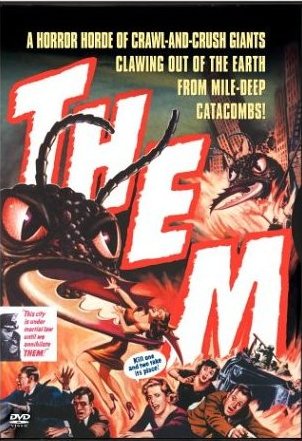
It didn’t take long. In the immediate aftermath of the dropping of the “victory weapon,” the atomic bomb, on two Japanese cities in August 1945, American fears and fantasies ran wild. Almost immediately, Americans began to reconceive themselves as potential victims of the bomb. In the scenarios of destruction that would populate newspapers, magazines, radio shows, and private imaginations, our cities were ringed with concentric circles of destruction and up to 10 million people in the U.S. and tens of millions elsewhere died horribly in a few days of imagined battle. Even victory, when it came in those first post-war years of futuristic dreams of destruction, had the look of defeat. And the two wartime American stories -- of triumphalism beyond imagining and ashes -- turned out to be incapable of cohabiting in the same forms. So the bomb fled the war movie (where it essentially never made an appearance) for the sci-fi flick in which stand-ins of every sort -- alien superweapons and radioactive reptilian and other mutant monsters -- destroyed the planet, endangered humanity, and pursued the young into every drive-in movie theater in the country.

As late as 1995, those two stories, the triumphalist end of “the Good War” and the disastrous beginning of the atomic age, still couldn’t inhabit the same space. In that 50th anniversary year, a planned exhibit at the National Air and Space Museum that was supposed to pair the gleaming fuselage of the Enola Gay, the B-29 that carried the first atomic bomb to Hiroshima, with the caramelized remains of a schoolchild's lunchbox (“No trace of Reiko Watanabe was ever found”) would be cancelled. The outrage from veterans' groups and the Republican right was just too much, the discomfort still too strong.

Until 1945, of course, the apocalypse had been the property of the Bible, and “end times” the province of God (and perhaps a budding branch of pulp lit called science fiction), but not of humanity. Since then, it’s been ours, and as it turned out, we were acting apocalyptically in ways that weren’t apparent in 1945, that weren’t attached to a single wonder weapon, and that remain difficult to grasp and even deal with now. With that in mind, and with thanks to Javier Navarro, we have adapted a video interview done with TomDispatch regular Noam Chomsky by What, the association Navarro helped to found. Reworked by Chomsky himself, it offers his thoughts on a perilous future that is distinctly in our hands. Tom

Humanity Imperiled: The Path to Disaster

by Noam Chomsky


How to Destroy a Planet Without Really Trying


There have been a range of reactions. There are those who are trying hard to do something about these threats, and others who are acting to escalate them. If you look at who they are, this future historian or extraterrestrial observer would see something strange indeed. Trying to mitigate or overcome these threats are the least developed societies, the indigenous populations, or the remnants of them, tribal societies and first nations in Canada. They’re not talking about nuclear war but environmental disaster, and they’re really trying to do something about it.

In fact, all over the world -- Australia, India, South America -- there are battles going on, sometimes wars. In India, it’s a major war over direct environmental destruction, with tribal societies trying to resist resource extraction operations that are extremely harmful locally, but also in their general consequences. In societies where indigenous populations have an influence, many are taking a strong stand. The strongest of any country with regard to global warming is in Bolivia, which has an indigenous majority and constitutional requirements that protect the “rights of nature.”

Ecuador, which also has a large indigenous population, is the only oil exporter I know of where the government is seeking aid to help keep that oil in the ground, instead of producing and exporting it -- and the ground is where it ought to be.

Venezuelan President Hugo Chavez, who died recently and was the object of mockery, insult, and hatred throughout the Western world, attended a session of the U.N. General Assembly a few years ago where he elicited all sorts of ridicule for calling George W. Bush a devil. He also gave a speech there that was quite interesting. Of course, Venezuela is a major oil producer. Oil is practically their whole gross domestic product. In that speech, he warned of the dangers of the overuse of fossil fuels and urged producer and consumer countries to get together and try to work out ways to reduce fossil fuel use. That was pretty amazing on the part of an oil producer. You know, he was part Indian, of indigenous background. Unlike the funny things he did, this aspect of his actions at the U.N. was never even reported.

So, at one extreme you have indigenous, tribal societies trying to stem the race to disaster. At the other extreme, the richest, most powerful societies in world history, like the United States and Canada, are racing full-speed ahead to destroy the environment as quickly as possible. Unlike Ecuador, and indigenous societies throughout the world, they want to extract every drop of hydrocarbons from the ground with all possible speed.

Both political parties, President Obama, the media, and the international press seem to be looking forward with great enthusiasm to what they call “a century of energy independence” for the United States. Energy independence is an almost meaningless concept, but put that aside. What they mean is: we’ll have a century in which to maximize the use of fossil fuels and contribute to destroying the world.

And that’s pretty much the case everywhere. Admittedly, when it comes to alternative energy development, Europe is doing something. Meanwhile, the United States, the richest and most powerful country in world history, is the only nation among perhaps 100 relevant ones that doesn’t have a national policy for restricting the use of fossil fuels, that doesn’t even have renewable energy targets. It’s not because the population doesn’t want it. Americans are pretty close to the international norm in their concern about global warming. It’s institutional structures that block change. Business interests don’t want it and they’re overwhelmingly powerful in determining policy, so you get a big gap between opinion and policy on lots of issues, including this one.

So that’s what the future historian -- if there is one -- would see. He might also read today’s scientific journals. Just about every one you open has a more dire prediction than the last.

“The Most Dangerous Moment in History”

The other issue is nuclear war. It’s been known for a long time that if there were to be a first strike by a major power, even with no retaliation, it would probably destroy civilization just because of the nuclear-winter consequences that would follow. You can read about it in the Bulletin of Atomic Scientists. It’s well understood. So the danger has always been a lot worse than we thought it was.

We’ve just passed the 50th anniversary of the Cuban Missile Crisis, which was called “the most dangerous moment in history” by historian Arthur Schlesinger, President John F. Kennedy’s advisor. Which it was. It was a very close call, and not the only time either. In some ways, however, the worst aspect of these grim events is that the lessons haven’t been learned.

What happened in the missile crisis in October 1962 has been prettified to make it look as if acts of courage and thoughtfulness abounded. The truth is that the whole episode was almost insane. There was a point, as the missile crisis was reaching its peak, when Soviet Premier Nikita Khrushchev wrote to Kennedy offering to settle it by a public announcement of a withdrawal of Russian missiles from Cuba and U.S. missiles from Turkey. Actually, Kennedy hadn’t even known that the U.S. had missiles in Turkey at the time. They were being withdrawn anyway, because they were being replaced by more lethal Polaris nuclear submarines, which were invulnerable.

So that was the offer. Kennedy and his advisors considered it -- and rejected it. At the time, Kennedy himself was estimating the likelihood of nuclear war at a third to a half. So Kennedy was willing to accept a very high risk of massive destruction in order to establish the principle that we -- and only we -- have the right to offensive missiles beyond our borders, in fact anywhere we like, no matter what the risk to others -- and to ourselves, if matters fall out of control. We have that right, but no one else does.

Kennedy did, however, accept a secret agreement to withdraw the missiles the U.S. was already withdrawing, as long as it was never made public. Khrushchev, in other words, had to openly withdraw the Russian missiles while the U.S. secretly withdrew its obsolete ones; that is, Khrushchev had to be humiliated and Kennedy had to maintain his macho image. He’s greatly praised for this: courage and coolness under threat, and so on. The horror of his decisions is not even mentioned -- try to find it on the record.

And to add a little more, a couple of months before the crisis blew up the United States had sent missiles with nuclear warheads to Okinawa. These were aimed at China during a period of great regional tension.

Well, who cares? We have the right to do anything we want anywhere in the world. That was one grim lesson from that era, but there were others to come.

Ten years after that, in 1973, Secretary of State Henry Kissinger called a high-level nuclear alert. It was his way of warning the Russians not to interfere in the ongoing Israel-Arab war and, in particular, not to interfere after he had informed the Israelis that they could violate a ceasefire the U.S. and Russia had just agreed upon. Fortunately, nothing happened.

Ten years later, President Ronald Reagan was in office. Soon after he entered the White House, he and his advisors had the Air Force start penetrating Russian air space to try to elicit information about Russian warning systems, Operation Able Archer. Essentially, these were mock attacks. The Russians were uncertain, some high-level officials fearing that this was a step towards a real first strike. Fortunately, they didn’t react, though it was a close call. And it goes on like that.

What to Make of the Iranian and North Korean Nuclear Crises

At the moment, the nuclear issue is regularly on front pages in the cases of North Korea and Iran. There are ways to deal with these ongoing crises. Maybe they wouldn’t work, but at least you could try. They are, however, not even being considered, not even reported.

Take the case of Iran, which is considered in the West -- not in the Arab world, not in Asia -- the gravest threat to world peace. It’s a Western obsession, and it’s interesting to look into the reasons for it, but I’ll put that aside here. Is there a way to deal with the supposed gravest threat to world peace? Actually there are quite a few. One way, a pretty sensible one, was proposed a couple of months ago at a meeting of the non-aligned countries in Tehran. In fact, they were just reiterating a proposal that’s been around for decades, pressed particularly by Egypt, and has been approved by the U.N. General Assembly.

The proposal is to move toward establishing a nuclear-weapons-free zone in the region. That wouldn’t be the answer to everything, but it would be a pretty significant step forward. And there were ways to proceed. Under U.N. auspices, there was to be an international conference in Finland last December to try to implement plans to move toward this. What happened?

You won’t read about it in the newspapers because it wasn’t reported -- only in specialist journals. In early November, Iran agreed to attend the meeting. A couple of days later Obama cancelled the meeting, saying the time wasn’t right. The European Parliament issued a statement calling for it to continue, as did the Arab states. Nothing resulted. So we’ll move toward ever-harsher sanctions against the Iranian population -- it doesn’t hurt the regime -- and maybe war. Who knows what will happen?

In Northeast Asia, it’s the same sort of thing. North Korea may be the craziest country in the world. It’s certainly a good competitor for that title. But it does make sense to try to figure out what’s in the minds of people when they’re acting in crazy ways. Why would they behave the way they do? Just imagine ourselves in their situation. Imagine what it meant in the Korean War years of the early 1950s for your country to be totally leveled, everything destroyed by a huge superpower, which furthermore was gloating about what it was doing. Imagine the imprint that would leave behind.

Bear in mind that the North Korean leadership is likely to have read the public military journals of this superpower at that time explaining that, since everything else in North Korea had been destroyed, the air force was sent to destroy North Korea’s dams, huge dams that controlled the water supply -- a war crime, by the way, for which people were hanged in Nuremberg. And these official journals were talking excitedly about how wonderful it was to see the water pouring down, digging out the valleys, and the Asians scurrying around trying to survive. The journals were exulting in what this meant to those “Asians,” horrors beyond our imagination. It meant the destruction of their rice crop, which in turn meant starvation and death. How magnificent! It’s not in our memory, but it’s in their memory.

Let’s turn to the present. There’s an interesting recent history. In 1993, Israel and North Korea were moving towards an agreement in which North Korea would stop sending any missiles or military technology to the Middle East and Israel would recognize that country. President Clinton intervened and blocked it. Shortly after that, in retaliation, North Korea carried out a minor missile test. The U.S. and North Korea did then reach a framework agreement in 1994 that halted its nuclear work and was more or less honored by both sides. When George W. Bush came into office, North Korea had maybe one nuclear weapon and verifiably wasn’t producing any more.

Bush immediately launched his aggressive militarism, threatening North Korea -- “axis of evil” and all that -- so North Korea got back to work on its nuclear program. By the time Bush left office, they had eight to 10 nuclear weapons and a missile system, another great neocon achievement. In between, other things happened. In 2005, the U.S. and North Korea actually reached an agreement in which North Korea was to end all nuclear weapons and missile development. In return, the West, but mainly the United States, was to provide a light-water reactor for its medical needs and end aggressive statements. They would then form a nonaggression pact and move toward accommodation.

It was pretty promising, but almost immediately Bush undermined it. He withdrew the offer of the light-water reactor and initiated programs to compel banks to stop handling any North Korean transactions, even perfectly legal ones. The North Koreans reacted by reviving their nuclear weapons program. And that’s the way it’s been going.

It’s well known. You can read it in straight, mainstream American scholarship. What they say is: it’s a pretty crazy regime, but it’s also following a kind of tit-for-tat policy. You make a hostile gesture and we’ll respond with some crazy gesture of our own. You make an accommodating gesture and we’ll reciprocate in some way.

Lately, for instance, there have been South Korean-U.S. military exercises on the Korean peninsula which, from the North’s point of view, have got to look threatening. We’d think they were threatening if they were going on in Canada and aimed at us. In the course of these, the most advanced bombers in history, Stealth B-2s and B-52s, are carrying out simulated nuclear bombing attacks right on North Korea’s borders.

This surely sets off alarm bells from the past. They remember that past, so they’re reacting in a very aggressive, extreme way. Well, what comes to the West from all this is how crazy and how awful the North Korean leaders are. Yes, they are. But that’s hardly the whole story, and this is the way the world is going.

It’s not that there are no alternatives. The alternatives just aren’t being taken. That’s dangerous. So if you ask what the world is going to look like, it’s not a pretty picture. Unless people do something about it. We always can.

 
Noam Chomsky is Institute Professor Emeritus in the MIT Department of Linguistics and Philosophy. A TomDispatch regular, he is the author of numerous best-selling political works, including Hopes and Prospects, Making the Future, and most recently (with interviewer David Barsamian), Power Systems: Conversations on Global Democratic Uprisings and the New Challenges to U.S. Empire (The American Empire Project, Metropolitan Books).

[Note: This piece was adapted (with the help of Noam Chomsky) from an online video interview done by the website What, which is dedicated to integrating knowledge from different fields with the aim of encouraging the balance between the individual, society, and the environment.]

Follow TomDispatch on Twitter and join us on Facebook or Tumblr. Check out the newest Dispatch book, Nick Turse’s The Changing Face of Empire: Special Ops, Drones, Proxy Fighters, Secret Bases, and Cyberwarfare.

Copyright 2013 Noam Chomsky

Bradley Manning and the Ghost of Osama bin Laden


Osama bin Laden's Ghost 

by Tim King - Salem-News.com

SACRAMENTO, CA - How many Americans know Osama bin Laden denied being connected to the attacks on the United States, Sept. 11th 2001? Is it possible to imagine a terrorist going to that much effort, knowing full well that the one and only result would be an attack on an unprecedented scale against two Middle eastern countries... and failing to claim it?

The man, bin Laden, didn't deny it once, he denied it over and over again but the United States media and press failed to divulge it in any meaningful way. George W. Bush told the public bin Laden claimed the act on the very same days that bin Laden issued statements saying he had nothing to do with it.

Then, as if on cue, he would materialize in the 'bin Laden tapes' and Bush and Cheney would release them, always at key times to deflect attention from real issues. Obama played along and secured his second election for having captured and killed bin Laden, don't believe it for a second.


"As a Muslim, I try my best to avoid telling a lie. I had no knowledge of these attacks, nor do I consider the killing of innocent women, children, and other human beings as an appreciable act." - bin Laden

Now prosecutors in the Bradley Manning trial say Manning had directly communicated with bin Laden. That's pretty interesting, did he use a seance? Regardless of the non-illustrious lies of the Bush and Obama administrations, Usama or "Osama" as the west likes to refer to him, has been a dead man walking for many years.

Strong evidence points to bin Laden having been killed during the Northern Alliance period in the final days of 2001. It happened in the caves at Tora Bora during a series of ferocious attacks at the onset of the long running war in Afghanistan.

I have spoken to two U.S. Army Special Forces operators who were there, and while neither positively identified the body of this most wanted terrorist, they strongly believed that they successfully targeted his location. The terrorist's remains were sealed up in a collapsed cave.

As you will note in the links below to past articles, there is another source that claims bin Laden's death was more recent, approximately six years ago.

I was in Jalalabad, Afghanistan in 2007, in bin Laden's former training camp that the Afghan National Army (ANA) controls today. Here I had a first hand opportunity to talk to people and learn what they knew about this notorious war lord who helped free the people of Afghanistan from a ten-year Soviet occupation that in spite of its brutality, failed to claim as many lives as the U.S. war on Iraq alone.

Real, documented, highly uncomfortable facts fail to properly boost political agendas of war. Usama bin Laden is a ghost. I find it beyond incredible that people don't take into account the fact that bin Laden clearly and unequivocally denied any role in the attacks. The first noted account of bin Laden's public communication about 9/11 came the day after September 11th, when a spokesman for bin Laden expressly denied his having any involvement in the attacks, as noted by History Commons. Their information about the particular statements from bin Laden below, are set in blue blockquotes.

September 12, 2001: Aide Says Bin Laden Denies Role in 9/11 Attacks


A close aide to Osama bin Laden reports that bin Laden denies any role in the previous day’s attacks on the United States, but has praised those responsible for them. [Associated Press, 9/12/2001] The aide, one of bin Laden’s senior lieutenants, speaks by satellite telephone with Palestinian journalist Jamal Ismail, who is the Islamabad bureau chief of Abu Dhabi Television. [Associated Press, 9/12/2001; Daily Telegraph, 9/13/2001] Ismail has long-standing ties with bin Laden and has conducted several interviews with him over the last few years. [Associated Press, 9/13/2001] The aide, who does not want to be publicly named, calls Ismail early in the day from a hideout somewhere in Afghanistan. He quotes bin Laden as calling the attacks on the US “punishment from almighty Allah” for America’s attempt to “control the entire world by force.” He tells Ismail, “Osama bin Laden thanked Almighty Allah and bowed before him when he heard this news [of the attacks].” But, the aide says, bin Laden has stated, “I have no information about the attackers or their aims and I don’t have any links with them.” [Associated Press, 9/12/2001; Daily Telegraph, 9/13/2001; Reuters, 9/13/2001; BBC, 9/14/2001] Yesterday it was reported that a million people have died from heroin overdoses since the U.S. launched its war in Afghanistan, the heroin capital of the world. It is the United States that brought crack to the streets of America during Reagan's years of supporting the Contra's in their quest to murder the peasants, reprented by the Sandinista's. The U.S. has not just blood dripping permanently from its hands, it also has the stain of being responsible for the very existence of deadly drugs. All of this plays into the bin Laden story and the years of occupational war in Afghanistan. A statement was issued by the Taliban on 13th Sept. 2001, confirming the same thing, that bin Laden was not involved in the 9/11 attacks. Remember that Taliban had relations with the United States, they were attempting to secure funds from Union 76 for the notorious, failed pipeline project, and Taliban leaders visited George W. Bush in Texas at his request, when he was the governor of that state. The Bush family knew the Taliban and through their oil fortunes, had a direct connection to the bin Laden family of Saudi Arabia.

September 13, 2001: Taliban Says Bin Laden Denies Role in 9/11 Attacks


Mullah Abdul Salam Zaeef.
[Source: Robert Nickelsberg / Getty Images]


Afghanistan’s ruling Taliban says that Osama bin Laden has told them he played no role in the September 11 attacks on the United States. Mullah Abdul Salam Zaeef, the Taliban ambassador to Pakistan, tells Reuters, “We asked from him, [and] he told [us] we don’t have any hand in this action.” [Reuters, 9/13/2001] Zaeef says bin Laden has been cut off from all outside communication, including telephone and the Internet, and so it would have been impossible for him to have coordinated the attacks. [Reuters, 9/13/2001; Los Angeles Times, 9/15/2001] Zaeef says the Taliban is willing to cooperate with the US in investigating the 9/11 attacks, stating, “We are ready for any help according to [Islamic] Sharia law.” But he stresses that if America has any evidence against bin Laden, it should provide it to the Taliban, which has sheltered him as a “guest.” [Reuters, 9/13/2001]

The statement I have been most familiar with in recent years is the next, from al Jazeera, and consequently carried by the mainstream agencies like CNN and The BBC.

September 16, 2001: Bin Laden, in Statement Read on Al Jazeera, Denies Involvement in 9/11 Attacks


Osama bin Laden, the exiled Saudi multimillionaire considered by the United States to be the prime suspect for the 9/11 attacks, issues a statement through the Arabic satellite television channel Al Jazeera, in which he denies responsibility for those attacks. [CNN, 9/17/2001; Washington Post, 9/17/2001] In the statement, which is read out by an Al Jazeera announcer, bin Laden says: “The US government has consistently blamed me for being behind every occasion its enemies attack it. I would like to assure the world that I did not plan the recent attacks, which seems to have been planned by people for personal reasons. I have been living in the Islamic emirate of Afghanistan and following its leaders’ rules. The current leader does not allow me to exercise such operations.” The statement is signed “Sheik Osama bin Laden.” [Associated Press, 9/16/2001; CNN, 9/17/2001] President Bush dismisses bin Laden’s denial. Asked whether he believes it, Bush responds: “No question he is the prime suspect. No question about that.” [White House, 9/16/2001; Baltimore Sun, 9/17/2001] Vice President Dick Cheney says he has “no doubt that [bin Laden] and his organization played a significant role” in the 9/11 attacks. [NBC, 9/16/2001; Washington Post, 9/17/2001] On this day, bin Laden also faxes a statement to the Afghan Islamic Press (AIP) agency, in which he denies responsibility for the 9/11 attacks (see September 16, 2001). [Guardian, 9/17/2001] Previously, on September 12, he denied any involvement, according to a close aide of his (see September 12, 2001). [Associated Press, 9/13/2001] On September 13, Afghanistan’s ruling Taliban said bin Laden told them he had played no role in the attacks (see September 13, 2001). [Reuters, 9/13/2001] But in mid-December 2001, the Pentagon will release a video which apparently shows bin Laden indicating his complicity (see Mid-November 2001). [BBC, 12/14/2001; Fox News, 12/14/2001] However, there will be questions about the authenticity of this film (see December 13, 2001). [Guardian, 12/15/2001] This is an item that I discovered a few months ago and republished on Salem-News.com, it was an eye opening, more expanded version of bin Laden's denial of any connection to 9/11.

September 28, 2001: Bin Laden Again Denies Involvement in 9/11 Attacks


Osama bin Laden denies his involvement in the 9/11 attacks. In an interview with the Daily Ummat, a Pakistani newspaper, he says: “I have already said that I am not involved in the September 11 attacks in the United States (see September 16, 2001). As a Muslim, I try my best to avoid telling a lie. I had no knowledge of these attacks, nor do I consider the killing of innocent women, children, and other human beings as an appreciable act. Islam strictly forbids causing harm to innocent women, children, and other people. Such a practice is forbidden even in the course of battle.… The United States should try to trace the perpetrators of these attacks within itself; the people who are a part of the US system but are dissenting against it. Or those who are working for some other system; persons who want to make the present century as a century of conflict between Islam and Christianity so that their own civilization, nation, country, or ideology can survive. They may be anyone, from Russia to Israel and from India to Serbia. In the US itself, there are dozens of well-organized and well-equipped groups capable of causing large-scale destruction. Then you cannot forget the American Jews, who have been annoyed with President Bush ever since the Florida elections and who want to avenge him.… Then there are intelligence agencies in the US, which require billions of dollars worth of funds from Congress and the government every year.… They needed an enemy.… Is it not that there exists a government within the government in the United Sates? That secret government must be asked who carried out the attacks.” [Daily Ummat (Karachi), 9/28/2001] The newspaper says it conducted the interview with bin Laden by submitting questions for him to Taliban officials and then receiving written replies. [Ananova, 9/28/2001] There is no question that bin Laden applauded the attacks on the United States, he said that the United States would not know security until the Palestinians have it. What this means, is that the blind, endless support of Israel is what is at the root of all Islamic hatred of America. Israel took the land it possesses militarily, and has been in the ethnic cleansing business for years. Israel has separate laws for Jews and non-Jews. It even has Jewish-only roads for colonizing settlers. Similarly, criticism of Israel's treatment of the indigenous Palestinians was the last thing Saddam Hussein talked about before being executed.

October 7, 2001: Bin Laden Issues Video, Warning the US, but Does Not Claim Responsibility for 9/11


Bin Laden appears on Al Jareeza, in
a taped statement broadcast shortly
after US-led strikes on Afghanistan
begin. [Source: Al Jazeera]


In a recorded statement broadcast on television worldwide, Osama bin Laden issues a strongly worded message to the United States, but makes no claim of responsibility for 9/11. The recording is broadcast on the Al Jazeera television network within an hour of the first US strikes on Afghanistan, and is then shown by CNN. There is no date on the tape and no immediate way of determining where it was made. [New York Times, 10/8/2001] Bin Laden is shown sitting in a stone cave. His top deputy, Ayman al-Zawahiri, appears at his side. [Associated Press, 10/8/2001] Referring to the 9/11 attacks, bin Laden says, “What the United States tastes today is a very small thing compared to what we have tasted for tens of years.” He praises those responsible, saying, “I ask God Almighty to elevate their status and grant them paradise.” [BBC, 10/7/2001] It is the first time he has spoken publicly about 9/11. But he makes no claim in his statement of having been responsible for the attacks. [Associated Press, 10/8/2001] He has previously explicitly denied responsibility for 9/11 (see September 16, 2001 and September 28, 2001). Bin Laden concludes his message warning, “[N]either the United States nor he who lives in the United States will enjoy security before we can see it as a reality in Palestine and before all the infidel armies leave the land of Mohammed.” [BBC, 10/7/2001] The following day, White House press secretary Ari Fleischer will tell reporters that, after watching this message, President Bush concluded that bin Laden “virtually took responsibility” for 9/11. [CNN, 10/8/2001] It is such an easy ploy to see through. The U.S. government counts on the American public to simply refuse to believe such an act, bringing a dead terrorist's image to life over and over, because it is unconscionable. But the average Joe forgets that this government has lied over and over throughout history, because the 'government' is a body of people making decisions, and the ones made in small groups behind closed doors accomplish far more of a direction for this country than anyone would like to admit. America's reputation has been drug through the mud time and time again, and Usama bin Laden's alleged connection to 9/11 is the kind of deceit that could bring a nation to its knees, if the public ever truly grasped the idea, and all the while, as this article shows, we are literally swamped with information proving at minimum, that bin Laden did not in fact, claim to have anything to do with the terrorist attacks. He also vividly outlined how it was crucial that he not carry out any acts of this nature. Taliban leaders at the time offered to turn bin Laden over if the U.S. could provide any proof at all of this man's role in 9/11. Another item that would shock most Americans, is the fact that bin Laden was never officially named as a suspect in the Sept. th attacks.

Mid-November 2001: Bin Laden ‘Confession’ Video Made, according to US


Khaled al-Harbi (right) talking to Osama bin Laden
or one of his doubles.
[Source: US Department of Defense]


A conversation between Osama bin Laden, Ayman al-Zawahiri, al-Qaeda spokesman Suliman abu Ghaith, and Khaled al-Harbi, a veteran of al-Qaeda’s jihad in Bosnia, is videotaped. A portion of the taped conversation is later said to be found by the US and will be used as evidence of bin Laden’s involvement in 9/11. [Unknown, 2001; Guardian, 12/13/2001; Kohlmann, 2004, pp. 28-9] According to a translation released by the Pentagon, the man said to be bin Laden says: “[W]e calculated in advance the number of casualties from the enemy, who would be killed based on the position of the tower. We calculated that the floors that would be hit would be three or four floors. I was the most optimistic of them all… (inaudible)… due to my experience in this field, I was thinking that the fire from the gas in the plane would melt the iron structure of the building and collapse the area where the plane hit and all the floors above it only. This is what we had hoped for.” He continues: “We had notification since the previous Thursday that the event would take place that day. We had finished our work that day and had the radio on. It was 5:30 p.m. our time.… Immediately, we heard the news that a plane had hit the World Trade Center. We turned the radio station to the news from Washington.… At the end of the newscast, they reported that a plane just hit the World Trade Center.… After a little while, they announced that another plane had hit the World Trade Center. The brothers who heard the news were overjoyed by it.” [US Department of Defense, 12/13/2001 ]

The release of the tape, which is said to be found by US intelligence officers in Jalalabad, will be a major news story, and the tape will be taken by the media as proof of bin Laden’s responsibility for 9/11. President Bush will comment, “For those who see this tape, they’ll realize that not only is he guilty of incredible murder, he has no conscience and no soul, that he represents the worst of civilization.” British Foreign Secretary Jack Straw will add, “By boasting about his involvement in the evil attacks, bin Laden confirms his guilt.” [BBC, 12/14/2001; Fox News, 12/14/2001; CNN, 12/16/2001] However, the tape will later be disputed from three points of view:
The accuracy of the translation will be questioned (see December 20, 2001). For example, the man thought to be bin Laden does not say “we calculated in advance the number of casualties,” but “we calculated the number of casualties”;
An analyst will conclude that the tape was actually made earlier as a part of a US-run sting operation (see (September 26, 2001));
Some commentators will question whether the person in the video is actually bin Laden (see December 13, 2001). In mid-2002, Al Jazeera reporter Yosri Fouda will allegedly interview al-Qaeda figures Ramzi bin al-Shibh and Khalid Shaikh Mohammed (see April, June, or August 2002). In a 2003 book he will co-write, Fouda will claim that he asked an unnamed al-Qaeda operative who was setting up the interview if the bin Laden video was fake. This person will supposedly reply: “No. The tape, the brothers said—I am not sure whether they left it behind or not—but the Sheikh [bin Laden], yes, was talking to someone from Mecca.” [Fouda and Fielding, 2003, pp. 135] I've written before about how Jalalabad, Afghanistan is loaded with men who dress and look like the notorious terrorist leader. You just have to drive down the main street to see how remarkably similar so many men look to Usama bin Laden. This Mujahideen leader adopted the culture of this part of Afghanistan. A body double would be no trouble, there must have been many - and they weren't receiving pay from the CIA to perform the role.

December 13, 2001: Authenticity of Bin Laden ‘Confession’ Video Is Disputed


The man in the picture on the left is supposed to
be bin Laden in October 2001. The picture on the
right is undisputendly bin Laden in December
[Source: Reuters]


Following the release of a home video in which Osama bin Laden apparently confesses to involvement in 9/11 (see Mid-November 2001), some commentators question its authenticity, as a number of strange facts about the video soon emerge. For example, all previous videos had been made with the consent of bin Laden, and usually released to the Arabic television channel Al Jazeera. This video was supposedly recorded without his knowledge, found in a house in Afghanistan, and then passed to the CIA by an unknown person or group. Experts point out that it would be possible to fake such a video. So many people doubt the video’s authenticity that President Bush soon makes a statement, saying it was “preposterous for anybody to think this tape was doctored. Those who contend it’s a farce or a fake are hoping for the best about an evil man.” [Guardian, 12/15/2001] Some commentators will suggest that the person thought to be bin Laden is not actually the al-Qaeda leader. For example, arabist Kevin Barrett will say that the person in the video is “at least 40 or 50 pounds heavier, and his facial features [are] obviously different.” [Capital Times (Madison), 2/14/2006] The man said to be bin Laden also makes some questionable statements in the video:
“I was thinking that the fire from the gas in the plane would melt the iron structure of the building…” [US Department of Defense, 12/13/2001 ] The jet fuel spilled from the planes burned up about 10 minutes after impact (see 8:57 a.m. September 11, 2001), the towers’ structure did not melt (see September 12, 2001-February 2002), and the towers were not made of iron, but steel. [National Institute of Standards and Technology, 9/2005, pp. 6] Bin Laden had studied civil engineering at university and had experience as a construction contractor. [Burke, 2004, pp. 47; Laden, 2005, pp. xii-xiii] It is unclear why he would think the towers were made of iron.
“We did not reveal the operation to [the brothers who conducted the operation] until they are there and just before they boarded the planes.” [US Department of Defense, 12/13/2001 ] All the hijackers purchased tickets for the 9/11 flights about two weeks in advance (see August 25-September 5, 2001). The six plot leaders had flight training (see July 6-December 19, 2000, (June 28-December 2000), January-February 2001, and May 5 and 10, 2000), and some of the other 13 are thought to have assisted with target surveillance and casing flights (see May 24-August 14, 2001, August 1, 2001, June 2001 and August 2001).
“Those who were trained to fly didn’t know the others. One group of people did not know the other group.” [US Department of Defense, 12/13/2001 ] The opposite is true: the pilots intermingled with the muscle and the teams for the various planes mixed (see April 23-June 29, 2001, April 12-September 7, 2001, and June 27-August 23, 2001).
There are reports that bin Laden had from four to ten look-alike doubles at the time. [Agence France-Presse, 10/7/2001; London Times, 11/19/2001] Ask the question, "Why would anyone attack the United States, of all places, with a hot button president like George W. Bush in office?" You will not find any suitable answers. The only possible reaction to such an attack would be what it was, the unwarranted deaths of hundreds and hundreds of thousands of Middle eastern people. What kind of a war hero would bring that kind of wrath to the people of a place they adopted as their home? You are to believe that these massive 9/11 attacks were conducted from a cave, by a man dying from kidney failure - well documented at the time, who totally denied having anything to do with it. No way. Then you have the whole WMD fiasco in Iraq...

December 26, 2001: Bin Laden Again Denies 9/11 Involvement, but Praises Hijackers


Osama bin Laden making
his “Nineteen Students” speech.
[Source: Al Jazeera]


Osama bin Laden makes a new video statement about 9/11, again denying the US has enough evidence against him to warrant an attack on Afghanistan (see September 16, 2001 and September 28, 2001), which he calls “a vicious campaign based on mere suspicion.” However, in what Professor Bruce Lawrence calls “his most extended and passionate celebration of the hijackers of 9/11,” he praises the 19 who carried out “the blessed strikes against global unbelief and its leader America.” He says of the hijackers, “It was not nineteen Arab states that did this deed. It was not Arab armies or ministries who humbled the oppressor who harms us in Palestine and elsewhere. It was nineteen post-secondary school students—I beg Allah almighty to accept them—who shook America’s throne, struck its economy right in the heart, and dealt the biggest military power a mighty blow, by the grace of Allah Almighty.” He continues by saying that the hijackers “are the people who have given up everything for the sake of ‘There is no Allah but Allah.’” He also criticizes Israel’s occupation of Palestine, and suggests that Israel is trying to expand its borders to Medina, currently in Saudi Arabia. Bin Laden also attacks the sanctions against Iraq, which he notes have resulted in “the murder of over a million children.” [Laden, 2005, pp. 145-157] Bin Laden’s left arm appears to be injured in the video, fueling speculation he was wounded in the battle for Afghanistan [CNN, 7/23/2002] No new videotapes of Bin Laden speaking are released for nearly three years after this (see October 29, 2004). [BBC, 10/30/2004]


Lest we forget the bogus account of Navy SEAL's capturing and killing bin Laden in Abbotobad, Pakistan. There is a long list of reasons he could not possibly have been there, the man had a huge price tag on his head, people believe widely that he helped bring a major disruption to the region in terms of a U.S. military occupation, he was dying of kidney failure years earlier, and would have had to have received years of dialysis treatment in a cave to have survived very long after 9/11 at all.

Remember that the majority of the Navy SEAL's involved in that operation must have believed they were actually going to capture the man. Remember too that the majority of that SEAL team died in a helicopter crash in Afghanstan shortly after the alleged bin Laden killing, that was in fact, the largest loss of life in a single aircraft incident in the entire war, what were the odds? I don't think that their deaths were a coincidence. I have great respect for Navy SEAL's and in no way believe they are part of the deception.

The analogy of bin Laden attacking the most populated U.S. city and national capital, would be a person living in a gang neighborhood murdering a couple of members of the larger gang, knowing that retribution would be their own family and friend's imminent destruction.

I guess we have to assume that even bin Laden himself was baffled into believing that the 19 students were actually responsible for the tragedy of 9/11. I must admit it has been a journey, as the various articles I have written about this man over the years reflect.

Invoking the image of a dead man to wage what really amounts to WWIII, is one of the gravest evils in modern history.

http://www.historycommons.org/context.jsp?item=a091201aidedenies#a091201aidedenies

Articles by Tim King about bin Laden:

May-01-2013: Rumsfeld Announced $2.3 TRILLION Was Missing from Pentagon One Day Before 9/11

Feb-21-2013: Waging War Over Natural Gas

Feb-03-2013: Another Navy SEAL, Another Violent Death

Dec-17-2012: 'Tere Bin Laden' is Paralyzingly Funny! (Unlike the True Story)

Sep-11-2012: SEALed & Delivered: Account of Abbottabad Ensnares Obama in Impossible bin Laden Scenario

Sep-11-2012: 9/11 Hijackers Passports were Issued by CIA - US Consulate Whistleblower

Jul-19-2012: Former CIA Agent Publicly States: Osama bin Laden Died Five Years Ago

Jun-19-2012: Bombshell: Newly Released CIA Documents Prove Bush Could have Killed Bin Laden; Prevented 911

May-07-2012: Abandoning Afghanistan, Great Job America

Sep-08-2011: Ahmad Massoud: the Lion in the Path of Understanding 9/11

Sep-03-2011: Gearing Up for 911

Jul-16-2010: The Tragic Red Sacrifice in Afghanistan

May-06-2011: 'Lion Sheik' bin Laden and the Confused American Public

May-01-2011: Osama Bin Laden's Death Claimed, But How Does One Kill a Corpse?

Jan-21-2011: Terrorism by the Numbers

Aug-01-2010: Great American Heroes: Ho Chi Minh, Saddam Hussein and Osama bin Laden

Jun-18-2010: A Colorado Ex-Con's Quest to Kill bin Laden

Sep-11-2007: Afghanistan: Is Osama bin Laden Alive and Well? (VIDEO)

Kerry's Plan for Palestine: Barter Statehood for "Economic Peace"

US lays trap for Palestinians - John Kerry’s plan: Palestinians to be cast as fall guys – again

by Jonathan Cook in Nazareth - Redress

Under heavy pressure from the US, the Israeli prime minister, Binyamin Netanyahu, has paid grudging lip service over the past four years to the goal of Palestinian statehood. But his real agenda was always transparent: not statehood, but what he termed “economic peace”.

Ordinary Palestinians, in Netanyahu’s view, can be pacified with crumbs from the master’s table: fewer checkpoints, extra jobs and trading opportunities, and a gradual, if limited, improvement in living standards. All of this buys time for Israel to expand the settlements, cementing its hold over the West Bank and East Jerusalem.

After 20 years of pursuing Palestinian statehood implied in the Oslo accords, the US indicated last week it was switching horses. It appears to be adopting Netanyahu’s model of “economic peace”.

After 20 years of pursuing Palestinian statehood implied in the Oslo accords, the US indicated last week it was switching horses. It appears to be adopting Netanyahu’s model of “economic peace”.

The US secretary of state, John Kerry, flanked by the Israeli president, Shimon Peres, and the Palestinian Authority (PA) chairman, Mahmoud Abbas, at the World Economic Forum in Jordan, revealed an economic programme for getting peace talks on track.

Some 300 Israeli and Palestinian business people were on board, he said, and would invest heavily in the Palestinian economy in a venture that was “bigger, bolder and more ambitious than anything since the Oslo accords”.

No more details were forthcoming, except that it will be overseen by Tony Blair, Britain’s former prime minister who has been the Quartet representative, the international community’s “man in Jerusalem”, since 2007.

He is a strange choice indeed, given that the Palestinian leadership has publicly dismissed him as “Israel’s defence attorney” and privately argued – as revealed in the Palestine Papers leaked in 2011 – that he advocates “an apartheid-like approach to dealing with the occupied West Bank”.

Kerry’s claims for his programme were grand yet vague. Some four billion US dollars in private investment over three years would boost the Palestinian economy by 50 per cent; agricultural production and tourism would triple; unemployment fall by two-thirds; wages rise by 40 per cent; and 100,000 homes would be built.

But the proposal left few impressed, and for good reason.

“We are not animals that only want food. We are a people struggling for freedom.” (Abdallah Abdallah, senior Fatah official)

Kerry is simply repackaging the task Blair was entrusted with six years ago. His job has been to develop the Palestinian economy and build up Palestinian institutions in preparation for eventual statehood, so far to little effect.

As David Horovitz, editor of the right-wing Times of Israel newspaper, scoffed: “If there was four billion dollars to be had in private investment in the Palestinian economy, you can rest assured that Tony Blair would have found it.”

Or seen another way, the Palestinian economy’s problem is not a lack of investment; it is a lack of viable opportunities for investment. Palestinians have no control over their borders, airspace, radio frequencies, water and other natural resources, not even over the currency or internal movement of goods and people. Everything depends on Israel’s good will. And few investors will be prepared to bet on that. Israel has repeatedly shown itself more than ready to crush the PA’s finances by, for example, withholding Palestinian tax revenues it collects and is mandated to pass on.

Blair’s role has been heavily criticized because his narrow focus on economic development has not only failed to foster a climate conducive to talks but has served as cover for Israel and Washington’s inaction on Palestinian statehood. Instead of rethinking Blair’s failed mandate, Kerry appears set on perpetuating and expanding it.

Abdallah Abdallah, a senior Fatah official, summed up the Palestinian response: “We are not animals that only want food. We are a people struggling for freedom”.

Israel, meanwhile, is only too ready to push Kerry down this hopeless path.

From Israel’s perspective, the US plan usefully distracts attention from the Arab Peace Initiative, the Arab states’ renewed offer last month of full diplomatic relations with Israel in return for its withdrawal from most of the occupied territories.

Abbas is facing intense pressure from the US, with the Kerry plan intended to leverage him into dropping his condition that Israel freeze settlement growth before negotiations restart.

Netanyahu, worried the offer might corner him into serious talks, has responded with stony silence. At the same time, Ya’ir Lapid, the supposedly centrist finance minister who was originally promoted by the West as a peacemaker, has squashed the idea of a deal with the Palestinians as unrealistic. He told the New York Times last month that he supported expanding the settlements.

Israel, it seems, hopes that the Palestinian Authority, now permanently mired in financial crisis, can be arm-twisted with promises of billions of dollars in sweeteners. According to Palestinian sources, Abbas is facing intense pressure from the US, with the Kerry plan intended to leverage him into dropping his condition that Israel freeze settlement growth before negotiations restart.

Israel is keen to win that concession. Despite reports that Netanyahu has quietly promised the Americans he will avoid embarrassing them for the next few weeks with announcements of settlement building, a rash of projects is in the pipeline.

At the weekend, media reports disclosed a plan for 300 new homes in East Jerusalem, while nearly 800 more are to be released for sale. Several settlement outposts established without authorization from the Israeli government are expected to be made legal retrospectively, including hundreds of homes in Eli, near Ramallah.

Reuters reported on 3 June that Kerry expects a decision on restarting peace talks within two weeks – or, his officials say, he will walk away from the peace process. He told a meeting of the American Jewish Committee the same day: “If we do not succeed now, we may not get another chance.”

…the real danger for the Palestinians… is that they are being set up as the fall guy. Should they refuse to sign up to the latest version of economic peace, Israel and the US will be only too ready to blame them for their intransigence.

For Netanyahu, such threats are hollow. If the US absents itself from the conflict, Israel will simply be left with a freer hand to intensify its subjugation of the Palestinians and the theft of their land.

Even though much more is at stake for the Palestinians, the PA has so far been quietly dismissive of the Kerry plan. It has stated it will not make “political concessions in exchange for economic benefits” – a diplomatic way of saying it will not be bribed to sell out on statehood.

But the real danger for the Palestinians, as they remember only too well from the 2000 Camp David talks, is that they are being set up as the fall guy. Should they refuse to sign up to the latest version of economic peace, Israel and the US will be only too ready to blame them for their intransigence.

This is win-win for Netanyahu, and another moment of disastrous slippage in the diplomatic process for the Palestinians.

Japan and China's Roiling Relations Bubbling Over


LDP Pro-China Wing Fires Back at Abe

by Peter Lee - China Matters

LDP’s Pro-China Wing Fires Back at Abe; More Yeast for the Nikkei; and More Confusion About the Ryukyus

It always seemed likely that, back in the Deng Xiaoping days, the PRC and Japan were eager to cut a deal for normalization of relations and, therefore, both sides would agree to put the Senkaku issue on the backburner.

The “set aside the Senkakus” sentiment was certainly the governing spirit at a press conference during Deng’s 1978 visit to Japan, as Ezra Vogel’s biography of Deng records (pg. 304 of the ebook):

When a reporter asked about the ownership of the Senkaku Islands, the audience became tense, but Deng replied that the Chinese and Japanese held different views, had different names for the islands, and should put the issue aside so that later generations, who would be wiser than those present, could solve the problem. The audience was visibly impressed…

In the amicable context of 1978, “putting the issue aside” would appear to mean “let’s discuss it later” which puts the issue well down the slippery slope of “an issue that can be discussed/an issue for discussion/an issue that is open to negotiation”.

Apparently, there wasn’t any public confirmation that this spirit informed the actual Sino-Japanese discussions behind closed doors.

Until now.

In an interesting development, a China-friendly LDP elder decided to go public with his recollections of the Japanese attitude toward the Senkakus during the period of normalization under Tanaka and Deng, in an apparent effort to restore the islands’ status as a topic of engagement rather than an excuse for self-righteous belligerence.

This creates some awkwardness for the Abe government, which has hung its hat on the position that the Senkakus have always and indubitably (at least since 1895 and disregarding the 1945-1952 hiatus of US occupation) belonged to Japan, the sovereignty of the sacred rocks has never been debased by inclusion in the greasy diplomatic dealings between Japan and China, we can do anything we want with them, if you want to talk about the Senkakus, talk to the hand, buster.

Reawakening memories of the time when discussions relating to the Senkakus were a matter of mutual amity probably also reflects the fact that the Chinese government is getting anxious about the downward spiral of PRC-Japan relations—and Prime Minister Abe’s success in building anti-China relationships with India, Vietnam, et. al.—and is interested in appearing less confrontational.

The Chinese charm offensive also includes a full-court press of high level cordiality at the Shangri-La defense confab and a rather frantic cozying up to the United States (including a request for the early Xi-Obama Sunnyland summit and, to sweeten the pot, more than the usual expressions of impatience with North Korea).

This gives President Obama at degree of leverage over the PRC that he has not enjoyed in the past.
The USA will take advantage of this favorable situation by forcibly torqueing Xi’s testicles on the matter of “cyberwarfare” and cyberespionage.

It will be interesting to see if President Obama also exploits China’s accommodating posture to “rebalance” the Pacific situation by tilting a little more toward China and away from Japan, or contents himself with a zero-sum win on cyber stuff.

Contradicting government, Tanaka confidant says two sides cut deal at time of normalization of ties

Senkaku row shelved in ’70s: Nonaka

Kyodo

Jun 5, 2013 BEIJING – In a new ripple to Japan’s assertion of ownership of the disputed Senkaku Islands in the East China Sea, former chief Cabinet Secretary Hiromu Nonaka said leaders from Japan and China had agreed to shelve the territory row when the two countries normalized relations in the early 1970s.

The remark by the former Liberal Democratic heavyweight, a disciple of the late Prime Minister Kakuei Tanaka, who cut the normalization deal with Beijing in 1972, contradicts the government’s official stance that there was no such agreement at the time.

Nonaka, who is leading a delegation of current and former Diet members on a visit to China, told reporters Monday, “Just after the normalization of relations, I was told clearly by then-Prime Minister Kakuei Tanaka that a decision was made on the normalization by shelving the Senkaku issue.

“As a living witness, I would like to make clear (what I heard),” Nonaka said after meeting in Beijing with Liu Yunshan, the fifth-ranked leader of the Chinese Communist Party.

Liu is said to have told the delegation that Japan is responsible for the current confrontation with China. Apparently aiming to have Japan acknowledge at least the existence of a bilateral territorial dispute, Liu also reportedly said he hopes to see a solution reached through dialogue between the two governments.

In Tokyo, top officials reiterated the government’s view that the Senkakus are not an issue Japan should put on the shelf since no territorial dispute exists.

“There is no truth (to the remark) that (Japan) agreed with China to shelve or maintain the status quo of the Senkaku Islands,” Chief Cabinet Secretary Yoshihide Suga said, reiterating Tokyo’s position that no territorial dispute exists.

Foreign Minister Fumio Kishida also repeated the same line: “It is not the case that to this day, we have agreed to shelve (the dispute), nor has there been a territorial dispute that should be shelved in the first place.”

Bubble Bubble Toil & Trouble

Looks like Prime Minister Abe is preparing additional bubbliciousness for the Nikkei and, perhaps, lucky stock exchanges in emerging markets:

Japan's government is set to urge the nation's public pension funds - a pool of over $2 trillion - to increase their investment in equities and overseas assets as part of a growth strategy being readied by Prime Minister Shinzo Abe, according to people with knowledge of the policy shift.

It seems that the Japanese government is going to make sure the Japanese stock market stays propped up by artificial means, at least until the Japanese economy restructures into that senior-citizen-fueled growth engine we've been told about, or the smart money cashes out, whichever comes first.

Hmmm. Should I be buying the Nikkei? shorting it?...or both?

Somebody Else Is Badly Confused About the China/Okinawa Issue

But it’s not AFP.

Can anybody tease out the contradiction of this headline from on line news site Japan Today:

China distances itself from claim it owns Okinawa

And the lede from the accompanying article, sourced from AFP?

A top Chinese general on Sunday sought to distance the country from claims by some of its scholars that the Ryukyu Islands, which include Okinawa, do not belong to Japan.

I hate to admit it, but this qualifies as supporting evidence for the “blogsites have lower standards than traditional news outlets” slam.

Japan Today is also guilty of not policing its Wikipedia entry which is a total rip job by somebody who obviously totally completely hates Japan Today.

Sample:
Claims of Universal Expertise Japan Today staff has been known to employ underhanded tactics to prevent criticisms of media incompetence. Often times they will intentionally ignore new or existing information and state that the only truth is their stance. They claim they are experts in all fields, including law, engineering, psychology, and politics.

…which, comes to think of it, also supports the “Wikipedia content can’t be trusted” slam.

Recently, the founder of Japan Today (no longer involved in operations) showed up on the Talk page to criticize the entry but, as of this writing, it’s still up there in all its glory.

On the other hand, for a good piece of bloginess on the Ryukyu/Okinawa issue, here’s a link to something I wrote on the LDP's Okinawa problem--and China's pleasure in stirring the pot.

June 5th Protect Sovereignty, Oppose Canada-China FIPA


June 5th Solidarity Rally to Oppose Canada-China FIPA

by Council of Canadians

On June 5th, at 12:30 pm, Idle No More, the Council of Canadians and Common Causes will be rallying outside MP James Lunny’s office (6-6894 Island Highway North Nanaimo - at Canadian Tire Plaza).

This is a solidarity rally to support the Hupacasath First Nation's court challenge against the Canada - China FIPA (Foreign Investment Promotion and Protection Agreement). The Hupacasath will be in federal court in Vancouver from June 5th to 7.

This 30 year 'corporate rights' agreement will allow corporations to sue governments for the loss of 'potential profits' when governments pass laws, measures or policies that are in the public interest or protect the environment but which restrict corporations. This 'corporate rights' deal will enshrine the race to the bottom in legal text - it needs to be stopped and we need to support the Hupacasath effort to do so on our behalf.

There's more information on the Council of Canadians website http://canadians.org/blog/?p=21093

The Hupacasth facebook invite to the Vancouver rally is here:
 https://www.facebook.com/events/358836414237678/?fref=ts

The Nanaimo Facebook invite is here
https://www.facebook.com/events/175962969235206/


(30)


Media Alert for immediate release

For More information contact:

Paul Manly
midislandcoc@gmail.com

What's Bakken and How is It Changing America's Energy Landscape?

Will Saudi Arabia Allow the U.S. Oil Boom? Interview with Chris Faulkner

by James Stafford - Oilprice.com

Technology, technology, and more technology—this is what has driven the American oil and gas boom starting in the Bakken and now being played out in the Gulf of Mexico revival, and new advances are coming online constantly. It's enough to rival the Saudis, if the Kingdom allows it to happen.

Along with this boom come both promise and fear and a fast-paced regulatory environment that still needs to find the proper balance.

In an exclusive interview with Oilprice.com, Chris Faulkner, CEO of Breitling Energy Companies—a key player in Bakken with a penchant for leading the new technology charge—discusses:
  • How Bakken has turned the US into an economic powerhouse
  • What the next milestone is for Three Forks
  • What Wall Street thinks of the key Bakken companies
  • Where the next Bakken could be
  • What to expect from the next Gulf of Mexico lease auction
  • What the intriguing new 4D seismic possibilities will unleash
  • What the linchpin new technology is for explorers
  • How the US can compete with Saudi Arabia
  • Why fossil fuel subsidies aren't subsidies
  • How natural gas is the bridge to US energy independence
  • Why fossil fuels shouldn't foot the bill for renewable energy
  • Why Keystone XL is important
  • Why the US WILL become a net natural gas exporter

James Stafford: How important are Bakken and Three Forks to US energy in the big picture?

Chris Faulkner: The Bakken Shale has been the biggest driver in America's reversal of decades of decline in oil production. It has transformed North Dakota into an economic powerhouse with the nation's lowest unemployment rate and fastest-growing GDP—and an oil production level surpassing that of some OPEC nations. An added increment of almost 800,000 barrels per day of oil output, built in less than a decade, has helped the US reduce its dependency on oil imports from often hostile countries by 22% since peaking in the mid-2000s.

US oil production is at its highest level since 1992, and in another 5 years, it is projected to reach its highest level since 1972. More importantly, the US oil production surge will help tamp down the possibility of chronically recurring oil supply shortages and help keep a lid on oil price spikes for the foreseeable future. Additionally, the Bakken surge is helping to narrow the spread between WTI and Brent, providing even more economic incentive to develop the costly unconventional resource plays.

James Stafford: The US government recently more than doubled its estimates for Bakken and Three Forks to 7.4 billion barrels of undiscovered and technically recoverable oil and 6.7 trillion cubic feet of natural gas. How is the industry responding to this? How are investors responding?

Chris Faulkner: Some operators had already been developing the Three Forks formation ahead of the USGS revised estimate for the Greater Bakken play. That drilling in fact provided much of the knowledge about the Three Forks that led to the USGS upgrade. We're already seeing stepped-up drilling in the Three Forks, and some of that will entail dual horizontal laterals, a real milestone that could yield spectacular IP rates. Accordingly, Wall Street analysts are upgrading their guidance on companies such as Continental Resources that are leading the Bakken charge.

James Stafford: What's the next Bakken?

Chris Faulkner: That's a tough one. In a sense, we've already seen it with the Three Forks reappraisal. But it would be exceedingly difficult to replicate the Bakken, with its vast areal extent and thick pays. Progress is being made with a modest level of drilling in the Tuscaloosa Marine Shale of southern Louisiana and Smackover Brown Dense Shale in southern Arkansas/northern Louisiana, but results have been somewhat spotty to date. Perhaps the best prospective candidate is the Cline Shale in the Texas Permian Basin. This shale covers a vast area, has very thick pay zones, and there is established infrastructure. Some estimates have put its technically recoverable resources at 30 billion barrels of oil. But it's very early days in that play. Devon Energy is moving aggressively there, and we should get some hints of its true potential before too long.

James Stafford: How excited should investors be about the Monterrey Shale?

Chris Faulkner: Some restraint is in order. While preliminary estimates put potential Monterey Shale technically recoverable resources at more than 15 billion barrels, it's hardly a slam dunk. There has been a flurry of leasing and some drilling to date, but as of yet no operator has “cracked the code” for the Monterey. Even apart from the substantial technical challenges and complicated geology and petrophysics, a bigger hurdle would be the widespread and entrenched anti-oil development attitudes industry faces in California, which already has the most stringent regulatory regime in the nation. Furthermore, that anti-oil stance will just gain momentum with the anti-frac campaign that the environmental pressure groups are pushing now.

James Stafford: The US government's next auction of Gulf of Mexico acreage is expecting a bigger turnout than previous auctions. How is the bidding environment shaping up ahead of this sale?

Chris Faulkner: Excellent. Even with the near tripling of minimum bid requirements in deepwater areas, I expect brisk bidding. Operators are fine-tuning their exploration strategies in the deepwater areas, and some recent significant discoveries, such as ConocoPhillips's huge Shenandoah find, will only stoke that enthusiasm. I think we're also seeing the beginnings of a revival in shallow Gulf waters, judging from the high number of bids there in the last sale. Expectations of a gas price rebound were underpinned by the latest approval of another LNG export terminal—both positive for shallow-water drilling.

James Stafford: How important are Brazil's pre-salt finds to a revival in the US Gulf of Mexico?

Chris Faulkner: The Gulf revival is proceeding quite nicely as it is with the string of big discoveries in the Inbound Lower Tertiary. However, the knowledge and best practices being accumulated in the pre-salt play off Brazil probably benefits the pre-salt plays emerging off West Africa more so than in the US Gulf, where success has been concentrated more in the subsalt. In fact, the advances gained in probing the Gulf subsalt—particular in seismic technology—laid much of the groundwork for decoding Brazil's pre-salt. I think you'll see the Gulf operators focus more on the Lower Tertiary as the flavor of the day.

James Stafford: How are drilling advancements contributing to a re-evaluation of old data and the collection of new data?

Chris Faulkner: There's no doubt that MWD and LWD [Measurements-while-Drilling/Logging-while-Drilling] have helped operators gain a better perspective on old well logs. As accumulation of drilling data in real time makes even more technical advances, progress will continue. This may be the biggest contributing factor for the dramatic reductions in spud-to-release times that we've seen in the major unconventional plays.

James Stafford: What are the most recent major advancements in seismic imaging and data processing that are changing the way companies decide where to explore and where to drill next?

Chris Faulkner: 3D seismic is firmly established as a valuable exploration tool, especially for delineating reservoirs that have already been identified, and there are intriguing new possibilities for 4D seismic (essentially 3D seismic phases over time), especially for enhanced oil recovery and carbon sequestration applications. But in terms of pure exploration, the linchpin technology has been reverse time migration, which really got the ball rolling for subsalt and pre-salt plays in the Gulf and off Brazil and West Africa. Then explorers started using pre-stack depth migration to ultimately arrive at a fully defined 3D salt geometry, which has fueled much of the success in the Gulf.

James Stafford: What can we expect both from drilling technology and supercomputer data collection and processing over the next 5-10 years?

Chris Faulkner: We'll probably see a growing convergence of microseismic data gathering and processing in real time and real-time drilling data gathering to enhance mapping of natural fractures in tight reservoirs that may help drillers better steer the well so as to optimize subsequent placement of frac stages.

James Stafford: Can the US really compete with Saudi Arabia in terms of production?

Chris Faulkner: Sure, just as long as the Saudis will allow it. Don't forget the Kingdom is still the world's swing supplier, a role it's held since the late 1970s. It's important to remember that the Saudis not only have the largest proved reserves of oil, it's also the largest repository—by far—of low-cost oil reserves. Much of Canada's oil sands and US tight oil requires $75 per barrel or more to be economically viable. Saudi Arabia also needs $75 per barrel, but that's to support its current domestic budget. The Kingdom's lifting costs are somewhere around $5 at last report. So Saudi Arabia could easily flood the market, as it did in the early ‘80s, if it lost too much market share, dropping oil prices to $50 or less, and US drilling and production would collapse. Ideally, growing demand from China and other Asian markets will help sustain Saudi production levels and oil prices even as the Americas become self-sufficient in oil.

James Stafford: Can we expect to see a gradual end to fossil fuel subsidies in the near or medium-term?

Chris Faulkner: Depends on what you mean by subsidy. Anti-oil factions erroneously claim that the standard tax incentives that the US oil and gas industry shares with most other American businesses are subsidies. But while these incentives are the target of some heated rhetoric, there are enough red-state Democrats in Congress to prevent them from being stripped away, especially for the independent oil companies that rely most heavily on them. A more likely development in the US would be incremental attempts to impose a “back door” carbon tax by proxy–essentially the Obama administration resorting to regulatory overreach to add to the costs of fossil fuel development, production, and consumption. This kind of disincentive essentially creates a subsidy-in-reverse.

James Stafford: Who benefits most from these subsidies and how?

Chris Faulkner: Again, if you mean standard industry tax breaks such as expensing of intangible drilling costs, expanded amortization for G&G costs, repealing the percentage depletion allowance benefit, pure-play E&P independents rely on them more heavily than integrated firms such as the majors or hybrid midstream/upstream firms. I've seen estimates that eliminating these incentives could slash as much as 15–20% of US drilling. But if you mean true subsidies such as those in Iran or Venezuela aimed at keeping gasoline and other fuel costs to consumers below their real costs, then the primary beneficiaries are the autocrats and dictators who might get ousted without them.

James Stafford: Is natural gas a feasible bridge to the US' renewable energy future, and will the Obama administration's plan to fund clean energy projects with oil and gas revenues work?

Chris Faulkner: Absolutely yes and absolutely no, respectively. The fact that US greenhouse emissions have fallen in recent years owing mainly to power plants switching from coal to low-cost natural gas illustrates the first point quite clearly. The fact that US LNG export projects are moving ahead underscores the point that there are abundant gas resources to support that bridge.

As to the second point, one word: Solyndra. How do you think Americans will react to their energy bills spiking so that more of their tax dollars can be flung down that rat hole? How reticent do you think the Republicans will be about pointing that out?

James Stafford: How important is Keystone XL to the US' energy future?

Chris Faulkner: Keystone XL is important for several reasons. First, blocking the project will alienate our most important energy trading partner, Canada. Some folks talk about US energy self-sufficiency, but for oil that is a much taller hurdle; however, North American oil self-sufficiency could be achieved in less than a decade. Who knows how Canada will react to such a snub and an apparent violation of NAFTA? Retaliatory measures in energy trade are not out of the realm of possibility. The irony is that Canadian oil sands syncrude, bitumen, and heavy oil will continue to move south irrespective of Keystone XL's fate, so any purported environmental benefits from stopping the project are a wash. And Gulf Coast refiners are eager to replace declining supplies of heavy crude from Mexico and Venezuela (not to mention the reliability of the latter's supplies) with low-gravity feedstock from a friendly North American supplier whose supply will only increase.

Perhaps the most important impact of blocking Keystone XL is symbolic. If the administration caves to the environmental pressure lobby, it sends an unmistakable message to both sides; the result will be a perception of significantly heightened investment risk in the US oil sector and an emboldened opposition that will use the momentum of this “victory” (certainly a pyrrhic one for America) to step up opposition to oil and gas development everywhere in North America. Don't forget: A hostile administration beset by a sluggish economy imposed the windfall profits tax that resulted in the migration of hundreds of billions of dollars of US oil and gas company E&P capex overseas; this was the single biggest factor in the US oil production decline of the past several decades. A regulatory stranglehold can have the same effect.

James Stafford: What can we expect in the next 1-2 years in terms of advanced fracking technology that could help remove some of the opposition to the process?

Chris Faulkner: The use of benign frac fluid constituents taken from food sources is certainly a significant advance and at least shows industry is trying to address the public's concerns. Breitling Oil and Gas' EnviroFrac™ program was founded in February 2010 to evaluate the types of additives typically used in the process of hydraulic fracturing to determine their environmental friendliness. After evaluations are completed, EnviroFrac™ calls for the elimination of any additive not critical to the successful completion of the well and determines if greener alternatives are available for all essential additives. EnviroFrac™ is a decisive move toward an even greener fluid system. By reviewing all of the ingredients used in each frac, the program identifies chemicals that can be removed and tests alternatives for remaining additives. To date, the company has eliminated 25% of the additives used in frac fluids in most of its shale plays.

But the truth of the matter is that the science and data have always been on industry's side in this debate. So technology is less of a consideration in removing opposition than are efforts to educate the public about the science and data.

James Stafford: How important is technology versus acreage to a company's success? How does this balance work out for Breitling?

Chris Faulkner: Given our size, Breitling's focus on technology actually provides leverage for our investors against the huge scale of effort and capex that larger companies employ in amassing vast leaseholds in today's resource plays. We rely on advanced exploration technology to help us find prospects others might have overlooked and help us be more selective in high-grading the best opportunities. For example, 3D seismic surveys—and earlier 3D surveys in particular—often contain information that is beyond visual resolution and thus escapes the interpreter. Signal processing on the workstation using what might be termed “geologically based seismic deconvolution” has the potential to enhance the resolution to the point that this hidden information can be made visible and incorporated into the interpretation. Breitling's patent-pending Geo3D Seismic Filtering technology takes existing 3D seismic data and enhances it so that it is noise-free with a broad enough “zero phase” spectrum to represent fractional match points that could lead to oil and gas discovery. Within the limitations of the seismic data we can use this synthetic data to optimize our 3D data set and locate oil and gas reservoirs that were missing in previous low resolution interpretation.

James Stafford: There have been a number of hints by the Obama administration that the US could become a net gas exporter, with potential exporters eyeing lucrative Asian markets. What will this mean for gas prices at home? What will it mean for the US economy?

Chris Faulkner: I think this has gone beyond the “hints” stage with the administration recently approving a second LNG export terminal, although I expect more of that LNG will go to Europe than to Asian markets. The US would experience a net economic benefit occurring with unrestrained exports. Certainly US gas prices would increase but not nearly as much as EIA's earlier study concluded, because global competition among established LNG suppliers would put a cap on US LNG exports at a certain price point. The US trade balance will improve. All energy-intensive industries combined would see a loss of jobs or output no greater than 1% in any year. If anything, putting a cap on LNG export volumes would probably push gas prices higher because it lessens that competition emerging in an increasingly global LNG trade.

James Stafford: Chris, thanks for taking the time to speak with us – hopefully we will get a chance to speak later in the year. For those of you looking to find out more about Chris and Breitlings operations please visit: http://www.breitlingenergy.com


Recurring Gas: Gasland 2

"Gasland 2" Grassroots Premiere in Illinois Highlights Industry PSYOPS and Ongoing Fracking Fights

by Steve Horn - DeSmogBlog

"Gasland 2" screened yesterday in Normal, IL and DeSmogBlog was there to gain a sneak peak of the documentary set for a July 8 HBO national premiere.

Josh Fox's documentary played at the Normal Theater, the second-ever screening since the film officially premiered on April 21 at the Tribeca Film Festival in New York City.

The movie builds on Fox's Academy Award-nominated "Gasland," further making the case of how the shale industry's hydraulic fracturing ("fracking") boom is busting up peoples' livelihoods, contaminating air and water, polluting democracy and serving as a "bridge fuel" only to propel us off the climate disruption cliff.


A central theme and question of the film is, "Who gets to tell the story?" That is, industry PR pros and bought-off politicians utilizing the "tobacco playbook" and saying "the sky is pink," or families directly injured by the industry? Fox explains how the industry has gamed the system, ensuring the communities have their voices drowned out. The Gasland films seek to tell some of the victims' stories.

Another theme is the bread and butter of following any big industry's influence: following the money. In depicting the financial clout of Big Oil, "Gasland 2" shows that the oil and gas industry has gone to the lengths of deploying warfare tactics - literally - on U.S. citizens to ram through its agenda.
PSYOPs, Other DeSmogBlog Work Featured

Much of the content in "Gasland 2" has also been covered on DeSmogBlog over the past few years.

Robert Howarth's and Anthony Ingraffea's prominent "Cornell Study" receives some good play in the film. Howarth and Ingraffea demonstrated that from cradle to grave, fracked gas has a more dangerous global warming effect than coal, a death knell to the "natural gas as a bridge fuel" meme. President Obama's deployment of American Petroleum Institute "jobs" talking points for fracking is in there too.

Former head of the Dept. of Homeland Security under President George W. Bush and Republican Gov. of Pennsylvania, Tom Ridge, also takes a beating in the film. His appearance on "The Colbert Report" is righteously roasted, the same appearance in which he lied to U.S. citizens and declared he was "not a lobbyist" even though he was registered to lobby at that time for the U.S. Chamber of Commerce.

"Tailsman Terry the Fracosaurus," which demonstrates the industy's willingness to utilize propaganda on young children, receives a similar round of ridicule in "Gasland 2." Fox also explains the oil industry's use of Big Tobacco's Playbook through interviews with Naomi Oreskes, author of "Merchants of Doubt," a major theme of our coverage of both the shale gas industry and the Tea Party.

Steve Lipsky, who was left in the dust by Range Resouces and the Environmental Protection Agency (EPA), is one of the central characters of the film. The major villain of that tale is former PA Democratic Gov. Ed Rendell, who helped derail and censor the EPA's fracking groundwater contamination study motivated by Lipsky's water contamination in Weatherford, TX.

While the prospective shale gas export boom is covered in some depth in the film, so too is the concept of the government-industry revolving door, particularly as it pertains to Pennsylvania. The Public Accountability Initiative's study "Fracking and the Revolving Door in Pennsylvania" is featured in the film, a study we also covered.

Last but certainly not least, Gasland 2 devotes an entire section to the industry's admitted use of psychological warfare tactics (PSYOPs) on U.S. citizens, as we first revealed in Nov. 2011.

The Houston PR conference referred to in the film is one I attended and covered in some depth. It was a gathering of industry public relations executives talking among friends about how to best manipulate mainstream media journalists, divide and conquer anti-fracking activists, and intimidate local communities to go along with fracking operations that endanger their health and drinking water.

"Gasland 2" presents the audio of Range Resouces Director of Corporate Communications and Public Affairs Matt Pitzarella revealing that Range hires PSYOPs Iraq War veterans to use their skills to pressure local communities. The film also features Anadarko Petroleum External Affairs Manager Matt Carmichael advising gas industry PR pros to read the Army "Counterinsurgency Field Manual" and "Rumsfeld's Rules," because "we are dealing with an insurgency."

Both audio clips were obtained by Earthworks' Sharon Wilson at the conference and provided to media by Earthworks and DeSmogBlog. CNBC first broke the story on Nov. 8, 2011.
Frackalypse Now: DeSmog PSYOPS Spoof by Mark Fiore

DeSmog partnered with Pulitzer Prize-winning cartoonist Mark Fiore to produce this spoof video in the vein of Coppola's "Apocalypse Now," making its debut today, "Frackalypse Now":

Illinois Fracking Fight Wages On

The grassroots premiere of "Gasland 2" in Illinois is significant since a major battle royale is brewing over fracking in the Land of Lincoln. The battle lines have been drawn: grassroots "fracktivists" are fighting for a statewide moratorium, while the industry and major green NGOS are pushing through a bill that would regulate fracking, but allow the controversial and dangerous practice to continue long before it's been independently proven safe for water, health and the global climate.

With two weeks left in the legislative session, activists - informed by inside sources - believe there could be an 11th hour effort to ram through the bill.


Because of that, Illinois Peoples Action (IPA) and Southern Illinoisans Against Fracturing our Environment (SAFE) held a press conference in the afternoon before the film's screening. The conference featured Fox, a SAFE activist, and Illinois native and prominent anti-fracking author and scientist, Sandra Steingraber - author of the book "Raising Elijah: Protecting Our Children in an Age of Environmental Crisis."

"How are we going to receive our eduction [about fracking]?," Fox asked rhetorically at the press conference. "From an industry that would come into Illinois and do a third-world exploitation model in America, with the President in his home state absent, with the major big green groups cutting backroom deals?

"I'm here to say there's a model that's been used in New York that's revolved around incredible insistence. They said fracking was a done deal to us in New York and four years later, it's not a done deal there and it's not a done deal here in Illinois."

Photo by Steve Horn