Sunday, August 25, 2013

Summer of Snowden (Egypt, Syria and the rest)

The Summer of Snowden and Egypt, and What It Means for China

by Peter Lee - China Matters

[This post originally appeared at Asia Times Online on August 22, 2013 as "Denial Is Not Just a River in Egypt".  I've expanded and clarified the original piece considerably, especially in material pertaining to Golden Shield and the Great Firewall, with the additions shown in red.  This piece may be reposted if ATOl is credited and a link provided.]

The Summer of Snowden and Egypt has been an awkward one for the liberal democratic ideal and the rhetoric of ''universal values'' - and Beijing's inability to honor them - that have wrong-footed the People's Republic of China so thoroughly in recent years in the international arena.

Most recently, Egypt slid over to join Libya on the bloody bollocks side of the political ledger, as the liberal panacea for the ills of authoritarianism - millions of people in the streets voicing democratic slogans - was unapologetically and enthusiastically deployed to support a military coup against a democratically elected government and then initiate a bloody pogrom against Egypt's erstwhile rulers, the Muslim Brotherhood.

There have been rather eye-popping attempts to reconcile the Egyptian jacquerie of 2013 with the optimistic vision that prevailed during the Arab Spring - and differentiate the events in Egypt from the ''bad'' massacre in Beijing in 1989. A writer at a national US magazine inadvertently illustrated the true crime of Tiananmen - its violation of the law of neoliberal democratic optics:

The Tiananmen Square massacre, on the other hand, defied its historical context; that same year, Communist regimes across Eastern Europe fell peacefully, and within two years the Soviet Union would also collapse. Though the Tiananmen Square massacre happened before the fall of the Berlin Wall, it became, in retrospect, an outlier in the historical context of its era. And for this reason, the Chinese government's killing of its protesters seemed especially outrageous.
Tiananmen wasn't just a massacre; it was a crime against the zeitgeist!

Now that Egypt 2013 has apparently surpassed PRC 1989 on the massacre-o-meter, the Butchers of Beijing probably find it ironic that, while the PRC has been subjected to an increasingly anachronistic arms embargo by the West ever since Tiananmen, the Obama administration currently finds itself incapable of formally cutting off military aid to Egypt's new rulers. [1]

More to the point, the Egyptian precedent will provide plenty of ammunition to Chinese theorists who believe that the PRC formula of political stability and cautious reform by fiat pays more dividends than handing the future of the country over to let-'er-rip democracy.

The case is already being made in the pages of China's state media, as Global Times informs us:
A Chinese associate professor on Tuesday cautioned that developing countries should be vigilant against "democracy trap" in the wake of Egypt's deadly clashes.

The remarks by Ding Long, associate professor at the University of International Business and Economics, came in his article carried by the People's Daily on Tuesday. ...

Democratization of developing countries needs a preparatory phase, during which the development of the economy should be prioritized to strengthen social organizations and civil society, Ding noted.  
"Serious maladjustment of democracy may occur if developing countries indiscriminately imitate the Western democratic model," Ding warned. [2].
Self-serving advice by an authoritarian regime anxious to stay in power? Certainly.

Good advice for countries looking at the real dangers of democratic transition? Maybe.

There has been a lot of grim, informed attention paid by the China-watching media to President Xi Jinping's willingness to dash the hopes of liberal reformers with his relatively open determination to enforce the CCP's favored norms of political stability and organizational obedience, marked by a round-up of open society activists, lawyers, and even, from the other side of the fence, a Maoist activist eager to make the case for ex-Chongqing mayor Bo Xilai as he headed for trial. [3]

Xi has been remarkably active on the propaganda and ideology front. Other than the ''China Dream'', one of the first fruits of the 18th Party Congress was the ''mass line'' - in Xinhua's words, ''a guideline under which CPC officials and members are required to prioritize the interests of the people and persist in exercising power for them'' since ''the CPC is facing a more complicated situation in maintaining ties with the public, as rapid economic and social development has resulted in conflicts between different social groups'' and "therefore, the CPC needs to build systems and mechanisms to encourage its members to interact with the public and guarantee its mass line principle," (according to Gao Xinmin of the CCP Central Party School). [4]

At the same time, the CCP propaganda chiefs put out a sternly worded directive about the ''7 things not to discuss'', basically a laundry list of liberal concerns like ''Western constitutionalism'', ''universal values'', ''civil society'' (''opposition to opening and reform'' was also bullet-pointed, presumably to put devotees of Bo Xilai on notice). Xi removed any doubt that he stood behind the principle of party supremacy with an extensively reported speech to an ideological work conference that urged party members to be more pro-active in propaganda work, essentially promoting a vision of the CCP as the glue that will bind a fracturing Chinese society and worldview into a single instrument of national economic and social development. [5]

Good luck with that, one might say, given the imbalances and frictions within the Chinese economy and society and the Party's perhaps terminal unpopularity, thanks to its addiction to corruption, non-transparency, and impunity.

However, the Xi administration that took up the reins of power earlier this year is preparing to confront some significant challenges, which can perhaps best be met with a party apparatus rededicated to self-preservation through unity, and not afflicted and divided by liberal Chinese critics fixated on the CCP's myriad democratic shortcomings.

Xi and Prime Minister Li Keqiang recognize some serious structural threats to Chinese development as yields from the old export/infrastructure investment binge model dry up. The new regime has haltingly signaled its desire to transition to a consumer-driven model of economic growth, reform the hukou (household registration) system, curb the economic and loan-hogging dominance of the PRC's overbuilt state-owned enterprises and, perhaps, even deal with the dysfunctional model of local government funding through runaway land seizure and real estate development that is driving Chinese fiscal governance into a ditch - as soon as Bo Xilai has been safely consigned to the dustbin of history.

However, all these reforms - if Xi and Li have the nerve to carry them out - bring with them the prospect of social unrest. Access to credit will become more difficult, enterprises will topple, people will get thrown out of work, people coming out of school will have trouble finding jobs, officials and other millionaires will scheme to protect their dwindling bank balances or, try to stay out of jail or out of a grave as the next corruption investigation blows through town to distract and placate the unhappy masses during the wrenching transition ... and the central government and party regime will want to make sure that an anti-regime nexus of discontent, dissent, factionalism, and opportunism does not emerge to oppose the central government and its policies.

If social and institutional forces amplify the voices of dissent within Chinese society and even link street activists to disgruntled bosses and millionaires and generals - which is what happened in Egypt and, for that matter China in 1989 - and produce the ultimate catastrophe for CCP governance: an elite split bringing forth a new Gorbachev, Zhao Ziyang - or Bo Xilai.

To an authoritarian regime, increased control is an end in itself. However, the central government's hostility to political reform - and its eagerness to pour scorn on the ostentatious reverence paid by China's liberals to the PRC's (party written, People's Congress-rubber stamped, and never-voted-on) national constitution as a piece of political theater - may also signal that Xi Jinping is trying to seize the political and security high ground in order to anticipate and blunt resistance to his policies.

Since the PRC's ability to manage this transition is of considerable importance to both China and the world, and given the negative example of events in Egypt, perhaps a rethinking of the relationship between political and social reform will make its way onto the world's agenda if Xi and Li make a serious effort to pursue their reform quest.

If American liberal opinion still has limited heartburn digesting 1,000 corpses in Cairo as a speedbump on the road to democracy, it will probably have even less difficulty reconciling the Snowden revelations with its persistent critique of authoritarian Chinese security practices.

Nevertheless, the surveillance story has embarrassed several Western governments by dropping more shoes than a footloose caterpillar as the Guardian and Washington Post bookend the Obama administration's efforts at damage control with carefully escalated revelations.

The United States appears to have been reasonably, if not overwhelmingly, sedulous in avoiding the targeted collection of communications between ''US persons'' within the US. That's supposed to be the job of the Federal Bureau of Investigation, and the FBI is expected to clear a higher legal and evidentiary bar than the National Security Agency before it avails itself of the universal wiretapping backdoors mandated on US telecoms equipment by the CALEA (Communications Assistance for Law Enforcement Act) statute.

At the same time, it has become abundantly clear that the National Security Agency (NSA), whose statutory playground is non-US communications, can also listen to anybody anytime in the United States if the protections embodied in US laws and the Foreign Intelligence Surveillance Act courts fail, thanks to accident, design, or the exercise of individual initiative, as they have apparently done in several cases.

Add to that the NSA's unquestioned ability to view traffic transiting the US or residing on the servers of US Internet service providers, e-mail providers, Facebook, Google, and Yahoo! and the like.

Add to that the extensive access to traffic and information that doesn't touch the United States, thanks to the cooperation and information sharing provided by the ''Five Eyes'' - the UK, Canada, Australia, and New Zealand, in addition to the US.

And then there is apparently an extensive cross-border hacking operation to access digital resources from uncooperative jurisdictions like China and Russia.

A watershed was perhaps reached with the detention of David Miranda, the partner of Glenn Greenwald (the Guardian reporter who broke the Snowden story), in the transit area of London's Heathrow Airport. It is difficult to conceive of a legally and strategically more ill-conceived sally than using an apparently bogus reading of British terrorism laws to detain Miranda and seize his electronics.

And it is difficult to conceive of an environment in which such a blunder could be committed, inviting unwelcome speculation that the surveillance and security apparatus is, despite government assurances, really out of control, drunk with its own sense of power and impunity, and given to the pursuit of arbitrary and illegal vendettas against individuals to whom it has taken a dislike.

Add it all up, and the Snowden revelations have, as a second-order result, painted privacy as a precarious privilege limited to US persons by a constitutionally restrained and perhaps less than enthusiastic US government, not a universal value affirmed to the world by the United States in its role as champion of freedom and free expression.

This has provoked some mental calisthenics by Chinese activists in their efforts to explain the qualitative difference between US and PRC surveillance. One dissident addressed a police search and confiscation of his ''probe hound'' - a device for detecting wireless eavesdropping - from his luggage while traveling in China:
[...]These things happened as the Edward Snowden revelations were attracting the world's attention. The Chinese government seemed gratified, even pleased. Look! The United States is no better than China, so let's all just stop the mutual carping.

But let's not jump to conclusions. How comparable are the cases? Is it conceivable that the United States would tell a citizen that he has no right to a probe hound? In China, the government can enter any space of any citizen anytime it wants. It is the ''counterespionage'' of citizens that is prohibited. [6]
In the wake of Bradley Manning's 35-year sentence for Wikleaking, it remains to be seen if the US State Department rolls out ''freedom to engage in counterespionage'' as a universal human right.

The fallout from two upcoming civil suits against US-based computer network equipment designer and supplier Cisco Systems will provide some perspective on how effectively the ''universal values'' critique of China's surveillance state survives the Snowden revelations.

The two suits, one filed in Maryland on behalf of democracy activist Du Daobin and other Chinese dissidents, the second in San Francisco by the Human Rights Law Foundation, an advocacy group friendly to the Falun Gong (FLG), a China-based spiritual practice group, on behalf of abused FLG practitioners, seek damages from Cisco's corporate head office for its alleged culpability in customizing machines supplied to the PRC's Golden Shield Project to assist China's Public Security Bureau in pursuing dissidents.

The two suits have been bubbling along for several months, but recently received a jolt of publicity as the Electronic Freedom Foundation filed an amicus brief on behalf of the plaintiffs in the Du Daobin case. [7]

The centerpiece of the Du Daobin case, at least in the public sphere, is the infamous Slide 57 from a Cisco internal briefing from 2002, which was rather belatedly leaked in 2010 and serves as Exhibit A to the complaint. In full, the slide reads:
The Golden Shield Project: Public Network Information Security Monitor System
Stop the network related crimes
Guarantee the security and services of the public network
Combat ''Falun Gong'' evil religion and other hostiles
[Note: Statement of Government goals from speech government official Li Runsen]
The regime's preoccupation with Falun Gong as a target of Golden Shield is confirmed by a 2007 public statement in the Chinese media (which the plaintiff's lawyers in the San Francisco case apparently seized upon for a rather tortured interpretation of ''struggle'' to link the PSB and the Golden Shield system and Cisco USA to brainwashing and other efforts to completely suppress the Falun Gong) that the Golden Shield Public Network Information Security Monitor System is ''an extremely important project to attack Internet crime and ensure the safety and service of the public network; in the struggle with the heterodox Falun Gong religious teaching and other hostile elements, it has already had an important effect. [8]

In slide 58, the presenter describes Cisco's opportunities relating to the overall Golden Shield project:
High starting point planning
High standard construction
Technical training
Security, operational maintenance
This does not appear to be terribly strong beer.

For perspective, the lengthy Cisco Powerpoint presentation described the state of play and potential Cisco opportunities throughout the Chinese public security apparatus. The Golden Shield was one significant area of PSB investment - a massive digitization and information systems integration program initiated in 1997 to bring the PRC's information systems and enforcement into the 21st century, and the ''Public Network Information Security Monitor System'' - responsible for the FLG and other hostiles - was one of six tasks within Golden Shield and is covered by one slide out of the 97 in the presentation.

Slide 57 could be spun as development of defensive measures against the proudly net-savvy and regime-unfriendly Falun Gong organization, not an aggressive campaign against innocent practitioners.

After all, the Internet was at the core of the FLG virtual community and its outreach, education, and growth strategy. E-mail had served as the instrument for mobilizing a vigil in front of Zhongnanhai, the Communist Party's headquarters in Beijing, in 1999 that excited the anxiety of the CCP and the determination of then Party leader Jiang Zemin to eradicate the group. In 2002, the year the Cisco slide was prepared, Falun Gong practitioners hijacked the transponder on an Asian communications satellite and beamed an FLG banner throughout China for 15 minutes.

Even today, the FLG prides itself on its Internet skills and, in 2010, it received a US$1.5 million grant from the US State Department for development of its Internet censorship evasion technologies, Freesurf and Ultranet. In its own submission, the plaintiffs declare that:
Prior to the implementation of the Golden Shield, it was impossible for the CCP or security authorities to effectively detect, identify, or track widespread Falun Gong activities online. [9]
Interestingly, the Electronic Frontier Foundation (EFF) also did not file an amicus brief on behalf of the case being pursued against Cisco in San Francisco (perhaps because the lawyers' determination to seek class action status for tortured FLG practitioners made that filing look more problematic), even though the Du Daobin case rests its case on the rather easily challenged assertion that Golden Shield's essential identity is as an instrument of repression of political dissent, apparently in order to spare the legal team the heavy lifting of linking Cisco to concrete instances of customization for the purpose of human rights violations. [10]

The EFF, although a highly effective and determined protector of digital rights, made the rather annoying flub of misspelling ''Falun Gong hostiles'' as ''Falun Gong hostilities'' throughout the brief. It also conflated Golden Shield - the Public Security Bureau's massive national internal surveillance, information aggregation, and data mining network targeting domestic crime and dissent, basically what would happen in the United States if the FBI had the capabilities of the NSA without any constitutional restraints - with ''The Great Firewall of China'' - the considerably smaller (but to Western journalists and West-friendly dissidents and content-hungry netizens absolutely infuriating) software regime imbedded in international gateway and regional routers to detect and block undesirable foreign content.


The Great Firewall is apparently not run as an exclusively Public Security Bureau operation.  As far as I can tell, it gets its marching orders from the State Internet Information Office under the State Council.  A PSB official is a vice director of the SIIO and undoubtedly has a decisive voice there, but I draw the implication that, in bureaucrat-speak, there are multiple party/media/propaganda equities involved in deciding what gets blocked, beyond the priorities of the PSB and its particular mission of tracking and trampling on crooks and dissidents whose on-line activities rise far enough above the level of embarrassment and irritation to be criminalized.

The publicly identified architect of the Great Firewall of China, Fang Binxing, was a telecoms functionary who until recently served as head of the Beijing Telecommunications University. Fang openly defended the government's right to restrict the flow of information and has maintained a rather hapless public persona, getting pelted with shoes and eggs during his rare public appearances and shutting down his Weibo account after it became a target of non-stop invective.

On the occasion of Fang's announcement of his retirement from his post at BTU in July of this year, rumored to be because of cancer, Radio Free Asia--whose website, one can safely say, certainly served as the object of Fang's unwelcome attentions--gave him a valedictory that included the comment from a Chinese blogger that "For someone to do as he did was simply monstrous...He's sick and hasn't died yet and he's already cursed at, he's got cancer and everybody celebrates his impending death. As a general matter, cursing a dead person is not virtuous, but in this case intellectuals and netizens are unanimous; no one will condemn such behavior."

I might point out that Li Runsen, the architect of Golden Shield--whose statement of the objectives of the Golden Shield Public Information Security Monitor System provided the content for Slide 57--  was a heavyweight in the Public Security Bureau and has now moved onto a profitable second career in the security/industrial complex as a director of the Shenzhen-based China Security and Surveillance Corporation.  As yet, apparently nobody has displayed the temerity to abuse Li on-line for equipping the authoritarian Chinese state with digital teeth and claws, let alone organize displays of egg and shoe-throwing at his rare public appearances. 

 Long story short, although persecuting political and religious dissidents is a significant mission both for Golden Shield and for its public network monitoring operation (which, according to slide 4 of the Cisco presentation, is handled by PSB Bureau 11 and implemented at the various local levels--here's the site for Yantai), it's not the only job and the PRC apparently invested 3.7 billion yuan (US$604 million) in Golden Shield to link together almost 2 million computers to do a lot of cop stuff as well. [11]


Therefore, simply linking Cisco to Golden Shield without demonstrating customization of software explicitly designed to pursue dissidents--which seems to be the approach in the Du Daobin case--may not be an evidentiary slam dunk.


The Falun Gong complaint, on the other hand, seems to be richer in smoking gun allegation of Cisco USA's culpability in modifying its equipment specifically and overtly for the purpose of hunting down Falun Gong practitioners:
71. Defendants marketed to Public Security officers that its security software was the ''only product capable of recognizing over 90% of Falun Gong pictorial information.''

72. To achieve such a high success rate, Defendants identified and analyzed Internet activity that is unique to Falun Gong practitioners and used this activity to create unique digital Falun Gong''signatures.'' These Falun Gong-specific signatures were incorporated by Defendants into security software upgrades at regular intervals to ensure Falun Gong activity was identified, blocked and tracked.
Cisco is expected to argue that, thanks to a corporation-friendly ruling by the Supreme Court concerning the ''Alien Torts Statue'' (which permits aliens to file civil suits for damages in US courts and serves as the legal basis for both actions), US corporations (as opposed to individuals) are not liable for overseas malfeasance unless a relevant ''US nexus'' (which was not clearly defined in the ruling) can be shown.

However, this is a civil, not a criminal case and, as O J Simpson can attest, the evidentiary bar for initiating and winning a civil case is considerably lower than for a criminal case. What exactly is a ''human rights violation'' and what is ''routine security practice'' is in the eyes of the beholder - the court - and not subject to the criminal standard of ''proof beyond a reasonable doubt''.

The EFF brief is littered with ''suggests'' and ''plausibles'' and, in the end, its news release declares that there is enough ambiguity to justify, not preclude, the court accepting the case and embarking on discovery:
Regardless of whether Cisco "merely" sold surveillance and censorship equipment to China or whether they customized this equipment to pinpoint dissidents, it's clear that the place to decide this issue is a court of law. The plaintiffs have a right to present their evidence and have a court rule on the legitimacy of their claims. [12]
If one or more of the cases goes to trial, perhaps enough damaging information will be shaken out of Cisco during the disclosure process to keep the legal ball rolling and even support other cases against US manufacturers or Chinese entities and individuals.

However, the PRC leadership, as it looks at the travails of Egypt and the single-minded US commitment to the surveillance regime, will probably decide it is better to avoid the Egyptian example of rapid democratic reform, embrace the US model of unrepentant expansion of its information collection and processing abilities, and see little incentive to alter its authoritarian behavior.


Notes:

1. See CNN report, August 20, 2013.
2. See Chinese professor warns of "democracy trap", Xinhua, August 20, 2013.
3. See Journalists, Lawyers Targeted as Xi Tightens ControlChina Digital Times, August 22, 2013.
4. CPC's "mass line" campaign not a short-term movement, News of The Communist Party of China, July 15, 2013.
5. See here.
6. When it Comes to Domestic Spying, US is no China, August 22, 2013.
7. See US District Court for the District of Maryland case filing hereThe EFF amicus brief is here.
8. See here.
9. See here.
10. See Daobin v. Cisco Cisco's Legal Legerdemain Continues, Ward & Ward PLLC.
11. See Xinhuanet.
12. Cisco and Abuses of Human Rights in China: Part 1, by Rainey Reitman, Electronic Frontier Foundation, August 22, 2011.

Vltchek Dancing with Havana


Havana, Where Everyone Can Dance

by Andre Vltchek  - CounterPunch

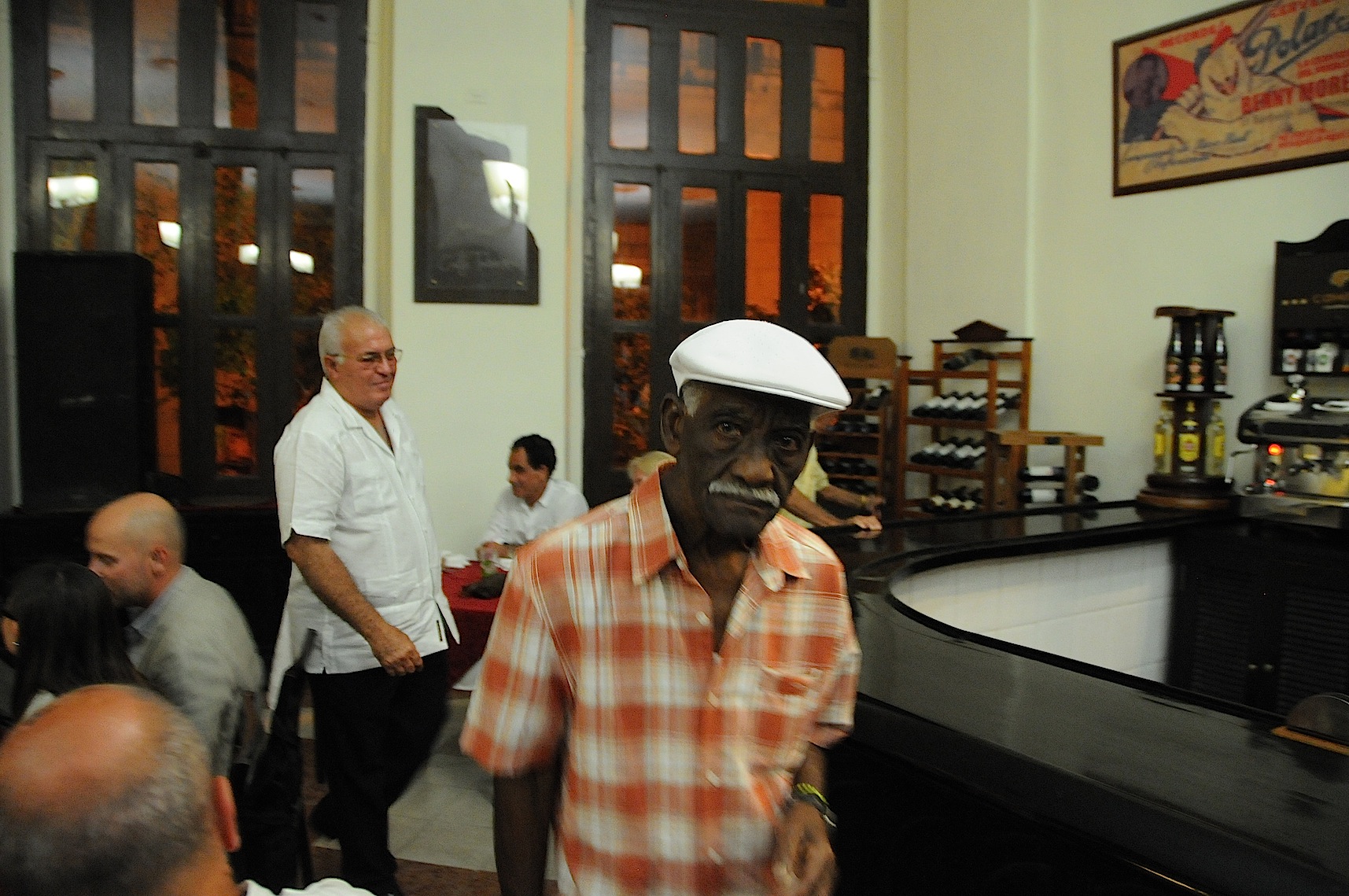
Havana, Cuba  -  It is crowded and loud. La Froridita, a famous old bar in Havana Vieja (Old Havana), is packed to the roof. Patrons consist mostly of foreigners and some overseas Cubans. They are loud, trying to shout over the upbeat son music booming from an old stage where the confident lead singer of an all-girl-band is threatening her boyfriend or husband, by a stunning re-arrangement of the old bolero ‘Si Tu Te Vas’ (‘If you go away’).

It is all very cool. This is the exact bar where Hemingway used to have his countless daiquiris. Not those touristy and over-sugary ones that one can get anywhere in the world nowadays (even here, at La Floridita), but those very ‘masculine’ daiquiris, bitter and unsweetened, made only from rum, squeezed grapefruits and crushed ice.

The waiters, all middle-aged men, are working in unison, with perfectly coordinated movements, wearing “Havana Club” aprons.

Drinks here go for US$6, making them out of reach for most ordinary Cuban citizens. But this place is just a part of that huge hard-currency earning industry, with countless outlets all over the island: beach resorts, clubs, restaurants, bars, and boutiques. Propaganda beamed from the North calls this arrangement ‘cynical’. Some Cuban citizens, critics of the Communist system, as well as various revolutionary ‘purists’, also dislike the arrangement. But there is consensus among the rest of the population that this is the best way to maintain the free and excellent health system, education, housing and culture.

Clubs, theatres, galleries, all are powerful magnets for educated visitors from all over the world. Cuba has the reputation of a cultural powerhouse. And unlike in any other nation in the world, Cuba’s main attraction are the high-quality artists, and the main ‘exports’ are not manufacturing or agriculture; it is culture and arts.

People from all over the world are traveling here to listen to some of the greatest music played anywhere on earth, to visit countless research centers, art schools, to attend concerts and performances, or simply stroll through many magnificent cities, world heritage sites declared by UNESCO, like those of Santiago de Cuba and Havana.


Buena Vista Social Club after the concert.

In the Old Havana, the atmosphere is always electrifying. Unlike in Western Europe and United States where culture and arts have become mostly decorative and ‘form over substance’, in Cuba, art is alive, it overflows onto the streets, and it is magnificently vibrant.

I lean over the bar and scream into the ear of old barkeep whose name is Jose:

“They say this is like surrendering to capitalism. This bar; places like this bar…”

“Let them eat shit”, he replies laconically, working with his powerful mixer. “Look, do you see that door; the entrance door? It is open right? This place is air-conditioned but the door is open. All over the Old Havana, the doors and all those huge windows that grow from the floor, are open. Do you know why? So everybody can hear the music. Windows here are like walls. And if they are open, it is as if there is nothing between the musicians and the street. Nothing at all! You just stand and listen, for free.”

“And if they, people, want to come inside?” I ask.

“So they come in”, he replies. “They don’t have to drink our booze here. It is their country. They can enter, and listen, of course. Do you see any bouncers here? Look, in this country we care about feeding people and curing the sick first… It is not easy with the embargo… We will make sure in the future that everyone can have a drink in places like this too. But for now, honestly, it is not the priority!”


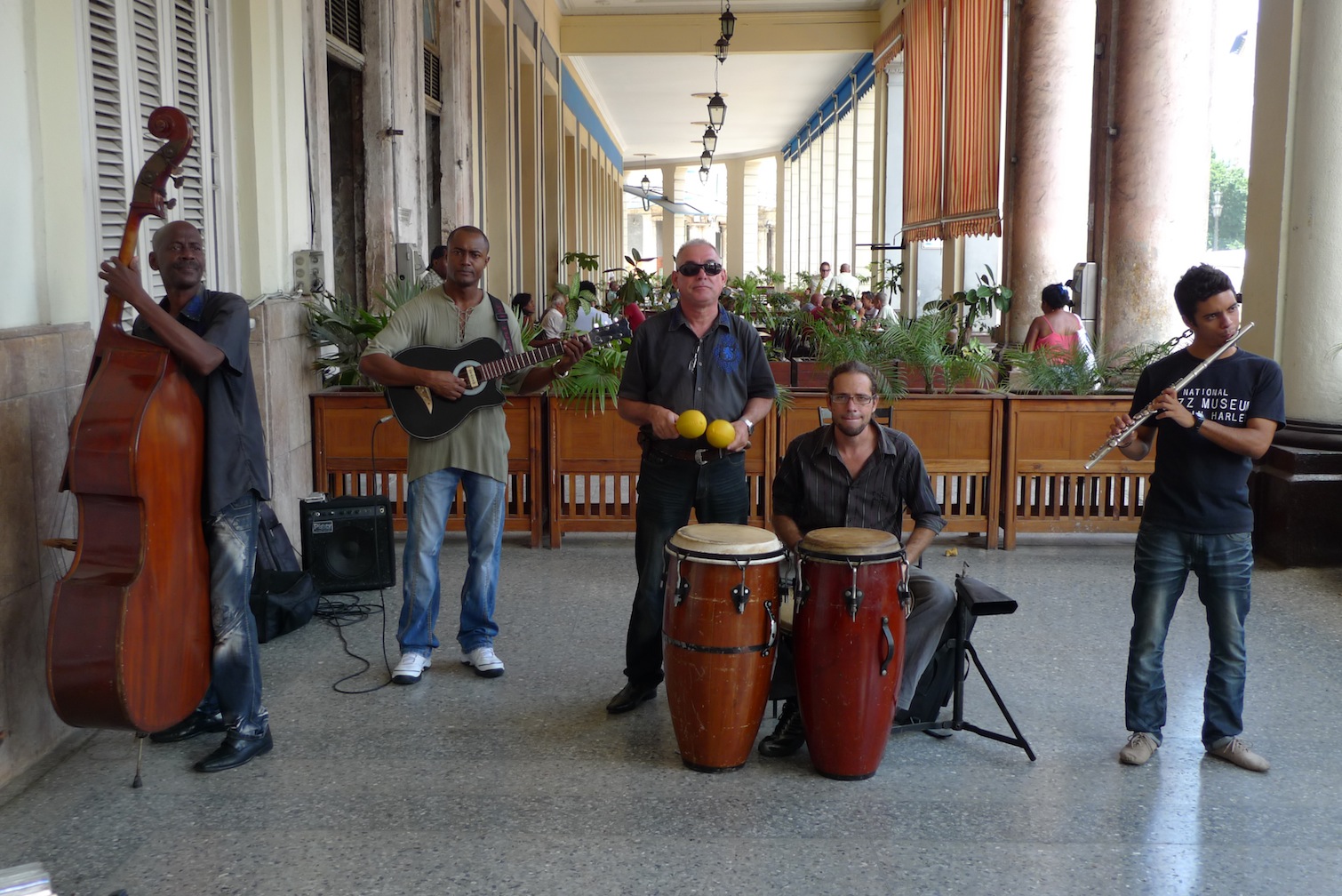
Just playing in the street.

At the end of the L-shaped bar, a bronze statue of Ernest Hemingway is leaning on a perfectly polished wooden surface. Several tourists take snapshots of the embracing great North American novelist, one of the best friends of the revolutionary Cuba. Hemingway lived here. He donated money from his Nobel Prize for Literature, to this country.

Here, in this bar, Hemingway is not politicized too much. But it is clear what the Western establishment is ready to do to those who support Cuba and socialism:

The FBI tailed Hemingway, he was harassed and until now there are many unanswered questions regarding his death. Some suggest that his 1960 medical treatment was actually supervised by the government authorities and that he was given excessive doses of electric shocks that destroyed his memory and drove him to suicide.


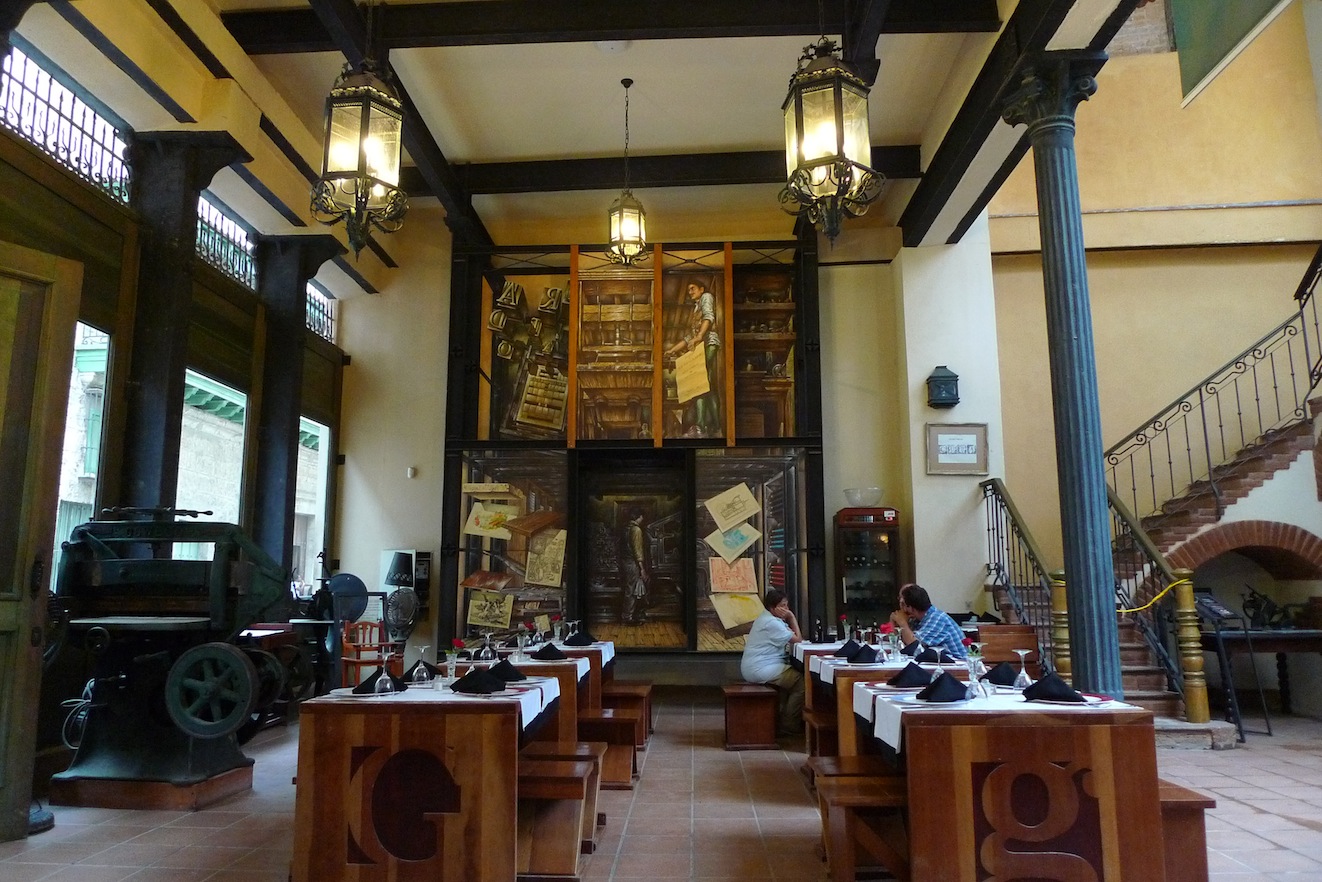
New concept of restaurants – old printing house.

This is of course not common knowledge embedded in the minds of North American and European visitors. They come here for the arts, for the unrepeatable atmosphere of lightness and good humor. They come here to listen to music and to dance. And to taste bits of ‘forbidden fruits’, and to break the US embargo here and there.

Very few can resist falling in love with the country where entire streets; entire neighborhoods, are turned into concert halls and dance floors.

One of the iconic phrases symbolizing Latin American revolutions has always been: “Everybody Dances or Nobody Dances!”

In Cuba, music and dance are synonymous with life. Here, everybody dances, and that is how the revolution survives.


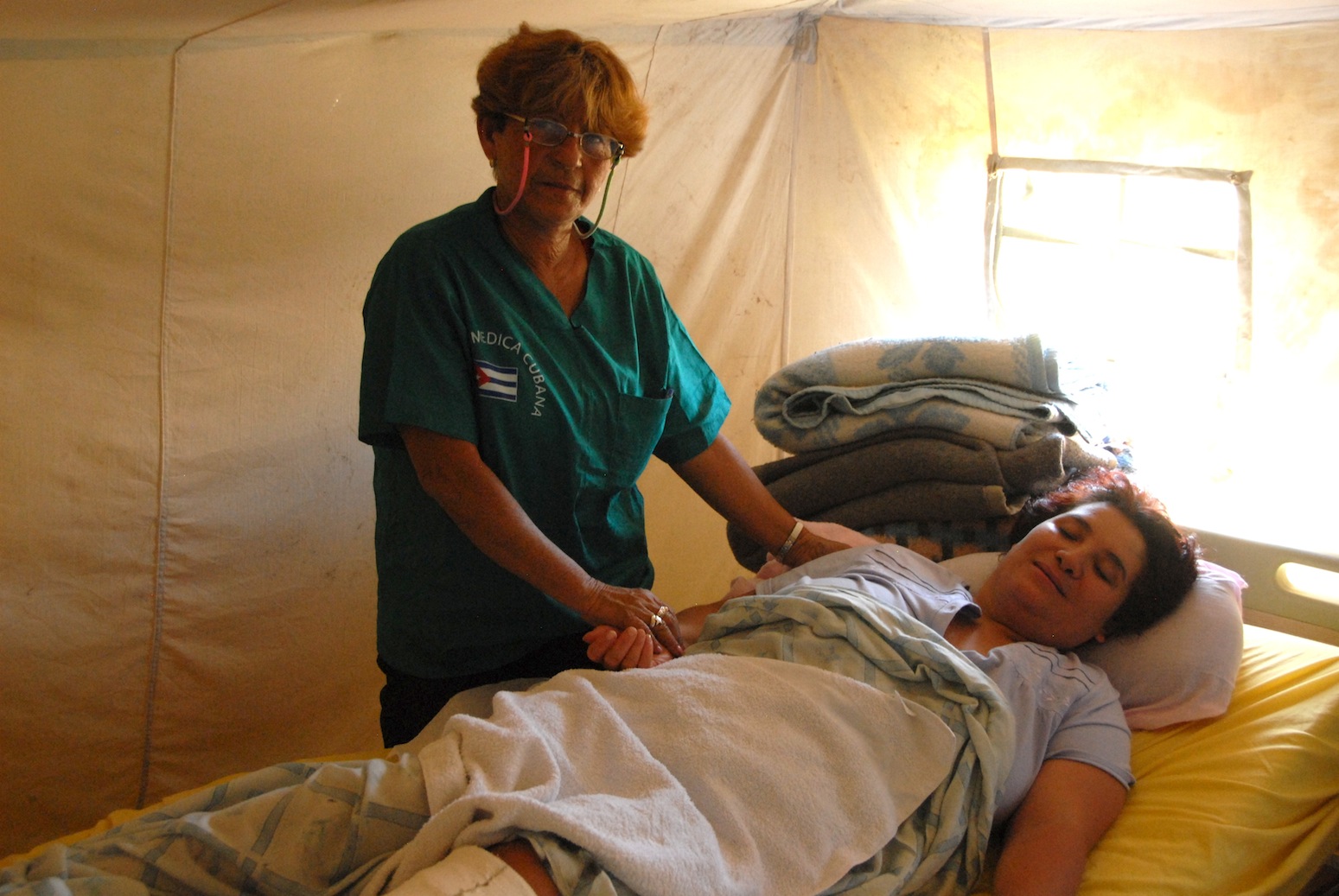
Cuban doctor at work in Rancagua, Chile, after deadly earthquake.

Yet things are not always ‘light’. Cuba is under an embargo, de-facto under siege. It is often forced to literally fight for its survival. The East European Block collapsed a quarter of a century ago. The Cuban economy was instantly pushed into a corner, it almost collapsed, as the ‘newly capitalist’ European countries almost immediately refused to honor trade agreements with its former ally, all too eager to join as quickly as possible, the club of global oppressors. And then, the brutal US trade embargo has been clearly geared, for decades, to destroy this proud Communist island-nation.

A short walk away from La Floridita, another iconic restaurant La Bodegita de Medio used to witness the indulgence and over-indulgence of Hemingway of yet another typically Cuban drink mojito. And La Bodegita was just one of many places bombed by Cuban exiles.

There were countless terrorist attacks against the island, coming from both the United States, and from the right-wing Cuban exiles settled abroad. Passenger airliners were blown from the sky in full flight, clouds were diverted to trigger draughts, crops were poisoned and tourist destinations were repeatedly bombed.

But Cuba stood proud and tall. It sometimes bled badly, its people had to get used to tightening their belts, but the country managed to survive the worst hours, and began growing once again.

Even in its most difficult hours, Cuba continued to help poor countries by sending there their doctors and teachers. Even when it stood, for several years, almost alone, it never abandoned its internationalist path.

Its culture and the arts became the main pillars of the fight for survival, for the nation’s identity.

During my latest visit, Mario Hubert Garrido, Director of Prensa Latina Television (Prensa Latina is the Cuban and International press agency founded by Ernesto Che-Guevara, after the revolution in 1956), explained the role culture plays in his country:

“Cuban culture has always had deep roots in the Cuban nation. And it is what feeds the spirit of resistance so embedded in the psyche of our people, always, but especially during the most difficult times. Here, people are united, because of the blockade, and because of the aggression against our nation. Here, culture means, above all, solidarity.”

We talk. I agree to write for Prensa Latina. Here, interiors are simple. There are photos of Vietnam on the walls, the iconic villages of Ha Long Bay. There is some artwork and paintings depicting Fidel jumping from a tank. There are exposed, naked light bulbs. A pre-historic radio receiver broadcasts a program about Jose Marti and his long journey; I can’t comprehend from where to where, really.

I feel at home here, inside this old dilapidated villa, very close to the statue of my great Chilean hero, President Salvador Allende.

“Do Cubans really hate North Americans?” I ask. “Do Cuban artists?”

He smiles. His smile is gentle, despite the fact that he is the director of an important revolutionary television station.

“No”, he replies after a while. “Here, despite the political situation, we still maintain many vivid cultural contacts between Cuba and the United States. You know: writers, film directors…”

He looks at me, and he almost winks.

“It has never stopped. It will never stop. It never will… Even right now, as we are speaking, there is a meeting of Cuban and North American academics taking place in Washington D.C.”

“Culture is solidarity,” I smile.

He nods. Before I go, we embrace.


Cubanismo big band performing in Malaysia.

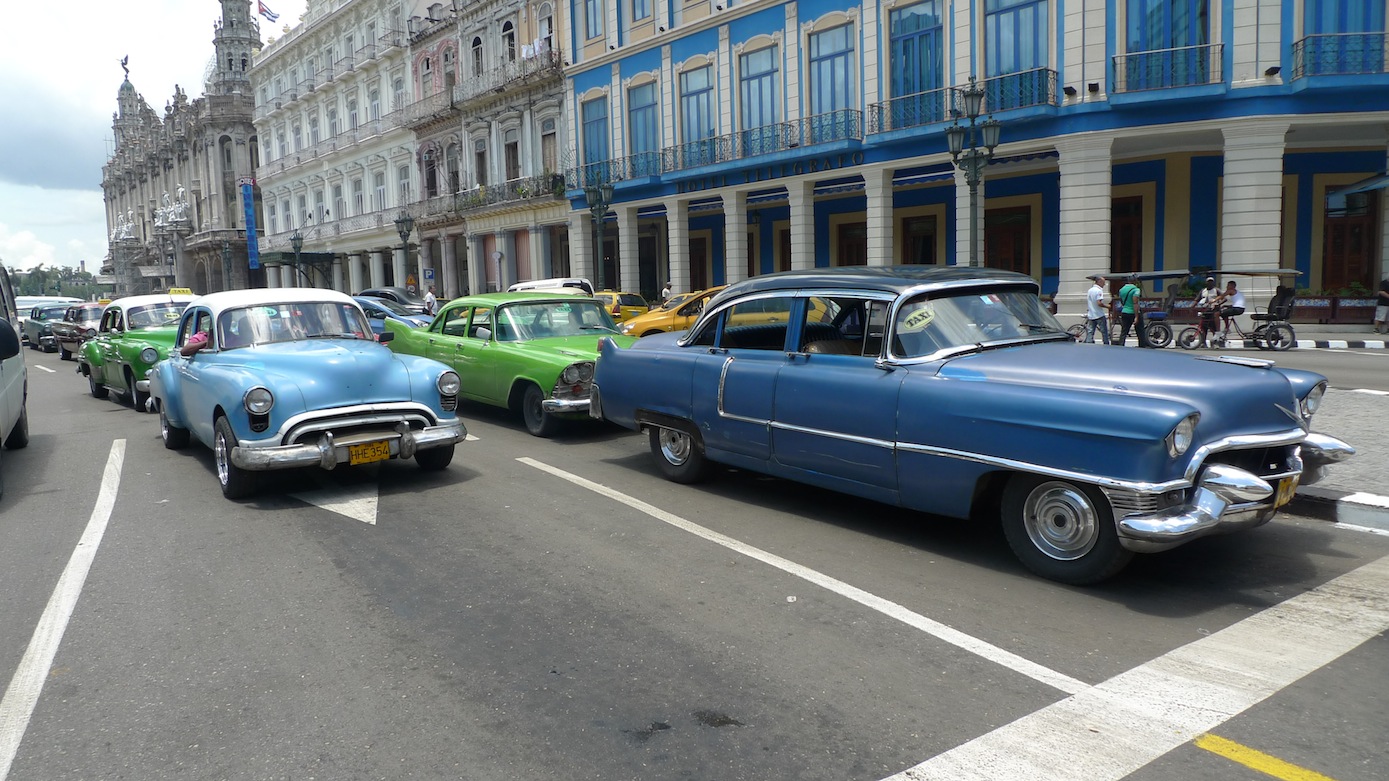
At the historic “Hotel Inglaterra” a band of local salseros is playing in the open, right on the pavement. Nothing special, honestly, but good and honest stuff nevertheless.

Inside, in the restaurant, the ceramics are magnificent, but the food is mediocre.

But I am actually content as I am sitting at an enormous wooden table with my best friend, the Chinese concert pianist Yuan Sheng. He flew in to Havana all the way from Beijing, in order to participate in a festival of some of the best pianists from all over the world; the festival organized by his former professor from the Manhattan School of Music, the legendary Solomon Gadles Mikowsky, himself originally from Cuba.

“I am tremendously impressed by the cultural life and art scene in Cuba”, explains Yuan, excitedly. “I traveled to and performed in so many countries in North America, Europe, Africa and Asia… But what I see here is unprecedented. Music, ballet, arts… Even the art objects that people sell on the street… It all shows how heroic the national character of Cuban people is.”

“Cuba is also very open-minded and receptive of international culture; there is a constant interchange with the world. The plane which I took here was bringing an entire delegation of Chinese artists and performers. And that is at the same time as I was coming to take part in yet another festival, which was featuring top international pianists. Coming here, I am helping to deepen the understanding between China and Cuba. And you know, in the last years, many educated Chinese people are fascinated with this island and its artists. When I was talking to my friends back in Beijing, that I am going to Cuba, their eyes widened. They were envious, they kept telling me how lucky I am. They wanted to know, to understand Cuba.”


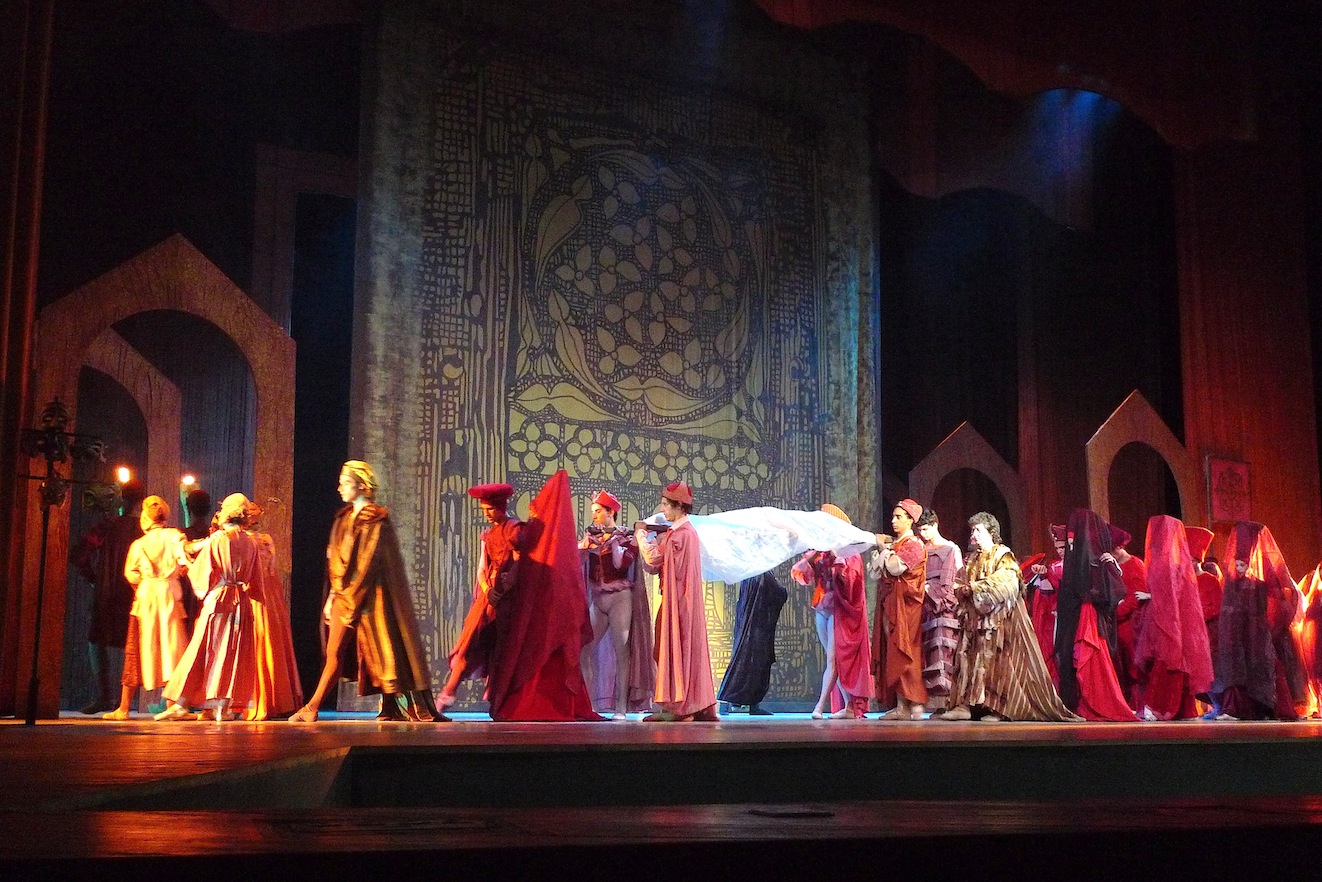
National Ballet – Shakespeare and His Masks – New National Theatre.

Later that night we ended up drinking beer with the renowned North American concert pianist Simone Dinnerstein, talking about the music and artwork of her famous father, Simon Dinnerstein.

We are in a café, in one of those beautiful squares, at night. Nearby, some band is playing old Mexican boleros. Simone, Yuan and I switch our discussion to the piano festival, but then, suddenly we all fell silent.

There is an unmistakable, confident, perfect sound coming from nearby. It’s the Buena Vista Social Club! The stars are brilliant. Historic buildings are brightly illuminated. Two great classic pianists, one North American and one Chinese, are trying to catch the sounds coming from the Taberna. It is not difficult: all the windows and doors are open!


Great Chinese pianist Yuan Sheng and a local singer.

One night, Yuan and I go to the National Ballet of Cuba, to see a performance of “Shakespeare and His Masques” under the choreography of the legendary Alicia Alonso.

There are literally thousands of people queuing in front of the entrance doors. The tickets cost almost nothing, just a symbolic token, everyone here can actually attend some world-class performances.

But that very particular evening, something goes wrong. The doors do not open 15 minutes before the performance, as they should; they do not open even when it is time to begin.

The crowd mumbles, but stays calm. Ushers look indifferent. I knock on one of the glass doors and ask what is happening. The ‘electric system collapsed’, I am told. ‘Does it happen often?’ I ask. Not often, hardly ever.

The usher is at first rude, but then I ‘win her heart’ by smiling and explaining that I am a writer and my friend is famous Chinese pianist, and we would actually like to wait inside, walk through the semi-darkness of this legendary theatre, and just dream.

She likes that. She obviously likes dreaming in semi-darkness, too. She let’s us in.

“It reminds me of China, when I was growing up”, says Yuan.


Still going strong.

To some extent it also reminds me of Prague some time ago. But what exactly is it that we feel?

People are absolutely real here. They are not ‘trained’ to be servile, even in the service ‘industry’. They are gloomy if they are in a bad mood, or cheerful when something good happens to them. They are not afraid of losing their job.

Cuban people are honest, sometimes brutally honest. They laugh when they are happy and they cry when it hurts. They show affection to those they love, and scorn to those they hate. It is a pure and sincere society. And in many ways much freer than those societies that are promoting their own freedom as the only model for the world.

Eventually, the enormous space of the Nation Theatre fills up with thousands of people. The performance begins. It is powerful, as expected, sharp as a razor blade, with an unmistakably brilliant choreography and excellent dancers.

Love stories and stories of death, of betrayal and hope. It is Shakespeare at his best, converted to classical ballet, on this green tropical island obsessed with artistic and intellectual excellence.

But at the end, the audience does not cheer. The applause is lukewarm. The long wait in front of the theatre was not forgiven. It is Cuba, after all, and in Cuba, one does not feel obliged to applaud, even when confronted by unmistakable greatness.


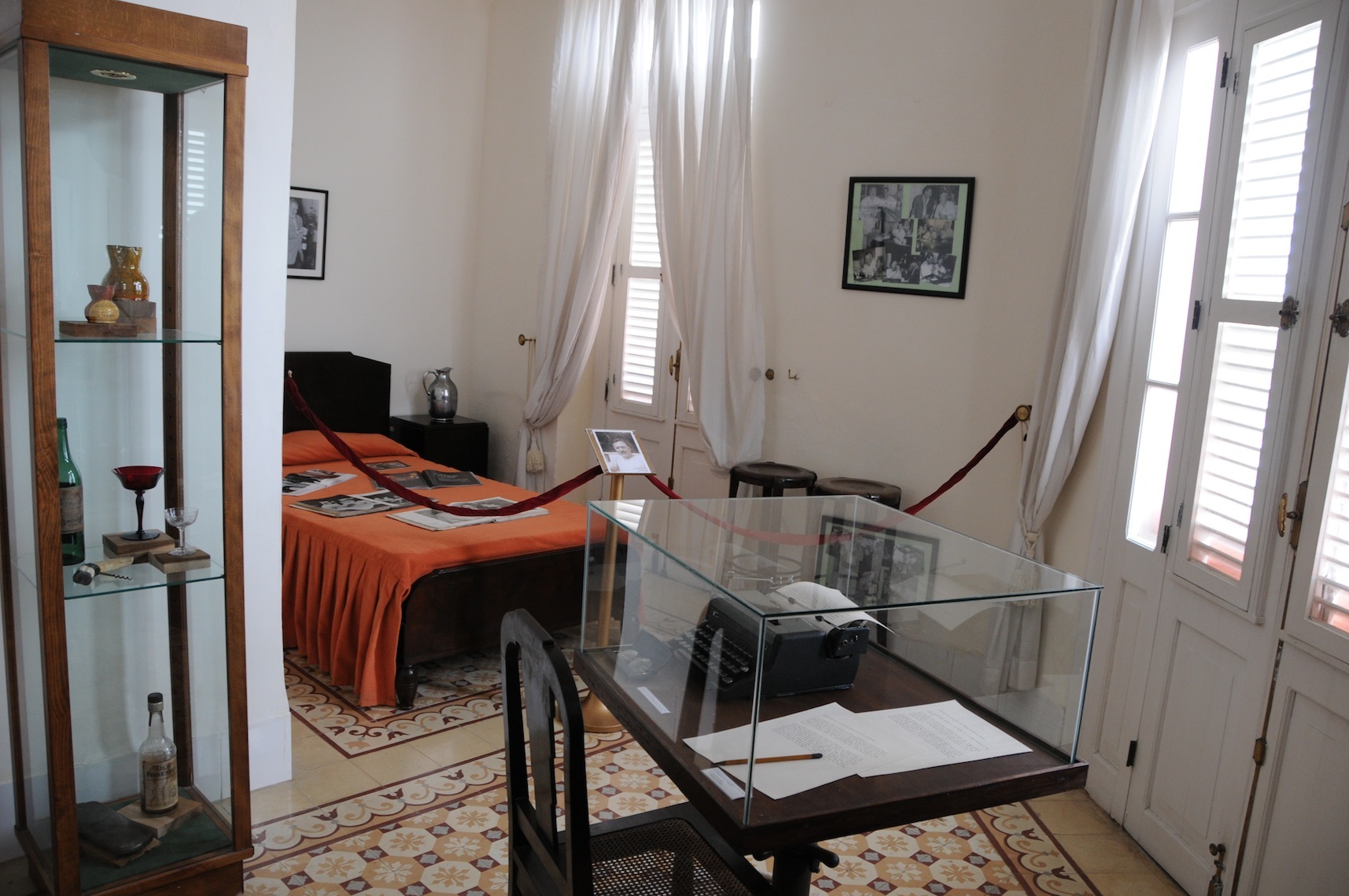
Hemingway’s room at hotel Ambos Mundos.

In the old lobby of the historic hotel San Felipe, in old Havana, Solomon Mikowsky, a legendary Professor of piano at Manhattan School of Music, continues to be impressed with Cuba, his native land:

“Before, Cuba honored only great people, great artists like Jose Marti. But now, Cuba is honoring every single person, every single artist, who contributed to the creation of this great nation. Poets, musicians, actors, writers, alongside the great warriors… Now the history of Cuba has expanded to several hundreds of heroes who made a true contribution… And by educating people, the government has made sure that so many citizens of Cuba are now thirsty for knowledge! Culturally, Cuba is to Latin America what Athens used to be to Europe. Cuban arts are not designed to ‘please the audience’. They are designed to aim at excellence and creativity… they are geared to produce great poets in virtually every field of the arts.”


In La Floridita.

Great bards and filmmakers, poets… That’s Havana. Bookstores selling high quality, subsidized books…

I walk through the center of the city; I stop at an old and elegant bookstore. I decide to buy ten books of contemporary poetry. This store does not accept convertible currency (CUC).

“Please go next door and buy local pesos”, I am told. I go to the bank. “What for?” the young clerk asks me. “I need to buy books.” “How many?” Ten, I tell her. “Then change only 5 dollars and after you pay at the bookstore, you will get plenty of change for public buses, so you can write for the rest of the week.”

I talk to great artists, to journalists and students. For days I talk, and watch. I listen to music, day and night. I read.

“Obama, give me 5!” I see posters on the wall. It is referring to the 5 Cuban patriots who have been held in high security prisons in the United States, for infiltrating the CIA, and for trying to prevent hostile, even terrorist actions, against Cuba. The posters are very artistic. But then, here, everything graphic could pass for art.

Then, one night, a young woman, a student, asks me about my impressions:

“What do you think about Cuban culture?”

We are in the old Basilica, where the piano festival is held. She is holding a small notepad in her hands.

“Do not think…” she smiles. “Answer quickly. Just few words…”

“Revolution… dignity… passion…” I shoot.

She nods.

I then turn the tables around:

“You? What is it for you?’

She thinks only for two or three seconds: “Everything… Life… Death… Love…”

Behind us, we hear Chopin’s etude. And behind the walls of the Basilica, as the sun goes down, one of the most beautiful cities on earth is beginning to explode in a perfect harmony of sounds and rhythms.

This is not necessarily how revolutions are made. But this is how they survive!

Andre Vltchek is a novelist, filmmaker and investigative journalist. He covered wars and conflicts in dozens of countries. His critically acclaimed political revolutionary novel Point of No Return is now re-edited and available. Oceania is his book on Western imperialism in South Pacific. His provocative book about post-Suharto Indonesia and market-fundamentalist model is called “Indonesia – The Archipelago of Fear” (Pluto). He just completed feature documentary “Rwanda Gambit” about Rwandan history and the plunder of DR Congo. After living for many years in Latin America and Oceania, Vltchek presently resides and works in East Asia and Africa. He can be reached through his website.

Gorilla Radio with Chris Cook, Kevin M. Gallagher, Alexandra Morton, Janine Bandcroft Aug. 26, 2013

This Week on GR

by C. L. Cook - Gorilla-Radio.com

It's been almost a year since the American muckraking journalist, Barrett Brown's arrest by the FBI. As well as his articles, published at mainstream sites like Vanity Fair, the Guardian, and The Huffington Post, Brown was too for a time an information conduit for the online hacktivist collective, Anonymous.

It was likely this connection that raised his profile with the feds; that and his role in creating Project PM, an independent think-tank and wiki set up to dissect and disseminate the thousands of files retrieved from the private security contractor HBGary. Brown is still held in federal custody, waiting without bail for the commencement of his trial on charges that could see him put away for more than a century.

Kevin M. Gallagher is a Massachusetts-based writer, musician, and systems administrator. He's also the director and founder of Free Barrett Brown, a coalition of concerned citizens who see in Brown's case an imminent danger to the freedom of us all, and threat to all our freedoms. Free Barrett Brown.org is currently trying to raise funds for Barrett's legal defense, and working to keep his case in the media spotlight.

Kevin M. Gallagher in the first half.

And; the precarious situation for wildlife in the Salish Sea, and for the entirety of land-based flora and fauna dependent on nutrients it brings ashore, has elevated again. New findings of an illness effecting herring has marine biologist, author, and wild salmon activist, Alexandra Morton again trying to gain the absent attention of those government agencies ostensibly charged and concerned with the care and oversight of Canada's marine environment. She says, statements so far made by a B.C. Ministry of Environment spokesperson to "Canada's national paper," the Globe and Mail intimating a "limited" viral outbreak may be "good for herring stocks" is unhelpful and uninformed.

Alexandra Morton tilting again at the B.C. Ministry of Environment and the DFO, this time for the herring, in the second half.

And; Victoria Street Newz publisher and CFUV Radio broadcaster, Janine Bandcroft will join us at the bottom the hour to bring us up to speed with some of the good things, and less so, going on on our city's streets and beyond. But first, Kevin M. Gallagher and the strange case of Barrett Brown.


Chris Cook hosts Gorilla Radio, airing live every Monday, 5-6pm Pacific Time. In Victoria at 101.9FM, and on the internet at: http://cfuv.uvic.ca.  He also serves as a contributing editor to the web news site, http://www.pacificfreepress.com. Check out the GR blog at: http://gorillaradioblog.blogspot.ca/
G-Radio is dedicated to social justice, the environment, community, and providing a forum for people and issues not covered in the corporate media.

Some past guests include: M. Junaid Alam, M. Shahid Alam, Gilad Atzmon, Joel Bakan, Maude Barlow, Ramzy Baroud, William Blum, Luciana Bohne, William Bowles, Mordecai Briemberg, Helen Caldicott, Noam Chomsky, Michel Chossudovsky, Diane Christian, Paul Cienfuegos, David Cromwell, Ezili Danto, Jon Elmer, Yves Engler, Laura Flanders, Amy Goodman, Denis Halliday, Chris Hedges, Julia Butterfly Hill, Robert Jensen, Dahr Jamail, Diana Johnstone, Malalai Joya, Kathy Kelly, Naomi Klein, Frances Moore Lappe, Ingmar Lee, Dave Lindorff, Alexandra Morton, Loretta Napoleoni, Andrew Nikiforuk, Ken O'Keefe, Greg Palast, Michael Parenti, Robert Parry, John Pilger, Kevin Pina, Paul Craig Roberts, David Rovics, Danny Schechter, David Schindler, Vandana Shiva, Tim Shorrock, Norman Solomon, Jean Saint-Vil, Harvey Wasserman, Paul Watson, Bernard Weiner, Andy Worthington, Mickey Z., Howard Zinn and many others.

Alexandra Morton Asks DFO: "What's Behind Our Hemorrhaging Herring?"

Bleeding Herring

by Alexandra Morton

The Provincial farm salmon vet suggests "limited outbreaks" could be good for the herring. However, he admits he has no information on this outbreak, so does not know if it is limited.

In a recent paper co-published by DFO, researchers found that the virus VHS can infect Atlantic salmon and "spillback" to infect and kill herring. It is unclear how this dynamic has been included in Dr. Marty's statement to the Globe and Mail.
Quote from the paper:
"Transmission of VHSV from Atlantic salmon to sympatric Pacific herring was indicated by 100% mortality...." in 3/4 trials.

Download 2013 VHS Virus in farmed S to wild herring.pdf (2397.4K)

UPDATE AUGUST 13: Globe and Mail picks up the story

UPDATE: August 12, 2013
DFO has answered my request that they test the herring from northeastern Vancouver Island. They said they have not received any reports of a die-off, but their crew in the region is going to try to get samples if possible. I appreciate their response and I will be following up with them to see how it goes. I attribute the fast response to all of you who wrote to them. Thank you.

On August 10, 2013 these herring were found off northeastern Vancouver Island along the shoreline of Sointula, Malcolm Island. This is a re-occurring event, but this is most severe symptoms that I have seen. In past, the fins of the herring have been bloodshot, but now it is also their bellies.

They are bleeding from beneath their scales, many are bleeding in their eyeballs. They are swimming with tiny sockeye, very likely from the Nimpkish River, and they are food for the chinook and coho runs now passing through the area.


I am writing to Mark Saunders, DFO Manager, Salmon and Freshwater Ecosystems, Pacific Biological Station, saundersm@dfo-mpo.gc.ca to ask that DFO figure out what is wrong with these fish as the symptoms are extreme enough that it seems likely other fish could be infected if this is caused by a virus.

If DFO will test these fish, and produce those test results so we can evaluate them, we will have the opportunity to decide, as a society, if we want to try to assist the herring to better health.

I hope that you will join me in writing to Mr. Saunders as I expect he is not entirely free to pursue this without our request. I have come to this opinion based on Cohen Commission exhibits wherein DFO scientists have expressed frustration in their ability to research viruses.

Herring are essential to life on the BC coast. I no longer believe it is useful to ask DFO to protect wild fish, we will need to do that ourselves, however, within DFO there are remarkable scientists who can tell us exactly what is wrong with these herring. We pay their salaries and we are instructing them to figure out what is wrong with these herring and to get back to us with verifiable results.


Dear BC Minister of Agriculture
 
I am writing to file an official complaint regarding what I see as misleading comment by your employee, Dr. Gary Marty, to the public in the Globe and Mail today.

In this article: http://www.theglobeandmail.com/news/british-columbia/disease-killing-pacific-herring-threatens-salmon-scientist-warns/article13722113/

Dr. Marty is quoted suggesting that a limited VHS outbreak could be "actually good…" for herring populations in BC.

While Dr. Marty appears to be quoting scientific research, he does not know if this is a "limited outbreak" and he omits the recent and relevant results in a paper co-published by DFO (attached) that reports that VHS can infect Atlantic salmon and "spillback" into wild populations causing 100% mortality in herring in 3/4 trials.

Given that these herring were observed in an area surrounded by Atlantic salmon farms to the south, east and north, it is my opinion that Dr. Marty should have added comment regarding this high relevant and alarming finding by DFO. The CFIA reports there are salmon farms infected with VHS http://www.inspection.gc.ca/animals/aquatic-animals/diseases/reportable/2013/eng/1360390270607/1360390361782

"3.3. Experiment 3: transmission of VHSV from Atlantic salmon to herring
Transmission of VHSV from Atlantic salmon to sympatric Pacific herring was indicated by 100% mortality and recovery of VHSV with titers exceeding 1 􏰂 106 from herring sentinels in 3 out of 4 immersion replicates."

This paper openly notes that: "herring biomass in salmon netpens can measure in the tons in some salmon farms (unpublished observation, K. Garver)"

I am requesting that DFO and/or the province of BC follow up and correct Dr. Marty's quote in the Globe and Mail. The governments of BC have the responsibility to inform the public accurately about a resource as valuable as herring. It is unethical in my view to suggest that herring bleeding throughout their bodies could be "actually good." I would also like to know how the DFO and the Province of BC, who are responsible for the siting of each salmon farm, have responded to VHS in salmon farms and the recent DFO finding that this can potentially cause 100% mortality in BC herring.

Thank you.
Alexandra Morton


Welcome to the Belgian Grand Prix

Welcome to the Belgian Grand Prix

by Greenpeace


Roving the Occupied North Pacific with David Rovics


Travels in the Occupied North Pacific

by David Rovics

There are remarkable coincidences in life. I feel like I've been asleep since I was born, and I'm only just starting to wake up. Reality wasn't entirely wiped from my consciousness -- it was just hidden well enough so that only a fraction of us would notice it was there, and if we did, the drones would kills us and the clones would tell us we're dreaming.

I'm sitting in a plane headed from Tokyo to Guangzhou to Perth. Someone at China Southern Airlines likes a recent Hollywood release called Oblivion, and I can see why. There are only a few recent releases to choose from, and it's the first one that comes up when you touch "Sky Movies" on the screen. (At this point I should say "spoiler alert.")

In the movie, Tom Cruise is a clone, one of thousands, but he doesn't know it. He knows his memory was wiped since "the war," for necessity's sake, presumably because it was all just too awful to remember. The truth is, he's serving an alien occupation of Earth. His job is to fix drones. The job of the drones is to kill Scavengers ("Scavs") who live in the radioactive wasteland below his airborne home. The massive alien triangular thing in space he's unwittingly serving is sucking up the oceans, supposedly in order to help the remainder of the human race populate a new planet they've all had to move to, since Earth was destroyed in the war.

The truth is that the remainder of the human race isn't on Titan (the new planet). Rather, the "Scavs" are what's left of humanity, and they're trying to stop the alien mother ship from sucking up the oceans. The drones are killing them, and Tom Cruise and all the other Tom Cruise clones are keeping the drones running so they can go about their business. All the clones know not to go into the "radiation zones," which aren't radioactive in actuality -- it's just that the radiation zones are where the other Tom Cruise clones are operating, and they're not supposed to run into each other because then they'd wake up to the whole thing. Which of course they do, since it's Hollywood, and they defeat the alien nemesis and are victorious in the end, salvaging what remains of life on Earth.

Seems to me this movie is a pretty good allegory for modern America. We (Americans, and others) have been raised on a combination of lies and ignorance -- our memories have effectively been wiped. We are serving a sort of alien occupation which you could call capitalism, empire, or the "point one percent," which, though it's basically not human, has a mind of it's own. It is sucking up the oceans because there is profit in that, regardless of the fact that in the process we'll all be killed. It uses us to service its drones, so the drones can kill the Scavs, those humans whose memories are still intact, who are trying to resist this insanity. The aliens in power make sure we don't go near the "radiation zones" where we might discover the truth, and they make sure we are convinced that it's actually us who are in control, and what we're doing is in our collective, democratic best interests.

There are so many layers to this onion that I get the feeling I've so far only uncovered the first few of them.

The further west you go in the United States, the more military bases there are. It was a young Chicano in New Mexico who first pointed this out to me a few years ago. I had been traveling the US constantly for years and I hadn't consciously noticed this fact. My friend in New Mexico figured this was because the leaders of the country were more worried about their more recent acquisitions, such as what we now call the southwest (which of course the Mexicans used to call the northeast).

If this is true of the southwest (and it is), it is even more true of Hawai'i, which was the first destination of my current four-continent world tour. (Or three continents and one extremely large island, depending on how you measure Australia.)

The Hawaiian islands were a sovereign nation with a royal family and various foreign embassies, and it was very blatantly and unequivocally stolen at gunpoint by the US Navy one day. What's immediately obvious to any visitor to Hawaii, even if you don't get any further than the capital city, is that both the US Navy and the Hawaiian natives are still there. The Navy runs the place, and the natives are, for the most part, it seems, homeless and living on the streets and on the beaches, constantly getting harassed by the authorities for making the tourists uncomfortable, by existing.

My family and I arrived in Honolulu only days after the "not guilty" verdict for Trayvon Martin's racist killer. Not coincidentally, in Honolulu a trial is ongoing, which will probably end with a similar verdict, for an off-duty law enforcement officer who was in town for a conference one day. He and his colleagues had been briefed that they should watch out for the restive natives. So, for good measure, he shot one in a fast food restaurant one night, after a night on the town, drinking. But his victim was a young nonwhite man who was out late at night hanging out with other young nonwhite men, so he must have been up to something, anyway.

Aside from the occasional beach off-limits because of whatever toxins the US Navy poisoned it with, aside from the outrageously high property values which only the rich can easily afford, aside from the masses of disenfranchised natives, what has become of Hawaii since it was forcibly annexed by "the mainland" (never mind the fact that it's closer to Asia than it is to North America -- the US is "the mainland") is actually pretty cool. Since the nineteenth century, people have been moving to Hawaii to work (slave, more like) in the fields, to fish, to work as merchants, to escape famine, to live in an island paradise, or some combination thereof, from all over Asia, North America and Europe. At this point, looking at the beautiful brown bodies covering so many of the beaches around Oahu, the average Hawaiian is some wonderful mixture of Chinese, Filipino, Japanese, Polynesian, and European heritage. There are those from these various communities, particularly the Japanese, it seems, who eschew the sun, just as they do in their land of origin, and have also avoided quite so much intermarrying as everybody else. But for the most part, the Hawaiians who are not recent transplants from "the mainland" are a pan-Pacific, sun-worshipping potpourri of humanity.

Reeking with money, with an economy based largely on tourism and military spending, it's not an easy place to be a revolutionary. The relatively few people you might call "radicals" coalesce around Revolution Books. On "the mainland" much of the progressive movement shuns those elements many consider to be "the sectarian left," but in Honolulu Revolution Books is an ecumenical hangout for anybody with a brain, despite the large posters advertising Bob Avakian's latest book. For a musician like me visiting Honolulu, this is the place to play, and was indeed the only venue anybody ever recommended for me to investigate, when I asked residents of Hawaii who I met online about it.

Former ambassador and military officer Ann Wright, who resigned in protest against Bush's invasion of Iraq, is based in Honolulu, and she was at the gig. Jeff Paterson now lives in California, but when he was in the military he was based in Hawaii, and it was on a military airfield in Hawaii where he sat down and refused to board a plane bound for Iraq during the build-up to what they call "the first" Gulf War. (The US and other western powers had been at war many, many times in the Gulf long before 1991, but these memories have largely been wiped clean.)

If there's a place in the world that is a sort of "compromise" between the US and Japan, culturally speaking at least, it would have to be Hawaii. About one-third of the population is of Japanese descent, and the Japanese language can be heard all over Honolulu, along with restaurant chains you won't see outside of Japan and Hawaii, and sometimes occasionally parts of California, staffed with real Japanese people. The Japanese population is accustomed to US military bases -- they're all over Japan, as well. But it is an uncomfortable fact that one of the biggest tourist destinations is Pearl Harbor, where the history books tell us World War 2 began for the USA, after Japan's Air Force attacked it.

History is written by the victors, and the narrative always begins wherever it's most convenient for the narrative to begin. So the history of Japan-US relations began with that massive "sneak attack." The US embargo of Japan that preceded it -- widely acknowledged as an act of war, though undeclared, as usual -- never happened. Neither did the US Navy's merciless bombardment of Tokyo, previously called Edo, at the end of what became known as the Edo Era, in 1856. In our history textbooks it's very briefly referred to as the "Opening of Japan." Japan's 250 years of peace became Japan's era of "isolation" -- never mind the fact that they carried on robust trade relations with their neighbors, Korea and China, as well as the Netherlands, in the largely Christian port city of Nagasaki.

Admiral Perry's unprovoked attack 157 years ago destabilized Japan, leading to a revolution in that country -- a revolution largely motivated by a desire to regain the sense of national security that they once thought they had, not wanting to become the opium-addicted colony which much of China had become by that time. And so Japan embarked on the fastest industrialization process the world had ever seen, becoming a major industrial and military power virtually overnight, becoming the first non-European nation to defeat a European empire in a conventional war (the war with Russia in 1905).

But the nineteenth-century British-US-French-Russian war to "open" China -- the Opium War, in which the western powers got together to force the Chinese emperor to allow the importation of an addictive drug, in the process killing tens of thousands of people and burning entire cities to the ground -- has been wiped clean of our collective memories, along with the Naval bombardment of Japan that followed, way back when. This is an inconvenient place to begin your narrative.

No, rather, the fact that most of the US Navy was half-way across the Pacific, in Hawaii, so close to the shores of Japan, in 1941, while war raged in Europe, was some kind of coincidence. And the fact that most of the US Navy is now once again half-way across the Pacific is because of a fear of "Chinese aggression." Never mind the fact that nobody can tell you when was the last time China committed any actual acts of aggression against another country aside from Tibet. (A notable exception, no doubt, but not exactly what the US is on about when stirring up fears of Chinese aggression.) And the Korean War is even called "the Forgotten War" by the US media on the rare occasions it's mentioned. Even more forgotten are the half-million Chinese soldiers killed by the US military, who went to defend the popular, revolutionary government of Korea from the US invaders. Still more forgotten is the fact that the puppet government the US was trying to keep in power was itself put into power by the Japanese occupiers, who were asked to stay on by the US temporarily, lest the far more popular communists take the country back. (The history textbooks never mention the fact that the US always, always prefers fascists over communists. Democratic governments are tolerated, but only when they're "business friendly.")

We flew from Honolulu to Fukuoka at the end of July, to visit my wife's family and friends in the city of Ube, in the province of Yamaguchi, home to many of the Samurai revolutionaries who brought the Edo Era to an end, abolished their own class, and ushered in the disastrous era of the Japanese Empire that followed. And also a beautiful place, full of mountains and very community-oriented communities -- very far from Tokyo in so many ways.

Reiko's parents organized my first gig in Japan, at the Nishigaoka Community Center -- one of the many community centers in Ube and other towns and cities in Japan. It's a wooden building whose front yard is a playground with fun stuff for kids to climb on, and a dirt parking lot. Little kids from the neighborhood spontaneously gather there to climb and run in the playground or play cards on the porch, oblivious to the 100-degree (34 Celsius) heat. Adult members of the community rent the place out very cheaply for different purposes -- morning exercises, concerts, rehearsals, dance classes, English classes, community festivals, etc.

Recently when the community center needed repairs, every household in the community volunteered to contribute the equivalent of $700 (over the course of three years) for these expenses. Not a single household turned down the request for funds, though it was entirely optional, and in many bigger cities of Japan, these community centers are a thing of the past. Not in Nishigaoka.

In some instances, people in the neighborhood have to deal with the contradictions of wanting to fit in to their neighborhood, and wanting to fit in to their broader Japanese community. For example, the man they keep on reelecting as their representative in the prefectural legislature is a member of the JCP, the Japanese Communist Party. Very few of the local community members would call themselves communists, but they constantly reelect Fujimoto-san. This way they can remain loyal to their overall concept of what it means to be Japanese -- which does not involve being a communist -- but they can also be loyal to their community, which means voting JCP.

The folks who organize my gig included a bunch of people in addition to Reiko's parents, and the people who came to the show -- over 70 of them -- were just regular members of the community, of all ages. Not raving leftists or anything, but they enjoyed the gig just fine, as far as I could tell. They certainly bought lots of CDs -- and they could even tell what the songs were about, since Reiko spent many long hours setting up a Powerpoint slide show with translated lyrics, one verse at a time, to project on a screen next to me.

Which of course was where almost everybody in the room was looking. This always takes a bit of getting used to for a performer, who is naturally accustomed to being the center of attention, both for the ears as well as the eyes of the audience. Half of Reiko's friends seem to be English teachers, but even they were looking at the screen. The exception to this were the Gaijin -- the foreigners. Including my daughter and me, there were five white people in the room that night, which may be more than there have ever been at one time in the Nishigaoka Community Center.

Japanese culture -- like most cultures around the world aside from the "rugged individualist" Anglo countries and some others -- is very community-oriented. The group is considered to be more important than the individual, generally. But of course there are different ways to be loyal to that group, and different definitions of what the group is.

For Doro-Chiba, a radical (that is, sensible), small labor union, loyalty is to the working class -- not only the working class of Japan, but the international working class. These were the folks who paid for Reiko, Leila and I to take the bullet train from Yamaguchi to Hiroshima to spend two days and nights commemorating the day that the name "Hiroshima" become synonymous with the term, "apocalypse."

In 2007 Reiko and I were in Hiroshima for the annual commemorative events, but that time we were involved with the bigger events, organized by the bigger anti-war coalition, led by the JCP. I like the JCP, but sometimes their orientation involves an umbrella which is a little too big. I like the "big umbrella" approach generally, but when your umbrella covers anybody who claims to be against nuclear weapons, even if they're basically just against nuclear weapons because they don't have one yet, and they're otherwise representatives of nasty dictatorial governments, then I have a problem. Such was the case in 2007, where I sang in between speeches delivered by folks like the foreign ministers of countries like Malaysia, and Mubarak's Egypt.

Doro-Chiba's events don't involve people like that. Rather, their events and protests embrace the commonality of the movement against nuclear weapons and the movement against nuclear power, and the speakers included not only survivors of the atomic bombings in Hiroshima, Nagasaki, and the nuclear tests in Micronesia, but survivors of the Fukushima disaster as well.

Everyone involved with the events of those days seemed to unanimously agree about what was the most notable moment of the whole thing.

There were maybe a thousand of us marching from the Atom Dome, past the place where Prime Minister Abe was giving a typically messed up speech, decrying the use of nuclear weapons, and embracing the future of nuclear power, while his government stockpiles massive amounts of weapons-grade plutonium.

Japanese chanting during political rallies has a martial feel to it -- someone chants a rhythmic phrase, and then everybody else repeats it, and maybe raises their fists in unison. So this was happening as we were going along, and the person leading the chants was using a wireless microphone. Other people were carrying bullhorn-style speakers on their shoulders, for the sound to come out of. The police were "escorting" the march with big trucks, and each truck had big loudspeakers on top.

Normally what's coming out of the police truck's speakers is a continuously-playing announcement by someone with a very polite-sounding female voice, advising nearby drivers and pedestrians that there's a march coming through, and apologizing for the inconvenience. Suddenly, for the first time that anybody can remember, the chants from the person with the wireless microphone started coming through the speakers mounted on the police trucks, but about fifty times louder than they were through out little mobile bullhorn things, complete with feedback.

At first everybody was confused as to what exactly was going on -- it was so ear-piercingly loud it was disorienting. I was worried about my daughter's ears -- we were near the front of the march, right in front of the police and their trucks. And I was wondering if one of the Doro-Chiba folks who was good with computers might have hacked into the police's system somehow. But it turned out that their sound system just randomly happened to pick up the frequency that the wireless mike was broadcasting on. One of the cops went into the truck and did something, and it stopped happening. What we could be certain of was that the Prime Minister might not have heard our march passing by otherwise, but with the help of the police he sure heard it that day.

Leila saw a playground soon after that incident and we left the march. Sitting on a bench in the park was a hibakusha, a survivor of the atomic bombing on that day in 1945. He said he didn't like crowds, so he didn't go join the marches and such, but that he liked to come and sit nearby the epicenter on this day each year. He told us he lived four kilometers away at the time, and was going to school, in first grade. He mentioned that one of his classmates was an American boy, though he didn't know what that kid or his family was doing living in Japan during the war. He said there was a bright flash of light and tremendous heat, and suddenly all that was left of his classroom were the pillars. He and his classmates wanted to head home, but home for most of them was closer to the city center, and they figured that was a bad idea, so they just stayed there where they were. After a while, horribly burnt people started walking like zombies past them, walking away from the city, holding their arms out in front of them so their hanging skin wouldn't fall off.

The extreme right activists were there in Hiroshima on the day, as usual, in small numbers, as usual, with their war-time flags. And as usual, they were surrounded by riot police who were in turn surrounded by progressives of various sorts who were shouting them down and not letting them create much of a scene. These were the sights and sounds that greeted us initially on the morning of August 6th, when we took a taxi from our hotel room to the Atom Dome, where these events are generally centered. Very notably, and movingly, at the moment just after 8 am, the moment just after the bomb exploded in 1945, everybody was silent for a minute -- the rightwingers and leftwingers stopped yelling at each other, the speakers stopped speaking, the singers stopped singing, the Buddhists stopped chanting. Only the cicadas didn't care.

Ten days or so later, stranded at a Narita Airport hotel after being denied entry to New Zealand, I was listening to a BBC report about the Japanese far right yelling at Koreans in an immigrant neighborhood in Tokyo. Apparently there were several hundred of these rightwingers behaving in very un-Japanese ways, screaming at the immigrants. What I didn't hear about until later, from folks I ended up staying with in the city, was that soon after the rightwingers started up with these shenanigans, five times as many people turned out to protest against them. If BBC covered that, I missed it.

Perhaps it's not considered newsworthy that there are at least five times as many vocal antifascists as there are fascists. Perhaps it's just considered the norm that that would be the case, and therefore not "news." But I wish that kind of thing would get more coverage, because otherwise some people might be left with very wrong impressions about Japanese society. One might get the impression the society is full of clones who just go along with the status quo, which of course is true to a large extent, but not nearly as much as either Japanese nationalists or American propaganda would have us believe. In reality, there's a rich current of rebellion in Japan, today and historically, as with everywhere else on the planet -- from the rebel Samurai who overthrew Japanese feudalism after the first US invasion, to the rebels against the Empire like Chiune Sugihara, to those protesting the xenophobes in the immigrant neighborhood last week.

My last night in Japan, before boarding this plane, was spent at a veritable hive of leftwing activity, a place called Cafe Lavanderia (so named because it used to be a laundromat). Red and black flags and posters everywhere from the Zapatistas and the Spanish Civil War, they even serve their banana smoothies with red and black straws. In the cafe I met a friend of my dear friend Brad Will, who met him in Oaxaca only days before he was killed there. There was a trumpet player who had just come there from the weekly Friday protests against Tepco and the Japanese government's inadequate response to the ongoing nuclear disaster not far to the north of Tokyo. There were a couple of folks who invited me to visit Terminal 2 at Narita Airport the following day (I didn't have time), where there is a small house and community garden in the middle of the airport, a remnant of the militant struggle led by local farmers there that delayed the construction of this huge international airport for nine years.

The clones and drones are everywhere doing the bidding of the capitalists, but the Scavs are everywhere, too, in the occupied North Pacific. Next stop: Australia.

Taking Grassy Narrows to the (Premier's) Street

Grassy Narrows Supporters Wake up Wynne at Home, Demand Action on Mercury Poison

by FREE GRASSY.NET


Toronto - Hundreds of Grassy Narrows Indigenous Nation supporters, including a massive 80 person strong marching samba band, are parading to Premier Wynne's house today.

Their banners will read "You wouldn't live with mercury in your home, why must Grassy Narrows?"
Sunday, August 25  12:15 p.m.

Meet at the North Toronto Collegiate field on Roehampton St. east of Yonge, one block north of Eglinton.

“The government has taken away our forests and given us back disease and sickness and death,” said Judy Da Silva, a Grassy Narrows Clan Mother.
“Wynne promised to help us, but she did not take that commitment seriously. It is time for Ontario to listen to our people when we say no to logging that brings more mercury poison into our rivers and our bodies.”
Grassy Narrows is demanding action on ongoing mercury poisoning that has taken a tragic toll on three generations of families in Grassy Narrows.

Mercury poisoning, first discovered in Grassy Narrows the early 70’s, has left its terrible mark on three generations of Anishinaabe people – loss of balance, tremors, loss of vision, numbness, cerebral palsy, and more.
“Last summer Wynne promised to do something about this crisis. Over a year later nothing has been done to improve the lives of families in Grassy Narrows, only talk,” said Katelyn Blasick, a marching band member and Grassy Narrows supporter. 
“Instead of helping the Province continues to plan for more clearcut logging in Grassy Narrows' watershed – a practice that further increases mercury poison levels in local fish.”
“For people in Grassy Narrows there is no vacation from mercury poison,” said Chrissy Swain, a young mother of three in Grassy Narrows. “We have to live with the sickness of mercury poison in our bodies and in our families every day.”

In June organizations representing over one million Ontarians wrote to Premier Wynne urging her to call an end to unwanted logging on Grassy Narrows territory. Premier Wynne has not responded.


RELEASE Sunday Aug. 25, 2013

*#freegrassy #sovsummer *

*Contact:* 647-783-3552

High resolution images, video, and B-Roll available.

*More information: *http://freegrassy.net/2013/08/02/noisedemo/


Lebanon: 42 Confirmed Killed Hundreds Injured in Friday Mosque Bombing

42 Killed, 500 Injured In Mosque Explosion In Lebanonauthor Saturday August 24, 2013 01:03 

by IMEMC & Agencies

The Lebanese Ministry of Health stated that 42 persons have been killed, and more than 500 have been injured, in two explosions that targeted two mosque in Tripoli, in northern Lebanon.


Image By LBC


The Ministry said that the first explosion took place in front of the Taqwa Mosque, in the Az-Zahiriyya area, while the second explosion took place in the Salaam Mosque.


The large number of casualties in Salaam Mosque is because it was filled with worshipers; dozens of bodies were complete burnt.

Lebanese security sources stated that the bomb that targeted the Salaam mosque is believed to have weighed 100 kilograms.

Another explosion took place in front of Hamza mosque but led to no casualties.

The Lebanese Interior Minister, Marwan Sharbel, stated that the bomb was placed in a car that was parked in front of the mosque, the Lebanese Broadcasting Corporation LBC has reported.

The Hague Conspiracy: UK Rallying Cry for More War Taken Up by State Broadcast Organ


The BBC’s Syrian Chemical Weapons Coverage: An exercise in Imperial deception 

by williambowles.info

Over the past three days, since the story first broke, the BBC’s news Website (I use the word news advisedly) has carried twelve stories on the alleged chemical weapons attack that took place in a suburb of Damascus.

Today’s offerings include, Hague believes Assad behind attack (23/8/13), without offering a shred of proof that the Assad government is behind the alleged attack or even that it took place, takes foreign secretary Hague’s ‘belief’ as a given. The lead paragraph tells it all:

UK Foreign Secretary William Hague says he believes President Assad was behind a chemical attack in Syria.

What Hague’s belief is based upon is not revealed, instead we get more of the same:

“I know that some people in the world would like to say that this is some kind of conspiracy brought about by the opposition in Syria,” said Mr Hague.

Now why does Hague feel compelled to bring in the issue of a conspiracy? Perhaps because it is a conspiracy? A conspiracy dreamed up to justify the overthrow of the sovereign government of Syria. Hague then makes the most astonishing statement:

“I think the chances of that are vanishingly small [that it was a conspiracy] and so we do believe that this is a chemical attack by the Assad regime.”

‘So we do believe’ intones Hague but the BBC article offers not a shred of actual proof that one, gas was actually used and two, if gas was used who it was used by?

Now you have to ask why the BBC feels it necessary to propagandise on behalf of the UKUS governments? What’s in it for the BBC? Well if it was an independent organisation, there could be no justification for promoting an allegation as fact even when its main UK advocate, Hague himself, can only offer his “belief”. But given as the BBC is the de facto mouthpiece for the UK state, it clearly has to peddle the ‘party line’. The piece continues:

“Pressing for UN weapons inspectors to be given access to the site, the UK foreign secretary said: “It seems the Assad regime has something to hide.

“Why else have they not allowed the UN team to go there?”

But who says the Syrian government have denied access to Ghouta? Given as firstly, the area in question is under the control of the rebels (isn’t that the reason why all we have to go on are the rebels presentations, which judging by the videos I’ve seen, look suspiciously staged?), at the point of writing, there’s nothing the Syrian government can do about it. Second, just a few miles away there’s the newly arrived UN inspection team, who given the chance, I’m sure will want to check out the situation for themselves.

In fact, they have, see here.

Even Barack Obama says “the alleged used of chemical weapons” and doesn’t actually name the Assad government. Once burned, twice shy perhaps, considering that the last alleged Syrian government use of chemical weapons turned out to have been used by the rebels. Do I detect a pattern here?

But by the last section of the article we read:

He [Hague] added: “This is what we are focused on and we are working with countries all over the world to try to bring this about and to try to establish the truth to the satisfaction of the world about what is clearly a terrible atrocity.

Well at least now the man is admitting that he doesn’t actually know what really happened, and it makes a nonsense of the BBC’s title. But just how compelling the propaganda assault has been (it reminds me somewhat of the media’s coverage of the Boston Bombing), is that ‘progressive’ media outlet, Democracy Now! has just published a piece that’s pretty much in step with the BBC’s coverage, though it does at least entertain the idea that if the Syrian government had done it it had shot itself in the foot and opened the door to direct (as opposed to indirect) foreign intervention, which is what Hague is proposing we do. Thus proof is is crucial.

“The only possible explanation of what we have been able to see is that it was a chemical attack and clearly many, many hundreds of people have been killed, some of the estimates are well over 1,000.

“There is no other plausible explanation for casualties so intense in such a small area on this scale.” – Hague

There is nothing clear about anything at this point in time, not even that chemical weapons were actually used. We have only the conveniently supplied rebel footage, which when viewed objectively, tells us nothing much at all, except that some appeared to be dead but not how they died and in some of the footage it’s not even clear the people are actually dead. Another part of Democracy Now!’s footage shows people, young an old, walking around rather aimlessly and clearly very aware of the camera’s presence, too aware I think.

The entire event registers as false, as contrived and just too damn convenient and to have happened on the same day as the UN inspection team arrived? That’s a coincidence? At the end of the day, it’s the latest and the most elaborate provocation staged to try and justify direct, foreign intervention by the Imperialist powers, given that the ‘rebels’ appear to be on the run.

Yesterday, the 22rd August, the BBC put out another propaganda piece titled, Obama’s thick red line on Syria by the BBC’s North American Editor, Mark Mardell. The title tells it all doesn’t it. Obama is indecisive, unsure of what to do (the issue of the chemical weapons is not even mentioned directly, it’s just assumed that it was the Assad government that used them):

President Obama clearly has a problem, and will be accused of inaction and dithering.

Mardell gives the game away when he writes:

The president’s main military adviser has cancelled a planned news conference. Chairman of the Joint Chiefs of Staff Gen Martin Dempsey was due to answer questions at the foreign press centre.

Perhaps he’s had to call it off because he is busy planning what happens next in Syria. [my emph.]

‘Busy planning what happens next in Syria’ says it all really. Syria is just another place to go blow up and decide if it has a future. The BBC speaks with an Imperialist tongue, that’s why the BBC is so gung ho about invading Syria to the point that it’s entire coverage of the events in Ghouta are based on nothing more than supposition and allegation? This outrageous piece of out and out warmongering ends thus:

In either case, Mr Obama is likely to insist on going the full UN route to gather the maximum possible support for any action – and that means waiting for the inspector’s report on earlier incidents at the very least.

I could be very wrong. The bombers could be in the air by this afternoon.

But at the moment all Mr Obama plans for today is a talk about the cost of college education and “a better deal for the middle classes”.

I suspect his red line is very thick indeed.

Obviously too thick for the BBC aka the state.

In another, later Mardell piece, quoting from Obama’s speech on the subject we read (just in case we didn’t get it with the earlier piece):

[Obama] calls the attack “troublesome” and says it touches on core national interests of the US, but quickly adds: 
“Sometimes what we’ve seen is that folks will call for immediate action, jumping into stuff, that does not turn out well, gets us mired in very difficult situations, can result in us being drawn into very expensive, difficult, costly interventions that actually breed more resentment in the region.”

Damn these dithering imperialists, Mardell seems to be telling us! Get on with it and bomb the crap out of Assad! Mardell continues:

You might think a private punishment is not much of a deterrent and anything that happens now will have to be a lot more public.

/../

It does not sound like a man gung ho for military action. It sounds like the pleading of man being dragged, pushed and pulled by allies and world opinion to do something but who wants to be certain it doesn’t end up in a new war.

Mardell is pissed off because Obama doesn’t want to start bombing another country (yet)! What is going on here when a journalist, paid for out of the public purse and purportedly working for a media outfit that is bound by law to be objective and impartial, can act as point man for the Empire and its fucking wars?!
Hopefully related posts:
  1. Syria chemical weapons claim: The BBC just doesn’t give up By William Bowles
  2. Experts Doubt Syrian Chemical Weapons Claims
  3. Materials implicating Syrian govt in chemical attack prepared in advance – Russia
  4. Syrian govt ready to cooperate with UN experts in chemical attack probe – Moscow
  5. Syria and Chemical Weapons: What Do We Know? By Peter Hart
  6. Syria: Chemical Attack in Ghouta ‘an Accident Caused by Free Syrian Army’ By Gianluca Mezzofiore
  7. Video: EMERGENCY ALERT: Latest Syrian Chemical Attack Follows History of False Flag Provocations
  8. ‘Chemical Weapons’ media propaganda in US, UK is designed to hide the truth in Syria
  9. Syria: Al-Nusra With “Chemical Weapons” Sourced From Turkey
  10. Video: Syrian army finds chemical agents in rebel tunnels near Damascus