Wednesday, October 11, 2017

The Catalan Paradox

Catalonia’s Paradox

by Josep Maria Antentas  - The Bullet


October 11, 2017

October 1 has passed, closing a period of the shared history between Catalonia and the Spanish state and beginning an uncertain future. It was a day when all the tension building over the five-year independence process came to a head.

The numbers speak volumes. 2,262,424 votes cast. With an electoral roll of approximately 5.3 million people, that represents 42.5 per cent turnout. We would have to include the votes seized by the police and from citizens who could not vote to calculate a final number.

Of those votes counted, 2,020,144 (90 per cent) were in favor of independence, 176,566 (7.8 per cent) against, and 45,586 (2 per cent) left their ballots blank.

Next to these tallies, we must list another figure: the 890 officially registered injuries. The images say even more than the numbers – unprecedented police violence met historic popular mobilization.

The independence movement has emerged victorious, and, while the vote doesn’t mean that pro-independence forces will reach their goals immediately, they did gain momentum by demonstrating their determination and capacity for mobilization despite state repression and their opponent’s decision to boycott. The post-Franco Spanish state is more discredited than ever in Catalonia.

The immediate consequences are clear. The Law of Transiency, which Catalonia’s parliament passed on September 8, stipulates that, if the referendum results in a “yes” victory, the Catalan government would move to proclaim an independent republic.

Getting Ready for the Second Act


However, it is not clear how the government will proceed. Its decisions will determine the fate of the independence movement as well as the broader democratic bloc that supported the vote. How to keep that democratic bloc – which goes beyond the pro-independence forces – united is a decisive strategic question in this context. Catalonia’s independence hangs in the balance, and in the short term, the institutional and political struggle between the Catalan and Spanish states will only intensify the current crisis. Though the official independentist narrative claims that the main work for achieving independence is already done, October 1 marked the start of the most critical phase.

We should therefore see the October 3 general strike as October 1’s second act. Initially driven by small unions, the planned work stoppage eventually won partial support from the Comisiones Obreras (CCOO) and Unión General de Trabajadores (UGT), Catalonia’s two major unions. These organizations did not call for a full strike but for partial work stoppages, to which both workers and employers agreed. Eventually the Catalan National Assembly (ANC) and Òmnium Cultural – the mainstream independence movement’s leading organs – as well as the Catalan government threw their support behind the protest, though the ANC did so only reluctantly.

This “official” bloc rebranded the event as a cross-class “nation stoppage” that mixed a traditional strike with mass demonstrations and the voluntary closure of enterprises and public administration. Overall, the day turned into another impressive collective action in the midst of an exceptional political situation.

What will happen now in Catalonia depends not only on local actions but also on the impact that the independence movement, referendum, and mass protests have on Spanish politics in general. The situation’s complexity makes it dangerous to draw any hasty conclusions.

On the one hand, the People’s Party (PP), which rules Spain, will continue to use Catalan independence to mobilize its conservative base. On the other hand, a section of the Spanish public, including Podemos and its base, has rejected the state’s repression and now favors a legal referendum.

Further, in those parts of Spain that, like Catalonia, have longstanding national – or regional – conflicts, the independence process may polarize pro-Spanish centralists and the respective nationalist movements.

All these factors create a complicated scenario for the Left, which will lose more ground in the long term if it gives up the defense of democracy in the short term. Behind these rapidly unfolding events sits an important paradox: Catalan independence poses the greatest threat to the continuity of the political and institutional scaffolding created in 1978, but it may also temporarily strengthen some of the state’s pillars, producing a framework that pushes Spanish politics to the right.

Madrid's Strategy


The PP, working hand in hand with the state apparatus and most of the media, has taken an inflexible stance toward independence since the movement began in 2012. It will continue this approach because it believes that opposing Catalan sovereignty benefits the party in a number of ways: it boosts support in key regions of the Spanish state, unites its base, recovers ground from Ciudadanos, puts Pedro Sánchez’s “new” Socialist Party (PSOE) under pressure, and moves political debate away from the issues that help Podemos, such as state corruption and the ongoing economic crisis.

But for the umpteenth time since political turmoil began in 2011 with the rise of 15M, narrow partisan logic has prevailed over long-term thinking. The PP’s failures show the Spanish elite’s strategic limitations when confronted with the crisis of the 1978 regime. Resist and endure before all challengers – from Catalan independentists to 15M and its electoral offshoots. This has become the ruling class’s mantra.

The PP’s scorched earth policy has an important precedent, one that coincides with the rise of pro-independence forces in Catalonia: the aggressive Spanish nationalism of José María Aznar's second government (2000-4). While Aznar’s centralism was useful for the Right at the time, it actually triggered the current crisis, producing irreversible disaffection among the Catalan people.

The government in Madrid likely calculates that it should intensify its confrontation with the independentists until it can defeat their hopes for a quick independence process. Having used the stick, it will later try the carrot, offering some room to more moderate forces.

But the more the Spanish state’s policy entrenches the conflict, the more difficult it will be to change direction. When legitimacy fails, only force remains, but the use of the latter only further erodes the former. Today, the crisis of legitimacy of the Spanish state in Catalonia has reached its peak.

September 20 to October 1


Before the state intensified its repressive policies on September 20, the independence movement, led by the ANC and Òmnium, lacked self-organization from below. Only the Candidatura d’Unitat Popular (CUP) represented an anticapitalist and unofficial pro-independence current, but it did so at the cost of serious internal contradictions and enormous external pressures.

But the state’s repressive barrage and the imminence of the vote spurred popular self-organization, and neighborhood and municipal Committees of Defense of the Referendum (CDRs) joined the Escoles Obertes (Open Schools) in organizing volunteers to protect polling stations on October 1.

Neither the ANC nor Òmnium were overtaken by the push from below, but they may force these organizations’ militants to engage in more consistent civil disobedience. Up to this point, their approach remained quite timid, concentrating on setting up polling stations, and they had not planned any real system of defense to confront police harassment.

Large-scale self-organization emerged late. Without a doubt, if Catalonia en Comú had actively engaged more around the referendum, the process could have gone much further (though we should recognize that many of its militants played an active role beyond what the party officially did). What was achieved on Sunday was spectacular, but the absence of a unitary movement was felt in the months leading up to the referendum. The ANC did not want to promote a broader alliance, and the forces outside the mainstream could not initiate their own dynamic to align with the ANC. Only the events of the last few days changed the situation, launching a process of organization from below that had not existed before.

Phase Two


In the coming confrontation, the movement has four fundamental challenges.

First, it must expand its social base.  

It is difficult to evaluate the results of October 1 in detail thanks to the repressive conditions under which voting took place. No doubt, over two million “yes” votes constitutes an important social bloc. While not strictly a numerical majority, no organized or active counter-bloc has emerged to oppose it.

The independence movement exploded between 2012 and 2014 but has remained more or less stagnant, albeit at high levels of support, since then.

Some got tired of the eternal process that seemed to go nowhere, but, in recent days, new support developed, mainly because of the Spanish state’s repression. Some “yes” votes may have been cast in favor of democracy rather than independence. Further, we cannot know how many people who would have voted “yes” could not do so because of all the complications of the day.

In terms of its social composition, the independence movement’s base pivots around the middle class and young people, though older voters were very visible in the polling lines on Sunday. The mainstream movement never captured an important part of the left-wing social base and, in fact, it did not try to do so: it simply expected they would eventually become convinced.

Catalunya en Comú's hesitant policy reflects not only its leadership's views, but the social reality of its political and electoral base. This is worth noting explicitly, as it’s a key factor. Having a specific policy towards left-wing political and social organizations and their social base is necessary, which undoubtedly clashes with the project of the neoliberal right in power, the Partit Demòcrata Europeu Català (PDeCAT), whose weakness should be exploited to impose a left turn. We should roughly sketch the path to radicalizing the mainstream independentist movement: implementing urgent political and social measures as an anti-crisis package, prioritizing the start of a constituent process, and creating a framework that can include those who do not necessarily want independence but support some sort of constitutional rupture with the state.

Indeed, the absence of any alliance between independentists and those who support Catalonia’s right to decide has been one of the process’s biggest strategic weakness. This has one immediate implication: the Catalan Parliament must carry through the referendum’s popular mandate in a way that ensures the pro-democracy-but-anti-independence sectors who participated in the organization on October 1 feel included. That is, it must avoid fracturing the democratic-disobedient front that contributed to the vote’s success and thereby reducing its supporters to an alliance of independentist forces only, without distorting the meaning of what was approved on Sunday.

Second, the independence movement must maintain the strength shown after September 20, in the days leading up to October 1, and on the day itself. 

Democratic grassroots efforts such as CDRs should continue in one form or another. Beyond the ANC and Òmnium, the people should build broad committees that are not subordinate to those two organizations while still having a policy of unity toward them.

Until September 20, pro-independence action was limited to the impressive September 11 annual mobilization, but it had little capacity to respond in important moments or to go beyond the ANC or Òmnium when they opted to react to events passively. The answer is not to return to normal but to sustain the dynamics of self-organization that began on the eve of October 1.

Third, pro-independence forces must develop a more complex perspective regarding the struggle, confrontation, and victory.

The movement regularly uses the term “disconnection” to describe independence, a word that, while conveying a seductive image of quiet change, greatly simplifies what breaking with the state actually entails.

The official discourse has insisted that independence represents a transition from one legality to another, ignoring the fact that, if the former does not accept that change, what begins is a struggle in which brute force is decisive (recall Marx’s remark in Capital: “between equal rights, force decides”). Force nevertheless is conditioned by the context and legitimacy of the one who wields it. Keeping all this in mind is important for the looming sustained conflict.

Fourth, pro-independence forces must look for and weave alliances across the entire Spanish state. 

The movement has welcomed the solidarity it received from outside Catalonia in response to the intensified repression, but it based its strategy on unilateral action, never seeking out support in other parts of Spain beyond the nationalism of the Basques or Galicians. In reality, unilateralism and the search for allies are compatible.

That support is more necessary than ever now. As long as the PP believes that the iron fist benefits it the most in the short term, it will maintain its policy of repression. Independentism must articulate its struggle, without dissolving it, within the context of the broader battle against the 1978 regime.

Democracy, both by standing against repression and by being able to decide the future, should be the starting point. The recognition of a common adversary will be the second step.

The Internal Frontline


The independence movement confronts the Spanish state, but the movement has also faced an internal struggle. The most visible disagreement is between the two government parties, the right-wing, neoliberal PDeCAT and the center-left Esquerra Republicana de Catalunya (ERC). But, beyond their competition, the most decisive battle will take place over whether the radical forces within the movement can surpass the bloc formed by the Catalan government, ANC, and Òmnium Cultural.

Events since September 20, especially the self-organization from below and the movement’s radicalization, may favor more left-wing forces, both politically (primarily the CUP) and socially. Finally, the role that Catalonia en Comú plays in this struggle will be decisive in determining whether this situation shifts left.

Until September 20, Ada Calou’s party remained passive. When the government called the referendum last year, Catalonia en Comú expected the plans to collapse, hoping that every step toward the vote would be the last and that the government would push a unilateral referendum into the indefinite future. The party only explained its position when pushed, and then it opted to defend the referendum process as a mobilization without committing to its success or calling for a massive turnout.

After the state’s repressive turn, however, Catalonia en Comú modified its position and joined the mobilization, but it did not fundamentally transform its strategic orientation. Ada Colau’s blank vote – neither “yes” nor “no” – summed up the party’s discomfort with the independence debate.

Now Catalonia en Comú must choose: either it watches the fight from a distance, or it joins the confrontation with the state and supports a constituent process. It can take this active role with twin objectives: overcoming the centralized state and breaking the Right and center-left’s hegemony over the independence movement.

To do so would not necessarily mean supporting full independence. Instead, it might prove that a rupture with the state has become the necessary condition for a federal solution. That is, without betraying its own programmatic positions, Catalonia en Comú can support the proclamation of the Catalan Republic and the opening of a constituent process.

If it stays on the margins, this could push it to the periphery of Catalan politics or, if independence is defeated, it may enjoy a rebound effect that gives them it a new medium-term success. But either way, if the party resumes the passive orientation it held prior to October 1 in the new stage that opens, it will severely affect the nature of its political project. It is not only Catalonia en Comú’s position on the independence debate that is at stake, but its own constituent and rupturist drive. The discomfort of the independence movement with the Comu's position is understandable, but this should not make the party forget the need to have a unitary policy towards them, particularly on democratic and constituent issues.

Podem has had a more proactive and committed position toward the referendum. It denied the vote’s binding nature and even called on its base to vote “no,” but these positions contradict the party’s proposal to open a constituent process.

Now Podem must decide if it will stay outside the next phase of confrontation with the state, or if it will have an active policy towards the sovereigntist bloc and help to try to overcome that bloc’s right wing.

Thus, the Left must complete three interrelated tasks: maintain the independence movement’s unified action against the Spanish state, articulate a democratic and anti-repressive bloc that moves beyond independence, and fight to re-balance Catalonia’s political forces to favor the Left.

This last point gets at a more fundamental question: what does the term independence mean, and how does it relate to the concept of sovereignty? The mainstream movement has presented independence as the solution to all of Catalonia’s problems while leaving the concept empty of concrete content. In fact, official independentism, both in its neoliberal and center-left forms, could produce independence without real sovereignty in a state that is formally independent but remains subaltern to the European Union, favorable to international trade agreements like the TTIP and to policies that serve multinationals.

The Catalan left must insist on sovereignty with all its national, social, economic, and health dimensions, not to mention its relationship to notions of democracy and solidarity against reactionary nationalism. Put another way, the Left must figure out how to link a proposal for political change with a proposal for another social, economic, and institutional model, to go beyond the change without change that mainstream independence embodies.

Contradictions


Those on the Left, both in Catalonia and the Spanish state, who have remained opposed to or outside the independence movement have often pointed out, with more or less authority, the process’s innumerable contradictions. The most notorious of all, of course, remains the presence of a neoliberal party at the head of the Catalan government, a defender of a strict policy of social cuts that never used to support independence. I have already pointed out some limits of the Catalan political process – in terms of the social base and the contending forces.

But the constant insistence on the process’s contradictions reflects an excessively scholastic attitude toward social reality itself and unfortunately often appears in many Left analyses of phenomena that fall outside their authors’ predetermined schemas.

All social processes produce contradictions to a greater or lesser extent. This comes from the very complexity of human societies and how they express conflict. A movement not only contains contradictions and limitations, but its evolution will always produce contradictory and limited results. This observation brings us back to what social theorists call the unintended consequences of social action.

Any anticapitalist strategy needs to learn how to work in the context of contradictions and limits to try and resolve the former in an emancipatory direction while widening the confines of the latter. The purest strategy is precisely the one that knows how to handle itself in an impure, contradictory, and complex world.

“Whoever expects a ‘pure’ social revolution will never live to see it. Such a person pays lip-service to revolution without understanding what revolution is,” wrote Lenin in 1916 about the Easter Rising. Today, we are not facing a revolution, but his words nevertheless apply to the Catalan reality.

Faced with the imperfections of the Catalan independence movement, the Left has two options: opt for a passive policy that will involuntarily exacerbate the movement’s deficiencies, or follow an active policy that intervenes in reality and pushes the process in a more progressive direction. The first option leads, depending on the case, toward abstract radicalism, propagandism, or institutionalist routinism. None of these outcomes have anything to do with a serious attempt to change the world.

The contradictions and limits of the five-year independence process have prompted the abrupt emergence of striking paradoxes, a term that can take on both comic and tragic valences. Certainly, the days leading up to October 1 were days of paradox. Disobedient parties called for order and calm, while leftists turned to the Catalan police. Right-wing forces appealed for institutional disobedience, disguised as complying with the new Catalan legality, while activists and anarchists lined up to vote. A reactionary government accused its citizens who wanted to organize a referendum of plotting a coup.

When social processes accelerate, as they have in Spain, all strategic thinking that does not want to be fossilized must plunge headfirst into these paradoxes, where things are not what they seem and where the consequences of actions may not always be clear. •

Josep Maria Antentas is a professor of sociology at the Autonomous University of Barcelona. This article first published on the Jacobin website.

Tuesday, October 10, 2017

Myth of the Lone Reporter: Making the Story Possible

The Journalist and the Fixer - Who Makes the Story Possible?

by Nick Turse - TomDispatch


October 5, 2017

We were already roaring down the road when the young man called to me over his shoulder. There was a woman seated between us on the motorbike and with the distance, his accent, the rushing air, and the engine noise, it took a moment for me to decipher what he had just said: We might have enough gas to get to Bamurye and back.

I had spent the previous hour attempting to convince someone to take me on this ride while simultaneously weighing the ethics of the expedition, putting together a makeshift security plan, and negotiating a price. 
Other motorbike drivers warned that it would be a one-way trip. “If you go, you don’t come back,” more than one of them told me. I insisted we turn around immediately.

Once, I believed journalists roamed the world reporting stories on their own. Presumably, somebody edited the articles, but a lone byline meant that the foreign correspondent was the sole author of the reporting. Then I became a journalist and quickly learned the truth. Foreign correspondents are almost never alone in our work.

We’re almost always dependent on locals, often many of them, if we want to have any hope of getting the story. It was never truer for me than on that day when I was attempting to cover an ongoing ethnic cleansing campaign in South Sudan.

Tomgram: Nick Turse, A Disappearance, a Body, and What It Takes to Make the News

We tend to think of them as separate and distinct wars: the war in Afghanistan, the war in Iraq. Yet it’s not hard to trace the ways in which America’s knee-jerk overreaction to the terrorist attack of 9/11 and the “preemptive” invasion of Iraq that followed in 2003 destabilized whole regions, spreading conflict like the plague. One war begot another, often right next door, just as the war in Iraq seemed to spill into neighboring Syria and set off its demolition, too. The infamous “surge” of more than 20,000 additional U.S. troops into Iraq in 2007 only accelerated the flight of Iraqis from their homes: more than a million of them were displaced within that country, while close to a million more crossed the border into Syria.

Those Iraqi refugees generally had more money than their Syrian counterparts. With their arrival, schools and hospitals became overcrowded, food prices in Damascus rose 30% and rents 150%. Hard-pressed Syrians moved to run-down neighborhoods in Damascus, finding themselves second-class citizens in their own capital. As the number of refugees only increased, UNHCR, the U.N. Refugee Agency, found itself desperately overstretched, with money enough to help only with housing or food, not both. Poor Iraqi widows and single mothers eventually slid into the sex trade. Women danced in nightclubs where impoverished mothers sold their little girls into one-night “marriages” to high-rolling tourists from the Gulf states. And things only got worse. Such misery is contagious.

Syrian President Bashar al-Assad, having opened borders to Iraqis, feared the subversion of his own regime. He had always run a tight ship, much like his fallen autocratic neighbor Saddam Hussein. With the surge of Iraqis into Damascus, he doubled down. When I worked in the city in 2008, you could smell surveillance in the air. The same guy lounging in different neighborhoods. The lock picked. Papers rifled. A camera gone. The rising sense of something worse about to happen. The shadow of the war in Iraq fell across Damascus like a prediction. Less than three years later, in March 2011, peaceful protests began after 15 young boys were arrested and tortured -- a 13 year-old died -- for having written graffiti in support of the Arab Spring. Assad responded with deadly force and, by July, civil war was underway. To date, at least 465,000 Syrians have been killed, one million injured, and 12 million -- half the country’s population -- displaced like the Iraqis before them.

As for the U.S.: in 2016, we dropped 12,192 bombs on Syria although we are not officially at war with that country. That’s more than the 12,095 bombs we dropped that same year on Iraq, with which we are no longer at war, and more than we have dropped on any country since the war in Vietnam. It’s all about the unlimited license the war on terror has given the U.S. military. We now bomb “terrorists” wherever we “see” them (often among civilians), and currently not just in Syria and Iraq but also in Afghanistan, Yemen, Pakistan, Libya, and Somalia. Donald Trump, during his first six months in office, set an all-time presidential record, dropping 20,650 bombs on seven Muslim countries for reasons he did not explain, even as he nearly doubled the number of civilians being killed. And he’s just getting started.

TomDispatch managing editor Nick Turse brings us back to ground level today, as he writes about the courageous unsung local people, the “fixers,” who make possible the faraway work of journalists like him and the prize-winning Canadian reporter Deborah Campbell whose extraordinary new book he discusses. Full disclosure: I’m a colleague and friend of both Nick and Campbell, whose riveting book takes you deep into the eerie police state that was Damascus before the bombs began to fall in Syria. Ann Jones

The Journalist and the Fixer 

Who Makes the Story Possible?

by Nick Turse


As the motorbike driver was topping off the tank with gasoline from a plastic water bottle, I had a final chance to think things over. We were going to cross the border from Uganda into South Sudan so I could gather evidence of a murder by government troops in a village garrisoned by those same soldiers. The driver hailed from one of the ethnic groups being targeted by South Sudan’s army. If we were found by soldiers, he would likely be the first of us killed. The woman, Salina Sunday, was my guide. She was confident that she would be safe and didn’t show an ounce of fear, even though women were being raped and killed as part of the ethnic cleansing campaign churning through the southlands of South Sudan, including her home village, Bamurye.

Within minutes we were off again to find, if we were fortunate, the mutilated body of the murder victim; if we were unfortunate, his killers as well. I had met Sunday barely more than an hour earlier. I had laid eyes on the driver for the first time only minutes before we left. They were strangers and I was risking their lives for my work, for “my” story.

The Fix is In


When it comes to overseas newsgathering, it’s the “fixers,” those resourceful, wired-in locals who know all the right people, who often make it possible. Then there are the generous local reporters, translators, guides, drivers, sources, informants of every sort, local friends, friends of friends, and sometimes -- as in that trip of mine to Bamurye (recently recounted in full in the Columbia Journalism Review) -- courageous strangers, too. Those women and men are the true, if unsung, heroes behind the bylines of so many foreign correspondents. They’re the ones who ensure that, however imperfectly, we at least have a glimpse of what’s happening in far-off, sometimes perilous places about which we would otherwise be clueless.

So when the great Iona Craig dons a black abaya and niqab, inserts her “brown tinted contact lenses to cover [her] green foreigner eyes,” and blows the lid off a botched U.S. Navy SEAL raid in Yemen that killed at least six women and 10 children, she does it with the aid of fixer-friends. They are the ones who make the arrangements; who drive and translate; who, in short, risk their lives for her, for the story -- and for you. When Pulitzer Prize-winning photojournalist Daniel Berehulak produces an instantly iconic New York Times exposé of the brutal war on drugs launched by Philippine President Rodrigo Duterte, veteran journalist and uber-fixer Rica Concepcion is also behind it.

If you read the reporting of the New Yorker’s Jon Lee Anderson, Leila Fadel (then of the Washington Post), or Nancy Youssef (then of McClatchy) on Libya, you likely benefited from the work of fixer Suliman Ali Zway. Eyder Peralta’s powerful report on a doctor’s strike at Kenya’s Kiambu County Hospital that you heard earlier this year? The late Jacque Ooko, a veteran journalist who worked as National Public Radio’s bureau assistant in Nairobi, got Peralta in the door. And that August 19, 2017, front-page tour de force by Ellen Barry of the New York Times about a murder in a village in India? You can thank her colleague Suhasini for it, too.

Canadian journalist Deborah Campbell is no different. Like so many foreign correspondents, she’s also leaned on fixers. Unlike most of us in the trade, however, she’s written a beautiful book-length love letter to one of them -- her vivid, captivating A Disappearance in Damascus: Friendship and Survival in the Shadow of War. Campbell’s award-winning memoir-and-more offers a unique window into the life and work of foreign correspondents and the relationships they forge with those they rely on to help them do their jobs.

Unlike the New York Times’s Jeffrey Gettleman, whose recent Love, Africa: A Memoir of Romance, War, and Survival oddly fixates on both his ardor for his girlfriend-turned-wife and his infidelity -- “As we tumbled into bed, a firefight erupted... We didn’t stop” -- the love in Campbell’s book has nothing to do with eros. Nor is it an obsession with place, though Campbell’s affection for the beauty she finds in Syria is evident. Instead, what drives A Disappearance in Damascus is the story of the deep bonds of friendship that formed between Campbell and her fixer in Syria, a remarkable Iraqi refugee named Ahlam. While Gettleman’s book is sold as “a tale of passion,” the burning desire in Campbell’s pages is most felt when, in the second half of the book, she launches a relentless search for her fixer and friend after Ahlam disappears without a trace.

Campbell, a self-described “immersive journalist,” traveled to Damascus in 2007 to cover the deluge of Iraqis flooding into Syria as a result of the American invasion of their country and the carnage that followed. There, she found the resilient Ahlam, elevated to a position of leadership in the Iraqi refugee community by popular acclaim. She was a charismatic figure who exuded confidence, knew all the right people, and got the job done -- the very qualities that make for a top-flight fixer. While supporting her husband and two children, fixing for Campbell and other journalists, and solving the problems of beleaguered refugees, Ahlam even managed to set up a school for displaced girls. It’s little wonder that Campbell took to her and that those two strong, driven women became close friends.

The power of their personal bond, the blessing of their friendship, however, turned out to be a curse as well. When Ahlam was suddenly disappeared by the Syrian regime, Campbell became convinced that she had been targeted because of their work together. Ahlam had, in fact, aided journalists from al Jazeera, the Wall Street Journal, the BBC, and other media outlets, worked for multiple foreign aid groups, and even the U.S. military (in Iraq), which meant that there were myriad reasons why the Syrian government might have arrested her. Still, Campbell couldn’t shake a deep-seated feeling that she was at fault.

In a profession typified by countless anxieties, fear for your fixer (or driver or source) is a special one that may manifest itself in an acidic churn deep in your gut or racing thoughts that you can’t slow down as you stare up through your mosquito net at a wobbling ceiling fan. Have you endangered the people who devoted themselves to helping you do your job? Have you potentially sacrificed their welfare, perhaps their lives, for a story? As Campbell puts it:

“I could accept the knowledge that nothing I wrote or would ever write would change a thing and that the world would continue to create and destroy and create and destroy as it always did. I could accept living without a relationship. I would still be okay. What I could not accept was Ahlam being gone. It was unthinkable that she had been missing for almost seven weeks. Unthinkable that she could be lost and never heard from again. Unthinkable that I could do nothing."

It called to my mind a time when a driver-turned-friend of mine was smacked around and taken away by angry government officials. I’ve never forgotten my fear for him and the abject sense of powerlessness that went with it. It’s a special type of anxiety that, I suspect, many foreign correspondents have experienced. (My driver was luckily released a short time later, a far different outcome than Ahlam’s arrest.)

Campbell responds to her friend’s disappearance by utilizing the very skills that make her a great journalist and begins to investigate just what happened. At times, it turns her book into a first-class detective story and, for that very reason, provides a useful primer on how reporters practice their craft.

For those who know anything about the sparse literature on the subject, A Disappearance in Damascus calls to mind perhaps the most iconic tale of this type -- another story rooted in platonic love, deep affection, and the sense of responsibility that grows between a journalist and a fixer (even if that fixer was officially a “stringer”).

“I began the search for my friend Dith Pran in April of 1975. Unable to protect him when the Khmer Rouge troops ordered Cambodians to evacuate their cities, I had watched him disappear into the interior of Cambodia, which would become a death camp for millions,” wrote New York Times reporter Sydney Schanberg. “Pran had saved my life the day of the occupation, and the shadow of my failure to keep him safe -- to do what he had done for me -- was to follow me for four and a half years.”

That magazine-article-turned-book -- both titled “The Death and Life of Dith Pran” -- and the movie adaptation, The Killing Fields, chronicled Pran’s long journey as he navigated and survived the unthinkable horror of the Cambodian autogenocide and also stands as a testament to his enduring friendship with Schanberg. A Disappearance in Damascus brings to mind some of the same themes of friendship and responsibility, raises some of the same questions about duty and loyalty, and evokes some of the same emotions, though I won’t give away whether Ahlam, like Pran, makes it out alive. In war -- or even its shadow -- nothing is certain. (At least until you read the book.)

Someone Has to Open the Door


When they meet again in 1979, after Pran has survived the unimaginable and trekked through Cambodia’s killing fields to safety beyond the Thai border, Schanberg asks his friend if he can ever forgive him. “Nothing to forgive,” Pran replies, offering him something like complete absolution.

Not all relationships with fixers, of course, blossom into Schanberg-Pran, Campbell-Ahlam love stories. And not all fixers are fantastic and fearless. There are the incompetent ones and the lazy ones and those allergic to schedules. Others come to see you as a bottomless wallet -- and who can blame them, given our privilege and relative riches? But this can lead to unrealistic expectations, as it once did for me, when I received an email from a fixer I’d worked with many times asking for a stipend of $500 per month in (more or less) perpetuity. And that, in turn, can result in hurt feelings when you explain that you simply can’t do it. These are, thankfully, the exceptions.

While largely unknown to the public, fixers might finally be getting some much-deserved recognition -- albeit in small ways. A Disappearance in Damascus is a shining example. These days, foreign correspondents seem to be acknowledging those who helped them more openly, offering warm tributes to and remembrances of their fixers. Perhaps this is evidence, as reporter Aaron Schachter put it, of a greater willingness to admit the “dirty little secret of foreign correspondents: We don't do our own stunts.” Late last year, Roads & Kingdoms, a digital magazine “publishing longform dispatches, interviews, and global ephemera,” began a series called “Unbylined” in which fixers from Mexico to Haiti, Afghanistan to Libya, get their say through thoughtful interviews focused on their craft.

Still, even fixers are just part of the story. Where would foreign correspondents be without great drivers? Probably stranded on some wretched stretch of road. I can’t count the number of times I’ve stayed too long doing interviews, leaving my driver to try to make up the time to the river before the last ferry departs for the day or get off a dangerous road before dark. These are the guys who know all the shortcuts, the complex language of car horns, and how to make good time on bad roads. Along with them, depending on where you travel, there are the motorbike drivers and the men and women who pilot boats, as well as those who fly the puddle jumpers and helicopters that get you where you’re going. And that’s just to begin a list.

There are precious few Africans (or Afghans or Iraqis, for that matter) of much depth in Jeffrey Gettleman’s Love, Africa -- another in a list of reasons the book has been panned by many and excoriated in his own newspaper’s book review. But in his discussion of “Commander Peacock” (the man’s own nom de guerre), an Ethiopian who is treated as a person and not simply a prop, Gettleman offers up important insights into what he calls “the transitive property of trust.” He observes:

“Reporters deposit their lives in it all the time. People I’d trusted had hooked me up with people they’d trusted who hooked me up with people they’d trusted. Peacock and I were simply two terminal points on a long line drawn by trust.”

This form of faith -- based on a sequence of relationships -- is often key to overseas reporting, but it isn’t the only type of journalistic trust to be found out there. There’s trust of another sort, trust that’s earned, like that between Schanberg and Pran or Campbell and Ahlam. And then there’s the trust that’s freely given, a faith that you can only hope someday to be worthy of.

That’s the trust of the Salina Sundays of this world, of those ordinary people who exhibit extraordinary courage, place their confidence in you, and even risk their lives because they believe in what you’re doing, in the stories you hope to tell.

When I met Sunday -- a gimlet-eyed, middle-aged woman with a strong bearing -- on what she reckoned was a somewhat safer road, she was setting off into South Sudan on a difficult journey to try to salvage a few of her belongings for what she expected would be a long exile in Uganda. She was in desperate circumstances, homeless, a woman without a country. Still, she took the time to stop and speak with a stranger. And she told me about a friend who had been murdered by rampaging South Sudanese troops, a man whose corpse she had only recently seen by the side of the road.

I asked if she would guide me to him and she readily agreed. In the midst of an unfolding tragedy, that is, she upended her plans and decided without hesitation to lead a foreigner she had just met down a more dangerous path, literally and figuratively. She didn’t know a thing about me -- not whether I could get a story published or had any hope of doing justice to this particular horror or would even bother to write about it. But she made a leap of faith and put her life on the line for the sake of my story -- and so for me as well.

I tried to live up to her confidence, to make the risk she took worthwhile. I think this is a common experience for many journalists. You feel a deep responsibility to the people you interview and to your fixers, drivers, and translators -- to everyone, that is, who sacrifices and takes chances to make your work possible.

I don’t know what Salina Sunday would think about the stories I’ve written, but I hope she would approve. She wanted the world to know just what had happened in Bamurye, what South Sudan’s soldiers had done to her friend. She wanted people overseas to grasp the grim nature of the war in her homeland. It’s exactly what drove Ahlam in her work for Deborah Campbell, the reason she took risks to tell stories that could turn her into a target. “Someone,” the Iraqi-refugee-turned-fixer said, “has to open the door and show the world what is happening.”

Nick Turse is the managing editor of TomDispatch, a fellow at the Nation Institute, and a contributing writer for the Intercept. He recently covered ethnic cleansing by government forces in South Sudan for Harper’s Magazine and the Columbia Journalism Review. His latest book is Next Time They’ll Come to Count the Dead: War and Survival in South Sudan. His website is NickTurse.com. This article was reported in partnership with the Investigative Fund at the Nation Institute.

Follow TomDispatch on Twitter and join us on Facebook. Check out the newest Dispatch Book, Alfred McCoy's In the Shadows of the American Century: The Rise and Decline of U.S. Global Power, as well as John Dower's The Violent American Century: War and Terror Since World War II, John Feffer's dystopian novel Splinterlands, Nick Turse’s Next Time They’ll Come to Count the Dead, and Tom Engelhardt's Shadow Government: Surveillance, Secret Wars, and a Global Security State in a Single-Superpower World.

Copyright 2017 Nick Turse

Gorilla Radio with Chris Cook, Su Rynard, Pablo Ouziel, Kathy Kelly, Janine Bandcroft October 12, 2017

This Week on GR

by C. L. Cook - Gorilla-Radio.com


October 12, 2017 


We're living today in Rachel Carson's fabled "tomorrow."

Fifty-five years after her harbinger book, 'Silent Spring' warned of the inevitable end our industrial creation would bring to the natural world around us, the proofs of Carson's prognostications are clear to all but the most obtuse, or willfully blind observors. But even these may notice the silence where birdsong used to be.

Su Rynard is an artist and filmmaker whose work has screened at festivals and in galleries in Canada, the US, and Europe. She's the recipient of numerous awards for her documentaries and received the Alfred P. Sloan Feature Film Prize for her debut feature film, Kardia.

Listen. Hear.

Her recent documentary, The Messenger is an environmental tour de force that like Rachel Carson's work implores we see clearly now what we sacrifice before it disappears entirely.

Su Rynard in the first segment.

And; Catalonia president, and Catalan independence leader Carles Puigdemont addressed parliament Tuesday regarding his party's plans for the future of Spain's restive Catalunya region. Nearly two weeks after the referendum on separation deemed illegal by Madrid overwhelmingly endorsed leaving Spain Puigdemont, who had threatened to unilaterally declare the wealthiest of the country's regions a new nation, backpedaled slightly, "suspending" for an unspecified time his promise to unilaterally declare independence to allow for negotiation.

When, where, what, and with whom he plans to negotiate was not made clear; so for now, Catalonia waits for Madrid. Dr. Pablo Ouziel is a Post-Doctoral fellow here at UVic,whose project in progress is, 'Towards Democratic Responses to the Crisis of Democracy in Spain: Forms of Participatory and Representative Civic Engagement.' He's a Spanish national, and more poignantly, Catalan.

Pablo Ouziel and Catalunya waiting to exhale in the second segment.

And; is it possible to live unaware of our fellows' suffering amid a holocaust? History tells us, not only is it possible, but that ignorance is the necessary condition for a fully-blown human cataclysm to take hold. My third guest asks, how many of us are aware right now of the "terror faced by people in South Sudan, Somalia, northeast Nigeria, northern Kenya and Yemen[?]."

Kathy Kelly is a long-time peace and justice activist, essayist, author, and recipient of numerous awards for her peace service, including multiple nominations for the Nobel Peace prize and many more.

Kelly is co-founder of Voices in the Wilderness and Voices for Creative Nonviolence, co-authored the book, ‘Prisoners on Purpose: a Peacemakers Guide to Jails and Prison,’ and wrote, ‘Other Lands Have Dreams: from Baghdad to Pekin Prison.’ In her latest article, 'Great Hunger' Kelly reveals the current holocaust occurring beneath most of our screens.

Kathy Kelly and allowing the voices of the suffering to speak in the final segment.

And; Victoria activist and CFUV Radio broadcaster at-large, Janine Bandcroft will be here at the bottomish of the hour with the Left Coast Events bulletin. But first, Su Rynard and hearing The Messenger's song.

Chris Cook hosts Gorilla Radio, airing live Thursdays, 11-Noon Pacific Time. In Victoria at 101.9FM, and streaming at: cfuv.ca.  He also serves as a contributing editor to the web news site, pacificfreepress.com. Check out the GR blog at: gorillaradioblog.blogspot.ca/

Fascist v. Fascist: The Antifa Ploy

Antifa in Theory and in Practice

by Diana Johnstone - CounterPunch


October 9, 2017

“Fascists are divided into two categories: the fascists and the anti-fascists.”
Ennio Flaiano, Italian writer and co-author
of Federico Fellini’s greatest film scripts.


In recent weeks, a totally disoriented left has been widely exhorted to unify around a masked vanguard calling itself Antifa, for anti-fascist.

Hooded and dressed in black, Antifa is essentially a variation of the Black Bloc, familiar for introducing violence into peaceful demonstrations in many countries.

Imported from Europe, the label Antifa sounds more political. It also serves the purpose of stigmatizing those it attacks as “fascists”.


Photo by jcrakow | CC BY 2.0

Despite its imported European name, Antifa is basically just another example of America’s steady descent into violence.

Historical Pretensions


Antifa first came to prominence from its role in reversing Berkeley’s proud “free speech” tradition by preventing right wing personalities from speaking there. But its moment of glory was its clash with rightwingers in Charlottesville on August 12, largely because Trump commented that there were “good people on both sides”. With exuberant Schadenfreude, commentators grabbed the opportunity to condemn the despised President for his “moral equivalence”, thereby bestowing a moral blessing on Antifa.

Charlottesville served as a successful book launching for Antifa: the Antifascist Handbook, whose author, young academic Mark Bray, is an Antifa in both theory and practice. The book is “really taking off very fast”, rejoiced the publisher, Melville House. It instantly won acclaim from leading mainstream media such as the New York Times, The Guardian and NBC, not hitherto known for rushing to review leftwing books, least of all those by revolutionary anarchists.

The Washington Post welcomed Bray as spokesman for “insurgent activist movements” and observed that:

“The book’s most enlightening contribution is on the history of anti-fascist efforts over the past century, but its most relevant for today is its justification for stifling speech and clobbering white supremacists.”

Bray’s “enlightening contribution” is to a tell a flattering version of the Antifa story to a generation whose dualistic, Holocaust-centered view of history has largely deprived them of both the factual and the analytical tools to judge multidimensional events such as the growth of fascism. Bray presents today’s Antifa as though it were the glorious legitimate heir to every noble cause since abolitionism. But there were no anti-fascists before fascism, and the label “Antifa” by no means applies to all the many adversaries of fascism.

The implicit claim to carry on the tradition of the International Brigades who fought in Spain against Franco is nothing other than a form of innocence by association. Since we must revere the heroes of the Spanish Civil War, some of that esteem is supposed to rub off on their self-designated heirs. Unfortunately, there are no veterans of the Abraham Lincoln Brigade still alive to point to the difference between a vast organized defense against invading fascist armies and skirmishes on the Berkeley campus. As for the Anarchists of Catalonia, the patent on anarchism ran out a long time ago, and anyone is free to market his own generic.

The original Antifascist movement was an effort by the Communist International to cease hostilities with Europe’s Socialist Parties in order to build a common front against the triumphant movements led by Mussolini and Hitler.

Since Fascism thrived, and Antifa was never a serious adversary, its apologists thrive on the “nipped in the bud” claim: “if only” Antifascists had beat up the fascist movements early enough, the latter would have been nipped in the bud. Since reason and debate failed to stop the rise of fascism, they argue, we must use street violence – which, by the way, failed even more decisively.

This is totally ahistorical. Fascism exalted violence, and violence was its preferred testing ground. Both Communists and Fascists were fighting in the streets and the atmosphere of violence helped fascism thrive as a bulwark against Bolshevism, gaining the crucial support of leading capitalists and militarists in their countries, which brought them to power.

Since historic fascism no longer exists, Bray’s Antifa have broadened their notion of “fascism” to include anything that violates the current Identity Politics canon: from “patriarchy” (a pre-fascist attitude to put it mildly) to “transphobia” (decidedly a post-fascist problem).

The masked militants of Antifa seem to be more inspired by Batman than by Marx or even by Bakunin.

Storm Troopers of the Neoliberal War Party


Since Mark Bray offers European credentials for current U.S. Antifa, it is appropriate to observe what Antifa amounts to in Europe today.

In Europe, the tendency takes two forms. Black Bloc activists regularly invade various leftist demonstrations in order to smash windows and fight the police. These testosterone exhibits are of minor political significance, other than provoking public calls to strengthen police forces. They are widely suspected of being influenced by police infiltration.

As an example, last September 23, several dozen black-clad masked ruffians, tearing down posters and throwing stones, attempted to storm the platform where the flamboyant Jean-Luc Mélenchon was to address the mass meeting of La France Insoumise, today the leading leftist party in France. Their unspoken message seemed to be that nobody is revolutionary enough for them. Occasionally, they do actually spot a random skinhead to beat up. This establishes their credentials as “anti-fascist”.

They use these credentials to arrogate to themselves the right to slander others in a sort of informal self-appointed inquisition.

As prime example, in late 2010, a young woman named Ornella Guyet appeared in Paris seeking work as a journalist in various leftist periodicals and blogs. She “tried to infiltrate everywhere”, according to the former director of Le Monde diplomatique, Maurice Lemoine, who “always intuitively distrusted her” when he hired her as an intern.

Viktor Dedaj, who manages one of the main leftist sites in France, Le Grand Soir, was among those who tried to help her, only to experience an unpleasant surprise a few months later. Ornella had become a self-appointed inquisitor dedicated to denouncing “conspirationism, confusionism, anti-Semitism and red-brown” on Internet. This took the form of personal attacks on individuals whom she judged to be guilty of those sins. What is significant is that all her targets were opposed to U.S. and NATO aggressive wars in the Middle East.

Indeed, the timing of her crusade coincided with the “regime change” wars that destroyed Libya and tore apart Syria. The attacks singled out leading critics of those wars.

Viktor Dedaj was on her hit list. So was Michel Collon, close to the Belgian Workers Party, author, activist and manager of the bilingual site Investig’action. So was François Ruffin, film-maker, editor of the leftist journal Fakir elected recently to the National Assembly on the list of Mélenchon’s party La France Insoumise. And so on. The list is long.

The targeted personalities are diverse, but all have one thing in common: opposition to aggressive wars. What’s more, so far as I can tell, just about everyone opposed to those wars is on her list.

The main technique is guilt by association. High on the list of mortal sins is criticism of the European Union, which is associated with “nationalism” which is associated with “fascism” which is associated with “anti-Semitism”, hinting at a penchant for genocide. This coincides perfectly with the official policy of the EU and EU governments, but Antifa uses much harsher language.

In mid-June 2011, the anti-EU party Union Populaire Républicaine led by François Asselineau was the object of slanderous insinuations on Antifa internet sites signed by “Marie-Anne Boutoleau” (a pseudonym for Ornella Guyet). Fearing violence, owners cancelled scheduled UPR meeting places in Lyon. UPR did a little investigation, discovering that Ornella Guyet was on the speakers list at a March 2009 Seminar on International Media organized in Paris by the Center for the Study of International Communications and the School of Media and Public Affairs at George Washington University. A surprising association for such a zealous crusader against “red-brown”.

In case anyone has doubts, “red-brown” is a term used to smear anyone with generally leftist views – that is, “red” – with the fascist color “brown”. This smear can be based on having the same opinion as someone on the right, speaking on the same platform with someone on the right, being published alongside someone on the right, being seen at an anti-war demonstration also attended by someone on the right, and so on. This is particularly useful for the War Party, since these days, many conservatives are more opposed to war than leftists who have bought into the “humanitarian war” mantra.

The government doesn’t need to repress anti-war gatherings. Antifa does the job.

The Franco-African comedien Dieudonné M’Bala M’Bala, stigmatized for anti-Semitism since 2002 for his tv sketch lampooning an Israeli settler as part of George W. Bush’s “Axis of Good”, is not only a target, but serves as a guilty association for anyone who defends his right to free speech – such as Belgian professor Jean Bricmont, virtually blacklisted in France for trying to get in a word in favor of free speech during a TV talk show. Dieudonné has been banned from the media, sued and fined countless times, even sentenced to jail in Belgium, but continues to enjoy a full house of enthusiastic supporters at his one-man shows, where the main political message is opposition to war.

Still, accusations of being soft on Dieudonné can have serious effects on individuals in more precarious positions, since the mere hint of “anti-Semitism” can be a career killer in France. Invitations are cancelled, publications refused, messages go unanswered.

In April 2016, Ornella Guyet dropped out of sight, amid strong suspicions about her own peculiar associations.

The moral of this story is simple. Self-appointed radical revolutionaries can be the most useful thought police for the neoliberal war party.

I am not suggesting that all, or most, Antifa are agents of the establishment. But they can be manipulated, infiltrated or impersonated precisely because they are self-anointed and usually more or less disguised.

Silencing Necessary Debate


One who is certainly sincere is Mark Bray, author of The Antifa Handbook. It is clear where Mark Bray is coming from when he writes (p.36-7):

“… Hitler’s ‘final solution’ murdered six million Jews in gas chambers, with firing squads, through hunger and lack of medical treatment in squalid camps and ghettoes, with beatings, by working them to death, and through suicidal despair. Approximately two out of every three Jews on the continent were killed, including some of my relatives.”

This personal history explains why Mark Bray feels passionately about “fascism”. This is perfectly understandable in one who is haunted by fear that “it can happen again”.

However, even the most justifiable emotional concerns do not necessarily contribute to wise counsel. Violent reactions to fear may seem to be strong and effective when in reality they are morally weak and practically ineffectual.

We are in a period of great political confusion. Labeling every manifestation of “political incorrectness” as fascism impedes clarification of debate over issues that very much need to be defined and clarified.

The scarcity of fascists has been compensated by identifying criticism of immigration as fascism. This identification, in connection with rejection of national borders, derives much of its emotional force above all from the ancestral fear in the Jewish community of being excluded from the nations in which they find themselves.

The issue of immigration has different aspects in different places. It is not the same in European countries as in the United States. There is a basic distinction between immigrants and immigration. Immigrants are people who deserve consideration. Immigration is a policy that needs to be evaluated. It should be possible to discuss the policy without being accused of persecuting the people. After all, trade union leaders have traditionally opposed mass immigration, not out of racism, but because it can be a deliberate capitalist strategy to bring down wages.

In reality, immigration is a complex subject, with many aspects that can lead to reasonable compromise. But to polarize the issue misses the chances for compromise. By making mass immigration the litmus test of whether or not one is fascist, Antifa intimidation impedes reasonable discussion. Without discussion, without readiness to listen to all viewpoints, the issue will simply divide the population into two camps, for and against. And who will win such a confrontation?

A recent survey* shows that mass immigration is increasingly unpopular in all European countries. The complexity of the issue is shown by the fact that in the vast majority of European countries, most people believe they have a duty to welcome refugees, but disapprove of continued mass immigration. The official argument that immigration is a good thing is accepted by only 40%, compared to 60% of all Europeans who believe that “immigration is bad for our country”. A left whose principal cause is open borders will become increasingly unpopular.

Childish Violence


The idea that the way to shut someone up is to punch him in the jaw is as American as Hollywood movies. It is also typical of the gang war that prevails in certain parts of Los Angeles. Banding together with others “like us” to fight against gangs of “them” for control of turf is characteristic of young men in uncertain circumstances. The search for a cause can involve endowing such conduct with a political purpose: either fascist or antifascist. For disoriented youth, this is an alternative to joining the U.S. Marines.

American Antifa looks very much like a middle class wedding between Identity Politics and gang warfare. Mark Bray (page 175) quotes his DC Antifa source as implying that the motive of would-be fascists is to side with “the most powerful kid in the block” and will retreat if scared. Our gang is tougher than your gang.

That is also the logic of U.S. imperialism, which habitually declares of its chosen enemies:

“All they understand is force.” 

Although Antifa claim to be radical revolutionaries, their mindset is perfectly typical the atmosphere of violence which prevails in militarized America.

In another vein, Antifa follows the trend of current Identity Politics excesses that are squelching free speech in what should be its citadel, academia. Words are considered so dangerous that “safe spaces” must be established to protect people from them. This extreme vulnerability to injury from words is strangely linked to tolerance of real physical violence.

Wild Goose Chase


In the United States, the worst thing about Antifa is the effort to lead the disoriented American left into a wild goose chase, tracking down imaginary “fascists” instead of getting together openly to work out a coherent positive program. The United States has more than its share of weird individuals, of gratuitous aggression, of crazy ideas, and tracking down these marginal characters, whether alone or in groups, is a huge distraction. The truly dangerous people in the United States are safely ensconced in Wall Street, in Washington Think Tanks, in the executive suites of the sprawling military industry, not to mention the editorial offices of some of the mainstream media currently adopting a benevolent attitude toward “anti-fascists” simply because they are useful in focusing on the maverick Trump instead of themselves.

Antifa USA, by defining “resistance to fascism” as resistance to lost causes – the Confederacy, white supremacists and for that matter Donald Trump – is actually distracting from resistance to the ruling neoliberal establishment, which is also opposed to the Confederacy and white supremacists and has already largely managed to capture Trump by its implacable campaign of denigration. That ruling establishment, which in its insatiable foreign wars and introduction of police state methods, has successfully used popular “resistance to Trump” to make him even worse than he already was.

The facile use of the term “fascist” gets in the way of thoughtful identification and definition of the real enemy of humanity today. In the contemporary chaos, the greatest and most dangerous upheavals in the world all stem from the same source, which is hard to name, but which we might give the provisional simplified label of Globalized Imperialism. This amounts to a multifaceted project to reshape the world to satisfy the demands of financial capitalism, the military industrial complex, United States ideological vanity and the megalomania of leaders of lesser “Western” powers, notably Israel. It could be called simply “imperialism”, except that it is much vaster and more destructive than the historic imperialism of previous centuries. It is also much more disguised. And since it bears no clear label such as “fascism”, it is difficult to denounce in simple terms.

The fixation on preventing a form of tyranny that arose over 80 years ago, under very different circumstances, obstructs recognition of the monstrous tyranny of today. Fighting the previous war leads to defeat.

Donald Trump is an outsider who will not be let inside. The election of Donald Trump is above all a grave symptom of the decadence of the American political system, totally ruled by money, lobbies, the military-industrial complex and corporate media. Their lies are undermining the very basis of democracy. Antifa has gone on the offensive against the one weapon still in the hands of the people: the right to free speech and assembly.


Notes.

* Où va la démocratie?», une enquête de la Fondation pour l’innovation politique sous la direction de Dominique Reynié, (Plon, Paris, 2017). 


Diana Johnstone is the author of Fools’ Crusade: Yugoslavia, NATO, and Western Delusions. Her new book is Queen of Chaos: the Misadventures of Hillary Clinton. She can be reached at diana.johnstone@wanadoo.fr
More articles by:Diana Johnstone

Monday, October 09, 2017

Passing: Rafe Mair's Final Word

Rafe Mair Left Us a Final Book

by Delores Broten - Watershed Sentinel


October 9, 2017
Legendary broadcaster, former lawyer and politician Rafe Mair had just finished work on his last book when he passed away on October 9, 2017


Staff at Watershed Sentinel Books are deeply saddened to learn of Rafe Mair's passing this Thanksgiving morning.

Mair had been working with WS Books on his final book, Politically Incorrect: How Canada Lost Its Way and the Simple Path Home.

Rafe had been actively engaged with the co-editing process, and was always keen and quick to correspond, even throughout challenges with his health. His lively sense of humour made him a joy to work with.

Sadly, he passed away while the book was still at the printers.

"We are devastated to hear of Rafe's passing. I so much wanted him to hold this new book in his hands, because he was passionate about it, as he was passionate about so much. And I am grieving the loss of my new friend, just as we were getting to know each other," said editor Delores Broten. 
"As soon as the book was printed, it was supposed to be express shipped to him."

Politically Incorrect is part memoir, part history, part constitutional analysis and part pure Rafe - on federation, BC's role, the Meech Lake and Charlottetown accords, how Canada's "responsible government" undermines democracy, and what to do about it - the "Mair Solution."

"Rafe thinks this book is about British Columbia. Well, yes, it is. But it's also a book about Canada by a great citizen whose particular service to the body politic is to toss it and gore it. And that's exactly what it needs." said journalist Silver Donald Cameron in an advance review.

In his foreword to the book, Mark Hume states,

"Mair argues that by failing to come to grips with the underlying structural issues that still exist in Canada, the future of the nation is at stake... He is an older lion now than when he was a broadcasting giant, but the roar hasn't left him."


For Immediate Release

Watershed Sentinel Books is the book publishing arm of the non-profit Watershed Sentinel Educational Society. www.watershedsentinel.ca

Page for Politically Incorrect: www.watershedsentinel.ca/incorrect

Delores Broten
Editor, Watershed Sentinel
PO Box 1270, Comox BC V9M 7Z8
www.watershedsentinel.ca
People Powered Media!


It is with a heavy heart and many fond memories that we mourn the loss of Common Sense Canadian co-founder and lead columnist Rafe Mair, a champion of the people and environment he loved so dearly.

Rafe was a fierce, uncompromising spirit with a deep sense of justice and unlimited reservoir of courage for speaking truth to power. He leaves behind a prolific legacy of accomplishments in government, journalism, and environmental advocacy.

He loved his wife Wendy, his family, chocolate labs, fly fishing, jazz, and Winston Churchill, whose words were his mantra:

"Never give in--never, never, never, never, in nothing great or small, large or petty, never give in except to convictions of honour and good sense. Never yield to force; never yield to the apparently overwhelming might of the enemy." 

He was a British Columbian through and through. He loved this place - its mountains, rivers, wild salmon, and independent spirit - and gave every ounce of his soul to defending it. He will be deeply missed by this publication and its co-founder and publisher, Damien Gillis, as he will by so many people whom he informed, entertained and inspired over a long, rich life.

Thank you, Rafe, and may you rest in peace.

Damien Gills

Understanding Trump "Zig Zag" Doctrine

President Zigzag

by Robert Parry - Consortium News


October 6, 2017

Exclusive: President Trump boasts about his “zigzag” foreign policy as if inconsistency is an attribute in dealing with a fragile world, but his zigzagging endangers backchannel intermediaries handling outreach to North Korea, reports Robert Parry. 


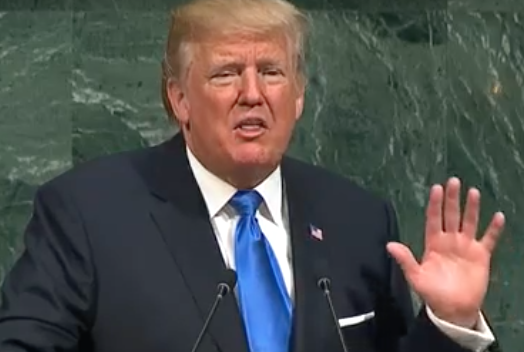
President Trump’s bellicose speech to the United Nations General Assembly last month sparked a crisis for the behind-the-scenes diplomacy that was then reaching out to North Korea and Iran, with Trump’s comments jeopardizing not only the talks but the credibility of the intermediaries, according to a source familiar with those efforts.

President Trump speaking to the United Nations
General Assembly on Sept. 19, 2017.
(Screenshot from Whitehouse.gov)

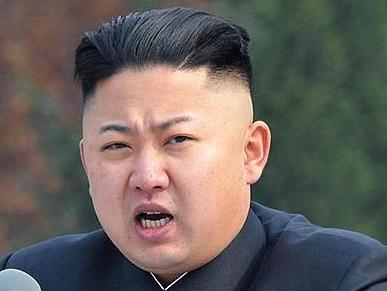
Trump essentially pulled the rug out from under the intermediaries by insulting North Korean leader Kim Jong Un as “Rocket Man,” threatening to “totally destroy” Kim’s nation of 25 million people, and calling for regime change in Iran. Trump’s bluster on Sept. 19 also deepened internal tensions with Secretary of State Rex Tillerson who was privately supporting the secret diplomacy.

The next day, when one of the intermediaries complained about the harm that Trump’s speech had caused, the President glibly explained that he liked to “zigzag” in charting his foreign policy, the source said.

The immediate consequences of Trump’s U.N. speech included ratcheting up nuclear-war tensions on the Korean peninsula and torpedoing a possible diplomatic breakthrough with Iranian President Hassan Rouhani. A proposed meeting between Rouhani and Trump around the Iranian president’s trip to the U.N. sank under Trump’s barrage of insults, the source said.

Trump’s “zigzag” approach to foreign policy has similarities to President Richard Nixon’s infamous “madman theory,” in which Nixon pretended to be crazy enough to launch a nuclear strike against North Vietnam in a ploy to gain concessions from Hanoi and its allies during the Vietnam War.

In Trump’s depiction of his business negotiating style, he has hailed the value of coming on tough to soften up a rival. But one problem of this approach in foreign policy is that Trump’s zigzagging left the U.S. government’s middlemen in the uncomfortable position of appearing to have misled senior North Korean and Iranian officials regarding what U.S. intentions were. The source said no one was in physical danger but apologies had to be made and the credibility of the initiatives suffered a severe blow.

In the case of North Korea, the backchannel goal had been to tamp down the heated rhetoric between Washington and Pyongyang and to persuade the North Koreans to begin talks with South Korea about the possibility of some loosely formed confederation that could then lead to the gradual withdrawal of U.S. military forces and a reduction in overall tensions.

Leaving Intermediaries in the Lurch


However, by using his maiden U.N. speech to personally insult North Korea’s leader and to threaten to annihilate the country, Trump left his intermediaries in the unenviable spot of trying to explain to North Korean officials the chasm between the U.S. administration’s private overtures and the President’s public outburst.


North Korean leader Kim Jong Un

That was the context behind Secretary of State Tillerson’s public acknowledgement last Saturday that the administration was engaged in direct communications with the North Korean government. In effect, Tillerson was trying to bolster the credibility of the intermediaries by putting the backchannel contacts into the public light.

“We are probing, so stay tuned,” Tillerson said. “We ask, ‘Would you like to talk?’ We have lines of communications to Pyongyang — we’re not in a dark situation, a blackout.”

Tillerson added, “We have a couple, three channels open to Pyongyang.” Tillerson even went out of his way to specify that these were American channels, not indirect contacts through China or some other third-party government.

“We can talk to them,” Tillerson said. “We do talk to them.” The Secretary of State then rebuffed a suggestion that he was referring to Chinese intermediaries. Shaking his head, Tillerson said, “Directly. We have our own channels.”

But Trump was not done with his administration’s zigzagging. On Sunday, he belittled the idea of a dialogue with North Korea by tweeting out that “I told Rex Tillerson, our wonderful Secretary of State, that he is wasting his time trying to negotiate with Little Rocket Man.”

“Save your energy Rex,” Trump added, before slipping in another thinly veiled threat of a military strike: “we’ll do what has to be done!”

However, despite Trump’s truculence, the source said the behind-the-scenes contacts with North Korea have resumed although they remain fragile amid concerns that Trump may again take to Twitter with more threats and insults – and again put the intermediaries in a no-man’s-land facing angry North Koreans leaders doubting the honesty and integrity of individuals supposedly representing the U.S. government.

The source said Trump has been apprised of this danger and supposedly has agreed not to undercut these intermediaries again.


President Trump meets with Israeli Prime Minister 
Benjamin Netanyahu in New York on Sept. 18, 2017
(Screenshot from Whitehouse.gov)

But Trump lacks enough sophistication about international relations to understand the complexities of the global chessboard and the risks involved in his erratic behavior. He is also susceptible to having his head turned by the last person who speaks with him, particularly if that person is Israeli Prime Minister Benjamin Netanyahu.

Some people around Trump traced the President’s destructive U.N. speech, in part, to Netanyahu’s insistence that Trump get in line behind the Israeli policy of continued hostility toward Iran and Syria.

When Trump was delivering the address to a mostly stone-faced General Assembly – with many delegates clearly distressed listening to crude threats of war at the podium of an institution created to achieve peace – one of the few visibly happy people in the building was Netanyahu as Trump embraced neoconservative war policies, albeit behind “America First” rhetoric.

Trump has continued to toe Netanyahu’s line in the President’s current threats to refuse certification that Iran is abiding by the 2015 nuclear-weapons accord even though senior administration officials and international inspectors have confirmed that Iran is in compliance.

So, the fate of Tillerson’s backchannel diplomacy may ultimately rest on whether the troublemaking Netanyahu pulls Trump’s chain again or whether President Zigzag wakes up at 3 a.m. with an itchy Twitter finger and a desire to look tough.

Investigative reporter Robert Parry broke many of the Iran-Contra stories for The Associated Press and Newsweek in the 1980s. You can buy his latest book, America’s Stolen Narrative, either in print here or as an e-book (from Amazon and barnesandnoble.com).

Sunday, October 08, 2017

Corbyn and Britain's "New" Politics

The Rising of Britain's 'New Politics'

by John Pilger - Information Clearing House


October 6, 2017

Delegates to the recent Labour Party conference in the English seaside town of Brighton seemed not to notice a video playing in the main entrance. The world's third biggest arms manufacturer, BAE Systems, supplier to Saudi Arabia, was promoting its guns, bombs, missiles, naval ships and fighter aircraft.

It seemed a perfidious symbol of a party in which millions of Britons now invest their political hopes.

Once the preserve of Tony Blair, it is now led by Jeremy Corbyn, whose career has been very different and is rare in British establishment politics.

Addressing the Labour conference, the campaigner Naomi Klein described the rise of Corbyn as "part of a global phenomenon. We saw it in Bernie Sanders' historic campaign in the US primaries, powered by millennials who know that safe centrist politics offers them no kind of safe future."

In fact, at the end of the US primary elections last year, Sanders led his followers into the arms of Hillary Clinton, a liberal warmonger from a long tradition in the Democratic Party.

As President Obama's Secretary of State, Clinton presided over the invasion of Libya in 2011, which led to a stampede of refugees to Europe. She gloated at the gruesome murder of Libya's president. Two years earlier, Clinton signed off on a coup that overthrew the democratically elected president of Honduras. That she has been invited to Wales on 14 October to be given an honorary doctorate by the University of Swansea because she is "synonymous with human rights" is unfathomable.

Like Clinton, Sanders is a cold-warrior and "anti-communist" obsessive with a proprietorial view of the world beyond the United States. He supported Bill Clinton's and Tony Blair's illegal assault on Yugoslavia in 1998 and the invasions of Afghanistan, Syria and Libya, as well as Barack Obama's campaign of terrorism by drone. He backs the provocation of Russia and agrees that the whistleblower Edward Snowden should stand trial. He has called the late Hugo Chavez - a social democrat who won multiple elections - "a dead communist dictator".

While Sanders is a familiar liberal politician, Corbyn may be a phenomenon, with his indefatigable support for the victims of American and British imperial adventures and for popular resistance movements.

For example, in the 1960s and 70s, the Chagos islanders were expelled from their homeland, a British colony in the Indian Ocean, by a Labour government. An entire population was kidnapped. The aim was to make way for a US military base on the main island of Diego Garcia: a secret deal for which the British were "compensated" with a discount of $14 million off the price of a Polaris nuclear submarine.

I have had much to do with the Chagos islanders and have filmed them in exile in Mauritius and the Seychelles, where they suffered and some of them "died from sadness", as I was told. They found a political champion in a Labour Member of Parliament, Jeremy Corbyn.

So did the Palestinians. So did Iraqis terrorised by a Labour prime minister's invasion of their country in 2003. So did others struggling to break free from the designs of western power. Corbyn supported the likes of Hugo Chavez, who brought more than hope to societies subverted by the US behemoth.

And yet, now Corbyn is closer to power than he might have ever imagined, his foreign policy remains a secret.

By secret, I mean there has been rhetoric and little else. "We must put our values at the heart of our foreign policy," said Corbyn at the Labour conference. But what are these "values"?

Since 1945, like the Tories, British Labour has been an imperial party, obsequious to Washington: a record exemplified by the crime in the Chagos islands.

What has changed? Is Corbyn saying Labour will uncouple itself from the US war machine, and the US spying apparatus and US economic blockades that scar humanity?

His shadow Foreign Secretary, Emily Thornberry, says a Corbyn government "will put human rights back at the heart of Britain's foreign policy". But human rights have never been at the heart of British foreign policy - only "interests", as Lord Palmerston declared in the 19th century: the interests of those at the apex of British society.

Thornberry quoted the late Robin Cook who, as Tony Blair's first Foreign Secretary in 1997, pledged an "ethical foreign policy" that would "make Britain once again a force for good in the world".

History is not kind to imperial nostalgia. The recently commemorated division of India by a Labour government in 1947 - with a border hurriedly drawn up by a London barrister, Gordon Radcliffe, who had never been to India and never returned - led to blood-letting on a genocidal scale.

Shut up in a lonely mansion, with police night and day

Patrolling the gardens to keep the assassins away,

He got down to work, to the task of settling the fate

Of millions. The maps at his disposal were out of date

And the Census Returns almost certainly incorrect,

But there was no time to check them, no time to inspect

Contested areas. The weather was frightfully hot,

And a bout of dysentery kept him constantly on the trot,

But in seven weeks it was done, the frontiers decided,

A continent for better or worse divided.

W.H. Auden, 'Partition'


It was the same Labour government (1945--51), led by Prime Minister Clement Attlee - "radical" by today's standards - that dispatched General Douglas Gracey's British imperial army to Saigon with orders to re-arm the defeated Japanese in order to prevent Vietnamese nationalists from liberating their own country. Thus, the longest war of the century was ignited.

It was a Labour Foreign Secretary, Ernest Bevin, whose policy of "mutuality" and "partnership" with some of the world's most vicious despots, especially in the Middle East, forged relationships that endure today, often sidelining and crushing the human rights of whole communities and societies. The cause was British "interests" - oil, power, wealth.

In the "radical" 1960s, Labour's Defence Secretary, Denis Healey, set up the Defence Sales Organisation (DSO) specifically to boost the arms trade and make money from selling lethal weapons to the world. Healey told Parliament, "While we attach the highest importance to making progress in the field of arms control and disarmament, we must also take what practical steps we can to ensure that this country does not fail to secure its rightful share of this valuable market."

The doublethink was quintessentially Labour. When I later asked Healey about this "valuable market", he claimed his decision made no difference to the volume of military exports. In fact, it led to an almost doubling of Britain's share of the arms market. Today, Britain is the second biggest arms dealer on earth, selling arms and fighter planes, machine guns and "riot control" vehicles, to 22 of the 30 countries on the British Government's own list of human rights violators.

Will this cease under a Corbyn government? The preferred model - Robin Cook's "ethical foreign policy" - is revealing. Like Jeremy Corbyn, Cook made his name as a backbencher and critic of the arms trade. "Wherever weapons are sold," wrote Cook, "there is a tacit conspiracy to conceal the reality of war" and "it is a truism that every war for the past two decades has been fought by poor countries with weapons supplied by rich countries".

Cook singled out the sale of British Hawk fighters to Indonesia as "particularly disturbing". Indonesia "is not only repressive but actually at war on two fronts: in East Timor, where perhaps a sixth of the population has been slaughtered... and in West Papua, where it confronts an indigenous liberation movement".

As Foreign Secretary, Cook promised "a thorough review of arms sales". The then Nobel Peace Laureate, Bishop Carlos Belo of East Timor, appealed directly to Cook: "Please, I beg you, do not sustain any longer a conflict which without these arms sales could never have been pursued in the first place and not for so very long." He was referring to Indonesia's bombing of East Timor with British Hawks and the slaughter of his people with British machine guns. He received no reply.

The following week Cook called journalists to the Foreign Office to announce his "mission statement" for "human rights in a new century". This PR event included the usual private briefings for selected journalists, including the BBC, in which Foreign Office officials lied that there was "no evidence" that British Hawk aircraft were deployed in East Timor.

A few days later, the Foreign Office issued the results of Cook's "thorough review" of arms sales policy. "It was not realistic or practical," wrote Cook, "to revoke licences which were valid and in force at the time of Labour's election victory". Suharto's Minister for Defence, Edi Sudradjat, said that talks were already under way with Britain for the purchase of 18 more Hawk fighters. "The political change in Britain will not affect our negotiations," he said. He was right.

Today, replace Indonesia with Saudi Arabia and East Timor with Yemen. British military aircraft - sold with the approval of both Tory and Labour governments and built by the firm whose promotional video had pride of place at the Labour Party conference - are bombing the life out of Yemen, one of the most impoverished countries in the world, where half the children are malnourished and there is the greatest cholera epidemic in modern times.

Hospitals and schools, weddings and funerals have been attacked. In Ryadh, British military personnel are reported to be training the Saudis in selecting targets.

In Labour's 2017 manifesto, Jeremy Corbyn and his party colleagues promised that "Labour will demand a comprehensive, independent, UN-led investigation into alleged violations... in Yemen, including air strikes on civilians by the Saudi-led coalition. We will immediately suspend any further arms sales for use in the conflict until that investigation is concluded."

But the evidence of Saudi Arabia's crimes in Yemen is already documented by Amnesty and others, notably by the courageous reporting of the British journalist Iona Craig. The dossier is voluminous.

Labour does not promise to stop arms exports to Saudi Arabia. It does not say Britain will withdraw its support for governments responsible for the export of Islamist jihadism. There is no commitment to dismantle the arms trade.

The manifesto describes a "special relationship [with the US] based on shared values... When the current Trump administration chooses to ignore them... we will not be afraid to disagree".

As Jeremy Corbyn knows, dealing with the US is not about merely "disagreeing". The US is a rapacious, rogue power that ought not to be regarded as a natural ally of any state championing human rights, irrespective of whether Trump or anyone else is President.

When Emily Thornberry linked Venezuela with the Philippines as "increasingly autocratic regimes" - slogans bereft of facts and ignoring the subversive US role in Venezuela - she was consciously playing to the enemy: a tactic with which Jeremy Corbyn will be familiar.

A Corbyn government will allow the Chagos islanders the right of return. But Labour says nothing about renegotiating the 50-year renewal agreement that Britain has just signed with the US allowing it to use the base on Diego Garcia from which it has bombed Afghanistan and Iraq.

A Corbyn government will "immediately recognise the state of Palestine". But it is silent on whether Britain will continue to arm Israel, continue to acquiesce in the illegal trade in Israel's illegal "settlements" and treat Israel merely as a warring party, rather than as an historic oppressor given immunity by Washington and London.

On Britain's support for Nato's current war preparations, Labour boasts that the "last Labour government spent above the benchmark of 2 per cent of GDP" on Nato. It says, "Conservative spending cuts have put Britain's security at risk" and promises to boost Britain's military "obligations".

In fact, most of the £40 billion Britain currently spends on the military is not for territorial defence of the UK but for offensive purposes to enhance British "interests" as defined by those who have tried to smear Jeremy Corbyn as unpatriotic.

If the polls are reliable, most Britons are well ahead of their politicians, Tory and Labour. They would accept higher taxes to pay for public services; they want the National Health Service restored to full health. They want decent jobs and wages and housing and schools; they do not hate foreigners but resent exploitative labour. They have no fond memory of an empire on which the sun never set.

They oppose the invasion of other countries and regard Blair as a liar. The rise of Donald Trump has reminded them what a menace the United States can be, especially with their own country in tow.

The Labour Party is the beneficiary of this mood, but many of its pledges - certainly in foreign policy - are qualified and compromised, suggesting, for many Britons, more of the same.

Jeremy Corbyn is widely and properly recognised for his integrity; he opposes the renewal of Trident nuclear weapons; the Labour Party supports it. But he has given shadow cabinet positions to pro-war MPs who support Blairism, tried to get rid of him and abused him as "unelectable".

"We are the political mainstream now," says Corbyn. Yes, but at what price?

Follow John Pilger on twitter @johnpilger - http://johnpilger.com/

Bringing In Palestine's Olives

Olive Harvest, England, and More

by Mazin Qumsiyeh - palestinenature.org 


October 8, 2017

A week in Palestine is always very busy, full of positive and negative happenings but always full of new educational opportunities.

For examples from the past few days: We had a meeting and a visit to Bethlehem Mental Health Institution discussing their significant needs and we (Rotary Club of Bethlehem and Palestine Institute of Biodiversity and Sustainability) might be able to help.

On Wednesday we had our first coffee cooked over biogas (gas we generated from organic compost with anaerobic bacteria).


Image: http://www.jai-pal.org/en/campaigns/
olive-tree-campaign/olive-picking-program

On Thursday I gave my master students their first exam (many did very well, others should improve). Also on Thursday we met with very good people from inside and outside the municipal council of Beit Sahour to plan a better greener sustainable town.

On Friday we had a memorial for our departed friend Qavi and we sincerely thank the 60 people who attended and many others who helped or simply sent letters of condolences or in other ways contributed to having a meaningful memorial.

On Saturday, we attended two conferences one by Muwatin on issues of democracy and one by Masarat on the Palestinian situation and reconciliation between Hamas and Fatah. These two institutions should be listened to. I had a challenging question to Dr. Nabil Shaath who spoke on behalf of Mahmoud Abbas. I implored them end the charade of a “two-state solution” and endless negotiations (begging).

On Sunday, our team was conducting a workshop for school students in Bruqeen (an area we documented genotoxic effect of Israeli industrial settlements which impact native people health). In between several meetings every day, writing papers, grant proposals, supporting needy people, and much more.

In short we are “having joyful participation in the sorrows of this world”. You can join us (e.g. in 10 days we need help harvesting olives in our botanical garden) and follow us on facebook for photos etc under Palestine Museum of Natural History or my own personal page under Mazin Qumsiyeh


I will be giving public lectures in England October 24- November 3. My schedule is posted here: http://qumsiyeh.org/upcomingevents/

That ‘Israel Lobby’ Controversy? History Has Proven Us Right by Stephen M. Walt:
http://forward.com/opinion/383901/that-israel-lobby-controversy-history-has-proven-us-right/

Dream Defenders, Black Lives Matter & Ferguson Reps Take Historic Trip to Palestine:
http://www.ebony.com/news-views/dream-defenders-black-lives-matter-ferguson-reps-take-historic-trip-to-palestine#axzz4u5FVV0mc

At Native American prayer camp, Palestinian refugees share stories and build connections:
http://mondoweiss.net/2017/09/american-palestinian-connections/

Stay Human

Mazin Qumsiyeh
A bedouin in cyberspace, a villager at home
Professor and (volunteer) Director
Palestine Museum of Natural History
Palestine Institute of Biodiversity and Sustainability
Bethlehem University
Occupied Palestine
http://qumsiyeh.org
http://palestinenature.org
Join me on facebook: https://www.facebook.com/mazin.qumsiyeh.9

HumanRights newsletter
http://lists.qumsiyeh.org/listinfo/humanrights

Never Deliver Party: NDP Wavers on "Fish Farm" "Promises"

BC's Never Deliver Party? 

by Don Staniford - Green Around the Gills


October 8, 2017

If the BC New Democratic Party dilly-dally and dither any longer they should seriously consider changing their name to the BC Never Deliver Party. As time ebbs away, the chances of the NDP actually delivering on their pre-election pledge to protect wild salmon and remove salmon farms appears more and more remote.

Anyone watching Andrew Weaver, leader of the Green Party of British Columbia, "seeking clarity" of the NDP in the BC Legislature last month will have been alarmed at the NDP's lack of commitment (the NDP's negative body language alone is enough to ring alarm bells).


[Please see link for full article. - ape]


Watch video online here


The NDP may not have a time-line for the removal of salmon farms but time is fast running out for wild salmon - and for the credibility of the NDP. A comparison of the NDP's pre-election pledges and promises with the NDP's post-election procrastinations and prevarications leaves a nasty smell (rather reminiscent of a salmon farm).