Monday, October 08, 2018

The Untouchables: How Saudi Regime's Rogue Behaviour Reigns

The Royal Touch: How Saudi Money Keeps Washington at War in Yemen

by Ben Freeman - TomDispatch


October 4, 2018

It was May 2017. The Saudis were growing increasingly nervous. For more than two years they had been relying heavily on U.S. military support and bombs to defeat Houthi rebels in Yemen.

Now, the Senate was considering a bipartisan resolution to cut off military aid and halt a big sale of American-made bombs to Saudi Arabia.

Fortunately for them, despite mounting evidence that the U.S.-backed, supplied, and fueled air campaign in Yemen was targeting civilians, the Saudi government turned out to have just the weapon needed to keep those bombs and other kinds of aid coming their way: an army of lobbyists.

That year, their forces in Washington included members of more than two dozen lobbying and public relations firms. Key among them was Marc Lampkin, managing partner of the Washington office of Brownstein Hyatt Farber Schreck (BHFS), a company that would be paid nearly half a million dollars by the Saudi government in 2017.

Tomgram: Ben Freeman, The Saudi Lobby Juggernaut

If you were sleeping in 2010 when the Supreme Court -- you know, the perfectly reasonable one that didn’t yet have Brett Kavanaugh on it -- made political spending a form of free speech with its Citizens United case, you may not yet know that American politics is increasingly a possession of the 1%. In fact, for the first time in American history, there’s even a billionaire in the Oval Office showering tax perks on every other billionaire in sight. During the last eight years, not so surprisingly, “outside spending” in election campaigns has headed for the stratosphere. According to Open Secrets, “During the 2016 election cycle, the top 20 individual donors (whose contributions were disclosed) gave more than $500 million combined to political organizations. The 20 largest organizational donors also gave a total of more than $500 million, and more than $1 billion came from the top 40 donors.” Think about that for a moment and also consider this: in the 2016 campaign season, hardline pro-Israeli casino magnate Sheldon Adelson and his wife, Miriam, gave millions of dollars to President Trump’s campaign and nearly $83 million in all to Republicans. Now, according to the New York Times, Adelson has a “direct line to the president,” a reality reflected in The Donald’s decision to move the U.S. embassy in Israel to Jerusalem. In addition, in this mid-term election season, the couple has already invested a staggering $55 million in efforts to keep Congress in Republican hands.

And don’t think of this new reality as a purely all-American one either. There are some distinctly un-American deep pockets out there on our planet that are also pouring money into this country’s politics in order to get their own direct lines buzzing to Washington. In fact, speaking about the Middle East, as TomDispatch’s Ben Freeman, director of the Foreign Influence Transparency Initiative at the Center for International Policy, points out today, right at the top of that list are the royals of Saudi Arabia. That includes, of course, Prince Mohammed bin Salman, now the power behind the throne in that country. He’s wooed President Trump with the promise of massive future Saudi arms deals and, earlier this year, reportedly bragged that he had the president’s son-in-law, Jared Kushner, a key adviser on the Middle East, “in his pocket.” And what a pocket that's proven to be! Given the disastrous Saudi war in Yemen that the prince launched in 2015 and that Washington has supported ever since, believe me, that's no small thing. Today, Freeman offers an unprecedented look at just how a set of foreign Sheldon Adelsons have opened their deep, oil-rich pockets and put American politicians of all sorts in them. It’s a story that needs to be told. Tom

The Royal Touch: How Saudi Money Keeps Washington at War in Yemen

by Ben Freeman


Records from the Foreign Agents Registration Act (FARA) show that Lampkin contacted Senate offices more than 20 times about that resolution, speaking, for instance, with the legislative director for Senator Tim Scott (R-SC) on May 16, 2017. Perhaps coincidentally, Lampkin reported making a $2,000 contribution to the senator’s political action committee that very day.

On June 13th, along with a majority of his fellow senators, Scott voted to allow the Saudis to get their bombs. A year later, the type of bomb authorized in that sale has reportedly been used in air strikes that have killed civilians in Yemen.

Little wonder that, for this and his other lobbying work, Lampkin earned a spot on the “Top Lobbyists 2017: Hired Guns” list compiled by the Washington publication the Hill.

Lampkin’s story was anything but exceptional when it comes to lobbyists working on behalf of the Kingdom of Saudi Arabia. It was, in fact, very much the norm. The Saudi government has hired lobbyists in profusion and they, in turn, have effectively helped convince members of Congress and the president to ignore blatant human rights violations and civilian casualties in Yemen. According to a forthcoming report by the Foreign Influence Transparency Initiative program, which I direct, at the Center for International Policy, registered foreign agents working on behalf of interests in Saudi Arabia contacted Congressional representatives, the White House, the media, and figures at influential think tanks more than 2,500 times in 2017 alone. In the process, they also managed to contribute nearly $400,000 to the political coffers of senators and House members as they urged them to support the Saudis. Some of those contributions, like Lampkin’s, were given on the same day the requests were made to support those arms sales.

The role of Marc Lampkin is just a tiny sub-plot in the expansive and ongoing story of Saudi money in Washington. Think of it as a striking tale of pay-to-play politics that will undoubtedly be revving up again in the coming weeks as the Saudi lobby works to block new Congressional efforts to end U.S. involvement in the disastrous war in Yemen.

A Lobby to Contend With


The roots of that lobby’s rise to prominence in Washington lie in the aftermath of the terrorist attacks of September 11, 2001. As you may remember, with 15 of those 19 suicidal hijackers being citizens of Saudi Arabia, it was hardly surprising that American public opinion had soured on the Kingdom. In response, the worried Saudi royals spent around $100 million over the next decade to improve such public perceptions and retain their influence in the U.S. capital. That lobbying facelift proved a success until, in 2015, relations soured with the Obama administration over the Iran nuclear deal. Once Donald Trump won the presidency, however, the Saudis saw an unparalleled opportunity and launched the equivalent of a full-court press, an aggressive campaign to woo the newly elected president and the Republican-led Congress, which, of course, cost real money.

As a result, the growth of Saudi lobbying operations would prove extraordinary. In 2016, according to FARA records, they reported spending just under $10 million on lobbying firms; in 2017, that number had nearly tripled to $27.3 million. And that’s just a baseline figure for a far larger operation to buy influence in Washington, since it doesn’t include considerable sums given to elite universities or think tanks like the Arab Gulf States Institute, the Middle East Institute, and the Center for Strategic and International Studies (to mention just a few of them).

This meteoric rise in spending allowed the Saudis to dramatically increase the number of lobbyists representing their interests on both sides of the aisle. Before President Trump even took office, the Saudi government signed a deal with the McKeon Group, a lobbying firm headed by Howard “Buck” McKeon, the recently retired Republican chairman of the House Armed Services Committee. His firm also represents Lockheed Martin, one of the top providers of military equipment to the Kingdom. On the Democratic side, the Saudis inked a $140,000-per-month deal with the Podesta Group, headed by Tony Podesta, whose brother John, a long-time Democratic Party operative, was the former chairman of Hillary Clinton’s presidential campaign. Tony Podesta later dissolved his firm and has allegedly been investigated by Special Counsel Robert Mueller for serving as an unregistered foreign agent.

And keep in mind that all this new firepower was added to an already formidable arsenal of lobbying outfits and influential power brokers, including former Republican Senate Majority Leader Trent Lott, who, according to Lee Fang of the Intercept, was “deeply involved in the [Trump] White House hiring process,” and former Senator Norm Coleman, chairman of the pro-Republican Super PAC American Action Network. All told, during 2017, Saudi Arabia inked 45 different contracts with FARA-registered firms and more than 100 individuals registered as Saudi foreign agents in the U.S. They proved to be extremely busy. Such activity reveals a clear pattern: Saudi foreign agents are working tirelessly to shape perceptions of that country, its royals, its policies, and especially its grim war in Yemen, while simultaneously working to keep U.S. weapons and military support flowing into the Kingdom.

While the term “foreign agent” is often used as a synonym for lobbyist, part of the work performed by the Kingdom’s paid representatives here resembles public relations activity far more than straightforward lobbying. For example, in 2017, Saudi foreign agents reported contacting media outlets more than 500 times, including significant outreach to national ones like the New York Times, the Washington Post, the Wall Street Journal, and PBS, which has aired multiple documentaries about the Kingdom. Also included, however, were smaller papers like the Pittsburgh Post-Gazette and more specialized outlets, even ESPN, in hopes of encouraging positive stories.

The Kingdom’s image in the U.S. clearly concerned those agents. Still, the lion’s share of their activity was focused on security issues of importance to that country’s royals. For example, Saudi agents contacted officials at the State Department, which oversees most commercial arms transfers and sales, nearly 100 times in 2017, according to FARA filings. Above all, however, their focus was on Congress, especially members with seniority on key committees. As a result, at some point between late 2016 and the end of 2017, Saudi lobbyists contacted more than 200 of them, including every single Senator.

The ones most often dealt with were, not surprisingly, those with the greatest leverage over U.S. relations with Saudi Arabia. For example, the office of Senator Lindsey Graham (R-SC), who sits on both the appropriations and armed services committees, was the most contacted, while that of Senator Chris Coons (D-DE) was the top Democratic one. (He sits on the appropriations and foreign relations committees.)

Following the Money from Saudi Arabia to Campaign Coffers


Just as there’s a clear pattern when it comes to contacting congressional representatives who might help their Saudi clients, so there’s a clear pattern to the lobbying money flowing to those same members of Congress.

The FARA documents that record all foreign-agent political activity also list campaign contributions reported by those agents. Just as we did for political activities, the Foreign Influence Transparency Initiative program conducted an analysis of all campaign contributions reported in those 2017 filings by firms that represented Saudi interests. And here’s what we found: more than a third of the members of Congress contacted by such a firm also received a campaign contribution from a foreign agent at that firm. In total, according to their 2017 FARA filings, foreign agents at firms representing Saudi clients made $390,496 in campaign contributions to congressional figures they, or another agent at their firm, contacted on behalf of their Saudi clients.

This flow of money is best exemplified by the 11 separate occasions we uncovered in which a firm reported contacting a congressional representative on behalf of Saudi clients on the same day someone at the same firm made a campaign contribution to the same senator or House member. In other words, there are 10 other cases just like Marc Lampkin’s, involving foreign agents at Squire Patton Boggs, DLA Piper, and Hogan Lovells. For instance, Hogan Lovells reported meeting with Senator Bob Corker (R-TN) on behalf of the Royal Embassy of Saudi Arabia on April 26, 2017, and that day an agent at the firm made a $2,700 contribution to “Bob Corker for Senate 2018.” (Corker would later decide not to seek reelection.)

While some might argue that contributions like these look a lot like bribery, they turn out to be perfectly legal. No law bars such an act, and while it’s true that foreign nationals and foreign governments are prohibited from making contributions to political campaigns, there’s a simple work-around for that, one the Saudis obviously made use of big time. Any foreign power hoping to line the pockets of American politicians just has to hire a local lobbyist to do it for them.

As Jimmy Williams, a former lobbyist, wrote: “Today, most lobbyists are engaged in a system of bribery, but it’s the legal kind.”

The Saudi Lobby Today


Fast forward to late 2018 and that very same lobby is now fighting vigorously to defeat a House measure that would end U.S. support for the Saudi war in Yemen. They’re flooding congressional offices with their requests, in effect asking Congress to ignore the more than 10,000 civilians who have died in Yemen, the U.S. bombs that have been the cause of many of those deaths, and a civil war that has led to a resurgence of al-Qaeda in the Arabian Peninsula, or AQAP. They’ll probably mention Secretary of State Mike Pompeo’s recent “certification” that the Saudis are now supposedly taking the necessary steps to prevent more civilian casualties there.

What they’re not likely to mention is that his decision was reportedly driven by the head of the legislative affairs team at the State Department who just happens to be a former foreign agent with BGR Government Affairs, one of 35 FARA registrants working for Saudi Arabia at this moment. Such lobbyists and publicists are using the deep pockets of the Saudi royals to spread their propaganda, highlighting the charitable work that government is doing in Yemen. What they fail to emphasize, of course, are the Saudi blockade of the country and the American-backed, armed, and fueled air strikes that are killing civilians at weddings, funerals, school bus trips, and other civilian events. All of this is, in addition, helping to create a grotesque famine, a potential disaster of the most extreme sort and the very reason such humanitarian assistance is needed.

In the end, even if the facts aren’t on their side, the dollars are. Since September 2001, that reality has proven remarkably convincing in Washington, as copious dollars flowed from Saudi Arabia to U.S. military contractors (who are making billions selling weapons to that country), to lobbying firms, and via those firms directly into Congressional coffers.

Is this really how U.S. foreign policy should be determined?

Ben Freeman is the director of the Foreign Influence Transparency Initiative at the Center for International Policy (CIP). This is his second TomDispatch piece.

Follow TomDispatch on Twitter and join us on Facebook. Check out the newest Dispatch Books, Beverly Gologorsky's novel Every Body Has a Story and Tom Engelhardt's A Nation Unmade by War, as well as Alfred McCoy's In the Shadows of the American Century: The Rise and Decline of U.S. Global Power, John Dower's The Violent American Century: War and Terror Since World War II, and John Feffer's dystopian novel Splinterlands.

Copyright 2018 Ben Freeman

Bulgarian Authorities Probe Journalist, Victoria Marinova's Murder

Bulgarian TV journalist who covered EU corruption brutally murdered

by RT


8 Oct, 2018

A TV reporter who covered EU funds fraud cases was brutally murdered and allegedly raped in northern Bulgaria. It's the third murder of a journalist in the EU amid concerns over press freedom. Victoria Marinova, 30, (far left) who hosted a show on local TVN, was found dead on a popular jogging route near the Danube in the city of Ruse Saturday.
European journalists murdered this year:
Victoria Marinova, Daphne Caruana Galizia and Jan Kuciak

[UPDATE:  German authorities arrest 21 year old Bulgarian for Marinova murder. (Guardian).]


The city has never seen such a brutal crime, according to experienced criminologists cited by local media.

The woman was raped and beaten, and succumbed to head injuries and suffocation, according to local media citing investigators. The victim’s cell phone, car keys, and some clothes were not found with her, but the car reportedly was not stolen.

No official version of the chilling murder has been presented so far as the authorities are trying to find the perpetrators, saying it’s “just a matter of time.” Police have not ruled out any motives for the heinous crime.

Meanwhile, the OSCE representative on freedom of the media, Harlem Desir, called on the authorities to “quickly determine” if this attack was “linked to her work.”

Some already speculate that the woman might have been the victim of her latest report. She hosted the recently-launched ‘Detector’ program, and its last episode covered the investigation by Bivol website, claiming to expose a corruption scheme inside EU-funded projects.

Marinova earlier was an anchor of another program called ‘Podium’, which aired reports on various topics.

TVN, the station she worked for, said she had never received any threats and the entire staff is shocked by the incident.

Marinova is the third reporter to be killed in the span of a year in the EU, as concern grows regarding press safety and freedom.

Last October, prominent Maltese journalist Daphne Caruana Galizia, who exposed the Maltese prime minister’s offshore dealings in the Panama Papers scandal, died in a car bomb attack.

In February, Slovak investigative journalist Jan Kuciak was shot dead. The 27-year-old was known for his reports on tax fraud and shady dealings of Slovakia’s elite, and the police did not rule out that the murder was related “to his investigative activity.”

Where Is Jamal Khashoggi? Saudi Journo Disappears After Embassy Visit

Turkey Says Critical Saudi Journalist Was Killed in Saudi Consulate

by TRNN (Partner Content Provided by Deutsche Welle)


October 8, 2018

Turkish authorities have suggested that a missing Saudi journalist was murdered by a special hit squad inside Saudi Arabia’s consulate in Istanbul. The prominent commentator was last seen entering the diplomatic mission.


Saudi journalist Jamal Khashoggi missing after visiting Saudi Arabian Consulate in Istanbul

Sunday, October 07, 2018

"To the Ramparts!" Preserving American Freedom of Speech

Ralph Nader, “To The Ramparts”

Media of the Day - CounterPunch


October 5, 2018


Forgive My Trespass...

Forgiveness is Overrated

by Caitlin Johnstone - Rogue Journalist


October 7, 2018

Journalist David Sirota has just published an excellent op-ed titled, “America’s new aristocracy lives in an accountability-free zone”, which begins with the observation that “Enron executives were among the last politically connected criminals to face any serious consequences for institutionalized fraud.” Sirota goes on to remind readers how there was never any attempt by either mainstream political party to bring accountability to anyone responsible for monstrous offenses ranging from the disastrous invasion of Iraq to the ecocidal manipulations of fossil fuel plutocrats to the Wall Street plundering which led to the 2008 global financial crisis.

Sirota’s argument is solid: there is an aristocratic class which has successfully neutered all the institutional mechanisms which were meant to protect the powerless from the powerful.

The government is bought and owned by the plutocrats and so is the media, as the continued forgiveness of unforgivable transgressions which those institutions have been bestowing upon the aristocracy clearly reflects. This means that the only thing left protecting the populace from the powerful is the populace itself.

A couple of years back I read a Shaun King article titled “Stop asking black victims of white violence if they forgive their victimizers”, about a bizarre trend in which the black survivors of police shootings and racially motivated terrorism were consistently finding themselves barraged with questions about forgiveness.

King wrote about how “before her son, Philando, had even been buried, his body riddled with bullets from a Minnesota police officer, Valerie Castile was asked live on CNN if she forgave the man who shot him,” which is a truly demented thing to ask someone in such a situation. Why would a newscaster bring up forgiveness when a horrific injustice has just been inflicted and no measures of any kind have even been taken to rectify it?

In response to the latest wave of sex scandals in the Roman Catholic Church, “masses of forgiveness” were held in August as a way to help the faithful in “healing” their distrust of the institution which has upheld itself as the highest moral authority in the world for two thousand years.

“I beg forgiveness for these sins and for the scandal and betrayal felt by so many others in God’s family,” said Pope Francis at a Marian shrine in Ireland in response to the degradation and abuse inflicted upon the people of that nation by trusted Church officials.

The concept of forgiveness is a recurring theme in any abusive relationship, and necessarily so, because without extensive value being placed upon that concept there wouldn’t be a relationship.

You wouldn’t have a battered wife, you’d have a story about how a woman’s boyfriend hit her one time and she grabbed all her stuff and split.

You wouldn’t have a brainwashed and exploited cult member, you’d have a story about how someone met a group of people and left when things got weird.

You wouldn’t have a major world religion consistently embroiled in horrifying scandals, you’d have people dismissing that religion and placing their energy and attention elsewhere.

You wouldn’t have a society that constantly allows itself to be manipulated into consenting to abuse and exploitation by an aristocratic class, you’d have a people’s uprising in which the vastly outnumbered elites are shrugged off and replaced with a system which benefits humanity.

Forgiveness is overrated. There are only two types of people who consistently promulgate the importance of forgiveness: abusers and their codependents. The abuse can range from pedophilia and battery to war and ecocide, and the codependency can range from a wife saying she fell down the stairs again to a newscaster demanding to know when the mother of a son just gunned down by police will forgive his murderer, but the formula remains the same in each instance.

Anyone who goes around around telling everyone else how important it is to forgive is either an abuser or one of their brainwashed Stockholm syndrome victims. Forgiveness is something you do for yourself, for your own benefit, when you are ready and only for freeing yourself from energetic entanglements. Those who have truly learned the value of authentic forgiveness don’t run around telling other people to forgive those who have wronged them, because they understand that you don’t need anyone else’s help or permission to forgive somebody, and you don’t even need anyone to change necessarily.

If you really want to forgive someone so that you can move on and stop thinking about it, you can do so as long as they’re not doing the bad thing to you anymore. They don’t have to repent or admit to their wrongdoing or whatever; you can forgive them for being the thing they are just like you can forgive a man-eating bear for being a man-eating bear. If it would really benefit your inner peace and undo some mental chatter, you can zoom out and see that a human being’s behavior is patterned like the veins in a leaf, and that patterning rarely changes. You unknowingly walked into that person’s path as innocently as if you’d accidentally walked in front of a bus. Forgiving someone can just be letting go of the idea that they will change, or that they would’ve done anything different or would do anything different given the chance.

Once you’ve seen that though, you don’t let them back in your life, and you certainly don’t let them go on running the world. Man-eating bear be man-eating bear, man. You don’t let a man-eating bear hang around long enough to eat another one of your children, and you don’t let a neocon hang around long enough to destroy another middle-eastern country. You know what they do, you’ve seen what they are, and you don’t let them do it anymore.

Being lulled into a state of inertia with hypnotic entreaties about forgiveness and how we’re all kinda fucked up and we all make mistakes and we’re all the same is just another psychologically abusive manipulation performed by the abusers and their codependents. Some people in the highest echelons of power right now have facilitated the most extraordinary barbaric crimes on a scale that even the worst serial killer in his most horrifying fantasies could barely bring himself to imagine. Our greatest mistake as a species right now is forgiving them.

One major way that sociopaths differ from normal people is that they don’t think about things in terms of feeling bad or feeling good about doing something, they just think about the consequences. If you don’t feel guilt, you don’t worry about feeling guilty. It literally doesn’t factor into your decision-making process. “Oh, I won’t do that again because I sure do feel bad about that million people I helped kill” is not a thought that ever goes through their head. If the consequences of Iraq were a buttload of profit and a regular spot on CNN with absolutely no downside whatsoever, no uncomfortable trip to the Hague, no endless prison sentence, no stripping of wealth, status and power, then of course they want to do it again and again and again and again and again. They will do it until they are stopped.

So America’s new aristocracy must be stopped, and the only way they can be stopped is to be held to account, right here, on earth, as soon as humanly possible. Allowing them to go on for even one more day is acknowledging that there are no consequences for evil, and when there are no consequences for evil, evil will reign.

And that’s where we are right now. Evil reigns, but it’s a simple matter of restoring justice to the earth by the people taking their power back and standing in judgement of these pricks and making sure they do not do this again. Passing judgement on someone is an idea that makes good people feel uneasy, and that’s deliberate. From the Pope down, we’ve been anesthetized with this mind-virus that in order to be good people we just put our head down, work hard, die poor, and let God do the judging. How convenient for power is that story? A little too convenient. Sold to us by the same people who rape children and sit on a throne of stolen riches.

I don’t buy it anymore, and neither should you.

________________________

Thanks for reading! The best way to get around the internet censors and make sure you see the stuff I publish is to subscribe to the mailing list for my website, which will get you an email notification for everything I publish. My articles are entirely reader-supported, so if you enjoyed this piece please consider sharing it around, liking me on Facebook, following my antics on Twitter, checking out my podcast, throwing some money into my hat on Patreon or Paypal,buying my new book Rogue Nation: Psychonautical Adventures With Caitlin Johnstone, or my previous book Woke: A Field Guide for Utopia Preppers.


Bitcoin donations:1Ac7PCQXoQoLA9Sh8fhAgiU3PHA2EX5Zm2

Corbyn Vilification Campaign: UK Media Ignore Report Exposing Misleading Media Coverage

Blanket Silence: Corporate Media Ignore New Report Exposing Distorted And Misleading Coverage of Corbyn

by Media Lens


October 3, 2018

If there's one thing we've learned in the 17 years since Media Lens began, it's that media professionals generally hate being challenged, critiqued or criticised.

This fierce antipathetical belligerence underlies the corporate media's total refusal to mention, far less discuss, a recent damning report on how the corporate media have been misreporting Labour and its supposed 'problem' with antisemitism.

The report was published last week by the Media Reform Coalition (MRC), set up in 2011 in the wake of the News International phone hacking scandal, to promote debate about the media and democracy.

The MRC coordinates effective action by civil society groups, academics and media campaigners, and is currently chaired by Natalie Fenton, Professor of Communication and Media at Goldsmiths, University of London.

The urgent need for such a media initiative is highlighted by the disturbing reality that Britain has one of the most concentrated media environments in the world, with just three companies in control of 71% of national newspaper circulation and five companies running 81% of local newspaper titles.

In the careful MRC study, articles and news segments on Labour and antisemitism from the largest UK news providers, both online and television, were subjected to in-depth analysis. The research was undertaken by Dr Justin Schlosberg, Senior Lecturer in Journalism and Media at Birkbeck, University of London, together with Laura Laker, an experienced freelance journalist.

In their study, Schlosberg and Laker identified:

'myriad inaccuracies and distortions in online and television news including marked skews in sourcing, omission of essential context or right of reply, misquotation, and false assertions made either by journalists themselves or sources whose contentious claims were neither challenged nor countered. Overall, our findings were consistent with a disinformation paradigm.'

In other words, the corporate media have been pumping out reams of 'fake news' promoting a narrative that Corbyn and Labour are mired in an 'antisemitism crisis'.

Out of over 250 articles and news pieces examined by Schlosberg and Laker, fully 95 examples were found of misleading or inaccurate reporting. In particular, there were (our emphasis):

• 29 examples of false statements or claims, several of them made by news presenters or correspondents themselves, six of them on BBC television news programmes, and eight on the Guardian website.

• A further 66 clear instances of misleading or distorted coverage including misquotations, reliance on single -source accounts, omission of essential facts or right of reply, and repeated value-based assumptions made by broadcasters without evidence or qualification. In total, a quarter of the sample contained at least one documented inaccuracy or distortion.

Overwhelming source imbalance, especially on television news where voices critical of Labour's code of conduct on antisemitism were regularly given an unchallenged and exclusive platform, outnumbering those defending Labour by nearly 4 to 1. Nearly half of Guardian reports on the controversy surrounding Labour's code of conduct featured no quoted sources defending the party or leadership.

This is, to say the least, totally unacceptable from any supposedly responsible news outlet. It is even more galling when it comes from the Guardian and BBC News, both with large global audiences, who constantly proclaim their credentials for 'honest and balanced reporting'.

Much recent corporate media coverage has focused on the International Holocaust Remembrance Alliance (IHRA) definition of 'antisemitism'. Corporate media across the spectrum have argued that in refusing to accept the IHRA definition in total, with all of its accompanying examples, Corbyn has promoted antisemitism, alienated Britain's Jewish community and divided his own party.

Philip Collins wrote in The Times of Corbyn (our emphasis):

'He has, for some reason he cannot articulate, insisted that the Labour Party should be just about the only institution that does not accept the definition of antisemitism approved by the International Holocaust Remembrance Alliance.'

In July, a Times editorial stated of Labour's National Executive Committee (our emphasis):

'Instead of adopting a standard definition of antisemitism formulated by the International Holocaust Remembrance Alliance, and endorsed by governments around the world, the NEC has amended it in unacceptable ways... Let there be no doubt: these are unconscionable and antisemitic accusations.'

In September, another Times leader opined (our emphasis):

'Labour's national executive committee will vote today on whether to adopt the internationally recognised definition of antisemitism. It is essential that it does. Governments and organisations worldwide have adopted the carefully worded text developed by the International Holocaust Remembrance Alliance. Jeremy Corbyn's hamfisted attempt to rewrite it, without consultation and with the apparent aim of protecting certain activists, shames his party.'

The Times added:

'British Jews are well placed to define what constitutes racism towards them, just as any minority deserves the last word in the debate as it applies to them. Gordon Brown has called for Labour to "unanimously, unequivocally and immediately" adopt all the examples. Anything less would mark a dark day indeed for the party.'

Noting that three leading British Jewish newspapers had declared that a Corbyn-led government would pose 'an existential threat to Jewish life in this country', senior Guardian columnist and former comment editor Jonathan Freedland asked:

'How on earth has it come to this?'

Part, but not all, of the problem, Freedland suggested, was (our emphasis):

'Labour's failure to adopt the full text of the near universally accepted International Holocaust Remembrance Alliance's (IHRA) definition of antisemitism, including all its illustrative examples'.

He added:

'When Jews hear that the IHRA is not good enough, they wonder: what exactly is it that Labour wants to say about us?'

And yet, as the MRC report [pdf] makes clear, although the IHRA is an international body with representatives from 31 countries, only six of those countries have, to date, formally adopted the definition themselves. Several high-profile bodies have rejected or distanced themselves from the working definition, including the EU's Fundamental Rights Agency - a successor to the body that drafted the original wording on which the definition is based - and academic institutions including the London School of Economics and School of Oriental and African Studies. Moreover, academic and legal opinion has been overwhelmingly critical of the IHRA definition, including formal opinions produced by four leading UK barristers.

But, note Schlosberg and Laker:

'Virtually none of this essential context found its way into news reports of the controversy. Instead, the Labour Party was routinely portrayed by both sources and correspondents as beyond the pale of conventional thinking on the IHRA definition.'

Nearly 50% of Guardian reports failed to include any quotes from those critiquing the IHRA definition or defending Labour's code of conduct on antisemitism. In fact, media reporting (our emphasis):

'effectively gave those attacking Labour's revised code and championing the IHRA definition a virtually exclusive and unchallenged platform to air their views. By comparison, their detractors – including a number of Jewish organisations and representatives of other affected minorities – were systematically marginalized from the coverage. Furthermore, Labour MPs adopting even moderate positions defending the code were subjected to far more aggressive questioning from interviewers than those adopting extreme positions attacking it.'

In a calm, methodical and rigorous manner, the MRC has exposed to public view the blatant anti-Corbyn bias of even the 'best' media outlets: the BBC and the Guardian.

Response To The Media Reform Coalition Report


Our searches using the ProQuest newspaper database reveal that there has not been a single news article or editorial published about the report. This is a remarkable symptom of the glaring tendency of the media to reject, or simply blank, reasoned, well-researched criticism.

When The Canary website published an article about the MRC report, they approached both the Guardian and the BBC for comment. The Guardian's response was boilerplate rhetoric – 'The Guardian has featured a wide range of voices in this debate', etc - that failed to acknowledge the paper's unambiguous distortions and omissions. The BBC did not even provide a comment.

The sole newspaper mention to date is a letter in the Guardian which may only have been published because Noam Chomsky is one of the signatories, along with high-profile figures such as Brian Eno, Yanis Varoufakis, Ken Loach and a number of media academics. They make a crucial point that relates to criticism of the Guardian itself (mentioned earlier):

'In relation to the IHRA definition of antisemitism that was at the heart of the dispute, the research found evidence of "overwhelming source imbalance" in which critics of Labour's code of conduct dominated coverage, with nearly 50% of Guardian reports, for example, failing to include any quotes from those defending the code or critiquing the IHRA definition.'

The letter also notes the MRC researchers' conclusion that media distortions and inaccuracies:

'were not occasional lapses in judgment but "systematic reporting failures" that served to weaken the Labour leadership and to bolster its opponents within and outside of the party.'

Chomsky and his co-signatories add:

'In covering the allegations that Labour is now "institutionally antisemitic", there have been inaccuracies, clear distortions and revealing omissions across our most popular media platforms. We believe that significant parts of the UK media have failed their audiences by producing flawed reports that have contributed to an undeserved witch-hunt against the Labour leader and misdirected public attention away from antisemitism elsewhere, including on the far right, which is ascendant in much of Europe.'

Given the Guardian's appalling record of boosting fake news of a Labour 'antisemitism crisis', and given its vehement opposition to Corbyn's brand of moderate socialism, it is no wonder that #DumpTheGuardian and #BoycottTheGuardian were trending in the UK last Friday as part of a dedicated Twitter campaign.

Pro-Corbyn Labour MP Chris Williamson tweeted his support in response to the MRC report:

'My reference to McCarthyism vindicated by this report. The Guardian newspaper's deplorable contribution explains why so many people are saying #BoycottTheGuardian'

Last Wednesday, Jeremy Corbyn gave a speech to the Labour Party conference in which he dared to criticise the British corporate media who have been gunning for him ever since he became the party's leader:

'It turns out that the billionaires who own the bulk of the British press don't like us one little bit.

'Now it could be because we're going to clamp down on tax dodging. Or it may be because we don't fawn over them at white tie dinners and cocktail parties.'

He added:

'We must, and we will, protect the freedom of the press to challenge unaccountable power.

'Journalists from Turkey to Myanmar and Colombia are being imprisoned, harassed or sometimes killed by authoritarian governments and powerful corporate interests just for doing their job.

'But here, a free press has far too often meant the freedom to spread lies and half-truths, and to smear the powerless, not take on the powerful.

'You challenge their propaganda of privilege by using the mass media of the 21st century: social media.'

Pippa Crerar, Guardian deputy political editor, responded with the standard kneejerk conflation of Corbyn's reasoned comments with the idiotic 'fake news' mantra of Trump. She tweeted:

'Corbyn criticises some parts of British media, claiming they "smear the powerless, not take on the powerful". As a journalist, makes me very uncomfortable to hear him leading attack on our free press. Dangerous, Trumpian territory.'

We responded:

'Honest, rational criticism is not an "attack", and it is not "dangerous". A corporate press that refuses to listen or respond to this kind of reasonable criticism is itself dangerous. If anyone has a right to criticise media smears, it is @jeremycorbyn.'

The level of popular support for this view is indicated by the fact that our tweet has so far received 518 retweets and 1,222 likes; a massive response by our standards.

To her credit, Crerar did engage with us reasonably, unlike the vast majority of her media colleagues over many years:

'Totally agree media has to reflect/listen. Not for a minute saying we're perfect (some elements extremely *imperfect*). But orgs also do invaluable work eg Windrush, grooming scandal, MPs expenses so just not true to say we don't hold power to account.'

We answered:

'Thanks for replying, Pippa, very much appreciated. Glad you agree "media has to reflect/listen". Doesn't that mean taking Corbyn's thoughtful, reasoned criticism seriously, rather than lumping it in with Trump's awful tub-thumping? Corbyn and Milne really aren't "dangerous".'

Her follow-up:

'I've sat back today & watched pile-on. I'd always rather engage but not when abusive. Like I said, media far from perfect, but I fear JC's comments ignored excellent journalism that does exist & undermined journalists who produce it. Of course, nowhere near as extreme as Trump.'

And our reply:

'Our response generated nearly 800 [now 1,700] likes and retweets - that gives an idea of the strength of feeling. Like other media, the Guardian's smearing of Corbyn has gone way too far. It's time to start listening to your readers @KathViner.'

To date, there has been no further exchange; and certainly not a peep out of Guardian editor, Katharine Viner; which is typical for this extraordinarily unresponsive media professional.

Justin Schlosberg, lead author of the MRC report, told The Canary:

'Neither the Guardian nor the BBC have acknowledged or even directly responded to the myriad reporting failures highlighted in our research. It is completely inadequate to offer blanket dismissals or simply kick into the long grass of their respective complaints procedures.'

Schlosberg pointed out:


'The failure to answer to these allegations is even more serious than the reporting failures themselves.'

Conclusion


As a further, related example of bias, consider the corporate media's stunning indifference to the bomb threat that interrupted the screening of a new film, 'The Political Lynching of Jackie Walker', in Liverpool on September 25. Walker is a former Momentum Vice-Chair who was suspended from the Labour party as part of a propaganda blitz attempting to silence critics of Israel. The screening was organised by Jewish Voice for Labour which has been supportive of Jeremy Corbyn.

If the corporate media were genuinely motivated by concerns about alleged rising antisemitism, this shocking threat would have generated headline coverage. Instead it was met by a blanket of silence. A brief online Guardian piece was, to say the least, ambiguous in its narrative. Ex-Guardian journalist Jonathan Cook noted:


'Another "fake news" master-class from the Guardian. A bomb hoax to stop Corbyn-supporting, Jewish Labour members screening a film about how Labour's "anti-semitism crisis" has been manufactured is framed as *more* evidence of Jew hatred in the party!'

According to our ProQuest database search, the only mentions in the print press have been in the Liverpool Echo and The Times of Israel. Where are all the editorials and major comment pieces in the Guardian, The Times and elsewhere?

As for the Media Reform Coalition report itself, it is no surprise that the BBC, the Guardian and the rest of the corporate media should brush away detailed reasoned criticism of their biased reporting, or pretend such clear evidence does not exist. These media outlets sell themselves as publicly accountable; or, at least, as defenders of the public interest; a valiant fourth estate standing up for the truth and honest, neutral news coverage. And yet, when the alternative media makes a mistake, or says 'the wrong thing', there are angry howls and screaming mockery from the corporate commentariat. The hypocrisy is staggering, and, again, entirely predictable.

DC & DE

'Propaganda Blitz', the new Media Lens book, has just been published by Pluto Press.

We recently made an urgent appeal for support.

Saturday, October 06, 2018

Balloon Girl Self-Destructs

'We've Been Banksy'd!' Balloon Girl Self-Destructs on Fetching 1.3 Million at Sotheby's Auction

by RT


October 6, 2018

The elusive world-famous British street artist Banksy has reportedly pulled off one of the greatest art heists, allowing his own painting to self-destruct, just moments after ‘Girl with a Balloon’ had fetched over £1mn at auction.

Art lovers and collectors appeared shocked the moment Banksy’s Girl with a Balloon shredded itself into ribbons immediately after hammering a record of £860,000 (£1.04mn or $1.37mn with buyer's premium) at a Contemporary Art Evening Auction at Sotheby's London on Friday.

The 101cm-by-78 cm canvas in an artist's frame, annihilated in front of the auctioneers by a mechanism apparently hidden within the base of the frame, with just strips left to admire from the 2006 masterpiece produced by the famous-yet-anonymous British artist.

Dry Rainforest

Drought-Laden Rainforest 

by Robert Hunziker - CounterPunch


October 6, 2018

The world’s rainforests are under attack at a rate of 2.5 acres per second. Global warming and clear-cutting for growing palm oil and raising cattle are some of the biggest annihilators.

The repercussions are devastating. For example, one of the consequences is harmful alteration of hydrological cycles for major grain-growing regions of the planet.

But, that’s just the start of trouble.

Disrupted hydrological cycles, which are only now being disclosed by new research, are one example amongst many of the aftereffects of stressed-out ecosystems as a result of (a) global warming, (b) turbo-charged climate change, and (c) the persistent human footprint. The awful truth is that ecosystems across the world are stressed-out like never before.

But, nobody sees it.

Uncommonly stressed-out ecosystems occur most prominently where nobody lives, nobody sees, Antarctica, Tibetan glaciers, the Arctic, Siberian permafrost, Colorado River Basin, Alaskan permafrost Andes’ glaciers, Patagonia, Totten glacier, East Siberian Arctic Sea, ocean plankton, the Amazon rainforest. Who lives anywhere near those hot spots of ecosystem disruption?

Over time, the breakdowns turn more powerful, more dangerous, as a discordant world fails to come to grips with distinct risks of several tipping points simultaneously flaring up all at once. Such a horrific scenario could strike with the impact of a 7.5-mile-wide asteroid. The last time that happened 65 million years ago it was sayonara in a flash of geological time. If dinosaurs couldn’t handle it, well, as for Homo sapiens… hmm.

As a suggestion, maybe a world conference on “Impending Ecosystem Collapses” should be held, similar to Paris 2015, but titled: How in the hell did we let this happen? With a sub-conference titled: No-holds-barred capitalism’s infinite growth syndrome clashes with ecological preservation. Or, how about: Would capitalism-lite be better? Or, how about: Starting all over again?

Eliminating excessive amounts of CO2 in the atmosphere would be a good start, a big leap forward to curing a lot of ills, and should be combined with reforestation and an enforceable order to stop cutting down rainforests with reckless abandon. According to Global Forest Watch: “Deforestation in crucial tropical rainforests has doubled since 2008.” Much of it is illegal and linked to corruption.

“A growing body of evidence indicates that the continuing destruction of tropical forests is disrupting the movement of water in the atmosphere, causing major shifts in precipitation that could lead to drought in key agricultural areas in China, India, and the U.S. Midwest.” (Source: Fred Pearce, Rivers in the Sky: How Deforestation Is Affecting Global Water Cycles, YaleEnvironment360, July 24, 2018)

Not only is there a problem with the hydrology cycle, but also three 100-year droughts (the ones that are supposed to happen once every 100 years!) hit the Amazon Rainforest like clockwork 2005-2010-2015 over the past 10 years. That’s unprecedented. As far as science knows, it has never happened before! It’s kinda like an out-of-body experience, hovering over blackened tree stumps as far as the eye can see.

Three droughts within a decade should take your breath away. If it doesn’t, it’s because of a failure to tune in to the overbearing Great Acceleration, aka: human footprint, overrunning planetary resources. Therefore, a key determinate for society’s longevity will be whether ecosystems, such as the rainforests, hang in there without cascading into irretrievable impracticable no-go oblivion.

Subsequent to the 2005 Amazon rainforest drought: ‘The biggest surprise for us was that the effects appeared to persist for years after the drought,’ said co-author Professor Yadvinder Malhi from the University of Oxford. ‘We had expected the forest canopy to bounce back after a year with a new flush of leaf growth, but the damage appeared to persist right up to the subsequent drought in 2010.” (Source: Malhi, et al, Effects of Drought in the Amazon Persist Years Later, Oxford University, 2018)

Another big problem: One season of drought can reduce the CO2 absorption ability of the Amazon for years to come. But, three back-to-back-to back droughts! Whew – triple ouch! Over time, it becomes impossible for the world’s great rainforests to combat global warming. Instead of serving as a “sink of CO2,” the forests “emit CO2,” happening now. Try that one on for size Mister Runaway Global Warming. Hmm- fits like a glove.


According to a study by NASA, the Amazon drought, over a three-year span, lost 270M metric tons of carbon per year. It’s not supposed to work that way folks. Part of the problem is global warming itself. A warming atmosphere shifts moisture away from the rainforest, which is the wrong direction!

Also, droughts self-perpetuate additional drought conditions, as a considerable portion of the rain that falls in a rainforest comes from water vapor that the trees release through their own leaves. But, dying leaves don’t release much water vapor, which shrinks the hydrological flow variability.

Photo: Mike Goren | CC BY 2.0

 A recent study “Amazon Outlook —Continued Warming, Multiyear Droughts,” Water Resources Research, a journal of the American Geophysical Union, July 10, 2018 says:

“Our work suggests that there is a possibility for even longer droughts, perhaps lasting multiple seasons or years, setting the stage for fires that could clear swaths of the rainforest.”

Scientists at NASA’s Jet Propulsion Laboratory found that after the 2005 drought the most affected parts of the Amazon Rainforest lost 35 inches rainfall in years following. (Source: Yan Yang, et al, Post-Drought Decline of the Amazon Carbon Sink, Nature, 2018)

As it happens, ongoing destruction of rainforests represents one of the major impacts of the Great Acceleration or the human footprint eclipsing nature. Already, early glimpses of that footprint are found stamped onto the backsides of three unprecedented 100-yr. droughts.

Rainforest decimation is but one of many ecosystem perils that should land on the desks of every world leader: “Urgent – Do Something!” And, oh yeah, while your at it maybe put in a good word for clean renewable energy.

In lieu of today’s inordinately compressed timeline of climate change (many scientists say stuff is happening 10xs faster than ever before), risks of widespread collapsing ecosystems are now more pronounced than at any time since the discovery of fire. It’s not too difficult to point a finger at the prime movers and shakers, i.e., excessive greenhouse gases like CO2 and the pitched battle over infinite growth. Infinity is a lot.

All of which brings to light the highly controversial Stern Review: The Economics of Climate Change, 2006 (more relevant today than back in the day). The British government requisitioned the high-powered study to calculate the economics of climate change. The landmark 700-page report, stated: “Climate change is the greatest and widest-ranging market failure ever seen.”

The Stern Review also ticked off a handful of consequences, assuming a “worst-case basis” and “business as usual, ” meaning no effort by the nations of the world to reign-in greenhouse gas emissions. Some of the mentions include, sea level rise possibly as high as 10-15 feet (remember- “worst-case basis”) in a few decades, Florida, NYC, and London likely flooded at various stages, and massive water-food shortages throughout the world, assuming temps run up 2C-5C during the century. And assuming “business as usual.”

Additionally, according to the report: Deforestation is responsible for more emissions than the transport sector, and a number of studies suggest “Amazon rainforest could be vulnerable to climate change, with models projecting significant drying in this region.” (a prophetic statement 12 years ago)

In sum, and relevant to all of the above, according to Mauna Loa Observatory as of Sept. 23, 2018 Atmospheric CO2 registers 405.5 ppm versus 381.82 ppm twelve years ago.

As an aside, following the asteroid collision 65mya within a period of 100,000 years, CO2 increased at rate of 0.2ppm/yr taking temps up 5C. Today we’re at “2.3 ppm/yr or the highest growth rate ever seen in modern times,” according to Carl Edward Rasmussen, University of Cambridge, Sept. 2018.

Apologies to Sir Nicholas Stern, as contrary to admonitions in his 700-page report, free-market globalists have cranked up the dial for CO2 up-up-and-away, forever more! Infinite growth!

Biz as usual prevails.

What was it Sir Nicholas Stern said about the “worst-case basis”?

Postscript: “Every tree in the forest is a fountain, sucking water out of the ground through its roots and releasing water vapor into the atmosphere through pores in its foliage. In their billions, they create giant rivers of water in the air – rivers that form clouds and create rainfall hundreds or even thousands of miles away.”

“But as we shave the planet of trees, we risk drying up these aerial rivers and the lands that depend on them for rain. A growing body of research suggests that this hitherto neglected impact of deforestation could in many continental interiors dwarf the impacts of global climate change. It could dry up the Nile, hobble the Asian monsoon, and desiccate fields from Argentina to the Midwestern United States.”
(Fred Pearce- eminent UK author and science journalist)
 
Robert Hunziker lives in Los Angeles and can be reached at rlhunziker@gmail.com.
More articles by:Robert Hunziker

Trump's Stealth Enshrinement of NAFTA 2.0

NAFTA 2.0 Enshrines Deregulation for all of North America

by TRNN


October 5, 2018

The new agreement, now named the U.S.-Mexico-Canada agreement or USMCA, seems to be a mixed bag of things that both corporate America wanted and that unions support.

For example, on the issue of auto manufacturing, the USMCA requires a higher percentage of domestically produced parts in order to qualify for zero tariffs when exported. Also, on wages, it requires workers to be paid an average of sixteen dollars per hour in order to be exempt from tariffs.

However, on copyright issues, the deal strengthens the hand of corporations by forcing countries to adopt U.S. copyright protections, which will have an effect on keeping drug prices higher than they otherwise would be.

To examine the effect of NAFTA 2.0, or the USMCA, on the environment and on food safety, is Patrick Woodall. Patrick is the Research Director for the group Food and Water Watch.


Trump’s re-negotiated NAFTA, now called the USMCA, pushes food safety and other forms of deregulation to new extremes, making it more difficult to undo the damage even after Trump leaves office, says Patrick Woodall of Food and Water Watch.

Friday, October 05, 2018

CORPORATE MANAGEMENT REASON FOR RUSSIAN OPERATIONS THAT GO WRONG

TOP SECRET//NOFORN/– THE RUSSIAN CORPORATE MANAGEMENT REASON FOR OPERATIONS THAT GO WRONG

by John Helmer - Dances with Bears


October 5, 2018

Moscow - Until mid-April, almost six months ago, the performances of the British, Dutch, Ukrainian and American intelligence agencies in producing evidence to explain the downing of Malaysian Airlines MH17 and the poisoning of Sergei and Yulia Skripal in Salisbury were about equal in fabrication quality and standard of proof; equally poor.

The four services had no need to use espionage tools or hack into the Netherlands-based organs investigating the missile attack and the poisoning. That is because their agents walked through the front doors of the Dutch Safety Board (DSB), the Joint Investigation Team (JIT), and the Organization for the Prohibition of Chemical Warfare (OPCW); took seats at their internal proceedings; and were given unrestricted access to their files. The agents of the four services also dictated the findings which have been published by the DSB, JIT, and OPCW; they have jointly agreed to withhold release of material evidence.

It has taken much longer for investigations by British, Dutch and other independent researchers to prove their fabrications and disinformation. The Russian contribution to this effort has been positive, though delayed, incomplete and contradictory, in the MH17 case; it has been negative in the Skripal case.

Then on April 13, four Russians were arrested in The Hague, the Dutch capital, in circumstances and on evidence suggesting they and their alleged employer, the Main Directorate of the General Staff (GRU), were attempting to spy on the OPCW by electronic means. Official disclosure of what they were doing was delayed for six months until this Thursday. The exposed Russian operation threatens to compromise the veracity of much of the independent investigations of the MH17 and Skripal cases.

How could the four middle-aged operatives and their superiors at GRU have miscalculated the risks and costs of being caught, as compared to their estimate of the gains of their OPCW operation, if they had got clean away?

One clue to the answer can be found at page 24 of the Dutch military intelligence dossier, titled “operational modus operandi”. In the baggage of the four Russians were two wads of unspent cash — €20,000 and $20,000.

Details of the failed Russian operation in The Hague and the successful counter-intelligence operation by the Dutch, have been summarised in the western media. For evidence on which the media have relied, there is this 41-page US grand jury indictment with detailed allegations of names and operations going back to late 2014, click to open.

For the Dutch operation at OPCW last April, there is this 34-page folder of pictures and captions issued by the Dutch Defence Intelligence and Security Service. General Onno Eichelsheim, the defence intelligence chief, also provided a briefing to accompany the dossier.

The US criminal charge against the Russian agents is not espionage, which is reportedly their job, but their job tools — wire fraud, identity theft, money laundering, conspiracy. The “victims” reported in the US indictment are government organizations and intergovernment agencies which have been running public campaigns and sanctions against Russian organizations; most of them involving doping in Olympic sports and World Cup football.

The US prosecutors report the Russian motives for the GRU operations to include efforts to “undermine, retaliate against or otherwise de-legitimize the efforts” of the anti-Russian campaigns of the “victims”. Although the US indictment has added a description of the OPCW operation, it alleges no Russian motive, and issues no criminal charge for what the four Russians had done before their arrest on April 13.

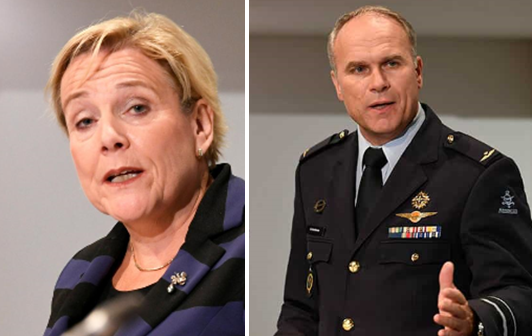
If state espionage requires a motive, the October 4 presentation by Dutch officials was ambiguous. The Dutch Minister of Defence Ank Bijleveld announced the obvious:

“let me reiterate what the Dutch authorities have said before, namely that all organisations involved in the MH17 investigation …have long been aware of the Russian intelligence services’ interest in this investigation and have implemented appropriate measures.” 

General Onno Eichelsheim, head of the Dutch military intelligence agency, claimed the Russian operation intended “digital manipulation and sabotage” of the OPCW.

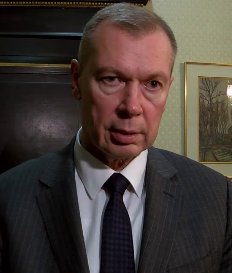
The week before the Russian team arrived at The Hague, Russia’s representative to the OPCW, Alexander Shulgin (right), supported by several other state delegates at the OPCW, had charged the British and Americans, and also the OPCW secretariat, of sabotage of the organization’s charter, especially Articles VIII and IX. These set the rules and procedures for investigating allegations of chemical warfare by one state against another.

The secretariat, run by a Turkish diplomat who previously ran NATO operations in Syria and Ukraine, was also accused of illegally keeping the investigation of the Skripal case secret from the Russian representative and other OPCW members.

Voting on this “sabotage” occurred at the OPCW session on April 4; the Russian team now publicly charged with trying to open this secret arrived one week later, on April 11. For details of the earlier story, read this.

Last night the Foreign Ministry in Moscow accused the Dutch and British of a fresh attempt to change the way the OPCW secretariat investigates allegations like those the British have made in the Skripal case. “Some Western countries,” a ministry statement charges, “are persistently seeking the creation of such a mechanism to apportion blame for the use of chemical weapons contrary to international law and in violation of the UN Security Council’s prerogative. It is apparent that the current smear campaign is another stage aimed at creating the ‘necessary’ political background in order to push through this illegitimate initiative.”

Dutch defence officials have told the press that among the equipment they took from the four Russians arrested in April “laptops also contained material related to the Dutch investigation into the 2014 downing of Malaysian Airlines flight MH17 over Ukraine”.

Also, the Dutch allege

“they…found evidence that a Russian officer had been in a Kuala Lumpur hotel near where Malaysian government officials were investigating the 2014 crash of the passenger jet over Ukraine that killed nearly 300 people.”

Left, Ank Bijleveld, Dutch Minister of Defence; right, General Onno Eichelsheim 
head of the Dutch Defence Intelligence and Security Service.

Moscow sources say new rounds of information warfare are to be expected, and there ought to be no surprise in the effort by the Russian intelligence services to investigate the OPCW after the positions the organization has taken in the Syrian cases and the Skripal case.

What is problematic this time, the sources believe, is that the four agents were caught with all of their equipment and personal records.

“The absence of standard security measures the four agents ought to have followed and their lack of tradecraft ought to be an embarrassment for their immediate superiors and for the GRU command. On first appearances this operation shows that GRU’s cyber-warfare units lack professionalism and command discipline.”


A source close to GRU cautions against theorizing and guesswork in intelligence operations, but speculates nonetheless.

“I am trying to imagine how the operation commanders assessed the risk that their four-man team would get caught, and whether what they were after was worth the risk they were running. There appears to have been a lot of cash budgeted for these operations, and I am wondering how much of it was handled the way Russian commercial businesses operate. Do I need to say more?”

Thursday, October 04, 2018

Brazilian Women Arise!

Brazil’s Women Rise Against Possible Far-Right Presidency

by TRNN


October 3, 2018

This coming Sunday, October 7, 147 million Brazilians are eligible to vote in the country’s elections for president, Congress, state governors, and state legislatures.

It will be a historic vote for several reasons. First, this is the first election following the impeachment, which many say actually was a coup, of President Dilma Rousseff. Second, the leading presidential candidate, former president Lula da Silva of the Workers Party, was barred from running in what his supporters and many independent analysts call a rigged trial on charges of corruption. Third, the vote could very well result in the election of a right-wing extremist, Jair Bolsonaro, who has a long history of misogyny, racism, homophobia, and support for Brazil’s brutal military dictatorship, which governed Brazil between 1964 and 1985.


Women in Brazil took to the streets across the country, to declare their opposition to far-right presidential candidate Jair Bolsonaro, ahead of Sunday’s presidential vote

Skripals and Sanctions Feature in Putin's Speech at Oil and Gas Confab

Anger Therapy in Wartime

by John Helmer - Dances with Bears


October 4, 2018

Moscow - On Monday President Vladimir Putin’s spokesman, Dmitry Peskov, responded to British and American press reports about the Skripal case by saying the Kremlin had decided not to respond.

“We will no longer talk with the media. The BBC cannot confirm anything; the BBC can put forward an assumption or something else. Since the whole discussion has been conducted at the media level, we, as the Kremlin, no longer want to take part in that discussion.”

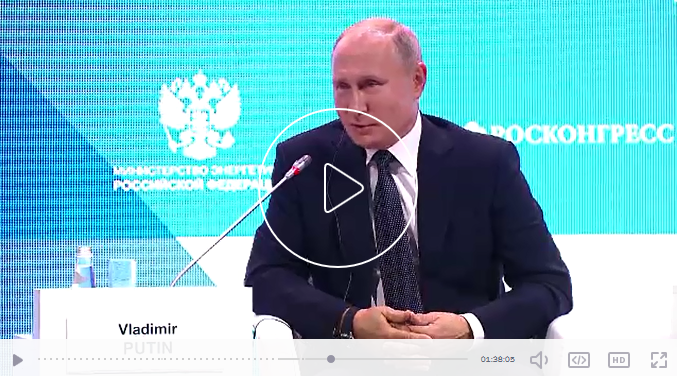
On Wednesday, in a speech to the international oil and gas industry, the state news agency Tass reported President Putin as declaring:

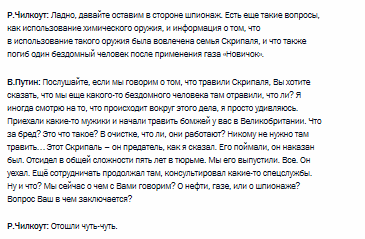
“Some media outlets are trying to put forward the idea that [Sergei] Skripal was practically a human rights defender. He is simply a spy and a traitor to his country. He is just scum (подонок) and that is it.”

Watch the session in full, with English translation voice-over.


The question about Skripal was asked by Ryan Chilcote, an American broadcaster employed by CNN, the US Public Broadcasting System, and Bloomberg. Chilcote offers himself for hire through the London Speakers Bureau “Bring Ryan Chilcote as a keynote speaker to your next event to motivate your audience”, his agent announces.

Chilcote didn’t ask Putin a direct question about Skripal. He asked about the sanctions which have followed.

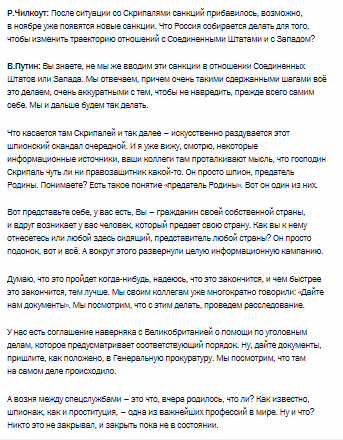
“After the situation with Skripal, sanctions have increased; in November, possibly, there will already be new sanctions. What is Russia going to do the change the trajectory of relations with the United States and with the West?”

Putin decided to speak directly about Skripal at Min:1:05:41. Подонок appears at Min:1:07:03.

Kremlin record of Putin’s speech and Q&A session: http://en.kremlin.ru/

The Tass translation for Putin’s term подонок is not the accepted one. Scumbag and bastard are more common translations. The live voice-over English translation as Putin was speaking was “scoundrel”.

Reuters, Bloomberg, the Murdoch press, and CNN opted for scumbag. The official Kremlin translation into English says: “He is scum, that’s all.”


Kremlin text: http://kremlin.ru/


Putin spoke about the Skripal case for almost five minutes. The Tass and other press reports have compressed his remarks.

“He is just a spy, a traitor to the motherland. Do you understand? There is such a concept as ‘traitor to the motherland’ [audience applause]. He’s one of them.”
“Just imagine the situation – you are a citizen of your own country, and all of a sudden in your country, there is a person who betrays it. How will you treat him – the normal reaction would be to say he’s a подонок, that’s all. And around it a whole information campaign has been launched.
I hope this will blow over, the sooner the better. All this squabbling between the special services didn’t just surface yesterday. As we all know, espionage, just like prostitution, is one of the world’s most important professions. No one has ever shut it down, nor is anyone still able to close it down.”