Friday, October 12, 2018

Shaking Hands with the Devil: Facebook Joins Internet Political Purge

Facebook carries out massive purge of oppositional pages

by Andre Damon  - WSWS


12 October 2018 

On Thursday, Facebook removed some of the most popular oppositional pages and accounts on the world’s largest social media network, in a massive and unconstitutional assault on freedom of expression.

With no public notice or accounting, over 800 pages and accounts have been summarily removed from the internet. The removed pages include Police the Police, with a following of over 1.9 million, Cop Block, with a following of 1.7 million, and Filming Cops, with a following of 1.5 million.

Other pages targeted include Anti-Media, with 2.1 million followers, Reverb Press, with 800,000 followers, Counter Current News, 500,000 followers, and Resistance, 240,000 followers.

Facebook COO Sheryl Sandberg shakes hands with
Senate Intelligence Committee Chairman Richard Burr

Right-wing publications, including Right Wing News, were also removed.

The move has no precedent in the history of the internet. Workers throughout the United States and the world must be put on notice: the ruling elite is meeting a growing strike wave by workers with the expansion of censorship and police state measures.

In a blog post, Facebook announced that it was “banning… Pages, Groups and accounts created to stir up political debate,” referring to this as “coordinated inauthentic activity.”

These pages use “sensational political content” to “build an audience and drive traffic to their websites.” Tellingly, the social media monopoly added that the pages “are often indistinguishable from legitimate political debate.”

Facebook said the pages were targeted for their “behavior,” including operating “multiple accounts” and posting “clickbait.” These half-hearted efforts to deny that it is targeting oppositional Facebook pages with unsubstantiated allegations about their “behavior” are a transparent lie.

In an instant, the world’s largest social media monopoly has removed avenues through which the American population learns about police criminality, state murder and other government crimes.

An article in the New York Times on Facebook’s moves makes clear that the moves to censor the internet, which began under the pretext of combatting “Russian meddling” in the 2016 elections, are now openly targeting domestic political organizations.

In “Made and Distributed In the USA: Online Disinformation,” the Times refers approvingly to the suppression of “influence campaigns” that “are increasingly a domestic phenomenon fomented by Americans on the left and the right.” It cites an “information warfare researcher” from the New Media Frontier organization as stating,

“There are now well-developed networks of Americans targeting other Americans with purposefully designed manipulations.”

The Times further sites Ryan Fox, co-founder of New Knowledge, as claiming that censored pages and organizations “are trying to manipulate people by manufacturing consensus—that’s crossing the line over free speech.” Fox has previously worked for the NSA and the US Joint Special Operation Command. The CEO of New Knowledge, Jonathon Morgan, is connected to the Brookings Institution and was previously a special advisor to the US State Department.

In alliance with the state, Facebook and other social media companies are deciding what organizations constitute “well-developed networks” seeking to “manipulate” public opinion. Of course, this applies not to the mass media, which are engaged in constant government propaganda, but to oppositional groups.

The main targets are left-wing organizations. In August 2017, the World Socialist Web Site published an open letter to Google alleging that it was censoring left-wing, anti-war and socialist websites. As a result of changes to Google’s search ranking algorithm, traffic to leading left-wing pages dropped by as much as 75 percent.

“Censorship on this scale is political blacklisting,” the letter declared.

“The obvious intent of Google’s censorship algorithm is to block news that your company does not want reported and to suppress opinions with which you do not agree.
Political blacklisting is not a legitimate exercise of whatever may be Google’s prerogatives as a commercial enterprise. It is a gross abuse of monopolistic power. What you are doing is an attack on freedom of speech.”

The same indictment applies to Facebook’s latest action.

Censorship by social media monopolies has been instigated by leading figures within the US government, including Democratic Senators Mark Warner and Dianne Feinstein and Democratic Congressman Adam Schiff, who have demanded that the companies suppress “divisive content” in repeated hearings of the House and Senate intelligence and judiciary committees.

In acting as the agents of the American government in carrying out mass censorship, Facebook is directly violating the First Amendment of the Constitution, which prohibits the government from “abridging the freedom of speech.”

While attempting to hide their efforts behind the false pretenses of stopping “inauthentic behavior,” the social media companies in internal discussions have directly acknowledged that they are engaging in political censorship. An internal Google document leaked on Tuesday admitted that “tech firms have gradually shifted away from unmediated free speech and towards censorship.”

The document acknowledged that such actions constitute a break with the “American tradition that prioritizes free speech for democracy.” Amid growing demands by the government and corporate advertisers to police what users say, the document states, censorship is a means to “increase revenues.”

These efforts are entirely in line with plans by the US military to move towards a police state regime. Last month, the Atlantic Council summarized the proceedings of a US Special Forces conference that called for a sweeping crackdown on freedom of expression.

The report observed that “technology has democratized the ability for sub-state groups and individuals to broadcast a narrative with limited resources and virtually unlimited scope,” bypassing the “professional gatekeepers” of the establishment media.

Social media companies have been “thrust into a central role” in seeking to stifle “incorrect” political viewpoints because the vast majority of the population opposes direct government censorship, the report noted.

In January, the World Socialist Web Site called for the formation of an international coalition of socialist, anti-war and progressive websites and organizations to oppose the government’s drive to censor the internet. We urge all organizations that have been censored by Facebook to contact us and join this coalition.

Thursday, October 11, 2018

Purge Splurge: Twitter, Facebook Target Dissent

Facebook, Twitter Purge More Dissident Media Pages in Latest Escalation

by Caitlin Johnstone - Rogue Journalist


October 11, 2018

Facebook has purged more dissident political media pages today, this time under the pretense of protecting its users from “inauthentic activity.”

In a statement co-authored by Facebook Head of Cybersecurity Nathaniel Gleicher (who also happens to be the former White House National Security Council Director of Cybersecurity Policy), the massive social media platform explained that it has removed, “559 Pages and 251 accounts that have consistently broken our rules against spam and coordinated inauthentic behavior.

This “inauthentic behavior”, according to Facebook, consists of using “sensational political content – regardless of its political slant – to build an audience and drive traffic to their websites,” which is the same as saying they write about controversial things, and posting those political articles “in dozens of Facebook Groups, often hundreds of times in a short period, to drum up traffic for their websites.”

In other words, the pages were removed for publishing controversial political content and trying to get people to read it. Not for writing “fake news”, but for doing what they could to get legitimate indie media news stories viewed by people who might want to view it.

The practice of sharing your material around in Facebook groups is common practice for most independent media content creators; I did it myself a lot in late 2016 and early 2017, and pretty much all my indie media peers at the time did too.


Rachel Blevins  
@RachBlevins

Excellent breakdown the of the Facebook purge by @RealAlexRubi with commentary from some of the page owners who have poured countless hours over the last few years into building reputable Facebook pages that still dare to challenge the mainstream narrativehttps://sputniknews.com/us/201810121068814924-Reporters-Pages-Shut-Down-By-Facebook/ 

EXCLUSIVE: Meet the Reporters Whose Pages 
Were Shut Down By Facebook

Facebook purged hundreds of pages from its platform on Thursday. But instead of the usual targets - namely Russia and Iran - Thursday’s ban shut down accounts operated by independent American...
sputniknews.com
“For those of you who read what I write, you know that I did not violate any standards,” writes Terresa Monroe-Hamilton, whose personal profile and Facebook page for her political blog NoisyRoom.net were both deleted. 

“In fact, I don’t send out most of what I write. I send on big news links and a few memes. It was enough to get me banned and the pages are simply gone.”
“Facebook took down my page with nearly 70,000 followers, labeling it as ‘spam,’ when I have spent 4 years working to build that page up and using it to post the articles I wrote and videos of my reporting,” tweeted RT America’s Rachel Blevins.
“This is so incredibly wrong and is affecting hundreds of similar pages.”

“And just like that 5 + years of hard work promoting ideas of peace and freedom have been erased,” wrote a Facebook user called John Liberty, who lost multiple pages about police accountability, cannabis legalization and libertarianism.

Two of the most high-profile pages which were shut down have probably been seen at some point by any political dissident who uses Facebook; the Free Thought Project, which had 3.1 million followers, and Anti-Media, which had 2.1 million. I’ve found useful information on both sites before, and despite disagreeing with them ideologically in some areas have found them both vastly more legitimate than anything you’ll find on Google News.

As if that wasn’t creepy enough, some of the accounts purged by Facebook appear to be getting censored on Twitter as well, bringing back memories of the August cross-platform coordinated silencing of Alex Jones. The aforementioned Anti-Media has now been suspended from Twitter just hours after tweeting about being removed from Facebook, along with one of its top writers Carey Wedler, and a Unicorn Riot activist named Patti Beers who had more than 30,000 Twitter followers has just been removed from both sites as well.

I have said it before and I will say it again: in a corporatist system, wherein there is no clear line between corporate power and government power, corporate censorship is government censorship. You can’t have a system wherein corporate lobbying and campaign finance amount to legalized bribery of elected officials, wherein massive Silicon Valley corporations form extensive ties with secretive government agencies in order to eclipse their competition, and then claim this is a matter of private corporations enforcing their own rules on their own private property. This is just what totalitarian government censorship looks like in a corporatist oligarchy.

Do you want a few Silicon Valley plutocrats determining what political speech constitutes “inauthentic activity” for you? Do you want a world in which the masses are herded into massive government-allied social media stables which are then regularly brought before the US Senate to pledge more iron-fisted censorship of problematic political speech? Do you want a world in which social media corporations are forced to make alliances with existing power structures in order to be allowed to grow? Do you want a world in which venues of political discourse are increasingly sterilized to favor the agendas of the ruling class? If not, the time to act is now.

Regardless of where you’re at on the political spectrum, if you oppose the status quo then opposing internet censorship of any political speech is now a matter of simple self defense. If this wasn’t obvious to you when they shut down Alex Jones, it should damn well be obvious to you now. If you want to change the existing system in any way which takes power away from those currently in power, your voice is next on the chopping block. They’re locking all the doors down as fast as they can to keep us trapped in this Orwellian oligarchy until they get us all killed by war or ecocide. If they shut down the public’s ability to share dissident information, they’ll have locked the final door. Don’t let them.

_________________________

Thanks for reading! The best way to get around the internet censors and make sure you see the stuff I publish is to subscribe to the mailing list for my website, which will get you an email notification for everything I publish. My articles are entirely reader-supported, so if you enjoyed this piece please consider sharing it around, liking me on Facebook, following my antics on Twitter, checking out my podcast, throwing some money into my hat on Patreon or Paypal,buying my new book Rogue Nation: Psychonautical Adventures With Caitlin Johnstone, or my previous book Woke: A Field Guide for Utopia Preppers.


Bitcoin donations:1Ac7PCQXoQoLA9Sh8fhAgiU3PHA2EX5Zm2

Israel's Soldiers Breaking the Silence

Breaking the Silence about Israel’s occupation of Hebron 

by Jonathan Cook - The National


8 October 2018

Former Israeli soldiers exposing the brutality of the occupation of the West Bank face fresh challenges

Ido Even-Paz switched on his body camera as his tour group decamped from the bus in Hebron. The former Israeli soldier wanted to document any trouble we might encounter in this, the largest Palestinian city in the occupied West Bank.

It was not Hebron’s Palestinian residents who concerned him. He was worried about Israelis – Jewish religious extremists and the soldiers there to guard them – who have seized control of much of the city centre.

Mr Even-Paz, 34, first served as a soldier in Hebron in the early 2000s. Today he belongs to Breaking the Silence, a group of former soldiers turned whistleblowers who leads tours into the heart of Israel’s settlement enterprise. After 14 years of operations, however, Breaking the Silence is today facing ever-more formidable challenges.

Hebron, 30km south of Jerusalem, is a microcosm of the occupation. A handful of settlers moved here uninvited five decades ago, drawn in part to the what Israelis call the Tomb of the Patriarchs and Palestinians the Ibrahimi mosque. The Herod-era building is erected over the putative burial site of Abraham, Patriarch in Judaism, Christianity and Islam. Since then the settler ranks have swollen to nearly 900 – aided by the Israeli army.

Despite their relatively small number, however, their territorial footprint has been expanding relentlessly, and now covers some 2 square kilometres.

The settlers and military, says Mr Even-Paz, have worked hand in hand to hijack the freedoms of some 230,000 Palestinians and turn Hebron’s once-vibrant commercial centre into a ghost town. All of this has happened with the apparent blessing of the Israeli government.

War crimes witnessed


When Mr Even-Paz arrived in Hebron as a teen soldier at the height of the Second Intifada, he was keen to distinguish himself as a combat soldier by fighting Palestinian “terrorists”, and impress his father, a retired career officer.

His political awakening however, didn’t begin until much later, in 2008, as Israel launched a massive assault on the Gaza Strip. Later he discovered the more than 1,000 testimonies recorded by Breaking the Silence, in which Israelis acknowledged that they had participated in or witnessed war crimes during their military service.

“Those stories were exactly like mine. I thought I’d done nothing significant during my military service, that it was boring. I started to realise it was the very mundanity of the occupation – its round-the-clock oppression of Palestinians – that was the core of the problem.”

He believes the problem of the occupation is systemic rather than the result of misconduct by individual soldiers.

“Whatever a soldier believes when they begin their military service, there is no way to behave ethically in the occupied territories,” he says.
“It’s a system in which Palestinians are always treated as inferior, always viewed as the enemy, whoever they are.

“Every day the job is to inflict collective punishment. We were told explicitly that we were waging psychological war, that we were there to intimidate them.

“In the middle of the night we raided families’ homes, chosen randomly, waking up frightened children. We violently broke up Palestinian protests. I arrested Palestinians every day to ‘dry them out’ – to teach them a lesson, to make them understand who is boss.” 

Army treated as sacred


Yet in Israel, the military is regarded as an almost sacred institution. Breaking the Silence casts a long, dark shadow over claims that Israel’s is the most moral army in the world.

Hebron is ground zero for much of the group’s work, where military service is a rite of passage for Israeli combat soldiers. The group’s tour attracts some back later in life, either after they grow troubled by their earlier experiences enforcing the occupation or because they want to show family members what their service was like.

Some go on to testify to the group, says Ori Givati, Mr Even-Paz’s colleague on the tour. “When they come with us to places like Hebron, the memories flood back. They recall things they did that they can now see in a different light.”

With the spread of phone cameras in recent years, the dark underbelly of the occupation in Hebron has been ever harder to conceal, confirming the soldiers’ testimonies.

Palestinians have captured on video everything from terrified small children being dragged off the street by soldiers into military Jeeps to an army medic, Elor Azaria, using his rifle to execute a prone Palestinian man by shooting him in the head from close range.

‘Separation policy’


Israel has carved Hebron into two zones, part of its “separation policy”. H1, the city’s western side, is nominally under the jurisdiction of the Palestinian Authority, except when Israel decides otherwise.

H2, a fifth of the city and home to somewhere between 20,000 and 30,000 Palestinians (the number is contested), is where settlers and soldiers rule. They are supported by a much larger neighbouring settlement of 8,000 religious Jews, Kiryat Arba, hemming in Hebron’s eastern flank.

The chain of settlements form a spear of territory thrusting into Hebron’s throat from the main body of H2 and Kiryat Arba.

“The idea is to make life so intolerable the Palestinians will choose to expel themselves,” Mr Even-Paz says.
“Unemployment among Palestinians is about 70 per cent in H2, so the pressure is on the residents to move into H1 or out of Hebron entirely.”

In their place, the settlers have taken over. Carefree-looking couples wander with push chairs, men and boys hurry to seminaries, bored teenagers study their phones on street corners, and families lounge at bus stops for the frequent services connecting them to Jerusalem and elsewhere.

Everything, says Mr Even-Paz, from water and electricity to rents and public transport, is subsidised to encourage Jews to move here.

Amid the surrounding Palestinian homes, all of this “normality” takes place in a controlled environment that is anything but. It is enforced by heavily fortified checkpoints, razor-wire, watchtowers, army patrols and rooftop sentries watching every move.

Many of the settlers have licences to carry army-issue rifles and handguns.

Two systems of law


As elsewhere in the occupied territories, Israel has imposed two systems of law. Palestinians, including children, face summary arrest, military trial and draconian punishment, while settlers operate under an Israeli civil law that involves due process and a presumption of innocence – though even this is rarely enforced against them.

“They know they are untouchable,” says Mr Even-Paz.
“The army’s rules of engagement mean soldiers can’t enforce the law on Israeli civilians.

“Soldiers are not allowed to respond if the settlers commit a crime or assault a Palestinian. They are even under orders not to shoot back if a settler opens fire at them.”

Not that such a scenario has occurred often. Many soldiers are religious settlers themselves, and even the secular ones sympathise with Hebron’s settlers.

“When I served, they brought us hot drinks on a cold day, and iced drinks on a hot day. During Shabbat [the Sabbath], they invited us to come and eat in their homes. They became like family to us.

But that welcome has turned sour since Mr Even-Paz joined Breaking the Silence. Settlers have thrown eggs, water-bombs, coffee grounds and mud at him. Yehuda Shaul, the founder of Breaking the Silence, was recently punched in the face during a tour of Hebron, and another guide had paint poured over her.

It’s not just settlers targeting the group.

Accused of treason


Government ministers routinely accuse Breaking the Silence of treason and of aiding supposed efforts by Europe to damage the army and Israel’s image. Prime minister Benjamin Netanyahu has in the past called for the group’s members to be investigated by the police.

He also refuses to meet any foreign dignitary who has dealings with Breaking the Silence. That policy resulted in a highly publicised snub last year to the German foreign minister, Sigmar Gabriel.

In July, the parliament passed a law barring Breaking the Silence from schools, even though visits by “loyal” soldiers are a mainstay of the curriculum.

Now the army and settlers appear to be working hand-in-hand to stymie the group’s tours.

In fact, 10 years ago, the army issued an order banning the group’s trips to Hebron, though Breaking the Silence eventually won a costly legal battle to have them reinstated.

But in recent weeks the settlers have markedly intensified efforts to break up the tours. The army, meanwhile, appears to be exploiting the upsurge in settler violence to crack down on Breaking the Silence, on the pretext that restrictions are necessary to “prevent friction”.

‘Sterilised area’


The same rationale was originally used to implement the system of restricted access for Palestinians to areas of Hebron coveted by settlers. In 1994, shortly after the Israeli and Palestinian leaderships signed the Oslo peace accords, a fanatical settler, Baruch Goldstein, opened fire in the Ibrahimi mosque, killing and wounding some 150 worshipping Muslims.

It should have provided the moment for Yitzhak Rabin, Israel’s then prime minister, to remove the small settler community from Hebron. It was a necessary first step in proving that Israel was serious about the Oslo process and creating a Palestinian state in the occupied territories.

Instead, Mr Even-Paz observes, Israel entrenched the settlers’ rule, crafting the situation visible on the ground today.

For more than 15 years, Israel has forbidden entry for Palestinians to what was once Hebron’s main throroughfare and central shopping area along Shuhada Street. Now it has been rebranded in Hebrew as King David Street, and declared what the army terms a “sterilised area”. The closure severs the main transport routes for Palestinians between north and south Hebron.

Most of the Palestinian inhabitants have been driven from the city centre by endless harassment and attacks by settlers, bolstered by arrests and night raids conducted by the army, says Mr Even-Paz.

The few Palestinians still residing in the area are literally caged into their own homes – their doors welded shut and their windows covered with bars. The bars are there for their own protection because settlers throw stones, eggs and soiled nappies at their windows. The families are forced to enter and leave via the rooftops into back streets to shop, work and meet friends.

The dozens of stores that once drew shoppers from throughout the southern West Bank have been sealed up long ago. The army, according to our guide, has turned a blind eye to the settlers requisitioning some for their own use.

Shadowed by soldiers


As we moved into the settler-controlled heart of Hebron, we got a taste of the new official policy of intimidation and harassment against Breaking the Silence.

It started early on when an officer approached to tell us we were not allowed to move without a military escort. Soldiers and Jeeps shadowed us closely.

Our group hardly looked combative. It included European staff from a human rights organisation; curious holidaymakers; a group of young friends brought along by an Israeli leftist they were visiting; and a young Jew from Brooklyn who was in Israel to understand the occupation and his Jewish identity more deeply.

The last, who asked to be identified only as Todd for fear that his entry into Israel might be blocked next time by the authorities, said it was his first time in the West Bank.

“I feel an obligation to understand what’s going on because it’s done in the name of Jews. But it is very hard to see this up close. It hurts.”

The only crossing point on Shuhada Street still open to Palestinians, Bab al-Khan, is littered with half a dozen checkpoints, which only Palestinian children returning from school appeared willing to pass.

Even that route is under threat. Settlers have occupied two Palestinian homes either side of the road in an attempt to force the army to close the street to Palestinians entirely, says Mr Even-Paz.

Way ahead blocked


The confidence of the settlers today – and their support from the government and among a significant section of the Israeli public – was starkly on show during the recent Sukkot holiday, or Feast of the Tabernacles.

Every few minutes a truck converted into open-backed tour bus offered a free lift for some two dozen Israeli “tourists” at a time, taking them from the Tomb of the Patriarchs up the Palestinian-free Shuhada Street to the settlements.

But while these Jewish visitors had the run of the place, our escort of heavily armed soldiers soon blocked the way ahead.

Half-way up Shuhada Street, before we could reach the last two, most extreme illegal settlements, the military commander issued an order that we were denied further access to “prevent friction”.

As we stood at the side of the road contesting the ban, Israelis on the tour buses plied past, staring at us like unwelcome gatecrashers at their party.

“It seems there are only two kinds of people not allowed to walk through the centre of Hebron,” Mr Even-Paz observed.
“Palestinians and Breaking the Silence.”

Swinging Nevada: Hoi Polloi Vie to Bring Down Orange State

A Chance to Swing the Senate: Cooks and Casino Workers Take on Trump

by Rebecca Gordon - TomDispatch

 
October 11, 2018
 
It’s what campaigners say every November, I know, but this year’s election really is as important as it gets. Will U.S. voters choose to halt the progress of Donald J. Trump’s slow-motion coup? Or will the tide just continue rolling over us? So much depends on what happens in Nevada -- a state that once elected a senator by a mere 401 votes. The race between Jacky Rosen and Dean Heller represents the best chance we have of taking the Senate away from the GOP this year. 
 
That’s why 40 people are spending two months living in a hotel this fall, working to make it happen. I’m one of them. 
 
Tomgram: Rebecca Gordon, All Eyes on Nevada

The other day as I was passing through a waiting room in my gym, I suddenly saw -- well, who else in 2018? -- Donald Trump on a giant TV screen. He was trying on a specially made hardhat and preparing to address the National Electrical Contractors Association Convention. (“We are truly grateful to our electricians, our wiremen, linemen, engineers, technicians, journeymen, contractors, and apprentices -- oh, I love that word. That was a great -- I love the word ‘apprentice.’ [Applause.] I love that word. You know, I did that show 14 seasons, and then I left. They wanted to sign me for three more seasons. I said, ‘No, I’m going to run for president.’ [Laughter.] It’s true.”) And one thing struck me from watching his face, something we never cease to do these days: he’s having the time of his life. No kidding. He’s the center of everything, the beau of every ball. He’s historic! Yes, he truly is! No one has ever... no, never... been faintly attended to this way in the history of the media... in the history of anything. Period. Exclamation point!

Why would he want to do one thing differently? I can’t imagine. And any moment he’s feeling even slightly down, all he has to do is hold a rally and be buoyed and cheered (in both senses of the word). Really, it’s his world and welcome to it. Yes, as the New York Times revealed recently, so much about the story that got him elected president was a con. He wasn’t a self-made man, or rather a self-made billionaire, but a daddy’s boy, a "self-made sham." He was already pulling in $200,000 a year (in today’s dollars) by age three and a millionaire, thanks to daddy, by age eight. And he and his family, the Times suggested, cut corners and cheated on their taxes to give themselves money galore from their dad’s businesses even as The Donald himself bounced from one disaster to another. (Who even remembers the Trump Shuttle or the moment the Trump-owned Plaza Hotel went bankrupt, not to speak of those five Atlantic City casinos that went down in a heap?)

But here’s the thing: none of it really matters. As Hillary Clinton and crew didn’t understand when it came to The Donald's unreleased tax returns in 2016, Americans love a con man. It’s in the American tradition to admire someone who beats the system (even if you can’t). And that applies to taking daddy’s money, too, and claiming otherwise. Don’t think for a second that it will shake his adoring base. The catch, of course, is that while Donald Trump can get away with being a self-made sham, most Americans can’t and when the fat hits the fire -- and it will sooner or later -- he’ll undoubtedly escape with the dollars, as he has in the past, but his base and so many other Americans won’t (any more than they did in the 2008-2010 Great Recession).

Right now, the checks on him are so minimal that he can live it up until hell freezes over, which is why the coming midterms are undoubtedly an election for the ages. Whether it’s a blue wave or an orange one will matter bigly, which is why those who are working to ensure that the oranging of America won’t go on forever may be the unsung heroes of our moment. Here, then, is a report from TomDispatch regular Rebecca Gordon, who usually brings us news about American torture practices and our never-ending wars, but in these months has found herself on another kind of front line entirely -- in Nevada and deep in the mid-term moment. Tom

A Chance to Swing the Senate: 

Cooks and Casino Workers Take on Trump

by Rebecca Gordon

 
It’s 11:00 on a Tuesday morning in Reno, Nevada, when Christina, Cesar, and Nate step to the front of the room to start the meeting. They begin a slow, accelerating clapping, and the room responds in kind. “Se puede o no se puede?” shouts Cesar. (“Can we do it or not?”) “Sí se puede!” comes the thunderous answer. (“Yes, we can!”)

Next, a canvasser named Tonya gives the weather report: “It’s gonna get up to 92 today, with just a little bit of breeze. So drink lots of water.” Then Christina goes over yesterday’s numbers: “We knocked on 2,148 doors and talked to 612 voters. We identified 429 Rosen supporters and 419 for Sisolak. That’s great!” Again, everyone applauds.

Christina, Cesar, and Nate are our team captains, the “leads,” as we call them, of this election effort. We’re all part of what’s known as an “independent expenditure campaign”; that is, we do our work without coordination or even communication with any candidate’s organization. Our campaign has been mounted by Culinary Workers Local 226 under the auspices of the AFL-CIO to elect Democrats to the U.S. Senate and the governor’s mansion.

Like the leads, Tonya is one of almost 40 rank-and-file members of UNITE HERE, the hotel, casino, and food-service workers union in North America. Along with some family and friends, they’re now in Nevada for the duration. They’ve taken a leave of absence from their jobs as cooks, casino workers, hotel housekeepers, and airport catering workers to help elect Jacky Rosen senator and Steve Sisolak governor. For two months they’re living away from their homes and families in an extended-stay hotel.

Six days a week, these men and women hit the streets of Washoe County, knocking on doors to talk with voters about the issues that truly matter: the rising cost of living, a stagnant minimum wage, the overcrowding and underfunding of local schools, and Republican efforts to deny health insurance to Nevadans with pre-existing conditions or throw hundreds of thousands of people off the Medicaid rolls. They listen to voters’ stories and respond with their own.

I live in San Francisco, but until November 6th, I’ve joined them here in a campaign that seems to go on 24 hours a day. Most of my own work is done in a cramped office attached to the main room of the campaign’s headquarters, where I share a desk with Paul, the other “data nerd.” We spend our days hunched over laptops, preparing the lists of voters and their addresses that the canvassers will load into their electronic tablets the following day.

Get-out-the-vote technology has come a long way since we used to buy expensive paper lists from private companies and photocopy precinct maps purchased from the local registrar of voters. Today, most progressive campaigns contract with NGP VAN, an integrated electoral database that facilitates all kinds of voter contact, from email to phone banks to door knocking. Using the VAN, campaigners can locate specific voters they particularly want to talk with, based on, among other things, age, gender, race, party affiliation, and voting frequency.

Data nerds like Paul and me can then explore individual precinct maps filled with the dots of target houses and use a mouse to draw boundaries around areas where the canvassers should be putting their energies. It’s a process known as “cutting turf.” ­Canvassers load these “turfs” onto their tablets daily and promptly have a map of where they’re going, including information about each voter they’re likely to run into. They can then add to our database by recording observations and the results of their conversations as notes for future canvassers: “Mean dog,” “Confederate flag hanging in the garage,” or “needs a ride to the polls.” Each night, the results of that day’s canvass are uploaded to the VAN.

Wonderful as it may be, however, the technology remains secondary to the true wonder of this Nevada campaign: the surprisingly powerful conversations that canvassers are having when they knock on those doors. More about those conversations later, but first a bit about why they’re so important.

What Are the Stakes?


Nevada’s voters -- along with those in a few other states -- have the opportunity to shift the balance of power in the Senate. Reclaiming one (or at least part of one) of the three branches of the federal government is the best hope of staving off the overlapping agendas of President Trump and the Republicans.

Voters here also have the chance to elect a Democratic governor. Control of state legislatures and governorships has gained a particular significance as the 2020 census approaches, because state governments control the process of drawing congressional districts. According to the Gallup polling organization, since 2006, Republican Party affiliation has hovered somewhere between 26% and 30% of the population, but the gerrymandering of congressional districts has helped that party hold onto 236 of the 435 seats in the House of Representatives. (The Democrats have 193 and six seats are presently vacant.) Every 10 years, after the national census, congressional districts get redrawn. So the best chance of reclaiming future House seats from Republican gerrymandering lies in winning as many statehouses and governorships as possible now.

The U.S. and the rest of the world have endured more than a year and a half of Donald J. Trump, his bluster, bombast, and horrific blunders. After years of complaining that this country is the world’s laughingstock, the president finally demonstrated the truth of that claim when a recent self-aggrandizing speech of his provoked laughter at the U.N. General Assembly.

We’ve lived through a presidential election tainted by Russian interference; an ever-flowing stream of blatant lies from the White House; the vile separation of families at the U.S.-Mexico border; the successful appointment to the Supreme Court of two right-wing ideologues; the recycling of Bush and even Reagan-era war criminals; and the continuation of U.S. support for a criminal and ruinous war in Yemen, where millions of people are teetering on the edge of famine.

Over the last 20 months, the Trump administration has begun to demonstrate the classic hallmarks of a fascist regime: racism, authoritarianism, and extreme nationalism. This rightward lurch comes in the disturbing context of growing anti-democratic movements internationally -- from eastern Europe and Germany to Brazil and the Philippines.

That’s why it’s hard to overstate the importance of this campaign in Washoe, Nevada’s second-most-populous county, where Reno is located. In 2008 and 2012 -- together with Clark County, home of Las Vegas -- Washoe helped swing the state for Barack Obama. In 2016, its voters did the same for Hillary Clinton. In this year’s mid-term election, it holds the key to possibly turning the Senate.

For almost a decade, Washoe and Clark counties have put Nevada in the “blue state” column, but the margins have grown slimmer each year. According to figures assembled by UNITE HERE, Barack Obama beat John McCain in this state by almost 120,000 votes. Four years later, he beat Mitt Romney by a little less than 68,000. In 2016, Clinton won Nevada by only 27,200 votes.

As is so often the case in a mid-term campaign, turnout is the crucial factor. It’s not easy to get people to vote in a non-presidential election year, even when their own interests are very much at stake. And that’s where the union’s approach is crucial.

I’ve worked in a fair number of electoral campaigns over the years, some of them run by issue-based political organizations, some on behalf of a specific candidate. The compressed timeframe and exhausting pace can create a powerful incentive for the people involved to be less than truthful about their achievements. Sometimes it’s lies all the way to the top. Precinct walkers exaggerate their contact numbers when reporting to their leads. Leads exaggerate their team numbers to their supervisors, and so on up the chain.

This campaign has been different. The leadership is focused on getting as accurate a picture as possible of each day’s canvassing, of the quality as well as the quantity of discussions with voters. The leads work with canvassers to be sure that when a voter replies, “I guess so,” to “Can we count on you to vote for Jackie Rosen?” that “guess” doesn’t get recorded as “strong support.” That voter is someone we should talk with again and possibly even offer to bring to a polling site ourselves during Nevada’s two-week early-voting period.

Three Organizing Skills


Many of the canvassers have worked on union-organizing campaigns in their own shops. In fact, recently one of our organizers, Seth, was over the moon because his local in Sacramento, California, just won a contract they’d spent months fighting for. Leaving that city in the midst of that campaign was a hard choice for him, but the skills he brought to Reno have proven invaluable.

It’s fair to say that UNITE HERE has at least two goals in this campaign. The first, of course, is to elect Jacky Rosen and Steve Sisolak, which, as these campaigners see it, will further both the interests of working people in general and the union’s goals in particular. These include guaranteeing the rights of immigrants, who make up much of the workforce in the hospitality sector of the economy; advancing the concept that “one job should be enough” for economic survival; and keeping the government from taxing the hard-won health benefits of union members while ensuring that all working people have access to adequate health care.

Rosen, for example, is committed to raising the federal minimum wage to $15 an hour. (Since 2009, it’s been stuck at $7.25.) She has also visited the U.S.-Mexico border to investigate the grim conditions at Trump-era immigrant detention facilities. Finally, unlike her opponent, she’s committed to holding on to the health-care rights Americans won under Obamacare.

But that’s only for starters. The campaign also has a second purpose, as important to the union in its own way as winning this election: the development of future organizers and leaders from its rank and file. UNITE HERE emphasizes leadership among those who are the majority of its members -- immigrants, people of color, and women. I often overhear the leads discussing how to help specific canvassers practice leadership skills. Most mornings, Cesar, Nate, and Christina -- each of whom came from that same rank and file -- ask a few of the canvassers to demonstrate one of three crucial organizing skills: getting in the door, asking an “agitational” question, or telling a personal story. All three will help any canvasser make a genuine connection, however brief it may be, with the stranger who opens the door when they knock.

“Getting in the door” means being able to catch a potential voter’s attention, even after she says she’s busy, or not interested, or disgusted by all the negative ads she’s seen on TV. There’s no way to identify a voter as one of yours -- or persuade her to become one -- if you can’t even start a conversation with her. I often watch canvassers demonstrate approaches that work for them. A typical one I heard the other day: “I can see you’re really busy and I wouldn’t interrupt you, except that this is really important for our community. I’m a hotel room cleaner from Northern California spending two months away from my family, living in a hotel, to have a chance to talk with people like you.” It works, because it’s real.

You then ask what the leads call “an agitational question” to heighten the emotion of the moment, raise the temperature a little. This is effective, but only if you’ve paid close attention to whatever clues you can pick up about the situation of the person on the other side of that door. It also means really listening to how they answer your questions. Otherwise, you won’t connect to a voter’s genuine concerns. “Is the cost of living affecting your family?” a canvasser might ask in a less-affluent area. “Are you worried about how crowded your children’s schools are getting?” could be a question that gets the attention of a voter with a yard full of toys. Not surprisingly, for instance, some Spanish-speakers respond emotionally to questions focused on how they feel about the president who launched his campaign by decrying “Mexican rapists.” Canvassers come back to the office and role-play their conversations, constantly trying to figure out better ways to make and hold that crucial connection to a voter.

“Telling a personal story” is a way of inviting that voter to see the unknown person at her door as someone like herself and to understand why that canvasser really believes her vote matters. Several mornings we’ve listened teary-eyed as a canvasser tells a story from her own life. “I was homeless as a child,” one woman began, “and I don’t want any other child to have to go through what my family and I did.” Her generosity in exposing her life not just to fellow campaigners but to complete strangers, to people who might mock or even rudely dismiss her -- or might be moved enough to really begin to talk -- inspired us all to keep at it.

Wide and Deep


In the past, when I’ve worked on electoral campaigns with community organizers, I’ve found that they’re often frustrated with the minimalist quality of the contacts permitted anyone by the pace of an electoral campaign. That’s not surprising since community organizers want to make deep connections with potential or actual community leaders. For that, multiple conversations and visits to people’s homes are often a necessity, so that there’s time for both of you to open up and make a true connection.

Electoral organizing, by contrast, is often described as going wide but not deep. Your goal is to touch as many people as possible, with time in short supply, and get them to vote your way in a specific election (or simply out to vote). It’s all about the numbers. That’s why electoral organizing can, in the end, be so unsatisfying. Even when you win, it can feel like you haven’t built anything lasting. The day after the election, the organization you helped put together is usually dismantled like the campaign office where you’ve lived for the previous few months. Even when community organizations participate in elections, they often find it difficult to consolidate their relationships with the campaign volunteers, let alone the actual voters they’ve met.

Knowing all that, why did I choose this particular campaign to work on in 2018? I could, for instance, have tried to add my bit to Stacey Abrams's run for governor in Georgia. I’d certainly love to see that particular black woman occupy that particular post. Like many folks I know, I could have worked in northern California’s 10th congressional district where a Democrat has a rare chance to unseat an incumbent Republican. But I chose to come to Nevada for two reasons.

I wanted to work on a campaign that I knew would be well-organized and well run, that wouldn’t waste my time or that of other campaign workers, volunteers, and above all voters. Experience had shown me that UNITE HERE knows how to get things done.

I also wanted to work on a campaign that would build beyond Election Day. As the daughter of a sometime union organizer and a proud member of my own union of part-time college faculty, I believe that, despite their internal failings and the endless vicious attacks launched on them in this century, unions remain the best vehicle for the collective power of working people. And that power -- combined with the strength of national and international movements for peace and racial, gender, and climate justice -- is what stands between Donald J. Trump and his plutocratic ilk and the rest of us.

And I’m impressed with this union-run electoral campaign in the northwestern corner of Nevada. Six days a week, at least nine hours a day, ordinary working people are going both wide and deep in an organized effort to build political power and better the lives of workers and their families. Their eyes are on Nevada in an election where the stakes couldn’t be higher.

Rebecca Gordon, a TomDispatch regular, teaches at the University of San Francisco. She is the author of American Nuremberg: The U.S. Officials Who Should Stand Trial for Post-9/11 War Crimes. Her previous books include Mainstreaming Torture: Ethical Approaches in the Post-9/11 United States and Letters from Nicaragua.

Follow TomDispatch on Twitter and join us on Facebook. Check out the newest Dispatch Books, Beverly Gologorsky's novel Every Body Has a Story and Tom Engelhardt's A Nation Unmade by War, as well as Alfred McCoy's In the Shadows of the American Century: The Rise and Decline of U.S. Global Power, John Dower's The Violent American Century: War and Terror Since World War II, and John Feffer's dystopian novel Splinterlands.

Copyright 2018 Rebecca Gordon

Wednesday, October 10, 2018

All Points Bulletin for Vancouver Island Killer Whales

To: DFO

Lifeforce

Landwatch

by Susanne Hare Lawson


October 10, 2018


Re: Killer Whale populations around Vancouver Island...


In response to DFO study regarding the survival of the killer whale populations around Vancouver Island, I would like to comment and add some information and observations. (I have lived on an island on the open Pacific in Clayoquot Sound for almost 50 years now.) Recently, DFO closed all Chinook sportfishing in the Southern Half of Vancouver Island likely due to the seriousness of the Killer Whale survival statistics. (From Long Beach to Nanaimo I believe).

My observations regarding the present situation...


1. The fish farms are producing very serious diseases that are affecting not only wild salmon but possibly humans as well as killer whales, particularly their vulnerable young. 


Paul Spong who has studied whales for almost 40 years here on the coast, responded that a virus was a likely culprit in the loss of the recent young killer whale which the mother kept with her for weeks. Alexandra Morton has documented the serious plagues that are inhabiting fish farms and Atlantic salmon that are being brought to the farms.

A shellfish closure has been in effect in Clayoquot Sound since the summer, particularly after one young man who handles seafood was rushed to hospital with a heart virus that was a complete unknown to doctors here. Piscene Reovirus attacks the hearts of farmed salmon and is affecting wild salmon as well. It is a probable cause of deaths of young killer whales.

The viruses, parasites and diseases being found in and around fish farms is a serious concern and has been proven to be a major cause of the loss of our wild salmon. They should be removed from the coastal areas and put in populated areas where they can be maintained properly if they are to continue. Not on our outer shores.

2. The loss of wild salmon is starving the killer whale populations as well. 


Here in Clayoquot, the returns of wild salmon are pathetically low and falling. The only sustaining wild salmon for the most part here are the wild Columbia River fish and other salmon that are looked after. This is not only affecting killer whales but bears, wolves, eagles, migrating birds, trout and the myriad other species who depend upon our wild Pacific Salmon for sustenance.

The loss of herring is of equal importance to the survival of wild salmon and those populations and migration has almost bottomed out here in Clayoquot, a lot due to the pollution and parasites from fish farms. Logging, which continues unceasing here on the coast, has also caused a major loss of wild salmon due to lack of appropriate water temperatures, water flow, water clarity and sediment.

3. The total disconnect between habitat integrity for species through government policy is appalling. 


Resource extraction, pollution, disease, climate changing conditions, disregard for the survival of the young and migration routes of both salmon and killer whales and what they feed on and need for survival has been relegated to the back burner and given a look at now and then as these species dwindle. Are we to see their demise? If so, we can count on ours.

4. Short Term monetary profit has put not only the killer whales but small coastal communities at risk as we lose the integrity of the marine life around us that we depend upon. 


It is time to protect and enhance the natural world and get out of the way of the paths that other species need in order to survive. Those impediments are obvious, it isn't rocket science to understand and see what is needed. We can change and bring these populations back to healthy numbers and all live in a place of abundance.

There is more but addressing these issues would be a start.

Thank you.

Sincerely, Susanne Hare Lawson,
Wickaninnish Island, Tofino, B.C

How Israel Kills the Dream, One Child at a Time

That Single Line of Blood: Nassir al-Mosabeh and Mohammed al-Durrah

by Ramzy Baroud - The Palestine Chronicle


October 10, 2018

As the frail body of 12-year-old Nassir Al-Mosabeh fell to the ground on Friday, September 28, history was repeating itself in a most tragic way.

Little Nassir was not just another number, a 'martyr' to be exalted by equally poor refugees in Gaza, or vilified by Israel and its tireless hasbara machine. He was much more than that. The stream of blood that poured out from his head wound on that terrible afternoon drew a line in time that travelled back 18 years.

Almost 18-years to the day separates Nassir's recent murder and the Israeli army killing of Mohammed Al-Durrah, also 12, on September 30, 2000. Between these dates, hundreds of Palestinian children have perished in similar ways.

Reports by the rights’ group, B’tselem, are rife with statistics: 954 Palestinian children were killed between the Second Intifada in 2000 and Israel's war on Gaza, the so-called Operation Cast Lead in 2008. In the latter war alone, 345 child were reportedly killed, in addition to another 367 child fatalities reported in Israel’s latest war, ‘Protective Edge’ of 2014.

But Mohammed and Nassir - and thousands like them - are not mere numbers; they have more in common than simply being the ill-fated victims of trigger-happy Israeli soldiers.

In that single line of blood that links Nassir al-Mosabeh and Mohammed al-Durrah, there is a narrative so compelling, yet often neglected. The two 12-year-old boys looked so much alike - small, handsome, dark skinned refugees, whose families were driven from villages that were destroyed in 1948 to make room for today’s Israel.

Young as they were, both were victims of that reality. Mohammed, died while crouching by the side of his father, Jamal, as he beseeched the Israelis to stop shooting. 18 years later, Nassir walked with thousands of his peers to the fence separating besieged Gaza from Israel, stared at the face of the snipers and chanted for a free Palestine.

Between the two boys, the entire history of Palestine can be written, not only that of victimization and violence, but also of steadfastness and honor, passed from one generation to the next.

“Who will carry on with the dream,” were the words Nassir’s mother repeated, as she held a photograph of her son and wept. In the photo, Nassir is seen carrying his school bag, and a small bottle of rubbing alcohol near the fence separating Gaza and Israel.

“The dream” is a reference to the fact that Nassir wanted to be a doctor, thus his enthusiasm to help his two sisters, Dua’a and Islam, two medical volunteers at the fence.

His job was to carry the alcohol bottle and, sometimes, oxygen masks, as his sisters would rush to help the wounded, many of them Nassir’s age or even younger.

In a recent video message, the young boy - who had just celebrated the achievement of memorizing the entire Holy Quran - demonstrated in impeccable classical Arabic why a smile can be considered an act of charity.

Protesting the Israeli siege and the injustice of life in Gaza was a family affair, and Nassir played his role. His innovation of taping raw onions to his own face to counter the tears induced by the Israeli army tear gas garnered him much recognition among the protesters, who have been rallying against the siege since March 30.

So far, nearly 200 unarmed protesters have been killed while demanding an end to the 11-year long blockade and also to call for the ‘Right of Return’ for Palestinian refugees.

Nassir was the 34th child to be killed in cold-blood since the protests commenced, and will unlikely be the last to die.

When Mohammed al-Durrah was killed 18 years ago, the images of his father trying to shield his son’s body from Israeli bullets with his bare hands, left millions around the world speechless. The video, which was aired by France 2, left many with a sense of helplessness but, perhaps, the hope that the publicity that Mohammed’s televised murder had received could possibly shame Israel into ending its policy of targeting children.

Alas, that was never the case. After initially taking responsibility for killing Mohammed, a bogus Israeli army investigation concluded that the killing of Mohammed was a hoax, that Palestinians were to blame, that the France 2 journalist who shot the video was part of a conspiracy to ‘delegitimize Israel’.

Many were shocked by the degree of Israeli hubris, and the brazenness of their mouth- pieces around the western world who repeated such falsehood without any regard for morality or, even, common sense. But the Israeli discourse itself has been part of an ongoing war on Palestinian children.

Israeli and Zionist propagandists have long claimed that Palestinians teach their children to hate Jews.

The likes of Elliott Abrahms raged against Palestinian textbooks for "teaching children to value terrorism." “That is not the way to prepare children for peace,” he wrote last year.

In July the Israeli army claimed that Palestinian children deliberately “lure IDF troops”, by staging fake riots, thus forcing them into violent confrontations.

The US-Israeli propaganda has not just targeted Palestinian fighters or factions, but has done its utmost to dehumanize, thus justify, the murder of Palestinian children as well.

“Children as young as 8 turned into bombers, shooters, stabbers,” reported one Adam Kredo in the Washington Free Beacon, citing a “new report on child terrorists and their enablers.”

This is not simply bad journalism, but part of a calculated Israeli campaign aimed at preemptively justifying the killing of children such as Nassir and Mohammed, and thousands like them.

It is that same ominous discourse that resulted in the call for genocide made by none other than Israel's Justice Minister, Ayelet Shaked, where she also called on the slaughter of Palestinian mothers who give birth to "little snakes."

The killing of Nassir and Mohammed should not then be viewed in the context of military operations gone awry, but in the inhuman official and media discourses that do not differentiate between a resistance fighter carrying a gun or a child carrying an onion and an oxygen mask.

Nor should we forget that Nassir al-Mosabeh and Mohammed al-Durrah are chapters in the same book, with an overlapping narrative that makes their story, although 18 years apart, one and the same.

Ramzy Baroud is a journalist, author and editor of Palestine Chronicle. His latest book is The Last Earth: A Palestinian Story (Pluto Press, London, 2018). He earned a Ph.D. in Palestine Studies from the University of Exeter and is a Non-Resident Scholar at Orfalea Center for Global and International Studies, UCSB.

Gorilla Radio with Chris Cook, Ted Smith, Jordan Reichert, Janine Bandcroft October 11, 2018

This Week on GR

by C. L. Cook - Gorilla-Radio.com


October 11th, 2018

With this year's Fall in BC comes the municipal elections. October 20th is your chance - if you're a citizen of "majority" age, and possess the requisite identification and are registered, or registrable - to cast votes for Mayors and council, Capital Region District directors, and School Board trustees.

Unlike the larger provincial and federal elections, candidates in these polls are not generally professional politicians, but citizen peers interested in the issues governing the way our communities run, and how the place where we live will evolve and develop in the near term. These are issues, amid the accelerated pace of change around here, of unprecedented importance.

Listen. Hear.

Ted Smith is a long-time justice activist and co-founder of the Victoria Cannabis Buyer’s Club, which provides cannabis-based products to people with terminal and incurable medical conditions. Ted broke the legal trail in the medical marijuana struggle, persevering repeated harassment and arrest, and taking the case all the way to Canada’s Supreme Court – and winning!

Ted Smith in the first half.

And; Jordan Reichert is no stranger to politicking, the mental health and addictions professional, animal advocate, community organizer, and Victoria local, ran in the last federal election, and has too put himself forward for a seat on Victoria City Council this time around.

Jordan Reichert and seeking, "Public policy that reflects the values, needs, and diversity of Victoria" in the second half.

And; Victoria-based activist and CFUV Radio broadcaster at-large, Janine Bandcroft will be here at the bottom of the hour with the Left Coast Events Bulletin of some of the good things to be gotten up to around here in the coming week. But first, Ted Smith and "a campaign to make government more accountable and accessible to citizens."

Chris Cook hosts Gorilla Radio, airing live every Thursday between 11-Noon Pacific Time. In Victoria at 101.9FM, and on the internet at: http://cfuv.uvic.ca.  He also serves as a contributing editor to the web news site, http://www.pacificfreepress.com. Check out the GR blog at: http://gorillaradioblog.blogspot.ca/

Tuesday, October 09, 2018

"Women and Children First To the Barricades!"

Aux Barricades Mes Enfants!

by Philip Giraldi - UNZ


October 9, 2018

Time for the sans-culottes to rise up against Washington's insanity


On October 21st there will be a Women’s March on the Pentagon hosted by the Global Women’s Peace Action. My wife and many of our friends will be going and even I will tag along in support in spite of my gender.

We participate with some reservations as we have only demonstrated publicly twice since 9/11, once opposing the then about to start Iraq War and once against the annual meeting of the American Israel Public Affairs Committee (AIPAC).

All too often demonstrations morph into progressive exercises in flagellation of what are now referred to as “deplorable” values with little being accomplished either before, during or afterwards, apart from the piles of debris left behind to be cleaned up by the Park Service. And such events are rarely even covered by the media in Washington, where the Post generally adheres closely to a neocon foreign policy tactic, which means that if you ignore something distasteful it will eventually go away.

Hopefully on this occasion it will be different because the time for talking politics is rapidly being rendered irrelevant by the speed of Washington’s disengagement from reality and Americans of all political persuasions must begin to take to the streets to object to what their government is doing in their name. I am mildly optimistic that change is coming as I find it difficult to imagine that in spite of the relentless flood of mainstream media propaganda there is even a plurality of Americans that supports with any actual conviction what the United States is doing in Syria and what it intends to do in Iran. And apart from a desire to make voting in America safer and insofar as possible interference free, I also believe that most think that Russiagate is a load of hooey and would prefer to be friends with Moscow.

Why now? “Now” is a whole new ballgame, as the expression goes, because the utter insanity coming out of Washington could easily wind up killing most of us here in the Land of the Free and the Home of the Brave. Specifically, in a press conference on Tuesday, Kay Bailey Hutchison, a former Senator from Texas who is currently the United States’ ambassador to NATO, declared that Washington was prepared to launch a preemptive attack on Russian military installations as a response to alleged treaty violations on the part of Moscow. Note particularly what Hutchison actually said: “At that point, we would be looking at the capability to take out a missile that could hit any of our countries. Counter measures would be to take out the missiles that are in development by Russia in violation of the treaty. They are on notice.”

And note further what she was implying, namely that Washington, acting on its own authority, has the right to attack a nuclear armed and powerful foreign country based on what are presumably negotiable definitions of what are acceptable weapons to base on one’s own soil. It would be an attack on a neighbor or competitor with whom one is not at war and which does not necessarily pose any active threat. By that standard, any country with a military capability can be described as threatening and one can attack anyone else based purely on one’s own assessment of what is acceptable or not.

It is quite remarkable how many countries in the world are now “on notice” for punishment when they do things that the United States objects to. United Nations Ambassador Nikki Haley has warned that she will be “taking names” of those United Nations members that criticize U.S. policies in the Middle East. As increasing discomfort with U.S. initiatives there and elsewhere is a worldwide phenomenon, with only Israel, the Philippines, Nigeria and Kenya having a favorable view of Washington, Haley’s list is inevitably a long one. Secretary of State Mike Pompeo and National Security Advisor John Bolton, when they are not fabricating intelligence and inflating threats, have likewise warned specific countries that they are being judged by Washington and will be punished at a level proportionate to their transgressions.

Hutchison is not known as a deep thinker, so one has to suspect that her expressed views were fed to her by someone in Washington. Her specific grievance against Russia relates to Moscow’s reported deployment of new land-based missiles that have a claimed range of more than 5,000 kilometers, which is enough to hit most targets in Europe. If true, the development would be in violation of the Intermediate-Range Nuclear Forces (INF) Treaty of 1987 and would definitely pose a potential threat to the Europeans, but the more serious question has to be the rationale behind threatening a nuclear war through preemptive action over an issue that might be subject to renewed multilateral negotiation.

Hutchison and the State Department inevitably went into double-speak mode when concerns were expressed about possible preemption against Russia. She clarified her earlier comments with an almost incomprehensible “My point: Russia needs to return to INF Treaty compliance or we will need to match its capabilities to protect U.S. & NATO interests. The current situation, with Russia in blatant violation, is untenable.”

Spokesman Heather Nauert at State then chimed in “What Ambassador Hutchison was talking about was improving overall defense and deterrence posture. The United States is committed to upholding its arms control obligations and expects Russia to do the very same thing.” Both disclaimers were needed, even if lacking in clarity, but they did not dispel the ugly taste of the initial comment regarding starting a war of preemption. Russia took note of the back and forth, with a Foreign Ministry spokesman drily observing “It seems that people who make such statements do not realize the level of their responsibility and the danger of aggressive rhetoric.” Hutchison and Nauert also do not seem aware of the fact that Russia’s frequently stated defense doctrine is to use nuclear weapons if and when it is attacked by a superior force, which might well be Moscow’s assessment of the threat posed by U.S. led NATO.

The disconnect between the White House’s often expressed desire to improve relations with Russia and the bureaucracy’s tendency to send the opposite message is typical of what has been referred to as Trump’s “dual-track presidency”. Gareth Porter has recently observed how President Trump, for all his faults in so many ways, is indeed desirous of military disengagement in some areas but he is repeatedly being overruled or outmaneuvered by the permanent bureaucracies in government, most notably the Pentagon and intelligence services. Hutchison, Haley, Pompeo and Bolton speak and act for that constituency even when they appear to be agreeing with the president.

So given the danger of war based on what Washington itself says about the state of the world and America’s presumed role in it, it is time to take the gloves off and march. That a high-level official can even stand up and speak about preventive war with a major nuclear power is disgraceful. She should be fired immediately. That she has not been fired means that someone somewhere high up in the bureaucracy agrees with what she said. Nuclear war is not an option. It is an end of all options.

Philip M. Giraldi, Ph.D., is Executive Director of the Council for the National Interest, a 501(c)3 tax deductible educational foundation that seeks a more interests-based U.S. foreign policy in the Middle East. Website is www.councilforthenationalinterest.org, address is P.O. Box 2157, Purcellville VA 20134 and its email is inform@cnionline.org.

Eathquake Rocks Northern Haiti

Another Earthquake Rocks Northern Haiti

by Kim Ives - Haiti Liberte


October 9, 2018

An earthquake measuring 5.9 on the Richter scale shook northern Haiti on Sat., Oct. 6, 2018, at 8:11 p.m. Haitian authorities say 14 people died and close to 200 were injured, but those figures are expected to rise.

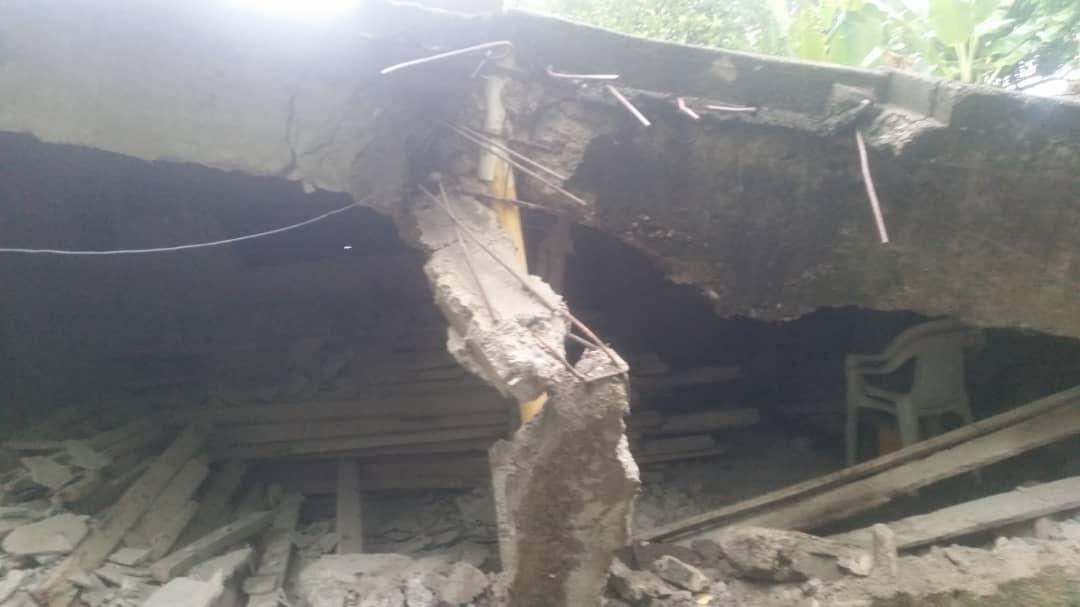
Dozens of homes were damaged and a few large structures, including a church, a school, and an auditorium, wholly or partially collapsed.

The epicenter of the quake was in the ocean, 12 miles north of Port-de-Paix, northwest Haiti’s largest city. Damage was also reported in the large town of Gros Morne, and at least one death occurred on La Tortue Island.

A map showing the epicenter of the Oct. 6, 2018
earthquake of Ile de la Tortue, near Port-de-Paix.

Another weaker 5.2 earthquake occurred at 4:00 p.m. on Sun., Oct. 7, some 10 miles north of Port-de-Paix. It was 11 times less powerful than the quake the day before.

Haiti’s north has registered several tremors and temblors in recent weeks. A 5.2 earthquake struck about 36 miles east of Fort Liberté on Sep. 23 at 1.46 a.m. and a 3.6 magnitude tremor struck 11 miles north of Cap Haïtien on Sep. 24 at 8:04 p.m.


The Catholic Church-run St. Gabriel Primary School in Gros Morne 
was mostly destroyed. Credit: Jonathan LaMare

“All this seismic activity could be a precursor to a major earthquake of magnitude 7 or 8,” said geological engineer Claude Prépetit, the director general of Haiti’s Office of Mines and Energy (BME). “We have to be ready for more powerful events.”

Prépetit said Haiti had recorded some 26 tremors between 2.9 and 4.6 since from January to August 2018.


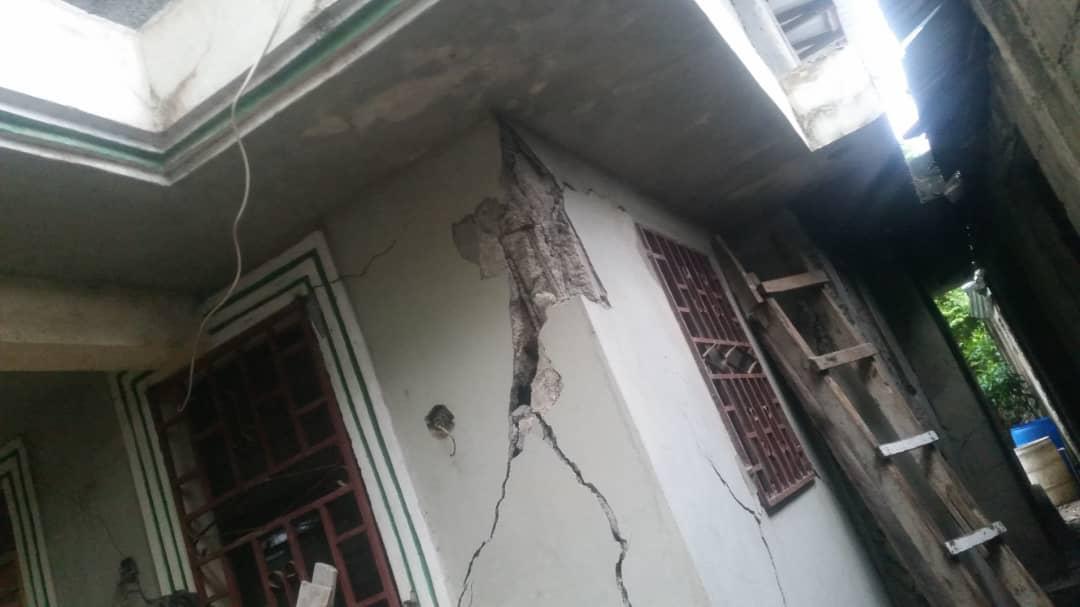
 Another house damaged in the Oct. 6, 2018 quake.

A 5.9 magnitude seism is about 45 times less powerful than the 7.0 earthquake that devastated the area around Haiti’s capital, Port-au-Prince, on Jan. 12, 2010. Nonetheless, it was still able to cause considerable damage due to the poor construction of many homes and buildings in Haiti. In Gros Morne, a large auditorium completely collapsed and St. Gabriel’s primary school crumpled. In Plaisance, the front of a large Roman Catholic church fell down, and in Port-de-Paix, the main police station was badly damaged.


Many houses in Haiti, like this one damaged in the Oct. 6 quake, 
are of very poor construction.

The Septentrional Fault Zone runs the length of Haiti’s northern coast while the Enriquillo-Plantain Garden Fault Zone runs down the middle of Haiti’s southern peninsula.

On May 7, 1842, an estimated 8.1 magnitude struck near Cap Haïtien, leveling the city and triggering a tsunami. Some 5,000 were killed by the earthquake and 300 by the tsunami.