Friday, June 07, 2019

"Trust Us, We're BIG Media" - Silencing Dissent by Design

The Trust Project: Big Media and Silicon Valley’s Weaponized Algorithms Silence Dissent

by Whitney Webb - MintPress News


June 7th, 2019

Given the Trust Project’s rich-get-richer impact on the online news landscape, it is not surprising to find that it is funded by a confluence of tech oligarchs and powerful forces with a clear stake in controlling the flow of news.


After the failure of Newsguard — the news rating system backed by a cadre of prominent neoconservative personalities — to gain traction among American tech and social media companies, another organization has quietly stepped in to direct the news algorithms of tech giants such as Google, Facebook, and Microsoft.

Though different from Newsguard, this group, known as “The Trust Project,” has a similar goal of restoring “trust” in corporate, mainstream media outlets, relative to independent alternatives, by applying “trust indicators” to social-media news algorithms in a decidedly untransparent way.

The funding of “The Trust Project” — coming largely from big tech companies like Google; government-connected tech oligarchs like Pierre Omidyar; and the Knight Foundation, a key Newsguard investor — suggests that an ulterior motive in its tireless promotion of “traditional” mainstream media outlets is to limit the success of dissenting alternatives.

Of particular importance is the fact that the Trust Project’s “trust indicators” are already being used to control what news is promoted and suppressed by top search engines like Google and Bing and massive social-media networks like Facebook. Though the descriptions of these “trust indicators” — eight of which are currently in use — are publicly available, the way they are being used by major tech and social media companies is not.

The Trust Project’s goal is to increase public trust in the very same traditional media outlets that Newsguard favored and to use HTML-embedded codes in favored news articles to promote their content at the expense of independent alternatives. Even if its effort to promote “trust” in establishment media fail, its embedded-code hidden within participating news sites allow those establishment outlets to skirt the same algorithms currently targeting their independent competition, making such issues of “trust” largely irrelevant as it moves to homogenize the online media landscape in favor of mainstream media.

The Trust Project’s director, Sally Lehrman, made it clear that, in her view, the lack of public trust in mainstream media and its declining readership is the result of unwanted “competition by principle-free enterprises [that] further undermines its [journalism’s] very role and purpose as an engine for democracy.”

Getting to know the Trust Project


The Trust Project describes itself as “a consortium of top news companies” involved in developing “transparency standards that help you easily assess the quality and credibility of journalism.” It has done this by creating what it calls “Trust Indicators,” which the project’s website describes as “a digital standard that meets people’s needs.” However, far from meeting “people’s needs,” the Trust Indicators seem aimed at manipulating search engine and social-media news algorithms to the benefit of the project’s media partners, rather than to the benefit of the general public.

The origins of the Trust Project date back to a 2012 “roundtable” hosted by the Markkula Center for Applied Ethics at Santa Clara University, a center funded by former Apple CEO Mike Markkula. That roundtable became known as the Roundtable on Digital Journalism Ethics and was created by journalist Sally Lehrman, then working at the Markkula Center, in connection with the New Media Executive Roundtable and Online Credibility Watch of the Society of Professional Journalists. Lehrman has explicitly stated that the Trust Project is open only to “news organizations that adhere to traditional standards.”

The specific idea that spurred the creation of the Trust Project itself was born at a 2014 meeting of that roundtable, when Lehrman “asked a specialist in machine learning at Twitter, and Richard Gingras, head of Google News, if algorithms could be used to support ethics instead of hurting them, and they said yes. Gingras agreed to collaborate.” In other words, the idea behind the Trust Project, from the start, was aimed at gaming search-engine and social-media algorithms in collusion with major tech companies like Google and Twitter.
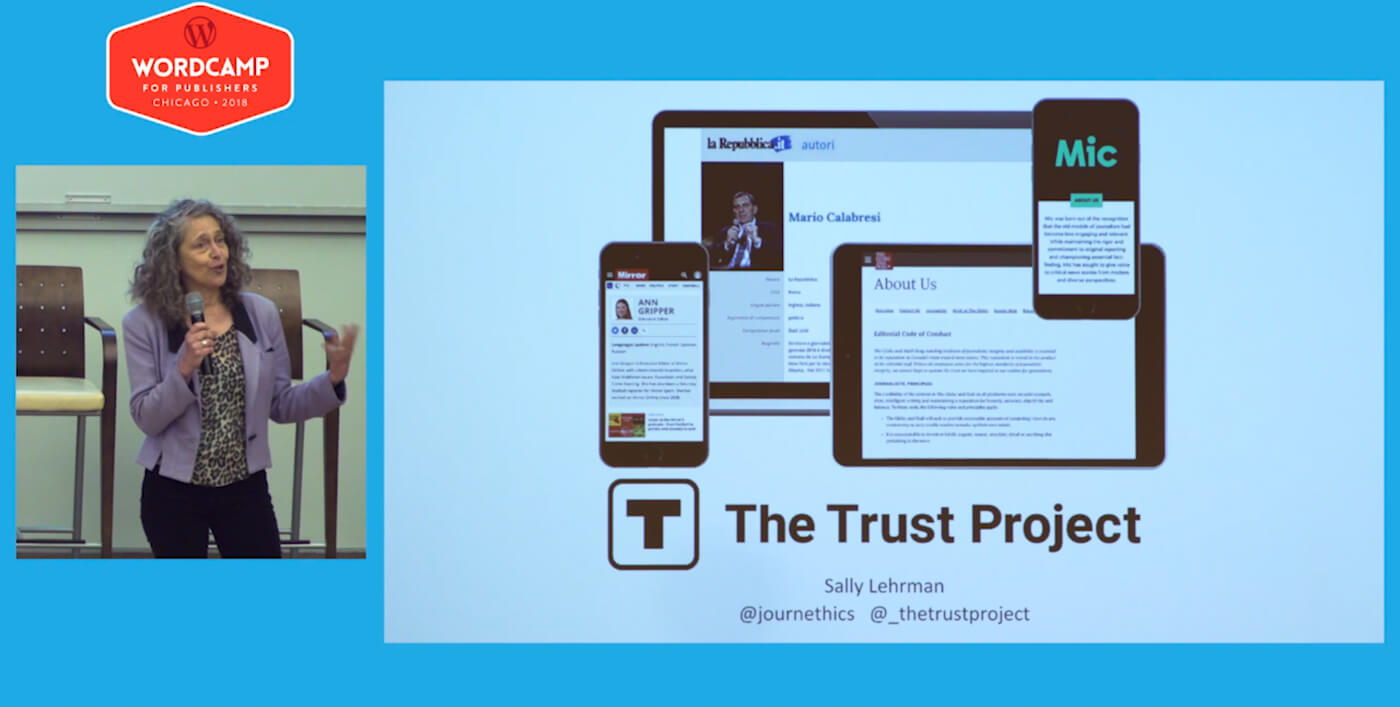
 Sally Lehrman discusses the Trust Project at 2018 WordCamp For Publishers

As the Trust Project itself notes, the means of altering algorithms were developed in tandem with tech-giant executives like Gingras and “top editors in the industry from 80 news outlets and institutions,” all of which are corporate, mainstream media outlets. Notably, the Trust Project’s media partners, involved in creating these new “standards” for news algorithms, include major publications owned by wealthy oligarchs: the Washington Post, owned by the world’s richest man, Jeff Bezos; the Economist, directed by the wealthy Rothschild family; and the Globe and Mail, owned by Canada’s richest family, the Thomsons, who also own Thomson Reuters. Other Trust Project partners include The New York Times, Mic, Hearst Television, the BBC and the USA Today network.

Other major outlets are represented on the News Leadership Council of the Markkula Center, including the Financial Times, Gizmodo Media, and The Wall Street Journal. That council — which also includes Gingras and Andrew Anker, Facebook’s Director of Product Management — “guides the Trust Project on our Trust Indicators.”

These “Trust Indicators” are the core of the Trust Project’s activities and reveal one of the key mechanisms through which Google, Twitter and Facebook have been altering their algorithms to favor outlets with good “Trust Indicator” scores. Trust Indicators, on their face, are aimed at making news publications “more transparent” as a means of generating increased trust with the public. Though a total of 37 have been developed, it appears only eight of them are currently being used.

These eight indicators are listed and described by the Trust Project as follows: 


  • Best Practices: What are the news outlet’s standards? Who funds it? What is the outlet’s mission? Plus commitments to ethics, diverse voices, accuracy, making corrections and other standards.
  • Author/Reporter Expertise: Who made this? Details about the journalist, including their expertise and other stories they have worked on.
  • Type of Work: What is this? Labels to distinguish opinion, analysis and advertiser (or sponsored) content from news reports.
  • Citations and References: What’s the source? For investigative or in-depth stories, access to the sources behind the facts and assertions.
  • Methods: How was it built? Also for in-depth stories, information about why reporters chose to pursue a story and how they went about the process.
  • Locally Sourced? Was the reporting done on the scene, with deep knowledge about the local situation or community? Lets you know when the story has local origin or expertise.
  • Diverse Voices: What are the newsroom’s efforts and commitments to bringing in diverse perspectives? Readers noticed when certain voices, ethnicities, or political persuasions were missing.
  • Actionable Feedback: Can we participate? A newsroom’s efforts to engage the public’s help in setting coverage priorities, contributing to the reporting process, ensuring accuracy and other areas. Readers want to participate and provide feedback that might alter or expand a story.

How the Trust Project makes these indicators available to the public can be seen in its new project, the Newsroom Transparency Tracker, where it provides a table of “transparency” for participating media outlets. Notably, that table conflates actual transparency practices with simply providing the Trust Project with outlet policies and guidelines related to the above indicators.

For example, The Economist gets a perfect transparency “score” for having provided the Trust Project links to its ethics policy, mission statement and other information requested by the project. However, the fact that those policies exist and are provided to the Trust Project does not mean that the publication’s policies are, in fact, transparent or ethical in terms of their content or in practice. The fact that The Economist provided links to its policies does not make the publication more transparent, but — in the context of the Newsroom Transparency Tracker’s table — it provides the appearance of transparency, though such policy disclosures by The Economist are unlikely to translate into any changes to its well-known biases and slanted reporting towards certain issues.

Trust Indicators manipulate big tech algorithms


The true power of the Trust Indicators comes in a form that is not visible to the general public. These Trust Indicators, while occasionally displayed on partner websites, are also coupled with “machine-readable signals” embedded in the HTML code of participating websites and articles used by Facebook, Google, Bing and Twitter. As Lehrman noted in a 2017 article, the Trust Project was then “already working with these four companies, all of which have said they want to use our indicators to prioritize honest, well-reported news over fakery and falsehood.”

Gingras of Google News also noted that the Trust Indicators are used by Google as “cues to help search engines better understand and rank results … [and] to help the myriad algorithmic systems that mold our media lives.”

A press release from the Trust Project last year further underscores the importance of the embedded “indicators” to alter social-media and search-engine algorithms:

“While each Indicator is visible to users on the pages of the Project’s news partners, it is also embedded in the article and site code for machines to read — providing the first, standardized technical language that offers contextual information about news sites’ commitments to transparency.”

Despite claiming to increase public knowledge of “news sites’ commitments to transparency,” the way that major tech companies like Google and Facebook are using these indicators is anything but transparent. Indeed, it is largely unknown how these indicators are used, though there are a few clues.

For instance, CBS News cited Craig Newmark — the billionaire founder of Craigslist, who provided the Trust Project’s seed funding — as suggesting that “Google’s search algorithm could rank trusted sources above others in search results” by using the project’s Trust Indicators.

Last year, the Trust Project stated that Bing used “the ‘Type of Work’ Trust Indicator to display whether an article is news, opinion or analysis.” It also stated that “when Facebook launched its process to index news Pages, they worked with the Trust Project to make it easy for any publisher to add optional information about their Page.” In Google’s case, Gingras was quoted as saying that Google News uses the indicators “to assess the relative authoritativeness of news organizations and authors. We’re looking forward to developing new ways to use the indicators.”

Notably, the machine-readable version of these Trust Indicators is available only to participating institutions, which are currently corporate, mainstream publications. Though WordPress and Drupal plug-ins are being developed to make those embedded signals to search engines and social media available to smaller publishers, it will be made available only to “qualified publishers,” a determination that will presumably be made by the Trust Project and its associates.

Richard Gingras, in a statement made in 2017, noted that “the indicators can help our algorithms better understand authoritative journalism — and help us to better surface it to consumers.” Thus, it is abundantly clear that these indicators, which are embedded only into “qualified” and “authoritative” news websites, will be used to slant search-engine and social-media news algorithms in favor of establishment news websites.

The bottom line is that these embedded and exclusive indicators allow certain news outlets to avoid the crushing effects of recent algorithm changes that have seen traffic to many news websites, including MintPress, plummet in recent years. This is leading towards a homogenization of the online news landscape by starving independent competitors of web traffic while Trust Project-approved outlets are given an escape valve through algorithm manipulation.

The tech billionaires behind the Trust Project


Given the Trust Project’s rich-get-richer impact on the online news landscape, it is not surprising to find that it is funded by rich and powerfl figures and forces with a clear stake in controlling the flow of news and information online.

According to its website, the Trust Project currently receives funding from Craig Newmark Philanthropies, Google, Facebook, eBay founder Pierre Omidyar’s Democracy Fund, the John S. and James L. Knight Foundation (often abbreviated as the Knight Foundation), and the Markkula Foundation. Its website also states that Google was “an early financial supporter” and that it had originally been funded by Craig Newmark, the founder of Craigslist.

As previously mentioned, the Trust Project’s co-founder is Richard Gingras, current Google vice president of News. The Trust Project’s website described Gingras’s current role with the organization as “a powerful evangelist” who “can always be counted upon for expert advice and encouragement.” Newmark’s current role at the Trust Project is described as that of a “funder and valued connector.”
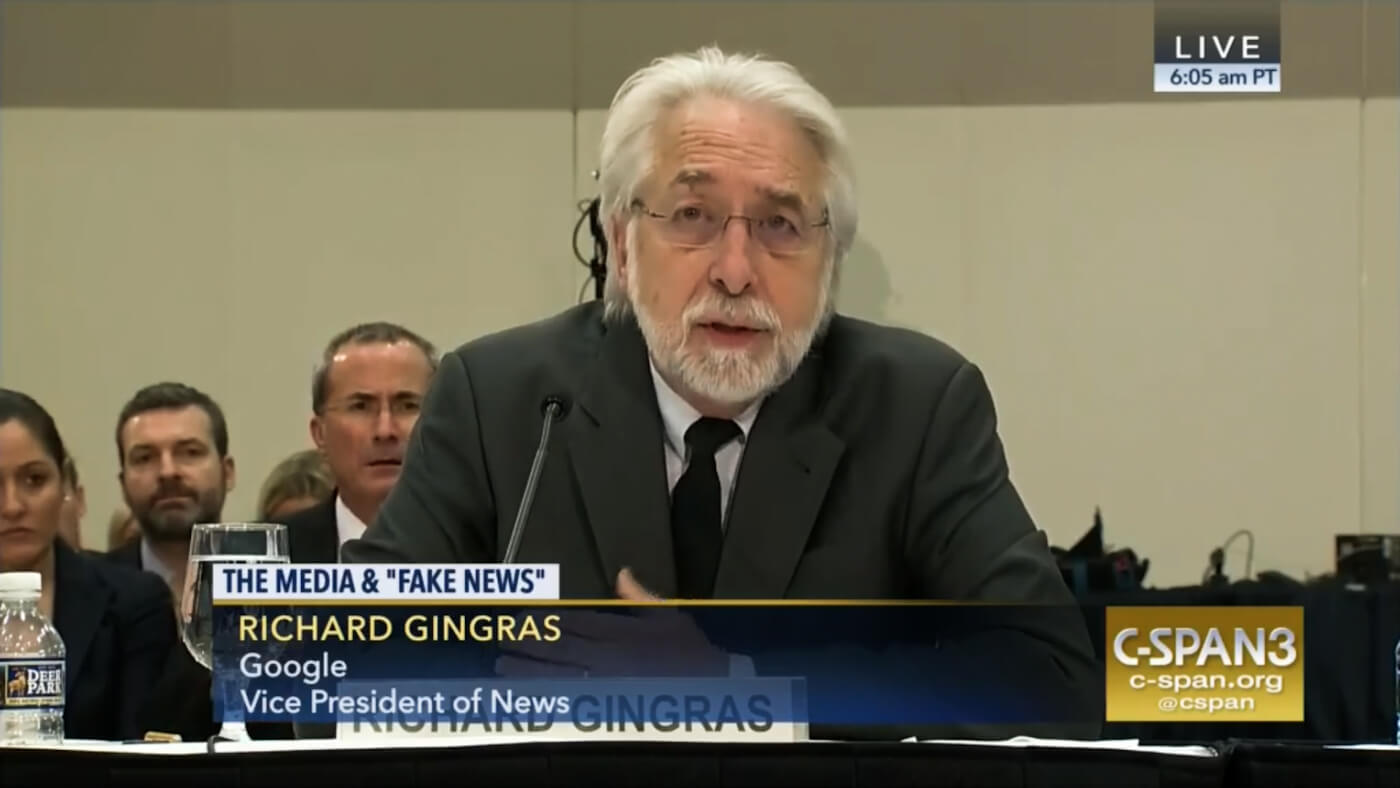
Google VP Richard Gingras testifies at a British Committee Hearing on “Fake News”

Newmark, through Craig Newmark Philanthropies, who provided the initial funding for the Trust Project, and has also funded other related initiatives like the News Integrity Initiative at the City University of New York, which shares many of the same financiers as the Trust Project, including Facebook, Omidyar’s Democracy Fund, and the Knight Foundation. The Trust Project is listed as a collaborator of the News Integrity Initiative.

Newmark is also very active in several news-related NGOs with similar overlap. For instance, he sits on the board of the Electronic Frontier Foundation (EFF), a longtime recipient of massive grants from the Omidyar Network, and Politifact.com, which is funded in part by Omidyar’s Democracy Fund.

Newmark is currently working with Vivian Schiller as his “strategic adviser” in his media investments. Schiller is a member of the Council on Foreign Relations, former head of news at Twitter, and a veteran of well-known mainstream outlets like NPR, CNN, The New York Times and NBC News. She is also a director of the Scott Trust, which owns The Guardian.

The Markkula Foundation, one of the key funders of the Trust Project, exercises considerable influence over the organization through the Markkula Center for Applied Ethics, which originally incubated the organization and whose News Leadership Council plays an important role at the Trust Project. That council’s membership includes representatives of Facebook, The Wall Street Journal, The Washington Post, Financial Times and Google, and “guides the Trust Project on our Trust Indicators and advises on core issues related to information literacy and rebuilding trust in journalism within a fractious, so-called post-fact environment.”

Both the Markkula Foundation and the Markkula Center for Applied Ethics were founded by A. M. “Mike” Markkula, former CEO of Apple. The Markkula Center’s Journalism Ethics program is currently headed by Subramaniam Vincent, a former software engineer and consultant for Intel and Cisco Systems who has worked to bring together big data with local journalism and is an advocate for the use of “ethical-AI [artificial intelligence] to ingest, sort, and classify news.”

The John S. and James L. Knight Foundation is another interesting funder of the Trust Project, given that this same foundation is also a key investor in Newsguard, the controversial, biased news rating system with deep connections to government insiders and self-described government propagandists. There is considerable overlap between Newsguard and the Trust Project, with the latter citing Newsguard as a partner and also stating that Newsguard’s demonstrably biased ratings use the project’s “trust indicators” in its full-length reviews of news websites, which Newsguard calls “nutrition labels.”

In addition, becoming a Trust Project participant is a factor that “supports a positive evaluation” from Newsguard, according to a press release from last year.

Notably, Sally Lehrman, who leads the Trust Project, described the project’s trust indicators for news as ”along the lines of a nutrition label on a package of food” when the Trust Project was created nearly a year before Newsguard launched, suggesting some intellectual overlap.

A previous MintPress exposé revealed Newsguard’s numerous conflicts of interest and a ratings system strongly biased in favor of well-known, traditional media outlets — even when those outlets have a dubious track record of promoting so-called “fake news.” It should come as no surprise that the Trust Project’s goal is to increase public trust in the very same traditional media outlets that Newsguard favored and to use HTML-embedded codes in news articles to promote their content at the expense of independent alternatives.

A familiar face in the war against independent media


The Democracy Fund, another top funder of the Trust Project and a bipartisan foundation that was established by eBay founder and PayPal owner Omidyar in 2011 “out of deep respect for the U.S. Constitution and our nation’s core democratic values.” It is a spin-off of the Omidyar Network and, after splitting off as an independent company in 2014, became a member of the Omidyar Group.

The fund’s National Advisory Committee includes former Bush and Obama administration officials and representatives of Facebook, Microsoft, NBC News, ABC News and Gizmodo Media group.

The Democracy Fund’s involvement in the Trust Project is notable because of the other media projects it funds, such as the new media empire of arch-neoconservative Bill Kristol, who has a long history of creating and disseminating falsehoods that have been used to justify the U.S. war in Iraq and other hawkish foreign policy stances.

As a recent MintPress series revealed, Omidyar’s Democracy Fund provides financial support to Kristol’s Defending Democracy Together initiative and also supports Kristol’s Alliance for Securing Democracy, a project of the German Marshall Fund think tank that is best known for its cryptic Hamilton68 “Russian bot” dashboard. Omidyar’s Democracy Fund has also donated to the German Marshall Fund’s Defending Digital Democracy project and directly to the German Marshall Fund itself.

In addition, Charles Sykes, a co-founder and editor-at-large of Kristol’s new publication The Bulwark, is on the Democracy Fund’s National Advisory Committee.

An acolyte of Kristol’s who works at the German Marshall Fund, Jamie Fly, stated last October that the coordinated social-media purges of independent media pages known for their criticisms of U.S. empire and U.S. police violence was “just the beginning” and hinted that the German Marshall Fund had a hand in past social media purges and, presumably, a role in future purges.

Thus, the Democracy Fund’s links to neoconservatives who promote the censoring of independent media sites that are critical of militaristic U.S. foreign policy jibe with the fund’s underlying interest in the Trust Project.

Omidyar’s involvement with the Trust Project is interesting for another reason, namely that Omidyar is the main backer behind the efforts of the controversial Anti-Defamation League (ADL) to become a key driver of which outlets are censored by Silicon Valley tech giants. The ADL was initially founded to “stop the defamation of the Jewish people and to secure justice and fair treatment to all” but critics say that over the years it has begun labeling critics of Israel’s government as “anti-Semites.”

For example, content that characterizes Israeli policies towards Palestinians as “racist” or “apartheid-like” is considered “hate speech” by the ADL, as is accusing Israel of war crimes or attempted ethnic cleansing. The ADL has even described explicitly Jewish organizations that are critical of Israel’s government as being “anti-Semitic.”

In March 2017, the Omidyar Network provided the “critical seed capital” need to launch the ADL’s “new Silicon Valley center aimed at tackling this rising wave of intolerance and to collaborate more closely with technology companies to promote democracy and social justice.” That Omidyar-funded ADL center allowed the ADL to team up with Facebook, Twitter, Google and Microsoft — all of whom also collaborate with the Trust Project — to create a Cyberhate Problem-Solving Lab. Since then, these companies and their subsidiaries, including Google’s YouTube, have relied on the ADL to flag “controversial” content.

Given the fact that the Trust Project shares with the ADL a key funder (Pierre Omidyar) and several external tech partners, it remains to be seen whether there is overlap between how major tech companies like Google and Facebook use the Trust Indicators in its algorithms and the influence of the ADL on those very same algorithms.

What is clear however is that there exists an undeniable overlap given the fact that Craig Newmark, who provided the seed funding for the Trust Project and continues to fund it, is also a key donor and advisor to the ADL. In 2017, Newmark gave $100,000 to the ADL’s Incident Response Center and is a member of the group’s tech advisory board.

Outsourcing censorship


Of course, the most interesting and troubling donors of the Trust Project are Google and Facebook, both of which are using the very project they fund as a “third party” to justify their manipulation of newsfeed and search-engine algorithms. Google’s intimate involvement from the very inception of the Trust Project tags it as an extension of Google that has since been marketed as an “independent” organization tasked with justifying algorithm changes that favor certain news outlets over others.

Facebook, similarly, funds the Trust Project and also employs the “trust indicators” it funds to alter its newsfeed algorithm. Facebook’s other partners in altering this algorithm include the Atlantic Council — funded by the U.S. government, NATO, and weapons manufacturers, among others — and Facebook has also directly teamed up with foreign governments, such as the government of Israel, to suppress accurate yet dissenting information that the government in question wanted removed from the social-media platform.

The murkiness between “private” censorship, censorship by tech oligarchs, and censorship by government is particularly marked in the Trust Project. The private financiers of the Trust Project that also use its product to promote certain news content over others — namely Google and Facebook — have ties to the U.S. government, with Google being a government contractor and Facebook sporting a growing body of former-government officials in top company positions, including a co-author of the controversial Patriot Act as the company’s general counsel.

A similar tangle surrounds Pierre Omidyar, funder of the Trust Project through the Democracy Fund, who is extremely well-connected to the U.S. government, especially the military-industrial complex and intelligence communities. And partnering with media outlets like the Washington Post, whose owner is Jeff Bezos, spawns more conflicts of interests, given that Bezos’ company, Amazon, is also a major U.S. government contractor.

This growing nexus binding Silicon Valley companies and oligarchs, mainstream media outlets and the government suggests that these entities have increasingly similar and complementary interests, among which is the censorship of independent watchdog journalists and news outlets that seek to challenge their power and narratives.

The Trust Project was created as a way of outsourcing censorship of independent news sites while attempting to salvage the tattered reputation of mainstream media outlets and return the U.S. and international media landscape to years past when such outlets were able to dominate the narrative.

While it seems unlikely that’s its initiatives will succeed in restoring trust to mainstream media given the many recent and continuing examples of those same “traditional” media outlets circulating fake news and failing to cover crucial aspects of events, the Trust Project’s development of hidden algorithm-altering codes in participating websites shows that its real goal is not about improving public trust but about providing a facade of independence to Silicon Valley censorship of independent media outlets that speak truth to power.


Editor’s note | This article was updated to include Craig Newmark’s connections to the Anti-Defamation League.

Feature photo | Trust Project founder Sally Lehrman speaks at the 2018 Organization of News Ombudsmen conference. Photo | ONO

Whitney Webb is a MintPress News journalist based in Chile. She has contributed to several independent media outlets including Global Research, EcoWatch, the Ron Paul Institute and 21st Century Wire, among others. She has made several radio and television appearances and is the 2019 winner of the Serena Shim Award for Uncompromised Integrity in Journalism. 

Republish our stories! MintPress News is licensed under a Creative Commons Attribution-NonCommercial-ShareAlike 3.0 International License. 

Anatomy of Ecuador's Betrayal: Timeline of Lenin Moreno's Treachery

Isolated, Surveilled, Expelled: How Ecuador Betrayed Julian Assange

by Courage Foundation


June 7, 2019

Read the PDF version here

See our timeline here


The expulsion of Julian Assange from Ecuador’s embassy in London on 11 April 2019 marked the culmination of President Lenín Moreno’s years-long effort to renege on Ecuador’s commitment to protect the WikiLeaks publisher from the United States’ persecution.

By the time he took office on 24 May 2017, Moreno had already begun working on undermining Assange’s protections, a process that Moreno’s predecessor Rafael Correa, who granted Assange asylum in 2012, called “one of the greatest betrayals in Latin American history.”

Because Ecuador’s left-leaning citizenry is wary of overt signs of Western influence after decades of Latin American intervention, the more US-friendly President Moreno could not immediately expel Assange upon taking office without affronting those who elected him, though he was quick to call Assange an “inherited problem” and a “stone in the shoe.”

Instead, Moreno gradually ratcheted up restrictions, surveillance, and threats on Julian Assange over the course of his presidential term to build a pretext for ultimately revoking asylum and inviting British police into Ecuador’s embassy. 

Isolation


Moreno’s first major move against Assange was to impose absolute isolation on 27 March 2018, suspending internet access and denying visitors. Moreno justified the restrictions by complaining that Assange had endangered Ecuador’s relations with Spain by expressing his opinions on social networks regarding the referendum in Catalonia. 

  • 4 signal jammers installed to continuously block telephone coverage and WiFi signal
  • Assange prevented from accessing embassy’s landline telephone network
  • Ecuador banned his visits to further isolate Assange, including some of his lawyers
  • This isolation severely intensified the negative effects of detention on Assange’s physical and mental health

In October 2018, after months of backroom discussions between US and Ecuadorian authorities, Ecuador issued a “Special Protocol,” without explanation of its legal authority, imposing dozens of arbitrary and unappealable rules punishable by expulsion, including effectively banning any kind of interaction with other human beings during 80% the time.

The protocol disregarded numerous basic rights, and a fundamental principle of asylum, that protection only ceases when the risk in relation to which the asylum was granted comes to an end. 

Espionage


In May 2018, it was revealed that Ecuador had contracted specialized security services to spy on Assange, including his legal meetings, reporting back to Ecuador and to United States authorities. It is alleged that the security company hired by Ecuador has sold information relating to Assange, including to press outlets.

On 10 April 2019, the day before asylum was revoked and Assange was arrested, Wikileaks revealed a trove of evidence of the embassy spying operation, comprising thousands of photos, videos and audio recordings of Julian Assange, including of privileged legal, medical, and personal communications. On 3 May 2019, three men were charged with extortion in Spain following an undercover operation by Spanish police.

US Pressure


President Moreno has made it clear throughout his presidency that he is decidedly more amenable to cooperating with the United States than was his predecessor, Rafael Correa. In May 2019, one month after Assange’s arrest, the US and Ecuador signed an agreement to work together on “a series of economic and democracy initiatives,” opening a “new chapter of cooperation.” David Lewis, vice president of Manchester Trade Ltd., which has been working with Ecuadorian exporters, described Assange’s arrest as the “coup de grace” in the new partnership.

“The move on Assange was the final dot the ‘I,’ cross the ‘Ts’,” he said.

The move was long in the making. Before Moreno had even assumed office in May 2017, former Trump campaign chair Paul Manafort flew to Ecuador to broker deals:

“In at least two meetings with Mr. Manafort, Mr. Moreno and his aides discussed their desire to rid themselves of Mr. Assange…in exchange for concessions like debt relief from the United States”

In February and March 2018, US Government officials met with President Moreno and Minister of Defense Patricio Zambrano. One day after US SOUTHCOM’s meeting with Zambrano, Ecuador began the new regime of Assange’s isolation, and one day after that, Ecuador resumed negotiations with the US on a long-postponed free trade deal.

In June 2018, ten US Senators urged Vice President Mike Pence, headed to meet with Moreno, to raise concerns about Assange. After the visit, Pence confirmed that he did so:

“The vice president raised the issue of Mr. Assange. It was a constructive conversation. They agreed to remain in close coordination on potential next steps going forward,” a White House official said in a statement.

The following month, ahead of Moreno’s trip to London, Ecuador confirmed to press outlets that it would imminently withdraw Assange’s asylum.

In October 2018, after Ecuador announced that it would restore Assange’s internet access (under the restrictions of the “special protocol”), US House of Representatives’ Foreign Affairs Committee wrote to Moreno explicitly warning that Assange’s status in the embassy could stand in the way of US-Ecuador relations.

“We are hopeful about developing warmer relations with your government, but feel that it will be very difficult for the United States to advance our bilateral relationship until Mr. Assange is handed over to the proper authorities.”

In January 2019, US officials interrogated Ecuadorian diplomats and demanded “electronic records, the visitor log book, identity documents of persons visiting Mr. Assange, audio-visual material, and reports about Mr. Assange and his visitors.”

In February 2019, Ecuador secured a $4.2 billion loan from the IMF to pay off the nation’s debts, in a financing deal that also gives Ecuador $6 billion in additional loans. The US owns a controlling share of IMF votes and retains veto power over major decisions.

After Assange’s arrest, Ecuador and the US were even more overt about their cooperation. On 16 May 2019, the countries signed the new agreement on economic partnership, and on 20 May 2019, after over a month of blocking Assange’s lawyers access to retrieve Assange’s property, Ecuador handed all of Assange’s property in the embassy, comprising documents, computers, and Assange’s entire legal defense, over to prosecutors in the United States. Assange’s lawyer in Ecuador noted that there had been no chain of custody.

The UN Special Rapporteur on the right to privacy expressed serious concerns about Ecuador’s actions and its refusal to allow the UN expert to be present for the seizure. 

Rolling back asylum


Rather than immediately revoking asylum, Moreno’s government steadily eroded its protections and worked to justify Assange’s ultimate expulsion. A month after reports of US VP Pence’s June 2018 visit to Ecuador in which he explicitly discussed Assange’s status in the embassy, the Inter-American Court on Human Rights issued a ruling that, without naming Assange directly, imposed obligations on Ecuador to protect him from US extradition.

One month later, disregarding the ruling, Ecuador informed Assange’s legal defense that it would no longer oppose his eventual extradition to the United States and leaked to press outlets its intentions to withdraw asylum.

In January 2019, Assange’s legal team appealed to IACHR to compel Ecuador to prevent extradition to the US, and on 13 March 2019, IACHR instructed Ecuador that it has an obligation not to expel Julian Assange, directly or indirectly, to the United States.

Expulsion


Though Moreno had spent more than a year laying the groundwork to isolate, smear, and undermine Julian Assange and erode his asylum protections, in early 2019 he found himself engulfed in an embarrassing corruption scandal. On 19 February, La Fuente published “The Offshore Labyrinth of the Presidential Circle,” detailing how Ecuadorian President Lenín Moreno and his family used offshore companies (primarily INA Investment Corp) to make expensive purchases and receive potentially dubious payments. Shortly afterwards, a series of documents related to the same corruption scandal were published on inapapers.org.

Desperate to divert attention as his approval ratings plummeted, Moreno decided to falsely blame WikiLeaks for publishing the INA Papers. The president went as far as to claim that Assange had “hacked his phone.” Communications Minister Michelena made similar outlandish claims to CNN.

On 2 April, the President stated that Assange had “violated the ‘conditions’ of his asylum” and that he will “take a decision” “in the short term.”

On 5 April, WikiLeaks received a tip-off by a source high up in the Ecuadorian government that Assange had “days to hours” before his asylum was withdrawn. The UN torture expert Nils Melzner urged Ecuador not to expel Assange from embassy, and the UN privacy expert announced plans to visit Assange in the Embassy on 25 April. Six days later, on 11 April 2019, Ecuador summarily revoked Julian Assange’s asylum and invited British police in to arrest him. Ecuador announced it had “suspended” his nationality.

On 31 May 2019, in a press release revealing his findings regarding the Assange case, Melzner called for the “collective persecution” of Julian Assange to end immediately. In a scathing condemnation of the “deliberate and concerted abuse inflicted for years” on Julian Assange, Melzner called on the UK government not to extradite him to the United States, where Melzner fears Assange “would be exposed to a real risk of serious violations of his human rights.”

Melzner sent official letters to the United States, the United Kingdom, Sweden and Ecuador, urging each government “to refrain from further disseminating, instigating or tolerating statements or other activities prejudicial to Assange’s human rights and dignity and to take measures to provide him with appropriate redress and rehabilitation for past harm.”

Rousing the West

North American, European Public: Finally Wake Up, Damn It!

by Andre Vltchek - NEO

June 5, 2019

Year after year, month after month, I see two sides of the world; two extremes which are getting more and more disconnected:

I see great cities like Homs in Syria, reduced to horrifying ruins. I see Kabul and Jalalabad in Afghanistan, fragmented by enormous concrete walls intended to protect NATO occupation armies and their local puppets. I see monstrous environmental devastation in places such as Indonesian Borneo, Peruvian gold mining towns, or the by now almost uninhabitable atoll island-nations of Oceania: Tuvalu, Kiribati or Marshall Islands.

I see slums, a lack of sanitation and clean drinking water, where the boots of Western empires have been smashing local cultures, enslaving people and looting natural resources.

I work on all the continents. I never stop, even when exhaustion tries to smash me against the wall, even when there are hardly any reserves left. I cannot stop; I have no right to stop, because I can finally see the pattern; the way this world operates, the way the West has been managing to usurp it, indoctrinate, and enslave most of the countries of the world. I combine my knowledge, and publish it as a ‘warning to the world’.

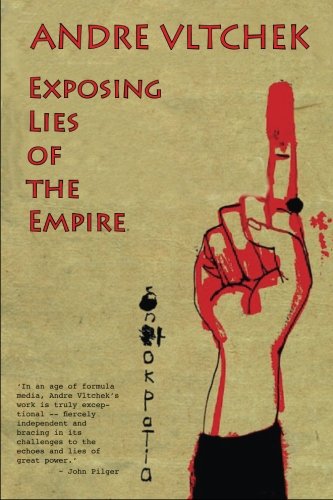
I write books about this ‘pattern’. My most complete, so far, being the 1,000 pages long “Exposing Lies of The Empire”.

Then, I see the West itself.

I come to ‘speak’, to Canada and the United States, as well as Europe. Once in a while I am invited to address Australian audiences, too.

The West is so outrageously rich, compared to the ruined and plundered continents, that it often appears that it does not belong to the Planet Earth.

A lazy Sunday afternoon stroll in Villa Borghese in Rome, and a horror walk through Mathare slum in Nairobi could easily exist in two distinct realities, or in two different galaxies.

Even now, after I slightly misspelled “Villa Borghese”, my Mac immediately offered a correction. It is because Villa Borghese does exist. On the other hand, “Mathare”, which I spelled correctly, was underlined red. Mathare ‘is an error’. Because it does not exist. It does not exist, despite the fact that around one million men, women and children lives there. It is not recognized by my MacBook Pro, nor by the great majority of my relatively well-educated readers in the West.

In fact, almost entire world appears to be one big error, non-entity, if observed from New York, Berlin or Paris.

I come and speak in front of the Western public. Yes, I do it from time to time, although with decreasing frequency.

Frankly, to face European or North American crowds feels depressing, even humiliating.

It goes like this: you are invited to ‘tell the truth’; to present what you are witnessing all over the world.

You stand there, facing men and women who have just arrived in their comfortable cars, after having good dinners in their well-heated or air-conditioned homes. You may be a famous writer and a filmmaker, but somehow, they make you feel like a beggar. Because you came to speak on behalf of “beggars”.

Everything is well-polished, and choreographed. It is expected that you do not show any ‘gore’. That you do not call your public ‘names’. That you do not swear, do not get drunk on the stage, do not start insulting everyone in sight.

What you usually face is quite a hard, or at least ‘hardened’, crowd.

Recently, in Southern California, when I was asked, by a fellow philosopher and a friend of mine, to address a small gathering of his colleagues, some people were banging on their mobile phones, as I was describing the situation at the Syrian frontline, near Idlib. I felt that my account was nothing more than a ‘background, an elevator music’ to most of them. At least when I am addressing millions through my television interviews, I do not have to see the public.

When you ‘speak’ in the West, you are actually addressing men and women who are responsible, at least partially, for the mass murders and genocides that are being committed by their countries. Men and women whose standards of living are outrageously high, because The Others are being robbed, humiliated, and often raped. But their eyes are not humble; they are drilling them into you, waiting for some mistake that you might make, so they can conclude: “He is fake news”. For them, you are not a bridge between those who ‘exist’ and those who don’t. For them, you are an entertainer, a showman, or more often than not: a nuisance.

To learn about war, about the terror that the West is spreading, is, for many in my audience yet another type of luxury, high-level entertainment, not unlike an opera performance or a symphony concert. If necessary, they can even pay, although mostly they’d rather not. After a titillating experience, it is back to the routine, back to a sheltered, elegant life. While you, the next day, are often catching a plane back to the reality of the others; to the frontline, to dust and misery.

They, your public (but face it, also most of your readers) came to show how ‘open-minded’ they are. They came ‘to learn’ from you, ‘to get educated’, while keeping their lifestyles intact. Most of them think that they know it all, even without your first-hand experience, they are benevolently doing you a favor by inviting you, and by dragging themselves all the way to some university or a theatre or wherever the hell you are standing in front of them. They did not come to offer any support to your struggle. They are not part of any struggle. They are good, peace-loving, hardworking people; that’s all.

You know, like those Germans, in the late 1930’s; self-righteous, hard-working folks. Most of them love their pets, and recycle their garbage. And clean after themselves at Starbucks.

A few days ago, we stopped the coup in Venezuela. I say we, because, although deep in devastated Borneo Island, I had been giving interviews to RT, Press TV, addressing millions. Even here, I never stopped writing, tweeting, always ready to drop everything just fly to Caracas, if I were to be needed there.

To defend Venezuela, to defend the Revolution there, is essential. As it is essential to defend Syria, Cuba, Russia, China, North Korea, Iran, Bolivia, South Africa and other revolutionary and brave nations that are refusing to surrender to the Western diktat.

While the ideological battle for Caracas was raging, I was thinking: is there anything that could still move the Western public into action?

Have they – Europeans and North Americans – become totally indifferent to their own crimes? Have they developed some sort of emotional immunity? Is their condition ideological, or simply clinical?

Here we were, in the middle of a totally open coup; an attempt by the West to overthrow one of the most democratic countries on our planet. And they did almost nothing to stop the terrorism performed by their regimes in Washington or Madrid! At least in Indonesia in 1965 or in Chile in 1973, the Western regime tried to hide behind thin fig leaves. At least, while destroying socialist Afghanistan and the Communist Soviet Union by creating the Mujahedin, the West used Pakistan as a proxy, trying to conceal, at least partially, its true role. At least, while killing more than 1 million people in Iraq, there was this charade and bunch of lies about the ‘weapons of mass destruction’. At least, at least…

Now, it is all transparent. In Syria, Venezuela; and against North Korea, Cuba, Iran, China, Russia.

As if propaganda was not even needed, anymore, it as if the Western public has become totally obedient, posing no threat to the plans of the Western regime.

Or more precisely, the once elaborate Western propaganda has become extremely simple: it now repeats lies, and the great majority of Western citizens do not even bother to question what their governments are doing to the world. The only thing that matters are ‘domestic issues’; meaning – the wages and benefits for the Westerners.

There are no riots like during the Vietnam War. Now riots are only for the better welfare of European workers. No one in the West is fighting in order to stop the plunder abroad, or the terrorist attacks unleashed by NATO against non-Western countries, or against those countless NATO military bases, against the invasions and orchestrated coups.

How much more can the Western public really stomach?


Or can it stomach absolutely everything?

Would it accept the direct invasion of Venezuela or Cuba or both? It has already accepted the direct intervention and destruction of Yugoslavia, Iraq, Afghanistan, Libya and Syria, to name just a few terrorist actions committed by the West in recent history.

So, how much more? Would an attack against Iran be acceptable? Let’s say, 2-3 million deaths?

North Korea, perhaps? A few more millions, a new mountain of corpses?

I am asking; it is not a rhetorical question. I really want to know. I believe that the world has to know.

Has the Western public reached the level of the ISIS (or call them IS or Deash)? Is it so self-righteous, so fanatic, so convinced of its own exceptionalism, that it cannot think, clearly, analyze and judge, anymore?

Would provoking Russia or China or both into WWIII be acceptable to people living in Bavaria or South Carolina, or Ontario?

And if yes, are they all really out of their minds?

And if they are, should the world try to stop them, and how?

I want to know the boundaries of the Western madness.


That there is madness is indisputable, but how massive is it?

I understand, I have now accepted the monstrous fact that the French, Yanks, Canadians, Brits or Germans do not give a shit about how many millions of innocent people they kill in the Middle East, or Southeast Asia, Africa or in ‘places like that’. I accept that they know close to nothing about their colonial history, and want to know nothing, as long as they have football, plenty of meat and 6 weeks vacations on exotic beaches. I know that even many of those who can see monstrous crimes committed by the West, want to blame everything on Rothschilds and ‘Zionist conspiracy’, but never on themselves, never on Israel which its West’s outpost in the Middle East, never on their culture which expresses itself through the centuries of plunder.

But what about the survival of our planet, and the survival of humankind?

I imagine the eyes of those people who come to my ‘combat presentations’. I tell them the truth. I say it all. I am never holding back; never compromise. I show them images of the wars they have unleashed. Yes, they; because the citizens are responsible for their own governments, and because there is, clearly, something called collective guilt and collective responsibility!

Those eyes, faces… I will tell you what I read in them: they will never act. They will never try to overthrow their regime. As long as they live their privileged lives. As long as they think that the system in which they are the elites, at least has some chance of surviving in its present form. They play it both ways, some of them do: verbally, they are outraged by NATO, by Western imperialism and savage capitalism. Practically, they do nothing tangible to fight the system.

What is the conclusion then? If they do not act, then others have to. And I am convinced: they will.

For more than 500 years the entire world has been in flames, plundered and murdered by a small group of extremely aggressive Western nations. This has been going on virtually uninterruptedly.

Nobody finds it amusing, anymore. Where I work, in places that I care about, nobody wants this kind of world.

Look at those countries that are now trying to destroy Venezuela. Look closely! They consist of the United States, Canada, majority of Europe, and mostly those South American states where the descendants of European colonialists are forming majority!

Do we want another 500 years of this?


North Americans and Europeans have to wake up, soon. Even in Nazi Germany, there were soldiers who were so disgusted with Hitler, that they wanted to send him to the dogs. Today, in the West, there is not one powerful political party which believes that 500 years of Western colonialist plunder is more than enough; that torturing the world should stop, and stop immediately.

If Western imperialism, which is the greatest and perhaps the only major threat our planet is now facing, is not decisively and soon dismantled by its own citizens, it will have to be fought and deterred by external forces. That is: by its former and present victims.

[First published by NEO – New Eastern Outlook]

Andre Vltchek is a philosopher, novelist, filmmaker and investigative journalist. He has covered wars and conflicts in dozens of countries. Four of his latest books are Revolutionary Optimism, Western Nihilism, a revolutionary novel “Aurora” and a bestselling work of political non-fiction: “Exposing Lies Of The Empire”. View his other books here. Watch Rwanda Gambit, his groundbreaking documentary about Rwanda and DRCongo and his film/dialogue with Noam Chomsky “On Western Terrorism”. Vltchek presently resides in East Asia and the Middle East, and continues to work around the world. He can be reached through his website and his Twitter. His Patreon

Denial and Distortion: Misremembering Canadian Genocide(s)

Roméo Dallaire Denies Canadian Genocide and Distorts Rwanda’s

by Yves Engler - Dissident Voice


June 6th, 2019

Is Roméo Dallaire a genocide denier?

After a (question free) talk at Concordia University this week I followed the famous Canadian general out of the room to ask why he still supports ruthless dictator Paul Kagame, (left).

Kagame is the individual most responsible for the mass slaughter in Rwanda in mid-1994 since his forces invaded the country, engaged in a great deal of killing and blew up the presidential plane that unleashed the genocidal violence.

In 1996 Kagame’s forces invaded the Congo to overthrow the government in Kinshasa and when their installed president kicked them out they reinvaded in 1998, causing an eight country war that left millions dead.

According to a 600-page report by the UN high commissioner for human rights, Rwanda was responsible for “crimes against humanity, war crimes, or even genocide” in the Congo.

With Dallaire refusing to answer my question I asked a Radio Canada journalist seeking to interview the former general to ask why he supports Kagame. The reporter was there to question Dallaire about the use of the term “genocide” in the Final Report of the National Inquiry into Missing and Murdered Indigenous Women and Girls. Dallaire said he had “a problem” with the use of the word “genocide” to describe what happened to First Nations.

“Is that an act of genocide? Is it?” he said.
“My definition of genocide, I read it very deliberately at the start of the Rwandan genocide, and it was a deliberate act of a government to exterminate deliberately, and by force and directly, an ethnicity or a group or an entity of human beings.”

Numerous media outlets picked up Dallaire’s comments. A La Presse headline read “Dallaire denounces the use of the term ‘genocide’” while Rebel Media’s The Ezra Levant Show reported on, “Rwandan genocide witness General Roméo Dallaire’s strong denouncement of Justin Trudeau’s agreement that the Missing and Murdered Indigenous Women findings indeed constitute a ‘genocide.’”

While Dallaire is opposed to labeling Canada’s dispossession of First Nations a genocide, he has repeatedly employed the term to describe rights violations in enemy states. In recent years he’s compared the situation of Darfur in Sudan and Baha’i in Iran, as well as Syria and Libya, to Rwanda. If Western interventionists are targeting a nation Dallaire is happy to employ the “G” word or “R” comparison.

Interestingly, Dallaire’s criteria for a genocide — “a deliberate act of a government to exterminate deliberately” — better applies to indigenous people in Canada than to the Tutsi in Rwanda. Dispossessed of 99% of their land, indigenous people have faced state-backed efforts to starve and sterilize them. They’ve also been made wards of the state, had their movement restricted and religious/cultural ceremonies banned. Residential schools and other so-called child welfare initiatives sought to eradicate their ways, or in the infamous formulation of the deputy superintendent of the Department of Indian Affairs from 1913 to 1932, Duncan Campbell Scott:

“Our objective is to continue until there is not a single Indian in Canada that has not been absorbed into the body politic and there is no Indian question.

Prior to confederation, British forces conquered today’s Nova Scotia through terror, putting the heads of Mi’kmaq soldiers on spikes and offering bounties to kill women and children. Founder of the Halifax fort, Lieutenant General Edward Cornwallis led the charge and by the mid-1760s the Mi’kmaq had been largely wiped out in Nova Scotia.

After British forces conquered Quebec General Jeffery Amherst’s forces gave indigenous chiefs in the Great Lakes region blankets and a handkerchief from a smallpox hospital. Commander of British forces in North America, Amherst wrote:

“You will do well to try to inoculate the Indians by means of blankets as well as to try every other method that can serve to extirpate this execrable race.

By the 1820s the Beothuk in Newfoundland were extinct. On the West Coast in 1862 colonial officials are accused of enabling the spread of smallpox among First Nations, which devastated the indigenous population.

Unlike the Tutsi in Rwanda, indigenous people in Canada didn’t end up in power after the “genocide”. Nor did Jews in Germany, the Herero in Namibia, Armenians in Turkey, Maya in Guatemala, etc. Rwanda is a peculiar case where the minority — 10% of the population — targeted for extermination ended up ruling after the bulk of the violence subsided.

That’s partly because the genocidal killings were not a long planned attempt to exterminate all Tutsi, which even the victors’ justice dispensed by the International Criminal Tribunal for Rwanda (ICTR) effectively concluded. Instead, it was the outgrowth of a serious breakdown in social order that saw hundreds of thousands slaughtered by relatively disorganized local ‘militias’ fearful of the Kagame-led foreign invasion that eventually conquered Rwanda and drove a quarter of the population out of the country. Probably an equal — and possibly a greater — number of Hutu were killed.

Dallaire has propagated a wildly simplistic account of the tragedy that gripped Rwanda and Burundi in the mid-1990s. He has promoted the Kagame-inspired fairy tale used to justify a brutal dictatorship in Rwanda and its expansionism in the region (as well as Western liberal imperialism).

According to the most outlandish aspect of this story, Hutu extremists murdered the Hutu presidents of Rwanda and Burundi and much of the Hutu-led Rwandan military command, weakening the Hutu government to its most frail point in three decades, and then decided to begin a long planned systematic extermination of Tutsi. In this depiction of Rwanda’s tragedy, the individual most responsible for unleashing the genocidal violence is the hero who ended “the Genocide”.

Dallaire is not innocent of Kagame’s violence. In his 2005 book Le Patron de Dallaire Parle (The Boss of Dallaire Speaks), Jacques-Roger Booh Booh, a former Cameroon foreign minister and overall head of mid-1990s UN mission in Rwanda, claims Dallaire had little interest in the violence unleashed by Kagame’s RPF despite reports of summary executions in areas controlled by them.

Booh Booh says Dallaire turned a blind eye to RPF weapons coming across the border from Uganda and he believes the UN forces under Dallaire’s command may have even transported weapons directly to the RPF, “becoming an objective ally of one of the parties in the conflict.”

Dallaire’s criticism of the Final Report of the National Inquiry into Missing and Murdered Indigenous Women and Girls is consistent with his political interventions. He has long been a cheerleader for Canadian and Western domination of the world. As I detail in this article, the former general opposed calls to withdraw Canadian soldiers from Afghanistan, supported the overthrow of Haiti’s elected government in 2004 and bombing of Libya in 2011.

He has also called for increased military spending and for Canada to join US ballistic missile “defence”. Now he appears to be denying a genocide perpetrated by a government he represented in the Senate and worked for in the military. Boil it all down and it simply becomes: ‘Our side is good and our enemies are bad.’

But, of course, this is what passes for foreign policy in Canada.

Yves Engler is the author of 10 books, including A Propaganda System: How Canada's Government, Corporations, Media and Academia Sell War and Exploitation. Read other articles by Yves.

Do British Columbians Have the Right to Clean Water?

Do you have the right to clean water in BC?

by Glade Watershed Protection Society

 
June 4, 2019

On Monday, April 1, 2019 - April Fool’s Day - Judge McEwan chose to adhere to a legal principle that makes it difficult for public interest groups to access the legal system. Judge McEwan did this by demanding that the Glade Watershed Protection Society (GWPS) raise the funds necessary to pay the legal costs of losing their case in order to proceed.


Glade Watershed Protection Society (GWPS) is a volunteer-based public interest group working to protect its consumptive use watershed. Their work is supported by West Coast Environmental Law and community fundraising. Judge McEwan’s requirement that GWPS raise $15,000 in 60 days to cover the potential costs of legal proceedings for two corporate logging companies effectively excludes them from equal access to the legal system. If the monies cannot be raised, their application for protection under the Drinking Water Protection Act (DWPA) will be dismissed.

Two timber companies have tenure in Glade public forest. On Feb 4, 2019 GWPS sought a temporary injunction against Kalesnikoff Logging Company (KLC) and Atco Wood Products (Atco) until a Forest Practices Review investigation and a judicial review of a DWPA decision could be completed. Both companies argued against the injunction stating that they had invested heavily in the Glade Creek watershed, and that logging would not harm the water. 
 
This contradicts reports prepared by Registered Professionals (Hydrologist, Forester and Forest Ecologist) that assert that water quality and quantity are at risk from planned logging, particularly in this time of climate change. KLC and Atco further asserted that since GWPS is a nonprofit with almost no funds, they would be unable to recoup any costs from them.

The court dismissed GWPS’s injunction application. Judge Tammen, BC Supreme Court, stated that the risk of harm to Glade Creek water does not “rise above the level of speculation.” Ignoring professionals’ concerns about water quantity, he stated that if harm did occur, it could be remedied by additional water treatment and would not be “irreparable.” 
 
Any changes to water flows cannot be remedied by water treatment. This decision also ignores the health risks associated with many forms of treated water and the high costs to install effective water treatment systems. The municipalities of Vancouver and Victoria discontinued logging in their watersheds for these reasons.

In his judgement, Judge Tammen stated that if the injunction were granted, the timber companies would suffer “irreparable” injury due to “obvious economic harm.” Furthermore, these companies would not be able to recover any damages from GWPS. By awarding costs to Atco and KLC because of their “virtual complete success” in the proceeding, the legal system has supported the corporate interests of resource companies, while dismissing societies appearing for the sake of the public good.

In court, Judge McEwan noted: 
 
“Do you have a right to clean water? I’d suggest you don’t… there just is nowhere in the law where you can look and say, there it is - there’s my right. I have a right to clean water.”

Through exploring legislative mechanisms to effectively protect drinking water – GWPS has come to an impasse. Yet climate change is predicted to increase the incidence of both spring floods and fall droughts. Forestry is the single largest greenhouse gas emitter in BC and the ‘business as usual’ paradigm ignores that intact, old forests produce the best water. Judges McEwen and Tammen’s decisions impact public interests across the province.

To assist the Glade Watershed Protection Society in defraying costs, the public can donate via https://www.protectgladewatershed.com.
We are also requesting people write to their local MLA, the Ministers of Forests, Lands, Natural Resource Operations and Rural Development, and the Environment asking for changes to forestry legislation so that water conservation is put ahead of resource development.

Glade Watershed Protection Society 
 

Thursday, June 06, 2019

Silly Goose! How Gina Haspel and the New York Times Made a Sucker of Trump

The New York Times Tries to Get Itself Out of the Duckgate Hole Using a Spade

by Rob Slane - The Blogmire


June 5, 2019

A number of people, including myself, wrote to the New York Times journalist, Julian Barnes, to point out that the piece he and his colleague, Adam Goldman, published on 16th April 2019 about the CIA Director, Gina Haspel, contained a part which unwittingly showed that she had misled President Trump into expelling 60 Russian diplomats in March 2018.

Here were the paragraphs of interest:


“During the discussion, Ms. Haspel, then deputy C.I.A. director, turned toward Mr. Trump. She outlined possible responses in a quiet but firm voice, then leaned forward and told the president that the “strong option” was to expel 60 diplomats.
To persuade Mr. Trump, according to people briefed on the conversation, officials including Ms. Haspel also tried to show him that Mr. Skripal and his daughter were not the only victims of Russia’s attack.

Ms. Haspel showed pictures the British government had supplied her of young children hospitalized after being sickened by the Novichok nerve agent that poisoned the Skripals. She then showed a photograph of ducks that British officials said were inadvertently killed by the sloppy work of the Russian operatives.

Ms. Haspel was not the first to use emotional images to appeal to the president, but pairing it with her hard-nosed realism proved effective: Mr. Trump fixated on the pictures of the sickened children and the dead ducks. At the end of the briefing, he embraced the strong option.

The outcome was an example, officials said, of how Ms. Haspel is one of the few people who can get Mr. Trump to shift position based on new information.”

I pointed out to the authors in an (unanswered) email that this was an extraordinary claim, because no children became sick due to poisoning by a toxic chemical, and nor did any ducks die. And so unless they were prepared to correct or retract their piece, there could only be two possibilities:

  1. Ms Haspel unwittingly showed false images to no less a person than the President of the United States, supplied to her by the British Government who knew them to be false, which persuaded him to embrace the “strong option”.
  2. Ms Haspel knowingly showed false images to no less a person than the President of the United States, which persuaded him to embrace the “strong option”.

It seems that the two journalists have not ignored mine and the many other emails they received about this issue, and they have today corrected their story. The paragraphs of interest now read as follows:

“During the discussion, Ms. Haspel, then deputy C.I.A. director, turned toward Mr. Trump. She outlined possible responses in a quiet but firm voice, then leaned forward and told the president that the “strong option” was to expel 60 diplomats.

To persuade Mr. Trump, according to people briefed on the conversation, officials including Ms. Haspel tried to demonstrate the dangers of using a nerve agent like Novichok in a populated area. Ms. Haspel showed pictures from other nerve agent attacks that showed their effects on people.

The British government had told Trump administration officials about early intelligence reports that said children were sickened and ducks were inadvertently killed by the sloppy work of the Russian operatives.

The information was based on early reporting, and Trump administration officials had requested more details about the children and ducks, a person familiar with the intelligence said, though Ms. Haspel did not present that information to the president. After this article was published, local health officials in Britain said that no children were harmed.

Ms. Haspel was not the first to use emotional appeals to the president. She and Mr. Pompeo showed Mr. Trump images of children sickened by chemical weapons attacks in Syria, in an earlier presentation. But Ms. Haspel’s strategy in the March briefing was to pair emotional appeals with her hard-nosed realism and it proved effective. At the end of the briefing, Mr. Trump embraced the strong option. [my emphasis]”

Below is Mr Barnes’s explanation on Twitter for the error and the correction:

“I made a significant error in my April 16 profile of Gina Haspel. It took a while to figure out where I went wrong. Initially, I reported that in March 2018, Gina Haspel, then the future CIA director, briefed President Trump about the Skirpal nerve agent attack, showing pictures of sickened children and dead ducks. That was wrong. There are—so far as we know—no pictures of dead ducks or sickened kids. Haspel did show pictures to Trump, but they were about the effects of nerve agents in general, they were not specific to the attack in the UK.

British officials did brief the Trump administration about early reports of dead ducks & sick children. Officials sought more info, believing such intel would be persuasive to Trump, who was skeptical of the proposed expulsion of 60 Russians in response to the attack. But Haspel did not brief the president on that intelligence.

Local UK health officials deny that any animals or children were sickened, as British officials pointed out soon after our story published. (In response to good reporting by @haynesdeborah, @guardian and others.) (link: https://www.theguardian.com/uk-news/2019/apr/18/no-children-ducks-harmed-novichok-attack-wiltshire-health-officials)

The intelligence about the ducks and children were based on an early intelligence report, according to people familiar with the matter. The intelligence was presented to the US in an effort to share all that was known, not to deceive the Trump administration. This correction was delayed because conducting the research to figure out what I got wrong, how I got it wrong and what was the correct information took time.

I regret the error and offer my apology. I strive to get information right the first time. That is what subscribers pay for. But when I get something wrong, I fix it.”

Here is my response on Twitter to Mr Barnes:

Dear Julian,

Thanks for taking the time to correct your report. However, it unfortunately raises just as many questions as the initial report.

Firstly, you say British officials briefed the Trump administration about early reports of dead ducks & sick children.

Really? Which early reports were these? There were none. The parents of the children who had tests to see if they had been contaminated were only contacted 2 weeks after the incident, and none of them was found to be ill. This is the first report on it, and it confirms the children were given the all clear. And there were never any dead ducks in Salisbury nor any reports of them.

Secondly, you say that “Officials sought more info, believing such intel would be persuasive to Trump, who was skeptical of the proposed expulsion of 60 Russians in response to the attack.” But the fact is that any further (truthful) info could not have persuaded Mr Trump, for the simple reason that no other people were harmed in Salisbury than the three people who were initially harmed. How, then, was he persuaded?

Thirdly, you presumably give the answer to the second point, when you say “Haspel did show pictures to Trump, but they were about the effects of nerve agents in general, they were not specific to the attack in the UK.” So in other words, Ms Haspel couldn’t show any pictures from Salisbury to persuade the sceptical Mr Trump, because there weren’t any to show. So she showed him pictures from other nerve agent attacks, which were presumably sufficiently bad to turn him from his scepticism, to expelling 60 diplomats. Even though nothing like that happened in Salisbury.

Thank you for clarifying that Ms Haspel did indeed wilfully mislead the President.”

Despite NYT’s correction, the question it poses is this: Which is worse:

  • The deputy director of the CIA showing a sceptical President some fake pictures of dead ducks and sick children to persuade him to take the strongest action?
  • Or the deputy director of the CIA, knowing full well that there weren’t any pictures of the effects of nerve agent on the population of Salisbury because only three people were ever affected, showing some pictures of actual nerve agent victims who were never anywhere near Salisbury to persuade him to take the strongest action?

The answer is they’re both as bad. In both scenarios, an utterly false picture of what happened in Salisbury was given to the sceptical President to twist his arm into taking action he didn’t want to take.

As they say, when in a hole, better stop digging.

Remembering a Different D-Day

D-Day: How the US Supported Hitler’s Rise to Power

by TRNN


June 6, 2019

On June 6, 1944, Allied forces stormed the beaches of Normandy, France, opening a second front against German fascism. The largest contingents of fighters were British, American, and Canadian. This battle has been depicted in movies and books as the decisive turning point of World War II, a ferocious struggle against a superior enemy.

But as The Real News Network's Paul Jay and author Peter Kuznick discuss, D-Day was also the moment where the United States' opposition to communism could no longer outweigh its tacit acceptance of Nazism, and the U.S. industrialists who helped rearm Germany after World War I could no longer profit from Hitler's Germany.

“In the aftermath of [World War I], there was such strong anti-war sentiment throughout Europe and throughout the United States that people were very, very loath to get involved in another war, and they were willing to tolerate things they perhaps shouldn't have,” Kuznick said.


Peter Kuznick is a professor of history and director of the Nuclear Studies Institute at American University. He’s the author of The Untold History of the United States, co-written with Oliver Stone, as well as Rethinking the Atomic Bombings of Hiroshima and Nagasaki.