Sunday, February 04, 2007

Sheehan Launching 'The Occupation Project'


Grannies do Heavy Lifting


http://www.chronwatch.com/content/
images-uploaded/sheehan%20hussein.jpg
Sunday, 04 February 2007
by Cindy Sheehan

My dear friend, Diane Baker, from Dallas-Ft. Worth who is a United Church of Christ Minister and fearless crusader for peace is also a grandmother, has a degenerative disease, and was sweeping garbage in DC for being arrested there this past October protesting the illegal and immoral war in Iraq: to save your children and the children of Iraq.

02/04/07 "ICHBlog" -- - -Three grandmas are going to Federal Prison for 1-3 months each for protesting the inhumane and horrifically criminal School of the Americas at Ft. Benning, Ga. They compromised the fence line protesting how the SOA (School of Assassins) training of murderers who oppress, torture and kill people all over the world...even throwing in a few South American dictators here and there. They did it to save your children and the children of the world.

My "grannies' in the Granny Peace Brigade get arrested over and over again all over the country trying to enlist in the US military to save your children and the children of Iraq.

Diane was sentenced to eight hours of sweeping trash in DC; which is a filthy city, but the trash that needs to be taken out resides in the White House. Diane was doing what each and every American has the right and the moral duty to do: she was exercising her First Amendment freedoms and her obligation to dissent against an out of control government. The "compassionate" judge ordered Diane, who is obviously physically challenged by her disease, to do this community service in freezing weather. Diane's entire life is community service to her country and to her patients in the hospice where she lovingly helps people go to the other side.

War is peace; hate is love; injustice is justice; indifference is compassion and this country is seriously upside down from over six years of an administration that thinks that good things are happening in a country where their policies have killed almost a million people and a "president" that goes to Wall Street to congratulate the only people who are benefit ting from his tax cuts and war for profit.

The members of Congress who role into their comfortable offices from hired cars and walk between their offices and the Congress building in underground tunnels in the oppressive heat of summer, or the dire cold of winter; are contemplating weak and cowardly measures for only symbolic opposition to a war that is killing the children of the sinking middle class in this country and the brown, non-Christian, non-English speaking children of Iraq. The people in the US who have everything to lose are allowing Congress to be complicit in the war crimes of BushCo.

The people of the US are also allowing Grannies to do the heavy lifting and hard work and prison time for us all. These wonderfully brave and committed women should be home playing and spoiling their own grandchildren, but they are putting their tired and sometimes diseased bodies on the line for yours.

Beginning on Monday, February 5th, the Occupation Project is beginning sit-ins in every House Rep and Senator's offices across this nation to demand an end to the war in Iraq by voting "nay" to giving any more money to BushCo for their murderous war.

Join the Occupation. Put your body on the line like these brave Grandmas have and as our brave, tired, and deceived soldiers do everyday for BushCo's lies.

Do it for all the children.

Cindy Sheehan is the mother of Spc. Casey Sheehan who was killed in Bush's war of terror on 04/04/04. She is the co-founder and president of Gold Star Families for Peace and the Camp Casey Peace Institute. She is the author of three books, the most recent is: Peace Mom: A Mother's Journey Through Heartache to Activism.


source:
http://www.ichblog.eu:80/content/view/342/2/

Saturday, February 03, 2007

Die TV, DIE!!!


Notes from a Super Bowl Sunday with the TV B-Gone - Die, TV!


Christopher Ketcham

Friday, 02 February 2007


The TV-B-Gone, which fits in the palm of the hand, is a universal remote whose sole purpose and power is to shut down televisions. During last year's Super Bowl Sunday, it resulted in at least one thrown bottle, two near fist-fights, twenty-seven (by my count) disappeared Hail Marys, touchdowns, and tackles, one half-time show half-seen (or seen, rather, in a kind of slow motion shutter effect — I with TV-B-Gone closing the screen, the bartender mashing finger into the on-button like a man poking out eyes), and one near-hammering-into-pulp of a writer waving a TV-B-Gone.

I deployed across Brooklyn that fateful Super Bowl 2006 with a single unit for a test run, assaulting mostly sports bars and taverns and also one restaurant (where no one in the crowd, not even the staff, noticed the quieting of the television — for me, a key indicator). I have since been terrorizing televisions almost daily. I go nowhere without the TV-B-Gone. I have killed televisions in Charles de Gaulle Airport, in Heathrow, on the streets of Paris, in the restaurants of small Utah towns, in a Virgin Megastore on Manhattan island, and in countless Brooklyn bars.

Mitch Altman, the 50-year-old inventor of the TV-B-Gone, tells me that when he feels depressed he arms himself and heads into the streets. "It's almost a compulsion for me. When I see a TV going in a public place, I go out of my way to turn it off," he says. "Imagine a room where there's an uptight person wearing really bright clothing and jumping up and down and yelling. It's hard to be relaxed when that person is present. When a TV goes off, I notice people's shoulders and arms relax — the body language changes completely. When I'm feeling blue, I turn off a television or two and life just seems a whole lot better."


Altman is a California technophile, a computer whiz, a self-described "geek." He pioneered virtual reality technologies in the 1980s and early versions of voice-recognition software. He built disk drives that were always smaller and faster, and eventually co-founded a company called 3Ware, which perfects disk drive "controllers." He was also a television addict. "I used to collect TVs off the street," he says. "I had 50 TVs in my mom's basement. She was very patient with me. I watched TV every waking moment of my life. But even as a little kid, I remember watching TV and telling myself, 'I don't like this, why am I watching this?' I was five years old when I asked that question. But I kept watching. The one show that I really hated was Gilligan's Island. But it delivered just enough to keep me coming back for more. That is the process of addiction."

Then, in 1980, Altman was watching TV as always, and the question came up that had been dogging him since he was five years old, and suddenly TV was over for him. "I was watching Gilligan's Island — nothing against Bob Denver, but I just couldn't handle it anymore. I went cold turkey. And I've never had a TV since."

It wasn't just Gilligan's Island. It was the physical and psychological awfulness of the experience of watching television. It was the fact that Altman one day sat down in a restaurant with old friends he hadn't seen in years, "but there was a television playing nearby and we found ourselves watching the TV — unable not to watch the television — instead of talking to each other, being with each other."

TV is unique in the EEG activity it summons in the human brain, and unique as well in that it drastically reduces the metabolic rate of the human organism. When you sleep, you use more energy than when you watch TV. When you stare at a painting or read a book or knit or fart in bed, you use more energy. EEG activity during television-watching is marked by alpha waves, those dreamy, spacey waves that also exist between sleeping and waking — a passive state in which sustained intense critical thought is pretty much impossible. Alpha waves are also associated with coma.

The technology that Altman devised to counteract this horror was simple. The TV-B-Gone consists of a computer chip programmed with a database of all the power codes of televisions in existence that Altman could track down from the public domain. The diode eye uses infrared light, which makes it felicitous to zap through clothing or across window panes or from a distance. "The chip speaks 214 power codes that work on thousands of different television sets," Altman says. "The power code for a Panasonic is the same as for a RCA. The TV industry made it so easy on me! I'd love to have a Cell-Phone-B-Gone, a Bush-B-Gone. But those things aren't so easy to get rid of." I suggested a unit that expands and clarifies the purpose, a unit that permanently disables the offending television. "There's no remote control code for 'blow up the tv,'" Altman tells me. "You can always buy a brick. Certainly a bomb is a technology that's been around for a while." One possible avenue is the use of a concentrated electromagnetic pulse that would burn out the circuits. "But how," Altman asks, "do you make it directional enough that it wouldn't harm the button-pusher? That's the question." Researchers should get to work.

Since Oct. 19, 2004, when Altman launched his product, more than 112,000 units have been sold in every state and territory of the US, and worldwide in over 80 countries. In 2005, Altman traveled on a TV-B-Gone tour across Europe, appearing on BBC TV sixteen times in two days — ironic enough. "My main reason for going to Europe," he says, "was for field-testing on European TVs." In January, a host on New York's WBAI talk radio, which was giving away TV-B-Gones for its winter fundraiser, noted that enthusiasts are now suggesting ingenious modifications. For example, one might mount the tv-killing diode eye in a hat, with the clicker device linked by cable in one's pocket. Or you might build an amplification unit with multiple flood-eyes that literally, as Altman put it, "turn off televisions any direction you look."

Super Bowl 2006 was effectively my own field test. Why go after the Super Bowl? The Super Bowl by its attraction of those scores of millions of human eyes brings to bear what is arguably the most expensive and sophisticated marketing and propaganda apparatus in history, and therefore it represents television's awfulness par excellence. Also, there is the issue of the essential but unspoken pathologic weirdness of men who never exercise gathering to peer at other grown men who run around on a screen in a plastic box chasing a piece of leather and smack each other on the ass when they catch the leather (at which sight the men watching the ants on the screen in the plastic box clap and jump up and down and touch each other as well).

When employing the TV-B-Gone among lunatics such as this, immense care must be taken. Here are suggested rules for terrorizing the upcoming event on February 4. First off, when the TV goes out, the TV-B-Goner should scream the loudest in protest to deflect suspicion. This makes strategic comrades of strangers who otherwise will want to smash your TV-B-Gone to bits. Second, order your drink before you strike; otherwise, the bartender will be too busy fending off the apes protesting the darkness at noon on the screen. Third, be drunk, even if you're not; everyone else is. Fourth, frequently throw up your hands in cheers; you can also, to look normal, produce a steady black-pantherish fist to celebrate "your team" (pick one); this allows innumerable angles to grab the eye of the target TV. Fifth, and most importantly, do not stand up in the midst of the horror of the evening to announce, after too many drinks, that you and the TV-B-Gone are the source of the trouble and that the TV-B-Gone is just wonderful and you can buy it anytime at www.tvbgone.com.


Christopher Ketcham
is a freelance journalist who has written for Harpers', Penthouse and Salon.com. He can be reached through his website: christopherketcham.com

Wednesday, January 31, 2007

Hugo the Horrible [BBC]


Chavez gets sweeping new powers


Critics say Mr Chavez is gathering powers in his own hands

Venezuelan President Hugo Chavez has been granted new special powers after an extraordinary assembly vote in the main square of the capital, Caracas.
Mr Chavez will now be able to rule by decree for the next 18 months.

His planned reforms will affect the energy sector, telecommunications, the economy and defence, among others.

Mr Chavez has said the legislation will transform the country into a socialist society. Opponents describe the new law as an abuse of power.

In the open-air public ceremony in the capital, lawmakers voted unanimously to grant the Venezuelan leader the new powers, shouting: "Long live Socialism."

He has been trying to export his kind of radical populism and I think his behaviour is threatening to democracies in the region

US deputy secretary of state
John Negroponte

Congressional Vice President Roberto Hernandez said the assembly passed the law so Mr Chavez could "urgently set up the framework for resolving the grave problems we have".

According to the so-called enabling law, the president can remake laws for "the construction of a new, sustainable economic and social model" to achieve an equal distribution of wealth.

Mr Chavez will be able to effect change by presidential decree in 11 broad areas.

Commanding position

It is expected that President Chavez will, in effect, nationalise the oil and gas industries, taking a majority share in their ownership.


Mr Chavez has huge assembly support after an opposition boycott
The move will involve companies like Exxon, BP and Chevron but it is uncertain what, if any, form of compensation those companies might receive.

Mr Chavez has popular support after his re-election victory last year, the assembly has been on his side since the opposition boycotted parliamentary elections in 2005, and Venezuela is reaping huge revenues from high oil prices.

He wants to scrap presidential term limits and rewrite the constitution to build what he calls "socialism for the 21st Century".

Officials say he has no intention of turning Venezuela into a communist state, arguing that freedom of speech and religion will all be safe.

But the US has again been critical of his leadership.

John Negroponte told a hearing to confirm his position as the new deputy secretary of state that Mr Chavez has not been a "constructive force in the hemisphere".

"He has been trying to export his kind of radical populism and I think that his behaviour is threatening to democracies in the region," Mr Negroponte said.

source:
http://news.bbc.co.uk/2/hi/americas/6315819.stm

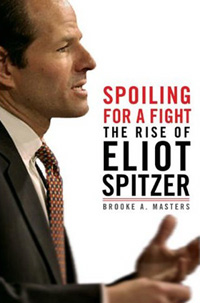
Spitzer’s First Budget


Spitzer’s First Budget Assails Health Care System


By DANNY HAKIM
Published: February 1, 2007

ALBANY, Jan. 31 — Gov. Eliot Spitzer proposed to radically restructure aid to New York’s sprawling health care industry in his first budget Wednesday, saying that the system props up failing hospitals and too often overlooks patients’ needs, while consuming roughly a third of the state’s budget.

The health care changes were among several ambitious proposals that the new governor outlined in his $120.6 billion budget, which would increase overall spending by 6.3 percent — about double the rate of inflation — and cut $1.2 billion from existing health care programs. The cuts would offset billions of dollars worth of proposed property tax cuts and increased education aid.

Many of the governor’s ideas, which followed up on his campaign pledge to toss aside the conventional way of doing business in Albany, would indeed reshape the way the state operates. But they face tough going in the Legislature, where Mr. Spitzer’s brash style has already put him on a collision course with the top legislative leaders, prematurely ending the political honeymoon that often greets newly elected governors. [News analysis, Page B5.]

To control health care spending, Mr. Spitzer would hold the growth of Medicaid to 1.7 percent, compared to 8 percent growth rates in recent years, by cutting subsidies to hospitals and nursing homes, slashing Medicaid reimbursement rates and by stepping up efforts to combat fraud. Conversely, he outlined a plan to make low-cost health insurance coverage available to the state’s 400,000 uninsured children.

His budget also called for several other major measures.

One was an education plan that would increase state aid to schools by $7 billion annually within four years and throw out the complex formula used to distribute school aid around the state. New York City would receive $3.17 billion more annually within four years, with the expectation that the city stick to Mayor Michael Bloomberg’s plan to increase its own spending by $2.2 billion annually within four years.

But a new municipal-aid formula would favor impoverished cities and take nearly $350 million a year away from New York City.

The budget also includes a $1,000- per-child tax deduction for private school tuition. Similar proposals failed to pass under the previous governor.

Another was a $6 billion, three-year property tax relief plan that would focus new aid on middle-class homeowners, granting an average of $920 in relief for such families in the New York suburbs and an average of $512 upstate. The Senate has proposed distributing the same amount of money in two years in a more broadly based manner.

A third major proposal would increase the state work force by nearly 2,500, including 355 workers who would carry out new policies on civil commitment of sexually violent predators. The governor also proposed creating 166 new environmental and conservation jobs, and create an office specializing in climate change to look at ways to reduce global warming.

Mr. Spitzer, readying for a fight over the health care cuts and school aid, told lawmakers on Wednesday morning that he would take his case to the public. Polls show the governor is far more popular than the Legislature.

“I’m going to be out there talking to voters, citizens, homeowners, taxpayers, editorial boards,” the governor said in his speech to lawmakers. “I’m going to be speaking to anybody who will listen. This is not a debate that will be cloistered in the halls of this building. This is a debate that I plan to bring to the people.”

The Republican Senate majority leader, Joseph L. Bruno, a frequent ally of the health care industry, said he had “serious differences” with the governor’s proposals, and also took aim at his style.

“When you’re governing, it’s all about compromise,” he added. People who “draw lines in the sand don’t get on-time budgets. They don’t get results.”

In taking on the health care system, Mr. Spitzer is confronting the nation’s costliest Medicaid program, one that helps support an expansive but money-losing hospital industry with arcane financing rules often designed to keep state aid in place, no matter the effect on patient care.

The health care proposals drew a sharp and immediate response from two politically powerful interest groups, the Greater New York Hospital Association and 1199 S.E.I.U., the health care workers’ union, which, in a joint statement, said the governor’s health proposals were “riddled with inaccuracies.”

Those two groups have cultivated close ties to legislators and spent millions on political contributions, and in the past have defeated similar proposed cuts by saturating the airwaves with television commercials explaining their viewpoint.

The governor’s Medicaid proposals would freeze reimbursement rates to hospitals and nursing homes, lower reimbursements to pharmacies and overhaul payments to hospitals to help them increase salaries.

But many advocacy groups were supportive, saying the proposals brought needed reform to a byzantine system of paying for health care. Michael Kink, legislative counsel of Housing Works, an advocacy and service organization for people with AIDS, said the governor “moves health care money towards patients and front-line care providers, and away from big institutions that don’t serve many Medicaid beneficiaries.”

For his part, the governor contended that “every patient will come out ahead in the long run,” adding that large hospitals and nursing homes “can afford it.”

“They are the ones who have received almost an unending supply of capital and cash over the last 10 or 15 years,” he said. “They will have to rationalize their own operations to make themselves accountable for those dollars they are getting.”

Kenneth E. Raske, the president of the Greater New York Hospital Association, said the cuts could hurt patient care. “He cuts us and we have to cut into the operations of the hospitals, particularly since no one has helped us by putting a freeze on our cost of doing business,” he said.

The governor’s proposed spending increases exceeded former Gov. George E. Pataki’s proposals in his executive budget a year ago — which were just over 4 percent for the total budget. But in his speech, Mr. Spitzer emphasized that his proposals were far lower than the final budget that the Legislature enacted, which increased spending over all by more than 9 percent.

Dealing just with the state’s spending of its own money, not federal aid, the governor is proposing to increase total state spending 7.8 percent, to $83.6 billion, or about three times the rate of inflation projected for the state.

Edmund J. McMahon, the director of the Empire Center for New York State Policy, an affiliate of the conservative policy group the Manhattan Institute, called the proposed spending increase the largest in an executive budget “since Pataki’s first election-year budget.”

“Unless the normal law of physics is suspended, it lays the groundwork for a big increase,” in spending, he said.

The governor said he was not proposing any new taxes, but Republicans disagreed, pointing to $449 million in business-tax loopholes that the governor is proposing to close and $67.7 million in new or higher fees in the budget. The governor also said he would create a special commission to explore whether some of the state’s prisons can be closed.

The governor warned lawmakers not to spend more than he was proposing, a notion that made some lawmakers roll their eyes.

“I think it’s kind of naïve to think you’re going to give this budget to the Legislature and they’re not going to enhance it in some way,” said James Tedisco, the leader of Republicans in the Assembly.

Friday, January 26, 2007

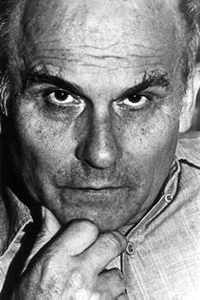
Ryszard Kapuscinski: Man with a mission


Kapuscinski Is Dead?


Ryszard Kapuscinski: Man with a mission

By Shefa Siegel

TheTyee.ca

January 24, 2007 Last month I was travelling Nicaragua with two Polish friends. As new friends do, we were fumbling for things to talk about, points of commonality, shared interests. "Shefa loves Kapuscinski," one told the other. An approving look. "But Kapuscinski," the friend asked, "he is dead?" I shook my head vigorously no, insisting he had a new book waiting to be published in English. Later, when I returned to Vancouver, I opened talks with the owner of a bookstore to bring the Polish travel writer for a signing once the book was published. "I must meet him," I told the storeowner.


Now the press agencies are reporting that in fact it is true, that Ryszard Kapuscinski has died at the age of 74, supposedly after a long illness. I gather there is much afoot in the world at the moment. Bombs in Baghdad, nukes in Tehran, the Democrats on the march; all the front page stories to which I have become immune in six long years of global insanity; six years in which I feel like I have been holding my breath, waiting to live. But the death of Kapuscinski makes me cry out to the walls of my empty apartment. This is news. This is sadness. This is a loss, a man I knew only from the six or seven books of his that are translated to English, and somebody who clearly never waited to live, nor for his life to begin.


For Kapuscinski was no mere travel writer, no mundane reporter. He revived the sagging, inert genre of traveloguing -- a form that had the vitality sapped from it a century ago when the British and American readership commercialized imperialism. Kapuscinski combined two rare attributes: courage and poetry. The obituaries will all record the same impressive resume: that as a reporter he witnessed 27 coups, reported from all over post-colonial Africa in the 1960s, put himself in mortal danger and later wrote books that were well received. But this will explain nothing. For any knee-twitching journalist in Addis Ababa can salivate over the prospects of an imminent war in Somalia, and work over his editor at Reuters to get him on the last flight in before the bombs drop. There is an endless reservoir of humans who derive pleasure from seeing other people cast into man's deepest darkness, and finance this need by reporting the facts from the interior of hotel rooms in war zones.


Risked all


Kapuscinski definitely had the daredevil gene. For no good reason, he would drive sacked roads in war-torn Nigeria to find out exactly who was controlling what areas, and be beaten and have gasoline poured over him before escaping with his life (a story for which his editors berated him by writing him with the curt message, "Ryszard, we must request you stop doing such things"). He definitely had stones. When he was temporarily positioned behind a desk and war broke out in Congo, he finagled a posting to Nigeria, changed the ticket to Cairo, flew to southern Sudan, bought a car, and drove to the Congo without permission, protection or pleasure. (Indeed from this experience he wound up imprisoned and hours from execution.)


For what defined Kapuscinski was not his ability to manage his heart rate, but his reflection, and the poetic attention to words, to understanding people and situations, which no longer exists in any mainstream literary medium. The proof of his genius is simply the weight of his books. For example, there are countless sources to read about Ethiopia and Haile Selassie. But look at the footnotes to Michael Ignatieff's reportage from Africa in The Warrior's Honour, and you will see that at the end of it all, he says something to the effect of nothing else claims the mantle of Kapuscinski's rendering of the fall of Selassie in The Emperor. Because in this book about majesty, Kapuscinski took the reader back through the ages, all the way to biblical stories of court intrigues chronicled by the Book of Esther or the feud between David and Saul narrated in the Book of Kings. And the technique was so simple, it is a miracle nobody did it before. He found the former courtiers of Selassie's last days (not a simple task of reporting), then recorded their monologues in their own voices. He let the places and the people he was experiencing and interviewing speak for themselves. Kapuscinski did what journalists were invented to do, which is give humanity to those who are different from ourselves. He was, in the most subtle form possible, an emissary for peace and for justice in the world.


Portrait maker


For his techniques, there are some who called Kapuscinski a liar (as a journalist from National Geographic told me colleagues of his believed). Indeed, he willingly admitted he did not take notes, that he believed any form of recording changed what people said. But, he explained, in the words that each person delivers, there is a unifying theme, a core idea, a trope to which Kapuscinski honed his attention. And it was this essence he later recorded from the relative quiet of his hotel room. But this is simply where Kapuscinski transformed reportage from a mediocre professional skill to a fine art. His goal was truth, not facts; he drew portraits rather than assessments; in many cases, his canvas was himself.


And much of the time he was so bang on it hurts as an aspiring writer to see how good somebody can be. When I was travelling parts of Africa as a UN consultant, and struggling with the feeling of having somehow been separated from reality, it was Kapuscinski who illuminated for me why I felt this way. "People from the United Nations form a club unto themselves," he commented in The Soccer War. "Many of them are pretentious: they look on everything and everyone from a global perspective, which means, simply, that they look down. They repeat the word 'global' in every sentence, which makes it difficult to settle everyday human problems with them."


Kapuscinski seemed to look down on no one, and was at his best with everyday problems, like when the truck he was being transported by broke down in the middle of Mauritania's desert. Africa was his first and only love. This is so clear from his collection of essays Shadow of the Sun, and a book of war reportage from Angola called Another Day of Life. Maybe it was the times, those early post-colonial days when a coup or revolution could break out at any moment, but Kapuscinski also clearly loved something about the contradictions of a continent at once so broken and so whole. He loved its austerity and its joy just beneath the surface. He did not care so much for Latin America, where he reported for five years, satirizing its "baroque" sensibilities. Everything in Latin America has to be the biggest, he wrote. If it has a river it is the longest, a mountain it is the tallest (he never did seem to report from Asia!), the plains the widest, a forest the biggest. He was not afraid to criticize or to love, all of which opened Kapuscinski to criticism, and even a certain kind of obscurity.


For although those who know him really know him, even my Polish friends knew him only because he had become something of a Polish celebrity by that point, coming as the special guest of an event where a statue was unveiled for a Polish traveller who cycled around Africa. This is to say, they were not terribly familiar with his books, much less his mission. And this is the key point about Kapuscinski, with whom I am obviously in love, passionate and partial: he possessed a profound sense of mission.


Towards peace through understanding


He admitted as much in an interview given to Charlie Rose some years ago, saying he had made a conscious decision to concentrate on history in the making rather than the history of the past, and that he felt a compulsive need to explain things to people with the hope that the deeper we know each other, the more peaceful humans will be.


This mission was more delicately wrapped in an essay he wrote years ago for Granta, which was later republished and used as the fulcrum for The Soccer War, called in various forms something like "High time I started writing the next book." In this essay, he highlights all the things he means to write about -- a form which serves as the file I now keep called, simply, "The Book I Mean to Write" -- if only he had time. "I would write a dictionary describing how different words take on different meanings depending on where they are spoken in the world," Kapuscinski writes. "I would write about the time I was sent to Latin America, but didn't really like it. I would write about how hard it is for a northerner to survive in the tropics, or what it feels like to hide in a hotel room when all white men are being rounded up on the streets, or the experience of being in motion so often, flying, stewardesses, passports, hotels, typewriters, loneliness. I would write about all this, if only things didn't keep coming up. If only the world would calm down for a moment. If only I could take a break from my deepest sense of mission."


A conviction so deep it becomes a mission is so rare for non-ideologues, zealots or fanatics, that Kapuscinski deserves praise, and respect, memorializing and dedications for holding so stoically to his own purpose throughout his life. His words alone will survive him. That is something. But more than his words a writer wants to be remembered for his ideas, which have a way of seeping into the world, and becoming part of the collective unconscious long after, in fact only after their bodies have passed and just their lines remain. To feel such gratitude and warmth for a person I only think I know, when in fact all I know are his words, is a testament to the righteousness of Kapuscinski's core idea, that the more the lives of others are explained to us, the less likely we are to fight. This is to say, the more likely we are to love. This is a tribute not only to Kapuscinski himself, but also to everyone who feels the inexplicable humanistic drive to put thought to order, apply meaning to language, give life to words.


"You must choose your words carefully," Kapuscinski said, "because there are so many of them in the world." It is a reassurance that the humanistic will is still alive in humanity, no matter how troubled, corrupt, or infuriating; no matter how desperately we need the world to become calmer, so that we can release our clenched teeth, and remember what it is like to breathe again.


Shefa Siegel
is a writer, environmental consultant for the United Nations Industrial Development Organization and doctoral student at the University of British Columbia. He lives in Victoria.


source:
http://thetyee.ca/Books/2007/01/24/Kapuscinski/

Thursday, January 25, 2007

Canada's Disappearing Internet Freedom

Canada Sleeps Through War to 'Save the Internet'

Pitched battle in U.S. over 'net neutrality' Digital democracy at risk if telecoms get their way say opponents.

By Bryan Zandberg
Published: January 17, 2007


TheTyee.ca

Net neutrality. A bland phrase capable of sparking a digital revolt.

In the United States it's the hot-button Internet issue of the day, a threat deemed so grave to free expression it gave rise to a stunning right-left coalition and galvanized celebrities and rock icons like REM with church groups, rights groups, academics, the CEOs of Google and Amazon, web pioneers Vint Cerf and Tim Berners-Lee and the 1.5 million Americans who sent a petition to Congress. (Not to mention providing the raison d'être for this hip short film primer on the topic.)

In Canada, on the other hand, the latest count on Kevin McArthur's online net neutrality petition clocks in at, well, a paltry 217 signatures.

It's not that the fight over net neutrality doesn't matter in Canada. At issue here, as in the United States, is whether telecom companies can favour some Internet sites over others by charging different rates to different customers and making some sites much easier to access than others. Critics say the practice threatens the Internet's level playing field and would stifle smaller independent voices on the web.

At stake is nothing less than democratic speech in the Canadian modern era, says McArthur. "I mean this is The People vs. Larry Flint all over again, only this time it's digital."

Odd then that public debate on the issue in Canada has been a non-starter. Especially when, between the two countries, it's Canada where the World Wide Web is most poised to become the latest plaything of the rich and the powerful.

'Sounds innocuous, but isn't'

To understand what net neutrality is and why it's important, it pays to take a look at what's been happening south of the border.

In 2005, the Federal Communications Commission (FCC) redefined "broadband," recasting it as an information, rather than a telecommunication, service.

"It sounds like an innocuous change, but it isn't," explains Ben Scott, a spokesperson for net neutrality for Free Press, a media democracy NGO based in Washington, D.C. With the stroke of a pen, Scott says the decision undid the entire regulatory regime attached to telecom services, thrusting them into "a category that has virtually no regulations."

The change didn't bode well for a broad spectrum of Internet users, from start-up companies to anyone who uses Google or YouTube. Whereas previously telcos were legally obliged to deliver packets of bits and bytes blindly, as an information service that restriction was no longer in force. This opened the door for what Scott calls a "CEOs-go-to-Wall-Street" scenario: almost immediately, the major carriers began to toy with the idea of creating a two-tier Internet, replete with a fast-track for content creators willing to pay for preferential service, and a slow lane for everyone else.

The idea of telcos acting as gatekeepers, combined with what that would potentially and physically do to the Internet, set off a firestorm of public protest. And in spite of the fact the telcos spent hundreds of millions of dollars lobbying Capitol Hill, a bill that would have paved the way for a two-tiered net died along with Republican majorities in the House and the Senate.
Now, Scott says a climate of intense public and congressional scrutiny will bar the telcos from acting as gatekeepers until net neutrality can be protected by law.

But what's to stop them in Canada? Less and less, it would appear.

Canada's hands-off stance

Professor Michael Geist has been talking about net neutrality and digital rights in his Toronto Star and Ottawa Citizen columns and via his blog for a while now. The Canada Research Chair of Internet and E-commerce Law says that even though Canada is rapidly deregulating the telecom industry, public debate amounts to little more than a whisper.
Just like in the States, net neutrality in Canada hovers in a state of legal limbo; the threadbare language of the Telecommunications Act means that two-tier Internet is more than a distant possibility; it's already here.

"I think it's already happening now but for the most part people don't recognize it," says Geist, who is based at the University of Ottawa.

"Some of the providers are already engaged in some of these kinds of activities, with little transparency and considerable uncertainty as to whether or not the legal system prohibits it."
Geist offers the example of profs who post their lectures online via an application called BitTorrent, free software designed to send large amounts of multi-media data from point A to point B. He says lately these video clips and audio files "slow to a crawl" when students try to download them because of "package-shaping" practices by companies like Rogers.

Digital profits up for grabs

Packet-shaping, or prioritizing the kinds of information being sent through the pipes, is the thin edge of the wedge, says Geist. All kind of digital rights are up in the air right now.
Much of this is because Internet service providers (ISPs) like Telus and Shaw have always offered "unlimited" bandwidth to subscribers, counting on the fact that the vast majority of users only use a sliver of it.

But with today's wave of user-generated content -- video, wikis, podcasts, MP3s, open source software and Internet telephone -- the old "unlimited" paradigm is broken. Telecoms are as tired of watching the average user eat up more and more bandwidth as they are of watching 100 million video clips a day zip through their wires, via free sites like YouTube. And their shareholders aren't seeing any of that Internet cornucopia -- like Google's recent $1.65 billion purchase of YouTube -- reflected in their company's quarterly reports.

While he says he can appreciate the telcos' concerns -- something's got to be done about the shrinking amount of available bandwidth -- Geist says they're going about it the wrong way.
"If all you're doing is saying, 'This is our existing service and we just want to extract additional dollars because we think Google makes too much money'...I don't know that that's a particularly convincing argument."

McArthur goes further. He says companies are in effect creating a problem so they can charge to fix it. "[Even] if everyone paid for a tier-one service, it would be THE EXACT SAME service we have today," he wrote by e-mail. "Quality of service only works while someone else is getting screwed."

"It's an attempt to extract more rent out of your server," Geist summarizes, "even if it comes at the expense of both their users' interests and the broader interest of the Internet as a whole."
Telus declined to address the issue of net neutrality in an interview and Shaw representatives did not return calls.

COA versus CNN

Steve Anderson's situation brings the potential effect of two-tier Internet into focus. Anderson is a master's student in online media studies at Simon Fraser University. He's also the managing editor of an independent online news source called COAnews, where he and a coterie of mostly volunteer editors stream a lot of audio and video files that sometimes fly in the face of what you see on the evening news. Under a two-tiered system, he says COA's shoestring budget would almost certainly keep it off the fast track.

"Right now we can literally compete with CNN or whatever if we provide news that people want to look at," he explains. "But if that situation goes through, then we just can't afford to pay the fees that CNN can, just like we can't afford to put up a cable news television show."
With few willing to wait for clips if they download at a snail's pace, the slow lane bottle-neck would be the death of independent online media, both for COAnews and for the thousands of other grassroots efforts trying to get their message out there. The Internet, he thinks, is in danger of falling in the for-profit footsteps of its predecessors radio and television.

Telus you didn't do it

Another wrinkle with deregulation is what happens when the carriers start to peep at what it is they're carrying, and then discriminate based on what they see. The landmark example -- the one that even advocates in the U.S. cite -- actually took place here in Canada when Telus blocked a website run by striking Telus employees called "Voices for Change."

Free speech activists were furious, but the company defended itself, saying it was acting to protect the identities of the people who chose to cross the picket lines, whose photographs were purportedly posted on the site. Regardless of their rationale, Telus cut access to another 766 totally unrelated sites by pulling the plug on the Florida server that hosted Voices for Change.
Marita Moll and Leslie Shade call these and other incidents of information-tampering "good reasons for Canadians to be concerned."

The pair, who work with the Canadian Research Alliance for Community Innovation and Networking, recently penned a joint e-mail to The Tyee in which they criticized the conclusions of the Telecommunications Policy Review Panel (TPRC), which delivered a 400-page report last year calling for sweeping changes to Canada's telecom oversight body, the Canadian Radio-television and Telecommunications Commission (CRTC).

In a nutshell, the panel determined that the CRTC should concern itself with monitoring the social and technical aspects of telecommunications, and leave economic issues up to market forces. Markets are to be regarded as competitive unless proven otherwise, said the panel, a conclusion warmly welcomed by the Conservative government.

But Moll and Shade see the sidelining of the CRTC as having negative ramifications for the industry, and moreover for the public good.

"Telecommunications are oligopolies and do not really engage in competitive behaviour," they wrote. "They own the markets together and they will co-operate in protecting those markets. As such, they have a huge incentive to collaborate to contain bandwidth use to the infrastructure channels they are prepared to provide."

The Big Four

By Geist's count, the biggest four Canadian providers (Telus, Shaw, Rogers and Bell) control 60 per cent of the country's $32 billion telecom market; the top eight control upwards of 80 to 90 per cent. Last week's Canwest-Alliance merger only highlights the how the list of players is shortening.

"There is the real incentive for some of these providers to exclude or diminish the quality of some of the new content that is emerging that I think will increasingly be seen as competitive."
Case in point: the CRTC's favourable ruling for Vonage, an Internet telephone company that complained about a quality of service fee imposed by Shaw, a decision which was overturned by Stephen Harper's Conservative government. Geist is concerned about the fact that the expert panel intended to oversee Canadian telecommunications is increasingly being told to butt out.
"They've actually tried to be hands-on on some issues and got themselves slapped down pretty good by the government."

You don't have to look to Internet telephone to see how the same near-monopolies work with web services. Even if there are eight Internet service providers in Canada, Geist says consumers typically only have the option of choosing between one of two providers for an Internet connection.

"You get cable or ADSL, or nothing," he notes. "That's not a competitive environment at all."
Which means that if in the future companies anger customers the way Telus or Shaw have in the past, "there's little reason to believe that consumers will have options to move to other services if they're unhappy."

Regardless of the situation, telecom deregulation is still "quite clearly the top priority of the Industry minister [Maxime Bernier]," says Geist.

"But the [government's] focus again has been solely one-sided: it's just been on deregulating without addressing these kinds of issues. And there's a certain irony there because this represents by far the best opportunity to build in some net neutrality provisions."

Canada's backwardness in this regard is made all the more apparent given a surprising move by the FCC in the recent AT&T-BellSouth merger. As a condition of U.S. government approval for the takeover, the FCC made both companies agree to respect network neutrality for two years, when clearer-cut legislation is expected to replace the murky language that currently regulates net neutrality in that country.

That move finds no parallel in Canada, where Section 36 of the Telecommunications Act offers no clearer guidance on the topic than the following line: "a Canadian carrier shall not control the content or influence the meaning or purpose of telecommunications carried by it for the public."
Experts like Geist, McArthur, Moll and Shade agree that guideline is as outdated as it is insufficient. In Ottawa last October, Moll and Shade took part in the Alternative Telecommunications Policy Forum, where a panel drafted the following proposal for a guideline: "network operators shall not discriminate against content, applications, or services on broadband Internet services based on their source or ownership."

That clause, meant as an appendix to the net neutrality recommendations in last year's TCRP report, has so far fallen on deaf ears on Parliament Hill.

According to Geist, Industry minister Maxime Bernier has thus far shown "little appetite" for inserting any such language into the Telecommunications Act.
Bernier did not respond to e-mails requesting an interview.

Canadians asleep on issue

For the moment, and judging by every indication, Canada limps into an uncharted electronic future in a near-total policy vacuum on the matter of net neutrality.
That vacuum, twinned with public apathy, is nothing short of a boon for telecom companies, say Moll and Shade, who go on to add that "public policy is obviously serving their needs."
And while the telecom lobbies swamp commissions like the recent TCRP with thousands of pages of testimony, "the few folks sending in submissions in the public interest are barely on the map," they say.

Given that fundamental aspects of how the Internet works are being decided by the PMO, Shade and Moll say it's up to the public to get Canadian politicians "up to speed" on net neutrality the way the American public did in the U.S. To date, there is scarce indication that any of the major parties are thinking about the issue; McArthur says a letter to his Conservative MP in Edmonton didn't even generate a standard response letter. He says only the Green party and the NDP are actively working on net neutrality.

So while many tout the digital revolution as ushering in a new wave of democracy, only 217 of them in Canada have stepped back from the glow and done something to protect it.
"There are lots of things to be really optimistic about online," says Geist, "but this isn't one of them."


source:
http://www1.thetyee.ca/Mediacheck/2007/01/17/NetNeutrality/

Related Tyee stories:

Wednesday, January 24, 2007

Bush Speech Terror Claim Debunked A Year Ago

Just one of many State of the Union lies, following in the tradition of the
2003 yellowcake fraud, Bush commits an impeachable offense by knowingly
lying to the American people

Prison Planet | January 24, 2007
Paul Joseph Watson


A claim made by President Bush in his State of the Union speech last night,
that an attack on an L.A. skyscraper had been averted, was universally
debunked as a hoax by Mayors, CIA, FBI and NSA personnel and counter-terror
experts nearly a year ago when it first surfaced. By regurgitating this
fraud, Bush has committed an impeachable offense by knowingly lying to the
American people.

Bush's address was punctuated with deception, horse hockey and
propagandistic drivel throughout, again reinforcing a characteristic that
was born in 2003 when Bush told the nation that Iraq had sought to buy
uranium from Niger , a claim the CIA had informed the administration was
based on falsified documents ten months before it was included in the
speech.

Amidst the cacophony of bullshit came this belter.

"We stopped an al Qaeda plot to fly a hijacked airplane into the tallest
building on the West Coast."

According to numerous public officials, terror experts and intelligence
personnel, this is simply not true.

Bush's is referring to an announcement made on February 9th last year in
which he made the claim that an Al-Qaeda plan to fly a plane into the LA
Library Tower was thwarted in 2002. The release of the news that the plot
had been prevented by means of tapping terrorist suspect's phones was
politically timed to coincide with the start of legal hearings on the Bush
administration's domestic eavesdropping program.

Fox "News," the White House's PR mouthpiece, immediately began showing
footage from the movie Independence Day, in which the famous tower is
destroyed.

Hours after the announcement, the mayor of Los Angeles, Antonio
Villaraigosa, went public with comments of his absolute bewilderment
concerning the alleged plot.

"I'm amazed that the president would make this (announcement) on national TV
and not inform us of these details through the appropriate channels," the
mayor said in an interview with The Associated Press. "I don't expect a call
from the president - but somebody."

The day after the announcement, twenty three separate intelligence experts,
all with either CIA, FBI, NSA or military credentials, both in and out of
service, angrily disputed Bush's remarks about the alleged L.A. plot, with
one going as far as saying that the President was "full of shit."

Another described the claims as "worthless intel that was discarded long
ago."

Get 5 months free at Prison Planet.tv when you sign up for our New Years
Special! TV shows, conference footage, field reports, protest clips, in
studio camera and audio interviews, books, every Alex Jones film, dozens of
other documentaries! Click here to subscribe!


A New York Times story cited "several counter-terrorism officials" as saying
that "the plot never progressed past the planning stages.... 'To take that
and make it into a disrupted plot is just ludicrous,' said one senior FBI
official."

The New York Daily News cited another senior counterterrorism official who
said: "There was no definitive plot. It never materialized or got past the
thought stage."

The Washington Post also dismissed the alleged plot as nothing more than
talk, noting that no actual attack plan had been thwarted.

The LA attack plot arose from the same discredited informant who said that
Washington and New York financial institutions were being targeted, which
led the White House to raise the terror alert right as the 2004 election
campaign was beginning.

"The President has cheapened the entire intelligence community by dragging
us into his fantasy world," said a veteran field operative of the Central
Intelligence Agency. "He is basing this absurd claim on the same discredited
informant who told us Al Qaeda would attack selected financial institutions
in New York and Washington."

In June 2004 John Pistole, the FBI's counterterrorism director, said he was
"not sure what [the CIA] was referring to," after a CIA counterterrorism
official who testified under the alias "Ted Davis" said that the US had
prevented aviation attacks against the east and west coast.

Questions were raised at the White House press briefing as to the noticeably
convenient announcement of a four year old alleged foiled plot in relation
to the furore about domestic spying.

"But is it just a coincidence? You had February 6th circled on the calendar
for the hearings, the NSA hearings. Is it just a pure coincidence that this
comes out today?" asked one journalist.

"Scott, I wanted to just ask a follow-up about the LA plot. Is there
something missing from this story, a practical application, a few facts?
Because if you want to commandeer a plane and fly it into a tower, if you
used shoe bombs, wouldn't you blow off the cockpit? Or is there something
missing from this story?" asked another.

There was indeed a great deal missing from this story in that it was nothing
more than hot air manufactured by the Bush administration at the most
politically expedient time, a psychological fraud unleashed on the public in
order to silence critics of the illegal NSA surveillance spying program.

Bush has again committed the impeachable offense of knowingly lying to the
American people in regurgitating the debunked plot in last night's State of
the Union address.

Sunday, January 21, 2007

Gorilla Radio for Monday, January 22, 2007

This past week, a friend of this program, currently on a book tour of the States, asked me if I was interested in coming down to one of his book events in Washington state. Not the first time I'd been invited to the land of the free, but this time I felt I needed to explore my own trepidations about crossing the 49th.

In the first half, a departure from form for a little ranting, reading, and raving.

And; the Common Energy Lectures kicked off at the University of Victoria last week. Common Energy describe themselves as: "a network of students, staff, faculty, and regional partners centered at UVic, working to create solutions to the climate crisis in Victoria."

Professor Ned Djilali is a Canada Research Chair and Director of the Institute for Integrated Energy Systems on the series, and he'll join us with some of the cutting edge technology development coming out of the university and what that means for the future of Victoria and beyond in the second half.

And; Janine Bandcroft will be here at the bottom of the hour to bring us up to speed with some of the good things you can get up to in and around Victoria in the coming week.

But first, the ugliness that has become America.

Bloggers Who Criticize Government May Face Prison

Bill would allow rounding up and imprisoning of non-registered political writers

Steve Watson
Infowars.net
Thursday, January 18, 2007

You'd be forgiven for thinking that it was some new restriction on free speech in Communist China. But it isn't. The U.S. Government wants to force bloggers and online grassroots activists to register and regularly report their activities to Congress in the latest astounding attack on the internet and the First Amendment.

Richard A. Viguerie, Chairman of GrassrootsFreedom.com, a website dedicated to fighting efforts to silence grassroots movements, states:

"Section 220 of S. 1, the lobbying reform bill currently before the Senate, would require grassroots causes, even bloggers, who communicate to 500 or more members of the public on policy matters, to register and report quarterly to Congress the same as the big K Street lobbyists. Section 220 would amend existing lobbying reporting law by creating the most expansive intrusion on First Amendment rights ever. For the first time in history, critics of Congress will need to register and report with Congress itself."

In other words Nancy Pelosi and the Democrats may redefine the meaning of lobbying in order that political communications to and even between citizens falls under the same legislation.

Under current law any 'lobbyist" who 'knowingly and willingly fails to file or report." quarterly to the government faces criminal charges including a possible jail term of up to one year.

The amendment is currently on hold.

This latest attack on bloggers comes hot on the heels of Republican Senator John McCain's proposal to introduce legislation that would fine blogs up to $300,000 for offensive statements, photos and videos posted by visitors on comment boards.

McCain's proposal is presented under the banner of saving children from sexual predators and encourages informants to shop website owners to the National Center for Missing and Exploited Children, who then pass the information on to the relevant police authorities.


Despite a total lack of any evidence that children are being victimized en mass by bloggers or people who leave comments on blog sites, it seems likely that the proposal will become legislation in some form. It is well known that McCain has a distaste for his blogosphere critics, causing a definite conflict of interest where any proposal to restrict blogs on his part is concerned.

In recent months, a chorus of propaganda intended to demonize the Internet and further lead it down a path of strict control has spewed forth from numerous establishment organs:

During an appearance with his wife Barbara on Fox News last November, George Bush senior slammed Internet bloggers for creating an "adversarial and ugly climate."

- The White House's own recently de-classified strategy for "winning the war on terror" targets Internet conspiracy theories as a recruiting ground for terrorists and threatens to "diminish" their influence.

- The Pentagon recently announced its effort to infiltrate the Internet and propagandize for the war on terror.

- In a speech last month, Homeland Security director Michael Chertoff identified the web as a "terror training camp," through which "disaffected people living in the United States" are developing "radical ideologies and potentially violent skills." Chertoff pledged to dispatch Homeland Security agents to local police departments in order to aid in the apprehension of domestic terrorists who use the Internet as a political tool.

- A landmark legal case on behalf of the Recording Industry Association of America and other global trade organizations seeks to criminalize all Internet file sharing of any kind as copyright infringement, effectively shutting down the world wide web - and their argument is supported by the U.S. government.

- A landmark legal ruling in Sydney goes further than ever before in setting the trap door for the destruction of the Internet as we know it and the end of alternative news websites and blogs by creating the precedent that simply linking to other websites is breach of copyright and piracy.

- The European Union, led by former Stalinist and potential future British Prime Minister John Reid, has also vowed to shut down "terrorists" who use the Internet to spread propaganda.

- The EU also recently proposed legislation that would prevent users from uploading any form of video without a license.

- We have also previously exposed how moves are afoot to clamp down on internet neutrality and even to designate a highly restricted new form of the internet known as Internet 2.

---------------------------------------------------------------------------------------------------------------
Want to start your own blog or website, get the word out and support Alex Jones? Infowars.net offers
high-quality webhosting services at very competitive prices, and most importantly, with
infowars.net, privacy is paramount! We don't sell the names of our customers to marketing
firms or the government. Click here for more info.
---------------------------------------------------------------------------------------------------------------

Make no mistake, the internet, one of the greatest outposts of free speech ever created is under constant attack by powerful people who cannot operate within a society where information flows freely and unhindered. All these moves mimic stories we hear every week out of State Controlled Communist China, where the internet is strictly regulated and virtually exists as its own entity away from the rest of the web.

The phrases "Chinese government" and "Mao Zedong" have even been censored on China's official Web sites because they are "Sensitive phrases". Are we to allow our supposedly Democratic governments to implement the same type of restrictive policies here?

Under section 220 of the lobbying reform bill, Infowars.net could be required to seek a license in order to bring this information to you. IF we were granted a license we would then have to report our activities to the government four times per year in order to bring you this information. Does that sound more like free speech or more like totalitarianism?

***********

Take action:

As well as calling the Senate you should go to GrassrootsFreedom.com which has a petition that you can sign against Section 220 of S. 1, the lobbying reform bill.

Paul Joseph Watson contributed to this report.

Sunday, January 14, 2007

Gorilla Radio for Monday, January 15th, 2007


Chris Cook hosts Gorilla Radio, airing live every Monday, 5-6pm Pacific Time. In Victoria at 101.9FM, 104.3 cable, and on the internet at: http://cfuv.uvic.ca He also serves as a contributing editor at the progressive web news sites: http://www.pej.org and www.atlanticfreepress.com. You can check out the GR blog at: http://GorillaRadioBlog.blogspot.com


PEJ News - C. L. Cook - This week on GR: Canadian journalist, commentator, author, and foreign policy analyst Eric S. Margolis and the blunders of Empire; Vancouver-based journalist and author, Monte Paulsen with solutions to Canada's burgeoning homelesssness crisis; and, Janine Bandcroft brings us up to speed on the good things to do in and around Victoria in the coming week.


Gorilla Radio for Monday,
January 15th, 2007

C. L. Cook

PEJ News
Jan. 14, 2007


One may be tempted to think: After nearly four years of the bloody debacle in Iraq, and more than five of efforts amounting to nought in Afghanistan, the U. S. administration, as it is under George W. Bush, would be tiring of war and ready to tone down its diplomatic bellicosity; but thinking has not proven the hallmark of either the current American president or the determined actors behind him. Instead, as the new year begins, Bush has announced reinforcements for Iraq, deployment of another carrier group to the Persian Gulf, and within hours of his January 10th address to the nation, authorized a U.S. commando raid against an Iranian consulate in Iraq and the taking of five of its staff prisoner, in a blatant contravention of international law.

In conjunction with this, and the fiasco of the Christmas hanging of kangaroo court tried Saddam Hussein, U.S. intelligence operatives were busy over-throwing the first remotely stable governance Somalia has known since president George H. W. Bush's disastrous "aid" mission was launched there in 1992.

With these beginnings, what can we expect for the rest of 2007?


Eric S. Margolis is a Canadian journalist, media commentator, and foreign affairs analyst whose work appears in Canada's Sun National Media outlets, Pakistan's Dawn, and in American Conservative Magazine. He's also a frequent commentator for the CBC, CNN, FOX, and other network news outlets in the United States and Britain and the author of the recently updated Canadian best-selling book, 'War at the Top of the World: the Struggle for Afghanistan, Kashmir, and Tibet.'

Eric S. Margolis in the first segment.

And; while the Conservative government of Stephen Harper rushes to defend empire and to fill the breaches in Canada's "porous" border with billions of tax dollars, daily more Canadians left out of the nation's economic life are finding themselves living out of doors. With an estimated quarter million citizens surviving with "no fixed" at the time of Harper's ascension to Sussex, the economic policies of the Tories hold little promise for their near future prospects.

Monte Paulsen is a journalist and author whose titles include: 'The Buying of the American President 2000,' and 'Beyond the Deep: The Deadly Descent into the World's Most Treacherous Cave.' Paulsen is currently a contributing editor to the Vancouver-based web news site, The Tyee. His work has also featured in newspapers and magazines from Rolling Stone to U.S. News & World Report. He also contributed to the Knight-Ridder investigative team awarded the 1997 Pulitzer Prize for Public Service while at the Grand Forks Herald.

Monte Paulsen and Seven Solutions to Homelessness in the second segment.

And; Janine Bandcroft will be here at the bottom of the hour to bring us up to speed with some of the good thing you can get up to in and around Victoria this week. But first, Eric S. Margolis and charting a perilous course in the coming year.


G-Radio is dedicated to social justice, the environment, community, and providing a forum for people and issues not covered in the corporate media.

Some past guests include: M. Junaid Alam, M. Shahid Alam, Joel Bakan, Maude Barlow, David Barsamian, Rhoda Berenson, William Blum, Luciana Bohne, William Bowles, Vincent Bugliosi, Helen Caldicott, Noam Chomsky, Michel Chossudovsky, Diane Christian, Juan Cole, David Cromwell, Murray Dobbin, Jon Elmer, Reese Erlich, Anthony Fenton, Jim Fetzer, Laura Flanders, Chris Floyd, Connie Fogal, Susan George, Stan Goff, Amy Goodman, Robert Greenwald, Denis Halliday, Chris Hedges, Sander Hicks, Julia Butterfly Hill, Robert Jensen, Dahr Jamail, Diana Johnstone, Kathy Kelly, Naomi Klein, Anthony Lappe, Frances Moore Lappe, Jason Leopold, Jeff Leys, Dave Lindorff, Jim Lobe, Jennifer Loewenstein, Wayne Madsen, Stephen Marshall, Linda McQuaig, George Monbiot, Loretta Napoleoni, John Nichols, Kurt Nimmo, David Orchard, Greg Palast, Mike Palecek, Michael Parenti, Robert Parry, Kevin Pina, William Rivers Pitt, Justin Podur, Jack Random, Sheldon Rampton, Paul Craig Roberts, Paul de Rooij, John Ross, Danny Schechter, Vandana Shiva, Norman Solomon, Starhawk, Grant Wakefield, Paul Watson, Bernard Weiner, Mickey Z., Dave Zirin, and many others.


Stay informed. Subscribe and get the best of PEJ News by email. Free.

Tomgram: Klare, The Pentagon as an Energy-Protection Racket

[for complete article links, please see original:
http://www.tomdispatch.com:80/index.mhtml?pid=157241]


This January, Tomdispatch has been focusing on the Pentagon, the imperial path, and militarization. Last week, Nick Turse explored the way Pentagon strategists, having taken possession of our future, are writing their own dystopian science fiction scenarios about how to fight in Baghdad 2025 and other urban megaslums of the planet (as American troops may soon be doing in Baghdad's huge Shiite slum of Sadr City). Then, Frida Berrigan considered the massively profitable business operation the Pentagon was running off fictional futures and the all-too-real weapons systems that will result from it.

Today, Michael Klare, an expert on resource wars and the author of the indispensable Blood and Oil: The Dangers and Consequences of America's Growing Dependence on Imported Petroleum, offers a startling vision of the grim energy future that the Pentagon is actually helping to create -- as well as the ruthless scrambles for energy resources, the Great Power energy races, and the kind of Big Brotherhood that may lie in our near future. This is the first of a major two-part Tomdispatch series on the possible emergence of a new phenomenon in our world that Klare dubs "Energo-fascism." Tom


Is Energo-fascism in Your Future?

The Global Energy Race and Its Consequences (Part 1)

By Michael T. Klare

It has once again become fashionable for the dwindling supporters of President Bush's futile war in Iraq to stress the danger of "Islamo-fascism" and the supposed drive by followers of Osama bin Laden to establish a monolithic, Taliban-like regime -- a "Caliphate" -- stretching from Gibraltar to Indonesia. The President himself has employed this term on occasion over the years, using it to describe efforts by Muslim extremists to create "a totalitarian empire that denies all political and religious freedom." While there may indeed be hundreds, even thousands, of disturbed and suicidal individuals who share this delusional vision, the world actually faces a far more substantial and universal threat, which might be dubbed: Energo-fascism, or the militarization of the global struggle over ever-diminishing supplies of energy.

Unlike Islamo-fascism, Energo-fascism will, in time, affect nearly every person on the planet. Either we will be compelled to participate in or finance foreign wars to secure vital supplies of energy, such as the current conflict in Iraq; or we will be at the mercy of those who control the energy spigot, like the customers of the Russian energy juggernaut Gazprom in Ukraine, Belarus, and Georgia; or sooner or later we may find ourselves under constant state surveillance, lest we consume more than our allotted share of fuel or engage in illicit energy transactions. This is not simply some future dystopian nightmare, but a potentially all-encompassing reality whose basic features, largely unnoticed, are developing today.

These include:

* The transformation of the U.S. military into a global oil protection service whose primary mission is to defend America's overseas sources of oil and natural gas, while patrolling the world's major pipelines and supply routes.

* The transformation of Russia into an energy superpower with control over Eurasia's largest supplies of oil and natural gas and the resolve to convert these assets into ever increasing political influence over neighboring states.

* A ruthless scramble among the great powers for the remaining oil, natural gas, and uranium reserves of Africa, Latin America, the Middle East, and Asia, accompanied by recurring military interventions, the constant installation and replacement of client regimes, systemic corruption and repression, and the continued impoverishment of the great majority of those who have the misfortune to inhabit such energy-rich regions.

* Increased state intrusion into, and surveillance of, public and private life as reliance on nuclear power grows, bringing with it an increased threat of sabotage, accident, and the diversion of fissionable materials into the hands of illicit nuclear proliferators.

Together, these and related phenomena constitute the basic characteristics of an emerging global Energo-fascism. Disparate as they may seem, they all share a common feature: increasing state involvement in the procurement, transportation, and allocation of energy supplies, accompanied by a greater inclination to employ force against those who resist the state's priorities in these areas. As in classical twentieth century fascism, the state will assume ever greater control over all aspects of public and private life in pursuit of what is said to be an essential national interest: the acquisition of sufficient energy to keep the economy functioning and public services (including the military) running.

The Demand/Supply Conundrum

Powerful, potentially planet-altering trends like this do not occur in a vacuum. The rise of Energo-fascism can be traced to two overarching phenomena: an imminent collision between energy demand and energy supplies, and the historic migration of the center of gravity of planetary energy output from the global north to the global south.

For the past 60 years, the international energy industry has largely succeeded in satisfying the world's ever-growing thirst for energy in all its forms. When it comes to oil alone, global demand jumped from 15 to 82 million barrels per day between 1955 and 2005, an increase of 450%. Global output rose by a like amount in those years. Worldwide demand is expected to keep growing at this rate, if not faster, for years to come -- propelled in large part by rising affluence in China, India, and other developing nations. There is, however, no expectation that global output can continue to keep pace.

Quite the opposite: A growing number of energy experts believe that the global output of "conventional" (liquid) crude oil will soon reach a peak -- perhaps as early as 2010 or 2015 -- and then begin an irreversible decline. If this proves to be the case, no amount of inputs from Canadian tar sands, shale oil, or other "unconventional" sources will prevent a catastrophic liquid-fuel shortage in a decade or so, producing widespread economic trauma. The global supply of other primary fuels, including natural gas, coal, and uranium is not expected to contract as rapidly, but all of these materials are finite, and will eventually become scarce.

Coal is the most plentiful of the three; if consumed at current rates, it can be expected to last for perhaps another century and a half. If, however, it is used to replace oil (in various coal-to-liquid schemes), it will disappear much more rapidly. This does not, of course, address coal's disproportionate contribution to global warming; if there is no change in the way it is burned in power plants, the planet will become inhospitable long before the last coal mine is exhausted.

Natural gas and uranium will outlast petroleum by a decade or two, but they too will eventually reach peak output and begin to decline. Natural gas will simply disappear, just like oil; any future scarcity of uranium can to some degree be overcome through the greater utilization of "breeder reactors," which produce plutonium as a byproduct; this substance can, in turn, be used as a reactor fuel in its own right. But any increased use of plutonium will also vastly increase the risk of nuclear-weapons proliferation, producing a far more dangerous world and a corresponding requirement for greater government oversight of all aspects of nuclear power and commerce.

Such future possibilities are generating great anxiety among officials of the major energy-consuming nations, especially the United States, China, Japan, and the European powers. All of these countries have undertaken major reviews of energy policy in recent years, and all have come to the same conclusion: Market forces alone can no longer be relied upon to satisfy essential national energy requirements, and so the state must assume ever-increasing responsibility for performing this role. This was, for example, the fundamental conclusion of the National Energy Policy adopted by the Bush administration on May 17, 2001 and followed slavishly ever since, just as it is the official stance of China's Communist regime. When resistance to such efforts is encountered, moreover, government officials only wield the power of the state more regularly and with a heavier hand to achieve their objectives, whether through trade sanctions, embargoes, arrests and seizures, or the outright use of force. This is part of the explanation for Energo-fascism's emergence.

Its rise is also being driven by the changing geography of energy production. At one time, most of the world's major oil and natural gas wells were located in North America, Europe, and the European sectors of the Russian Empire. This was no accident. The major energy companies much preferred to operate in hospitable countries that were close at hand, relatively stable, and disinclined to nationalize private energy deposits. But these deposits have now largely been depleted and the only areas still capable of satisfying rising world demand are located in Africa, Asia, Latin America, and the Middle East.

The countries in these regions were nearly all subject to colonial rule and still harbor deep distrust of foreign involvement; many also house ethnic separatist groups, insurgencies, or extremist movements that make them especially inhospitable to foreign oil companies. Oil production in Nigeria, for example, has been sharply curtailed in recent months by an insurgency in the impoverished Niger Delta. Members of poor tribal groups that have suffered terribly from the environmental devastation wrought by oil-company operations in their midst, while receiving few tangible benefits from the resulting oil revenues, have led it; most of the profits that remain in-country are pilfered by ruling elites in Abuja, the capital. Combine this sort of local resentment with lack of security and often shaky ruling groups, and it's hardly surprising that the leaders of the major consuming nations have increasingly been taking matters into their own hands -- arranging preemptive oil deals with compliant local officials and providing military protection, where needed, to ensure the safe delivery of oil and natural gas.

In many cases, this has resulted in the establishment of oil-driven, patron-client relations between major consuming nations and their leading suppliers, similar to the long-established U.S. protectorate over Saudi Arabia and the more recent U.S. embrace of Ilham Aliyev, the president of Azerbaijan. Already we have the beginnings of the energy equivalent of a classic arms race, combined with many of the elements of the "Great Game" as once played by colonial powers in some of the same parts of the world. By militarizing the energy policies of consuming nations and enhancing the repressive capacities of client regimes, the foundations are being laid for an Energo-fascist world.

The Pentagon: A Global Oil-Protection Service

The most significant expression of this trend has been the transformation of the U.S. military into a global oil-protection service whose primary function is the guarding of overseas energy supplies as well as their global delivery systems (pipelines, tanker ships, and supply routes). This overarching mission was first articulated by President Jimmy Carter in January 1980, when he described the oil flow from the Persian Gulf as a "vital interest" of the United States, and affirmed that this country would employ "any means necessary, including military force" to overcome an attempt by a hostile power to block that flow.

When President Carter issued this edict, quickly dubbed the Carter Doctrine, the United States did not actually possess any forces capable of performing this role in the Gulf. To fill this gap, Carter created a new entity, the Rapid Deployment Joint Task Force (RDJTF), an ad hoc assortment of U.S-based forces designated for possible employment in the Middle East. In 1983, President Reagan transformed the RDJTF into the Central Command (Centcom), the name it bears today. Centcom exercises command authority over all U.S. combat forces deployed in the greater Persian Gulf area including Afghanistan and the Horn of Africa. At present, Centcom is largely preoccupied with the wars in Iraq and Afghanistan, but it has never given up its original role of guarding the oil flow from the Persian Gulf in accordance with the Carter Doctrine.

The greatest danger to the Persian Gulf oil flow is now said to emanate from Iran, which has threatened to choke off all oil shipments through the vital Strait of Hormuz (the narrow passageway at the mouth of the Gulf) in the event of an American air assault on its nuclear facilities. In possible anticipation of such a move, the Pentagon recently ordered additional air and naval forces into the Gulf and replaced General John Abizaid, the Centcom Commander, who favored diplomatic engagement with Iran and Syria, with Admiral William Fallon, the Commander of the Pacific Command (Pacom) and an expert in combined air and naval operations. Fallon arrived at Centcom just as President Bush, in a nationally televised speech on January 10, announced the deployment of an additional carrier battle group to the Gulf and warned of harsh military action against Iran if it failed to halt its support for insurgents in Iraq and its pursuit of uranium-enrichment technology.

When first promulgated in 1980, the Carter Doctrine was aimed principally at the Persian Gulf and surrounding waters. In recent years, however, American policymakers have concluded that the United States must extend this kind of protection to every major oil-producing region in the developing world. The logic for a Carter Doctrine on a global scale was first spelled out in a bipartisan task force report, "The Geopolitics of Energy," published by the Washington-based Center for Strategic and International Studies (CSIS) in November 2000. Because the United States and its allies are becoming increasingly dependent on energy supplies from unstable overseas suppliers, the report concluded, "[T]he geopolitical risks attendant to energy availability are not likely to abate." Under these circumstances, "the United States, as the world's only superpower, must accept its special responsibilities for preserving access to worldwide energy supply."

This sort of thinking -- embraced by senior Democrats and Republicans alike -- appears to have governed American strategic thinking since the late 1990s. It was President Clinton who first put this policy into effect, by extending the Carter Doctrine to the Caspian Sea basin. It was Clinton who originally declared that the flow of oil and gas from the Caspian Sea to the West was an American security priority, and who, on this basis, established military ties with the governments of Azerbaijan, Georgia, Kazakhstan, Kyrgyzstan, and Uzbekistan. President Bush has substantially upgraded these ties -- thereby laying the groundwork for a permanent U.S. military presence in the region -- but it is important to view this as a bipartisan effort in accordance with a shared belief that protection of the global oil flow is increasingly not just a vital function, but the vital function of the American military.

More recently, President Bush has extended the reach of the Carter Doctrine to West Africa, now one of America's major sources of oil. Particular emphasis is being placed on Nigeria, where unrest in the Delta (which holds most of the country's onshore petroleum fields) has produced a substantial decline in oil output. "Nigeria is the fifth largest source of U.S. oil imports," the State Department's Fiscal Year 2007 Congressional Budget Justification for Foreign Operations declares, "and disruption of supply from Nigeria would represent a major blow to U.S. oil security strategy." To prevent such a disruption, the Department of Defense is providing Nigerian military and internal security forces with substantial arms and equipment intended to quell unrest in the Delta region; the Pentagon is also collaborating with Nigerian forces in a number of regional patrol and surveillance efforts aimed at improving security in the Gulf of Guinea, where most of West Africa's offshore oil and gas fields are located.

Of course, senior officials and foreign policy elites are generally loathe to acknowledge such crass motivations for the utilization of military force -- they much prefer to talk about spreading democracy and fighting terrorism. Every once in a while, however, a hint of this deep energy-based conviction rises to the surface. Especially revealing is a November 2006 task force report from the Council on Foreign Relations on "National Security Consequences of U.S. Oil Dependency." Co-chaired by former Secretary of Defense James R. Schlesinger and former CIA Director John Deutsch, and endorsed by a slew of elite policy wonks from both parties, the report trumpeted the usual to-be-ignored calls for energy efficiency and conservation at home, but then struck just the militaristic note first voiced in the 2000 CSIS report (which Schlesinger also co-chaired): "Several standard operations of U.S. regionally deployed forces [presumably Centcom and Pacom] have made important contributions to improving energy security, and the continuation of such efforts will be necessary in the future. U.S. naval protection of the sea-lanes that transport oil is of paramount importance." The report also called for stepped up U.S. naval engagement in the Gulf of Guinea off the coast of Nigeria.

When expressing such views, U.S. policymakers often adopt an altruistic stance, claiming that the United States is performing a "social good" by protecting the global oil flow on behalf of the world community. But this haughty, altruistic posture ignores crucial aspects of the situation:

* First, the United States is the world's leading gas guzzler, accounting for one out of every four barrels of oil consumed daily around the world.

* Second, the pipelines and sea lanes being protected by American soldiers and sailors at risk of life and limb are largely those oriented toward the United States and close allies like Japan and the NATO countries.

* Third, it is often specifically American-based corporations whose overseas operations are being protected by U.S. forces in turbulent areas abroad, again at significant risk to the military personnel involved.

* Fourth, the Pentagon is itself one of the world's great oil guzzlers, consuming 134 million barrels of oil in 2005, as much as the entire nation of Sweden.

So while it is true that other countries may obtain some benefits from the activities of the American military, the primary beneficiaries are the American economy and giant U.S. corporations; the primary losers are the American soldiers who risk their lives every day to protect the pipelines and refineries, the poor of these countries who see little or no benefit from the extraction of their natural resources, and the global environment as a whole.

The cost of this immense undertaking, in both blood and treasure, is enormous and it's still on the rise. There is, first of all, the war in Iraq, which may have been sparked by a variety of motives, but cannot in the end be separated from the historic mission first laid out by President Carter of eliminating any potential threat to the free flow of oil from the Persian Gulf. An assault on Iran would also have a number of motives, but it, too, would be tied to this mission in the final analysis -- even if it had the perverse effect of closing off oil supplies, driving up energy prices, and throwing the global economy into a tailspin. And there are sure to be more wars over oil after these, with more American casualties and more victims of American missiles and bullets.

The cost in dollars will also be great. Even if the war in Iraq is excluded from the tally, the United States spends about one-fourth of its defense budget, or some $100 billion per year, on Persian Gulf-related expenses -- the approximate annual price-tag for enforcement of the Carter Doctrine. One can argue about what percentage of the approximately $1 trillion cost of the war in Iraq should be added to this tally, but surely we are minimally talking about many hundreds of billions of dollars with no end in sight. Protection of pipelines and tanker routes in the Indian Ocean, the Pacific, the Gulf of Guinea, Colombia, and the Caspian Sea region adds additional billions to this figure.

These costs will snowball in the future as the United States becomes predictably more dependent on energy from the global south, as resistance to Western exploitation of its oil fields grows, as an energy race with newly ascendant China and India revs up, and as American foreign-policy elites come to rely increasingly on the U.S. military to overcome this resistance. Eventually, the escalation of these costs will require higher domestic taxes or diminished social benefits, or both; at some point, the growing need for manpower to guard all these overseas oil fields, refineries, pipelines, and tanker routes could entail resumption of the military draft. This will generate widespread resistance to these policies at home -- and this, in turn, may trigger the sorts of repressive government crackdowns that would throw an ever darkening shadow of Energo-fascism over our world.

Michael T. Klare is a professor of peace and world security studies at Hampshire College and the author of Blood and Oil: The Dangers and Consequences of America's Growing Dependence on Imported Petroleum (Owl Books).


[Note: Look for part two of Michael Klare's "Is Energo-fascism in Your Future?" -- "Petro-power and the Nuclear Renaissance" -- later this week.]

Copyright 2007 Michael T. Klare

Blundering Into Somalia Yet Again

Blundering Into Somalia Yet Again

by Eric Margolis


Ethiopia’s invasion of Somalia under cover of the Christmas holiday was a blatant aggression that is likely to widen the arc of conflict across the dangerously turbulent Horn of Africa. It also marks the opening of a new front in Washington’s war against Islamic militants and reformers.

Claims by Ethiopia that Somalia, a nation without any real military forces, threatened its border were as fanciful as assertions by Washington and Addis Ababa that the so-called "transitional government" they had installed in the town of Baidoa represented anything more than its own well-paid members.

The US-backed and financed Ethiopian offensive was clearly designed to crush the first stable government strife-torn Somalia has had in 15 years of civil war and anarchy. The new Islamic regime, known as the Union of Islamic Courts (UIC), recently managed to bring law and order to much of southern and central Somalia. In the north, a secessionist group has proclaimed something called independent "Puntland."

The Union of Islamic Courts ended Somalia’s long civil war by crushing local warlords who were being armed and financed by the CIA. The US claims the Islamic Courts is a second Taliban-style movement containing "terrorists" involved in the 1998 bombings of US embassies in East Africa who will turn Somalia into a hotbed of anti-American subversion. The UIC denies these allegations.

More important, under the Bush/Cheney Administration, any movement that has the audacity to call itself "Islamic" immediately becomes a target of American hostility. The embarrassing total defeat of US-backed Somali warlords by the Islamic Courts militia led directly to Washington’s decision to press Ethiopia to invade Somalia.

Ethiopia has one of Africa’s more powerful, well-trained armed forces with over 1,300 tanks and a modern air force that are now increasingly equipped and aided by the United States.

The repressive regime of strongman Meles Zenawi seems the antithesis of President George Bush’s calls for democracy, but has become a primary ally of Washington that is seen as a bulwark against Islamic forces in Africa. Washington has quietly supported Ethiopia in its long border war against its bitter foe, Eritrea. In recent months, the Eritrea has become an important supplier of small arms and munitions to Somalia.

Somalia’s ragtag Islamist militias are helpless against Ethiopian tanks, artillery and attack aircraft. Ethiopia’s army could quickly occupy all of Somalia, but it would then be very hard-pressed to protect its long, vulnerable supply lines against attack by Somali guerilla forces.

Ethiopia has enough men to wage a two-front war against Somalia and Eritrea, but a prolonged conflict would seriously undermine its fragile economy. Accordingly, Ethiopia’s likely strategy is to protect the western-imposed rump regime in Baidoa and launch attacks to prevent the UIC from consolidating power. But involvement by traditional enemy Ethiopia will undoubtedly further inflame Somali passions and strengthen the Islamic Courts. The latest war in the Horn of Africa could easily widen into a wider conflict that involves Eritrea, strife-torn regions of southern Sudan and Uganda, and northern Kenya, which has many ethnic Somalis.

Equally important, prolonged war with Somalia could open fissures in unstable, multiethnic, multi-religious Ethiopia. Though usually depicted as a Christian nation, at least 50 percent of Ethiopians are Muslim, and 35–40 percent Christians. Ethnic Amhara and Tigrayans comprise 32 percent of the population, while long-oppressed, rebellious Muslim Oromo in the south account for over 40 percent.

Ethiopia’s Muslims have long sought a voice in their nation’s affairs but were brutally repressed by Ethiopia’s royalist, Marxist, and now, the Tigrayn regimes. Conflict with Somalia could re-ignite the Oromo independence movement and lead to the splintering of Ethiopia, producing a reverse mirror image of ethnic-religious strife between Sudan’s northern Muslims and southern Christians and animists.

Ethiopia’s war against Somalia presents a more dangerous regional threat than an Islamic-run Somalia. The Bush/Cheney Administration is again showing its reckless ignorance and arrogance by charging into a tribal conflict, as it did in Afghanistan and Iraq, about which it knows nothing. Once again, Washington’s "cure" will be shown to be far worse than the disease it claims to address.

What Washington should be doing is talking to leaders of the Islamic Courts to ensure Somalia is not used as a new base for al-Qaeda operations. This is a fair request that can be sweetened by offers of financial support and assurances the Ethiopians will be leashed. But this appears too subtle for the administration’s ham-handed crusaders who have already blundered into two lost wars and are now courting a third.

January 1, 2007

Eric Margolis [send him mail], contributing foreign editor for Sun National Media Canada, is the author of War at the Top of the World. See his website.

Copyright © 2007 Eric Margolis