Tuesday, January 26, 2016

History: Fakin' It and Makin' It In Ukraine

Faking History

by Luciana Bohne - CounterPunch


January 26, 2016


“This is the final struggle, Let us pull together and tomorrow
The Internationale, Will be the human kind.”
— Written by Eugene Pottier in 1871, “The Internationale,” is the anthem of socialists, communists, anarchists, and social democrats. Anti-fascist Republicans sang it during the Spanish Civil War (1936-39).

Singing “The Internationale” today in Ukraine is punishable by up to ten years in prison. The Kiev Rada passed a law in December making it a crime to deny the “criminal nature” of the Soviet regime (1917-1991). From selling a Soviet-era postcard, to membership in the communist party, to singing the Soviet national anthem, the law penalizes all symbols and activities connected to the USSR.

Volodymyr Chemerys calls attention to the law’s violations of human rights in a recent article in CounterPunch:

A law was passed on “de-communization” which is in conflict with a number of fundamental rights and freedoms guaranteed by the European Convention for the Protection of Human Rights and Fundamental Freedoms. These include freedom of assembly and association (Article 11 of the Convention), freedom of expression (Article 10) and freedom of speech.

Though this law consigns both Nazi and Soviet symbols to Roman-style damnatio memoriae (erasure from memory), a second law criminalizes any expressed doubts about the legitimacy of the Organization of Ukrainian Nationalists (OUN) or the Ukrainian Insurgent Army (UPA) as Ukrainian independence fighters—though in the actual historical record they were counter-Soviet revolutionaries who collaborated with the Nazis in ethnic cleansing and egregious massacres of Jews, Poles, and others during WW II. One of the authors of the law was the son of Roman Shukhevych, leader of the UPA.

“De-communization”—the stripping of all traces of the Soviet past —will cost bankrupt Ukraine millions of dollars. The names of cities, streets, parks and other places bearing the memory of Soviet or communist heroes will have to be changed. The hammer and sickle, the coat of arms of the Soviet Union, is being removed from the Motherland Monument in Kiev, tribute to victory over Nazi Germany. Scheduled for a change-of-name are Dnepropetrovsk, honoring the revolutionary Grigory Petrovsky, and Kirovgrad, named after Sergey Kirov, assassinated First Secretary of the Central Committee of Leningrad. It is an offense to say, “The Great Patriotic War”; the dispassionate “Second World War,” in tandem with the West, replaces the official, Soviet-era designation.

I realize that some of these anti-communist acts may not shock the American public, disciplined for seventy years to a narrative similar to the one being re-written in Ukraine. It is a simplistic narrative: the communists were unthinkable. They still are. Mention “communism”—even neutrally–in liberal-left circles and the temperature drops to below zero. What they hear are memory’s sound bites–“Great Terror,” “Purges,” “Gulag,” “Totalitarianism.” A crime greater by far than that of the Nazis. Maybe 100 million killed by “Stalin’s terror.”

These clichés, virtual advertisement jingles, are passed from institutional hand to institutional hand like buckets of water putting out the fire of dissent—of imagining a different future; of knowing differently by virtue of the trauma of experience; of questioning official “truths.” The mind—if caught early—is easy to occupy. It has no army or police. It is, in fact, fascism’s first colony, proposing a Manichean interpretation of the world, dividing it in stark, improbable oppositions of good and evil. It yields a fabled reality, peopled by heroes and monsters, common to children, whose fervid but vulnerable imagination “fear a painted devil.” So long as our emotional integrity is not shattered by experience, we continue to live abstractly—in the mind, with “bad faith,” the opportunistic adaptation to the present, no matter how grotesque.

I am lucky. In common with the majority of people in the world, I have a more concrete relation to history, the kind that hurts—the kind that leaves wounds unto generations. In my family, fascists, assassinated my paternal grandfather (1932), a prosperous farmer, after expropriating him for anti-fascism and plunging the family into hunger and poverty. Officially, it was a suicide—throat cut. Partisans executed my maternal grandfather (1943) for spying for the fascists, hands tied in back with barbed wire; body plunged in a cave, never retrieved. People’s justice.

History is memory—often tragic; sometimes comic. When my village, on the border between Italy and Yugoslavia, was being liberated by Tito’s partisans, we greeted the liberators by scrawling on walls,”Smrt fasizmu; sloboda narodu”–“Death to fascism; freedom to the people.” Beneath these words, we hung a portrait of Tito, encircled by leaves plucked from the mulberry tree in the back of the farmhouse. Just as the partisan parade was approaching the village, my mother and my aunt cried out, calling for men to take down the portrait because the cow had eaten Tito’s symbolic laurels. The partisans were brave—that was known—but they were foreign Slavs from down the Balkans. They may take offense. Later, in Italy, in late forties and early fifties, it was usual to see a hybrid sort of funeral processing to the cemetery through the streets of towns—band playing “Bandiera Rossa,” coffin draped in the red hammer-and sickle flag, the priest heading the parade with incense and altar boys.

History is thus also a community bond, composed of tears and laughter, darkness and light, remembering and forgetting, forged in extreme moments of complex and passionate contradictions. Lying about history is breaking that bond and dividing communities. Often, and especially in deceptive and repressive times, history is better reflected in fiction because history must be caught in the lives of characters, who represent human beings swept up in a tide of events, whose meaning becomes apparent only in the living them —say, in Tolstoi’s War and Peace, Elsa Morante’s La storia (History), or Chinua Achebe’s Things Fall Apart.

Because reality can be far-fetched—especially realities of war—narratives must make it credible. In The Poetics, Aristotle warned about the far-fetched: it must be avoided at all costs. This was a critic who singled out Sophocles’ Oedipus Rex as a paragon of verisimilitude because of the balance of each of its elements—characters, plot, setting, spectacle, etc.—although it was the story of an improbable and unthinkable set of coincidences leading to parricide and incest. Art—narratives—must force the Delphic Oracle (fate, history) to speak clearly, forcefully, truthfully or the world becomes cacophony and chaos.

Neither in Ukraine nor in the West are past or present narratives credible today. In the US, for example, in the name of “terrorism,” we are giving our government carte blanche to strip our liberties and wreak havoc on the world. Yet, the narrative of terror is far-fetched. It privileges spectacle. Its plot is incoherent; its characters are anonymous, indistinguishable, inhuman. They are thousands of balaclavas and uncountable stacks of cloth turbans. Though there is a 0.00003 percent chance of falling victim to terrorism in the United States, my neighbor fears being hacked to death by ISIS in her backyard.

“History is being invented in vast quantities … it’s more important to have historians, especially skeptical historians, than ever before,” said Eric Hobsbawm in 2002.

Dutifully, professionally, as it happens, seventy international historians, experts on Ukraine, wrote an open letter to Petro Poroshenko urging him not to sign into law the bills proposed in April 2015. They wrote:   

The potential consequences of both these laws are disturbing. Not only would it be a crime to question the legitimacy of an organization (UPA) that slaughtered tens of thousands of Poles in one of the most heinous acts of ethnic cleansing in the history of Ukraine, but also it would exempt from criticism the OUN, one of the most extreme political groups in Western Ukraine between the wars, and one which collaborated with Nazi Germany at the outset of the Soviet invasion in 1941. It also took part in anti-Jewish pogroms in Ukraine and, in the case of the Melnyk faction, remained allied with the occupation regime throughout the war. . . . Any legal or ‘administrative’ distortion of history is an assault on the most basic purpose of scholarly inquiry: pursuit of truth. Any official attack on historical memory is unjust. Difficult and contentious issues must remain matters of debate. The 1.5 million Ukrainians who died fighting the Nazis in the Red Army are entitled to respect . . .. Those who regard victory over Nazi Germany as a pivotal historical event should neither feel intimidated nor excluded from the nation.

Indeed, historical truth is more urgent than ever. Clearly, raping the past means forcing an illegitimate and unwanted future—one not in the interest of the majority of people.

The new century promises bleak, as Hobsbawm noted:

A tentative forecast: war in the 21st century is not likely to be as murderous as it was in the 20th. But armed violence, creating disproportionate suffering and loss, will remain omnipresent and endemic – occasionally epidemic – in a large part of the world. The prospect of a century of peace is remote. 2002 Counterpunch article

Faking history is a form of burning books. Where books are officially burned, people follow. It’s already happened— on 2 May 2014 in the Hall of Trade Unions in Odessa set on fire by Kiev-junta-related neo-Nazi thugs. Over one hundred people died, including women and children. This was real history and real terrorism happening. The media ignored it.


Luciana Bohne is co-founder of Film Criticism, a journal of cinema studies, and teaches at Edinboro University in Pennsylvania. She can be reached at: lbohne@edinboro.edu
More articles by:Luciana Bohne

Monday, January 25, 2016

Canadian Press Pounces on Putin "Possible Assassin" Story

Canada's Mainstream Media All Over Latest 'Putin Maybe Did It' Story

by Roger Annis - New Cold War.org


Jan 25, 2016  


Canada’s mainstream media is all over the finding of a British inquiry that ‘maybe’ President Vladimir Putin had a hand in the killing of Alexander Litvinenko in Britain in 2006.

The British judge presiding over the inquiry into the 2006 killing says there is “strong circumstantial evidence” leading to a “strong probability” that the Russian FSB security agency was responsible for poisoning Litvinenko with plutonium and, further, that Russian President Vladimir Putin “probably approved” the act.


Alexander Litvinenko

The New York Times reports the inquiry’s conclusion released on January 21 that, “The [radioactive] polonium that was used to poison Mr. Litvinenko … had probably come from a Russian reactor.”

Litvinenko was a former Russian police investigator. His field of investigation was organized crime. He left Russia for Britain in 2000 and was granted political asylum.

Wikipedia reports that in Britain, Litvinenko worked as a “journalist, writer and consultant for the British intelligence services”. In 2002, he co-authored a book alleging that the FSB staged bombings in Russia that provided the government with a pretext for a second war in Chechnya (1999), following the disastrous First Chechen War in 1994-96 during the presidency of Boris Yeltsin. ‘Putin’ was said to be at the center of the alleged conspiracy.

The inquiry’s 328 page report and conclusions reminds of many other ‘maybe’ reports about the Russian president. Less than one year ago, the world was saturated with another ‘Putin did it’ story, that of the killing of Boris Nemtsov, a pro-Western critic of the Russian government and former top official of Yeltsin. Nemtsov was gunned gunned down in Moscow on Feb 27, 2015, apparently by assassins hired by people of yet to be determined political motivation.

Alas, with quick arrests and with ongoing, public disclosures by Russian police of their investigation, the ‘Putin killed Nemtsov’ story never had much legs. But when it comes to opportunities to bash the Russian government, the prevailing motto of Western media is ‘Never let facts get in the way of a good Russia-bashing story.’

Canada’s Globe and Mail daily gave the Litvinenko story a full centre-spread presentation on January 22, with a large lead-in on page one. The story was lifted from the New York Times.

The Times print edition used the provocative headline, ‘ Putin role likely in ex-spy’s death’. The Globe used a headline that could be commended for its accuracy if read in a certain context. It reads, ‘Poisoning death of Kremlin foe comes back to haunt Putin’. Indeed Western media is making yet another a stab at ‘haunting’ the Russian president. But this story is ten years old and it comes in a world troubled by matters of much more importance, tragic as is the apparent murder of any one man.

Much of the Globe centrespread consists of lurid visuals–a dying Alexander Litvinenko in a hospital bed, his grieving widow, people carrying a coffin, figures intended to look shadowy associated with the Russian police, including one wearing a balaclava, and an unflattering photo of Vladimir Putin himself. The Times features a photo of a smiling President Putin walking with an entourage.

The Toronto Star, Canada’s largest daily, gives the story the full page three treatment on January 22. An article by Foreign Affairs editor Olivia Ward pulls together wireservice news reports.

Ward adds her unique twist by wondering why the British government doesn’t immediately move to impose further sanctions on Russian businessmen and political leaders as a result of the ‘maybe’ inquiry’s accusation. Aha, we learn, Britain in awash is “dark money” from Russia, an unpleasant story which ‘maybe’ the British government would prefer to leave lying like the proverbial sleeping dog. Ward writes, “However, Britain may have limited legroom for kicking back at Moscow. The British economy has been boosted by billions of unaccounted dollars in ‘dark money’ from Russia, according to Germany’s Deutsche Bank. It has helped to overheat London’s property market to the boiling point.”

Hmm, if the Russian money is “dark”, and so much of it is pouring into Britain as to inflate the housing market and influence British foreign policy, who in the City of London and in the British government is in league? Watch the Star for further insights (but don’t hold your breath while waiting).

Like the Globe, the Star embellishes its story with some provocative background information. Kate Allen, the science and technology writer for the Star’s foreign desk, is commissioned to provide a description of polonium 210, the radioactive substance with which Alexander Litvinenko was poisoned.

Kate Allen is described on the Star website as “interested in all things great and geeky – from particle physics to paleontology and everything in between”. No doubt she is a talented writer; the Star is a serious newspaper. It’s unfortunate to see an up and coming writer get roped into a routine by her editors in the service of a provocative and dangerous anti-Russia foreign policy.

Read also:
Media more outraged by ‘possible’ murder by Putin than by definite murder by Obama,
By Matt Peppe, Counterpunch, Jan 25, 2016

Litvinenko death probe in UK concludes Putin ‘probably involved’,
RT.com, Jan 21, 2016

A Vital Debate: The Public and Community TV in Canada

Vital for Public to Weigh in on Community TV

by CACTUS


January 25, 2016

The CRTC has opened a forum for Canadians to share their views as it begins a review of its policy framework for both local and community TV on Monday, January 25th in Gatineau.

Click here: CRTC online forum about community TV

The review will last for 10 days and can be viewed live on CPAC's web site at www.cpac.ca

Since CACTUS was tied up organizing the Community Media Convergence in the fall of 2015 when the CRTC posted its original notice of consultation for its review of community and local TV and was unable to publicize the review widely, it's important that the public weigh in. The CRTC has reopened this portal at until February 3rd, the last day of the hearings.

The CRTC has also begun its review of complaints of non-compliance with the CRTC's community TV policy against Canada's five largest telecommunications companies. The complaints have been submitted by community groups and the Canadian Association of Community Television Users and Stations (CACTUS).

Almost 70 such complaints have now been filed against Shaw, Rogers, Cogeco, Eastlink, and Videotron community channels, accounting for more than 80% of licensed cable systems. Cable operators are expected to air 60% local content and 50% content produced by community members during any given week, but the majority of them fail to meet these minima. The public will have 30 days to 'weigh in' regarding the complaints, which are being posted here:

Complaints against BDU community channels.

It's important for members of the public living in these communties to share their experiences with their community channel. Is it airing relevant local content? Have they been offered media training and accessed the facilities to promote community events? Does the cable operator tell them these opportunities are available?

CACTUS' submission to the CRTC's review of local and community TV policy details how the vast majority of the over 300 cable community channels that once served Canadian communities large and small have been shuttered, following the process of technical interconnection and ownership consolidation in the cable industry. Cable companies don't have a presence in small communities anymore, except for the cables themselves. Communities need to be in the driver's seat in managing community channel budgets, so that they can reopen media centres that serve their need for digital media training and local coverage, on whatever platform and whatever media. The legacy model of cable-only traditional TV is something from the last century.

CACTUS proposes that the $151 million currently spent by cable companies on the relatively few big-city 'community channels' that remain could be better deployed by communities themselves from coast to coast to coast, and respond to the need for digital multilplatform content and for citizens to have a voice in broadcasting.

CACTUS will make an oral presentation to the CRTC on Tuesday morning, January 26th. Other community media organizations present each day over the 8 days of the hearing, along with other public-interest groups and industry stakeholders.

Here's the agenda:

Monday, 25 January 2016
VICE
Eastlink (int. #1482)
Télévision communautaire Frontenac (int. #1466)
Channel Zero Inc. (int. #1319)
Allan Sayegh (int. #242)
BCE (int. #1321)
Community Media Advocacy Centre (int. #1468)
NewWest.tv (int. #1470)

Tuesday, 26 January 2016
Groupe V Média, on behalf of its affiliate V Interactions inc. (int. #1274)
FRIENDS of Canadian Broadcasting (int. #1283)
Canadian Association of Community Television Users and Stations (int. #1472)
English Language Arts Network (int. #1445)
Tri-Cities Community Television (int. #1383)
Council of Senior Citizens’ Organizations of British Columbia and Public Interest Advocacy Centre (int. #1258)
Kirk LaPointe
Conseil provincial du secteur des communications du Syndicat canadien de la fonction publique (int. #1457)

Wednesday, 27 January 2016
Cogeco Cable Inc. (int. #1478)
Small Market Independent Television Stations Coalition (int. #1476)
The Chetwynd Communications Society (int. #1487)
Independent Community Television (ICTV-MTL) (int. #1432)
Healthy Fam (int. #606)
Quebec English-Language Production Council (int. #1384)

Thursday, 28 January 2016
St. Andrews Community Channel Inc. (int. #1469)
Rogers Communications Inc. (int. #1318)
Unifor (int. #1288)
RNC MEDIA INC. and Télé Inter-Rives ltée (int. #1307)
Fédération des communautés francophones et acadiennes du Canada (int. #1529)
Stephen Hawkins (int. #1089)
Fédération culturelle canadienne-française (int. #1365)
NAC TV (int. #1174)
On Screen Manitoba (int. #1467)

Friday, 29 January 2016
Canadian Broadcasting Corporation (int. #1343)
CSUR LA TÉLÉ (int. #1380)
Hay River Community Service Society (int. #1531)
Quebecor Media Inc., on behalf of Groupe TVA inc. and Vidéotron s.e.n.c. (int. #1525)
Urban Alliance on Race Relations (int. #1502)
Canadian Media Guild (int. #1391)
Canadian Cable Systems Alliance Inc. (int. #1474)

Monday, 1 February 2016
Fédération des télévisions communautaires autonomes du Québec (int. #1399)
Toronto Community Network/Independent Community Television Toronto (int. #1522)
MTS Allstream (int. #1479)
Fédération nationale des communications (int. #1486)
The Community Media Policy Working Group (int. #1464)
Regent Park Focus Youth Media Arts Centre (int. #1461)
Ontario Library Association (int. #1237)
Les Productions 4 Éléments (int. #604)
Wawatay Native Communications Society (int. #1462)
Forum for Research and Policy in Communications (int. #1473)

Tuesday, 2 February 2016
Shaw Communications Inc. (int. #1350)
CIMC TV - Telile (int. #1164)
Le Regroupement des TCA de la couronne de Montréal (int. #1159)
TELUS (int. #1345)
Southshore Broadcasting Inc. (int. #520)
Sid Chow Tan (int. #1235)
Community Media Education Society (int. #1334)
Metro Vancouver (int. #1423)
The Media Co-op (int. #1109)

Wednesday, 3 February 2016
Independent Web Series Creators of Canada (int. #1415)
Alliance des producteurs francophones du Canada (int. #1265)
Canadian Olympic Committee (int. #1349)
The National Campus and Community Radio Association (int. #1238)
Access Communications Co-operative (int. #1290)
FirstTel Communications Corporation (int. #1207)
Making Media Public and the Communications Policy Working Group (int. #1441)
The Alliance of Canadian Cinema, Television and Radio Artists (int. #1458)
Paul Gallien (int. #106)

Washington Carries Big Stick to Syria "Peace Talk" Confab

On eve of Syria “peace talks,” Washington threatens escalation across region

by Bill Van Auken - WSWS


25 January 2016

With Syria “peace talks” ostensibly set to begin in Geneva today, Washington has ratcheted up threats of US military escalation throughout the region. In the past few days, top US civilian and military officials have declared that they are prepared to seek a “military solution” in Syria, put “boots on the ground” in Iraq and launch another US-NATO war in Libya.

The talks themselves, which are being convened under the auspices of the United Nations, are not expected to begin as scheduled because of continuing sharp differences over what forces will be invited to attend and how the proposed agenda for a “political transition” will affect the future of Syrian President Bashir al-Assad.

The US and its regional allies, Turkey, Saudi Arabia and Qatar, are insisting that the delegation representing the Syrian opposition be limited to a so-called High Negotiations Committee, an alliance dominated by Islamist militias that was formed under the auspices of the Saudi monarchy.

Russia has opposed the participation in the talks of Salafist militias linked to Al Qaeda, which Washington and its allies have attempted to pass off as “moderate rebels.” It has also backed the participation of the Kurdish YPG militia that has seized substantial territory from the Islamic State of Iraq and Syria (ISIS), which all sides claim to be fighting.

Meanwhile, Turkey has indicated that it will boycott the talks if the Kurds are allowed to participate.

Underlying the bitter disputes over who will attend the so-called peace talks are the sharply divergent interests of the US, which, together with its regional allies, has backed the Islamist militias with arms and funding in a bid to topple the Assad government, and Russia, which counts this government as its principal ally in the Middle East. For its part, Turkey, while claiming to oppose ISIS, is principally concerned with overthrowing Assad and quelling the rise of a Kurdish territory on its southern border.

The Obama administration is determined to use the talks as an instrument for furthering its goal of regime change in Syria and, more broadly, the assertion of US imperialist hegemony throughout the Middle East. It insists that any political transition must include the speedy removal of Assad.

It faces being thwarted in these efforts, however, by Russia’s military intervention. The bombing campaign initiated by Moscow has begun to produce significant military gains by the Syrian army and allied militias against the Islamist forces backed by the US and its allies.

Backed by Russian airstrikes, Syrian government troops and local militias Sunday took back the strategic city of Rabia in western Latakia province, which had been under control of so-called “rebels,” including the Al Nusra Front, Al Qaeda’s Syrian affiliate, since 2012. The Syrian army has been making major gains as well in the north of Latakia, near the Turkish border, where Turkey staged its shoot-down of a Russian warplane. These advances threaten to cut off a principal supply route for the Western-backed Islamists.

The US has responded to the events in Syria with a flurry of visits to its closest regional allies and key sponsors of the Al Qaeda-linked militias in Syria, along with a steady drumbeat of threats.

Secretary of State John Kerry traveled to Riyadh over the weekend, barely three weeks after the Saudi monarchy sparked international outrage and revulsion with the mass beheadings of 47 prisoners, including Nimr al-Nimr, a Muslim cleric and leading spokesman for Saudi Arabia’s oppressed Shiite minority. Uttering not a word of criticism of the savagely repressive and viciously sectarian absolute monarchy, Kerry declared that the US maintained “as solid a relationship, as clear an alliance and as strong a friendship with the kingdom of Saudi Arabia as we have ever had.”

Vice President Joseph Biden, meanwhile, visited Turkey where he solidarized himself with the brutal crackdown by the government of President Recep Tayyip Erdogan against the country’s Kurdish minority that has seen tanks firing on neighborhoods and has cost the lives of hundreds of civilians.

Biden declared that Washington and Ankara were engaged in a “shared mission on the extermination of” ISIS. In reality, the Turkish government has been one of the main pillars of support for ISIS and other Islamist militias. It has directed its fire principally at Kurdish forces in Iraq and Syria, the same forces that the US has employed as proxy ground troops in its air war.

Biden said that Washington was determined to press ahead with the talks in Geneva, adding, “But we are prepared if that is not possible to having a military solution to this operation.”

Defense Secretary Ashton Carter indicated that the Pentagon is also preparing an escalation of its military intervention in Iraq, declaring at the World Economic Forum in Davos, Switzerland that the US is “looking for opportunities to do more, and there will be boots on the ground—I want to be clear about that—but it’s a strategic question, whether you are enabling local forces to take the hold, rather than trying to substitute for them.”

The Obama administration had repeatedly foresworn US “boots on the ground” in the region, referring to the deployment of large numbers of combat troops. Now it is deliberately employing the same phrase to justify the steady escalation of the deployment of “advisers” and “trainers” who are becoming ever more directly involved in combat operations.

At the same time, the US military is preparing to invoke the spread of ISIS as the pretext for intervening for the second time in less than five years in Libya.

“It’s fair to say that we’re looking to take decisive military action against ISIL in conjunction with the political process” in Libya, Gen. Joseph Dunford Jr., the chairman of the Joint Chiefs of Staff, said Friday.

“The president has made clear that we have the authority to use military force.”

In other words, President Barack Obama, has, without a word of warning to the American people, handed the Pentagon brass authorization to launch “decisive military action,” i.e., yet another war, whenever it sees fit.

The growth of ISIS in Libya, as in Iraq and Syria, is a direct product of US imperialist interventions in the region that have claimed over a million lives and turned millions more into refugees.

The US-NATO war in Libya toppled and murdered Libyan leader Muammar Gaddafi, smashed the country’s governmental and social infrastructure, and triggered a protracted civil war between the various Islamist militias—including those now affiliated to ISIS—that the US used as proxy forces in the 2011 war.

These same Libyan Islamist elements were funneled, together with large Libyan arms stockpiles, into Syria to wage the US-orchestrated war for regime change in that country. Now many of them have returned, bringing with them thousands of so-called foreign fighters.

Another war by the US and the European powers in Libya will not be aimed at smashing ISIS, any more than the last one was directed at defending “human rights” and “democracy.” Its principal objective will be the imposition of a puppet regime that will place the country’s huge oil reserves firmly under Western control.

Behind this region-wide eruption of American militarism there exist sharp differences within the US ruling establishment and Washington’s sprawling military-intelligence apparatus. The conflict is between those demanding a major new escalation in the Middle East and those opposing a large commitment of troops and materiel, insisting instead on a “pivot” to confront US imperialism’s major strategic rivals, principally China and Russia.

In the end, however, American imperialism is driven by its crisis to attempt to assert its control over the entire planet, and the so-called war against ISIS in the Middle East and North Africa becomes indissolubly linked with the buildup toward war with Russia and China. The increasingly frenetic interventions in Syria, Iraq and Libya could provide the spark for a global conflagration.

Stock Buybacks: A Nice Little Racket

Stock Buybacks and the Wall Street Sharktank: “A Whole Lotta Stealin’ Goin’ On”

by Mike Whitney  - CounterPunch


January 25, 2016
 
Let’s say you lend your brother-in-law, Pauli, 5,000-bucks so he can get his fledgling construction business off-the-ground. Then, you find out a week later that ‘good-old Pauli’ has shot the wad playing the horses at Long-acres and buying cocktails for his loafer-friends at Matt’s Mad Dog tavern? Would you feel like you’d been ripped off?

Sure you would. But when some slick corporate fraudster pulls the same scam, no one even raises an eyebrow.

What am I talking about?

I’m talking about the way that corporate bosses are allowed to take the hard-earned money from Mom and Pop investors and divide it among their freeloading shareholder friends via stock buybacks. You see, buybacks have been driving the market higher for the better part of six years, and every year the amount of cash diverted into this swindle gets bigger and bigger. According to Research Affiliates:

“In 2013, S&P 500 companies….spent $521 billion on buybacks. In 2014 that amount rose to $634 billion and moved higher still to $696 billion when total repurchases by all publicly traded companies in the U.S. market are included.” (“Are Buybacks an Oasis or a Mirage?“, Research Affiliates)

And, here’s more from an older article at the Wall Street Journal:

“Last year, the corporations in the Russell 3000, a broad U.S. stock index, repurchased $567.6 billion worth of their own shares—a 21% increase over 2012, calculates Rob Leiphart, an analyst at Birinyi Associates, a research firm in Westport, Conn. That brings total buybacks since the beginning of 2005 to $4.21 trillion—or nearly one-fifth of the total value of all U.S. stocks today.” (“Will Stock Buybacks Bite Back?“, Wall Street Journal)

Whatever the exact figure may be, we’re talking serious money here, something in the neighborhood of a half trillion dollars per year. And it’s all being used for the sole purpose of jacking stock price so voracious CEOs and their shareholders can make a killing. Not one dime of this money is going into expanding operations, hiring more employees, Research and Development or improving productivity. The lone objective of this farce is to inflate stock prices to Hindenburg proportions in order to line the pockets of filthy-rich one percenters.

And that’s just the half of it. The part I’ve left out is the part about how much debt these corporations are loading onto their balance sheets in order to feather their own nests. Take a look at this from Bloomberg:

“It’s official, using proceeds from debt sales to send cash to stockholders has never been more popular.

Standard & Poor’s 500 Index companies listed buybacks or dividends among the use of proceeds in $58 billion of bond deals in the past three months, the most on record, according to data compiled by Bloomberg and Sundial Capital Research Inc. More than $460 billion in repurchases were announced during the first five months of 2015, on pace to top last year’s record.” (“Debt Gone Wild” – Debt Funded Stock Buybacks Soar“, Advisor Perspectives)

$58 billion here, $58 billion there. Pretty soon you’re talking real money.

So let’s do the math: $58 billion in three months translates into $232 billion per year, which means that a heckuva a lot of the money that’s being given back to shareholders is being borrowed from–you guessed it– Mom and Pop, the suckers who’ll be left holding the bag when the whole system goes bust again in the not-too-distant future.

And why have Mom and Pop been buying all these crappy corporate bonds that are just adding to executive compensation instead of building stronger companies for a brighter future??

Because of the damn Fed, that’s why. The Fed has been holding rates underwater for seven years to keep the money flowing to Wall Street and to force smalltime investors (who have been trying to scrape by on their withering retirements) to look for a higher return on their savings then they’re getting on their risk-free fixed-income investments. In other words, the Fed has put a gun to their heads and forced them back into the Wall Street sharktank.

It’s all a question of incentives, right? If you keep rates low enough, long enough, “they will come”….and get fleeced again for that matter. Which is exactly the way the system is designed to work. Low rates mean more pigs to the slaughter. Period. Now check this out from the Fiscal Times:

“Not only are investors willing to buy more debt, they’re also attaching fewer conditions. Rating service Moody’s tracks covenant quality, essentially a measure of standards that bond issuers must meet, and reported Thursday that the latest reading remains near record highs, which indicates weak restrictions.” (“Why Corporate Debt Is Hitting Record Levels“, The Fiscal Times)

“Weak restrictions”, you say?

Well, that’s just great.

So, Mom and Pop got into bonds thinking, “I don’t trust stocks after the last crash, so I’ll load up on bonds cuz they’re safer”, right? Only now they see they’ve been led into a minefield where they might not get out in one piece. Some bond funds have already suspended redemptions, which means investors can’t withdraw their money. I’m dead serious. It’s like the Hotel California, “You can check out, but you can’t leave.” Not with your money at least. So you can kiss that retirement “Goodbye” and start filling out that job app for Taco Time now before the spot is taken by some other struggling graybeard.

Don’t you think companies should have to sign an oath to investors that they will NOT use their investment to divvy up among their shareholders? I do. And, besides, if a CEO doesn’t have a plan for reinvesting profits in his own business, then he shouldn’t be the CEO, right?

No one buys a bond thinking some corporate jerkoff is going to use the money to goose stock prices. That’s just pulling the wool over people’s eyes. Like I said earlier, no one in their right mind is going to lend brother-in-law Pauli 5K so he can blow it at the races or the tavern. Nor are they going to hand over their paltry retirement-savings to some shifty CEO who wants to use it to buy a bigger yacht or install a fountain at his palatial vacation retreat in the Hamptons. That’s not why people invest money.

This whole stock buyback-thing shouldn’t even be an issue, mainly because we used to have rules that prohibited the practice before the Deregulator in Chief, Ronald Reagan, took office and everything went to hell in a handbasket. Check it out:


“Prior to the Reagan era, executives avoided buybacks due to fears that they would be prosecuted for market manipulation. But under SEC Rule 10b-18, adopted in 1982, companies receive a “safe harbor” from market manipulation liability on stock buybacks if they adhere to four limitations.” (“SEC Admits It’s Not Monitoring Stock Buybacks to Prevent Market Manipulation“, Dave Dayen, Intercept)

Now, anything goes and the sky’s the limit. Wall Street basically tells its lackey Congressmen what they want and, BAM, Congress changes the rules like that. That’s basically how the system works.

As a result, Big Business keeps piling on more and more debt, creating more and more instability, and paving the way for another agonizing financial crisis.

Yes, I realize you’ve all heard that nonsense about “the strength of US corporations” and their “fortress balance sheets” that are bulging with $2 trillion in excess cash. Sorry to break the news to you, but it’s all baloney. Take a look at this from Bloomberg:

“Corporate leverage is now at its highest level in a decade, according to a new analysis from Goldman Sachs….

Years of low interest rates and eager investors have encouraged Corporate America to go on a shopping spree. On its list are share buybacks and dividend hikes to reward equity investors, as well as a series of merger and acquisition deals, all funded through a generous bond market. Since cash flow has not kept up with the boom in bond sales, the splurge has left Corporate America with its highest debt load in about 10 years, according to the bank…..

“The spectre of rising rates, potential global disinflation (dare we say ‘deflation’?), declining operating profits and wider credit spreads continues to create near-term consternation for weak balance sheet stocks,” the analysts conclude.” (“Goldman Sachs Says Corporate America Has Quietly Re-levered“, Bloomberg)

Talk about understatement! Corporate America didn’t go on a “shopping spree”. That’s ridiculous. They went on a six year debt-bender offloading zillions in bonds to credulous investors who’ll probably never see their money again. There’s no reason to dignify that sort of chicanery as a “shopping spree.”

And reread that last paragraph slowly and try to savor what the author is really saying. He’s saying that everything has changed; the Fed is taking its foot off the gas, earnings are shrinking, credit is tightening and the whole rickety infrastructure that keeps this Ponzi house of cards upright is about to collapse. Not today. Not tomorrow. But soon.

Which brings us to our final point, which is that there’s been no recovery. It’s all a big fraud. There was no restructuring of debt, no rebuilding of household wealth, no rebound in wages, incomes or employment. (excluding shitty-paying, part-time, service-sector jobs.) The whole lie has been predicated on a failed monetary policy that has created gigantic, system-devouring asset bubbles in stocks, bonds, corporate debt, derivatives, ETFs, REITs… you-name-it, it’s inflated. The Fed has created the same mess it created last time, and the time before that, and the time before that, and the time before that….

Anyway, you get the picture. What was that saying about “Old dogs and new tricks”?

That goes double for the Fed.


MIKE WHITNEY lives in Washington state. He is a contributor to Hopeless: Barack Obama and the Politics of Illusion (AK Press). Hopeless is also available in a Kindle edition. He can be reached at fergiewhitney@msn.com.
More articles by:Mike Whitney

Sunday, January 24, 2016

Losing the Actual in the Theoretical: Obama's Real v. Putin's Possible Murders

Media More Outraged by Possible Murder by Putin Than Definite Murder by Obama

by Matt Peppe - Just the Facts


The British government, whose foreign policy is overtly hostile to their Russian counterpart, declared last week that their investigation into the killing of a former Russian intelligence agent in London nearly a decade ago concluded there is a "strong probability" the Russian FSB security agency was responsible for poisoning Alexander Litivenko with plutonium.

They further declared that Russian President Vladimir Putin "probably approved" of the act.

The British investigation, which was likely politically motivated, seemingly raised more questions than it answered. But American corporate media were quick to use the accusations against Putin to demonize him, casting him as a pariah brazenly flaunting his disregard for international conventions.

The Washington Post (1/23/16) editorial board wrote that "Robert Owen, a retired British judge, has carefully and comprehensively documented what can only be called an assassination... Mr. Owen found (Andrei) Lugovoi was acting 'under the direction' of the FSB in an operation to kill Mr. Litivenko - one that was 'probably approved' by the director of the FSB and by Mr. Putin."

Actually, Owen did not find that former KGB operative Lugovoi was acting under the direction of the FSB to kill Litivenko. He found there was a "strong probability" this was the case. This means that even in Owens's view, there is not near certainty, which would meet the legal standard of reasonable doubt that would preclude a guilty judgement. There is even more doubt that even if it were the case the FSB ordered the murder, they did so on Putin's orders.

The New York Times editorial board (1/21/16) finds the investigation's results "shocking." For the Times, this confirms a pattern of Putin's rogue behavior. They claim Putin's "deserved reputation as an autocrat willing to flirt with lawlessness in his global ventures has taken on a startling new aspect."

Both of the prestigious and influential American newspapers argue that the British findings impugn Putin's respectability in international affairs. The Times says:

"Mr. Putin has built a sordid record on justice and human rights, which naturally reinforces suspicion that he could easily have been involved in the murder. At the very least, the London inquiry, however much it is denied at the Kremlin, should serve as a caution to the Russian leader to repair his reputation for notorious intrigues abroad."
The more hawkish Post says: 
"This raises a serious question for President Obama and other world leaders whose governments do not traffic in contract murder. Should they continue to meet with Mr. Putin as if he is just another head of state?"

Putin's alleged "sordid record on justice and human rights," which is taken for granted without providing any examples, is seen as bolstering the case for his guilt in the case of the poisoning death of Litivenko. This, in turn, adds to his "notorious" reputation as a violator of human rights.

The Post draws a line between the lawless Putin and the respectable Western heads of state, such as Obama. Though they frame their call to treat Putin as an outcast as a question, it is clearly intended as a rhetorical question.

It is curious that The Post draws a contrast between Putin and Obama, whose government is supposedly above such criminality. The newspaper does not mention the U.S. government's drone assassination program, which as of last year had killed nearly 2,500 people in at least three countries outside of declared military battlefields.Estimates have shown that at least 90 percent of those killed were not intended targets. None of those killed have been charged with any crimes. And at least two - Anwar al-Awlaki and his 16-year-old son Abdul Rahman - were Americans.

Obama himself is personally responsible for those killed by missiles launched from unmanned aircraft over the skies of sovereign countries. Several news reports have indicated that Obama is presented in meetings each week by military and national security officials with a list of potential targets for assassination. Obama must personally approve each target, at which point they are added to the state-sanctioned "kill list."

The British government has also assumed for itself the power to assassinate its own citizens outside a declared battlefield. Last fall, Prime Minister David Cameron ordered the deaths of two British citizens in Syria, who were subsequently disposed of in a lethal drone strike.

The Washington Post editorial board (3/24/12) claimed that Obama was justified in carrying out lethal drone strokes that kill American citizens "to protect the country against attack." Their lone criticism was that "an extra level of review of some sort is warranted."

After it was revealed that an American hostage was inadvertently killed in a drone strike in Pakistan, The Post (5/1/15) said that the issue of whether the American government continues to conduct drone strikes should not be up for debate. "(T)here is little question that drones are the least costly means of eliminating militants whose first aim is to kill Americans," they wrote.

While they tacitly accept the legal rationale for Obama's assassination program, the New York Times editorial board at least demonstrated some skepticism. In "A Thin Rationale for Drone Killings" (6/23/14), they called the memo "a slapdash pastiche of legal theories - some based on obscure interpretations of British and Israeli law - that was clearly tailored to the desired result." They say that "the rationale provides little confidence that the lethal action was taken with real care."

Yet they do not chastise Obama for his "intrigues abroad" nor do they condemn this as an example of his "sordid record on justice and human rights," language they used for Putin. The idea that relying on what are transparently inadequate legal justifications for killing an American citizen without due process would merit prosecution is clearly beyond the limits of discussion for the Times.

Recently Faheem Qureshi, a victim of the first drone strike ordered by Obama in 2009 (three days after his induction as President), who lost multiple family members and his own eye, told The Guardian that Obama's actions in his native lands are "an act of tyranny. If there is a list of tyrants in the world, to me, Obama will be put on that list by his drone program."

Surely both The New York Times and Washington Post disagree with Qureshi, because they believe the U.S. government is inherently benevolent and its motives are beyond reproach. But based on their editorials about the British investigation of the Litivenko poisoning, if Putin was responsible and was described by Qureshi in the same way, they would wholeheartedly agree.

The U.S. government and its allies in NATO, like Great Britain, have a clear agenda in vilifying Russia and its President. The US-NATO alliance supported the government that came to power in Ukraine in 2014 through a coup. After provinces in Eastern Ukraine - the vast majority of whose population is ethnically Russian and Russian-speaking - refused to recognize the NATO-backed coup government in Kiev, the Russian government supported them.

It should be easy to see how, from Russia's perspective, the Ukranian conflict can be understood as an extension of NATO encroachment towards Russia's borders that has continued unabated since James Baker told Mikhail Gorbachev in 1991 NATO would move "not an inch east."

"We're in a new Cold War," Stephen Cohen, professor of Russian studies and politics, told Salon.

"The epicenter is not in Berlin this time but in Ukraine, on Russia's borders, within its own civilization: That's dangerous. Over the 40-year history of the old Cold War, rules of behavior and recognition of red lines, in addition to the red hotline, were worked out. Now there are no rules."

Additionally, Russia's support for Syrian President Bashar al-Assad since 2011 throughout that country's civil war, and more recently its direct military intervention in the conflict that has turned the tide against US-backed rebels, has strongly rankled Washington.

The language used by top government officials to describe Russia has been astoundingly combative. Defense Secretary Ash Carter, the man in charge of the entire US military, claimed Russia is responsible for aggression and is "endangering world order."

The U.S. government's hyping of the Russian "threat" has been used to justify massive spending on the U.S. space program and other military expenditures, such as the $1 trillion to upgrade nuclear weapons,

One could even argue that the narrative of an aggressive and belligerent Russia is the principal justification for the continued existence of the NATO itself, two and a half decades after the breakup of the Soviet Union. The alliance allows the US military to be stationed in hundreds of bases throughout Europe under the guise of a purely defensive organization.

The U.S.'s most prominent media organizations should demonstrate the strongest skepticism towards the policies and actions of their own government. At the very least, they should hold their own country's leaders to the same standards as they do others. But time and again, the media choose to act as a mouthpiece to echo and amplify Washington's propaganda. They do the government's bidding, creating an enemy and rallying the public towards a confrontation they would otherwise have no interest in, while allowing the government to avoid accountability for its own misdeeds.

Matt Peppe writes the Just the Facts blog. You can find him on Facebook and Twitter or reach him by email at mdpeppe@gmail.com.

Rubble Kingdom Come: Tom's Tomorrow Headlines Today

Failed States and States of Failure: “We Destroyed the Cities to Save Them” and Other Future Headlines

by Tom Engelhardt - TomDispatch


January 24, 2016

One of the charms of the future is its powerful element of unpredictability, its ability to ambush us in lovely ways or bite us unexpectedly in the ass. Most of the futures I imagined as a boy have, for instance, come up deeply short, or else I would now be flying my individual jet pack through the spired cityscape of New York and vacationing on the moon.

And who, honestly, could have imagined the Internet, no less social media and cyberspace (unless, of course, you had read William Gibson’s novel Neuromancer 30 years ago)?

Who could have dreamed that a single country’s intelligence outfits would be able to listen in on or otherwise intercept and review not just the conversations and messages of its own citizens -- imagine the totalitarian regimes of the twentieth century -- but those of just about anyone on the planet, from peasants in the backlands of Pakistan to at least 35 leaders of major and minor countries around the world? This is, of course, our dystopian present, based on technological breakthroughs that even sci-fi writers somehow didn’t imagine.

And who thought that the Arab Spring or Occupy Wall Street were coming down the pike or, for that matter, a terror caliphate in the heart of the former Middle East or a Donald Trump presidential run that would go from success to success amid free media coverage the likes of which we’ve seldom seen? (Small career tip: don’t become a seer. It’s hell on Earth.)

All of this might be considered the bad but also the good news about the future. On an increasingly grim globe that seems to have failure stamped all over it, the surprises embedded in the years to come, the unexpected course changes, inventions, rebellions, and interventions offer, at least until they arrive, grounds for hope. On the other hand, in that same grim world, there's an aspect of the future that couldn’t be more depressing: the repetitiveness of so much that you might think no one would want to repeat. I’m talking about the range of tomorrow’s headlines that could be written today and stand a painfully reasonable chance of coming true.

I’m sure you could produce your own version of such future headlines in a variety of areas, but here are mine when it comes to Washington’s remarkably unwinnable wars, interventions, and conflicts in the Greater Middle East and increasingly Africa.

What “Victory” Looks Like


Let’s start with an event that occurred in Iraq as 2015 ended and generated headlines that included “victory,” a word Americans haven’t often seen in the twenty-first century -- except, of course, in Trumpian patter. ("We're going to win so much -- win after win after win -- that you're going to be begging me: 'Please, Mr. President, let us lose once or twice. We can't stand it any more.' And I'm going to say: 'No way. We're going to keep winning. We're never going to lose. We're never, ever going to lose.’")

I’m talking about the “victory” achieved at Ramadi, a city in al-Anbar Province that Islamic State (IS or ISIL) militants seized from the Iraqi army in May 2015. With the backing of the U.S. Air Force -- there were more than 600 American air strikes in and around Ramadi in the months leading up to that victory -- and with U.S.-trained and U.S.-financed local special ops units leading the way, the Iraqi military did indeed largely take back that intricately booby-trapped and mined city from heavily entrenched IS militants in late December. The news was clearly a relief for the Obama administration and those headlines followed.

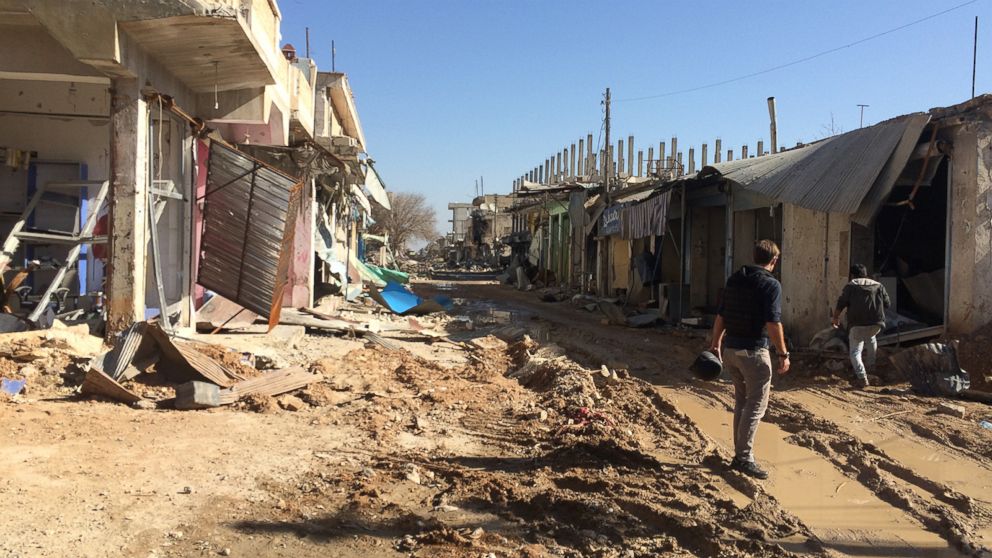
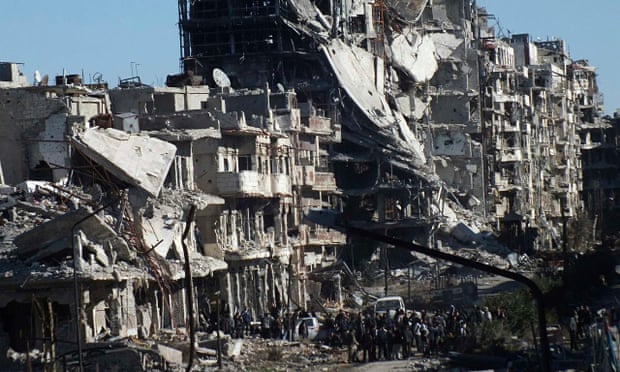
And here’s what victory turned out to look like: according to the Iraqi defense minister, at least 80% of the city of 400,000 was destroyed. Rubblized. Skeletized. “City” may be what it’s still called, but it’s hardly an accurate description. According to New York Times reporter Ben Hubbard, who visited Ramadi soon after the “victory,” few inhabitants remained. Of an Iraqi counterterrorism general there with him, Hubbard wrote: 

“In one neighborhood, he stood before a panorama of wreckage so vast that it was unclear where the original buildings had stood. He paused when asked how residents would return to their homes. ‘Homes?’ he said. ‘There are no homes.’”

Hubbard also cited the head of the Anbar provincial council as estimating that “rebuilding the city would require $12 billion.” (Other Iraqi officials put that figure at $10 billion.) That’s money no one has, including an Iraqi government increasingly strapped by plummeting oil prices -- and keep in mind that that’s only a single destroyed community. The earlier, smaller victories of the Kurds at Kobane and Sinjar in Syria, also backed by devastating U.S. air power, destroyed those towns in a similar fashion, as for instance has Bashar al-Assad’s barrel bombing air force and military in parts of the city of Aleppo and in the now thoroughly devastated city of Homs in central Syria. The Russians have, of course, entered the fray, too, in the American style, bombing and advising.

Let’s add one more thing before we write our future headlines. The day after President Obama gave his final State of the Union address, Secretary of Defense Ashton Carter visited the 101st Airborne Division at Fort Campbell, Kentucky. Eighteen hundred of that division’s members are soon to be deployed to Iraq to aid Iraqi military units in their drive to retake parts of their country from the Islamic State. For those future advisers, Carter elaborated on the president’s plans, laying out in some detail how he (and presumably Obama) saw the conflict playing out. Favoring the image of the Islamic State as a metastasizing cancer, he said:


“The ISIL parent tumor has two centers -- Raqqa in Syria, and Mosul in Iraq. ISIL has used its control of these cities and nearby territories as a power base from which to derive considerable financial resources, manpower, and ideological outreach. They constitute ISIL’s military, political, economic, and ideological centers of gravity.
“That’s why our campaign plan’s map has got big arrows pointing at both Mosul and Raqqa. We will begin by collapsing ISIL’s control over both of these cities and then engage in elimination operations through other territories ISIL holds in Iraq and Syria.”

In fact, such a campaign would give “elimination operations” new meaning, since it would clearly involve quite literally eliminating the urban infrastructure of significant parts of the region. Three cities are, in fact, at present targeted: Fallujah (population perhaps 300,000), the other major IS-controlled city in al-Anbar Province, Mosul (the second largest city in Iraq, with a population presently estimated at 1 to 1.5 million), and Raqqa, the Syrian “capital” of the Islamic State, now reportedly stuffed with refugees (population 200,000-plus). Put them together and you have a 2016 plan for a U.S.-backed set of campaigns in Iraq and Syria based on the same formula as the taking of Ramadi: massive American air power in support of heavily trained and advised Iraqi special ops forces and army units or, in Syria, Kurdish peshmerga outfits and assorted Kurdish and Syrian rebels. Add in the Islamic State’s urge to turn the urban areas it holds into giant bombs and what you have is a plan for the rubblization of yet more cities in the region.

There has, of course, been much talk about an offensive to retake Mosul since relatively small numbers of Islamic State fighters captured the city from tens of thousands of fleeing Iraqi troops in June 2014. There was, for instance, a highly touted spring offensive against Mosul that was much discussed in early 2015 but never happened, so it’s impossible to be sure that the overstretched, generally underperforming Iraqi military will even make it to Mosul in 2016 or that there will be any non-American “boots” available to take Raqqa, especially since that city sits well outside any imaginable future Kurdistan. Still, assuming all went “well,” we essentially know what the future holds: Ramadi-style “victories.”

As a result, the end of the year headline for American/Iraqi/Kurdish/Syrian rebel operations -- adapted from an infamous 1968 line by an anonymous American officer in Vietnam after U.S. planes had pummeled the provincial capital of Ben Tre -- would be: “We Destroyed the Cities to Save Them.”

Based on Ramadi, you could then perhaps offer these "ballpark" (not that any stadiums would be left standing) future estimates for rebuilding: Falluja, $10 billion; Raqqa, $7 billion; Mosul, $20 to $25 billion. Those are obviously fantasy figures, but the point is that “success” against and “victory” over the Islamic State would undoubtedly leave much of the region a modern Carthage. And who would pay for a new Ramadi, or Mosul, or Fallujah, or Raqqa, no less all of them and more?

Put another way, “victory” would mean that Iraq will have far fewer habitable cities and a far larger number of displaced people whose resettlement will undoubtedly be subject to the ethnic tensions that helped fuel the Islamic State in the first place. This represents a reasonably predictable future, one that should be obvious enough to anyone who took a half-serious look at the situation. It certainly should be obvious to Ashton Carter, as well as to American planners at the Pentagon and in the Obama administration. And yet the planning goes on as if “victory” were a meaningful category under the circumstances.

And here’s the thing: you can join the Islamic State in blowing up the physical plant of Syria and parts of Iraq and then eject its fighters from the rubble, but you’ll be destroying the means of existence of a vast, increasingly unsettled population. What you may not be able to do in the process is destroy a movement that began in an American military prison in Iraq and has always been a set of ideas. You may simply create a legend.

Unleashing the Special Operators and the Drones


Now, let’s consider another set of potential future headlines linked to present planning and past experience. Secretary of Defense Carter claims that the U.S. strategy against the Islamic State is focused on creating “sustainable political stability in the region,” by which he means not just the battlefields of Iraq and Syria, but all of the Greater Middle East. As he said to the members of the 101st Airborne: 

“Next, let me describe the fight outside of Iraq and Syria. As we work to destroy the parent tumor in Iraq and Syria, we must also recognize that ISIL is metastasizing in areas such as North Africa, Afghanistan, and Yemen. The threat posed by ISIL, and groups like it, is continually evolving, changing focus and shifting location. It requires from us, therefore, a flexible and nimble response with a broad reach.”

For this, he clearly plans to let loose American Special Operations forces not just in Syria but elsewhere on assassination missions against key Islamic State figures or those heading their distant franchises. He’s also intent on sending in the drones across the region in “counter-terror operations and strikes on high-value targets” to “act decisively to prevent ISIL affiliates from becoming as great of a threat as the parent tumor itself.”

As with the future taking of cities in Iraq and Syria, there is an experiential baseline for such operations across the region. In his book Kill Chain, Andrew Cockburn has called this approach to the enemy “the kingpin strategy.” It was first used in the drug wars in Latin America and Central America in the 1990s and then, after 9/11, adapted to the weaponized drone and special operations forces. The idea was to dismantle drug cartels or later terror outfits from the top down by taking out their leadership figures.

In fact, in both the drug wars and the terror wars, as Cockburn shows, the results of this strategy have been repetitiously calamitous. The drone, for instance, has proven remarkably capable of “eliminating” both the top leadership of terror groups and key “lieutenants” as well as other influential figures in those organizations -- with the grimmest results: under the pressure of the drones and those special ops raids, such organizations (like the drug cartels before them) simply replaced their dead leaders with often younger and even more aggressive figures, while attacks rose and the groups themselves, instead of folding up, spread across the Greater Middle East and deep into Africa.

The drones, bringing with them relatively widespread “collateral damage,” including the deaths of significant numbers of children, have terrorized the societies over which they cruise and so proved an ideal recruitment poster for those spreading terror groups.

Hence, first in the Bush era in a seat-of-the-pants way and then in the Obama years in a highly organized fashion, drone assassination campaigns in Pakistan, Afghanistan, Yemen, Iraq, Syria, Libya, and Somalia killed leadership figures while functionally helping to spread the terror organizations they directed. They have, that is, been engaged not in a war on terror, but in a war for terror. When you look at the expansion of those terror outfits, including the growing numbers of “franchises” of the Islamic State, it should be obvious that, from special ops missions to drone assassinations, from full-scale invasions to the destruction of cities, the 14-plus years of varied American strategies and military tactics have repetitively contributed to one horror after another, sucking much of the region into the vortex.

What’s striking when you listen to Secretary of Defense Carter is that, obvious as this may be, none of it seems to truly penetrate in Washington. Otherwise how do you explain the lack of any serious recalibration of American actions, the only debate being between those in the Obama administration, including the president, who favor a version of mission creep and their Republican critics who favor doing more in a bigger way? In other words, in 2016 we’re clearly going to witness further rounds of the utterly familiar with -- somehow -- the expectation that something different will happen. Since that’s not likely, for the next set of future headlines just reach into the familiar past, substituting, when necessary, the future terror kingpin’s name: “AQAP [al-Qaeda on the Arabian Peninsula] announces death of [fill in name] in U.S. drone strike,” “U.S.: ISIS no. 2 killed in U.S. drone strike in Iraq,” “Army elite Delta Force kills top ISIS official, [fill in name], in daring Syria raid,” “Pentagon says senior al-Qaeda leader killed in drone strike,” and so on more or less ad infinitum.

The Arc of Instability


Recently, with Ashton Carter’s strategy for “stability” on my mind, I caught a phrase in a news report that I hadn't heard for quite a while. A journalist, perhaps on NPR, was discussing the recent al-Qaeda in the Islamic Maghreb (AQIM) terror attack on a hotel in Burkina Faso, a previously relatively stable country in West Africa, where at least 30 died, mainly foreigners. He spoke of a spreading “arc of instability” in the region.

Back in the early years of the century, officials of the Bush administration and supportive neocons regularly used that phrase to describe the Greater Middle East, from Pakistan to North Africa. Strangely enough, it disappeared in the post-Iraqi invasion years and remained largely absent in the Obama years as the disastrous Libyan intervention, presidentially orchestrated drone assassination campaigns, and other actions helped further transform the Greater Middle East into a genuine "arc of instability."

Today, in a way that would have been unimaginable back in 2002-2003, the region is filled with failing or failed states from Afghanistan and Syria to Libya, Yemen, and Mali. While Iraq may not quite be a failed state, it is no longer exactly a country either, but something like a tripartite entity. And so it goes, and so it evidently will go if the U.S., as in 2015, drops another 23,000 bombs and thousands of additional munitions on the region -- or far more, as seems likely under the mission-creep pressure of the war with the Islamic State.

We can’t, of course, know just what countries will fail next. However, it’s safe to assume that, as long as the Obama strategy -- and the Hillary Clinton or Ted Cruz or Donald Trump or Marco Rubio one that may follow -- involves more (or much more) of the same, more (or much more) of the same is likely to happen. As a result, similar predictable headlines will appear, as countries dissolve in various ways and the Islamic State, groups like al-Qaeda in the Islamic Maghreb, or newly founded terror outfits gain footholds amid the chaos. In that case, you only have to look into the recent past for headlines-to-come and adapt them slightly: “ISIS Is Building ‘Little Nests’ in [name of country here], U.S. Defense Secretary Warns,” “ISIS Is Gaining Ground in [name of country here], Competing with al-Qaeda,” “Islamic State Gained Strength in [name of country] by Co-opting Local Jihadists,“ and so on.

Amid the grimly predictable, there are, of course, many unknowns. Above all, we have no idea what it means at this point in history to turn a region, city by city, country by country, into something like a vast failed state and then continue to bomb the rubble. How do we begin to imagine what could emerge from the ruins of such a failed region in such a world, from an arc of instability far vaster than anything we have contemplated since World War II? I wouldn’t want to predict the headlines that could someday emerge from that situation, but whatever surprises are in store for us, the mere prospect of such a future should make your blood run cold.

Tom Engelhardt is a co-founder of the American Empire Project and the author of The United States of Fear as well as a history of the Cold War, The End of Victory Culture. He is a fellow of the Nation Institute and runs TomDispatch.com. His latest book is Shadow Government: Surveillance, Secret Wars, and a Global Security State in a Single-Superpower World.

Follow TomDispatch on Twitter and join us on Facebook. Check out the newest Dispatch Book, Nick Turse’s Tomorrow’s Battlefield: U.S. Proxy Wars and Secret Ops in Africa, and Tom Engelhardt's latest book, Shadow Government: Surveillance, Secret Wars, and a Global Security State in a Single-Superpower World.

Copyright 2016 Tom Engelhardt

Gaza Journos Demonstrate Support for Hunger Striking Colleague

Gaza Journalists Demonstrate in Support of Al-Qeeq

by IMEMC News & Agencies


January 24, 2016

Dozens of Palestinian journalists demonstrated on Sunday morning, in front of the UN High Commissioner for Human Rights office in Gaza City, in solidarity with hunger striking journalist Muhammad al-Qeeq.

The demonstration, organized by Gaza's union of journalists, was held in hopes to urge the international community to put pressure on Israel to free the imprisoned journalist.

33-year-old al-Qeeq began his hunger strike on November 25, in protest of being held in Israeli prison under administrative detention without charge or trial, for reasons he believes are tied to his work as a journalist.

While evidence against al-Qeeq is still being withheld, Amnesty International reported, according to Ma'an, that the military judge at Ofer Military Court said the file against him “accuses him of ‘incitement,’ of working with media associated with Hamas, a Palestinian political faction with an armed wing, and also of being a ‘threat to the security of the area.’"

Mahmoud Ulayyan, a member of Gaza's journalism union, said he believes al-Qeeq is inarguably being held due to his work as a journalist, and that Palestinian journalists urgently need protection from the "continuous Israeli violations" launched against them.

On Saturday, Amnesty International demanded that Israel either release or charge al-Qeeq, who the group said has been mistreated and tortured in ways that violate international law.

Amnesty said Israeli authorities have “undertaken a number of measures aimed at pressuring him [al-Qeeq] to end the hunger strike, some of which violate the prohibition of torture and other ill-treatment.” The rights group said Israel must “immediately cease all non-consensual medical treatment and other punitive measures” against al-Qeeq, whom the group said should be released unless he is charged with “an internationally recognizable criminal offense.”

After being transferred to a hospital at the end of December ,due to his deteriorating health, Physicians for Human Rights Israel (PHRI) revealed that Israeli authorities had forced medical treatment on al-Qeeq.

Following a visit by a PHRI lawyer to al-Qeeq in HaEmek Hospital, the group said the hunger striker had been "hooked up against his will to an infusion of salts and vitamins, and that blood was taken with the permission of the hospital's ethics committee.

"Al-Qeeq was tied to the bed and forcefully held down by prison wardens while a member of the medical staff made the infusion. For four days al-Qeeq remained tied to the bed, hooked up to the IV drip, while pleading for its removal, to no avail," according to PHRI.

Search IMEMC: "Muhammad al-Qeeq"

Beyond Slapstick: NATO's Clown Act in North Africa

Another fine mess: NATO’s 'Laurel & Hardy act' in Libya not getting laughs

by Finian Cunningham - RT


23 Jan, 2016


Washington and its NATO allies are stepping up more military involvement in this devastated North African country, now experiencing an uptick in terrorist activity, in some kind of macabre reprise of the classic comedy routine.

Earlier this week, Libya’s skirmishing factions announced that they were forming a new “national unity government”. The administration, backed by the United Nations, was forged from two erstwhile self-appointed rival governments based in the western city of Tripoli and the eastern city of Tobruk.

But the chances of implementing national governance remain wafer-slim. The real power in the country resides with a plethora of warring militias that have an overlapping relationship with the Islamic State terror group and have carved up the country into fiefdoms.

One reason for why the “unity government” was hastily and unconvincingly formed this week is that it gives a fig leaf of legality for greater Western military intervention in Libya under the guise of helping “the authorities” to fight jihadist terrorists.

Three days after Libya’s new government was unveiled, Washington’s top military officer, General Joseph F Dunford, said that plans were under way in the next weeks for “decisive action needed against Islamic State in Libya,” according to a Reuters report.

“You want to take decisive military action to check ISIL’s expansion and at the same time you want to do it in such a way that’s supportive of a long-term political process,” said General Dunford, using an alternative acronym for the IS terror group.

The US Joint Chiefs of Staff chairman was in Paris where he was consulting with French, British and Italian counterparts in the NATO military alliance.

The New York Times reported on Dunford’s announced military plans thus:

“Worried about a growing threat from the Islamic State in Libya, the United States and its allies are increasing reconnaissance flights and intelligence collecting there and preparing for possible airstrikes and commando raids, senior American policy makers, commanders and intelligence officials said this week.”

For the past several months, American, British and French special forces have reportedly been working clandestinely across Libya to try to establish which militias their governments might feasibly collaborate with.

But Libya has been plunged into such tribal anarchy over the past four years since the US-led NATO powers toppled the government of Muammar Gaddafi that it is nigh-impossible to disentangle the plethora of rival militia. Many of the militia and even some of the so-called political parties in the new unity government are integrated with the terror network.

A farcical insight into the NATO-induced chaotic nature of Libya is afforded by a report on how a unit of 20 American special forces were flown into an airport in the town of Al Watiya near Tripoli last month. The US troops were expecting a “warm reception” from the militia thought to be in control of the airport because it had received American training and weapons back in 2012. It turned out the US-trained Libyan battalion were no longer the local top dog. They had been displaced by another rival militia, which wasn’t friendly to the Americans.

A shoot-out was apparently avoided, but a tense standoff ensued before the US commandos were finally allowed safe passage from the airfield.

What that snippet illustrates is the total shambles that Libya has descended into. US troops feel free to land in a country seemingly without any legal sanction and then proceed to a near-firefight with some unknown enemy holding the airport facility. This is precisely the state of ruins that Gaddafi predicted would result from his demise, just before the NATO-assisted insurgents took his life in a barbaric street lynching in October 2011 and proceeded to take over the once-prosperous, stable country.

The Americans and their NATO allies evidently haven’t a clue which groups are running Libya – and that’s months after their special forces have allegedly been reconnoitering for “partners” with which to purportedly fight against the Islamic State.

America’s top general admitted to this cluelessness in his announced plan for more military intervention in Libya.

Dunford said the “US military leadership owed President Barack Obama and the US defense secretary [Ashton Carter] ideas about the ‘way ahead’ for dealing with the [IS] militant group” in Libya.

In other words, Dunford and his NATO counterparts do not have a plan. They are simply going back into a country that is riven with mercurial militias, many of which are apparently aligned with IS.

The American top general did not detail any specific recommendations, saying:

 “I think it’s pretty clear to all of us – French, US alike – that whatever we do is going to be in conjunction with the new [Libyan] government… My perspective is we need to do more.”

As noted earlier, working “in conjunction with the new government” is not confidence-inspiring given that it has only been cobbled together this week after years of feuding, and given that its various political members are associated with illegally armed groups.

Tragically, Libya is the very predictable outcome when countries are self-entitled to run amok in complete disregard of international law and other nations’ sovereignty.

Washington, London and Paris, together with other members of the NATO alliance, cynically abused a UN no-fly mandate back in March 2011 to launch a seven-month aerial blitzkrieg on Libya. The NATO powers, along with the Saudi-led Arab oil monarchies, colluded with jihadist groups on the ground, such as the Libyan Islamic Fighting Group, to achieve regime change in Libya.

These same militia and their cache of weapons were then mobilized by the American CIA and British MI6 to infiltrate Syria, according to American journalist Seymour Hersh, among others. Turkey was the conduit and Saudi Arabia was the financier for the Libya-Syria “ratline”. Note that this was around the same time that the jihadist proxies had stormed the US consulate in Libya’s Benghazi in September 2012, killing the US ambassador Christopher Stevens and three other American officials.

Now, apparently, because of Russia’s searing military intervention in Syria in support of the Assad government forces, the jihadists are clearing out of that country to set up bases in Libya. This relocation of jihadists from Syria and Iraq to Libya has even been reported in the Western mainstream media.

So, yes, Western governments and their military chiefs may well articulate “concern” about the surge in IS terror activity in Libya. This surge is real enough.

But what Washington, its NATO allies and the Western media won’t tell you is that they incubated the jihadist terror groups in Libya from their illegal regime change against Gaddafi; and then turned the country into a festering failed state from where terror groups were spawned to carry out a covert war for another regime change operation in Syria.

And after all that, we are told that these same Western powers are going back into Libya to sort out a mess – a mess that they created in the first place. This is Laurel and Hardy of the political and military kind. Only it's far from funny. It’s a diabolically criminal sick joke.


 Finian Cunningham (born 1963) has written extensively on international affairs, with articles published in several languages. Originally from Belfast, Northern Ireland, he is a Master’s graduate in Agricultural Chemistry and worked as a scientific editor for the Royal Society of Chemistry, Cambridge, England, before pursuing a career in newspaper journalism. For over 20 years he worked as an editor and writer in major news media organizations, including The Mirror, Irish Times and Independent. Now a freelance journalist based in East Africa, his columns appear on RT, Sputnik, Strategic Culture Foundation and Press TV.