Thursday, March 29, 2018

Same As It Ever Was: War Crimes (and Their Perpetrators) Old and New

Trump’s Recycling Program: War Crimes and War Criminals, Old and (Potentially) New

by Rebecca Gordon - TomDispatch


March 29, 2018

Fallujah 2003


A barely noticed anniversary slid by on March 20th. It’s been 15 years since the United States committed the greatest war crime of the twenty-first century: the unprovoked, aggressive invasion of Iraq. The New York Times, which didn’t exactly cover itself in glory in the run-up to that invasion, recently ran an op-ed by an Iraqi novelist living in the United States entitled “Fifteen Years Ago, America Destroyed My Country,” but that was about it. The Washington Post, another publication that (despite the recent portrayal of its Vietnam-era heroism in the movie The Post) repeatedly editorialized in favor of the invasion, marked the anniversary with a story about the war’s “murky” body count. Its piece concluded that at least 600,000 people died in the decade and a half of war, civil war, and chaos that followed -- roughly the population of Washington, D.C.

These days, there’s a significant consensus here that the Iraq invasion was a “terrible mistake,” a “tragic error,” or even the “single worst foreign policy decision in American history.” Fewer voices are saying what it really was: a war crime. In fact, that invasion fell into the very category that led the list of crimes at the Nuremberg tribunal, where high Nazi officials were tried for their actions during World War II. During the negotiations establishing that tribunal and its rules, it was (ironically, in view of later events) the United States that insisted on including the crime of “waging a war of aggression” and on placing it at the head of the list. The U.S. position was that all the rest of Germany’s war crimes sprang from this first “crime against peace.”

Similarly, the many war crimes of Dick Cheney and George W. Bush -- the extraordinary renditions; the acts of torture at Guantánamo, Bagram Air Base in Afghanistan, and CIA black sites all over the world; the nightmare of abuse at Abu Ghraib, a U.S. military prison in Iraq; the siege and firebombing (with white phosphorus) of the Iraqi city of Fallujah; the massacre of civilians in Haditha, another Iraqi city -- all of these arose from the Bush administration’s determination to invade Iraq.

It was to secure “evidence” of a (nonexistent) connection between Saddam Hussein and the al-Qaeda attackers of 9/11 that Secretary of Defense Donald Rumsfeld upped the ante at Guantánamo in his infamous memo approving torture there. The search for proof of the same connection motivated the torture of Abu Zubaydah at a CIA black site in Thailand. If not for that long-planned invasion of Iraq, the “war on terror” might have ended years ago.

Tomgram: Rebecca Gordon, Making Atrocities Great Again

[Note for TomDispatch Readers: Anyone willing to make a donation of $100 to this website ($125 if you live outside the United States) can still get a signed, personalized copy of Rebecca Gordon’s book American Nuremberg: The U.S. Officials Who Should Stand Trial for Post-9/11 War Crimes. Read today’s post and you’ll see (sadly enough) just how relevant it remains. Check out our donation page for the details. Tom]

There’s been a lot of free-floating fear and horror in the media recently about the appointment as national security adviser of John Bolton, a man who’s been itching for war(s) since the 1990s. His approach to Iran and North Korea in particular (not quite nuke ’em!, but not that much short of it either) isn’t what you’d call either carefully calibrated or particularly diplomatic. Still, a certain balance in reporting on Bolton has been lacking. You can search in vain for any outlets (other than Fox News) giving President Trump the slightest credit for what he did, which was no mean trick. After all, short of bringing former Vice President Dick Cheney out of “retirement” and making him secretary of defense (as indeed he was for President George H.W. Bush), it’s hard to think of a single former official of the George W. Bush administration -- or more or less anyone else -- who would still so vehemently defend the absolute brilliance of the invasion of Iraq and of "preemptive war.” On that score, Bolton is as close to the last man standing as you’re likely to find and since, in his eagerness for that 2003 invasion (and his willingness to back intelligence information, no matter how false, promoting it), he was also one of the first men standing, which means he is indeed a unique candidate for the national security adviser’s job.

Unfortunately, the media (Fox News excepted) just doesn’t get the thrill of it all. Keep in mind that President Trump tried “my generals” for more than a year and what did that get him? Deeper into Afghanistan, four dead Green Berets in Niger, stuck in Syria. Now, he’s putting the fate of the republic back in the hands of civilians (and in the process, miraculously enough, turning those hawkish generals into the true “adults” in, or presently leaving, or soon to leave the “room”). So some civilians are about to have their moment. Give them nine months at the outside. Bolton, in particular, has a reputation for being acerbic and beyond blunt in his views, so don’t expect him to last long with a president who clearly must be pandered to in extreme ways by those who care to survive in office -- or in the Oval Office -- for even modest lengths of time.

Here, then, is the true thrill of it all: imagining what could possibly come next. After the generals, the neocons, the Tea Party right, the Fox News commentators, the Islamophobes and Iranophobes of every sort -- that is, by election time 2018 -- who’s going to be left? What pool of Martians could Donald Trump possibly choose from for his next set of appointees? Stay tuned and, while you’re waiting, let TomDispatch regular Rebecca Gordon, author of American Nuremberg: The U.S. Officials Who Should Stand Trial for Post-9/11 War Crimes, return you to that invasion-of-Iraq moment and remind you of what a thoroughly stellar crew we’ve had running our ship of state, our own Titanic, for much of the time since. Tom

Trump’s Recycling Program: 

War Crimes and War Criminals, Old and (Potentially) New

by Rebecca Gordon


But Wasn’t That Then?


Fifteen years is an eternity in what Gore Vidal once called “the United States of Amnesia.” So why resurrect the ancient history of George W. Bush in the brave new age of Donald Trump? The answer is simple enough: because the Trump administration is already happily recycling some of those Bush-era war crimes along with some of the criminals who committed them. And its top officials, military and civilian, are already threatening to generate new ones of their own.

Last July, the State Department closed the office that, since the Clinton administration, has assisted war crimes victims seeking justice in other countries. Apparently, the Trump administration sees no reason to do anything to limit the impunity of war criminals, whoever they might be. Reporting on the closure, Newsweek quoted Major Todd Pierce, who worked at Guantánamo as a judge advocate general (JAG) defense attorney, this way:

“It just makes official what has been U.S. policy since 9/11, which is that there will be no notice taken of war crimes because so many of them were being committed by our own allies, our military and intelligence officers, and our elected officials. The war crime of conspiring and waging aggressive war still exists, as torture, denial of fair trial rights, and indefinite detention are war crimes. But how embarrassing and revealing of hypocrisy would it be to charge a foreign official with war crimes such as these?”

Guantánamo JAG attorneys like Pierce are among the real, if unsung, heroes of this sorry period. They continue to advocate for their indefinitely detained, still untried clients, most of whom will probably never leave that prison. Despite the executive order President Obama signed on his first day in office to close GITMO, it remains open to this day and Donald Trump has promised to “load it up with some bad dudes,” Geneva Conventions be damned.

Indeed, Secretary of Defense James (“Mad Dog”) Mattis has said that the president has the right to lock up anyone identified as a “combatant” in our forever wars, well, forever. In 2016, he assured the Senate Armed Services Committee that any detainee who “has signed up with this enemy” -- no matter where “the president, the commander-in-chief, sends us” to fight -- should know that he will be a “prisoner until the war is over.” In other words, since the war on terror will never end, anyone the U.S. captures in Afghanistan, Iraq, Niger, Somalia, Syria, Yemen, or elsewhere will face the possibility of spending the rest of his life in Guantánamo.

Recycling War Criminals


Speaking of Mattis and war crimes, there’s already plenty of blood on his hands. He earned that “Mad Dog” sobriquet while commanding the U.S. Marines who twice in 2004 laid siege to Fallujah. During those sieges, American forces sealed that Iraqi city off so no one could leave, attacked marked ambulances and aid workers, shot women, children, and an ambulance driver, killed almost 6,000 civilians outright, displaced 200,000 more, and destroyed 75% of the city with bombs and other munitions. The civilian toll was vastly disproportionate to any possible military objective -- itself the definition of a war crime.

One of the uglier aspects of that battle was the use of white phosphorus, an incendiary munition. Phosphorus ignites spontaneously when exposed to air. If bits of that substance attach to human beings, as long as there’s oxygen to combine with the phosphorus, skin and flesh burn away, sometimes right into the bone.

Use of white phosphorus as an anti-personnel weapon is forbidden under the Chemical Weapons Convention, which the U.S. has signed.

In Iraq, Mattis also saw to it that charges would be dropped against soldiers responsible for murdering civilians in the city of Haditha.

In a well-documented 2005 massacre -- a reprisal for a roadside bomb -- American soldiers shot 24 unarmed men, women, and children at close range. As the convening authority for the subsequent judicial hearing, Mattis dismissed the murder charges against all the soldiers accused of that atrocity.

Mattis is hardly the only slightly used war criminal in the Trump administration. As most people know, the president has just nominated Deputy CIA Director Gina Haspel to head the Agency. There are times when women might want to celebrate the shattering of a glass ceiling, but this shouldn’t be one of them. Haspel was responsible for running a CIA black site in Thailand, during a period in the Bush years when the Agency’s torture program was operating at full throttle. She was in charge, for instance, when the CIA tortured Abd al-Rahim al-Nashiri, who was waterboarded at least three times and, according to the executive summary of the Senate Intelligence Committee’s Torture report, “interrogated using the CIA's enhanced interrogation techniques.” (The report provided no further details.)

Haspel was also part of the chain of command that ordered the destruction of videotapes of the torture of Abu Zubaydah (waterboarded a staggering 83 times). According to the PBS show Frontline, she drafted the cable that CIA counterterrorism chief José Rodríguez sent out to make sure those tapes disappeared. In many countries, covering up war crimes would itself merit prosecution; in Washington, it earns a promotion.

More on Trump and Torture


Many people remember that Trump campaigned on a promise to bring back waterboarding “and a whole lot worse.” On the campaign trail, he repeatedly insisted that torture “works” and that even “if it doesn’t work, they [whoever “they” may be] deserve it anyway, for what they’re doing.” Trump repeated his confidence in the efficacy of torture a few days after his inauguration, saying that “people at the highest level of intelligence” had assured him it worked.

Trump’s nominee to replace Rex Tillerson as secretary of state is former Tea Party congressman and CIA Director Mike Pompeo. Known for his antipathy to Muslims (and to Iran), he once endorsed calling his Indian-American electoral opponent a “turban topper.”

Pompeo is as eager as Trump to restore torture’s good name and legality, although his public pronouncements have sometimes been more circumspect than the president’s. During his CIA confirmation hearings he assured the Senate Intelligence Committee of what most of its members wanted to hear: that he would “absolutely not” reinstitute waterboarding and other forms of torture, even if ordered to do so by the president. However, his written testimony was significantly more equivocal. As the British Independent reported, Pompeo wrote that he would back reviewing the ban on waterboarding if prohibiting the technique was shown to impede the “gathering of vital intelligence.”

Pompeo added that he planned to reopen the question of whether interrogation techniques should be limited to those -- none of them considered torture techniques -- found in the Army Field Manual, something legally required ever since, in 2009, President Obama issued an executive order to that effect. (“If confirmed,” wrote Pompeo, “I will consult with experts at the [Central Intelligence] Agency and at other organizations in the U.S. government on whether the Army Field Manual uniform application is an impediment to gathering vital intelligence to protect the country.”) Unlike many of Trump’s appointees, Pompeo is a smart guy, which makes him all the more dangerous.

When President Trump lists his triumphs, often the first one he mentions is the confirmation of Neil Gorsuch as a Supreme Court justice. Gorsuch, too, played a small but juicy role in the Bush torture drama, drafting the president’s signing statement for the Detainee Treatment Act when he worked in the Justice Department’s Office of Legal Counsel back in 2005. That statement officially outlawed any torture of “war on terror” detainees, and yet left open the actual practice of torture because, as Gorsuch assured President Bush, none of the administration’s self-proclaimed “enhanced interrogation techniques” (including waterboarding) amounted to torture in the first place.

Still, of all Trump’s recycled appointments, the most dangerous of all took place only recently. The president fired his national security advisor, Lieutenant General H.R. McMaster, and replaced him with John Bolton of Iran-Contra and Iraq invasion fame.

Under George W. Bush, Bolton was a key proponent of that invasion, which he’d been advocating since at least 1998 when he signed an infamous letter to Bill Clinton from the Project for a New American Century recommending just such a course of action. In 2002, Bolton, while undersecretary of state for arms control, engineered the dismissal of José Bustani, the head of the U.N.’s Organization for the Prohibition of Chemical Weapons, which was involved in overseeing Iraq’s disarmament process. A former Bolton deputy told the New York Times that Bolton was dismayed because Bustani “was trying to send chemical-weapons inspectors to Baghdad in advance of the U.S.-led invasion.” Presumably Bolton didn’t want the U.N. trumpeting the bad news that Iraq had no active chemical weapons program at that moment.

Nor has Bolton ever forgotten his first Middle Eastern fascination, Iran, although nowadays he wants to attack it (along with North Korea) rather than conspire with it, as President Reagan and he did in the 1980s. He’s argued in several editorials and as a Fox News commentator -- wrongly as it happens -- that it would be completely legal for the United States to launch first strikes against both countries.

Naturally, he opposes the six-nation pact with Iran to end its nuclear weapons program. When that agreement was signed, the New York Times ran an op-ed by Bolton entitled “To Stop Iran’s Bomb, Bomb Iran.”

It should (but doesn’t) go without saying that any first strike against another country is again the very definition of the initial crime on that Nuremberg list.

Recycling War Crimes


We can’t blame the Trump administration for the decision to support Saudi Arabia’s grim war in Yemen, a catastrophe for the civilians of that poverty-stricken, now famine-plagued country. That choice was made under Barack Obama. But President Trump hasn’t shown the slightest urge to end the American role in it either. Not after the Saudis threw him that fabulous party in Riyadh, projecting a five-story-high portrait of him on the exterior of the Ritz Carlton there. Not after his warm embrace of Saudi crown prince Mohammed bin Salman during his recent visit to the United States. In fact, at their joint press conference, Trump actually criticized former president Obama for bothering the Saudis with complaints about human rights violations in Yemen and in Saudi Arabia itself.

Meanwhile, the United States continues to fund and support the Saudi military’s three-year-old war crime in that country, providing weaponry (including cluster bombs), targeting intelligence, and mid-air refueling for Saudi aircraft conducting missions there. The conflict, which the New York Times has called “the world’s worst humanitarian crisis,” has killed at least ten thousand people, although accurate numbers are almost impossible to come by. As of December 2017, the Yemen Data Project had catalogued 15,489 separate air attacks, of which almost a third involved no known military targets and another 4,800 hit targets that have yet to be identified. Hospitals and other health facilities have been targeted along with crowded markets. Government funding for public health and sanitation ended in 2016, leading to a cholera epidemic that the Guardian calls “the largest and fastest-spreading outbreak of the disease in modern history.”

Through the illegal blockading of Yemen's ports, Saudi Arabia and its allies have exposed vast numbers of Yemenis to the risk of famine as well. Even before the latest blockade began in November 2017, that country faced the largest food emergency in the world. Now, it is in the early stages of a potentially devastating famine caused entirely by Saudi Arabia’s illegal war, aided and abetted by the United States. In addition, Trump has increased the number of drone assassinations in Yemen, with their ever-present risk of civilian deaths.

Yemen is hardly the only site for actual and potential Trump administration war crimes. In response to requests from his military commanders, the president has, for instance, eased the targeting restrictions that had previously been in place for drone strikes, a decision he’s also failed to report to Congress, as required by law. According to Al-Jazeera, such drone strikes in countries ranging from Libya to Afghanistan will no longer require the presence of an “imminent threat,” which means “the U.S. may now select targets outside of armed conflict,” with increased risk of hitting noncombatants. Also relaxed has been the standard previously in place “of requiring ‘near certainty’ that the target is present” before ordering a strike. Drone operators will now be permitted to attack civilian homes and vehicles, even if they can’t confirm that the human being they are searching for is there. Under Trump, the CIA, which President Obama had largely removed from the drone wars, is once again ordering such attacks along with the military. All of these changes make it more likely that Washington’s serial aerial assassinations will kill significant numbers of civilians in Iraq, Syria, Yemen, and other target countries.

Defense Secretary Mattis has also loosened the rules of engagement in Afghanistan by, for example, removing the “proximity requirement” for bombing raids. In other words, U.S. forces are now free to drop bombs even when the target is nowhere near U.S. or Afghan military forces. As Mattis told the Senate Armed Services Committee last October,

“If they are in an assembly area, a training camp, we know they are an enemy and they are going to threaten the Afghan government or our people, [Gen. John Nicholson, commander of U.S. Forces Afghanistan,] has the wherewithal to make that decision. Wherever we find them, anyone who is trying to throw the NATO plan off, trying to attack the Afghan government, then we can go after them.”

Under such widened rules for air strikes -- permitting them anytime our forces notice a group of people “assembling” in an area -- the chances of killing civilians go way up. And indeed, civilian casualties rose precipitously in Afghanistan last year.

And then there’s always the chance -- the odds have distinctly risen since the appointments of two raging Iranophobes, Pompeo and Bolton, to key national security positions -- that Trump will start his very own unprovoked war of aggression. “I’m good at war,” Trump told an Iowa rally in 2015. “I’ve had a lot of wars of my own. I’m really good at war. I love war in a certain way, but only when we win.” With Mike Pompeo whispering in one ear and John Bolton in the other, it's frighteningly likely Trump will soon commit his very own war crime by starting an aggressive war against Iran.

Rebecca Gordon, a TomDispatch regular, teaches at the University of San Francisco. She is the author of American Nuremberg: The U.S. Officials Who Should Stand Trial for Post-9/11 War Crimes. Her previous books include Mainstreaming Torture: Ethical Approaches in the Post-9/11 United States and Letters from Nicaragua.

Copyright 2018 Rebecca Gordon

Tuesday, March 27, 2018

Life for Charity for the Holy Land 5

Life Sentences for Charity Work - Free the 5!

by Abby Martin - The Empire Files


March 2, 2018

The Holy Land Foundation Five are Palestinian political prisoners sentenced up to upwards of 65 years in US prison for providing aid to refugees.


Abby Martin Interviews Miko Peled


Skripal Mystery: Britain's Over-Shoulder Hand Grenade for the EU

Britain's Last Hurrah to Vandalize EU-Russia Relations

by Finian Cunningham - Sputnik


March 27, 2018

Global insanity has taken over international relations. The British government is leading dozens of nations down a precarious path of Monty Python burlesque politics towards Russia.

It's far from funny. This is how world wars are incited. Over 100 Russian diplomats are being expelled by the United States, Canada, Australia, and European countries — largely at the behest of official British claims that Russia was responsible for an alleged poison attack in England earlier this month.

Moscow, and many other independent observers, have pointed out, not one scrap of evidence has been presented to date by the British government to support its claim Russian state agents carried out an assassination attempt on a former MI6 double agent and his daughter in Salisbury on March 4.

Sergei (66) and 33-year-old Yulia Skripal reportedly remain in hospital after apparently being injured from exposure to a nerve-agent substance while they were in a public space. But the exact circumstances of how they fell ill is not known. British claims of Russian state culpability are simply that: unverified claims.

The link to alleged Russian state involvement is tenuous at best, relying on undisclosed claims made by the British concerning the hypothetical poisonous substance which the Skripals supposedly encountered.

Yet on the basis of no evidence and heaps of sensational British speculation now more than 25 nations have exacted retribution on Russia, expelling up to 130 diplomats this week. The campaign to penalize Russia looks set to escalate even further. British Prime Minister Theresa May says that more punitive measures are being considered. The US and EU have also warned of further sanctions.

London is gloating at its capacity to galvanize other nations into action against Russia. And so it might. For it is something of an achievement — albeit dubious — that the British have managed to whip up one of the worst diplomatic crisis since the Second World War, based solely on lurid anti-Russian innuendo.

It is all the more something to marvel at given that Britain is in the throes of an acrimonious row with the European Union over its decision to quit the bloc.

The Brexit referendum held in 2016 ends British membership of the European community after more than 40 years from its joining in 1973. The departure has caused an existential rupture in the EU, unleashing tensions among separatist political forces in other member states. Not so long ago, senior EU figures were fretting that the entire bloc might even collapse altogether after the British blow to leave.

So, given the damage that British national politics have inflicted on the European Union it is rather astounding that now the bloc is rallying at the behest of Britain to further undermine relations with Russia.

It is unbelievable that supposedly advanced democracies in Europe are indulging Britain's trashing of legal standards to make wild claims against Russia.

However, on one hand we should not be surprised. Britain's historic role with regard to Europe since the Second World War has been to act as a spoiler to ensure that European states did not embrace socialist politics or develop friendly relations with Russia.

After World War II, there was a strong movement across Europe to adopt socialism. That was anathema to the Americans and their always-close British ally as the custodians of international capitalism. This was one reason why the US-led military alliance, the North Atlantic Treaty Organization, was set up in 1949 as a bulwark to keep Europe under Anglo-American control.

NATO's first secretary-general, Britain's Lord Ismay, quipped that the function of the alliance was "to keep the Americans in, the Germans down and the Russians out".

The European Union and its precursor European Economic Community was another such vehicle for American and British control over the continent to make sure it didn't establish independent, friendly relations with the Soviet Union.

One of the European architects, French President Charles de Gaulle, did not want to admit Britain to the early community because he rightly envisaged the British acting as a spanner in the works. How right de Gaulle was.

For most of its four-decade membership of the European bloc, Britain has been a troublesome party. It has always seemed to be out of step with the rest of Europe, using the benefits of trade, while at the same time stirring up political problems over Britain's "special status".

The Brexit debacle is the outcome of decades of incorrigible British carping and spoiling with the rest of Europe.

The irony is that just as this churlish European member is packing its bags to leave the bloc, Britain bequeaths a final act of vandalism on EU-Russian relations with its outlandish tale of an assassination attempt.

It is particularly risible that Britain's Foreign Secretary Boris Johnson has played such a prominent role in the latest saga, agitating "solidarity" among EU members against Russia. This is the same Johnson who arrogantly wants to dump Europe to pursue British fantasies of renewed "greatness". Recall his bumptious response to EU claims for financial compensation over the Brexit divorce: he advised the Europeans "to go whistle" — meaning, no reparation.

British leaders must be smugly laughing up their sleeves over the collective insanity they have induced across Europe in particular.

We can expect nothing better from Washington. It is only too willing to exploit an opportunity to demonize and debilitate Russia especially given its strategic goal of displacing Russian gas from European markets with its own fuel exports.

What is perplexing is just how gullible European states are to adopt a British wild-goose-chase story based on no evidence, which is storing up long-term strategic problems with Russia and the continent of Europe. Have the Europeans learnt nothing from their history of wars and destruction, and manipulation by perfidious Britain?

Amazing too is the timing of horrendous anniversaries. This month, it is 15 years since the Americans and British waged an illegal war on Iraq based on lies, inflicting over one million deaths and setting the entire Middle East on fire; this month, it is also seven years since the American and British principally launched the covert wars for regime change in Syria and Libya which have flooded Europe with a refugee crisis; it is three years this month since the Americans and British began supporting the Saudi war on Yemen which is described by the UN as the worst man-made humanitarian crisis in decades.

All the evidence for these American-British horrors are as plain as the nose on your face. And yet the pious European states have not issued sanctions for those crimes. No. They are instead prepared to cut the nose off their face to spite their own relations with Russia — all on the say-so of the self-serving British.

European political leaders may not have common morality or intelligence to see the travesty. But ordinary European citizens do. That is why the venal EU bureaucracy is in deep trouble. Its feckless leaders are betraying the real needs of the people, to pursue geopolitical charades. The people will not forgive such odious decadence.

Finian Cunningham has written extensively on international affairs, with articles published in several languages. He is a Master’s graduate in Agricultural Chemistry and worked as a scientific editor for the Royal Society of Chemistry, Cambridge, England, before pursuing a career in newspaper journalism. He is also a musician and songwriter. For nearly 20 years, he worked as an editor and writer in major news media organisations, including The Mirror, Irish Times and Independent.

Gorilla Radio with Chris Cook, Roxanne Dunbar-Ortiz, Pablo Ouziel, Janine Bandcroft March 29, 2018

This Week on GR

by C. L. Cook - Gorilla-Radio.com


March 29, 2018

Hundreds of thousands turned out Saturday in Washington, D.C. for 'March for Our Lives'. Though estimated at more than half a million voices strong, the throng's call fell beyond Donald Trump's earshot; the president being out of town at the time.

But the message was heard in cities across the United States and in towns around the World, where a growing chorus against gun violence inspired mass demos.

Roxanne Dunbar-Ortiz is an author, lecturer, educator and human rights activist. She's currently on tour promoting her latest book, 'Loaded: A Disarming History of the Second Amendment'.

Listen. Hear.

Some of her other titles include: 'An Indigenous People's History of the United States', 'The Great Sioux Nation: Sitting in Judgment on America', and the books of her Memoir Trilogy, 'Red Dirt' 'Blood on the Border', and 'Outlaw Woman'.

Roxanne Dunbar-Ortiz in the first segment.

And; in breaking news, Germany acted on a Spanish warrant for the arrest of Carles Puigdemont, fugitive leader of Catalonia's ruling separatist coalition Sunday. It's the latest development in the six months-long political battle for the heart of Catalonia. Dr. Pablo Ouziel is a Post-Doctoral fellow at UVic whose project in progress is, ‘Towards Democratic Responses to the Crisis of Democracy in Spain: Forms of Participatory and Representative Civic Engagement.’

Pablo Ouziel and the Spanish PM's latest Catalonia brain fit in the second segment.

And; Janine Bandcroft will be here at the bottom of the hour with the Left Coast Events bulletin to bring us up to speed with some of what's good to do in and around our town in the coming week. But first, Roxanne Dunbar-Ortiz and 'Loaded: A Disarming History of the Second Amendment'.

Chris Cook hosts Gorilla Radio, airing live every Thursday between 11-Noon Pacific Time. In Victoria at 101.9FM, and on the internet at: http://cfuv.uvic.ca.  He also serves as a contributing editor to the web news site, http://www.pacificfreepress.com. Check out the GR blog at: http://gorillaradioblog.blogspot.ca/

Engineered Environmental Disaster: Stopping Kinder Morgan in BC

Former Kinder Morgan Engineer Speaks Out Against Trans Mountain Pipeline 

by TRNN


March 27, 2018


During the past ten days, hundreds of protesters have been arrested in Burnaby, British Columbia in what has been dubbed the Standing Rock of the North. The target of their nonviolent resistance is the proposed 7.4 billion dollar expansion of Kinder Morgan's Trans Mountain tar sands pipeline.

The expansion of the Trans Mountain pipeline would nearly triple the flow of Alberta's landlocked bitumen to Canada's west coast and dramatically increase oil tanker traffic in the Pacific.


 Romilly Cavanaugh is an environmental engineer with 30 years experience, and is the recipient of the prestigious Fellow of Engineers Canada award for outstanding contributions to the profession of engineering. She also has a Masters degree from Harvard University in Sustainability and Environmental Management. Romilly was arrested on Tuesday for protesting the expansion of the Kinder Morgan pipeline near Vancouver, BC. 

Mexico's Rights Catastrophe: None Are Safe

Human Rights in Mexico, From Crisis to Catastrophe

by José Luis Granados Ceja  - MintPress News


March 27th, 2018

Two recent reports reveal that Mexico’s institutions are simply unable or unwilling to actually protect human rights and rampant incompetence denies justice to victims.

MEXICO CITYThirty-one-year-old photojournalist Ruben Espinosa was murdered the first time in July of 2015, when he and four women were fatally shot, execution style, with a 9-millimeter handgun, inside an apartment in a middle-class neighborhood of Mexico City.

Three of the women were likely in the wrong place at the wrong time; the real targets were almost certainly the human-rights activist Nadia Vera, 31, and Espinosa, both of who were implacable foes of the corrupt governor of the state of Veracruz, Javier Duarte.


Image: Horizontal.com.mx

In fact, Duarte — who would go on the lam after prosecutors accused him of embezzling $35 million in taxpayer money – was so enraged by the publication of one unflattering Espinosa photograph of the portly governor wearing a police cap, accompanying an article titled “Veracruz: A Lawless State,” that he tried to buy every copy of the magazine’s print run.

Espinosa was one of 42 Mexican journalists murdered during the presidency of Enrique Peña Nieto, more than in any other country in Latin America and rivaling war zones such as Syria.

According to the annual report released last week by Article 19, a nonprofit dedicated to promoting freedom of expression, there were 507 documented acts of aggression against journalists in Mexico; and yet in a staggering 99.6 percent of those cases no one is punished.

The reason, to most Mexicans, is clear: five years into the government of President Enrique Peña Nieto, Mexico is, for all intents and purposes, governed by narco-politics, in which a corrupt and complicit ruling party, the PRI, has no interest in protecting the citizenry because that would be tantamount to biting the hand that feeds it.

This deliberate neglect represents the second murder of Espinosa. From the beginning, police showed little interest in solving the homicide, and an independent review found that they erred at virtually every step in the investigation, from failing to preserve the crime scene to irregularities in the autopsy.

Moreover, according to Espinosa’s sister, Patricia Espinosa, law-enforcement authorities have insinuated that her brother’s recklessness was to blame for his own death and have attempted to stigmatize the women who were killed alongside him, suggesting that they were sex workers and their deaths were a result of their lifestyle.

“Prosecutors do not see us as people with dignity and rights,” Patricia Espinosa told MintPress News, adding:
“They see us as yet another page in the five, ten, or twenty volumes of the dossier … They believe that the (number) of pages (in) a volume reflects the quality.”

Letters on a page


Portraits of missing students depicted on billboard at protest camp 
inside Mexico City’s main square. (Rebecca Blackwell/AP)


The state’s impunity in the murders of Espinosa, Vera, her roommates and housecleaner is reminiscent of the 43 students from Ayotzinapa Rural Teachers College, who disappeared while traveling by bus from the province of Guerrero in southwest Mexico to attend a demonstration in Mexico City in September of 2014.

Prosecutors maintain that a notorious drug cartel kidnapped and killed the students, and then incinerated their corpses in a local dump site, but witnesses and evidence suggest a scenario in which both local and federal police are responsible for the massacre.

A report released last week by the Office of the United Nations High Commissioner for Human Rights in Mexico found that torture was used by the state to interrogate suspects in the Ayotzinapa case, which helped to undermine the investigation’s conclusions.

For the families of the missing students, the report served to confirm what they already suspected.

“These people were forced to declare what their torturers wanted to hear and not the truth,” said Mario González, father of one of the disappeared students.

Entitled “Double Injustice,” the report identified several human rights abuses – including arbitrary detention, lack of due process, and torture – committed throughout the investigation, and even found that an investigation into human rights violations was stymied by an abrupt change in managerial personnel. The report concluded:

“To the extent that the acts of torture and other human rights violations committed are not investigated and sanctioned, and the evidence obtained under torture is not excluded, not only are the rights of the accused affected but the right to the truth and justice of the victims of the events that took place on the night of September 26-27, 2014 are also affected.”

For Patricia Espinosa, the country is in the midst of a human rights crisis in which the state is “complicit” and, without the political will to enforce legally guaranteed protections, the rights of Mexicans under the current regime are “just letters on a page, without any value.”

A case in point is Congressional passage of the Law for the Protection of Defenders of Human Rights and Journalists six years ago. A fine law on paper, but attacks against journalists have continued unabated.

This year is already off to an inauspicious start. On March 21, Leobardo Vazquez Atzin, a reporter with La Opinión was shot dead, making him the third journalist slain so far in 2018. According to local reports, Vazquez had been the subject of threats from a mayor in the state of Veracruz.

Contrary to politicians’ assertions, recent trends suggest that the state, and not the drug cartels, is now the prime purveyor of violence and abuse against journalists.

According to Article 19, nearly half — about 48 percent — of the 1,986 acts of aggression against journalists since 2013 were carried out by the public officials, mostly law-enforcement and the armed forces.

“The lines become more and more blurred,” said Ana Cristina Ruelas, director of Article 19 in Mexico and Central America.
“In the majority of cases, narco-politics makes it impossible to differentiate between organized crime and public servants.”

Despite a number of independent investigations that debunk the government’s version of the Ayotzinapa disappearances, the government of Peña Nieto insists it played no role in the crime.

The offshoot of a narco-political state is a government whose chief function is to manage its public image. To respond to growing public concerns about transparency, legislators passed a bill granting greater autonomy to the institution tasked with guaranteeing public access to information and renamed it the Federal Institute for Access to Public Information and Data Protection, or IFAI.

Recently, however, one of the IFAI’s six commissioners, Ximena Puente, announced her candidacy for a Congress seat as a member of the ruling PRI, raising concerns about politicization of the regulatory agency.

In its report, Article 19 also called on the state to act swiftly to bring spending on government publicity under control. The federal government, in particular, spent approximately $2 billion on publicity during a five-year period from January 2013 to December 2017.

The situation is such that the Supreme Court of Justice took the unusual step of ordering the Congress to approve a law regulating government publicity by April 30, 2018.


The government’s public relations campaign muffles the cries for justice 


Patricia Espinosa, the sister of slain photojournalist Ruben Espinosa, 
details her experiences confronting Mexico’s institutions in her pursuit 
of justice for her brother at an event held by Article 19 on the occasion 
of the release of its annual report, Mexico City, March 20, 2018. 
(José Luis Granados Ceja/MintPress News)

“The government of Enrique Peña Nieto is unwilling to shoulder the political costs of its lie,” said Mario Patron, director of the Miguel Agustin Pro Juarez Human Rights Center, at an event addressing the psychosocial impacts on the victims in the Ayotzinapa case.

As a result, families of victims of this narco-political administration are left yearning for justice.

At a recent event organized by Article 19, Patricia Espinosa spoke of her slain brother and the toll his absence, and his unsolved murder, have taken on her family. She concluded by reading from a letter to Ruben that her young daughter recently wrote.

“I miss you a lot. After almost three years, I still miss you as if it were yesterday. You were a fantastic, exemplary, humble uncle; simply put, you were a super incredible person. I want to tell you that I am doing really well in school, I am trying very hard and one of the many reasons for that is you. Because I know that you always wanted all four of us to complete our studies. Cosmos is doing well. He is a hyper cool dog, and an important part of our family. I also want to tell you that soon I will start exercising and I promise to try very hard at everything and not to talk back much.

“I love you. I miss you.”
José Luis Granados Ceja is a writer and photojournalist based in Mexico City. He has previously written for outlets such as teleSUR and the Two Row Times and has also worked in radio as a host and producer. He specializes in contemporary political analysis and the role of media in influencing the public. He is particularly interested in covering the work of social movements and labor unions throughout Latin America.

Republish our stories! MintPress News is licensed under a Creative Commons Attribution-NonCommercial-ShareAlike 3.0 International License. 

Man Will Not Survive the Insect Apocalypse

Insect Decimation Upstages Global Warming 

by Robert Hunziker - CounterPunch


March 27, 2018   

Everybody’s heard about global warming. It is one of the most advertised existential events of all time. Who isn’t aware? However, there’s a new kid on the block. An alarming loss of insects will likely take down humanity before global warming hits maximum velocity.

For the immediate future, the Paris Accord is riding the wrong horse, as global warming is a long-term project compared to the insect catastrophe happening right now! Where else is found 40% to 90% species devastation?

The worldwide loss of insects is simply staggering with some reports of 75% up to 90%, happening much faster than the paleoclimate record rate of the past five major extinction events. It is possible that some insect species may already be close to total extinction!

It’s established that species evolve and then go extinct over thousands and millions of years as part of nature’s course, but the current rate of devastation is simply “off the charts, and downright scary.”

Without any doubt, it is difficult to imagine how humanity survives without insects, which are dropping dead in bunches right before our eyes. For proof, how many insect splats do people clean off windshields nowadays? Not many…. How many fireflies do children chase at night? Not many….

Several naturalists and environmental writers believe the massive loss of insects has everything to do with three generations of industrialized farming and the vast tide of poisons pouring over the landscape year-after-year, especially since the end of WWII. Ours is the first-ever pesticide-based agricultural society. Dreadfully, it’s an experiment that is going dead wrong… all of a sudden!

Insects are basic to thousands of food chains; for example, the disappearance of Britain’s farmland birds by over 50% in 40 years. Additionally, North America and Europe species of birds like larks, swallows, and swifts that feast on flying insects have plummeted.

But, these are only a few of many, many recorded examples of massive numbers of wildlife dropping dead right before our eyes.

Significantly, insects are the primary source for ecosystem creation and support. The world literally crumbles apart without mischievous burrowing, forming new soil, aerating soil, pollinating food crops, etc. Nutrition for humans happens because insects pollinate.

One of the world’s best and oldest entomological resources is Krefeld Entomological Society (est. 1905) tracking insect abundance at more than 100 nature reserves. They first noticed a significant drop off of insects in 2013 when the total mass of catch fell by 80%. Again, in 2014 the numbers were just as low. Subsequently, the society discovered huge declines in several observation sites throughout Western Europe.

For example, Krefeld data for hoverflies, a pollinator often mistaken for a bee, registered 17,291 hoverflies from 143 species trapped in a reserve in 1989. Whereas by 2014 at the same location, 2,737 individuals from 104 species, down 84%. (Source: Gretchen Vogel, Where Have All The Insects Gone? Science Magazine, May 10, 2017)

Down Under in Australia anecdotal evidence similarly shows an unusual falloff of insect populations. For example, Jack Hasenpusch, an entomologist and owner of the Australian Insect Farm collects swarms of wild insects but now says:

“I’ve been wondering for the last few years why some of the insects have been dropping off … This year has really taken the cake with the lack of insects, it’s left me dumbfounded, I can’t figure out what’s going on.” (Source: Mark Rigby, Insect Population Decline Leaves Australian Scientists Scratching For Solutions, ABC Far North, Feb. 23, 2018)

Concerned, Mr. Hasenpusch talked to entomologists in Sydney, Brisbane, Perth, New Caledonia, and Italy. All of them related similar experiences.

According to entomologist Dr. Cameron Webb / University of Sydney, researchers around the world widely acknowledge the problem of insect decline but are at a loss to explain the causes.

Obviously, something dreadful is suddenly happening throughout the entire biosphere. The insect catastrophe is a relatively new phenomenon that has caught society unaware, blindsided. Interestingly, 97% of the Animal Kingdom consists of invertebrates such as insects, crabs, lobsters, clams, octopuses, jellyfish, and worms, etc.

Scientists have been noticing the problem for some time now, but widespread public knowledge is simply not there. Jürgen Deckert, insect custodian at the Berlin Natural History Museum is worried that “there’s a risk we will only really take notice once it is too late.” (Source: Christian Schwägerl, What’s Causing the Sharp Decline in Insects, and Why It Matters, YaleEnvironment360, July 6, 2012)

The Senckenberg Entomological Institute/Frankfurt recorded a 40% decline in butterfly and Burnet moth species over a period of decades.

A Stanford University global index developed by Rodlfo Dirzo showed a 45% decline for invertebrates over four decades. Of 3,623 terrestrial invertebrate species on the International Union for Conservation of Nature Red List, 42% are classified as threatened with extinction.

The Zoological Society of London in 2012 published a major survey concluding that many insect populations are in severe decline. And in both the U.S. and Europe researchers have recorded 40% declines in bee populations because of colony collapse disorder and sharp losses of monarch butterflies.

“Of particular concern is the widespread use of pesticides and their impact on non-target species. Many conservationists view a special class of pesticides called neonicotinoids — used over many years in Europe until a partial ban in 2013 — as the prime suspect for insect losses…
“There are many indications that what we see is the result of a widespread poisoning of our landscape,” says Leif Miller, director general of the German chapter of Bird Life International,” Ibid.

Widespread poisoning of ecosystems is the norm in modern day society.

“Ours is a poisoned planet, … This explosion in chemical use and release has all happened so rapidly that most people are blissfully unaware of its true magnitude and extent, or of the dangers it now poses to us all as well as to future generations for centuries to come.” (Source: Julian Cribb, Surviving the 21st Century, Springer Nature, Switzerland, 2017, page 104)

“Most people are blissfully unaware” may be a blessing in disguise as the angst, dread, and uneasiness that knowledge of this horrendous crisis brings is the root cause of severe bouts of sleeplessness along with difficult spells of deep depression.
 
Robert Hunziker lives in Los Angeles and can be reached at rlhunziker@gmail.com.
More articles by:Robert Hunziker

Monday, March 26, 2018

Sinking Jeremy with "Anti-Semitist" Slurs

The Sharks Circling Around Corbyn Scent Blood

by Jonathan Cook


March 26, 2018

After a short reprieve following Jeremy Corbyn’s unexpected success in Britain’s general election last year, when he only narrowly lost the popular vote, most of the Labour parliamentary party are back, determined to bring him down.

And once again, they are being joined by the corporate media in full battle cry.

Last week, Corbyn was a Soviet spy. This week we’re in more familiar territory, even if it has a new twist: Corbyn is not only a friend to anti-semites, it seems, but now he has been outed as a closet one himself.

In short, the Blairites in the parliamentary party are stepping up their game. Corbyn’s social justice agenda, his repudiation of neoconservative wars of aggression masquerading as “humanitarianism” – lining the coffers of the west’s military-industrial elites – is a genuine threat to those who run our societies from the shadows.

The knife of choice for the Labour backstabbers this time is a wall mural removed from East London in 2012. At that time, before he became Labour leader, Corbyn expressed support on Facebook for the artist, Kalen Ockerman, known as Mear One. Corbyn observed that a famous anti-capitalist mural by the left-wing Mexican artist Diego Rivera was similarly removed from Manhattan’s Rockefeller Centre in 1934.

Interestingly, the issue of Corbyn’s support for the mural – or at least the artist – originally flared in late 2015, when the Jewish Chronicle unearthed his Facebook post. Two things were noticeably different about the coverage then.

First, on that occasion, no one apart from the Jewish Chronicle appeared to show much interest in the issue. Its “scoop” was not followed up by the rest of the media. What is now supposedly a major scandal, one that raises questions about Corbyn’s fitness to be Labour leader, was a non-issue two years ago, when it first became known.

Second, the Jewish Chronicle, usually so ready to get exercised at the smallest possible sign of anti-semitism, wasn’t entirely convinced back in 2015 that the mural was anti-semitic. In fact, it suggested only that the mural might have “antisemitic undertones” – and attributed even that claim to Corbyn’s critics.

And rather than claiming, as the entire corporate media is now, that the mural depicted a cabal of Jewish bankers, the Chronicle then described the scene as “a group of businessmen and bankers sitting around a Monopoly-style board and counting money”. By contrast, the Guardian abandoned normal reporting conventions yesterday to state in its news – rather than comment – pages unequivocally that the mural was “obviously antisemitic”.

Not that anyone is listening now, but the artist himself, Kalen Ockerman, has said that the group in his mural comprised historical figures closely associated with banking.


His mural, he says, was about “class and privilege”, and the figures depicted included both “Jewish and white Anglos”. The fact that he included famous bankers like the Rothschilds (Jewish) and the Rockefellers (not Jewish) does not, on the face of it, seem to confirm anti-semitism. They are simply the most prominent of the banking dynasties most people, myself included, could name. These families are about as closely identified with capitalism as it is possible to be.

There is an argument to be had about the responsibilities of artists – even street artists – to be careful in their visual representations. But Ockerman’s message was not a subtle or nuanced one. He was depicting class war, the war the capitalist class wages every day on the weak and poor. If Ockerman’s message is inflammatory, it is much less so than the reality of how our societies have been built on the backs and the suffering of the majority.

Corbyn has bowed to his critics – a mix of the Blairites within his party and Israel’s cheerleaders – and apologised for offering support to Ockerman, just as he has caved in to pressure each time the anti-semitism card has been played against him.

This may look like wise, or safe, politics to his advisers. But these critics have only two possible outcomes that will satisfy them. Either Corbyn is harried from the party leadership, or he is intimidated into diluting his platform into irrelevance – he becomes just another compromised politician catering to the interests of the 1 per cent.

The sharks circling around him will not ignore the scent of his bloodied wounds; rather, it will send them into a feeding frenzy. As hard as it is to do when the elites so clearly want him destroyed, Corbyn must find his backbone and start to stand his ground.

UPDATE:

This piece in the liberal Israeli newspaper Haaretz by their senior columnnist Anshel Pfeffer sums up a lot of the sophistry (intentional or otherwise) underscoring the conflation of leftwing critiques of neoliberalism and globalism with rightwing ultra-nationalism and anti-semitism.

Pfeffer writes:
The conspiracy theories of globalist bankers utilizing mainstream media and corrupt neoliberal politicians to serve their selfish sinister purposes, rather than those of ordinary people, are identical whether from left or right.

And on either side, most of the theorists will never admit to being anti-Semitic. They are just “anti-racist” or “anti-imperialist” if on the left, or “pro-Israel” on the right. And most of them really believe they have nothing against Jews, even while parroting themes straight out of the Protocols [of the Elders of Zion].

Notice the problem here. If you are a radical leftist who believes, as generations of leftists before you have done, that military, political, media, and financial elites operate in the shadows to promote their interests, to wage class war, then not only are you a conspiracy theorist, according to Pfeffer, but you are by definition anti-semitic as well. If you believe that an Establishment or a Deep State exists to advance its interests against the great majority, you must hate Jews.

The logic of Corbyn’s critics has rarely been articulated so forthrightly and so preposterously as it is here by Pfeffer. But make no mistake, this is the logic of his critics.

No one pays me to write these blog posts. If you appreciated it, or any of the others, please consider hitting the donate button.

Death by DDoS: New Eastern Outlook Latest Attack

The War on the People-Silencing The Truth 

by Christopher Black


March 25, 2018

New Eastern Outlook has been subjected to a series of DDoS attacks, denial of service attacks, for the past week and are attempting to restore their site.

They issued a statement today, March 25th, but service is still being interrupted and so people may not be able to see it so I have decided to publish it here.

People should be spreading the word on what has happened to New Eastern Outlook, one of the important journals that allows western and eastern writers to express their points of view and counter western propaganda. I am one of them.

This attack is an attack on all of us, on freedom of expression, freedom of association, of our rights to know the truth about the world.

We do not live in a democracy or free society in the west. We live in a prison we have to break out of, a prison of the mind that they are building around us. If this can happen to NEO, it will happen to Global Research, Counterpunch, Off-Guardian, and many other journals that deserve mention.

Here is their statement:

Dear readers,
We deeply regret the fact that readers have been unable to access NEO articles since March 19. This unpleasant fact was a direct result of a massive DDoS attack on our site, likely launched by Washington and its political allies in the West.

On one hand, it’s a truly regretful incident that demonstrates the true face of “American-style democracy” when thinking individuals are prevented access to alternative media through criminal means, illustrating the true state of affairs in the West and around the world as well.

On the other hand, this recent DDoS attack is a testament to the fact that the articles we present to readers leaves certain Western special interests sleepless. Such articles have helped expose their violations of international law in Syria, Iraq, Afghanistan, Libya and other countries where their agenda is being pushed forward by so-called soft power and armed aggression, while bringing bitter misery and death to hundreds of thousands of people.

We express our sincere gratitude to our authors who have been subjected to all sorts of discrimination over the years in various regions of the world for their efforts and contributions to NEO, exposing the troubled times of various nations, but nevertheless continue their humanitarian and educational activities.
However, it’s likely to get worse, as the Under Secretary of State for Public Diplomacy and Public Affairs, Heather Nauert has stated that the State Department believes that fighting Russia, Iran and China-based media sources to be its top priority. To bring down Russia-based media sources alone, US Congress is going to allocate 250 million dollars this year.

But it is highly unlikely that such measures will silence the alternative media, the family of which New Eastern Outlook has been a proud member. We are confident in your support and assistance in exposing the word of truth to more readers.

We would be grateful if those of you who also recently encountered similar oppressive measures of Western intelligence and government agencies, whether it was blocking of social media accounts or blogs for publishing truthful reports to share this information with us via our email – info@journal-neo.org.
We are confident that by joining our efforts we can overcome the onslaught of the Western propaganda as the alternative media is prepared to overcame any obstacle to provide people of all countries with truthful and insightful reports.

We are also welcoming you to our social media pages, if you are willing to engage in discussions of our publications.

The New Eastern Outlook editorial board.
https://journal-neo.org/2018/…/25/neo-has-come-under-attack/

Canada Jumps on Russia Expulsions, Cites Alleged Skripal Poisoning Conspiracy

Canada to expel 4 Russian diplomats, reject credentials of 3 more

by Kathleen Harris - CBC News


March 26, 2018

Sanctions intended to show solidarity with U.K. in wake of nerve agent attack in Salisbury

Canada is expelling four Russian diplomats and rejecting the credentials of three others in response to a nerve agent attack in Salisbury, U.K.

Canada is expelling four Russian diplomats over the nerve agent attack on an ex-spy in Salisbury, U.K.

The action will cover seven Russian personnel in all, including four members of Russia's diplomatic staff posted at the Embassy of the Russian Federation in Ottawa or the consulate in Montreal.


Chris Young/Canadian Press

"The four have been identified as intelligence officers or individuals who have used their diplomatic status to undermine Canada's security or interfere in our democracy," Foreign Affairs Minister Chrystia Freeland said in a statement.

As well, three applications by the Russian government for additional diplomatic staff in Canada will now be denied.

Freeland called the March 4 attack on a close ally and partner of Canada "a despicable, heinous and reckless act" that potentially endangered the lives of hundreds.

The steps have been taken pursuant to the Vienna Convention on Diplomatic Relations and to the Vienna Convention on Consular Relations, she said.

'Solidarity' with U.K.


"We are taking these measures in solidarity with the United Kingdom," Freeland said in the release. "These measures are not aimed at the Russian people, with whom Canadians have long and fruitful ties. Canada remains committed to dialogue and co-operation with Russia on issues where we face common challenges.
"The nerve agent attack represents a clear threat to the rules-based international order and to the rules that were established by the international community to ensure chemical weapons would never again destroy human lives."


Parliamentary Secretary Matt DeCourcey speaks 
on behalf of Foreign Minister Chrystia Freeland 0:25

Canada's move comes as the U.S. and several EU nations took diplomatic action. The U.S. administration said Monday it is expelling 60 Russian diplomats and ordered Russia's consulate in Seattle to close, to send a message to Russia's leaders about the "unacceptably high" number of Russian intelligence operatives in the U.S and to respond to the attack that left Sergei Skripal and his daughter in critical condition in Britain.

British Prime Minister Theresa May has said her government has concluded that it is "highly likely" that Russia is responsible for the attack on Skripal, a former Russian spy, and his daughter in Salisbury.

Pattern of 'unacceptable' behaviour


Freeland cited a "wider pattern of unacceptable behaviour" by Russia, that also includes complicity with the Assad‎ regime in Syria, the annexation of Crimea, Russian-led fighting in eastern Ukraine, support for civil strife in Ukraine, Georgia, Moldova and other neighbouring countries, interference in elections, and disinformation campaigns.

"Canada fervently supports the measures that the United Kingdom has taken so far and remains resolutely committed to acting in concert with its allies," she said in the release.

The release did not say how long the Russian diplomats have to leave the country, but the U.S. has issued a time frame of one week.

CBC's Journalistic Standards and Practices

Do "Accidents" Happen? A Turn of Phrase Adds Mystery to Skripal Enigma

Kremlin Purge or Purgative? Dmitri Peskov Advertises the Skripal "Accident"

by John Helmer - Dances with Bears


March 25, 2018

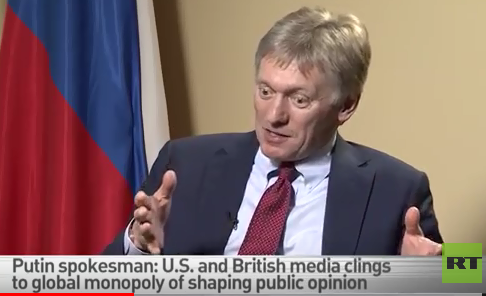
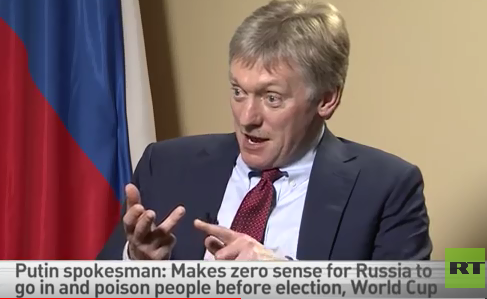
Moscow - Kremlin insiders report that fear for survival is now sweeping the Kremlin and the ministries of the Russian government, as it is acknowledged by senior officials that President Vladimir Putin (lead image, left) will make “significant changes” when he announces the new government after his inauguration in six weeks’ time.

Putin, the sources have disclosed, has been unpleasantly surprised by two results of the Skripal poisoning case, after the intelligence and security services have briefed him on all they now know of the case. The first surprise for Putin, the sources claim, is the failure of command and control on the part of the civilian arm of government to respond to the British challenges after the poisoning of Sergei and Yulia Skripal was announced on March 4.

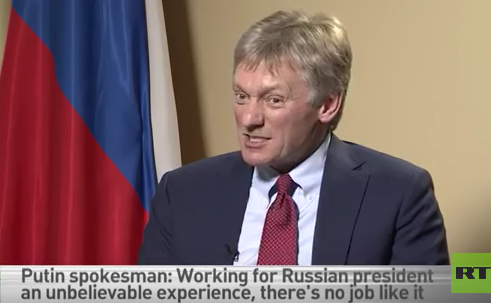
The second is the behaviour of the state media and propaganda arm operated by Dmitry Peskov (centre), the presidential spokesman.

“The Foreign Ministry hasn’t known how to act in London, whom to employ, whether to open its mouth, or keep it shut. The state propaganda organs have made this worse. Everything the government now says, truth though it may be, now looks unbelievable cover-up.”

The sources are guarded in their predictions. They believe Dmitry Medvedev will be reappointed prime minister. They expect that senior officials regarded as too fond of the west will go.

Watch and read as Dmitry Peskov explains to his boss why he should not be dismissed, and in the process reveals to the British government how the spokesman makes the president look culpable in the Skripal affair — an affair Peskov calls an “accident” six times over.

That’s a dramatic news-breaking term; Peskov fails to explain it.

Peskov, 50, comes from a Soviet Foreign Ministry family. He started there himself in 1990, rising slowly through the ranks to First Secretary. Eight years — all of his foreign posting time — he spent in Turkey. Peskov then started as a press officer in the Kremlin in 2000; he has been Putin’s spokesman at the presidency and the prime ministry. His present post, which also includes the power to direct the budgets and operations of the state media, commenced in 2012.

Last week Peskov summoned Russia Today Television (RT) for an unusually lengthy interview. Spoken in English, at 46 minutes it is far too long for most television viewers. With no independent count of the RT audience and a re-broadcast estimate of 28,000 for the video clip, Peskov was appealing to the president not to remove him. Watch the video here. The transcript can also be read in full.


Source: https://www.youtube.com/watch?v=7ATdRpvQKvI


Read these excerpts from an MI6 point of view, or from the perspective of the German Bundesnachrichtendienst (BND) or the French Direction générale de la sécurité extérieure (DGSE). They are asking themselves why Putin, with all that is now known to him of the movements, communications, and business activities of Yulia Skripal in Moscow and her father in England, would direct Peskov to say these things, but omit to explain the Russian evidence for the “accident”.


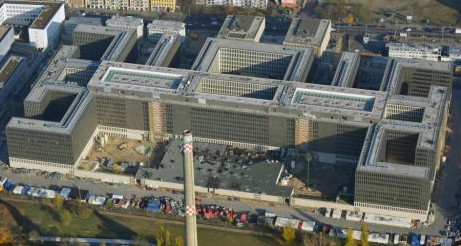
The headquarters of the BND in Berlin, constructed on the site 
of the German Democratic Republic’s World Youth Stadium. 

“…because this is Russia, it’s an outstanding country with its own traditions, historical traditions and historical mood of people. When they face any pressure coming from the outside they unite and they unite around a strong leader. This happened numerous times during our history. And, of course, partly it’s happening now because when you see an unprecedented pressure, when you see even craziness coming from some countries, you understand what I mean, people cannot tolerate it, they resist. And while resisting they unite around a strong leader. “
“Russia and President Putin is looking for repairing relationship where it is possible and looking for developing and furthering relationships with various countries, especially our partners in Europe, with the United States, and proceeding in this developing as far as our partners are ready to. The foreign policy, as far as I can interpret it, in Putin’s understanding the main purpose of foreign policy and international relations is to ensure a comfortable environment for implementing of domestic tasks.”
“…if you analyse the reaction coming from responsible members of international society, you will see that there’s a certain understanding of necessity of urgent negotiations on international security and even disarmament.”
“We cannot compare our military expenditures. In five years we’re going to spend less than 3% of our GDP for military defense purposes and for arms production purposes. It cannot be compared with the expenditures of the United States. But I would like to remind you the latest statements of President Putin. Russia is not going to be driven into an arms race. It doesn’t correspond with President Putin’s primarily goal of domestic economic development and domestic breakthrough in economy.”
“The more Russia is rising the more uncomfortable they feel and the more tough they start to behave in the international relations. And in this tough behavior they are ready to jeopardise international law, the basics of international relations, free trade and commerce regime. They are ready to forget about fair trade, they are ready to forget about WTO rules. They are ready to forget about every rules when they want to suppress Russia.”
“Lots of countries in Europe understand that Russia is an untakeable part of Europe and you cannot think about prosperous and developing Europe if you don’t see Russia being involved in all the European processes, that Russia’s voice has to be taken into account and so on and so forth. We cannot say that this angry attitude is an overwhelming one.”
“Actually what happened during the last three or four decades, Anglo-Saxon media started to rule the world – economic, commercial media and also political media. I mean the media from the United States and Great Britain. They are the most powerful, the most influential and they have the widest possible reach globally. And, of course, this feeling of monopoly brings a will to manipulate this monopoly. You can use this monopoly as a tool of delivering your point of view, whether it’s right or wrong it doesn’t matter, you can adjust it in accordance with the situation – to simply manipulate the brains of people throughout the world. And this is why they strongly oppose the appearance of any rivals, even small rivals like RT – in comparison with this huge machine.” 


“…size doesn’t matter here.You can be small, but you can do much more influential things. That is what you [RT] are doing. And that what makes them nervous because you are pretending to be a rival for them and this rivalry can ruin the system of brainwash. This is the reality what we see.”
“What we see is the country of Byron and Shakespeare, the country of Conan-Doyle, the country that used to be a brilliant empire with immense political traditions of diplomacy and so on and so forth, it turned into a country where politicians are making, let me humbly say, irresponsible statements. This is a problem. It’s a reflection of a very hostile policy, predictably hostile policy. And this is the reality that we have to face and we have to minimize the consequences of this unfortunate reality for our country and we have to ensure using all possible diplomatic and political methods. We have to minimize the consequences for our own country and to ensure that conditions for our domestic purposes are suitable and comfortable.”
“…we have to remember, the starting point is words of President Putin that Russia has nothing to do with this accident. This is number one. Number two: we’re not speaking about an attempted murder of the Russian spy in Great Britain. We are speaking about the attempt to murder the British spy in Great Britain. He was a British spy and he is a British spy. He is not a Russian spy.” 


“[Sergei Skripal] is a Russian citizen, but he is not a Russian spy. He was handed in to Britain as a result of an exchange. So, why should Russia hand in a man that is of any importance or that is of any value? It’s unimaginable. If he’s handed in – so Russia quits with him. He’s of zero value or zero importance. Go ahead! So this is number one.
Number two – words of President Putin:
 “We’re not as crazy as to even to think about something of that kind before presidential elections and before such an important global event as the football championship”.
Number three. The first accusations came from politicians just a couple of hours after the accident. A couple hours after the accident we heard the first accusations against Russia that ‘highly likely, Russia was responsible of that attempt of murder.’ And now we see the words of experts from the OPCW that say that the preliminary examination of this agent will take about three weeks. Is it contradictory? Yes, it is. Well, in general, why to blame Russia?
Maybe it’s a very rude comparison especially in this situation, I don’t think that anything can be ruder than the reality but, nonetheless, just imagine: Moscow city, a car accident, there’s a victim in the car accident. And we see what was the car. The car was a British-made car. Let’s say, a Range Rover. And just imagine, that myself or the Foreign Ministry spokeswoman makes a statement that a man was killed by a British-made car in a car accident in the centre of Moscow and highly likely Prime Minister of Great Britain may be responsible for that murder. Is it crazy? It is crazy.”
“We want to have a version. And we want to have a version as a result of Russia’s taking part in this investigation, at least receiving some data, receiving some information. You would probably notice that the briefing in the Foreign Ministry for ambassadors of various countries – we haven’t seen ambassador of Great Britain there. If Britain has questions in this case why wouldn’t the British ambassador come and hear the answers? As if they’re asking questions not willing to get any answers. As if they ask questions having judgements prior to that. This is extremely unfair. This is extremely contradictory with international law, international principles of behavior and diplomacy.”
“Everything that can be said as a theory is improper. You know, I’m not a politologist, I’m not a journalist to throw any theories of the incident. We have to be very responsible against this incident. This is really very dangerous for all of us – the usage of a nerve agent in Europe. This is a danger for all of us. This was an attempt of killing of the Russian citizen. By the way, I don’t know if Mr. Scripal still has a Russian citizenship, but his daughter definitely has. And Russia is the country that, of course, needs to receive the information about the state of health of its citizen that was assassinated on the British soil. This is completely unfair to mention any slightest possibility of Russia’s being involved in that.” 


“We’ve heard lots of statements coming from the American president saying that he would like to solve the existing problems between us two through a dialogue that is totally supported by his Russian counterpart Mr. Putin. But we know that some people in Congress and in the Senate are of a different opinion. I do not know to what extent the balance of power in the United States (and it’s none of our business, we cannot interfere in those affairs and we don’t have a slightest wish to interfere in that situation) can affect the future of our relationship. But we still consider the most important statements by the President of the United States and we do hope that there will be a chance for President Putin and President Trump to sit down together sooner or later.”
“Every joke from the president carries a very important, deep understanding.
[Question]: So how did you react?
“If the President is criticising you, even half-seriously, half-jokingly, you have to take it into account. Every press secretary in this world…
[Question: Bullshits?]
…is being criticised sometimes by his boss. It’s unavoidable.”
“President Putin is Russian and is making his jokes in Russian. And when they are interpreted incorrectly this is the problem of misinterpretation. Sometimes, yes, we feel different cultures, sometimes we cannot understand jokes coming from the other side and the same thing happening…
You know, it’s national specialities, I would think. And it’s rather our handicap in explaining our own President, I consider it to be our mishandling of information. So we have to be more careful, more creative in explaining those jokes.” 


“He’s got a huge understanding of what to do to make this country better. And he sees better than anyone in this country the scope of the problems.
He knows the problems of different regions, he knows the problems of people working in different spheres of the economy, of civil servants, he knows ecological problems, he knows problems of production, problems of healthcare, problems of social insurance and so on and so forth. But at the same time he understands what can be the way of solving these problems. And I can feel it working next to him that it’s a huge drive for himself combined with sense of responsibility.
This is a great chance for our country and a great challenge for himself.
[Question: That’s why you never wanted to leave him?]
It’s an unbelievable experience, an unprecedented experience. I can hardly imagine any other position in this world that brings such an experience to you.”

Sunday, March 25, 2018

Son of Muammar: Saif al-Islam Gaddafi's Bid to Save Libya

Gaddafi’s Son Hopes to “Restore the National State and Sovereignty” in Libya

by Elliott Gabriel - MintPress News


March 22nd, 2018

While Colonel Gaddafi’s second son was a highly divisive figure in Libya, the strife-ridden country has since witnessed a seething civil war and suffered major bloodshed amid power struggles between armed factions and competing governments.

Seven years after NATO-backed rebels deposed Libya’s leader, Colonel Muammar Gaddafi, the late leader’s son, Saif al-Islam Gaddafi, is reportedly readying himself for a return to the North African country’s political scene in a bid to unite the divided nation. Saif, 45, intends to run in presidential elections, scheduled for later this year, according to local media.

In this image taken from video made available Tuesday, Nov. 22, 2011, Moammar Gadhafi’s son Saif al-Islam Gaddafi, below right, is surrounded shortly after his capture Nov.  19, 2011, at a safe house in Zintan, Libya. Saif al-Islam is arguing with his captors, admonishing  them saying Libya’s regions that were united in revolution will turn against each other in the near future and rip the country apart. (AP/APTN)

He will reportedly announce his campaign in coming days, which will take place under the banner of the Popular Front for the Liberation of Libya, according to officials with the group.

Speaking at a press conference in Tunis on Monday, party spokesman Khaled Guel stressed the need to overcome political divisions. Guel told pan-Arab newspaper al-Araby al-Jadeed:

The humanitarian situation is deteriorating and the path forward is unclear. Therefore many Libyans now believe that the only way to save the country is through Saif al-Islam.”

The spokesman added that Saif “proposes the restoration of the national state with full sovereignty” as well as the “elimination of terrorism in all its forms.”

While Colonel Gaddafi’s second son was a highly divisive figure in Libya, the strife-ridden country has since witnessed a seething civil war and suffered major bloodshed amid power struggles between armed factions and competing governments.

The public face of the Gaddafi government


While Saif didn’t have a job title in the Gaddafi-led government, he was unquestionably among the country’s highest-ranking figures. He was seen as his father’s heir apparent and a relatively reform-oriented figure who sought to open up the country to foreign investors.

Saif gained further prominence as Libya’s de facto spokesman during the NATO-backed insurgency against the Great Socialist People’s Libyan Arab Jamahiriya, as Gaddafi-era Libya was officially named.

As the country became increasingly mired in civil war and subject to allegations of widespread repression and human-rights crimes, Saif flexed his fluent English-speaking skills before Western audiences and denounced the campaign to depict anti-government extremists as “democracy activists” extending the so-called “Arab Spring” to Libya.

As the 42-year-old Gaddafi government began to crumble in February 2011, Saif issued a prophetic warning to “be ready for a new colonial period from America and Britain” and the tearing-apart of Libya through tribal fratricide and warfare:

Everyone wants to become a Sheikh and an Emir; we are not Egypt or Tunisia so we are in front of a major challenge … There will be a war and no future … Remember my words.

You can say we want democracy and rights [but] instead of crying over 200 deaths we will cry over hundreds of thousands of deaths. You will all leave Libya, there will be nothing here. There will be no bread in Libya, it will be more expensive than gold.

The country will be divided like North and South Korea; we will see each other through a fence … You will see, worse than Yugoslavia …”

In an ostensible bid to enforce United Nations Security Council Resolution 1973 and protect the protesters resisting Gaddafi’s government, NATO and its Arab allies launched an alleged “humanitarian intervention” in March 2011. The campaign swiftly transformed into a “regime change” effort to dislodge Muammar Gaddafi, culminating in his gruesome extrajudicial killing by either NATO-backed rebel mobs or, as sources in Libya claim, an embedded French intelligence agent.

Upon learning of Gaddafi’s demise, U.S. then-Secretary of State Hillary Clinton brimmed over with delight and infamously told CBS News: “We came, we saw, he died!”

Following the fall of Tripoli, Saif was the last remaining member of the Gaddafi family who still remained in the country. In November 2011, Saif was arrested in the Sahara desert by the Zintan-based Abu Bakr al-Sadiq Brigade as he attempted to flee to Nigeria.

The Libyan “shit show”


The fall of Muammar Gaddafi proved to do precious little to stabilize the country or put an end to Libya’s all-out civil war. In fact, the collapse of central authority unleashed the long-dormant tribalism that the late leader hoped to weld into a common Libyan national identity.

Armed combat between competing factions and tribes was accompanied by anti-Black ethnic cleansing and the revival of chattel slavery. The country also transformed into a stomping ground for transnational terrorist factions affiliated with al-Qaida, the Islamic State group (ISIS), and the Libyan Islamic Fighting Group.

In the years since NATO intervened for the sake of silencing arms and protecting civilians, the social fabric of Libya has unraveled. Countless refugees have died attempting to escape the country — as armed tribal factions, members of the dissolved Gaddafi-era armed forces, and Islamist extremists have run rampant and clashed in an attempt to fill the power vacuum with their own fiefdoms.

In an infamous 2016 interview with The Atlantic’s Jeffrey Goldberg, President Barack Obama described the intervention as well-executed — in terms of forming a coalition, avoiding civilian casualties, and carefully “leading from behind” — but ultimately resulting in a “shit show,” thanks to the lack of interest among the U.S.’s European allies in nation-building efforts and to “the degree of tribal division in Libya, [which] was greater than our analysts had expected.”

After several years of Obama’s “shit show” unleashed by NATO arms, President Donald Trump reportedly has a far less charitable description of Libya: one of the “shithole countries” of the world.

Saif’s return


Since his release from captivity last June, Saif has been in hiding and hasn’t appeared in any photos or videos, yet his lawyers and relatives have made periodic announcements that he is in good health and will make a major return to Libya’s political scene.

Saif was sentenced to death in absentia in July 2015 by the U.N.-backed Government of National Accord in a mass trial for Gaddafi-era officials. Around the time of his release, the rival Tobruk-based government, led by Libyan National Army Marshal Khalifa Haftar, relieved the sentence in a general amnesty.

The International Criminal Court has also clamored for Saif to be handed over for his alleged role in crimes against humanity and the suppression of protests against his father’s regime, but African leaders have derided the body as a neocolonial tool of the West.

With the country in dire straits after years of anarchy and bloodshed, many are looking to the possibility that Saif’s stunning comeback could prove crucial to the reestablishment of peace and stability in Libya.

Ayman Boras, another spokesman for Saif’s soon-to-be-announced campaign, told reporters that the political platform Saif will announce consists of a “comprehensive political, security and social vision:”

[Saif’s] hands are extended to anyone who wants the good for Libya locally, regionally and internationally.”

All eyes are now on North Africa in the expectation that Saif al-Islam Gaddafi will come forward publicly and lay out his vision for a Libya that can finally overcome the chaos of the past seven years.


Elliott Gabriel is a former staff writer for teleSUR English and a MintPress News contributor based in Quito, Ecuador. He has taken extensive part in advocacy and organizing in the pro-labor, migrant justice and police accountability movements of Southern California and the state’s Central Coast.


Republish our stories! MintPress News is licensed under a Creative Commons Attribution-NonCommercial-ShareAlike 3.0 International License.