Tuesday, May 06, 2014

Searching for Mr. Good War: Is America Ready to Quit Fighting?

In Search of a Good War

by David Swanson - War is a Crime

The U.S. public is not longing for a U.S. war in Ukraine.

Seven percent want military options considered (poll by McClatchy-Marist, April 7-10), up from six percent a bit earlier (Pew, March 20-23), or 12 percent for U.S. ground troops and 17 percent for air strikes (CNN, March 7-9).

Polling is similar on U.S. desire for a war with Iran, or for U.S. military involvement in Syria. Many more Americans believe in ghosts and UFOs, according to the polls, than believe that these would be good wars.

The U.S. public never got behind the war on Libya, and for years a majority has said that the wars on Iraq and Afghanistan never should have been launched.

The search for a good war is beginning to look as futile as the search for the mythical city of El Dorado. And yet that search remains our top public project.

The U.S. military swallows 55.2 percent of federal discretionary spending, according to the National Priorities Project. Televised U.S. sporting events thank members of the military for watching from 175 nations. U.S. aircraft carriers patrol the world’s seas. U.S. drones buzz the skies of nations thousands of miles from our shores.

No other nation spends remotely comparable funds on militarism, and much of what the United States buys has no defensive purpose — unless “defense” is understood as deterrence or preemption or, indeed, aggression. As the world’s number one supplier of weapons to other nations, ours may be said to extend its search for a good war beyond its own affairs as well.

A 2006 National Intelligence Estimate found that U.S. wars were generating anti-U.S. sentiment. Former military officials, including Stanley McChrystal, say drone strikes are producing more enemies than they are killing. A WIN/Gallup poll of 65 nations at the end of 2013 found the U.S. far ahead of any other as the nation people believed was the greatest threat to peace in the world.

It is the ethics of a coward to believe that safety justifies all, but of a fool to commit immoral acts that actually endanger oneself. And what is more immoral than modern wars, with deaths and injuries so massive, so one-sided, and so heavily civilian?

Military spending produces fewer jobs than spending on education or infrastructure, or even on tax cuts for working people, according to studies by the Political Economy Research Institute. It is the ethics of a sociopath to justify killing for economic gain, but of a fool to do so for economic loss.

The military is our top consumer of petroleum and creator of superfund sites, in addition to being the hole into which we sink the funds that could address the real danger of climate change.

War justifies secrecy and the erosion of liberties: warrantless surveillance, lawless imprisonment, torture, and assassination, even as wars are marketed as defending “freedom.”

And of course the maintenance of nuclear and other weapons for war risks intentional or accidental catastrophe.

The downsides to war, even for an aggressor nation with overwhelming fire power, are voluminous. The upside would seem to be that if we keep fighting wars, one of them might turn out to be a good one.

But ask people to name a good war, and most will go back 73 years to World War II. A few will express badly misinformed views about Yugoslavia or Rwanda, but most will focus right in on Adolf Hitler. Think about that. Our top public project for the past three-quarters of a century has to go back that far to find a popular example of its use.

We live in a vastly changed world, and public opinion reflects that. The power of nonviolent action to resist tyranny and injustice is dramatically more realized, as is understanding of nonviolent conflict resolution and wise conflict avoidance.

Winston Churchill called World War II “the Unnecessary War” claiming that “there was never a war more easy to stop.” That war would not have happened without World War I, which nobody claims was itself unavoidable.

Just as the U.S. sells weapons to abusive nations today and prioritizes militarism over aid to refugees, Western nations helped fund the rise of the Nazis and refused to accept Jewish refugees. There are ways to prevent situations from ever reaching the point of war.

Or rather there would be if we weren’t so invested in the military industrial complex of whose “total influence” President Dwight Eisenhower warned.

David Swanson is author of War is a Lie. He lives in Virginia.

Monday, May 05, 2014

Seeing No Nazis in Ukraine: Western Media's Determined Ignoring of the Obvious

Ukraine's 'Dr. Strangelove' Reality

by Robert Parry  - Consortium News

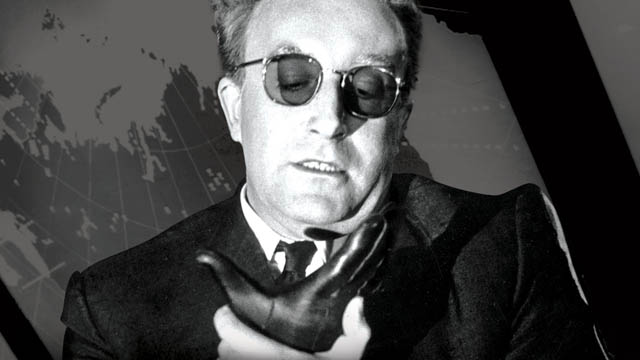
As much as the coup regime in Ukraine and its supporters want to project an image of Western moderation, there is a “Dr. Strangelove” element that can’t stop the Nazism from popping up from time to time, like when the Peter Sellers character in the classic movie can’t keep his right arm from making a “Heil Hitler” salute.


Peter Sellers playing Dr. Strangelove as he 
struggles to control his right arm from 
making a Nazi salute. 

This brutal Nazism surfaced again on Friday when right-wing toughs in Odessa attacked an encampment of ethnic Russian protesters driving them into a trade union building which was then set on fire with Molotov cocktails. As the building was engulfed in flames, some people who tried to flee were chased and beaten, while those trapped inside heard the Ukrainian nationalists liken them to black-and-red-striped potato beetles called Colorados, because those colors are used in pro-Russian ribbons.

“Burn, Colorado, burn” went the chant.

As the fire worsened, those dying inside were serenaded with the taunting singing of the Ukrainian national anthem. The building also was spray-painted with Swastika-like symbols and graffiti reading “Galician SS,” a reference to the Ukrainian nationalist army that fought alongside the German Nazi SS in World War II, killing Russians on the eastern front.

The death by fire of dozens of people in Odessa recalled a World War II incident in 1944 when elements of a Galician SS police regiment took part in the massacre of the Polish village of Huta Pieniacka, which had been a refuge for Jews and was protected by Russian and Polish partisans. Attacked by a mixed force of Ukrainian police and German soldiers on Feb. 28, hundreds of townspeople were massacred, including many locked in barns that were set ablaze.

The legacy of World War II – especially the bitter fight between Ukrainian nationalists from the west and ethnic Russians from the east seven decades ago – is never far from the surface in Ukrainian politics. One of the heroes celebrated during the Maidan protests in Kiev was Nazi collaborator Stepan Bandera, whose name was honored in many banners including one on a podium where Sen. John McCain voiced support for the uprising to oust elected President Viktor Yanukovych, whose political base was in eastern Ukraine.

During World War II, Bandera headed the Organization of Ukrainian Nationalists-B, a radical paramilitary movement that sought to transform Ukraine into a racially pure state. OUN-B took part in the expulsion and extermination of thousands of Jews and Poles.

Though most of the Maidan protesters in 2013-14 appeared motivated by anger over political corruption and by a desire to join the European Union, neo-Nazis made up a significant number. These storm troopers from the Right Sektor and Svoboda party decked out some of the occupied government buildings with Nazi insignias and even a Confederate battle flag, the universal symbol of white supremacy.

Then, as the protests turned violent from Feb. 20-22, the neo-Nazis surged to the forefront. Their well-trained militias, organized in 100-man brigades called “the hundreds,” led the final assaults against police and forced Yanukovych and many of his officials to flee for their lives.

In the days after the coup, as the neo-Nazi militias effectively controlled the government, European and U.S. diplomats scrambled to help the shaken parliament put together the semblance of a respectable regime, although four ministries, including national security, were awarded to the right-wing extremists in recognition of their crucial role in ousting Yanukovych.

Seeing No Nazis


Since February, virtually the entire U.S. news media has cooperated in the effort to play down the neo-Nazi role, dismissing any mention of this inconvenient truth as “Russian propaganda.”

Stories in the U.S. media delicately step around the neo-Nazi reality by keeping out relevant context, such as the background of national security chief Andriy Parubiy, who founded the Social-National Party of Ukraine in 1991, blending radical Ukrainian nationalism with neo-Nazi symbols. Parubiy was commandant of the Maidan’s “self-defense forces.”

NYTimes man, Nicholas Kristof

When the neo-Nazi factor is mentioned in the mainstream U.S. press, it is usually to dismiss it as nonsense, such as an April 20 column by New York Times columnist Nicholas Kristof who visited his ancestral home, the western Ukrainian town of Karapchiv, and portrayed its residents as the true voice of the Ukrainian people.

“To understand why Ukrainians are risking war with Russia to try to pluck themselves from Moscow’s grip, I came to this village where my father grew up,” he wrote. “Even here in the village, Ukrainians watch Russian television and loathe the propaganda portraying them as neo-Nazi thugs rampaging against Russian speakers.

“‘If you listen to them, we all carry assault rifles; we’re all beating people,’ Ilya Moskal, a history teacher, said contemptuously.”

In an April 17 column from Kiev, Kristof wrote that what the Ukrainians want is weapons from the West so they can to go “bear-hunting,” i.e. killing Russians.

“People seem to feel a bit disappointed that the United States and Europe haven’t been more supportive, and they are humiliated that their own acting government hasn’t done more to confront Russian-backed militants. So, especially after a few drinks, people are ready to take down the Russian Army themselves.”

Kristof also repeated the U.S. “conventional wisdom” that the resistance to the coup regime among eastern Ukrainians was entirely the work of Russian President Vladimir Putin, who, Kristof wrote, “warns that Ukraine is on the brink of civil war. But the chaos in eastern cities is his own creation, in part by sending provocateurs across the border.”

However, when the New York Times finally sent two reporters to spend time with rebels from the east, they encountered an indigenous movement motivated by hostility to the Kiev regime and showing no signs of direction from Moscow. [See Consortiumnews.com’s “Another NYT ‘Sort of’ Retraction on Ukraine.”]

Beyond the journalistic risk of jumping to conclusions, Kristof, who fancies himself a great humanitarian, also should recognize that the clever depiction of human beings as animals, whether as “bears” or “Colorado beetles,” can have horrendous human consequences as is now apparent in Odessa.

Reagan’s Nazis


But the problem with some western Ukrainians expressing their inconvenient love for Nazis has not been limited to the current crisis. It bedeviled Ronald Reagan’s administration when it began heating up the Cold War in the 1980s.

As part of that strategy, Reagan’s United States Information Agency, under his close friend Charles Wick, hired a cast of right-wing Ukrainian exiles who began showing up on U.S.-funded Radio Liberty praising the Galician SS.

These commentaries included positive depictions of Ukrainian nationalists who had sided with the Nazis in World War II as the SS waged its “final solution” against European Jews. The propaganda broadcasts provoked outrage from Jewish organizations, such as B’nai B’rith, and individuals including conservative academic Richard Pipes.

According to an internal memo dated May 4, 1984, and written by James Critchlow, a research officer at the Board of International Broadcasting, which managed Radio Liberty and Radio Free Europe, one RL broadcast in particular was viewed as “defending Ukrainians who fought in the ranks of the SS.”

Critchlow wrote, “An RL Ukrainian broadcast of Feb. 12, 1984 contains references to the Nazi-oriented Ukrainian-manned SS ‘Galicia’ Division of World War II which may have damaged RL’s reputation with Soviet listeners. The memoirs of a German diplomat are quoted in a way that seems to constitute endorsement by RL of praise for Ukrainian volunteers in the SS division, which during its existence fought side by side with the Germans against the Red Army.”

Harvard Professor Pipes, who was an informal adviser to the Reagan administration, also inveighed against the Radio Liberty broadcasts, writing – on Dec. 3, 1984 – “the Russian and Ukrainian services of RL have been transmitting this year blatantly anti-Semitic material to the Soviet Union which may cause the whole enterprise irreparable harm.”

Though the Reagan administration publicly defended Radio Liberty against some of the public criticism, privately some senior officials agreed with the critics, according to documents in the archives of the Reagan Presidential Library in Simi Valley, California. For instance, in a Jan. 4, 1985, memo, Walter Raymond Jr., a top official on the National Security Council, told his boss, National Security Adviser Robert McFarlane, that “I would believe much of what Dick [Pipes] says is right.”

What the Reagan administration apparently didn’t understand three decades ago – and what the U.S. State Department still has not seemed to learn today – is that there is a danger in stirring up the old animosities that divide Ukraine, east and west.

Though clearly a minority, Ukraine’s neo-Nazis remain a potent force that is well-organized, well-motivated and prone to extreme violence, whether throwing firebombs at police in the Maidan or at ethnic Russians trapped in a building in Odessa.

As vengeance now seeks vengeance across Ukraine, this Nazi imperative will be difficult to hold down, much as Dr. Strangelove struggled to stop his arm from making a “Heil Hitler” salute.

Investigative reporter Robert Parry broke many of the Iran-Contra stories for The Associated Press and Newsweek in the 1980s. You can buy his new book, America’s Stolen Narrative, either in print here or as an e-book (from Amazon and barnesandnoble.com). For a limited time, you also can order Robert Parry’s trilogy on the Bush Family and its connections to various right-wing operatives for only $34. The trilogy includes America’s Stolen Narrative. For details on this offer, click here.

Odessa's Bloody Footprints Lead to Obama's Front Door

Obama’s Bloodbath in Odessa

by Mike Whitney - CounterPunch

“As the building was engulfed in flames, photos posted on Twitter showed people hanging out of windows and sitting on windowsills on several floors, possibly preparing to jump. Other images showed pro-regime elements celebrating the inferno. Some jeered on Twitter that “Colorado beetles are being roasted up in Odessa,” using a derogatory term for pro-Russian activists wearing St. George’s ribbons.”  – Mike Head, Washington responsible for fascist massacre in Odessa, World Socialist Web Site

“I think what’s happening now shows us who’s actually been orchestrating the process from the beginning. At first, the United States preferred to stay in the shadows, but now they’ve exposed themselves as the leaders of this whole process.”  – Russian President Vladimir Putin.

Members of the fascist Right Sector set fire to Odessa’s Trade Unions House on Friday killing 40 anti-coup activists who had retreated to the building to escape escalating street violence.

Witnesses say that members of the Ukrainian security forces withdrew from the scene allowing the rightwing radicals to block the exits and firebomb the building forcing many to jump from open windows to the pavement below where they died on impact.

The few who survived the fall were savagely beaten with clubs and chains by the nearly 300 extremist thugs who had gathered on the street.

Much of the murderous provocation was caught on video including footage of the terrified occupants leaping to their deaths.

Just hours after the bloodbath took place in Odessa, President Obama praised the brutal crackdown in a joint-press conference with German Chancellor Angela Merkel. Obama announced that, “The Ukrainian government has the right and responsibility to uphold law and order within its territory.”

The president made no mention of the 40 victims who were burned alive or who jumped to their death trying to escape the fire. Nor did Obama offer his condolences to the families who lost loved one’s in the Nazi-ignited blaze. Instead, the president demanded that heavier penalties be levied on Moscow for its ‘defiance’ in Crimea where people were allowed to choose their own future through a referendum.

Here’s a clip from the press conference transcript:

“We are united in our determination to impose costs on Russia for its actions, including through coordinated sanctions….And as Ukrainian forces move to restore order in eastern Ukraine, it is obvious to the world that these Russian-backed groups are not peaceful protesters. They are heavily armed militants who are receiving significant support from Russia. The Ukrainian government has the right and responsibility to uphold law and order within its territory, and Russia needs to use its influence over these paramilitary groups so they disarm and stop provoking violence… if the Russian leadership does not change course, it will face increasing costs as well as growing isolation, diplomatic and economic.” (Wall Street Journal)

None of the victims of the tragedy were armed. None of them were Russian nationals. All of the people who were killed were identified as locals. There is no factual basis for Obama’s allegation that the “protestors… are heavily armed militants who are receiving significant support from Russia.” Obama’s claims are uncorroborated nonsense, fabrications and outright lies.

According to Obama, the coup government has “the right and responsibility to uphold law and order”, but (apparently) not to provide security for unarmed protestors who are burned alive by neo Nazis arsonists that perform their homicidal ritual in broad daylight while security troops look on approvingly. Do you see the flaw in Obama’s reasoning?

And what prompted Right Sector goons to stage the massacre when they had never done so before? Doesn’t that suggest that they must have gotten the green light from Kiev, which means, the attack must have been approved by Washington as well?

Is that where the bloody footprints lead; to the Oval Office?

Let’s suppose for a minute, that the White House was involved in the Odessa bloodbath. Wouldn’t that explain why the facts of the incident have not been accurately reported in any of the major media? Wouldn’t that explain why Obama failed to mention the incident in his press conference, or why the White House has not issued a statement condemning the perpetrators, or called for an independent investigation, or tried to interview any of the hundreds of eyewitnesses who saw what happened and reported the facts on Russian media?

Who authorized the attack on Odessa’s Trade Unions House? That’s what we want to know. Why did the Ukrainian Security Services withdraw and allow the fascist thugs to burn down the Zuccotti Park-like tent city in front of the building, chase the occupants into the building, painstakingly barricade the exits, and then hurl Molotov cocktails and stun grenades through the windows until the entire edifice was engulfed in flames?

Street fighting thugs don’t typically waste their time barricading exits unless it is part of a plan, a plan to create a big-enough incident to change the narrative of what is going on in the country.

But how does “changing the narrative” benefit Washington?

Well, just think of 9-11, for example: a “Pearl Harbor-type event” that changed all the rules and created the rational for curtailed civil liberties, authoritarian rule and perpetual war. Someone benefited from those changes, didn’t they?

Indeed. But how does that apply Ukraine and the Odessa tragedy?

Let’s say that Obama and his neocon advisors wanted to conceal what they’re really up to. Let’s say they felt they needed an excuse to justify NATO expansion, to block further EU-Russian economic integration, and to transform Ukraine into an anarchic, ungovernable failed state controlled by external powers. Let’s say Obama’s goals are not really altruistic after all, that he doesn’t really give a damn about democracy or freedom; that the real motive is the “pivot to Asia”, the dismemberment of the Russian Federation, the seizing of vital resources, and the control of China’s growth. So how does one achieve those goals without hoodwinking the public?

They don’t. Hoodwinking the public is an essential part any aggressive, imperialistic strategy, which is why western media has been embedded into the US Command Structure. The roll of propaganda is critical to the shaping of public opinion, garnering support for unpopular wars and policies, concealing the crimes of crooked politicians and outlaw corporatists, and diverting attention from the illicit, expansionist marauding of the Imperial state. In this case, Obama would rather propagate the fictitious narrative of an impending civil war then let people know what his real objectives are. The Odessa massacre fits perfectly into this strategy.

The incident suggests that deep ethnic and ideological differences are brewing just below the surface ready to explode at any minute into a full-blown civil war. But are they? The number of fascists in the country is actually quite small, probably just a few thousand altogether. That’s certainly not enough to incite a civil war. But, of course, the coup government can amplify their importance by giving them a free hand to carry out their murderous rampages, just as the media can magnify their importance by portraying their barbarous behavior as a symptom of deeply-rooted ethnic antagonisms that threaten to bubble up and rip Ukrainian society apart.

And that’s what they’ve done, isn’t it? The imposter government and the media have taken the rogue actions of a small group of bloodthirsty misfits, and patched together a story of a state that is on the fast-track to disintegration.

This isn’t the first time the US has tried to pull something like this off. In 2006, the Bush administration used a similar tactic in Iraq. That’s when Samarra’s Golden Dome Mosque was blown up in an effort to change the public’s perception of the conflict from an armed struggle against foreign occupation into a civil war. Bush wanted to use psy-ops (psychological operation) to shift attention away from US causalities (from an effective Sunni-led resistance) to a fictitious religious war between Sunni and Shia. The bombing of the third most sacred shrine in Islam, was expected to provide the Pearl Harbor-type event that would make the new narrative seem credible.

The media, of course, pushed the civil war trope as expected, even though the story unraveled some years later in an investigative piece that popped up in the New York Times. Here’s a blurb from the article titled “One Year Later, Golden Mosque still in Ruins” by Marc Santora:

“A caretaker at the shrine described what happened on the day of the attack, insisting on anonymity because he was afraid that talking to an American could get him killed. The general outline of his account was confirmed by American and Iraqi officials.

The night before the explosion, he said, just before the 8 p.m. curfew on Feb. 21, 2006, on the Western calendar, men dressed in commando uniforms like those issued by the Interior Ministry entered the shrine.

The caretaker said he had been beaten, tied up and locked in a room.

Throughout the night, he said, he could hear the sound of drilling as the attackers positioned the explosives, apparently in such a way as to inflict maximum damage on the dome”. (NY Times)

Clearly, if the men were men dressed in “commando uniforms like those issued by the Interior Ministry”, then the logical place to begin an investigation would be the Interior Ministry. (which was working hand in glove with US Intelligence agencies.) But there’s never been an investigation and the caretaker has never been asked to testify about what he saw on the night of the bombing. However, if he is telling the truth, we cannot exclude the possibility that paramilitary contractors (mercenaries) or special-ops (intelligence) agents working out of the Interior Ministry may have destroyed the mosque to create the appearance of a looming civil war.

The Times also added, “What is clear is that the attack was carefully planned and calculated”.

True again. We can see from the extent of the damage that the job was carried out by demolition experts and not merely “insurgents or terrorists” with explosives. Simple forensic tests and soil samples could easily determine the composition of the explosives and point out the real perpetrators.

The Times even provides a motive for the attack: “Bad people used this incident to divide Iraq on a detestable sectarian basis.”

Precisely. The Bush administration used the incident to change the storyline from foreign occupation to civil war, thus, creating the rational for ongoing US occupation. The civil war meme provided cover for the “Salvador Option”, “the Surge”, massive ethnic cleansing, death squads, Abu Ghraib, and more than a decade of US-sponsored terror which turned Iraq into a decimated third world scrapheap incapable of providing food, water or security for its people. “Mission accomplished”.

Now it’s on to Ukraine where another set of distortions, fabrications and lies are being used to pull the wool over the public’s eyes once again. This time “Hitler” Putin is the source of all the evildoing. Forget about the State Department’s role in toppling the democratically-elected government in Kiev. Forget about the snipers who killed peaceful protestors in Maidan Square and who are tied to Washington’s junta government. Forget about CIA Director John Brennan’s visit to Kiev just hours before the first government crackdown. Forget Joe Biden’s visit to Kiev just hours before the second government crackdown. Forget that, according to a report on Sunday by AFP, that:

“Dozens of specialists from the US Central Intelligence Agency and Federal Bureau of Investigation are advising the Ukrainian government…. helping Kiev end the rebellion in the east of Ukraine and set up a functioning security structure…” (“CIA, FBI agents ‘advising Ukraine government‘: report”, AFP)

Forget that Obama hasn’t produced a shred of evidence to prove that Moscow is involved in the turmoil in the East. Forget that the United States has been at the center of every major conflagration in every part of the world for the last two decades. Forget about the 40 people who were incinerated in a conflict that is 100 percent Washington’s doing and for which Barack Obama is personally responsible. Forget all of that and just remember this one thing: “Putin is evil. Putin is Hitler. Putin is cause of everything that’s wrong in the world.” Putin. Putin. Putin. Bad. Bad. Bad.

Got that?

Putin’s spokesman, Dmitry Peskov, summed up the feelings of many observers who’ve followed the outrageous developments in Odessa when he said ‘the government in Kiev “bears direct responsibility, and is complicit in these criminal activities. They allowed extremists and radicals to burn unarmed people alive. And I stress that these people were unarmed … The people who justify this punitive operation… are up to their elbows in blood.” (RT)

Obama is just as guilty as anyone in Kiev. Maybe guiltier.

Mike Whitney lives in Washington state. He is a contributor to Hopeless: Barack Obama and the Politics of Illusion (AK Press). Hopeless is also available in a Kindle edition. He can be reached at fergiewhitney@msn.com

Inside Syria: Updates Prior to the National Election

Syrian Update Prior to Presidential Election

by Lilly Martin - OpEd News

Syria began a spiral of violence in March 2011. The leaders of the uprising in Deraa have long gone; some are found now living in Benghazi, Libya. The followers of the Syrian revolution have long since realized the freedom and democracy they thought they were fighting for, was never on the table for offer. The foreign countries and their Arab allies who funded and designed the revolution had never intended they realize any freedoms or democratic reforms. It was all about regime change, even from the very first day.

Now we fast-forward 3 years, and the violence continues with more than 150,000 people having been killed; more than 10 million internally displaced, with over 2 million having fled. Some media centers far removed from the Syrian battle-grounds have labeled the crisis a 'civil war'. According to the Oxford English dictionary, this label is erroneous.

When does a label pasted on in error become political propaganda? 


We certainly cannot explain the error of BBC and CNN on poor English skills.

The dictionary definition of the term 'civil war' states: a war between citizens of the same country. According to BBC, CNN, and others of the western media, we should be able to find Syrian citizens who are fighting other Syrian citizens. But, instead we find Syrian citizens fighting citizens from: UK, USA, Belgium, France, Saudi Arabia, Qatar, Chechnya, Afghanistan, Pakistan, Tunisia, Morocco, and Turkey. Some of these fighters are Arabs, and some cannot speak even one word of Arabic.

Some are fighting to rid Syria of all heathens, according to their definition of heathens, which includes all Jews, Christians, and Muslims who are not following their new brand of Islam, which was invented by Salafi, Wahabi, and Muslim Brotherhood followers. Some of the men are simply fighting for the $1,000.00 per month cash paid to them by Saudi Arabia. To those fighters, it is just a job.

These fighters are armed terrorists, but the media calls them 'rebels'. The word rebel, in the connotation of a war of rebellion, means someone who is rebelling against a government. Why would a man from Chechnya or Belgium think he has any right to rebel against the Syrian government, when the Syrian government has no effect on his life or rights? Has the Syrian government oppressed or harmed any American or British person?

The Free Syrian Army began as a group of local Syrian men organized and fighting the Syrian Arab Army, which is the national army of Syria. However, the Free Syrian Army (FSA), which is the armed wing of the Syrian National Coalition (SNC) located in Istanbul, Turkey, made strategic alliances and pledges to Al Qaeda (AQ), the radical Islamic terrorist group of global fame. The FSA felt they would benefit by the numbers, weapons, and training of the AQ fighters. It was a win-win deal, until AQ and their allies of Jibhat Al Nusra (JAN) and Islamic State of Syria and Iraq (ISIS) began slaughtering the FSA.

The decision to eliminate the FSA emanated from the fact that the FSA just wanted regime change, and ultimately greater freedom and democracy, but AQ, J AN, and ISIS didn't have any goal in Syria short of establishing a caliphate, meaning to transform Syria into a Sunni Muslim state, without freedom and definitely without democracy, as those two concepts are in direct conflict with their ideology.

The two sides on the battle grounds in Syria today are foreign funded and supported non-Syrian terrorists, fighting against the Syrian Arab Army (SAA) which is composed of Syrian males, over the age of 18 years, in good health, and not enrolled in a university in Syria or abroad. The SAA is totally Syrian and is secular. There are 18 sects in Syria and all are drafted; there are no religious quotas in the national conscription. When you read in western media that the SAA are "forces loyal to the Alowi government" this is pure rubbish, and more propaganda.

Are the men and women in the armed forces of USA loyal to Obama's regime? 


A member of any military of any country is loyal to that nation, which means all the citizens. A soldier is not in a political policy-making position. He is drafted, or enlists, and he serves to defend his county from domestic or foreign attack.

Some media have dropped the term civil war, and instead use the term 'sectarian war'. They try to incorrectly compare the Sunni-Shia divisions we have seen in Bahrain, Saudi Arabia, and Iraq to Syria. Syria is not a Sunni-Shia clash. Syria is 18 different sects. The terrorists in Syria have burnt as many Sunni mosques as churches. The terrorists in Syria have burnt as many Korans as Bibles. It is true that the only sect that had a militia was the Sunni sect, that of the Free Syrian Army, but the men fighting the FSA daily were not exclusively Shiites, and were not in a militia; they were Sunni members of the Syrian Arab Army, as well as their fellow soldiers from all 18 sects. The Syrian Arab Army has never been an Alowi army, and has never represented one of the 18 sects exclusively.

The role of satellite TV channels is immense. People everywhere are watching CNN and BBC and many others, and have come to trust their news coverage of events happening around the world. They have come to rely on the mainstream media to kept them informed on events in far-flung places they will never in their lifetimes visit. They will listen to the news, watch the accompanying videos, and form opinions based on the information presented. If the information is biased, or downright lies, then we have entered the realm of propaganda.

There are many satellite TV channels located in the Arab world, and broadcast in Arabic. Channels such as Wessal, Safa, and others. These feature an Islamic cleric who gives fiery lectures on the importance of killing certain sects in Syria, the importance of raping little girls in Syria, urges Muslim females to give their bodies freely in sex-jihad in Syria, and who gives the Islamic ideology to back-up the wholesale killing of 20% of the civilian population of Syria, as long as it achieves the goal of regime change.

Further, we must examine the role of internet/social media. Facebook is full of pages and groups promoting the killing, rape and mutilation of unarmed Syrian civilians. YouTube is loaded with thousands of videos taken and uploaded by the terrorists themselves. They have hundreds of beheadings, live on camera, and in color. They have several videos of them barbecuing Syrians on grills. One of the most famous videos was of a Free Syrian Army soldier cutting open the dead body of a Syrian and eating his liver. That was so popular on YouTube that a British journalist was sent to Syria to personally interview the cannibal.

The airports, seaports, and roads of Turkey are full of terrorists coming in from places around the globe. They are seen at the airport in Istanbul. They are seen at the airport in Adana. They are all over the port at Iskanderun, and they are sleeping, eating, and driving all over the Southern border of Turkey as it approaches Syria. They are found from Yalada to Reyhanli, and everywhere in-between. I can't imagine what fear is in the hearts and minds of decent Turkish citizens who are forced to accept these bloodthirsty foreign terrorists in their midst. One such innocent Turkish woman was attacked and abused by terrorists on a domestic Turkish Air flight from Istanbul to Adana. After reporting her abuse to airline authorities they apologized but said there was nothing they could do about the matter, as the policy of transporting terrorists in Turkey for the purpose of fighting in Syria was a national policy, and not private.

Syria has 23 million people and they are from 18 religious sects. The Sunni Muslim sect is the largest at about 60%. Most of the current Presidential cabinet of ministers is from the Sunni sect. The current Parliament, which was voted on by general election during this crisis, is a very mixed group, with the Sunni sect well represented. Syria is a secular government, and the only secular government in the Middle East. After 40 years of socialist and secular type of government, the topic and labels of sects is disgusting to most Syrians. To the broad and educated mind, those are trivial matters that are only focused on by foreign governments, who are secular as well, or monarchies. I can't imagine the American public accepting the discussion of religious labels on each elected and appointed official in USA as of vital importance.

The Syrian opposition, SNC, located in Istanbul, Turkey, was founded by Muslim Brotherhood leaders for the purpose of regime change in Syria. The members are mainly followers of radical Islam, which is not a sect but is a political ideology, in direct opposition to both secular ideology and democratic ideology. To cover their true identity, the MB leadership of SNC threw in a handful of Communists, like George Sabra.

Communism and radical Islam: the future of Syria? 


The Syrian citizens, who have not been living in Paris, Riyadh, and London for the last 30 years, find the SNC repugnant and out of touch with Syrian society or political views. This is why most of the Syrian public has never followed or supported the SNC. The SNC is supported and followed by western governments and their Arab allies who don't care what the Syrian public wants. This is what has made the SNC divided and totally ineffective.

The SNC are speaking to, and working for, foreign governments and their Arab allies. For most of the members of SNC it is all about their own paycheck. This is their chance to rake in a large monthly salary, travel expenses, and lavish 5-star hotel living. This is their chance to destroy Syria, which was the land of their birth decades ago, but a home they forgot and distanced themselves from, both physically and emotionally. They have not seen Syria in years; they have no ties there other than some shared DNA, which they acquired without their own choice in the matter.


http://www.todayszaman.com/news-346593-us-report-says-turkey-used-as-transit-for-radical-groups-in-syria.html

http://www.telegraph.co.uk/news/worldnews/europe/turkey/10765696/Turkey-aided-Islamist-fighters-in-attack-on-Syrian-town.html

http://www.oxforddictionaries.com/us/definition/american_english/civil-war

Lilly Martin is an American citizen, living permanently in Syria. Visit her facebook page, Syria is My Home.

Sunday, May 04, 2014

No Gorilla

This Week on GR

by C. L. Cook - Gorilla-Radio.com

Painters are in this week...so no show

ape

NYTimes' Neutral Backpedal on Ukraine: Wrong then, Righter Noew

Another NYT ‘Sort of’ Retraction on Ukraine

by Robert Parry  - Consortium News

The New York Times, which has asserted for weeks that the Russian government is behind the unrest in Ukraine’s east, finally sent some reporters to the region to dig up the proof, but all they found were eastern Ukrainians upset by the coup regime in Kiev that replaced President Viktor Yanukovych.

The Times, which has been an unapologetic promoter of the “pro-democracy” uprising that ousted the democratically elected president through violent extra-constitutional means, has recently been promoting the “theme” that Ukrainians would be happy with their new unelected government if only the Russians weren’t “destabilizing eastern Ukraine.”

Times’ editors thought they had the goods two weeks ago with a front-page scoop featuring photographs supposedly proving the presence of Russian special forces troops. According to the Times, the photos “clearly” showed Russian special forces in Russia and then the same soldiers in eastern Ukraine.

However, only two days later, the scoop unraveled when it turned out that a key photo – supposedly showing a group of soldiers in Russia who later appeared in eastern Ukraine – was actually taken in Ukraine, destroying the premise of the entire story.

So, the Times belatedly dispatched reporters C.J. Chivers and Noah Sneider to Slovyansk in eastern Ukraine to talk with the militants who are opposing the coup regime in Kiev. To their credit, the two reporters actually seem to have recounted what they found, albeit with some of the anti-Russian bias that is now deeply embedded in the Western media narrative.

Noting that Moscow says the Ukrainian militants are not part of the Russian armed forces while “Western officials and the Ukrainian government insist that Russians have led, organized and equipped the fighters,” the reporters write:

“A deeper look at the 12th Company [of the People’s Militia] — during more than a week of visiting its checkpoints, interviewing its fighters and observing them in action against a Ukrainian military advance here on Friday — shows that in its case neither portrayal captures the full story.

“The rebels of the 12th Company appear to be Ukrainians but, like many in the region, have deep ties to and affinity for Russia. They are veterans of the Soviet, Ukrainian or Russian Armies, and some have families on the other side of the border. Theirs is a tangled mix of identities and loyalties.

“Further complicating the picture, while the fighters share a passionate distrust of Ukraine’s government and the Western powers that support it, they disagree among themselves about their ultimate goals. They argue about whether Ukraine should redistribute power via greater federalization or whether the region should be annexed by Russia, and they harbor different views about which side might claim Kiev, the capital, and even about where the border of a divided Ukraine might lie.”

Chuckling at Kiev


The Times reporters cited one unit leader named Yuri as chuckling “at the claims by officials in Kiev and the West that his operations had been guided by Russian military intelligence officers. There is no Russian master, he said. ‘We have no Muscovites here,’ he said. ‘I have experience enough.’ That experience, he and his fighters say, includes four years as a Soviet small-unit commander in Kandahar, Afghanistan, in the 1980s.

“The 119 fighters he said he leads, who appear to range in age from their 20s to their 50s, all speak of prior service in Soviet or Ukrainian infantry, airborne, special forces or air-defense units.”

The reporters also discovered mostly well-worn and dated weaponry, not the newer and more sophisticated equipment that is available to Russian forces.

“During the fighting on Friday, two of the fighters carried hunting shotguns, and the heaviest visible weapon was a sole rocket-propelled grenade,” Chivers and Sneider wrote.

“Much of their stock was identical to the weapons seen in the hands of Ukrainian soldiers and Interior Ministry special forces troops at government positions outside the city. These included 9-millimeter Makarov pistols, Kalashnikov assault rifles and a few Dragunov sniper rifles, RPK light machine guns and portable antitank rockets, including some with production stamps from the 1980s and early 1990s.”

Other Western journalists, who have bothered to report from eastern Ukraine rather than just accept handouts from the U.S. Embassy in Kiev or the State Department in Washington, discovered a similar reality.

For instance, on April 17, Washington Post correspondent Anthony Faiola reported from Donetsk that many of the eastern Ukrainians whom he interviewed said the unrest in their region was driven by fear over “economic hardship” and the IMF austerity plan that will make their lives even harder.


“At a most dangerous and delicate time, just as it battles Moscow for hearts and minds across the east, the pro-Western government is set to initiate a shock therapy of economic measures to meet the demands of an emergency bailout from the International Monetary Fund,” Faiola reported.

But this on-the-ground reality of legitimate and understandable concerns among the eastern Ukrainians has been missing from the U.S. propaganda barrage, which has overwhelmed the mainstream press as thoroughly as a similar P.R. campaign did during the run-up to the Iraq War, if not more so. Official Washington’s “group think” now is all about blaming Russian President Vladimir Putin for the Ukraine crisis.

One of the more preposterous theories that I have heard from Washington punditry and officialdom is that Putin arranged the Ukraine chaos as part of a scheme to reclaim land lost after the collapse of the Soviet Union in 1991. Though this notion of Putin as the aggressor plotting to reassert Russian imperialism has become something of a “conventional wisdom,” it is fully unsupported by the facts.

To believe that Putin instigated the Ukraine crisis, you would have to believe that he organized the Maidan protests, that he built up the neo-Nazi militias that spearheaded the Feb. 22 coup, and that he intentionally overthrew his ally, Yanukovych, whom Putin seemed to be trying to save. Though this conspiracy theory is ludicrous, it is now widespread in Official Washington.

Caught Off-Guard


The reality was that Putin was caught off-guard by the events in Ukraine, in part, because he was preoccupied with the Sochi Winter Olympics and the threat that the games would be marred by a major terrorist attack. He spent a great deal of time in Sochi personally overseeing the security.

Meanwhile, the Maidan uprising was unfolding in Kiev, cheered on by U.S. Assistant Secretary of State for European Affairs Victoria Nuland and partly financed by American entities, such as the U.S.-funded National Endowment for Democracy, whose longtime president Carl Gershman deemed Ukraine “the biggest prize” in a Washington Post op-ed published in late September, months before the current crisis erupted.

Though many of the protesters from western Ukraine had legitimate grievances over the pervasive corruption in Ukrainian politics and the inordinate power of a handful of wealthy oligarchs, the final violent coup was carried out by well-trained neo-Nazi militias organized in 100-man brigades, known as “the hundreds.”

After the Feb. 22 putsch when Yanukovych and many of his officials were forced to flee for their lives, Putin began reacting to this deteriorating situation on Russia’s border. What he was doing was “crisis management,” not implementing some Machiavellian scheme that had long been contemplated.

But the demonization of Putin in the Western media has been so total that anyone who dares question the most extreme interpretations of his behavior is denounced as a “Putin apologist.” Indeed, any attempt to present a nuanced narrative of what has happened in Ukraine is dismissed as somehow promoting Russian imperialism or spreading Russian propaganda.

This oppressive “group think” has, in turn, made formulating any rational policy toward Russia and Ukraine politically impossible in Official Washington.

In this context of asking who’s the real propagandist, it’s worth looking back on another New York Times front-page story from mid-April by David M. Herszenhorn, who accused the Russian government of engaging in a propaganda war.

In the article entitled “Russia Is Quick To Bend Truth About Ukraine,” Herszenhorn mocked Russian Prime Minister Dmitri Medvedev for making a Facebook posting that “was bleak and full of dread,” including noting that “blood has been spilled in Ukraine again” and adding that “the threat of civil war looms.”

The Times article continued, “He [Medvedev] pleaded with Ukrainians to decide their own future ‘without usurpers, nationalists and bandits, without tanks or armored vehicles – and without secret visits by the C.I.A. director.’ And so began another day of bluster and hyperbole, of the misinformation, exaggerations, conspiracy theories, overheated rhetoric and, occasionally, outright lies about the political crisis in Ukraine that have emanated from the highest echelons of the Kremlin and reverberated on state-controlled Russian television, hour after hour, day after day, week after week.”

This argumentative “news” story spilled from the front page to the top half of an inside page, but Herszenhorn never managed to mention that there was nothing false in what Medvedev wrote. Indeed, as the bloodshed has grown worse and a civil war has become more apparent, you might say Medvedev was tragically prescient.

It was also the much-maligned Russian press that first reported the secret visit of CIA Director John Brennan to Kiev. Though the White House later confirmed that report, Herszenhorn cited Medvedev’s reference to it in the context of “misinformation” and “conspiracy theories.” Nowhere in the long article did the Times inform its readers that, yes, the CIA director did make a secret visit to Ukraine.

Perhaps, the Chivers-Sneider story about the backgrounds of the fighters in the People’s Militia of eastern Ukraine – what looks like another New York Times’ “sort of” retraction of its earlier claims – will give some pause to the U.S. propaganda stampede into another unnecessary war. [For more details, see Consortiumnews.com’s “Ukraine, Though the US ‘Looking Glass.’”]

Investigative reporter Robert Parry broke many of the Iran-Contra stories for The Associated Press and Newsweek in the 1980s. You can buy his new book, America’s Stolen Narrative, either in print here or as an e-book (from Amazon and barnesandnoble.com). For a limited time, you also can order Robert Parry’s trilogy on the Bush Family and its connections to various right-wing operatives for only $34. The trilogy includes America’s Stolen Narrative. For details on this offer, click here.

NYT Editors Get It (Inadvertently) Right On Nuclear Power Demise

The NYTimes Pens an "Epitaph" for Nuke Power

by Harvery Wasserman - Ecowatch

In support of the dying nuclear power industry, the New York Times Editorial Board has penned an inadvertent epitaph.

Appearing in the May 2 edition, The Right Lessons from Chernobyl twists and stumbles around the paper’s own reporting. Though unintended, it finally delivers a “prudent” message of essential abandonment. The Times does concede that “The world must do what it can to increase energy efficiency and harness sun, wind, ocean currents and other renewable sources to meet our ever-expanding needs for energy.”

The edit drew 288 entries into its comment section before it was capped. I’ve posted one of them at NukeFree.org. Overall they’re widely varied and worth reading.

Because the Times is still the journal of record, the edit is a definitive statement on an industry in dangerous decline.

Let’s dissect:

The edit begins by citing the “New Safe Confinement” shield being built over the seething remains of Chernobyl Unit 4. Already “almost a decade behind schedule,” its completion is “a race against time” due to the “decrepit state of the sarcophagus” meant to contain the radiation there.

That we still must fear Chernobyl more than 28 years after it melted and exploded underscores the “nightmarish side of nuclear power.”

That the “vast steel shield” may not be done in time, or may not even end the problem, is downright terrifying, especially in light of the “near-bankruptcy of Ukraine,” not to mention a political instability that evokes horrific images of two hot wars and the cold one.

Amidst rising tensions between Ukraine, Russia and the west, the corporate media studiously avoids Chernobyl. But Belarus and Ukraine long ago estimated its cost to their countries at $250 billion each. One major study puts the global death toll at more than a million human beings.

The Times says Chernobyl’s terror is “more powerful than Three Mile Island before it or Fukushima after it.”

Three Mile Island suffered an explosion and melt-down in 1979. Exactly how much radiation escaped and who it harmed are still unknown. The industry vehemently denies that anyone was killed, just as it denied there was a melt-down until a robotic camera proved otherwise.

At Fukushima, there is no end in sight. Bad as it was, Chernobyl was one core melt and explosion in a single Soviet reactor in a relatively unpopulated area. Fukushima is three core melts and four explosions in American-designed General Electric reactors, of which there are some two dozen exact replicas now operating in the U.S., along with still more very similar siblings.

Spent fuel is still perched dangerously in damaged pools high in the Fukushima air. Thousands of rods are strewn around the site. The exact location of the three melted cores is still unknown. At least 300 tons of highly radioactive liquid pour daily into the Pacific, with the first of their isotopes now arriving on our west coast. Huge storage tanks constantly leak still more radiation. The labor force at the site is poorly trained and heavily infiltrated by organized crime.

The Times itself has reported that a desperate, terrified population is being forced back into heavily contaminated areas. Children are being exposed en masse to significant radiation doses. Given the horrific health impacts on youngsters downwind from Chernobyl, there is every reason to fear even worse around Fukushima.

But the Times Editorial Board follows with this:

“Yet it is also noteworthy that these civilian nuclear disasters did not and have not overcome the allure of nuclear power as a source of clean and abundant energy.”

“Allure” to whom? Certainly the corporations with huge investments in atomic energy are still on board. The fossil fuel industry is thoroughly cross-invested. And extraordinary corporate media access has been granted to pushing the odd belief that nuclear power can help mitigate global warming.

But the vast bulk of the global environmental movement remains firmly anti-nuclear. Grassroots opposition to re-opening any Japanese reactors is vehement to say the least. Amidst an extremely popular revolution in green technologies, U.S. opinion demands that nuclear subsidies be cut, which means death to an industry that can’t live without them.

It’s here the edit falls entirely overboard:

“Only Germany succumbed to panic after the Fukushima disaster and began to phase out all nuclear power in favor of huge investments in renewable sources like wind and sun.”

Germany’s green transition has been debated for decades, stepped up long ago by Chernobyl. With strong popular backing, the German nuclear phase-out, as in Sweden, Italy and numerous other European nations (Denmark never built any reactors) has long been on the table. The center-right Merkel government finally embraced it not only because of Fukushima, but because the German corporate establishment decided that going green would be good for business. As energy economist Charles Komanoff has shown, they’ve been proven right.

Despite the predictable carping from a few fossil/nuke holdouts, Germany will shut its reactors, as will, eventually, all other nations. The edit says there may be “an increase in greenhouse emissions,” but it will be “temporary.”

But as some in the respondents section point out, the Times ignores nuclear power’s own greenhouse impacts, especially in the mining, milling, transport and enrichment of radioactive fuel. Not to mention the heat emissions into the air and water from regular operations and periodic melt-downs and blow-ups. Or those involved with the as-yet unsolved management of radioactive wastes, both at exploded sites and where thousands of tons of spent fuel rods and other hot detritus still sit.

The Times does concede that: 

“The world must do what it can to increase energy efficiency and harness sun, wind, ocean currents and other renewable sources to meet our ever-expanding needs for energy.” 

But the vision of a green-powered Earth is no longer the property of a Solartopian movement. As the Times and other major publications have long reported, Wall Street has thoroughly rejected atomic energy and is pouring billions into renewables, especially photovoltaics (PV) which convert solar energy to electricity.

A technological, financial and ecological revolution is well underway. Maybe the Times Editorial Board should consult its financial section.

The edit then cites a recent Intergovernmental Panel on Climate Change (IPCC) report as a reason to keep nuclear energy as “part of the mix.”

But the IPCC report emphasizes atomic power’s negatives, most critically safety, economics, waste and timing. It posits no parallel burdens on the transition to renewables, which it says is both affordable and do-able within the time frame necessary to save the planet.

Even if public opposition somehow dissolved, the technical and economic prospects for small modular or other “fourth generation” nukes have crumbled. With the industry’s history of gargantuan cost overruns and endless delays, this editorial doesn’t bother to argue for them.

For nuclear to “play a role” in fighting climate change, the industry must keep its old, increasing decayed reactors on line. But many of the planet’s 400 commercial nukes are older than that crumbling sarcophagus at Chernobyl.
Japan’s Abe regime wants to re-open all 48 reactors idled since Fukushima. But as Reuters and others have reported, 30 or more can’t meet current safety standards or face too many technical barriers to safely or economically re-open.

With twice as many licensed reactors in the U.S., could the number of below-spec nukes here be more like 60?

Four of these decrepit nukes shut last year, with at least one more—Vermont Yankee—scheduled to close in 2014. For health, safety, economic and ecological reasons, many more of these dangerously decayed nukes are poised to go down.

But it’s precisely these the Times edit defends:

The reasons for the shutdowns vary. In some cases, competition from cheap natural gas and from nearby wind farms has forced reactors to operate at a loss. In other cases, a marginal plant’s economic viability has been jeopardized by the cost of replacing steam generators to extend the life of a plant or by the cost of upgrading safety systems to meet new requirements imposed after the disaster in Fukushima.

As it begs for “prudence” before shutting more reactors, we must ask:

Does the Times Editorial Board really want us to ignore the need to replace unsafe steam generators (as at California’s San Onofre) and just operate them as is?

Should we really ignore “new requirements imposed after the disaster at Fukushima?”

Should we also forget that the Union of Concerned Scientists and others report that many of those old nukes that can’t meet basic fire protection standards.

How about the U.S. reactors still dangerously vulnerable to earthquake damage … including the two at Indian Point, just north of the Times newsroom.

And those downriver from large dams whose failure could release floods parallel to the tsunami that swamped Fukushima.

Is all this okay with the Times Editors? Will the Grey Lady now provide the radioactive disaster insurance missing since 1957?

The edit does spare us more hype about the “nuclear renaissance.” After a decade of being pushed to buy a whole new fleet, we’re now begged to be “prudent” about shutting the old tugboats.

Above all, we’re not to be “spooked” into mistrusting an industry that for decades said reactors could not explode, but has now blown up five and melted five.

For the finale of this landmark edit, we hear that “the great shield over Chernobyl should also entomb unfounded fears of using nuclear power in the future.”

Fair enough.

A decade behind schedule, millions over budget, technologically unproven, threatened by political instability, surrounded by the dead and dying, that canopy’s sole purpose is to somehow contain future damage from a failed reactor that has already irradiated the planet, the people downwind, the ecological and economic future of the region.

If the New York Times wants to anoint Chernobyl’s unfinished second shroud as the prime symbol of today’s atomic industry, then this editorial is indeed a fitting epitaph.

Ukraine "Crisis" Extension of Western Triumphalist Shock Doctrinaires

Smoke and Mirrors: The Roots of Russian Revanchism

by Chris Floyd - CounterPunch Magazine

The Shock Doctrine vultures are coming home to roost. The intensifying crisis in Ukraine is one of the many malign, long-reverberating consequences of the West's decision to bludgeon Russia when it was reeling from the crack-up of the Soviet Union. Instead of giving the country breathing space, helping it find its way from the shattered socialist past toward its own new forms of civic life and economic organization, the West rushed to impose a brutal "market fundamentalism": the now-familiar horror show of "austerity," privatization, ruinous debt, plunging life expectancy, and rising infant mortality -- the pitiless devouring of the common good by crony capitalism.

This dish was served up by willing Russian stooges -- dazed patsies like Boris Yeltsin and the wild-eyed market zealots, converts to "Chicago School" economics, who filled his first government and tried, in the space of a few months, to transform a land that had never known capitalism (except in a few slivers of the economy, for a few decades, a century before) into the wet dream of Margaret Thatcher and Milton Friedman. The country was turned over to gangsters and hucksters, and to murky operators in the bowels of the security apparat. These were adherents of a different "Chicago School" -- the school of Al Capone.

I lived in Moscow when the Shock Doctrine was reaching its full fury. Murder was rampant: high-flying businessmen were gunned down on the steps of the metro, reporters investigating corruption were blown up in their newspaper offices. Used car salesmen became nation-straddling oligarchs; nuclear engineers and factory managers became drivers and janitors for Western-owned businesses. Ordinary people in threadbare clothes lined the streets and train stations, hawking their few private possessions and family mementos for ever-more worthless rubles. Homeless children -- the besprizorniki -- roamed the city, in packs or alone, abandoned, dirty, feral, scared. Drunks killed by rotgut turned up in the snow beneath gleaming billboards for Revlon and Marlboro. Casinos proliferated, while local bakeries and health clinics disappeared.

Meanwhile, in the Kremlin, the jihad of the market extremists raged on. With the encouragement of Western governments and the assistance of Western privateers and consultants, the government "auctioned" off a trillion dollars’ worth of public assets to oligarchs and insiders -- for $5 billion. Much of this money -- up to $350 billion from 1992-2001 -- was stripped from the country in capital flight and parked safely and profitably in Western financial firms. It was the greatest fire sale in human history.

The death toll of the first 10 years of "demokratsia" in Russia is astounding: an in-depth study published in the British Medical Journal found that "an extra 2.5 million to 3 million Russian adults died in middle age in the period 1992-2001 than would have been expected based on 1991 mortality rates." Up to 3 million unnecessary deaths -- as many as were killed in the Vietnam War.

It's no wonder that while I was there, in the mid-1990s, the general public had already come to regard "demokratsia" as a dirty word, synonymous with the endemic corruption, ruin and violence that the Western-backed elites had visited upon the country. This cynicism was confirmed by the election of 1996 -- my last hurrah in Moscow -- when a half-dead Yeltsin, supported vigorously by the West, miraculously overcame a 2 percent popularity rating to win "re-election." The price of this pyrrhic victory was the final surrender of the state to the oligarchs and security apparatchiks who, along with their American campaign operatives, had engineered the outcome. Flush with victory, they proceeded to push the country into yet another major crash in 1998, when life expectancy rates plummeted to the lowest levels since the famine years of the 1930s.

This is the rotten foundation upon which the increasingly ugly regime of Vladimir Putin is built. A culture, a country, a people savaged over and over through a century of unprecedented upheaval and violence were once again subjected to a firestorm of chaos that killed 3 million innocent people and left millions more stripped of hope, of opportunity, of meaning. Now Putin, who emerged from the dark nexus of power blocs that saved Yeltsin, fills this moonscape with empty symbols that play upon the fears and resentments of a battered people: hysterical nationalism, cartoon history, blustering machismo, fake religiosity, and "traditional values" more aligned with American Tea Party tropes than anything that has actually existed in Russian culture. He rails against the West but he rules a mirror image of it: a violent, militarized crony-capitalist pigsty that degrades and deceives its own people while directing their anger and confusion toward outsiders. In many ways, it's the American Cold Warriors’ dream come true: we have finally turned the Russians into us.

The conflict in Ukraine has many causes -- not least the meddling of American apparatchiks and oligarchs to engineer the overthrow of the elected government and destabilize the region. But if Western governments find themselves puzzled by the motives and moves of the Russian regime that now vexes them, they need only look in the mirror, and it will all become clear.

Fire and a Journalistic Waterloo: New York Times Lies While Ukraine Burns

Twisting Putin's Words on Ukraine

by Robert Parry - Consortium News

Sometimes dealing with the waves of U.S. media propaganda on the Ukraine crisis feels like the proverbial Dutch boy putting his fingers in the dike. The flood of deeply prejudiced anti-Russian “group think” extends across the entire media waterfront – from left to right – and it often seems hopeless correcting each individual falsehood.

The problem is made worse by the fact that the New York Times, the traditional newspaper of record, has stood out as one of the most egregious offenders of the principles of journalism. Repeatedly, the Times has run anti-Russian stories that lack evidence or are just flat wrong.

Among the flat-wrong stories was the Times’ big front-page scoop on photos that purportedly showed Russian troops inside eastern Ukraine, but the story had to be retracted two days later when it turned out that a key photo – allegedly of several men “clearly” in Russia before they later turned up in Ukraine – was actually taken in Ukraine, destroying the story’s premise.

The other type of Times’ propaganda – making assertions without evidence – appeared in another front-page story about Russian President Vladimir Putin’s phantom wealth ($40 billion to $70 billion, the Times speculated) without presenting a shred of hard evidence beyond what looked like a pricy watch on his wrist.

However, in some ways, the worst of the New York Times reporting has been its slanted and erroneous summations of the Ukraine narrative. For instance, immediately after the violent coup overthrowing elected President Viktor Yanukovych (from Feb. 20-22), it was reported that among the 80 people killed were more than a dozen police officers.

But, as the pro-coup sympathies hardened inside the Times, the storyline changed to:

“More than 80 protesters were shot to death by the police as an uprising spiraled out of control in mid-February.” [NYT, March 5]

Both the dead police and the murky circumstances surrounding the sniper fire that inflicted many of the casualties simply disappeared from the Times’ narrative. It became flat fact: evil “pro-Yanukovych” police gunned down innocent “pro-democracy” demonstrators. Also consigned to the memory hole was the key role played by well-organized neo-Nazi militias that led the final assaults on the police.

More recently, the Times’ Ukraine summary has challenged Putin’s denials that Russian special forces are operating in eastern Ukraine (the point that the bogus photo scoop was supposed to prove). So, now whenever Putin’s denial is noted, the Times contradicts him by claiming that he made the same denial about Crimea, that Russian troops weren’t involved, and then reversed himself later.

For instance, in Friday’s editions, the Times wrote:

“Mr. Putin has said there are no Russian troops in eastern Ukraine. He made similar claims during the annexation of Crimea, however, and then later acknowledged the existence of a Russian operation.”

But that simply isn’t true. The Russians never denied having troops in Crimea, since that’s where they maintain a major Black Sea naval base in Sevastopol and had a contractual agreement with Ukraine allowing the presence of up to 25,000 troops. At the time of the Feb. 22 coup, Russia had about 16,000 troops in Crimea and that was well known as Crimea began to break away from the post-coup regime in Kiev.

On March 4, the Associated Press reported that “the new Ukrainian leadership that deposed the pro-Russian Yanukovych … has accused Moscow of a military invasion in Crimea. The Kremlin, which does not recognize the new Ukrainian leadership, insists it made the move in order to protect Russian installations in Ukraine and its citizens living there.

“On Tuesday, Russian troops who had taken control of the Belbek air base in the hotly contest[ed] Crimea region fired warning shots into the air as around 300 Ukrainian soldiers, who previously manned the airfield, demanded their jobs back. …

“The shots reflected tensions running high in the Black Sea peninsula since Russian troops – estimated by Ukrainian authorities to be 16,000 strong -tightened their grip over the weekend on the Crimean peninsula, where Moscow’s Black Sea Fleet is based.

“Ukraine has accused Russia of violating a bilateral agreement on conditions of a Russian lease of a naval base in Crimea that restricts troop movements, but Russia has argued that it was acting within the limits set by the deal.

“Russia’s ambassador to the United Nations, Vitaly Churkin, said Monday [March 3] at the U.N. Security Council that Russia was entitled to deploy up to 25,000 troops in Crimea under the agreement. Churkin didn’t specify how many Russian troops are now stationed in Crimea, but said that ‘they are acting in a way they consider necessary to protect their facilities and prevent extremist actions.’”

Putin’s Comments


Also on March 4, Putin discussed another public confrontation in Crimea at a Moscow press conference. He said: “You should note that, thank God, not a single gunshot has been fired there; there are no casualties, except for that crush on the square about a week ago. What was going on there? People came, surrounded units of the [Ukrainian] armed forces and talked to them, convincing them to follow the demands and the will of the people living in that area. There was not a single armed conflict, not a single gunshot.

“Thus the tension in Crimea that was linked to the possibility of using our Armed Forces simply died down and there was no need to use them. The only thing we had to do, and we did it, was to enhance the defense of our military facilities because they were constantly receiving threats and we were aware of the armed nationalists moving in. We did this, it was the right thing to do and very timely.”

So, Putin did not deny that Russian troops were present in Crimea. He even acknowledged that they were operational and were prepared to take action in defense of Crimean citizens if necessary.

Arguably, Putin did dissemble on one point, though the precise circumstances were unclear. When a reporter asked him about a specific case of some people “wearing uniforms that strongly resembled the Russian Army uniform,” he demurred, claiming “those were local self-defense units.”

A Formal Speech


Two days after a hastily called referendum, which recorded a 96 percent vote in favor of seceding from Ukraine and rejoining Russia, Putin returned to the issue of Russian involvement in Crimea, a territory that first became part of Russia in the 1700s.

On March 18 in a formal speech to the Russian Federation, Putin justified Crimea’s desire to escape the control of the coup regime in Kiev, saying:

“Those who opposed the [Feb. 22] coup were immediately threatened with repression. Naturally, the first in line here was Crimea, the Russian-speaking Crimea. In view of this, the residents of Crimea and Sevastopol turned to Russia for help in defending their rights and lives, in preventing the events that were unfolding and are still underway in Kiev, Donetsk, Kharkov and other Ukrainian cities.
“Naturally, we could not leave this plea unheeded; we could not abandon Crimea and its residents in distress. This would have been betrayal on our part.”

Again, Putin was not claiming that the Russian government had no involvement in Crimea. He was, in contrast, confirming that it was involved. He continued:

“First, we had to help create conditions so that the residents of Crimea for the first time in history were able to peacefully express their free will regarding their own future. However, what do we hear from our colleagues in Western Europe and North America? They say we are violating norms of international law. Firstly, it’s a good thing that they at least remember that there exists such a thing as international law – better late than never.

“Secondly, and most importantly – what exactly are we violating? True, the President of the Russian Federation [Putin] received permission from the Upper House of Parliament to use the Armed Forces in Ukraine. However, strictly speaking, nobody has acted on this permission yet. Russia’s Armed Forces never entered Crimea; they were there already in line with an international agreement.

“True, we did enhance our forces there; however – this is something I would like everyone to hear and know – we did not exceed the personnel limit of our Armed Forces in Crimea, which is set at 25,000, because there was no need to do so.”

However, several weeks later, when Putin reiterated these same points, saying that Russian troops were in Crimea in support of the Crimean people’s right to have a referendum on secession from Ukraine, the New York Times and other U.S. publications began claiming that he had reversed himself and had previously hidden the Russian troop involvement in Crimea.

That was simply bad reporting, which now gets repeated whenever the Times mentions Putin’s denial of Russian troops in eastern Ukraine. Clearly, there is nothing “similar” between Putin’s previous statements about Crimea and his current ones about eastern Ukraine.

Beyond sloppy reporting, however, something arguably worse is playing out here, since this distortion fits with the pattern of anti-Russian bias and anti-Putin prejudice that has pervaded the “news” coverage at the Times and other major U.S. media outlets.

Rather than show some independence and professionalism, the Times and the rest of the MSM have marched in lock-step with the propaganda pronouncements emanating from the U.S. State Department.


Will Ukraine Be NYT’s Waterloo?

by Robert Parry 

May 3, 2014

For Americans interested in foreign policy, the New York Times has become the last U.S. newspaper to continue devoting substantial resources to covering the world. But the Times increasingly betrays its responsibility to deliver anything approaching honest journalism on overseas crises especially when Official Washington has a strong stake in the outcome.

The Times’ failures in the run-up to the disastrous Iraq War are, of course, well known, particularly the infamous “aluminum tube” story by Michael R. Gordon and Judith Miller. And, the Times has shown similar bias on the Syrian conflict, such as last year’s debunked Times’ “vector analysis” tracing a sarin-laden rocket back to a Syrian military base when the rocket had less than one-third the necessary range.

But the Times’ prejudice over the Ukraine crisis has reached new levels of extreme as the “newspaper of record” routinely carries water for the neocons and other hawks who still dominate the U.S. State Department. Everything that the Times writes about Ukraine is so polluted with propaganda that it requires a very strong filter, along with additives from more independent news sources, to get anything approaching an accurate understanding of events.


Screen shot of the fatal fire in Odessa, Ukraine,
on May 2, 2014. (From RT video)

From the beginning of the crisis, the Times sided with the “pro-democracy” demonstrators in Kiev’s Maidan square as they sought to topple democratically elected President Viktor Yanukovych, who had rebuffed a set of Western demands that would have required Ukraine to swallow harsh austerity measures prescribed by the International Monetary Fund. Yanukovych opted for a more generous offer from Russia of a $15 billion loan with few strings attached.

Along with almost the entire U.S. mainstream media, the Times cheered on the violent overthrow of Yanukovych on Feb. 22 and downplayed the crucial role played by well-organized neo-Nazi militias that surged to the front of the Maidan protests in the final violent days. Then, with Yanukovych out and a new coup regime in, led by U.S. hand-picked Prime Minister Arseniy Yatsenyuk, the IMF austerity plan was promptly approved.

Since the early days of the coup, the Times has behaved as essentially a propaganda organ for the new regime in Kiev and for the State Department, pushing “themes” blaming Russia and President Vladimir Putin for the crisis. [For details, see Consortiumnews.com’s “Ukraine, Though the US ‘Looking Glass.’”]

In the Times’ haste to perform this function, there have been some notable journalistic embarrassments such as the Times’ front-page story touting photographs that supposedly showed Russian special forces in Russia and then the same soldiers in eastern Ukraine, allegedly proving that the popular resistance to the coup regime was simply clumsily disguised Russian aggression.

Any serious journalist would have recognized the holes in the story – since it wasn’t clear where the photos were taken or whether the blurry images were even the same people – but that didn’t bother the Times, which led with the scoop. However, only two days later, the scoop blew up when it turned out that a key photo – supposedly showing a group of soldiers in Russia who later appeared in eastern Ukraine – was actually taken in Ukraine, destroying the premise of the entire story.

Soldiering On


The Times, however, continued to soldier on with its bias, playing up stories that made Russia and the ethnic Russians of eastern Ukraine look bad and playing down anything that might make the post-coup regime in Kiev look bad.

On Saturday, for instance, the dominant story from Ukraine was the killing of more than 30 ethnic Russian protesters by fire and smoke inhalation in Ukraine’s southern port city of Odessa. They had taken refuge in a building after a clash with a pro-Kiev mob which reportedly included right-wing thugs.

Even the neocon-dominated Washington Post led its Saturday editions with the story of “Dozens killed in Ukraine fighting” and described the fatal incident this way:

“Friday evening, a pro-Ukrainian mob attacked a camp where the pro-Russian supporters had pitched tents, forcing them to flee to a nearby government building, a witness said. The mob then threw gasoline bombs into the building. Police said 31 people were killed when they choked on smoke or jumped out of windows.
“Asked who had thrown the Molotov cocktails, pro-Ukrainian activist Diana Berg said, ‘Our people – but now they are helping them [the survivors] escape the building.’”

By contrast, here is how the New York Times reported the event in its Saturday editions as part of a story by C.J. Chivers and Noah Sneider focused on the successes of the pro-coup armed forces in overrunning some eastern Ukrainian rebel positions.

“Violence also erupted Friday in the previously calmer port city of Odessa, on the Black Sea, where dozens of people died in a fire related to clashes that broke out between protesters holding a march for Ukrainian unity and pro-Russian activists. The fighting itself left four dead and 12 wounded, Ukraine’s Interior Ministry said. Ukrainian and Russian news media showed images of buildings and debris burning, fire bombs being thrown and men armed with pistols.”

Note how the Times evades placing any responsibility on the pro-coup mob for trying to burn the “pro-Russian activists” out of a building, an act that resulted in the highest single-day death toll since the actual coup which left more than 80 people dead from Feb. 20-22. From reading the Times, you wouldn’t know who had died in the building and who had set the fire.

Normally, I would simply attribute this deficient story to some reporters and editors having a bad day and not bothering to assemble relevant facts. However, when put in the context of the Times’ unrelenting bias in its coverage of the Ukraine crisis – how the Times hypes every fact (and even non-facts) that reflect negatively on the anti-coup side – you have to think that the Times is spinning its readers, again.

For those who write for the Times – and the many more people who read it – the question must be whether the Times is so committed to its prejudices here that the newspaper will risk whatever credibility it has left. The coup regime from Kiev may succeed in slaughtering many ethnic Russians in the rebellious east — as the Times signals its approval — but will this bloody offensive become a Waterloo for whatever’s left of the newspaper’s journalistic integrity?

Investigative reporter Robert Parry broke many of the Iran-Contra stories for The Associated Press and Newsweek in the 1980s. You can buy his new book, America’s Stolen Narrative, either in print here or as an e-book (from Amazon and barnesandnoble.com). For a limited time, you also can order Robert Parry’s trilogy on the Bush Family and its connections to various right-wing operatives for only $34. The trilogy includes America’s Stolen Narrative. For details on this offer, click here.

Life in Syria: Horror of Haram, Nobbul, and Zahra

Horrors from Haram, Nobbul, Zahra

by Eva Bartlett - In Gaza

I'm working on translating an audio interview I did a few weeks ago in Latakia, with Syrians who have for over a year been displaced from their homes in northern Syria, after their villages were invaded by armed mercenaries.

The tormented man I spoke with from Haram, right near the Turkish border, told of being kidnapped by the terrorists for 3 months and 5 days... and of them kidnapping others, murdering them, and sending their decapitated heads back to the families.

"They had tanks and guns, like an army, just like an army. They killed around 110 people, and kidnapped around 250... children, civilians, soldiers. Until now, we don't know what's happened to them." (This was a year and three months ago, he said. I'll get his full interview posted as soon as I have it translated.)

Later, speaking with a group of women, Mother Agnes-Mariam translated:

"150 of their men were abducted and taken to Turkey. They were be-headed and their organs were taken for organ-trade."

"Nobody could help them because they were completely besieged. They had to flee with the children, walking 10 km. Then men walked 70 km through the mountains to escape."

She spoke of other areas that are constantly attacked, particularly the repeatedly invaded towns of Nubl and Zahara, whose population are mostly Shia.

"Nubbol and Zahara are 2 villages in the countryside of Aleppo that are Shia. Because they are Shia, they are besieged. Each time the terrorists invade, they take the woman, they rape them, they execute them naked, they cut them in pieces. It's like this since more than 2 years."

She, and a friend who lives in Latakia, stressed that many children have been abducted and not returned by these democracy & freedom armed mercenaries. The Latakia friend, Steven, Sryian-American, also noted that the residents of Zahra and Nubbol, being under siege, don't have food supplies; the Syrian army airdrops supplies to the area and it is smuggled in by others, at great personal risk of being sniped.

This article from Sep 2013 highlights once incidence of what seem to be rampant kidnappings of civilians in the Zahra and Nubbol areas:

"According to the reports from the countryside of the Syrian city of Aleppo, the Al-Qaeda-linked terrorists have hijacked a passenger bus with over 40 civilians, including children and women. The passenger bus was underway in the countryside of Syria’s city of Aleppo.

The abducted Syrian civilians, including women and children, were residents from the Syrian towns of Al-Zahra (Al-Zahraa) and Nabal (Nubbol), both towns located in the countryside of Aleppo (Halab).

The passenger bus was underway on the road between the cities of Aleppo and Idlib (Idleb). The attack by the Al-Qaeda-linked terrorists and jihadists from the al-Nusra Front (Jabhat al-Nusra) took place when the passenger bus was near the Syrian town of Zorbeh on the road between Aleppo and Idlib. The al-Nusra Front has stopped the passenger bus and kidnapped the over 40 Syrian civilians from the nearby towns of Nabal (Nubbol) and Al-Zahra (Al-Zahraa)."

In an earlier report, from May 2013, Press TV interviewed a resident of the area who managed to escape:

Residents of the Syrian cities of Noble and Al-Zahra, in dire condition

"Sharbu is a surgical assistant who has escaped from these areas. For the past year foreign backed armed terrorists have invaded these cities. Both cities are located about 20 kilometers from the strategic city of Aleppo and 40km from the Turkish border. Both cities have a combined population of around seventy thousand, in dire need of basic needs like electricity, gas, medical aid and food." 


**if the video doesn't play, watch it at this link.