Wednesday, April 10, 2019

Netanyahu's Attacks on Israel's Prisoner Population

The Unfinished Gaza War: What Netanyahu Hopes to Gain from Attacking Palestinian Prisoners

by Ramzy Baroud - PalestineChronicle.com


April 10, 2019
 

The current violence targeting Palestinian prisoners in Israeli jails dates back to January 2. It was then that Israel’s Public Security Minister, Gilad Erdan declared that the “party is over.”

“Every so often, infuriating pictures appear of cooking in the terrorist wings. This party is coming to an end,” Erdan was quoted in the Jerusalem Post.

Then, the so-called Erdan’s Committee recommended various measures aimed at ending the alleged “party”, which included placing limits on prisoners’ use of water, banning food preparations in cells, and installing jamming devices to block the alleged use of smuggled cell phones.

The last measure, in particular caused outrage among prisoners, for such devices have been linked to severe headaches, fainting and other long-term ailments.

Erdan followed his decision with a promise of the "use of all means in (Israel's) disposal” to control any prisoners' protests in response to the new restrictions.

The Israel Prison Service (IPS) "will continue to act with full force" against prison "riots", he said, as reported by the Times of Israel.

That "full force" was carried out on January 20 at the Ofer Military Prison near Ramallah, in the West Bank, where a series of Israeli raids resulted in the wounding of more than 100 prisoners, many of whom sustaining bullet wounds.

The Nafha and Gilboa prisons were also targeted with the same violent pattern.


The raids continued, leading to more violence in the Naqab Prison on March 24, this time conducted by the IPS force, known as the Metzada unit.

Metzada is IPS’ ‘hostage rescue special operation’ force and is known for its very violent tactics against prisoners. Its attack on Naqab resulted in the wounding of many prisoners, leaving two in critical condition. Palestinian prisoners fought back, reportedly stabbing two prison guards with sharp objects.

On March 25, more such raids were conducted, also by Metzada, which targeted Ramon, Gilboa, Nafha and Eshel prisons.

In response, the leadership of Palestinian prisoners adopted several measures including the dismantling of the regulatory committees and any other form of representation of prisoners inside Israeli jails.

The decentralization of Palestinian action inside Israeli prisons would make it much more difficult for Israel to control the situation and would allow prisoners to use whichever form of resistance they may deem fit.

But why is Israel provoking such confrontations when Palestinian prisoners are already subjected to a most horrid existence and numerous violations of international law?

Equally important, why now?

On December 24, embattled Prime Minister, Benjamin Netanyahu and other leaders of Israel’s right-wing government dissolved the Knesset (parliament) and declared early elections on April 9.

A most winning strategy for Israeli politicians during such times is usually increasing their hostility against Palestinians in the Occupied Territories, including the besieged Gaza Strip.

Indeed, a hate-fest, involving many of Israel’s top candidates kicked in, some calling for war on Gaza, others for teaching Palestinians a lesson, annexing the West Bank, and so on.

Merely a week after the election date announcement was made, raids of prisons began in earnest.

For Israel, it seemed like a fairly safe and controlled political experiment. Video footage of Israeli forces beating up hapless prisoners, accompanied by angry statements made by top Israeli officials captured the imaginations of a decidedly right-wing, militant society.

And that’s precisely what took place, at first. However, on March 25, a flare in violence in Gaza led to a limited, undeclared war.

A full-fledged Israeli war on Gaza would be a big gamble during an election season, especially as recent events suggest that the time of easy wars is over. While Netanyahu adopted the role of the decisive leader, so determined to crush the Gaza resistance, his options on the ground are actually quite limited.

Even after Israel accepted Egyptian-mediated ceasefire terms with the Gaza factions, Netanyahu continued to talk tough.


“I can tell you we are prepared to do a lot more,” Netanyahu said in reference to the Israeli attack on Gaza during a video speech beamed to his supporters in Washington on March 26.

But, for once, he couldn't, and that failure, from an Israeli viewpoint, intensified verbal attacks by his political rivals.

Netanyahu has “lost his grip on security,” the Blue and White party leader, Benny Gantz proclaimed.

Gantz’s accusation was just another insult in an edifice of similar blistering attacks questioning Netanyahu’s ability to control Gaza.

In fact, a poll, conducted by the Israeli TV channel, Kan on March 27, found that 53% of Israelis believe that Netanyahu’s response to the Gaza resistance is “too weak.”

Unable to counter with more violence, at least for now, the Netanyahu government responded by opening another battlefront, this time in Israeli prisons.

By targeting prisoners, especially those affiliated with certain Gaza factions, Netanyahu is hoping to send a message of strength, and to assure his nervous constituency of his prowess.

Aware of the Israeli strategy, Hamas’ political leader, Ismail Haniyeh linked the ceasefire to the issue of prisoners.

We “are ready for all scenarios,” Haniyeh said in a statement.

In truth, the Netanyahu-Erdan war on Palestinian prisoners is foolish and unwinnable. It has been launched with the assumption that a war of this nature will have limited risks, since prisoners are, by definition, isolated and unable to fight back.

To the contrary, Palestinian prisoners have, without question, demonstrated their tenacity and ability to devise ways to resist the Israeli occupier throughout the years. But more importantly, these prisoners are far from being isolated.

In fact, the nearly 6,000 Palestinian prisoners in Israeli jails represent whatever semblance of unity among Palestinians that transcends factions, politics and ideology.

Considering the direct impact of the situation in Israeli prisons on the collective psyche of all Palestinians, any more reckless steps by Netanyahu, Erdan and their IPS goons will soon result in greater collective resistance, a struggle that Israel cannot easily suppress.

Ramzy Baroud is a journalist, author and editor of Palestine Chronicle. His forthcoming book is ‘The Last Earth: A Palestinian Story’ (Pluto Press, London). Baroud has a Ph.D. in Palestine Studies from the University of Exeter (2015) and was a Non-Resident Scholar at Orfalea Center for Global and International Studies, University of California Santa Barbara. His website is www.ramzybaroud.net

Can China Beat Bitcoin?

China to Ban Bitcoin Mining?

by Richard Kastelein - Blockchain News


April 9, 2019 

Reuters is reporting that the government of China wants to eliminate bitcoin mining in the country. According to a draft list of industrial activities, The National Development and Reform Commission (NDRC) is seeking to stop which is a clear shot across the bow of the cryptocurrency industry.

China, home to the world’s biggest cryptocurrency mining farms (between 40 percent to 70 percent of the world’s mining power is still in China), is now considering banning them.

Again?
 
On the other hand… if it does happen.

“We have already seen the Chinese government is clamping down on the use of Bitcoin as a currency, competing with the Yuan, but this has had limited impact thus far. However, if local authorities begin targeting mining farms, this could have a substantial impact on Bitcoin’s global infrastructure. People talk a lot about the risks of a 51% attack, but the problem with accumulating so much centralised hash power in areas such as China is that – should it be turned off – the Bitcoin network’s performance will be harmed,” stated Matt Hawkins, CEO of Cudo Miner.

“The current status of Bitmain and its Chinese counterparts is significant to miners and the Bitcoin ecosystem. In the latest Antminer product, Bitmain will substantially reduce the global electricity use of Bitcoin, but only if the company is in a position to ship its products and if mining farm operators in China, and other regions throughout the world, take the risk of investing.

“Other networks, such as Monero and GRIN, are working hard to deploy ASIC-resistant Proof of Work algorithms that help keep GPU miners on the network. Ethereum will soon deploy Progressive Proof of Work to favour GPU characteristics, although you can argue it is already centralised through GPU farms.
It’s one of the biggest challenges of distributed computing – without central coordination, computing resources are decided by the market and are at the whim of regional policies throughout the world.”

The NDRC added cryptocurrency mining to a list of about 450 industries that it proposes to eliminate. If the move is finalized, local governments in China would be prohibited from supporting makers of Bitcoin and other digital currencies through subsidies or other benefits.

The commission said it would seek public comment until May 7 before making a final decision.

Richard Kastelein - Vancouver native Richard Kastelein is an award-winning publisher, innovation executive and entrepreneur. He sits on the advisory boards of some two dozen Blockchain startups and has written over 1500 articles on Blockchain technology and startups at Blockchain News and has also published pioneering articles on ICOs in Harvard Business Review and Venturebeat.  Irish Tech News put him in the top 10 Token Architects in Europe. Kastelein has an Ad Honorem - Honorary Ph.D. and is Chair Professor of Blockchain at China's first Blockchain University in Nanchang at the Jiangxi Ahead Institute of Software and Technology.

Hassan al Kortan: Man @ The Airport

Hassan al Kortan: Man @ The Airport; One Man's Story, A Nation's Tragedy

by ICA


April 11, 2019

David Lam Auditorium,

University of Victoria 

Thursday April 11th 

5pm


Gorilla Radio with Chris Cook, Stephanie Glanzmann, Molly Wickham, Janine Bandcroft April 11, 2019

This Week on GR 

by C. L. Cook - Gorilla-Radio.com


April 11, 2019

Last month, the provincial NDP sent for second reading its bill that would provide subsidies of some six billion dollars for a proposed LNG mega-project in B.C.'s north.

The proffered subsidies are on top of provincial sales tax breaks and "preferred industrial electricity rates" already doled over.

Though BC Premier, John Horgan says the province can have this massive fossil fuel project and keep its climate target commitments too, the BC Greens disagree, saying the bill amounts to "subsidization of climate change."

Listen. Hear.

Likewise, First Nations along the proposed pipeline route for the "largest private sector investment in Canada’s history" say it would be disastrous for their communities, destroying any hopes of maintaining traditional livelihoods, and ruining the environment.

April 1st, UVic hosted 'Voices from the Sacrifice Zone: Fracking in BC’s North'. LNG means fracking, and the "ushering in [of] dramatic changes to the health of ... lands, waters and peoples" that necessarily entails. Residents effected by the industry went on a province-wide tour, telling their experiences of fracking, and warning about the consequences to come should Mr. Horgan's bill be passed.

Molly Wickham is spokesperson of Gidimt’en Clan of Wet’suwet’en Nation, and she talked about the massive and myriad negative effects of the fracking industry.

Molly Wickham in the first half.


And; from the #Enough gun control demonstrations and demands for an economic paradigm shift in the United States, to Greta Thunberg's devastating J'accuse at last year's COP24 UN Climate Conference, and school strikes for climate everywhere, it's clear; global leadership is being challenged in ways unseen since the 1960's. A new generational divide is becoming increasingly evident, as so-called Millennials, (and their children) sharpen the focus of the political debate from the uncertainty of our times to the future viability of human civilization and survival of the biosphere itself.

Stephanie Glanzmann is Campus Organizer for Future Majority, a newly formed "national nonpartisan non-profit" organization, grassroots mobilizing young Canadians ahead of the October federal elections here. Steph's a UBC grad who's been organizing around climate justice issues and fossil fuel divestment campaigning for the past 5 years on unceded Coast Salish territory.

Steph Glanzmann and entraining the next generation of social change leaders for their future majority in the second half.

And; Victoria-based activist and long-time Gorilla Radio contributor, Janine Bandcroft will be here at the bottom of the hour with the Left Coast Event Bulletin of some of the good things to be gotten up to in and around our town in the coming week. But first, voice from the Sacrifice Zone, Molly Wickham and opposition to fracking and the proposed Coastal GasLink fracked gas pipeline. 

Chris Cook hosts Gorilla Radio, airing live every Thursday between 11-Noon Pacific Time. In Victoria at 101.9FM, and on the internet at: http://cfuv.uvic.ca.  He also serves as a contributing editor to the web news site, http://www.pacificfreepress.com. Check out the GR blog at: http://gorillaradioblog.blogspot.ca/

Tuesday, April 09, 2019

Global Climate Instability Precursor: What Happens in the Arctic, Doesn't Stay in the Arctic

Researchers Warn Arctic Has Entered 'Unprecedented State' That Threatens Global Climate Stability

by Jon Queally - Common Dreams


April 8, 2019

"Never have so many Arctic indicators been brought together in a single paper." And the findings spell trouble for the entire planet."

A new research paper by American and European climate scientists focused on Arctic warming published Monday reveals, the "smoking gun" when it comes to changes in the world's northern polar region is rapidly warming air temperatures that are having — and will continue to have — massive and negative impacts across the globe.

"Key Indicators of Arctic Climate Change: 1971–2017" is the work of scientists at the International Arctic Research Center at the University of Alaska Fairbanks and the Geological Survey of Denmark and Greenland in Copenhagen (GUES).

"The Arctic system is trending away from its 20th century state and into an unprecedented state, with implications not only within but beyond the Arctic." said lead author Jason Box.

Yukon River winds through western interior
Alaska in early April. (Photo: UAF/Todd Paris)

"Because the Arctic atmosphere is warming faster than the rest of the world, weather patterns across Europe, North America, and Asia are becoming more persistent, leading to extreme weather conditions.
"Another example is the disruption of the ocean circulation that can further destabilize climate: for example, cooling across northwestern Europe and strengthening of storms."

John Walsh, chief scientist at AUF's research center, was the one who called arctic air temperatures the "smoking gun" discovered during the research—a finding the team did not necessarily anticipate.

"I didn't expect the tie-in with temperature to be as strong as it was," Walsh said.
"All the variables are connected with temperature. All components of the Arctic system are involved in this change."

The study, published Monday as the flagship piece in a special issue on Arctic climate change indicators published by the journal Environmental Research Letters, is the first of its kind to combine observations of physical climate indicators—such as snow cover, rainfall, and seasonal measurements of sea ice extent—with biological impacts, such as a mismatch in the timing of flowers blooming and pollinators working. According to Walsh, "Never have so many Arctic indicators been brought together in a single paper."


This three-and-a-half minute video put together by the research team, explains its methodology and findings in detail.


The new study comes as temperature records in the polar regions continue to break record after record. Last week, climatologists said Alaska experienced the highest March temperatures ever recorded.

Statewide temperatures averaged 27°F degrees last month, a full 4 degrees higher than the record set in 1965. Brian Brettschneider, a climatologist with the International Arctic Research Center at University of Alaska Fairbanks, told the Anchorage Daily News, "We're not just eking past records. This is obliterating records."

Also last month, as Common Dreams reported, the UN Environment Programme (ENUP) warned in a far-reaching report that winter temperatures in the Arctic are already "locked in" in such a way that significant sea level increases are now inevitable this century.

Rising temperatures, along with ocean acidification, pollution, and thawing permafrost threaten the Arctic and the more than four million people who inhabit it, including 10 percent who are Indigenous. But, as UNEP acting executive director Joyce Msuya noted at the time,

"What happens in the Arctic does not stay in the Arctic."

That warning was echoed by the researchers behind the new study out Monday. Their hope, they said, is that the findings about air temperatures and the delicate interconnections between the climate and other natural systems in the Artic will "provide a foundation for a more integrated understanding of the Arctic and its role in the dynamics of the Earth's biogeophysical systems."

Have No Doubt, Nothing Certain in le Carré's World

If Everything John le Carré Wrote Since 1961 on British Spying Against Moscow Was True - It Was - Why Read the New le Carré Book Now?

by John Helmer - Dances with Bears


April 8, 2019

Moscow - “Always George’s problem,” John le Carré (lead image, left) has written in his latest resurrection of his best-known MI6 officer, George Smiley (right), “seeing both sides of everything. Wore him out.” “Breathtaking”, claimed an Irish novelist with no government experience, in a London newspaper review. “Gripping”, chimed a BBC journalist whose only official secret was an affair with another journalist he tried to stop other journalists reporting.

“An unexpected treat”, blurbed one of Rupert Murdoch’s newspaper employees. “A nostalgic comparison between espionage then and now”, blurbed another. The Los Angeles Times was religious about le Carré’s theme — “the toll eaxcted on the individual’s [spy] soul by serving institutions that fail to live up to their professed values will resonate as [readers] consider past and present covert actions of British and US governments.” This is a bite-back for the virulent hatred for the US and its intelligence services le Carré has written into his story, including disclosure of the MI6 document handling code, GUARD, which is so secret the British Government doesn’t mention it in its classification guidelines. It means keep secret from Americans.

David Ignatius, a career-long mouthpiece for the US services at the Washington Post, warns his readers. Le Carré “is at his worst describing characters he doesn’t like (in his recent books, many of the heavy-handed, unconvincing figures are American intelligence officers).”

Since the majority of le Carré’s readers are Americans, le Carré is asking them to pay money and wear themselves out seeing both sides of everything. Only le Carré’s intelligence officers never see the Russian side of anything. What they do see – le Carré makes the point repeatedly in A Legacy of Spies, now in its fifth printing – is the pointlessness of the intelligence they target, and the worthlessness of their methods for going about it.

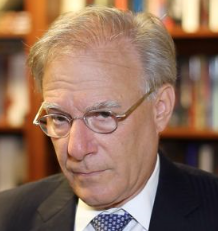
Jonathan Haslam, a British historian of the Anglo-American side of Russian espionage, isn’t sure which is stupider in spy stories – the derring-do of undercover agents or “the grubby reality immortalised by the former MI5/MI6 officer David Cornwall (John le Carré).” So Haslam recommends his own published inquiries into “the back rooms where the pencil has proven infinitely mightier than the sword.” Haslam can’t spell David Cornwell’s name correctly; he also can’t spell the Russian word, dacha. These are childish mistakes; the adult ones are documented here.

Haslam, like Ignatius (right) and the other blurb writers, doesn’t believe le Carré’s point about pointlessness and worthlessness. They see no irony in recommending the believability of their own propaganda over le Carré’s fiction. They refuse to concede what British and Russian professionals have been warning in parallel with le Carré’s MI6 stories.

Sir John Keegan, the British military historian and Defence Ministry adviser (dec. 2012), opens his book Intelligence in War with the reminder:

“In almost none of John le Carré’s brilliantly convincing constructions of spy and counter-spy life does he show an objective outcome for what his characters do…
They were playing a game, and the point was to keep the game going, not to win.”

Intelligence isn’t really produced by spies, Keegan concludes after analyzing cases of intelligence in warfare from the Napoleonic Wars through the American Civil War to several battles in the wars against Germany and Japan, the Cold War with the Soviet Union, and ending with the British-Argentine war over the Falkland Islands.
 
“Intelligence, however good, is not necessarily the means to victory…ultimately it is force, not fraud or forethought, that counts.”

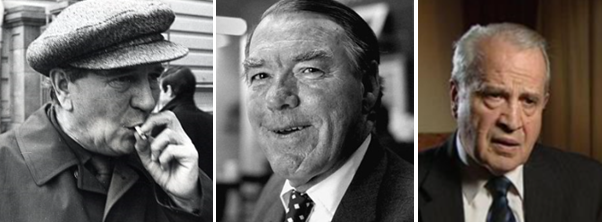
The KGB’s success in recruiting British double agents, Keegan reflected, came out of little, and ended up in next to nothing. Double agents like Kim Philby “had been seduced by the warped logic of Marxism,” in Keegan’s opinion. They caused “in retrospect damage [that] was superficial rather than substantial.”

Philby, Keegan adds, “was a classic example of a spy spying on spies, and the atmosphere of his world is perfectly caught in the novels of John le Carré, which almost exclusively concern the operations of espionage services against each other.”

Left to right: Kim Philby (in Moscow after he defected in 1963); 
John Keegan; Victor Cherkashin.

Victor Cherkashin, the KGB’s most successful counter-intelligence officer and American department chief, retired in 1991; then in 2004, after some of his US spies were caught, he published his memoirs. “While the general public clamours for plots about vital issues of national security,” Cherkashin wrote, “most spying has actually made little difference.” Summing up for his side in the last years of the Cold War, Cherkashin said: “intelligence became a game of penetrating the adversary’s service. It was expensive and superfluous.”

The new le Carré tale is forced by a group of MI6 lawyers out of Peter Guillam, one of George Smiley’s old agents, summoned from retirement on his Breton farm and required to pay £50 per day out of his own pension for a London bedsit during his interrogations. There is only one joke in the story, and that’s an inside one. As he sits in a waiting-room at headquarters, Guillam says to himself: “I thumb a grimy copy of Private Eye and wonder which of us has lost our sense of humour.”

The lawyers are trying to assemble the government’s defence against a wrongful death compensation lawsuit by the surviving children of two agents. One of them, the Smiley agent Alec Leamas, had been shot by East German border guards at the Berlin Wall; the other, an East German woman code-named Tulip, was murdered by a Stasi agent inside the compound of an MI6 safe house near Salisbury (yes, it’s Skripal country where enemy assassins still roam free).

Both of them had been betrayed by one of Smiley’s British colleagues. The details were covered up, and the files removed from the MI6 archive, in order to protect the Stasi assassin. In return, he betrayed his German and Russian agents until the KGB tumbled to him, and he got his deserts.

“What follows is a truthful account , as best I am able to provide it,” Guillam and le Carré open the book, “of my role in the British deception operation, codenamed Windfall.”

Truthfulness is Guillam’s French side; deception is British. Possibly the only leg up which the British services still think they have over their partners against their common adversary.

Le Carré condemns the idea, and he’s been doing that in the Smiley series since 1961. He gives Smiley the semi-final word.

“We were not pitiless, Peter. We were never pitiless. We had the larger pity. Arguably, it was misplaced. Certainly it was futile. We know that now. We did not know it then.”

Le Carré then lets Smiley lower the Union Jack. “Why did I do them?… was it all in the great name of capitalism? God forbid. Christendom? God forbid again…So was it all for England There was a time, of course there was. But whose England?… I’m a European, Peter. If I had a mission—if I was ever aware of one beyond our business with the enemy, it was to Europe. If I was heartless, I was heartless for Europe. If I had an unattainable ideal, it was of leading Europe out of her darkness towards a new age of reason.”

To make sure readers know that Smiley isn’t running a deception operation for Brexit (or is it Remain?), le Carré starts the book himself with an epigraph from one of the foggiest Germans of them all. “Every man is born as many men and dies as a single one – Heidegger (attrib).” By (attrib) le Carré is admitting he doesn’t know for certain. Le Carré readers appear to need the reassurance of doubt repeated over and over again.

Killing Palestine's Future: The Death of Teen Medic, Sajed Mizher

Al-Haq Refutes Israeli Army and Media Claims on the Killing of Volunteer First Responder Sajed Mizher in Dheisheh Refugee Camp

by Al-Haq


April 8,2019
 
On 27 March 2019, the Israeli occupying forces killed 17-year-old Palestinian citizen, Sajed Abd Al-Hakim Hilmi Mizher, a volunteer first responder with the Palestinian Medical Relief Society (PMRS).

Sajed Mizher was fatally shot by the Israeli occupying forces while he was on duty tending to the injured during confrontations between Palestinian youth and Israeli soldiers in Dheisheh Refugee Camp, south of Bethlehem, in the occupied West Bank.

Since Wednesday, 27 March 2019, Al-Haq has carried out comprehensive field investigations into the killing of Sajed Mizher, having collected sworn affidavits from eyewitnesses, prepared a field report of the incident, and collected images and other relevant documents on the case.

This report outlines the facts of the killing, as documented by Al-Haq, and provides contextual information collected in relation to the victim, while it further details the distortion of the truth by the Israeli occupying authorities in relation to alleged footage of the killing distributed by the Israeli army and media, and sheds light on Al-Haq’s conclusions as a result of its detailed documentation and follow-up.

To read Al-Haq's full special report, please click here.


Monday, April 08, 2019

Protecting WikiLeaks' Messenger

Protecting Julian Assange: A Must for People Of Conscience

by Kim Petersen, Dissident Voice 

via Popular Resistance

April 7, 2019

A high-level source within the Ecuadorian state has told Wikileaks that Julian Assange will be expelled within ‘hours to days.’  — WikiLeaks on Twitter.

The Mueller investigation of an alleged collusion between Donald Trump and Russia to influence the outcome of the 2016 presidential election has come to its drawn-out end — or not. US monopoly media reported incessantly on the affair, dubbed Russiagate, despite the paucity of evidence.

The monopoly media has apparently learned little from its misreporting of the possession of WMD by the Saddam Hussein government in Iraq. The wording “alleged” was absent from the reporting as were the WMD in Iraq. Nonetheless, such monopoly media reporting of alleged acts as though they were facts has continued over the use of poison gas by the Assad government in Syria and an assassination attempt on the Skripals in England, attributed to Russian agents. Having not learned, the New York Times and Washington Post seek to perpetuate the Mueller “Witch Hunt,” as Trump has ridiculed it.

In an age when educational institutions call for sharpening critical thinking skills, the corporate and state media scribes show a paucity of critical thinking. It should be apparent that when a journalist, anchor, reporter reports on a claim s/he has an immediate first duty to verify factuality by demanding evidence to back any claims. Do these media people purchase bridges in Brooklyn without checking the deed of ownership?

This media disinformation can have serious consequences, even criminal or genocidal consequences. The monopoly media was heavily complicit in bolstering the US government rush-to-war, basing its reporting on false stories and dubious sources. The war which claimed perhaps upwards of a million Iraqi lives1 was argued to be a genocide by Abdul Haq al-Ani and Tarik al-Ani in their legal tour de force: Genocide in Iraq: The Case against the UN Security Council and Member States (Clarity Press).

In their book, the authors make known the destruction of critical infrastructure (e.g., Iraqi power systems, roads, railroads, and domestic petroleum production) and the commission of war crimes (e.g., bombing civilian defense shelters) by the US and its collaborators.2

Wikileaks published evidence of the war crimes carried out in Iraq when it released the “Collateral Murder” video of US military in an Apache helicopter shooting an unarmed group of adults and children. Julian Assange is the founder of Wikileaks, and as such has been identified as an enemy of the governmental-media-military industrial complex. Sexual allegations were raised against Assange in Sweden, but he was never charged, and the case was closed by Sweden. Assange was on record as willing to go to Sweden and face the allegations, but he could not receive a guarantee that he would not be turned over to the United States. Britain keeps him confined to the Ecuadorian Embassy, what a United Nations panel calls “arbitrary detention,” with the threat of arrest and likely extradition.

I wrote an article last summer that cited reports that Ecuador’s president Lenín Moreno was about to renege on asylum that the government of previous Ecuadorian president Rafael Correa had granted Assange.

Now the specter of Assange being evicted from the Ecuadorian embassy is again at the forefront of the news. The Associated Press wrote that Moreno complained that WikiLeaks was intercepting his communications and invading his privacy. Importantly, AP noted that Moreno provided no evidence for his claims.

WikiLeaks
BREAKING: A high level source within the Ecuadorian state has told @WikiLeaks that Julian Assange will be expelled within "hours to days" using the offshore scandal as a pretext--and that it already has an agreement with the UK for his arrest.https://defend.wikileaks.org/2019/04/03/ecuador-twists-embarrassing-ina-papers-into-pretext-to-oust-assange/ 
9,050

Ecuador twists embarrassing INA Papers into pretext to oust Assange - Defend WikiLeaks

Ecuador twists embarrassing INA Papers into pretext to oust Assange On 26 March, WikiLeaks’ Twitter account announced that President Moreno is being investigated by Ecuador’s Congress for corruption,...
defend.wikileaks.org

Wikileaks issued a tweet: “BREAKING: A high level source within the Ecuadorian state has told @WikiLeaks that Julian Assange will be expelled within “hours to days” using the #INAPapers offshore scandal as a pretext–and that it already has an agreement with the UK for his arrest.”

Assange’s “great crime” is revealing the crimes of the US empire. War is peace. And revealing the crimes of the Empire is deemed criminal by Empire.

Others, not beholden to Empire, but followers-of-conscience are indebted to Assange who as a publisher, performed a massive service to humanity by informing people about acts their governments are involved in, support, or are silent about. WikiLeaks respects “our” right to know. It allows us to know of corruption and criminality in our governments so that society can organize to denounce and put an end to such corruption and criminality.

Nobel Peace Prize laureate Mairead Maguire recognized such service when she wrote the Nobel Peace Committee to nominate Assange:

"Julian Assange and his colleagues in Wikileaks have shown on numerous occasions that they are one of the last outlets of true democracy and their work for our freedom and speech. Their work for true peace by making public our governments’ actions at home and abroad has enlightened us to their atrocities carried out in the name of so-called democracy around the world.
"This included footage of inhumanity carried out by NATO/Military, the release of email correspondence revealing the plotting of regime change in Eastern Middle countries, and the parts our elected officials paid in deceiving the public. This is a huge step in our work for disarmament and nonviolence worldwide."

After criticism for awarding the prize to dubious types such as Barack Obama, the Norwegian Nobel Committee is being pressured from Nobel Peace Prize Watch to adhere to Alfred Nobel’s testament and his anti-militarism. Such an award may be the Nobel committee’s greatest opening to celebrate Alfred Nobel’s legacy and garner new luster for the Nobel Peace Prize’s tarnished reputation.

A Nobel Peace Prize should confer some kind of protection and immunity from further political persecution should Assange leave or be forced to vacate the Ecuadorian embassy — should it not? What kind of embassy would kick out a Nobel Peace Prize winner? And would Britain arrest a current Nobel Peace Prize winner? And would the Trump administration seek to persecute a Nobel Peace Prize winner given that Trump has been pining for his own Nobel, risible as that sounds.

Despite Assange’s sacrifice to humanity, he has ruffled the feathers of the power structure. Again, it is clear that Assange must be protected. The Nobel committee must come through for humanity and for peace.

People power needs to mobilize. If people care deeply about their right to be informed, to be apprised of their government partaking in war crimes, then millions must take to the streets and squares, especially in Norway and Britain.


Notes:
John Hopkins University epidemiologists corroborated an initial study and in the second study reported “654,965 additional deaths in Iraq between March 2003 and July 2006.” [1]
See review. [2]

Kim Petersen is a former co-editor of the Dissident Voice newsletter. He can be reached at: kimohp@gmail.com. Twitter: @kimpetersen.
Read other articles by Kim.

Fantastical, Fanatic: The "TICS" of US-Russo Historical Revisionism

Fanatical History of Russian Intelligence Operations from Princeton

by John Helmer - Dances with Bears


April 8, 2019

Moscow - Jonathan Haslam, an Englishman employed by Anglo-American universities to report Soviet and Russian political, military and espionage history for the past century until now, suffers from a tic. That’s tic as in fanatic, the adjective Haslam applies to everyone who is a target of his history. But look again: Haslam’s tic turns out to be a symptom of the one-eyed man who believes he’s king (professor) in the kingdom (university) of the blind.

Haslam reports that Felix Dzerzhinsky, the Bolshevik founder of the Cheka, was a “former religious fanatic”. The Latvian troops supporting the 1917 revolution were “both fanatical and efficient”. Naum Eitingon, Dzerzhinsky’s staff man in charge of undercover operations, was “a fellow fanatic”. The international Communist movement created by Moscow, the Comintern, “exported a steady stream of fanatical recruits”. The Cheka’s foreign department was organized “fanaticism”. Gleb Bokii, appointed by Vladimir Lenin in 1921 to create a special decryption service, was not only Lenin’s friend, he was also a “fanatic”.

The tic doesn’t stop when the KGB expanded under Nikita Khrushchev’s appointment of Ivan Serov as chairman. According to Haslam, Serov was a “fitness fanatic”.

Haslam makes sure his readers understand his sexual orientation towards Bolshevik and Soviet agents, and also towards their religious orientation if they were Jewish. Here is a short sample of from the long list of male agents with the physical or physiognomic features Haslam considers to be of vital historical interest to record today:

  • Bogdan Korbulov “was ugly – small and fat with a vicious temperament to match”.
  • Alexander Korotkov – “tall, handsome, athletic”.
  • Filipp Golikov – “short, no more than five feet two inches…stocky…completely bald. His face…rather unpleasantly flushed.”
  • Pavel Sudoplatov – “small but well-built, with sparkling black eyes under heavy eyebrows.”
  • Yakov Golos – “a small man with simian features, close-cut frizzy hair, and a dome of a forehead.”
  • Viktor Abakumov – “a good-looking man with ugly ambitions”.
  • Alexei Bosik, another of Haslam’s small men, this one “with a high-pitched voice and jet black hair (hence his nickname ‘Gypsy’).”
  • Dmitry Polyakov – “a pleasing smile”.
  • Nikolai Lysenko – “a miserable-looking man, but a formidable operative”.


Haslam is breaking no new ground to conclude thus that appearances can be deceiving, especially in espionage, so it’s unclear why he pays such repetitive attention to these details.

No woman agent — there are many in this history – is described by Haslam in such detail. Two attract him, however – Litzi Friedmann, Kim Philby’s first Viennese wife, was “unattractive”; judge for yourself from her picture at left.

Then there was Ursula (a London agent), documented as “having a babe [sic] in arms” when she was managing handovers of the vital Anglo-American atomic bomb secrets gathered by Klaus Fuchs.

For Haslam, the rest of the women are so, er, female as not to deserve a description, except for Maria Dobrova; she’s the exception who proves Haslam’s rule.

A military intelligence (GRU) captain code-named Maisy, she was “charming as well as pretty”, according to Haslam. Her successful spying on US plans for invading Cuba in 1961 were ignored by her (male) superiors. Haslam admits that after Dobrova’s identity had been betrayed and the FBI attempted to arrest her at a Chicago hotel in May 1963, she jumped out the window to her death. “Tragic fate”, Haslam calls it almost sympathetically.

What he does not explain is how he knows Dobrova was “pretty” because no photograph of Dobrova has been published. One photograph purportedly of her, which has appeared on the internet, was taken six months after her certain death.


Mr and Mrs Jonathan Haslam: left, Haslam; right, his wife Karina Urbach. 
Urbach’s professional curriculum vitae reveals she is either of German or 
Austro-German origin like Litzi Friedmann , but not whether, like Friedmann, 
she is Jewish. Jewish origins are a special focus in Haslam’s history of the 
Cheka through the purges of 1937-39 and well into the subsequent war period.

Haslam goes overboard on page 139. There he describes two big-nosed agents — Nikolai Aptekar “with a big nose and big ears” and Semyon Semyonov (Aba Taubman) with “a big nose, a large sensuous mouth, and round black eyes set below a receding hairline”. Haslam identifies the latter as Jewish; the religion of the former is omitted. All Christians, Muslims, Buddhists, atheists, and fire-worshippers go incognito in Haslam’s history because they weren’t Jewish.

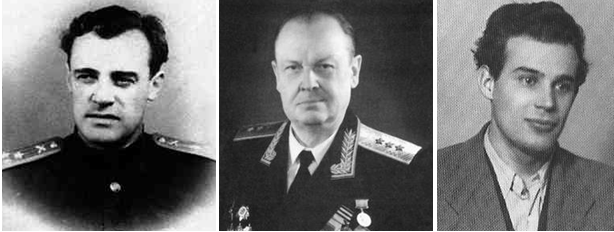
THE MOST HANDSOME RUSSIAN INTELLIGENCE OFFICERS IN HISTORY 


Almost no good-looking Russians have been engaged in intelligence 
work for the past century, reports Haslam. The exceptions he records 
are (left) Alexander Korotkov; centre: Alexander Sakharovsky; right: Vladimir Vetrov

Between 1980 and 1982 Vetrov worked for French intelligence, turning over material on technology theft by the KGB. He was jailed in France for attacking his girlfriend and killing a policeman; deported to Moscow; and executed there in 1985.

It’s difficult to tell from Haslam’s history of Russian intelligence, Soviet and post-Soviet, what his evidence is for successful deception of the Allies by the Russian side, and for what was delusional among the Russians, according to Haslam’s assessment. For example, he claims that during World War II the really effective intelligence gathered by the Moscow spy services came from British, American or other foreign agents who were themselves, in Haslam’s judgement, deluded into spying because they were deluded into believing some form of Marxism or Communism.

When these fellows came to their senses – following the German-Soviet Non-Aggression Pact of August 1939, for example; or Khrushchev’s denunciation of Stalin in February 1956 – Haslam’s conclusion is that intelligence of real value dried up.

Haslam’s explanation for the ineffectiveness of home-grown Russian intelligence is also delusional. That’s to say, no matter how accurate his spies were, Stalin refused to believe them out of his own mental derangement, suspicion of enemy deception, pathological paranoia, etc. Also, Lenin’s delusion about the value of cryptography left the successor agencies dangerously unprepared, according to Haslam, for the code-breaking technologies and computer achievements of the Allied side. That the Soviet Union and Russia survived at all when the Germans, the British and the Americans were so non-delusional, rational, and smart is remarkable in the story Haslam tells; he doesn’t have an explanation for it. Good looks or ugly mugs don’t appear to have been the deciding factor.

The Afghanistan War trick, accomplished by Anglo-American success in code and cipher-breaking and tapping into high-level Russian communications, is an important claim by Haslam. He reports that,

“by 1979 the Americans were able to use the knowledge gained from reading the traffic to trick the Russians into invading Afghanistan by the end of that year.” 

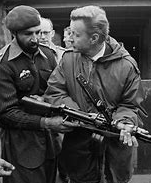
The problem with this is Haslam’s sources. One of the footnotes to the claim is a book Haslam had written himself before this one; another of the footnotes is “confirmed by a knowledgeable source”. A third is a remark of Zbigniew Brzezinski, National Security Advisor to President Jimmy Carter, who reportedly crowed after the Soviet military intervention began in Kabul in December 1979:

“They have taken the bait!” Haslam attributes this to a quote “off-guard in conversation after dinner in my college by the chief military assistant [to Brzezinski], William (‘Bill’) Odom”.

At the White House in those days, and ever since, Brzezinski (right with Osama bin Laden at the Khyber  Pass, 1980)
was a notorious liar in promotion of himself with President Carter, and to the disadvantage of Carter’s other advisors and public critics. 

Haslam has no independent source for judging whether Brzezinski’s remark was true or false; Odom after a bibulous evening is no better than Haslam’s anonymously “knowledgeable source”. Haslam also claims support for his theory of the Afghan War trick from Soviet generals of the time. But their memoirs have been written to settle many scores with the civilian Politburo’s management of the war, including their widespread view that Mikhail Gorbachev had betrayed them.

Haslam also makes the case that the Russian side has repeatedly failed to appreciate the intelligence value of cryptography and cyber operations, compared with the US and British services. The point is an important one, but Haslam has failed to follow through on it. He reports how often the Americans and British were able to use their superior decryption technologies and computing power to break the Russian codes, and read the most secret, command-level communications without the Russians knowing. Curiously, Haslam is silent on what these communications revealed.

Almost certainly — we now know in retrospect from declassified Allied sources — the Russian plans were revealed to be defensive, not offensive, and dominated by the fixed idea that the NATO allies were preparing a surprise attack. The communications also revealed how unprepared and ill-equipped the Russians privately admitted they were; and how uncoordinated their warfighting command-and-control was. In short, what Haslam has left out of the achievement of Anglo-American intelligence is the discovery that the Russian threat in Europe and worldwide was largely the propaganda of the Allied side; and also the discovery that the leadership in Moscow were justified in believing they were dangerously vulnerable to a nuclear first-strike plans of the type Daniel Ellsberg published last year.

Haslam concedes it was US strategy to trick Soviet intelligence into exaggerating its assessments of the likelihood of US attacks in order to “destabilize the economic foundations of the Soviet Union by depriving it of the technologies essential to war while simultaneously ratcheting up the arms race”. He thinks that because the Soviet Union collapsed, this calculation must have been successful. That’s been the basis for US triumphalism since 1991.


Haslam adds to the chorus of triumphalism by declaring the success of 
Anglo-American propaganda and subversion campaigns. “Radio Free Europe, 
Radio Liberty, Deutsche Welle, the Voice of America, the BBC World Service…
finally proved too much for the Soviet system to bear.” Twenty years later, the only 
medium published in Russian to mention Haslam and his book turns out to be Radio Liberty.

In January 2016 it broadcast an interview with Haslam in which he calls the subjects of his book — excluding himself and the Allied side – “absolutely ruthless idealist-fanatics”. Then he followed with this declaration:

“Soviet intelligence was unique in many ways. First of all, it was an instrument of a repressive totalitarian regime, suffering from espionage and the paranoid fear of an imaginary ‘ring of enemies’… During the Second World War and during the Cold War, Western intelligence was very well funded, but in peacetime, as a rule, it experienced chronic underfunding. 

Unlike Soviet Russia, intelligence has never been a priority part of foreign policy in the West. So the KGB and the GRU have always benefited from the Soviet xenophobia and permanent paranoia about the ‘enemy environment.’ ”

Haslam warns that the lesson of his history is urgent for today.

“Old Soviet myths about the ‘enemy environment’ are being revived, the image of the enemy, the role of which was determined by the United States, is being cultivated. I see in this espionage paranoia a transformed form of Stalin’s theory of the strengthening of class struggle in the construction of socialism, which justified repression and the existence of the ‘iron curtain’. The current relapse of espionage in Russia is a sign of its gradual transformation into a closed society.”

Here you have Haslam’s tic. Either he believes in the effectiveness of Anglo-American intelligence to trick the Russians into deluding and bankrupting themselves in unpopular military adventures leading to domestic regime change. Or else he believes Anglo-American intelligence is so unsuccessful, it has failed to prevent its operations in Chechnya, Syria, Ukraine and Venezuela from being neutralized by the Russian counter-attack.

Blind to this contradiction, Haslam’s delusion is that he’s free of the clinical symptoms he has diagnosed on the Russian side. That must be a qualification for admission to the Princeton Institute for Advanced Study, where Haslam – also his wife — are currently institutionalized.

Sunday, April 07, 2019

Rebel Rebel: Canada's False Front Dissident Media

Canada’s Rebel Media Exposed

by William Craddick - Disobedient Media


March 22, 2019

Canada’s The Rebel Media has been causing upset ever since it was founded in 2015. The alternative media outlet is well known for highly controversial coverage of sensitive political topics. But although many outlets have criticized The Rebel and its founder, Ezra Levant, an exhaustive examination of their operations has never been undertaken.

Closer inspection reveals that not only does The Rebel make a business of promoting Islamophobia and anti-Muslim sentiment, it also has deep ties to Canada’s political establishment as well as individuals and organizations with connections to intelligence agencies.

The revelations are certain to generate a discussion about ways in which the new generation of internet-based media outlets should self-investigate and police themselves.

I. Inside The Islamophobia Industry


In August 2017, Press Progress revealed that Ezra Levant was listed as receiving an undisclosed amount of funding from the Middle East Forum (MEF), a Philadelphia-based think tank that “promotes American interests in the Middle East and protects Western values from Middle Eastern threats.” The Center for American Progress has fingered the MEF as one of five key think tanks that are at the center of a network of anti-Islamic organizations. The financial tie between Levant and the MEF seriously calls into question the incentives that The Rebel has in focusing on a message that is heavily anti-immigrant, but is based mainly on emotional appeal rather than intellectual discourse.

Ezra Levant’s ties to MEF are longstanding and not merely financial in nature. Levant has a strong relationship with Daniel Pipes, an anti-Donald Trump conservative who is the founder and president of the Middle East Forum. Levant and Pipes’ history extends beyond the relationship through MEF. Both served as advisors to the anti-Muslim International Free Press Society along with others such as Dutch politician Geert Wilders and Canadian Security Intelligence Service (CSIS) consultant David Harris.

Both Pipes and the MEF hold a number of surprising connections to parties who apparently are involved with the Islamophobia industry for personal benefit. The membership of the Middle East Forum includes individuals who have worked for the Israeli government. Prominent names include MEF’s Israeli office head Daniel Seaman, who headed Israel’s Government Press Office, and Gregg Roman, MEF’s Director and former political advisor to the Deputy Foreign Minister of Israel.

Israel’s involvement in fueling anti-Muslim sentiment comes at a time where large numbers of Jewish people in Europe and the United States are considering migration to Israel over antisemitism fears. It has long been alleged that certain Zionist factions use Islamophobia as a tool to encourage immigration to Israel. Such accusations date back to the 1950’s, when both British diplomats and Iraqi authorities accused Zionists of being involved in a series of bombings that caused over 120,000 Iraqi Jews to flee to Israel during Operation Ezra and Nehemiah. Zionist groups have long played on Jewish concern over mistreatment that intensified due to persecution in Europe during the Second World War. The affiliation also has other practical purposes – it allows Israel to maintain propaganda pressure against geopolitical opponents of the Israel-Saudi nexus such as Qatar and Iran.


Daniel Pipes with a panel at a February 2019 conference 
co-hosted by the MEF on the “strategic threat” of Qatar

Non-state actors such as the Council on Foreign Relations (CFR) also have members who involve themselves with promoting Islamophobia. Daniel Pipes is included on the CFR’s membership roster and broadly networks with other affiliates of the CFR in his industry. Pipes is listed as an author at the Gatestone Institute along with CFR member Elliot Abrams and other luminaries such as John Bolton and Alan Dershowitz. Abrams has been connected to the MEF for decades. In 2000, he participated in the Lebanon Study Group which was jointly sponsored by the Middle East Forum and the U.S. Committee for a Free Lebanon. He is also tied to Daniel Pipes through their mutual membership with The Washington Institute for Near East Policy where Abrams is an outside author and Pipes is an adjunct scholar of the Institute. Organizations such as Swiss Propaganda Research have exhaustively outlined the extensive involvement of the CFR in media corporations across the political spectrum.

The MEF’s extensive connection to nation-states and special interests is indicative of the kinds of influences which drive The Rebel to espouse extreme views that are blamed for causing societal offense.

II. Pervasive Involvement Canada’s Political Establishment


Although The Rebel portrays itself as anti-establishment or an “outside the system” alternative media outlet they are in fact very much the opposite. As a young man, Ezra Levant was mentored by Tom Flanagan, former advisor to Canadian Prime Minister Stephen Harper. Flanagan has previously landed himself in trouble after a number of controversial statements which include a defense of viewing child pornography and calling for an assassination of Wikileaks founder Julian Assange.

Levant’s long time employer Sun News Network was the brainchild born out of a secret meeting between Stephen Harper, Harper’s then-communications director Kory Teneycke, Rupert Murdoch and former Fox Executive Roger Ailes. Teneycke would eventually go on to become the vice-president of Sun News and continues to collaborate with Levant on certain projects. The Rebel was itself largely a more extreme version of the (now defunct) Sun News. Many former Sun News employees have worked with The Rebel including Brian Lilley, Michael Coren, Marissa Semkiw, John Robson, Faith Goldy, and former IDF intelligence officer Jonathan Dahoah Halevi. Although many of these individuals have left The Rebel or been fired, their involvement indicates that the outlet is still very much tied into established interests and is intended to play a role in the mainstream media ecosystem.

The heavy association of former Sun News Network employees with an outlet that has now shifted so far to the right is ironic considering that Sun News was a subsidiary of Québecor Média. Québecor’s CEO, Pierre Karl Péladeau, was once an avowed Marxist who was formerly a leader of the social democrat Parti Québécois. Mr. Péladeau, whose avid social media use has drawn comparisons to President Donald Trump, seems not to mind ideological differences when it comes to working with parties that share a passion for bombastic behavior.

III. Connections To Special Interests


Levant is an old hand at going to war on behalf of his benefactors. While a student at the University of Calgary, Levant interned for the infamous Koch Brothers in Washington D.C. as well as the Fraser Institute in Vancouver, Canada. The Frasier Institute also receives funding from the Koch Brothers. While Levant worked at Sun Media, he authored the book “Ethical Oil” and helped found the Ethical Oil Institute with former director of issues management for Stephen Harper Alykhan Velshi. Ethical Oil engaged in an all out assault on environmentalists concerned about the impacts oil companies were having in Canada and targeted groups such as Tides Canada.

The push came at a time where Koch Industries was heavily lobbying Canada’s government to allow more unrestricted oil sands drilling and cut backs on environmentally-friendly restrictions. Clearly, Levant’s primary concern is not ideological purity but only the size of the paycheck he accepts to espouse particular views.

It is possible that The Rebel may continue to covertly receive funding from the Koch brothers by indirect means. According to research by DeSmogBlog, the Koch family-controlled Knowledge and Progress Fund has funneled millions into the non-profit Donors Trust. An examination of the groups funded by the Donors Trust shows that they have given $1.6 million to the Middle East Forum, who have in turn financed Levant and maintained professional ties to him.

IV. Potential Ties To Intelligence Agencies


The Rebel and their employees have consistently affiliated with individuals who have either an indirect or direct connection to various intelligence agencies. While some of these cases could be written off as circumstantial when viewed alone, in aggregate the various examples raise serious questions about whether or not a longstanding willingness to allow media assets of intelligence agencies to use The Rebel as a platform for propaganda exists.

Former Trump administration official Sebastian Gorka was a one-time contributor to The Rebel and used the outlet to promote propaganda including a defense of US air strikes in Syria which were unpopular with Donald Trump’s generally anti-foreign intervention voter base. Gorka, who has been lambasted for his ties to neo-nazi militia groups in Hungary and faced criminal charges there, was previously a member of the British Army’s 22 Intelligence Company of the Intelligence and Security Group which operated under the auspices of NATO. In January 2019, Gorka’s relationship with the Integrity Initiative, a British propaganda operation supported by UK’s military intelligence and Foreign Office, was exposed during a series of leaks online.

The Rebel also previously employed controversial media figure Lauren Southern until March 2017. Southern is known for making offensive media content that has lead her to be the target of intense criticism. Her intended career path had been to become a member of Canadian military intelligence, but Southern’s application process was interrupted after Ezra Levant noticed her at a Toronto conference posing challenging questions on oil drilling and pipelines to his speakers.


Video posted by Southern to YouTube on Jul 3, 2017 
discussing The Great Replacement

Although Southern denies links to extremism, she has directly referenced concepts such as “The Great Replacement” in her videos. The “Great Replacement” is a far-right ideology that focuses on what they describe as the replacement of the white, Christian population of Europe by non-Europeans.

The Great Replacement was directly referenced by Christchurch shooter Brenton Tarrant, who named a manifesto he released after the ideology. Tarrant travelled extensively to locations such as Pakistan, North Korea, Turkey, parts of Africa, Portugal, Spain, France, Afghanistan and Xinjiang, China while ostensibly unemployed. Turkish state-owned media source TRT World directly accused Tarrant of entering the country in 2016 with the intent “to carry out a terror attack and/or an assassination” in connection with the coup attempt against President Recep Tayyip ErdoÄŸan that same year.

There are also indications that The Rebel has had no issue associating with other media outlets accused of having been infiltrated by intelligence services. Former talk radio station LBC and Daily Mail employee Katie Hopkins spent one year with The Rebel before departing in December 2018. Hopkins lost her previous positions after attending the Defend Europe initiative alongside one-time Voice of Europe writer Peter Sweden. Defend Europe unsuccessfully attempted to disrupt ships carrying migrants into Europe via the Mediterranean before retiring to the Alps for what could reasonably be interpreted as an apparent vacation. Sweden, whose real name is Peter Imanuelsen, has since disavowed Voice of Europe and with the help of his family blown the whistle on infiltration of the outlet by British intelligence services. Although The Rebel seems to have removed most references to Voice of Europe from their social media, reports from outlets such as the Guardian and Bellingcat reveal concerted work the two outlets have done to mutually promote various issues and stories to news consumers online.

V. Concerning Collection Of User Data


An examination of The Rebel’s website reveals that they are utilizing software company NationBuilder. NationBuilder provides database services to clients which allows them to expand their reach to target larger audiences. Political figures such as Emmanuel Macron and Donald Trump have both used NationBuilder’s services to request voter files, as did the Brexit campaign. But in the wrong hands, such information could be weaponized to build databases of online users who might be considered “extremist” or dangerous. Anyone who accesses The Rebel’s website may find that at least some portion of their information is being logged and retained.

Considering the worrying ties Levant and The Rebel have to various intelligence agencies and political parties it is possible that such information could be used to monitor and track the activity of anyone fooled into following The Rebel due to their espousal of extreme anti-migrant and right wing views. Much like how the infiltration of Voice of Europe raised fears that British intelligence was monitoring and even weaponizing populist and nationalist followers for political ends, the affiliations of certain individuals with The Rebel raise similar concerns.

VI. Conclusion


The deep ties held by Levant to organizations who make a business out of promoting Islamophobia, his longstanding work with the political establishment of Canada and various special interests undermine the journalistic integrity of his outlet. The continual involvement of intelligence services-tied individuals with Levant and The Rebel is also a worthy cause for self-reflection and worry in alternative media. With political division continuing to intensify since 2016, there is an ever-increasing need to self-regulate the community and hold each other accountable. When individuals like Ezra Levant are allowed to establish large operations that involve many prominent media figures who are often associated with nationalism or populism, the skeptical regard with which more mainstream organizations and independent news consumers view these ideologies and individuals cannot be said to be unmerited. Perhaps it is time all of us to strive to be better.

Making Venezuelans Scream

Make the Economy Scream

by Moviementa Production


April 7, 2019

A journalist travels to Venezuela trying to understand why the politicians in his crisis-plagued country debate whether there is enough toilet paper in Caracas. 

Through several trips, which bring him from the shanty towns to the borders of Colombia and back to Europe he discovers a reality that differs from the mainstream media narrative.


By far the best in depth information I have found about the real situation in Venezuela. Everyone must see it.


~ Birgitta Jónsdóttir


More info: maketheeconomyscream.com/en/