Wednesday, May 08, 2019

Gorilla Radio with Chris Cook, T.J. Coles, David Rovics, Janine Bandcroft May 9, 2019

This Week on GR

by C. L. Cook - Gorilla-Radio.com


May 9, 2019

True to this time of lies, "free" is the name given to the attempt to capture and enslave the people of the World, while the word "trade" serves as a wry misnomer, meant to convince us the artful deals of the masters of capital are both consensual, and somehow mutually beneficial.

Together, 'Free Trade' is a concept Orwell would recognize, and cry laughing at the bitter predictability of.

Dr. T.J. Coles is an Associate Researcher at the Organisation for Propaganda Studies, a columnist for AxisOfLogic.com, and author.

Listen. Hear.

Coles’ articles too appear online at CounterPunch, Truthout and Z Magazine, among other places, and his many book titles include: ‘Real Fake News’, Britain’s Secret Wars’, ‘The Great Brexit Swindle’, ‘Manufacturing Terrorism: When Governments Use Fear to Justify Foreign Wars and Control Society’, and his latest, ‘Privatized Planet: ‘Free Trade’ as a Weapon Against Healthcare, Democracy and the Environment’.

Journalist and filmmaker, John Pilger says, "In this meticulously sourced book, T.J. Coles breaks down the facade of “free trade” and its army of acronyms, spelling out the threat from an extremism that wants your healthcare, wages, pensions and much more. You have been warned."

T.J. Coles in the first half.

And; readers of Marx, Karl not Groucho, remember the term, "Après moi, le déluge!" It was meant by Marx to indicate the contempt in which all capitalists must hold the life of the lowly labourer. How else can captains of industry masticate and disgorge the legions required to maximize profit, and relentlessly grow the economy? But, endless progress demands a certain, strategic short-sightedness, a disregard for the consequences of one's actions. It's a wilful blindness increasingly difficult to maintain today, where King Louis XV's phrase, "After me, the deluge" now belongs to us all and encompasses the whole of the World: "Après nous le déluge!" After US, the flood.

Inveterate American activist and singer/songwriter, David Rovics has for decades toured the World bringing his message of revolution and evolution for and to the masses. He's shared the stage with the greats of the age: Pete Seeger, Anne Feeney, Joan Baez, Chumbawamba, Billy Bragg, Attila the Stockbroker, and countless others. David is too a frequent essayist, and now a regular columnist at Dissident Voice, a podcaster, and Danish barista... Safe to say he's done a lot of things, but now David Rovics is set to enter the least illuminated of all Canada's dark corners, Ottawa, Ontario, (beatless heart of a heartless, beaten nation) for an evening of music, fun, and class struggle.

David Rovics, before the flood in the second half.

And Victoria-based activist and long-time Gorilla Radio contributor, Janine Bandcroft will be here at the bottom of the hour with the Left Coast Events Bulletin of some of the good things to be gotten up to in and around our town in the coming week. But first, T. J. Coles and Privatized Planet: Free Trade As a Weapon Against Democracy, Healthcare and the Environment.
Chris Cook hosts Gorilla Radio, airing live every Thursday between 11-Noon Pacific Time. In Victoria at 101.9FM, and on the internet at: http://cfuv.uvic.ca.  He also serves as a contributing editor to the web news site, http://www.pacificfreepress.com. Check out the GR blog at: http://gorillaradioblog.blogspot.ca/

Bridging the Intra-Palestinian Divide

The Two Narratives of Palestine: The People Are United, the Factions Are Not

by Ramzy Baroud - PalestineChronicle.com


May 8, 2019

The International Conference on Palestine held in Istanbul between April 27-29 brought together many speakers and hundreds of academics, journalists, activists and students from Turkey and all over the world.

The Conference was a rare opportunity aimed at articulating a discourse of international solidarity that is both inclusive and forward thinking.

There was near consensus that the Boycott, Divestment and Sanctions (BDS) movement must be supported, that Donald Trump’s so-called ‘Deal of the Century’ must be defeated and that normalization must be shunned.

When it came to articulating the objectives of the Palestinian struggle, however, the narrative became indecisive and unclear.

Although none of the speakers made a case for a two-state solution, our call for a one democratic state from Istanbul - or any other place outside Palestine - seemed partially irrelevant. For the one state solution to become the overriding objective of the pro-Palestine movement worldwide, the call has to come from a Palestinian leadership that reflects the true aspirations of the Palestinian people.

One speaker after the other called for Palestinian unity, imploring Palestinians for guidance and for articulating a national discourse. Many in the audience concurred with that assessment as well. One audience member even blurted out the cliched question: “Where is the Palestinian Mandela?”

Luckily, the grandson of Nelson Mandela, Zwelivelile "Mandla" Mandela, was himself a speaker. He answered forcefully that Mandela was only the face of the movement, which encompassed millions of ordinary men and women, whose struggles and sacrifices ultimately defeated apartheid.

Following my speech at the Conference, I met with several freed Palestinian prisoners as part of my research for my forthcoming book on the subject.

Some of the freed prisoners identified as Hamas and others as Fatah. Their narrative seemed largely free from the disgraced factional language we are bombarded with in the media, but also liberated from the dry and detached narratives of politics and academia.

“When Israel placed Gaza under siege and denied us family visitations, our Fatah brothers always came to our help,” a freed Hamas prisoner told me.
“And whenever Israeli prison authorities mistreated any of our brothers from any factions, including Fatah, we all resisted together.”

A freed Fatah prisoner told me that when Hamas and Fatah fought in Gaza in the summer of 2007, the prisoners suffered most.

“We suffered because we felt that the people who should be fighting for our freedom, were fighting each other. We felt betrayed by everyone.”

To effectuate disunity, Israeli authorities relocated Hamas and Fatah prisoners into separate wards and prisons. They wanted to sever any communication between the prisoners’ leadership and to block any attempts at finding common ground for national unity.

The Israeli decision was not random. A year earlier, in May 2006, the leadership of the prisoners met in a prison cell to discuss the conflict between Hamas, which had won the legislative elections in the Occupied Territories, and the PA’s main party, Fatah.

These leaders included Marwan Barghouthi of Fatah, Abdel Khaleq al-Natshe from Hamas and representatives from other major Palestinian groups. The outcome was the National Conciliation Document, arguably the most important Palestinian initiative in decades.

What became known as the Prisoner's Document was significant because it was not some self-serving political compromise achieved in a luxurious hotel in some Arab capital, but a genuine articulation of national Palestinian priorities, presented by the most respected and honored sector in Palestinian society.

Israel immediately denounced the document.


Instead of engaging all factions in a national dialogue around the document, PA President, Mahmoud Abbas, gave rival factions an ultimatum to either accept or reject the document in full. The spirit of the unity in the prisoners' initiative was betrayed by Abbas and the warring factions. Eventually, Fatah and Hamas fought their own tragic war in Gaza the following year.

On speaking to the prisoners after listening to the discourse of academics, politicians and activists, I was able to decipher a disconnection between the Palestinian narrative on the ground and our own perception of this narrative from outside.

The prisoners display unity in their narrative, a clear sense of purpose, and determination to carry on with their resistance. While it is true that they all identified as members in one political group or another, I am yet to interview a single prisoner who placed factional interests above national interest. This should not come as a surprise. Indeed, these men and women have been detained, tortured and have endured many years in prison for being Palestinian resisters, regardless of their ideological and factional leanings.

The myth of the disunited and dysfunctional Palestinian is very much an Israeli invention that precedes the inception of Hamas, and even Fatah. This Zionist notion, which has been embraced by the current Israeli Prime Minister, Benjamin Netanyahu, argues that ‘Israel has no peace partner’. Despite the hemorrhaging concessions by the Palestinian Authority in Ramallah, this claim has remained a fixture in Israeli politics to this day.

Political unity aside, the Palestinian people perceive ‘unity’ in a whole different political context than that of Israel and, frankly, many of us outside Palestine.

‘Al-Wihda al-Wataniya’ or national unity is a generational quest around a set of principles, including resistance, as a strategy for the liberation of Palestine, Right of Return for refugees, and self-determination for the Palestinian people as the ultimate goals. It is around this idea of unity that the leadership of Palestinian prisoners drafted their document in 2006, in the hope of averting a factional clash and keeping the struggle centered on resistance against Israeli occupation.

The ongoing Great March of Return in Gaza is another daily example of the kind of unity the Palestinian people are striving for. Despite heavy losses, thousands of protesters insist on their unity while demanding their freedom, Right of Return and an end to the Israeli siege.

For us to claim that Palestinians are not united because Fatah and Hamas cannot find common ground is simply unjustified. National unity and political unity between factions are two different issues.

It is important that we do not make the mistake of confusing the Palestinian people with factions, national unity around resistance and rights with political arrangements between political groups.

As far as vision and strategy are concerned, perhaps it is time to read the prisoners’ National Conciliation Document’. It was written by the Nelson Mandelas of Palestine, thousands of whom remain in Israeli prisons to this day.

Ramzy Baroud is a journalist, author and editor of Palestine Chronicle. His last book is ‘The Last Earth: A Palestinian Story’ (Pluto Press, London). Baroud has a Ph.D. in Palestine Studies from the University of Exeter and was a Non-Resident Scholar at Orfalea Center for Global and International Studies, University of California Santa Barbara. His website is www.ramzybaroud.net.

Tuesday, May 07, 2019

Seeing Julian: WikiLeaks Editor-in-Chief Kristinn Hrafnsson/Pamela Anderson Report on First Visit to Belmarsh

UK: 'We need to save his life' - Pamela Anderson after visiting Assange in prison

by RT


May 7, 2019

Actress Pamela Anderson spoke of WikiLeaks founder Julian Assange's innocence and the need to 'save his life' while speaking alongside WikiLeaks Editor-in-Chief Kristinn Hrafnsson in London on Tuesday, moments after they were Assange's first social visitors since he was detained in London's Belmarsh prison for skipping bail.


Video ID: 20190507 013 

Video on Demand: http://www.ruptly.tv 

Contact: cd@ruptly.tv 

Twitter: http://twitter.com/Ruptly 

Facebook: http://www.facebook.com/Ruptly


Dissecting a Failed Media-Assist in Venezuelan Coup Attempt

Failed ‘Coup’ a Fake Corporate News Story Designed to Trick Venezuelan Soldiers—and US Public

by Dave Lindorff  - FAIR


May 7, 2019


 Featured image: Venezuelan opposition figures Juan Guaidó and Leopoldo López calling for a military mutiny.

After days of breathless reporting in the US media about public and military support for Venezuelan President Nicolás Maduro collapsing, and about an April 30 coup by presidential poseur Juan Guaidó, we now know the truth: The whole thing was a fraud, staged at the instigation of Washington in hopes that the Venezuelan people and rank-and-file troops would fall for the trick and think an actual coup was underway.

We also know, from an excellent May 2 report by Michael Fox in the Nation magazine, that the US mainstream media and its reporters in country were promoting that dangerous fraud.


CNN ran Juan Guaido’s video, in which he falsely claimed 
to be “in the La Carlota air force base.”

Take CNN. In its reporting on the “uprising” announced by Guaidó on Tuesday, April 30, it ran a video from social media depicting Guaidó, accompanied by opposition leader Leopoldo López, along with some armed men in uniform, said to be military defectors, standing behind them. The video claimed they were on the La Carlota military airfield in eastern Caracas, which Guaidó said had been “liberated.”

According to CNN, he was addressing “thousands of supporters” on the scene, urging the rest of the Venezuelan military to join the coup and oust the “usurper” Maduro.

But as Michael Fox and other observers noted, CNN didn’t show those “thousands” of supporters—because there were none. Nor did the cable network explain in its report that Guaidó and Lopez were not actually at the airbase, but rather were standing on a highway overpass outside the base—which was, in fact, never in rebel hands at all.

Guaidó and his “deserting” soldiers quickly left the scene as government troops headed their way, with López later that day holing up in the Chilean and eventually the Spanish embassy, seeking asylum for himself and his family, and with some two dozen soldiers who had deserted in support of Guaidó asking for asylum in the Brazilian embassy.

There are two possibilities here: Either CNN’s US-based editors were lied to by their reporters in Caracas, or they were well aware that their story of the takeover of a military airfield, along with reports of thousands of protesters on the scene in support of Guaidó, was a hoax.

It’s not hard to imagine the latter being the truth, because CNN earlier was caught fraudulently reporting that Venezuelan troops had set aid trucks stopped at the Columbian border afire, when in fact the fires had been started by anti-Maduro protesters. Though this truth was proven by other reports and video, CNN never corrected its false story in that case, nor did it discipline its on-the-scene reporters.


Alan MacLeod (5/6/19) was one of several on Twitter 
who noted the absurd errors in CNN‘s May 5 report on Venezuela.

CNN’s standards of accuracy were further discredited by its May 5 claim that

pressure is mounting on Maduro to step down, following elections in January in which voters chose opposition leader Juan Guaidó over him for president.

Six reporters were credited for the story that contained this line, which has almost as many errors: Guaidó was not even a candidate in the May 2018 (not January 2019) presidential elections; Maduro won that race with 68 percent of the vote, a credible total given the opposition’s boycott of the balloting. Guaidó was chosen not by voters but by the National Assembly—which has been suspended by the Venezuelan Supreme Court—and ultimately by the Trump administration. As for “pressure…mounting on Maduro,” that seems like a dubious reading indeed of the post-coup attempt political terrain.

After much social media ridicule, CNN corrected the line, keeping in the bit about mounting pressure, but acknowledging that Guaidó “declared himself interim president.”

The New York Times hasn’t done any better. On the day of the fake coup, the Times reported, in an unusual unbylined article (at the end there was a note saying only that reporting was contributed by Isayen Herrera, Nicholas Casey, Anatoly Kurmanaev, Ana Vanessa Herrero, Rick Gladstone and Katie Rogers) headed “Venezuela Crisis: Guaidó Calls for Uprising as Clashes Erupt”:

“Today, brave soldiers, brave patriots, brave men attached to the Constitution have followed our call,” Mr. Guaidó said in a video posted on social media, speaking from Generalissimo Francisco de Miranda Air Base, a military airport in Caracas known as La Carlota.

The “newspaper of record” either made no effort to check its reporters’ “facts,” or went along deliberately with the charade that Washington’s hand-picked “legitimate president” Guaidó was actually speaking from a “liberated” military airfield, when he was really only standing on a highway overpass outside the airfield, which itself was never even contested, remaining in government hands throughout the day.

To compound the journalistic felony, the Times ran a Reuters wire photo showing Guaidó speaking to a street full of supporters, purportedly taken that day, but clearly not depicting where he had made his call for a coup, when he had only the camera to address, though incautious readers might well have assumed that is what the photo showed.

Did editors at the Times’ home office in New York double-check on the reporters’ claims before running their incendiary report of the capture of a government military airbase? Why didn’t one of the paper’s many reporters and photographers in Caracas high-tail it to the La Carlota base to get a firsthand report and video of the first victory in this so-called coup attempt?


This New York Times article’s claim (4/30/19) of “a predawn 
takeover of a military base in the heart of the capital, Caracas,” remains uncorrected.

In another linked story published the same day, this time authored by Nicholas Casey, the Times again reported falsely, writing:

It was the boldest move yet by Juan Guaidó, Venezuela’s opposition leader: At sunrise, he stood flanked by soldiers at an air force base in the heart of the capital, saying rebellion was at hand.

Clearly Casey was either making it up or, more likely, had been too lazy to go (or to dispatch one of his colleagues to go) to the airport to confirm the veracity of Guaidó’s “bold” claim. But this is not just fraudulent reporting, it is dangerous and incendiary propaganda. Its publication could have, and perhaps did, lead hundreds of coup backers to rush to the airport, where they were met by the Venezuelan military, with a number of protesters reportedly being injured in the ensuing confrontation.

Casey, in his article, writes that “by the end of the day,” it was clear that Guaidó had failed to precipitate a successful coup, but he doesn’t say what had been clear much earlier that day: that the airport had never been captured at all, and that Guaidó had not spoken from a liberated airfield, but from a bridge outside the airfield. In fact, Casey must have known, or should have by day’s end, and well before the Times’ deadline, that his earlier report on Guaidó’s call-to-arms had been based on fake information.

Instead, he was still pretending his story was fact-based, and presented as if he had been witness to the events he was reporting on. Even though his article notes that “by day’s end, news spread of another blow to the opposition: Leopoldo López, the political prisoner who heads Mr. Guaidó’s party, had fled into the Chilean Embassy, along with his wife, Lilian Tintori,” he continued with the fiction that an airbase had been captured and that the military was falling apart, writing:

The events also cast a harsh new light into the division within the armed forces, which puts Venezuela in a precarious position as the country’s political crisis deepens. While the highest ranks of the military dig into their support for Mr. Maduro’s government, many rank-and-file soldiers appear willing to defy their commanders and come to the aid of the opposition.

In fact, far from “many” soldiers deserting, it may have been no more than 25 men in uniform who defected in support of Guaidó, and they, as was well known by the time Casey filed his article, had sought asylum in the Brazilian embassy, a devastating sign of his failed call-to-arms, a reality which Casey didn’t bother to mention in his article. (Sitting at home on the evening of April 30 and reading reports in publications like Telesur English and Al Jazeera, I was able to learn about this and about Lopez’s seeking asylum with his family in the Spanish embassy, so surely Times factcheckers should have also been able to get that information challenging Casey’s reporting.)

Interestingly, Casey did quote the Maduro administration as stating late Tuesday night in a public TV broadcast that the La Carlota airport had never been threatened or taken over by defecting soldiers. Instead of verifying it as fact, all Casey did was cite Maduro’s denial, hinting that maybe it had not actually been “liberated.”

The Casey article, still available online, contains a correction at the end, dated May 1:

Because of an editing error, an earlier version of this article misidentified the CNN program on which Mr. Pompeo made his remarks about plans for Mr. Maduro to fly to Cuba. It was The Situation Room With Wolf Blitzer, not State of the Union.

But as of this story’s May 7 posting date, no correction has yet been made by the Times concerning the article’s fundamental and far more serious errors of reporting, such as there had been “a predawn takeover of a military base in the heart of the capital,” or that Guaidó had made his video appeal for a rebellion from that “liberated” airbase.

How does any self-respecting news organization allow such abysmally inaccurate reporting to remain this long online uncorrected? The only possible answer is that Casey, and the other in-country reporters who were said to have contributed to his bylined piece (Isayen Herrera, Ana Vanessa Herrero, Anatoly Kurmanaev and Katie Rogers), were giving the New York Times exactly the propaganda piece that they and the coup plotters in Washington wanted.

Manning Stands Firm Despite Court Coersion to Testify Against Assange

After nearly two months in jail, Chelsea Manning submits powerful appeal for release

by Niles Niemuth  - WSWS


7 May 2019

Betraying my principles is a much worse prison than the government can construct”

Whistleblower and political prisoner Chelsea Manning submitted an appeal Monday to the federal court in the Eastern District of Virginia asking for her release from jail.

Manning has been held in the Alexandria City Jail since March 8. She was detained for contempt of court after she refused to testify before a grand jury impaneled to bring frame-up charges against WikiLeaks publisher and journalist Julian Assange.

“She is convinced that to cooperate with this grand jury would be a betrayal of her beliefs about the grand jury process, and this grand jury process in particular,” Manning’s attorneys told the court in a written statement on Monday.

Chelsea Manning [Credit: Sparrow Media]

“She is prepared to suffer the consequences for her beliefs, and it should surprise nobody to find that she has the courage of her convictions.”

Manning’s eight-page statement is a powerful declaration of political principles. She is being targeted by the Trump administration as part of a nearly decade-long vendetta against her and Assange for exposing the US government’s war crimes in Iraq and Afghanistan.

“After two months of confinement, and using every legal mechanism available so far, I can—without any hesitation—state that nothing will convince me to testify before this or any other grand jury for that matter,” Manning declared. 
“With each passing day my disappointment and frustration grow, but so too do my commitments to doing the right thing and continuing to refuse to submit.”

“The idea I hold the keys to my own cell is an absurd one, as I face the prospect of suffering either way due to this unnecessary and punitive subpoena: I can either go to jail or betray my principles,” Manning stated.
“The latter exists as a much worse prison than the government can construct.”

Manning served seven years of a 35-year sentence in a military prison after she was convicted of leaking classified and sensitive documents exposing US war crimes to WikiLeaks in 2010. Most notably, she released the “Collateral Murder” video, which shows the 2007 attack by US Apache helicopter gunships in Baghdad that killed two Reuters journalists and at least a dozen Iraqis.

While Manning has not been charged or convicted of any new crime, she has been treated as a convict, held in the solitary confinement for her first 28 days in jail. UN Special Rapporteur on torture, Juan E. Méndez, has declared that prolonged isolation amounts to torture when used as a punishment, in pre-trial detention, indefinitely or when the person already suffers from a mental disability.

As her attorneys have noted in a previous appeal for her release, Manning indicates that she has already given the government everything she knows about her interactions with WikiLeaks and Assange during trial in 2013 and that any testimony before the grand jury would be duplicative. The real purpose of the government’s efforts to force her to testify before the grand jury is to undermine her testimony as a defense witness for Assange.

Manning’s statement describes the terrible impact of the enforced isolation on her mental health, which has been compounded by the year of solitary confinement she suffered when she was imprisoned by the Obama administration.

“I experienced difficulty keeping attention on anything, sometimes referred to as a ‘dissociative stupor.’ Thinking and concentrating get harder. Anxiety, frustration with minor things, irritation, and a spiraling inability to tolerate each symptom take hold,” she explains. 
 “At one point I started feeling ill during a short visit in a non-contact visit booth while struggling to have even a normal conversation. After weeks of under-stimulation, I became nauseated with vertigo and vomited on the floor, ending my visit prematurely.”

Making matters worse, Manning also noted that she has been denied access to necessary medical attention for a recent gender reassignment surgery, putting her at risk for permanent injury or a potentially deadly infection. She has also been denied regular access to sunlight, must keep her mind busy with puzzles without access to good literature or friends, and has gained 20 pounds since March due to poor nutrition.

Manning is taking a courageous stand to defend Assange, who was snatched from the Ecuadorian embassy in London on April 11 by British police after his asylum was illegally cancelled by the government of Lenin Moreno.

Assange was sentenced to 50 weeks in prison for bail jumping over spurious sexual assault allegations and now faces rendition to the United State. He faces an initial charge of attempted computer hacking that carries five years. He is accused of seeking to assist Manning to crack a password so that she could conceal her identity while using military computer networks.

Once in the United States, it is certain that the Justice Department will unseal further charges against Assange, including under the Espionage Act, which opens him up to the possibility of the death penalty.

“I believe this grand jury seeks to undermine the integrity of public discourse with the aim of punishing those who expose any serious, ongoing, and systemic abuses of power by this government, as well as the rest of the international community,” Manning explained.

“Therefore, participating in this fishing expedition—which potentially exposes other innocent people to the grand jury process—would constitute an unjustifiable and unethical action. Now, after sustaining serious psychological injury from my current confinement, I don’t wish to expose any other person to the trauma and exhaustion of civil contempt or other forms of prison or coercion.”

Manning noted her appreciation for the dozens to hundreds of daily letters of support, which provide her with “warmth and strength” from “colleagues, educators, lawyers, diplomats, activists, factory workers, veterans, journalists, union leaders, store clerks, gardeners, chefs, airplane pilots, and politicians…”

While Manning and Assange are cruelly pursued by the US government for their efforts to expose the truth, they have won the support and admiration of millions of workers and others around the world who will fight for their freedom.

Monday, May 06, 2019

Remembering Pete Seeger, Movement Musician

Pete Seeger Was A Movement Musician

by David Rovics - Dissident Voice


May 1st, 2019

If Pete Seeger were still with us, how would he be celebrating his 100th birthday? Probably by chopping wood.

On May 3rd, 1919, Pete Seeger was born. Many people in the more musical regions of my social circles are currently celebrating his life, for the occasion of what would have been his 100th birthday, had he lived past the age of 94.

Among people I know, so much has already been said about Pete, that I’m hesitant to say any more. But on fairly obsessive reflection around the subject of Pete Seeger myself in recent days, I realize I do have thoughts that might be worth sharing, despite the quantity of verbiage already cluttering the web.

So much has been said and written about him over the course of the past 83 years or so, it’s very easy to blend fact with fiction.

This is perhaps especially true for people who knew him, but only a little.

Does reading a book and having a short conversation with the author give you much more insight into the subject of the book than you would have had without that conversation? Probably not. But it’s been six years since Pete died, and I’m six years older. And I’ll just say up front here that it’s not my deeply intimate familiarity with Pete that makes me feel like I have something to say here — I barely knew the guy. But we had a lot of mutual friends and acquaintances, and most importantly, we shared the same profession — I am, and he was, a musician, among other things, but specifically a musician with deep social movement roots. He was a fish swimming in a sea of social movements throughout his life, and he navigated the waters as best he could, to be a helpful, musical part of those movements.

Anyone who visited him at his home mentions the wood-splitting right away. I never visited him at home or split wood with him, though I did sweep a floor with him once. I know how the wood-splitting thing can be, though, having grown up not far away from Beacon, New York, myself, in a wood-heated home in Connecticut, very close to another river that had, like the Hudson, long ago also been poisoned by industry — the Housatonic. You split a lot of wood to keep a wood stove hot through a northeastern winter. Or up in the hills, through the spring and fall, as well. Pete was reputed to live a very simple life, to the extent that he could manage it, as a relatively famous, at times chart-topping musician.

As far as I know, he never resented the fact that he did well enough as a musician to tour the world and feed his family. But Pete talked on so many occasions in so many ways about how profoundly uncomfortable he was with all the attention. When I was younger I assumed this was just him being humble — that secretly, he really enjoyed the fame and wealth. But later, on reflection, it’s very clear to me that he meant what he said — and pretty much everything he did in his life as a musician and organizer reinforced his words.

Pete certainly believed in the power of music, and surely wished music, including his music, would be used in many different circumstances — for the love of music, and for movement-building and community-building of all kinds. But throughout his life, though the spotlight repeatedly kept turning to him, among others, he was working for the movement.

By no means am I suggesting that Pete was anything less than a great musician, musical interpreter, and songwriter — he was all three. But his desire to just be an effective, musical part of a social movement, and not to be a shining star floating somewhere above the movement, was real.

When Pete Seeger was conceived, millions of people were slaughtering each other in Europe in the First World War. When Pete was a baby, the radical labor movement in the form of the IWW was being brutally destroyed in a concerted national campaign of arson, lynchings, arrests and deportations of union activists, carried out by the federal government. By the time Pete was a preteen, the Great Depression was in full swing, and the heir to the IWW, the Congress of Industrial Organizations, was organizing the working class, this time with much greater success than the IWW had had, partially because the federal authorities under FDR were sympathetic to unions. The CIO was led in no small part by Communist Party members. At that time, when people talked about the labor movement, the term was as inclusive as the term “the movement” later became in the Sixties. It was certainly meant to include the farmers and the unemployed, and many others.

By the time he was 17, with the Great Depression still raging, Pete was playing his banjo for the movement, back in the Thirties. Pete and I had a mutual friend named Bob Steck. Bob used to tell me about the movement in the 1930’s that he was an active part of, being a few years older than Pete (and also long dead). The Communist Party of the day focused a lot of energy on culture, what Bob called “the culture department.” He talked about how while organizing workers into unions was a major emphasis for Party organizers and sympathizers, of similar emphasis was the importance of communication — and using music and theater and other forms of culture to do that.

The CIO and the Communist Party were building on ideas and tactics that were well-worn, used with fairly spectacular success by the IWW, with its most well-known cultural import from Sweden, Joe Hill. When Pete Seeger was taking the subway around New York City singing for multiple labor and Communist Party events per day back when he was a teenager, Joe Hill had only been executed a little more than twenty years earlier. A typical day in the city Pete lived in at that time involved hundreds of thousands of people in the streets, protesting against capitalism, often being savagely beaten by police. When Pete was a teenager, many of his friends — including the aforementioned Bob Steck — went off to Spain, volunteering to fight alongside the anarchists there against fascism. Many of Pete’s friends never returned home. Many more would die in the far bigger, global war that occupied much of Pete’s twenties.

In the sea that Pete swam in, he was already feeling very lucky to be alive by the time he was a young adult. A child of privilege, but not living in what you might call a privileged time or a privileged position in it, partially by choice, but in any case, long before many other people would be thinking of mortality, Pete’s friends were dying, fighting for a cause they, and he, passionately believed in. Call it what you will, Pete disliked labels for his politics as much as he disliked labels for his music. But something involving egalitarianism, liberty, dignity, where everybody has a place to live, enough food, health care, clean water, etc. — that sort of thing.

He would see the lives of many of his friends and colleagues ruined by McCarthy’s anti-communist witch hunt, but Pete was, it seems to me, emotionally well-disposed to weather that storm, since he hadn’t been looking for the stardom he had just then been experiencing with his first big hits in the early 1950’s. He was blacklisted from TV and from lots of other venues, but he could still get gigs on the college campuses. Back during the blacklist, my mom was a student at Oberlin College, which is where she first heard a Pete Seeger concert.

As the Civil Rights movement got off the ground, Pete was there, naturally, going where the movement was. Same for the movement against the war in Vietnam, the movement against nuclear weapons and nuclear power, the environmental movement more broadly, the movement against intervention in Latin America, against invading Iraq, and, not long before he died, even Occupy Wall Street.

But it was natural for Pete to do these things, not because he was such a special guy with a heart of gold or whatever else — though he surely was — but because that’s what you do when you’re in the movement and you’re a musician. Pete was just a person. He was born into one of the greatest periods of social upheaval in the history of civilization — the 1930’s in New York City. He stood on the shoulders of the IWW, along with everyone else in the movement at the time, and he swam in the waters of the CPUSA, the CIO, and the social movement more broadly that these organizations were also just part of. Pete learned during that incredibly exciting, incredibly deadly period of history what the struggle was all about, what it meant to be a movement musician, and the role that music played in building and maintaining social movements.

What Pete learned from people like Bob back in the 1930’s was wisdom from a social movement that he spent the rest of his life sharing in so many ways. So did millions of other people who had the great privilege, or the curse, to be young American communists in New York City during the Great Depression and the world-historic social movement that it helped to bring into existence. Millions of lives were profoundly impacted by that thriving social movement, about which so much has been said, about which so much more needs to be said.

Bob Steck got home from Spain, after serving 16 months in one of Franco’s concentration camps. He became Director of Activities for Camp Unity, where he spent a lot of time hanging out with Pete Seeger, Leadbelly, Clifford Odets, Paul Robeson and other musicians and playwrights, who spent summers there along with lots of leftwing families from the New York region, performing, doing workshops, writing songs, skits and plays. In addition to his work at Camp Unity, Bob taught history in the New York public schools for thirty years.

I mention Bob only because I think that people like him, who were the people on the streets of New York who were largely responsible for imbuing Pete with his awareness of the world and his place in it, were serving the movement with the same sort of humble spirit that Pete gave to the movement. For Bob this meant running a summer camp and teaching history to poor kids in New York for most of his working life.

For Pete it meant making a lot of music and doing a lot of organizing over the course of his life — which only coincidentally put him in the spotlight a hell of a lot more than any high school history teacher is ever likely to be in.

Both Bob and Pete were raised by progressives, so they likely would have been progressive anyway, had history unfolded differently than it did. But they were fundamentally shaped by the 1930’s and the social movements of the period. If you knew many other leftwingers from Pete’s generation, the signs of a movement organizer are obvious.

What I think confuses people to some extent is that, for one thing, we live in a society where the cult of the individual is a dominant force. But also, the movements and organizations that existed when he was young have changed over time, and in most cases don’t exist anymore. The character of movements change, too, in different times and places — there are a lot of notable differences between, say, the labor movement of the 1930’s and the environmental movement of the 1970’s, as well as a lot of similarities that could be easily overlooked.

Some movement organizers in the 1930’s were on the payroll of organizations that later ceased to exist, or from which they were purged, or from which they developed political differences.

For some, that’s when the organizing ended.

But for many others, their movement orientation wasn’t tied up with the Communist Party, the IWW, the Southern Christian Leadership Conference, or any other organization, celebrity or political figure.

They were movement organizers, movement musicians, and if the movement didn’t find them, they kept doing their thing as best they could until the next wave came along, trying in various ways to poke the water and make it happen. That was Pete’s orientation, quite clearly.

Most of what I’ve written so far are conclusions I could have reached from reading Pete’s Wikipedia entry. But my own personal experiences bear out these sorts of impressions very clearly, of Pete as popular educator, organizer and promoter of things bigger than himself. The best way I can think of to summarize my personal experience of Pete Seeger, which also confirms all of my suspicions about the man, is that I essentially met him for the first time on at least three different occasions. Each time we met, it had been long enough since the last time that he clearly wasn’t making the association, or had forgotten about the last time. Each time was an entirely different context, and each time his response was consistent — to use his knowledge and position to promote the movement, to promote good communication, and to promote other artists.

Pete was only in his seventies when we first met. He looked old — white people who spend a lot of time outdoors are especially prone to wrinkling — but he was still very energetic. I sent the lyrics to a song I had just written, back in 1995, about the bombing of the federal building in Oklahoma. His response was to call me at my mother’s house and invite me to perform at the Clearwater Festival. Years later I sent him another lyric, and his response was to send me back sheet music for it which he had just written, for me to use if I wanted to. But then, during the course of what many of us were calling the Global Justice movement, when I was getting a lot of interesting gigs in the late Nineties, I had a show with Pete Seeger at the Grassroots Radio Conference. When we met again there in Jefferson, New York, it was evident that Pete had heard of me before, but didn’t realize we had already met several times. (Not that I asked, but it was clear that he thought we were meeting for the first time.) Once again, years later, a check arrived in the mail for $100 and a note indicating he had just discovered my music, and requesting that I send him all the CDs I had ever recorded.

Without, I hope, appearing to brag, the point is that Pete had his finger on the pulse of social movement activity. The reason why we saw each other and had other forms of contact on so many occasions in the late Nineties and early Naughties was specifically because those were the years when I was very much plugged in to two different overlapping social movements active around that time, which we could roughly characterize as the Global Justice movement and the Antiwar movement. He was hearing about me because he was plugged into those movements, too, just as he had been with previous movements. There are many other artists who can share similar stories about Pete.

I believe the last time I saw him in person was on February 15th, 2003. I guess he would have been 83. He was with his wife, Toshi, who I had briefly met before at the Beacon Sloop Club and maybe elsewhere. We were behind the stage at the antiwar rally which the antiwar coalition, United for Peace and Justice, had organized. We were waiting to do our bits, each of us were to do one song. It was way, way below freezing, with a harsh wind whipping between the skyscrapers of Manhattan. My friend Brad Simpson was rushing around — he was one of the organizers, at the time working for the War Resistors League. His former employer, Amy Goodman, was there, along with former South African Archbishop and anti-apartheid organizer Desmond Tutu and a bunch of other folks, including my singing partner at the time, Allie Rosenblatt.

Loads of mainstream media were there, too, but without exception, they were all glued to every word and every facial movement of Danny Glover, who was there, too, looking magnificent and impervious to the cold, unlike the rest of us shivering mortals. (In retrospect, those camera lights may have been very warm, and he may not be superhuman after all, but who knows.) Pete and Toshi were sensibly dressed in warm winter jackets, but I was concerned about the very red bits of exposed skin on his face, as he sat on an uncomfortable little chair in this very cold, dimly-lit tent.

I don’t remember what we talked about. I’m sure I was trying to be cool, and not slobber. I was just glad that Pete wasn’t currently in the limelight enough to warrant the cameras of the TV stations when Danny Glover was standing five feet away, and we could just chill, if you will, and be anonymous together. Bruce Springsteen’s album, the Seeger Sessions, would come out three years later. Pete was reportedly annoyed by Mr Springsteen’s choice for the title.

David Rovics is a singer-songwriter who tours regularly throughout North America, Europe, and occasionally elsewhere.
Read other articles by David, or visit David's website.

How Atlantic Toes "Humanitarian Intervention" Line on Venezuela

The Atlantic Illustrates Everything That’s Wrong With Media Coverage of Venezuela Sanctions

by Joshua Cho  - FAIR


May 6, 2019


Screenshot from video of pro-government rally in Caracas, 
May 1, 2019.


Trump’s Venezuela Policy: Slow Suffocation,” an Atlantic report (4/17/19) by Uri Friedman and Kathy Gilsinan, passed up a rich opportunity to expose the humanitarian pretexts for economic intervention, and instead exhibited the worst tendencies of corporate media coverage of US policy in Latin America.

The Atlantic (4/17/19) wonders “whether slow suffocation will prove a match for the myriad international actors that have shored up support for Maduro.”

The report focused on the Trump administration’s new sanctions on the countries National Security Adviser John Bolton branded as the “troika of tyranny” and “three stooges of socialism”: Venezuela, Cuba and Nicaragua.

The administration plans to activate provisions in the 1996 Cuban Liberty and Democratic Solidarity (Libertad) Act to allow US citizens to sue foreign companies “trafficking” in “stolen land.”

While the headline on its own could be read as accurately suggesting that the Trump administration’s policy was one of “slow suffocation” of the Venezuelan people, the subhead makes it clear that the Atlantic was really saying that the aim was “to tighten the noose on Nicolás Maduro”—described in the piece as Venezuela’s “authoritarian” leader.

By primarily framing US sanctions against Venezuela as a “diplomatic” alternative to the “military solution,” and as a continuation of a new Cold War contest against Russia, the report continued the corporate media practice (FAIR.org, 2/6/19) of downplaying the real harm sanctions are already inflicting on Venezuelans.

The Center for Economic and Policy Research (2/4/19) has pointed out how recognition of Juan Guaidó as president of Venezuela effectively functions as an oil embargo on Venezuela. This is devastating, since Venezuela’s economy depends almost entirely on oil export revenues for essential imports like food, medicine and medical equipment (New York Times, 2/8/19). Newer US sanctions that have caused Venezuela’s crude oil production to plummet even further are expected to reduce revenues over the coming year by $2.5 billion, almost as much as the country spent last year ($2.6 billion) to import food and medicine (CEPR, 3/25/19).


CEPR (4/19) compared Venezuelan and Colombian oil production to show 
that while falling oil prices hurt Venezuela’s oil industry, US sanctions hurt far more.

Economists Mark Weisbrot of CEPR and Columbia’s Jeffrey Sachs (CEPR, 4/25/19) have estimated that the death toll from US sanctions is more than 40,000 in 2017-18 alone, based on the experience of other countries in similar situations. They note that sanctions produce lethal effects by increasing unemployment and restricting access to essential imports like food and medicine, as well as preventing easy fixes to problems like rampant hyperinflation (Real News, 1/18/19). This is why UN human rights experts denounce US sanctions as “economic warfare,” which could amount to “crimes against humanity,” and compare the way they kill Venezuelans to a medieval siege (Independent, 1/26/19; Grayzone, 4/7/19).

Although it’s hard to see how one measures the “success” of sanctions—except by their capacity to immiserate the target populations—apparently the only “open question” for the Atlantic is whether or not “gradual economic strangulation” will “prove a match” for the support for Maduro from “foreign patrons” like Russia, China and Cuba. By confining itself to questions of tactical efficacy, and whether sanctions will triumph over the American empire’s rivals, the report completely omits questions of whether or not the US possesses the moral prerogative, and legal authorization, to impose unilateral sanctions and embargoes for regime change purposes.

The authors use the word “diplomatic” to describe sanctions several times throughout the piece, but oddly don’t cite a single diplomatic body to discuss them. If they had asked the UN Human Rights Council, which has condemned “unilateral coercive measures” like US sanctions against Venezuela, they might have noted that they are “contrary to international law.” Or the UN General Assembly, which has declared illegal the US’s ongoing embargo against Cuba for the 27th consecutive year in a recent vote of 189 to 2—with only the US and Israel voting against the resolution. The UN Charter, which grants the UN Security Council alone the legal authority to authorize sanctions and military interventions, or that of the Organization of American States, which forbids economic coercion altogether, would also have been good places to check on unilateral sanctions’ alleged diplomacy.

When discussing the Libertad Act, the Atlantic falsely referred to the revolutionary Cuban government’s nationalization of foreign-owned assets—which had often been given out by the former US-backed Batista dictatorship (CounterPunch, 3/23/16)—as “stolen land.” Legal scholar Marjorie Cohn has pointed out that a sovereign’s nationalization of the property in its jurisdiction doesn’t violate international law (Truthout, 2/24/19), as former US Secretary of State Dean Rusk admitted in 1962:

“Any sovereign national has the right to expropriate property, whether owned by foreigners or nationals. In the United States, we refer to this as the power of eminent domain. However, the owner should receive adequate and prompt compensation for his property.

The Atlantic piece also failed to mention that the Trump administration’s activation of Title III of the Libertad Act would also overturn longstanding legal precedent, as the US Supreme Court determined, in 1964’s Banco Nacional de Cuba v. Sabbatino, that US courts shouldn’t decide the legality of taking property in Cuban jurisdiction. The Court held that such questions would be best resolved in state-to-state negotiations—which the US government has refused to engage in, despite the Cuban government’s repeated offers to comply with international law by compensating the nearly 6,000 US parties with outstanding claims, as it successfully did with investors from other countries.

Most importantly, the Atlantic blindly peddled the humanitarian pretext offered by Trump administration officials, that they are merely opposing “tyranny” in Latin America officials. Instead of recalling the US’s history of using sanctions to undermine popular leftist governments to “make the economy scream,” installing reactionary dictatorships in countries like Chile, or supporting a failed 2002 Venezuelan coup to remove the popularly elected President Hugo Chávez (Extra!, 5–6/02), the authors leaned into corporate media tropes about Latin American leftists.

Mimicking Bolton’s red-baiting, the Atlantic characterized the other two nations targeted by him as “repressive socialist governments”: Cuba and Nicaragua, where revolutionaries overthrew the reviled US-backed Batista and Somoza dictatorships in their respective countries (New York Times, 3/16/86).

The Atlantic erased Maduro’s numerous domestic supporters, and the pre-sanctions social gains of the Bolivarian revolution (FAIR.org, 2/20/19), by depicting him as an isolated “strongman” propped up by “foreign patrons.”


Darth Vader illustrating the impact of US sanctions on Venezuela.

The “humanitarian” motivation of sanctions and embargoes is also belied by US State Department memoranda that openly strategized to undermine the fledgling Castro government by intentionally driving the population to “hunger” and “desperation.” These half-century-old documents are echoed by recent remarks by Trump administration officials boasting that US sanctions resemble Darth Vader’s death grip, and claiming that Venezuela’s “total economic collapse” is evidence that regime change “is working.”

However, one shouldn’t expect corporate media to provide the kind of illuminating journalism that would expose and contradict official pretexts, because their support for sabotaging popular left-wing political agendas abroad is fully consistent with their practice of discrediting similar agendas at home (FAIR.org, 2/8/19).

You can send messages to The Atlantic here (or via Twitter: @TheAtlantic) . Please remember that respectful communication is the most effective.

A Call for Aid: Unist'ot'en Healing Lodge Work Camp Begins

Work Camp at the Unist'ot'en Village begins

by Unist'ot'en Healing Lodge


May 6, 2019
Work Camp at the Unist'ot'en Village begins in one week. People and materials are already heading to the Village. Meanwhile Coastal GasLink and the RCMP continue to flaunt the limits of their interim injunction, abusing the land and abusing the people. 


But the resolve of the Unist'ot'en, along with the whole Wet'suwet'en Nation, remains strong. Please stand with these brave land defenders. Funds and allies are always appreciated.

The Unist'ot'en Village has stood for 10 years now as a bastion of resistance to fossil fuel pipelines and as an assertion of Indigenous sovereignty. It is the physical embodiment of the Unist'ot'en dedication to Healing the Land and Healing the People.

With the combined support of the BC and federal governments and overwhelming force employed by the RCMP, Coastal GasLink has been enabled to temporarily carry out work on its fracked gas pipeline through Wet'suwet'en Territory. This is pursuant to an Interim Court Injunction issued by the BC Supreme Court. 


(The photo, from a work camp a few years ago, is of an ally 
taking a quick break during framing of the Healing Lodge roof.)

But this fight is far from over. The Wet'suwet'en people have made a tactical decision not to confront the Company while this matter is before the courts. But, meanwhile vital work continues by the Unist'ot'en Clan and its allies to strengthen its presence on their traditional lands. The Healing Lodge (the heart of the Unist'ot'en Village) is almost complete. Plans are in the works to build Healing Cabins in strategic locations. Other key projects are happening as well.

It is here on Wet'suwet'en Territory that the future of Canada is being decided. If the fracked gas pipeline is built, Canada will be locked in to a fossil fuel nightmare for a generation. But, if the pipeline is stopped, perhaps we will finally turn to building a low carbon economy and take our place amongst the forward thinking nations of the world.

The stakes are high. We must win. Funds are vitally needed to continue building and strengthening the Unist'ot'en Village.

Will you stand with these brave people as they defend their Yintah and protect the Earth?

Saturday, May 04, 2019

Reading Between the Lies: Understanding Venezuela Media-Speak

Venezuela: Establishment Talking Points Translation Key

by Caitlin Johnstone - Rogue Journalist


May 4, 2019


Kingmakers and Clown: Venezuela's Trifecta of Evil

Things keep heating up in Venezuela, with possible “military options” now being seriously discussed at the Pentagon. And of course you know what that means!

That’s right, it means we can expect to see even more lies and manipulations from the political/media class as the narrative managers try to get their rapey little fingers into our minds to manufacture support for unconscionable acts.

This can create a very confusing environment for everyone, where up means down and black means white and “humanitarian intervention” means “murdering thousands and thousands of innocent human beings”.

With that in mind, here’s a handy translation key to help you understand what the establishment mouthpieces are really saying:

“I stand with the people of Venezuela” = I stand with some of the people in Venezuela, specifically the ones who support US government interests.

“Interim President” = Some guy most Venezuelans had never heard of until January of this year.

“Brutal dictator” = Elected leader who opposes US dictates.

“Usurper” = The guy calling the shots and leading the country.

“Opposition-led, military-backed challenge” = Coup.

“The people of Venezuela are starving” = Oil! Oil! Oil!

“All options are on the table” = One option is on the table.

“Popular uprising” = Unpopular uprising.

“Grassroots activists” = Let’s pretend the CIA’s not a thing.

“Freedom and democracy” = US control of Venezuela’s petroleum resources.

“Humanitarian aid” = Pretext for further escalations.

“Failed socialist policies” = Inability to overcome US economic warfare.

“Foreign interference” = An ally of Venezuela supporting its ally.

“We support the National Assembly” = Foreign interference.

“The Venezuelan Constitution” = Our convenient interpretation of the Venezuelan Constitution.

“We can’t just sit around and do nothing” = I have learned nothing since the Iraq War.

“54 countries recognize Guaido as president” = 141 countries don’t recognize Guaido as president.

“Troika of tyranny” = John Bolton’s second-favorite masturbatory fantasy.

“Special Envoy to Venezuela” = Convicted war criminal.

“The Monroe Doctrine” = I think all the countries on this side of the planet are my personal property.

“Operación Libertad” = Operación Libertad para el Petróleo de Venezuela.

“Shut the fuck up, bitch.” = Standard talking point from Venezuela coup narrative managers on social media.

“Talk to Venezuelans” = Talk to the wealthier, English-speaking Venezuelans with abundant free time and internet access who support a coup.

“You love Maduro” = I don’t have an argument for your opposition to US interventionism.

“You’re just a socialist who loves socialism” = I don’t have an argument.

“Go live in Venezuela if you love socialism so much” = I don’t have an argument.

“Maduro is killing his own people” = Yeah I’m just making shit up now.

“Maduro refuses to let in aid” = I just believe whatever the TV says.

“Trump is liberating the people of Venezuela” = I just believe whatever QAnon says.

“This US regime change intervention will be different” = I have replaced my brain with shaving cream.

_______________________

Everyone has my unconditional permission to republish or use any part of this work (or anything else I’ve written) in any way they like free of charge. My work is entirely reader-supported, so if you enjoyed this piece please consider sharing it around, liking me on Facebook, following my antics on Twitter, throwing some money into my hat on Patreon or Paypal, purchasing some of my sweet merchandise, buying my new book Rogue Nation: Psychonautical Adventures With Caitlin Johnstone, or my previous book Woke: A Field Guide for Utopia Preppers. The best way to get around the internet censors and make sure you see the stuff I publish is to subscribe to the mailing list for my website, which will get you an email notification for everything I publish. For more info on who I am, where I stand, and what I’m trying to do with this platform, click here.


Bitcoin donations:
1Ac7PCQXoQoLA9Sh8fhAgiU3PHA2EX5Zm2

Assange File: Chilling Journalism, Icing Dissent

Assange Extradition Will Have Chilling Effect on Investigative Journalism, Free Speech

by TRNN


May 3, 2019
  
WikiLeaks founder Julian Assange faced his first extradition hearing in London on Thursday in which he declared that he does not want to be extradited to the United States on charges of conspiring to hack a military computer.

Assange and his supporters though, argue that the case is really about punishing someone who published embarrassing information that the US government wants to keep secret. Shortly before the extradition hearing, Assange had been sentenced to 50 weeks in prison in the UK for violating bail conditions.

Assange is now being held in a maximum-security prison even though he was never charged with having committed a violent crime. We speak to Julian Assange's lawyer, Jennifer Robinson, about the first extradition hearing Assange had in London, where he refused to voluntarily turn himself over to US authorities.


Jennifer Robinson is an Australian human rights lawyer and barrister with Doughty Street Chambers in London. 


Civilizing Torture: An American Tradition Rebooted

Prudence Flowers reviews 'Civilizing Torture: An American tradition' by W. Fitzhugh Brundage

by Prudence Flowers - ABR


March 2019

The Eighth Amendment to the United States Constitution, ratified in 1791, prohibits the use of ‘cruel and unusual punishments’. General Order No. 100 (the Lieber Code of 1863) declares that ‘military necessity does not admit of cruelty’ and explicitly bars American soldiers from torture. The UN Convention Against Torture, which the United States signed in 1988, stipulates an absolute ban on torture and other cruel, inhuman, or degrading punishments.

Yet, as W. Fitzhugh Brundage amply demonstrates in Civilizing Torture: An American tradition, the United States has used torture at home and abroad for centuries.

Physical and psychological torment helped subjugate indigenous and enslaved populations, underpinned the formation of the carceral state, and has long been an instrument in America’s military adventures, particularly in the developing world. Yet notions of national exceptionalism have led many Americans to insist that the United States is a ‘unique nation with uniquely humane laws and principles’.

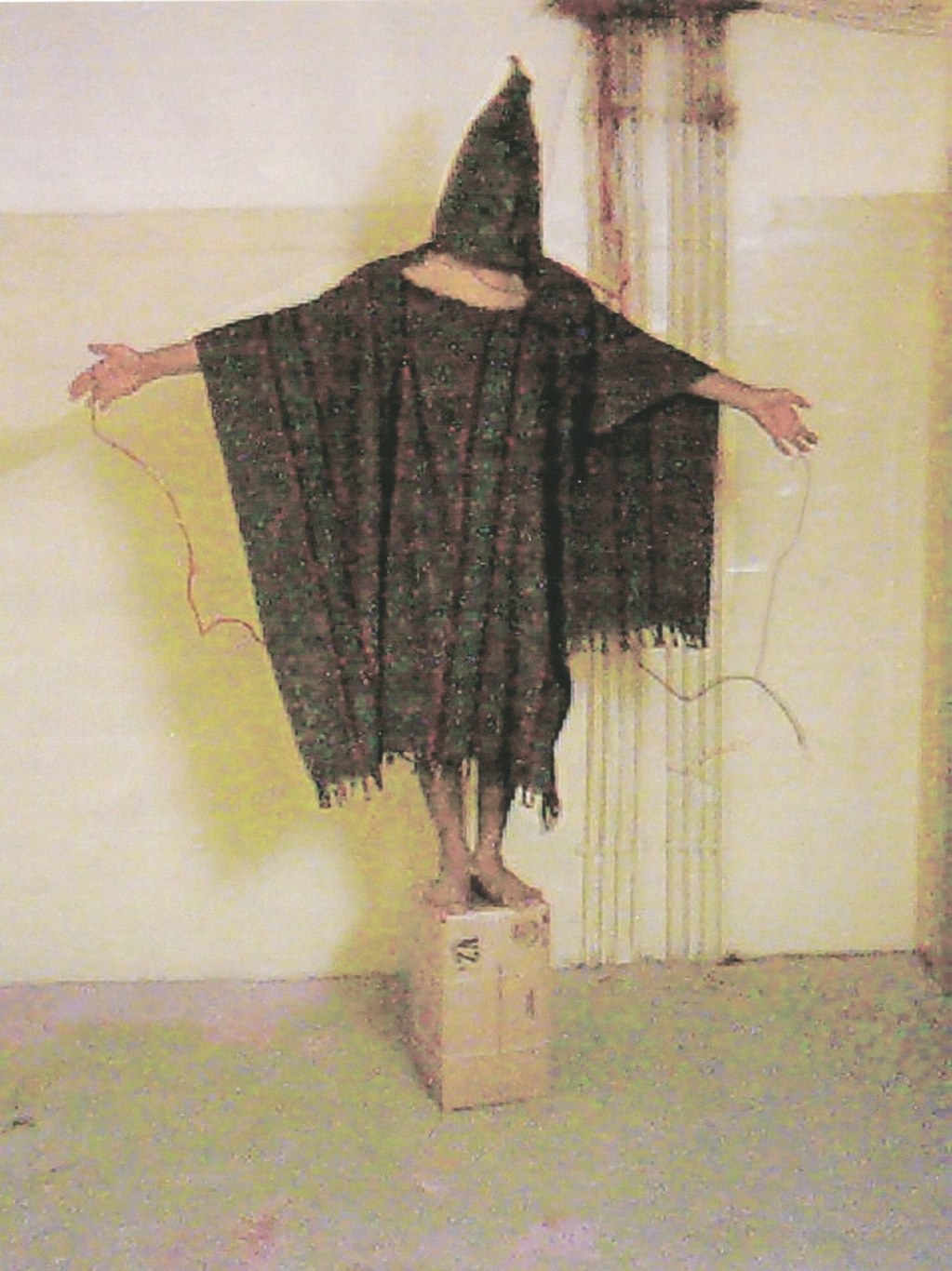
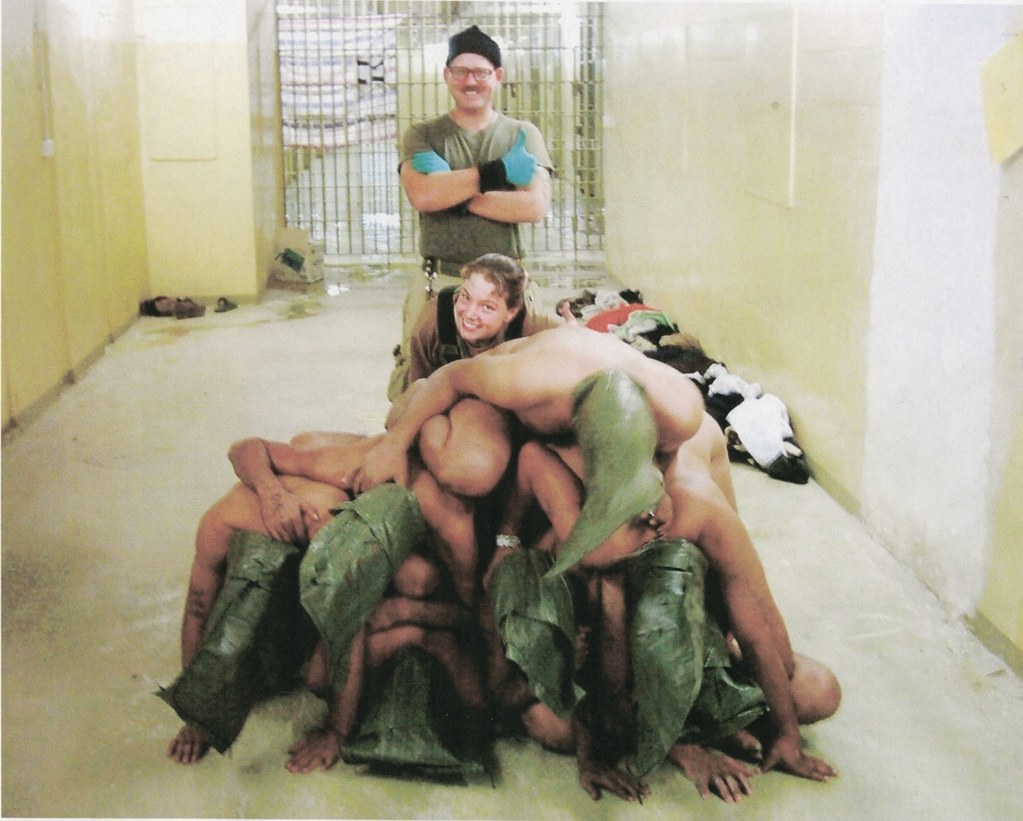
Thus, despite international revulsion at the horrors inflicted by American soldiers at Abu Ghraib in Iraq, President George W. Bush still maintained that ‘any activity we conduct, is within the law. We do not torture.’

Although the material in Civilizing Torture is distressing, Brundage’s approach is restrained. Acts of extreme cruelty are a necessary element for his argument, but this is neither an exhaustive catalogue of bodily humiliations, nor a partisan polemic.

The book ranges from the earliest moments of exploration and colonisation in the 1500s and 1600s, to the War on Terror in the 2000s. Case studies are included because, at the time they occurred, they triggered public discussion about whether certain practices or behaviours were torturous.

4 November 2003. Photograph taken by Staff Sgt. Ivan Frederick of a detainee at Abu Ghraib nicknamed 'Gilligan', later correctly identified as Abdou Hussain Saad Faleh, with a bag over his head, standing on the box with wires attached to his left and right hand (photograph via Wikimedia Commons) 

By focusing on these debates, Brundage demonstrates the long history of torture in the United States while exploring the ways that torture has been discursively justified. The public nature of the evidence base also hammers home one of his core contentions:

‘torture in the United States has been in plain sight, at least for those who have looked for it.’

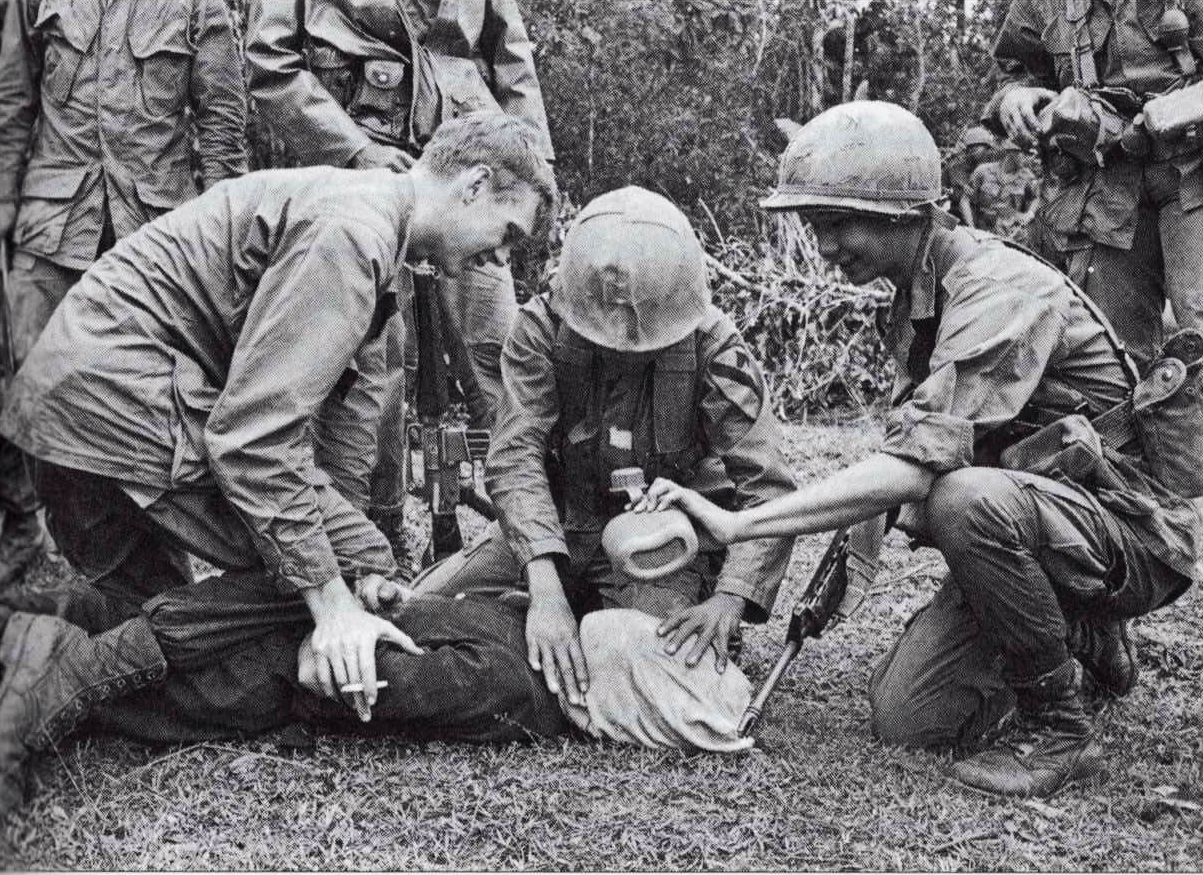
Some examples, such as the use of the ‘water cure’ in the Philippines in the early 1900s, or the rape, abuse, and murder of civilians in Vietnam in the 1960s and 1970s, the torture and ritual humiliation of prisoners as part of the War on Terror in the early 2000s, are well known. Brundage’s contribution is to methodically ground these notorious events in the broader historical context, vividly undercutting official claims that heinous acts are the work of a ‘few bad apples’.

A particularly fascinating thread is the focus on physical and psychological coercion in the nation’s prisons and police stations. In the new-model penitentiaries of the early 1800s, ‘bodily suffering’ was often seen as an instrumental means of compelling obedience, crucial if inmates were to be rehabilitated. From the late 1800s to the 1930s, a modernising police force relied on extreme forms of violence (the so-called ‘third degree’) to extract confessions.

Although the Supreme Court eventually ruled these excesses to be in violation of the Constitution, police torture did not completely disappear. In the 1970s and 1980s, some Chicago officers openly terrorised African-American suspects, deploying the techniques they had learnt as soldiers in Vietnam. This element of the book is urgent and timely, vital to understanding the dangers inherent in the dramatic growth of the prison–industrial complex, as well as the long history of police brutality that fuels contemporary movements such as Black Lives Matter.

An American soldier, aided by South Vietnamese soldiers, 
interrogates a suspected Viet Cong insurgent, undated.

Throughout, Brundage offers important insights into how extreme acts of physical and psychological violence are reframed and redefined. In almost every instance, defenders of torturous practices present American actions as falling on the acceptable side of state violence. As one CIA agent mused about the methods used to interrogate Vietnamese communist prisoners, ‘Were they tortured? It depends on what you call torture.’

At various points in US history, hangings, suffocation, stress positions, beatings, burnings, electrocution, waterboarding, sustained solitary confinement, and profoundly disorienting ‘brain warfare’ were all treated as legitimate techniques for the use of a modern, civilised society.

This long-running renegotiation of what exactly constitutes torture has also helped Americans maintain that ‘torture is something done by other people elsewhere’ (whether that be Catholics during the Spanish Inquisition, Native Americans, Filipino and Vietnamese nationalists, communists, or terrorists). When American colonists, prison officers, slave owners, soldiers, or police officers subject people to profound bodily and psychological horror, it is something else, something other than torture.

This book is thus as much about wilful ignorance and national self-delusion as it is about the physical mechanics of torture. Despite vigorous debates amongst contemporaries, and copious historical evidence to the contrary, Americans have repeatedly pleaded ignorance about the actions of the state. Brundage’s book is a welcome corrective, posing a profound and systematic challenge to this ‘compulsion to restore national innocence’.

7 November 2003. Corporal Charles Graner and Specialist 
Sabrina Harman pose for a picture behind nude detainees at Abu Ghraib 
(photograph via Wikimedia Commons)

Brundage also demonstrates that US officials and the broader public have frequently accepted torturous practices, as long as they occur in a state of exception and to those viewed as outsiders. Whether that be the War on Terror, the War on Drugs, the War on Crime, or the Civil War, critics of state violence are told that the pain and suffering of a minority is necessary to preserve the security of the majority. Victims of torture (whether they be slaves, Native Americans, criminals, prisoners, or ‘illegal enemy combatants’) are rhetorically defined as barbarous and uncivilised adversaries, unworthy of the protections officially offered by the state.

Although each case study includes voices that spoke in horror at what was done in the name of America, in most instances these critics had little success in halting abhorrent practices or in holding individual torturers (let alone those in power) to account.

Understanding the history of torture in the United States will not prevent future violence, but Brundage views this information as providing an important framework for an engaged citizenry. Civilizing Torture encourages the reader to look carefully at the ‘subtle work of denial and erasure’ used by torture apologists, to be aware of the circumstances that are used to justify torture, and to be conscious of the types of people likely to experience the unchecked violence of the state.

Given that the current occupant of the White House has insisted that torture ‘absolutely’ works and has boasted he ‘would bring back a hell of a lot worse than waterboarding’, the lessons of Civilizing Torture feel positively urgent.


Prudence Flowers is a lecturer in the history program at Flinders University. She teaches and writes about the United States, with a particular focus on social movement activism, conservative group formation and ideology, and the politics of gender and sexuality.

She is the author of The Right-to-Life Movement, the Reagan Administration, and the Politics of Abortion (Palgrave, 2019).

For more information, see her staff webpage:
https://www.flinders.edu.au/people/prudence.flowers

Friday, May 03, 2019

Waters on Palestine and Standing Up for Human Rights

Roger Waters on Palestine: “You Have to Stand Up for People’s Human Rights All Over the World”

by DemocracyNow!


May 3, 2019

After a judge ruled a panel can move forward Saturday at the University of Massachusetts Amherst on “Israel, Free Speech, and the Battle for Palestinian Human Rights,” we speak with one of the event’s scheduled participants.


Roger Waters, co-founder of Pink Floyd, one of the most popular rock bands of all time. He says he welcomes the lawsuit that challenged the event, because “what it does is it serves to shine a light on the predicament of the Palestinian people.”